Gramercy Park Block Association
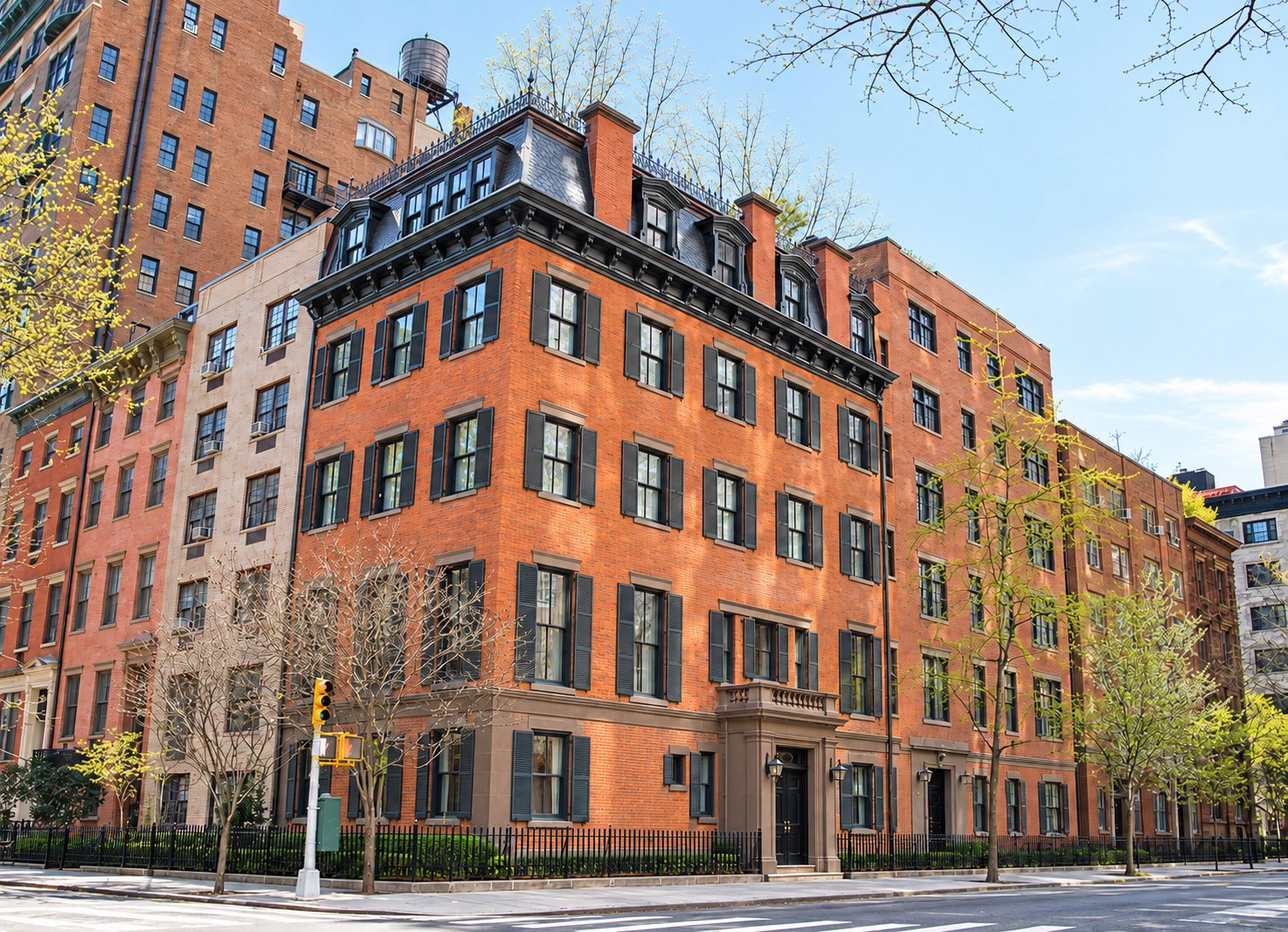
The red-brick Fish-Sonnenberg House at 19 Gramercy Park South, with its dark shutters and mansard roof.
19 Gramercy Park South
Gramercy Stories · No. 1

19 Gramercy Park South

In 1887, Mamie Fish changed this house’s address from 86 Irving Place to 19 Gramercy Park South. The doorway stayed where it was. Built in 1845, the house had already acquired its mansard roof when the Fishes bought it. Mamie commissioned Stanford White to remodel the interiors, adding a marble staircase and a ballroom for the parties that would make her famous.

Stuyvesant Fish ran the Illinois Central Railroad and became a Trustee of Gramercy Park in 1893. Mamie made their home a destination for fashionable New York, even as many of their contemporaries were moving uptown. Benjamin and Hilda Sonnenberg rented the lower two floors in 1931 and bought the property in 1945. They joined it to the building next door, creating a thirty-seven-room home filled with art, books and guests.

The building profile follows these two households, White’s alterations and the later restoration of the house now known as the Sonnenberg Mansion.

Read the building profile
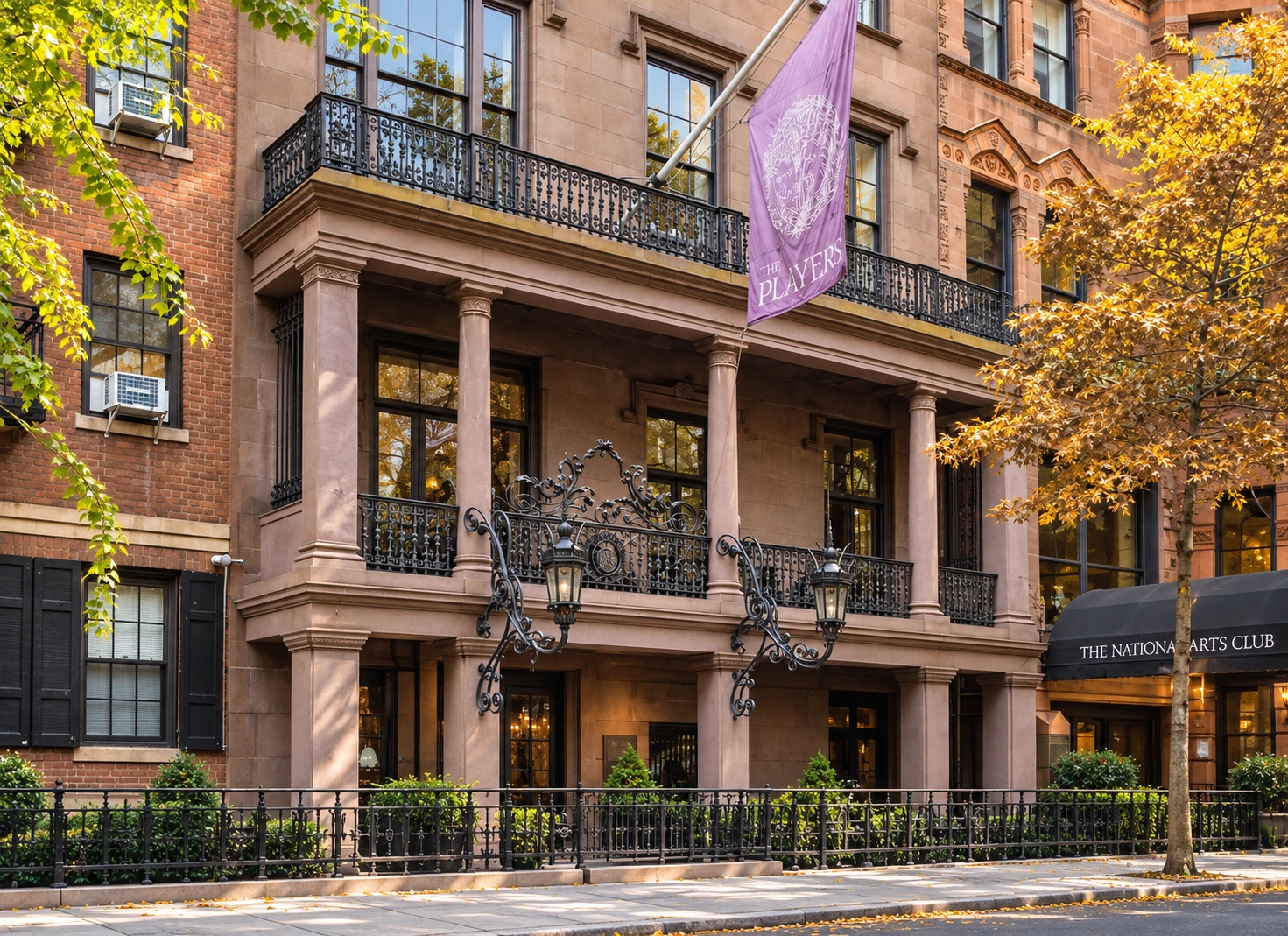
The Players at 16 Gramercy Park South, with its columned porch, purple banner and glowing entrance lanterns.
The Players at 16 Gramercy Park South
Gramercy Stories · No. 2

16 Gramercy Park South

Edwin Booth bought this brownstone in 1888 to create a club where actors, writers and people from other professions could meet as equals. The Players still occupies the house.

Stanford White replaced its high stoop with a street-level entrance and the columned porch that faces the Park. On New Year’s Eve, Booth presented the deed at midnight.

Mark Twain spent hours at the pool table. Maurice Barrymore found a joke in a portrait of Booth. The collections grew to include scripts, letters, photographs and the books actors kept close at hand.

Booth’s bedroom and sitting room remain upstairs, recently restored with the help of a fragment of historic wallpaper found behind a sconce. Elsewhere in the house, members gather for meals, exhibitions and performances.

Read the building profile
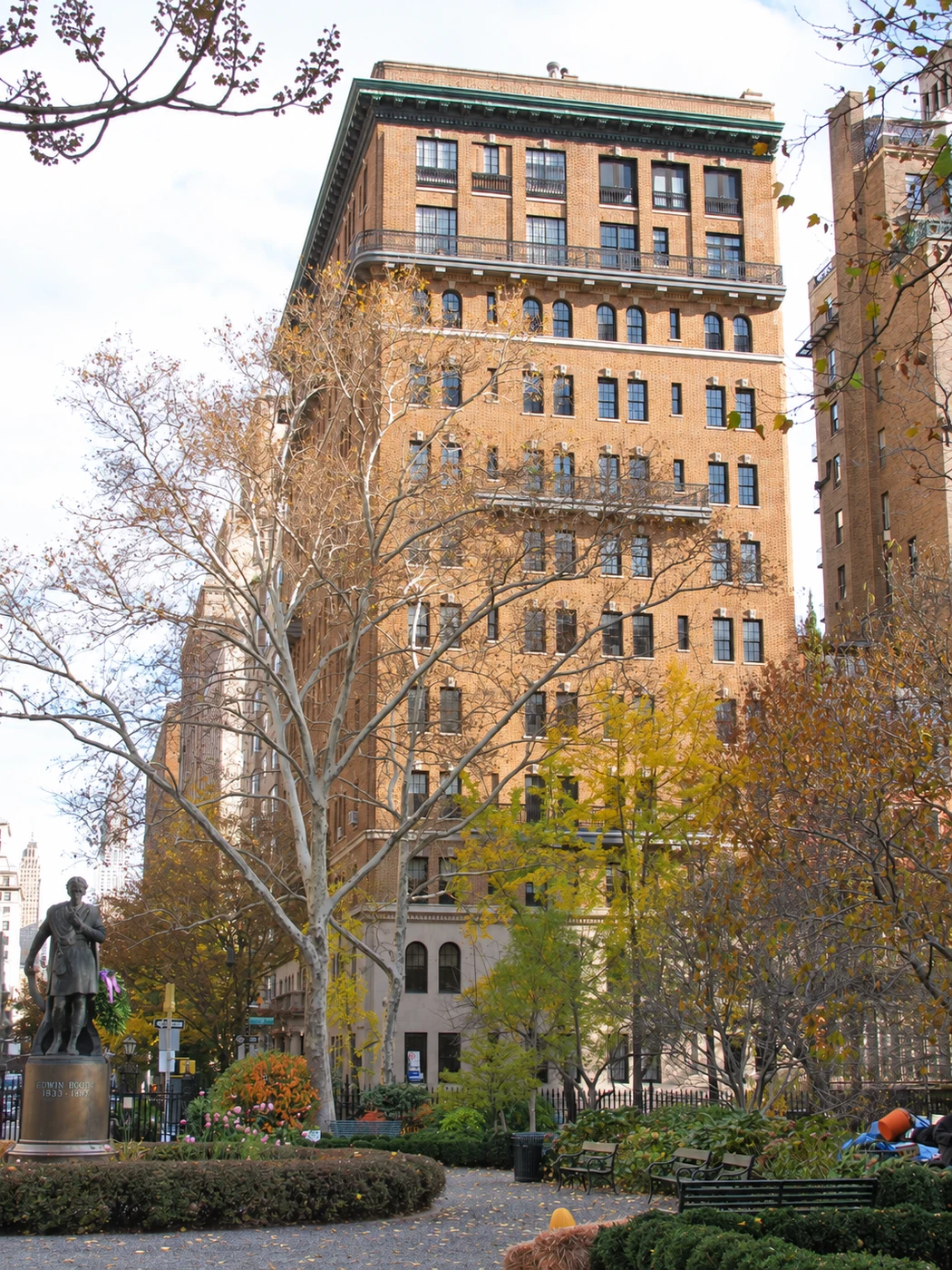
One Lexington Avenue rising above the trees on the north side of Gramercy Park, with the Edwin Booth statue at left.
One Lexington Avenue across Gramercy Park, photographed in November 2009.
Gramercy Stories · No. 3

One Lexington Avenue

The Atlantic cable meetings took place here: in Cyrus Field’s Gramercy Park home, on the very ground where One Lexington Avenue stands today.

Henry William Poor later combined the Field brothers’ houses into his residence at One Lexington, with interiors by Stanford White. A 1909 auction emptied those rooms before the apartment house replaced them.

Herbert Lucas’s cooperative followed in 1910–11. Its founders hoped the rent from some apartments would cover the owners’ maintenance payments, making a home on Gramercy Park more affordable.

A painter’s skylight, an editor’s daily walk and an iron fence preserved from Poor’s house bring the successive lives of this address into view.

Read the building profile
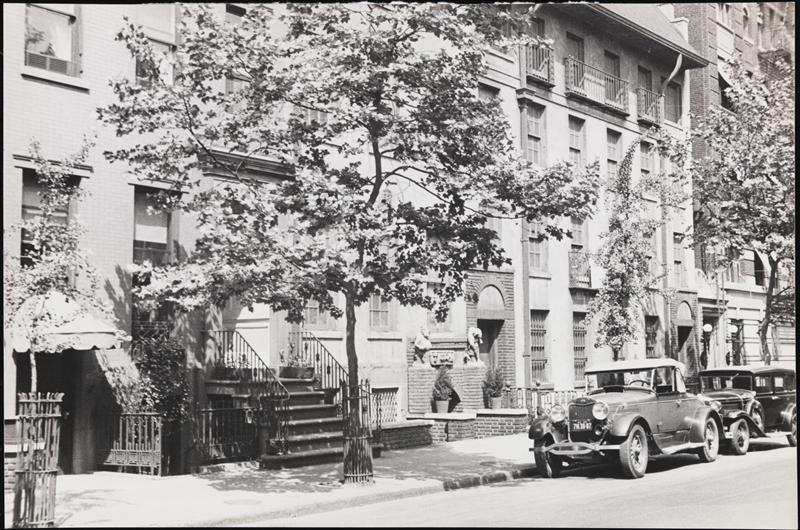
Trees, stoops, row houses and parked cars on East 19th Street in Carl Van Vechten’s 1932 photograph.
East 19th Street, June 20, 1932.

From the architectural record · 1932

The streets around the square.

Carl Van Vechten photographed these East 19th Street houses on June 20, 1932. Their stoops, ironwork and trees show how Gramercy’s character extends beyond the buildings facing the Park.

Explore the historic maps Follow the neighborhood’s history
Photo credits for this page
  • 19 Gramercy Park South · Original photograph: Steven Tucker, GPBA archive. View photograph
  • The Players at 16 Gramercy Park South · Original photograph supplied by GPBA. View photograph
  • East 19th Street, June 20, 1932.Carl Van Vechten. X2010.8.498. Museum of the City of New York. Museum record ↗
  • One Lexington Avenue across Gramercy Park, photographed in November 2009. · Photograph by Eden, Janine and Jim, CC BY 2.0. Lightly adjusted for color and clarity.