
11 Gramercy Park South
A Grant family house, a composer’s salon, and a voice that reached wartime America.
The Grant house · Anglo-Italianate · c. 1855
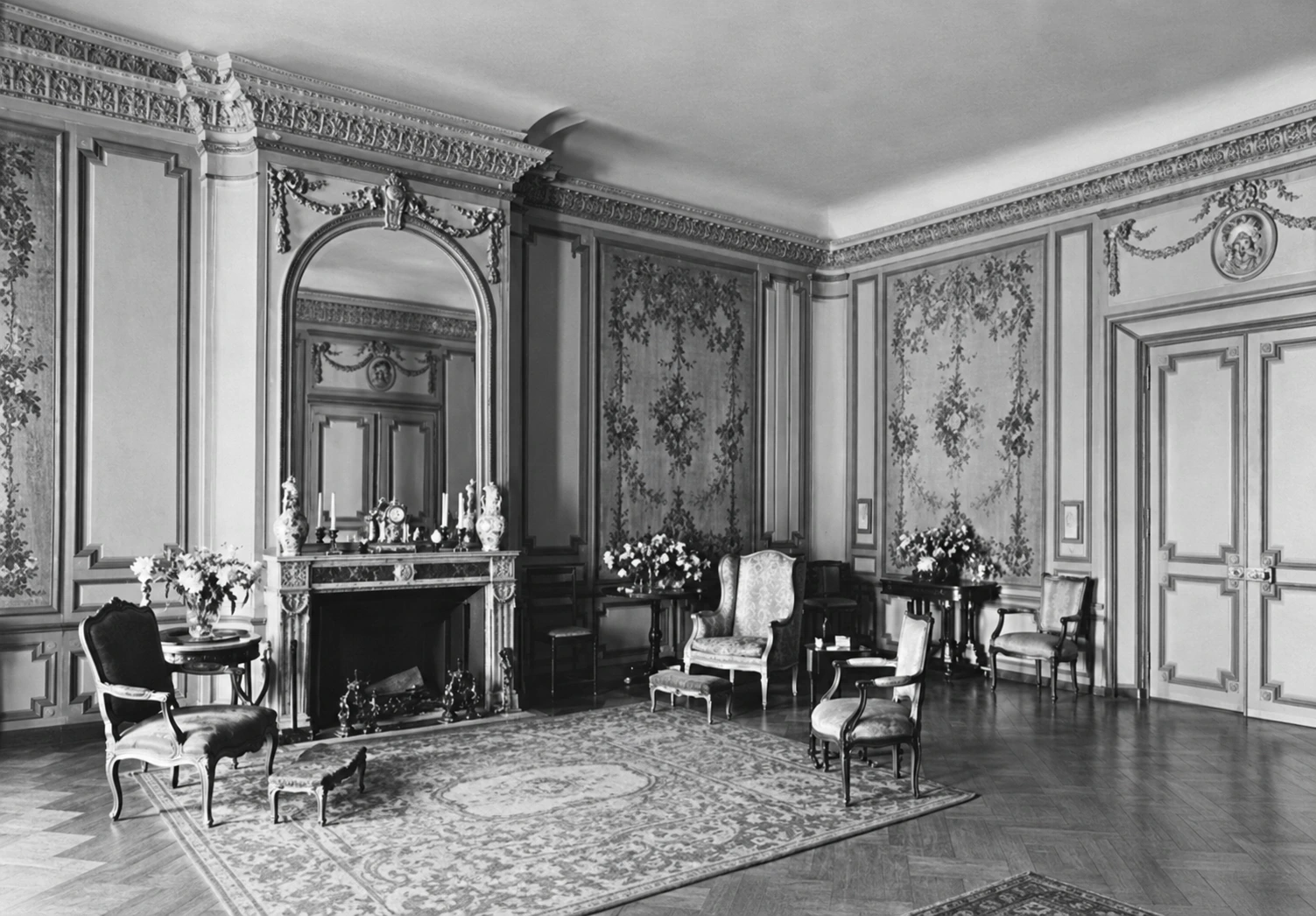
On a spring day in 1931, photographer Samuel H. Gottscho stepped inside 11 Gramercy Park South. His camera caught a world of tall paneled rooms, flowers on small tables, books beside a sofa, and doorways opening one beyond another. These were the rooms in which composer Samuel Barlow and his wife, Ernesta, gathered friends to hear music.
Behind the brownstone lay a story that reached from the Grant family’s industrial fortune to a lively musical and literary salon—and, through Ernesta’s wartime radio work, into homes across America.
Behind the brownstone
The Gilded Age Roots
A family house facing the garden
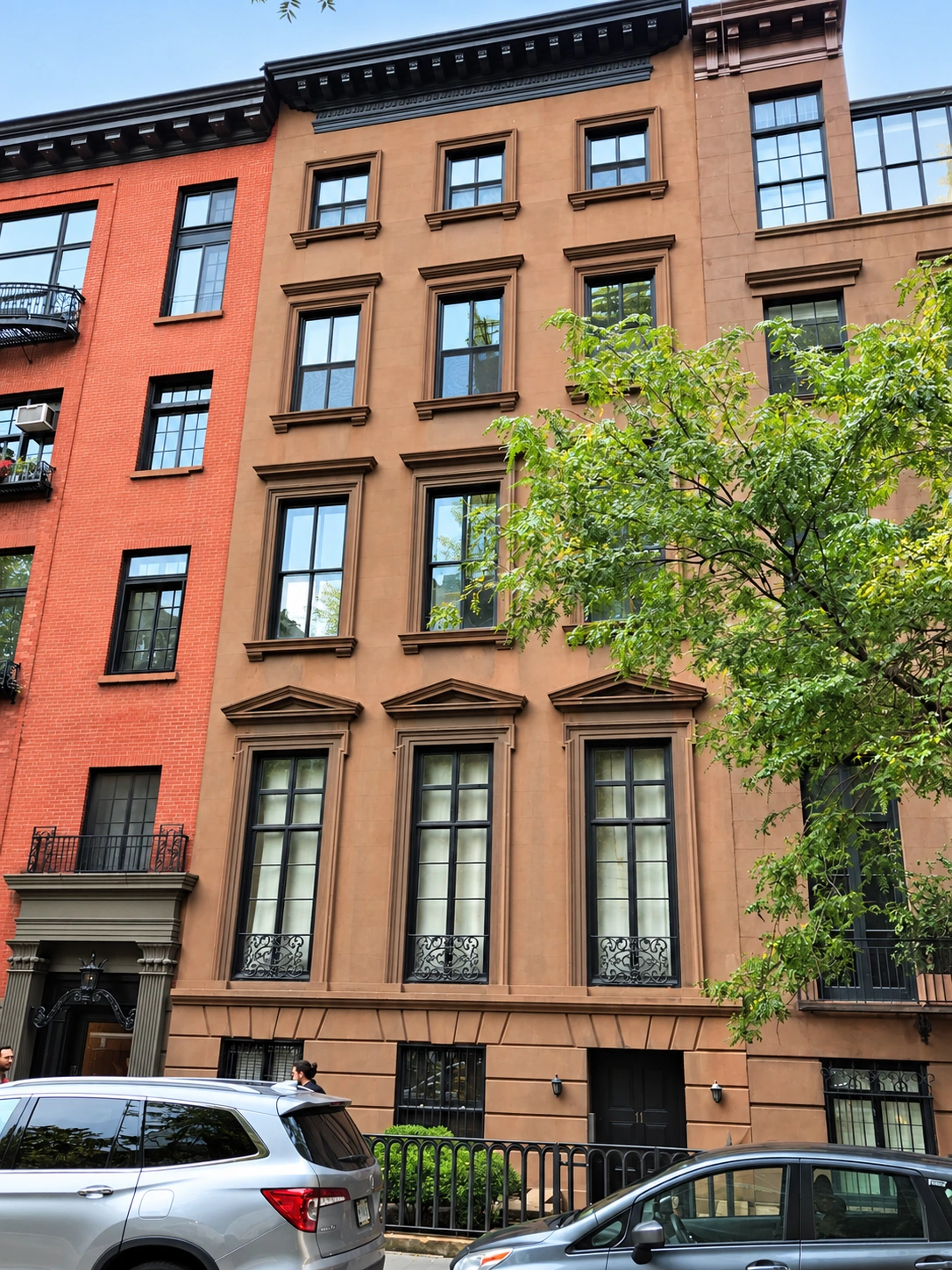
Built around 1855, No. 11 is a mid-nineteenth-century Anglo-Italianate brownstone on the south side of Gramercy Park. Its early residents, Oliver De Forest Grant and his wife, Eliza Adeline Suydam, belonged to the prosperous New York world that grew up around Samuel B. Ruggles’s private garden.
The house announced its place in that world through its tall parlor windows, triangular pediments, and continuous iron balcony. A high stoop once brought callers directly to the principal floor. Above it, the windows grew simpler toward the cornice: a measured, dignified front overlooking the Park.
The Grants’ name would travel much farther than this quiet stretch of East 20th Street. In the 1860s Oliver and his sons took control of a locomotive manufacturer in Paterson, New Jersey, the business that became Grant Locomotive Works.
An engine fit for Paris
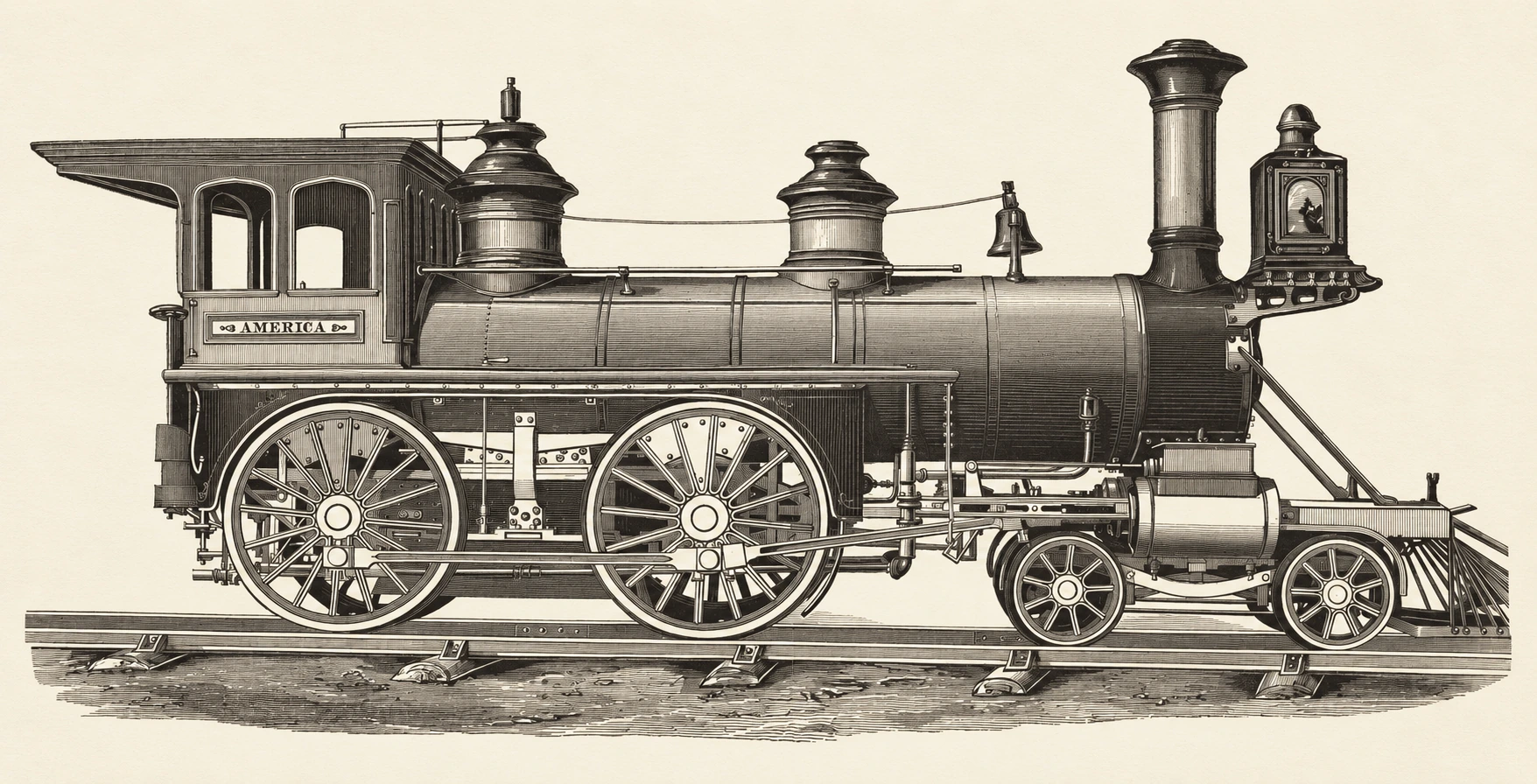
For the Paris International Exposition of 1867, the works produced America, a passenger locomotive dressed for an international audience. Its boiler was sheathed in German silver, its cab finished in fine American woods. The imposing wheels and elaborate headlamp made an industrial machine into a showpiece of craftsmanship and ambition.
After Paris, America went to work on the Chicago, Rock Island and Pacific Railroad. It offers a vivid glimpse of the enterprise behind the Grant family’s wealth, while their Gramercy address remained a home. By 1900, George De Forest Grant was still listed at No. 11.
A new way to live in an old house
In 1917, plans were drawn to divide the former family residence into apartments. Architect John E. Nitchie prepared the alterations for Mrs. Charles W. Sherwood. The old stoop eventually disappeared, and the entrance moved to the lower level.
Such changes opened Gramercy’s large houses to smaller households. At No. 11, apartment living would make room for one of the neighborhood’s most memorable creative partnerships.
The Composer’s Salon
Samuel and Ernesta
Samuel Latham Mitchell Barlow and Ernesta Beaux married in 1928. He was a composer with a musical life on both sides of the Atlantic; she was a writer and designer who had already published a book about wartime Europe. Together they made their Gramercy home a place where music and conversation belonged to everyday life.
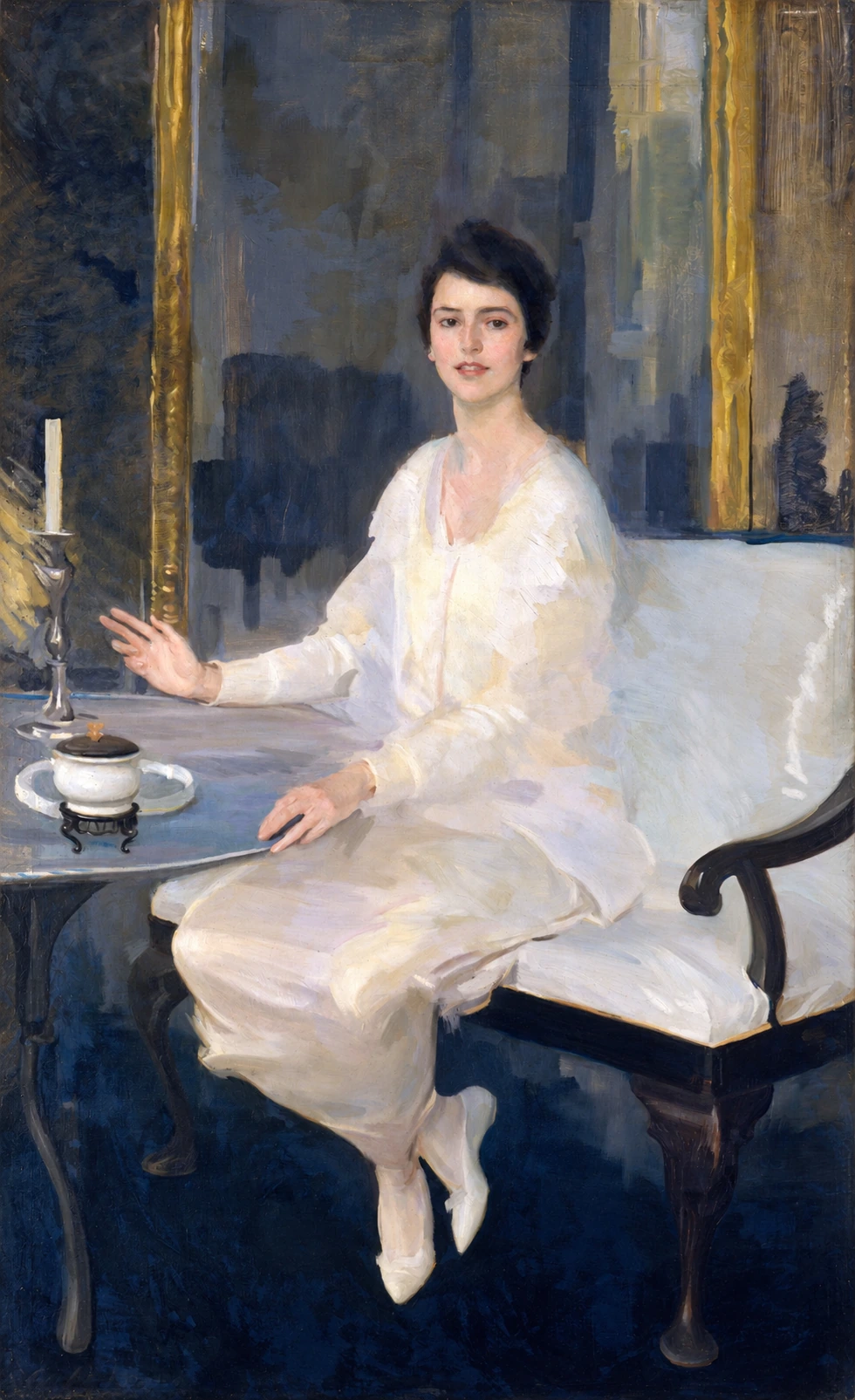
Ernesta had grown up in a family of artists and writers. The painter Cecilia Beaux was her aunt, and the biographer Catherine Drinker Bowen her sister. Beaux’s full-length portrait of Ernesta, painted in 1914, shows her in a white dress beside a tea table: a poised young woman whose later life would carry her well beyond the drawing room.
In the Barlows’ home, the pleasures of a beautiful interior served the pleasures of company. Small groups could gather close to the performers; a concert could become a conversation, and a literary celebration could turn into an evening of music.
Inside the rooms, 1931
Gottscho’s photographs bring that setting into view. In the living room, slender chairs stand around a patterned carpet. Flowers soften the formal wall panels; a tall mirror rises above the fireplace, reflecting the ornament of the opposite wall. There is grandeur here, but also room to draw a chair closer.
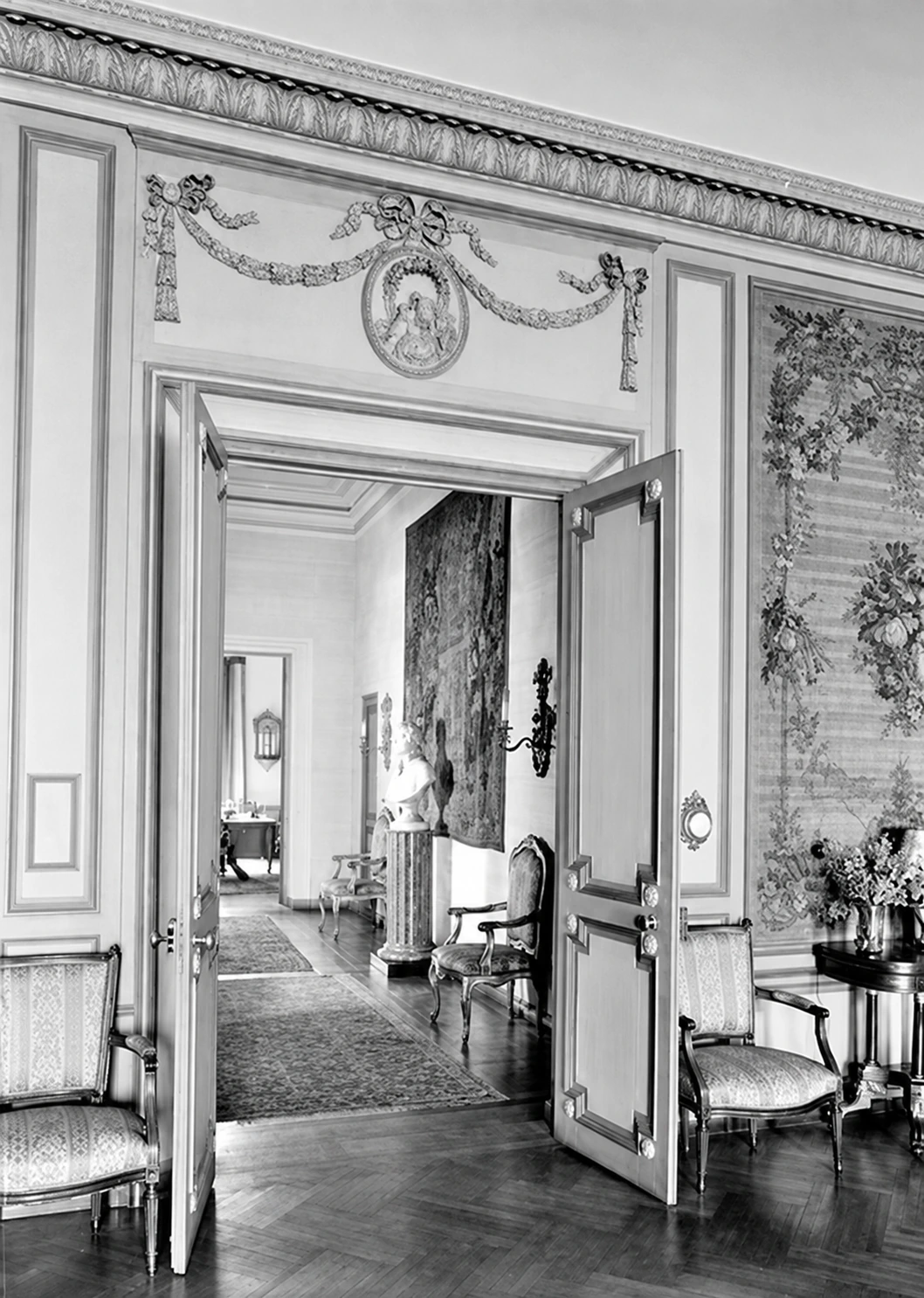
Beyond the living room, open doorways lead the eye through the apartment. A chair beside a doorway, a bust on a pedestal, and another room glimpsed in the distance give the photographs the feeling of a house waiting for its guests.
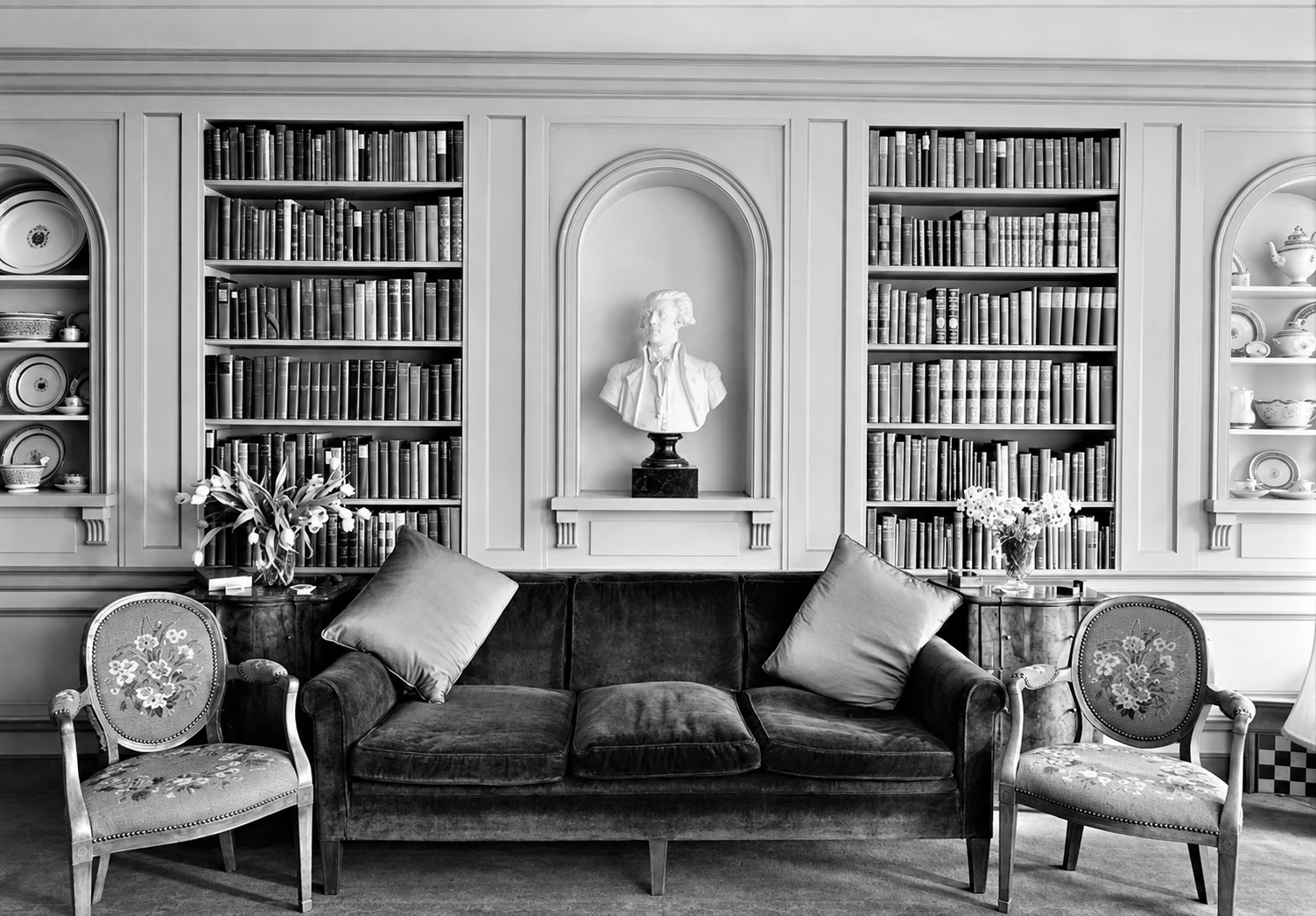
In the upper hall, books fill shelves on either side of a sculpted bust. A deep sofa and two embroidered chairs turn a passage into a place to sit. The arrangement captures something essential about the Barlows’ household: culture was at hand, on the shelves and around the room.
Poet Paul Engle later remembered Ernesta finding paneling in an eighteenth-century French château being dismantled and bringing it to New York for the music room. Listening there, he recalled, was “like sitting inside the music.”
Music, books, and company
Samuel’s work reached a major European stage in 1935, when his Mon ami Pierrot was performed at the Opéra-Comique in Paris. At home, music took a more intimate form. In February 1937, the Barlows celebrated Catherine Drinker Bowen and Barbara von Meck’s Beloved Friend, a book about Tchaikovsky, with excerpts from his operas. Literature, family, and performance met in the same rooms.
As war spread through Europe, the salon’s hospitality acquired another purpose. In February 1942, the Barlow home hosted a musical tribute associated with Homage to Paderewski, the anthology honoring the great Polish pianist and statesman. The collection brought together composers in North America, among them Béla Bartók, Darius Milhaud, and Bohuslav Martinů, and became a memorial after Paderewski’s death in 1941.
The Gramercy gathering supported the Paderewski Memorial Hospital in Edinburgh. A private room on the Park had become part of a wider effort linking music, exile, and relief.
A few doors away, the National Arts Club and The Players gave Gramercy’s cultural life its public landmarks. The Barlows supplied something more intimate: a home where books could be celebrated, musicians heard at close quarters, and friendships sustained over many years.
Wartime & Modern Era
Ernesta finds a national audience
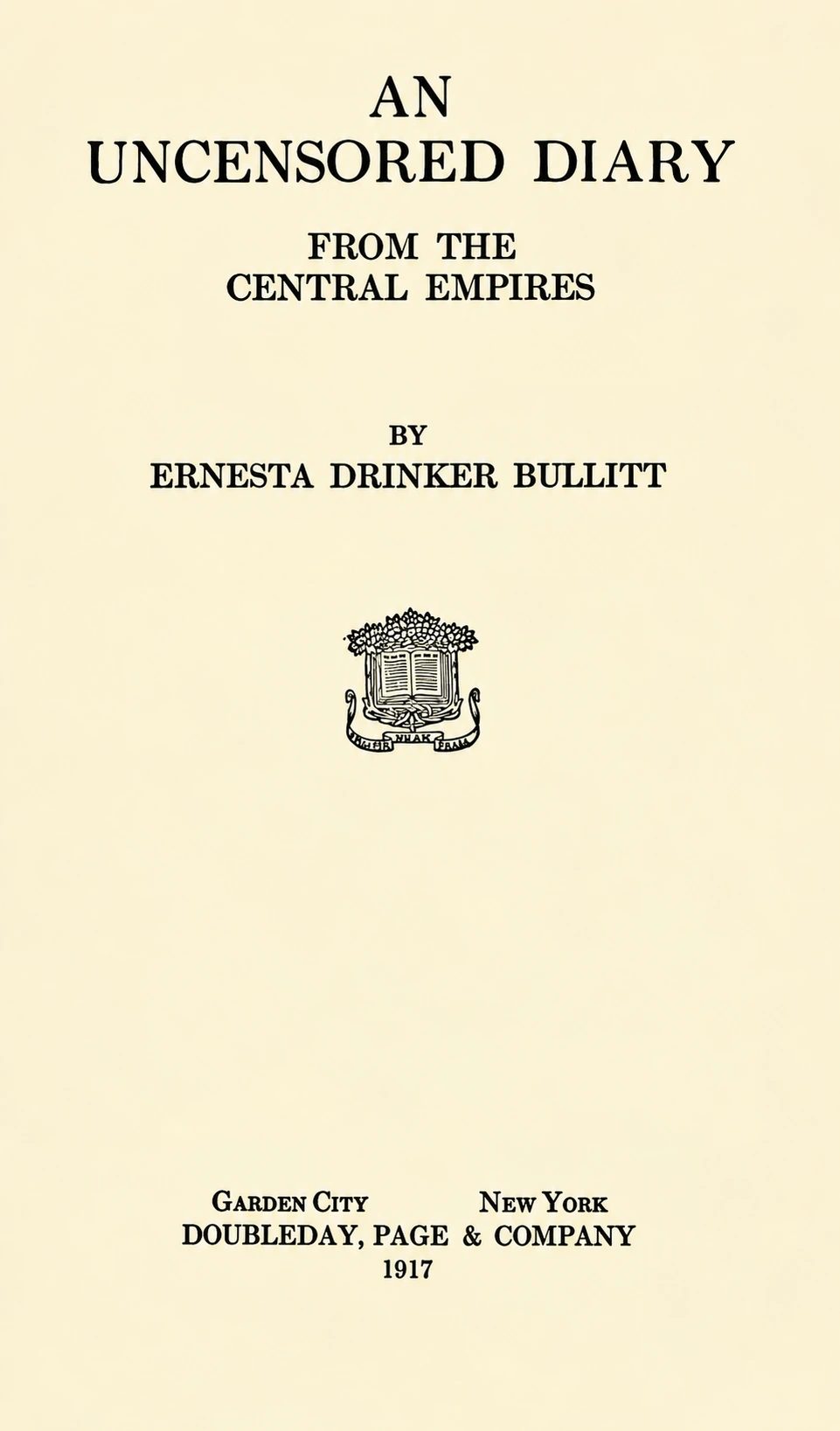
Ernesta’s curiosity about the wider world long predated the salon. In 1916 she traveled through Germany and Austria with her first husband, William C. Bullitt. Her observations appeared the following year as An Uncensored Diary from the Central Empires, published under the name Ernesta Drinker Bullitt.
During the Second World War, she turned from the printed page to radio. A short feature on WEAF, You and the War, grew into NBC’s network program Commando Mary. From 1942 to 1945, Ernesta told women about the work they could do, the training available, and the ways they could take part in the war effort.
Her subjects were practical. One broadcast described women in Caledonia, Michigan, sending hometown news to service members. Other programs explored factory work and opportunities for volunteers of different ages and abilities. She made a vast national emergency understandable through particular people and useful tasks.
The woman who welcomed a small audience into her Gramercy rooms was now addressing listeners across the country. Her surviving scripts preserve that other side of the hostess: an experienced observer with a clear public voice.
A home that endured
The Barlows’ hospitality continued after the war. In 1956, the house was the setting for teas and fashion shows for wives of United Nations delegates. Music, international friendships, and the life of the city continued to meet behind its doors.
On September 20, 1966, No. 11 became part of the Gramercy Park Historic District. The designation protected the architectural character of the neighborhood around it, including the brownstone’s distinctive Park-facing façade. The Barlows left in 1971, closing a long chapter in the house’s life.
A later owner brought another musical association. Producer and DJ John “Jellybean” Benitez acquired the property in 1992. The house continued as a residence divided into apartments, adapting to new households while retaining its place in the old row.
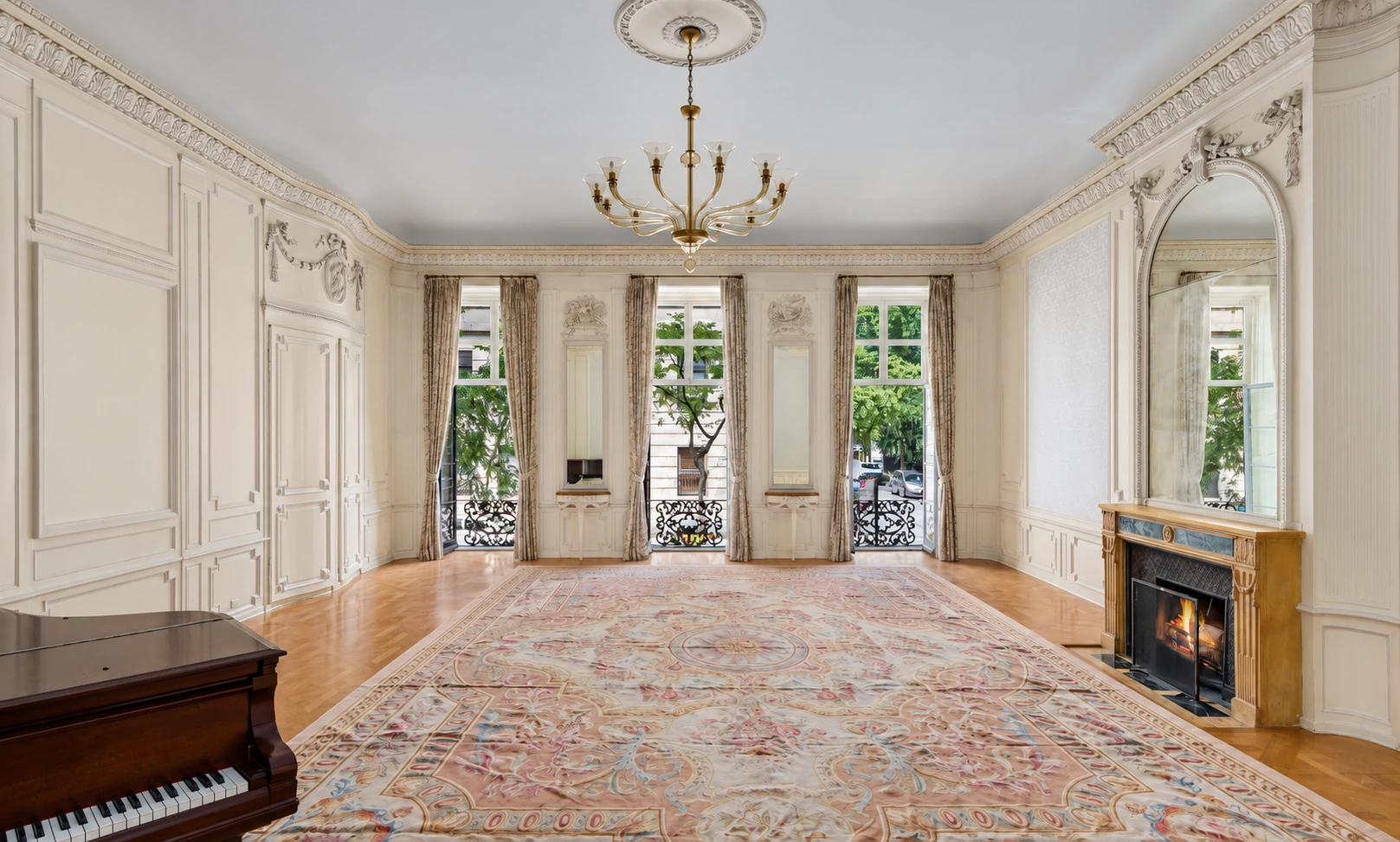
In 2026, property descriptions still show three residences. The later photograph below offers a counterpart to Gottscho’s intimate views: the tall windows looking toward the Park, the paneled walls, and the mirror above the fireplace remain central to the room. Across changing owners and arrangements, No. 11 has kept the generous spaces that once made it a home for music.
The building at a glance
The building record
- Address
- 11 Gramercy Park South · also 110 East 20th Street
- Historic address
- 11 Gramercy Park
- Date
- Mid-nineteenth century · c. 1855
- Original architect
- Not established
- Early household
- Oliver De Forest and Eliza Adeline Grant
- 1917 alterations
- John E. Nitchie · plans for Mrs. Charles W. Sherwood
- 1931 interior record
- Ernesta Beaux, client · John Oakman, architect
- Landmark status
- Within the Gramercy Park Historic District, designated September 20, 1966
- Present use
- Private residences; three apartments reported October 2, 2026
- Parcel
- Manhattan block 875, lot 75
Over time
Ruggles’s plan establishes the Park and its surrounding residential lots.
The Anglo-Italianate brownstone is built around 1855.
The Grants acquire the Paterson locomotive business; the Grant Locomotive Works name is chartered in 1867.
The state biographical directory lists George De Forest Grant at 11 Gramercy Park.
The sale and plans for apartment alterations appear in the Record and Guide; Nitchie’s estimate is $30,000.
Samuel L. M. Barlow and Ernesta Beaux marry.
Gottscho photographs the Barlow living room; the catalog names Ernesta Beaux and John Oakman.
Barlow’s Mon ami Pierrot is first performed at the Opéra-Comique in Paris.
A musical tribute associated with Homage to Paderewski takes place at the Barlow home.
Ernesta broadcasts as Commando Mary; scripts survive at Georgetown.
No. 11 is included in the new Gramercy Park Historic District.
The Barlows leave the house.
John “Jellybean” Benitez acquires the house.
Published property records describe three residences; a single-family plan is presented as a proposal.
Historical Notes & Sources
Historical notes
- Construction date. The narrative uses c. 1855. The 1966 Landmarks Preservation Commission report gives approximately 1855–56; Tom Miller’s 2021 history gives 1852. A contemporary construction record has not been recovered. The original architect and builder remain unidentified. John E. Nitchie’s documented work concerns the 1917 conversion; John Oakman is named in the 1931 interior photograph record.
- Address and photographs. No. 11 is also 110 East 20th Street, Manhattan block 875, lot 75. Earlier references often use “11 Gramercy Park.” The Library of Congress living-room record says “11 Gramercy Park West”; the other address evidence places the Barlow home on the south side. That catalog wording does not establish a move or renumbering.
- The 1917 conversion. The sale notice and architectural notices describe planned apartment alterations, with estimates of $28,000 and $30,000 and differing story counts. They are evidence of plans, not a final cost account. The association of the lowered entrance with this conversion comes from Miller’s later history.
- The Barlow salon. Paul Engle’s account of imported French paneling survives as a later recollection in Hualing Nieh’s Three Lives; the château and installation details are unverified. The 1937 and 1956 social notices are known here through Miller’s newspaper transcriptions. Accounts of the Paderewski event give February 17 and February 27, 1942; the narrative therefore uses the month only.
- Later use and preservation. The landmark protection is through the historic district, not a separate designation of the interiors. Ernesta’s residence does not establish a radio studio in the house, and Benitez’s ownership does not establish a recording studio. The September 2026 listing describes three residences; its alternate single-family floor plan is a proposal. Later photographs do not establish the date or authenticity of each interior fitting.
The Gilded Age Roots
- Pine, 1921 — John B. Pine, The Story of Gramercy Park, 1831–1921, pp. 3–10 and the founding indenture; the Park’s development, rather than a construction record for No. 11.
- LPC designation report — LPC, Gramercy Park Historic District, September 20, 1966, pp. 1–3; No. 11’s approximate date and architectural description.
- Address and parcel record — PropertyShark, address and parcel fields, checked October 2, 2026; 110 East 20th Street and block 875, lot 75.
- Miller, 2021 — Tom Miller, November 17, 2021; the alternative 1852 date and Grant-family identification. See the research note below.
- Clayton and Nelson, 1882 — W. Woodford Clayton and William Nelson, History of Bergen and Passaic Counties, New Jersey (1882), pp. 436–37; company ownership, the exposition locomotive, and the 1872 labor dispute.
- Linda Hall Library — Linda Hall Library, The Transcontinental Railroad, “Locomotives”; identification of America and Engineering, July 26, 1867, p. 64.
- Biographical directory, 1900 — Biographical Directory of the State of New York (1900), p. 167; George De Forest Grant’s address and club memberships.
- Record and Guide, August 18, 1917 — Real Estate Record and Guide, August 18, 1917, p. 208 (“Dwelling in Gramercy Park Sold”), p. 217 (“Plans Figuring”), and p. 218 (“Contemplated Construction”). The scanned pages were inspected.
The Composer’s Salon
- Georgetown exhibition and archives — Georgetown University Library, “Women in Government and Politics,” Ernesta Drinker Barlow section; family, marriage, writing, and broadcasting.
- The Metropolitan Museum of Art — The Metropolitan Museum of Art, Cecilia Beaux, Ernesta (1914), accession 15.82; sitter, date, and acquisition.
- Library of Congress — Library of Congress, Gottscho-Schleisner Collection, April 9, 1931; photograph metadata naming Beaux and Oakman. See the address discrepancy in the research note.
- Hualing Nieh, Three Lives — Hualing Nieh, Three Lives, English sample held by the University of Iowa, pp. 39–40; Paul Engle’s recollections, including the imported paneling. The brief quotation is on p. 40.
- Bibliothèque nationale de France — Bibliothèque nationale de France, authority record for Mon ami Pierrot; first performance January 11, 1935, and form of the work.
- Joseph A. Herter, 2011 — Joseph A. Herter, notes to Homage to Paderewski, Hyperion CDA67903 (2011); the anthology, Dorothy Lawton, and the composers’ circumstances.
- PTNA Piano Music Encyclopedia — Masaki Nishihara, PTNA Piano Music Encyclopedia, July 12, 2021; discusses the 2014 score edition and places its reported performance at Barlow’s home on February 17, 1942.
- Miller, 2021 — Miller cites the New York Sun of February 16, 1937, and New York Times notices of February 27, 1942, and December 12, 1956. Those newspaper passages are used through his transcription, not represented as independently inspected originals.
Wartime & Modern Era
- An Uncensored Diary, 1917 — Ernesta Drinker Bullitt, An Uncensored Diary from the Central Empires (Doubleday, Page & Company, 1917); digitized Library of Congress copy.
- Broadcasting, June 29, 1942, p. 28 — Broadcasting, June 29, 1942, “Lady Commandos”; contemporary notice identifying the WEAF precursor, network expansion, guests, and work-related subjects.
- Georgetown exhibition and archives — Georgetown’s exhibition and Ernesta Drinker Barlow Papers, GTM.081118; the August 2, 1942, script and the surviving 1942–45 series.
- Martin Grams, 2012 — Martin Grams, “The Story of Commando Mary,” November 2012; research using NBC program records. Specific examples are attributed to this later reconstruction.
- LPC designation report — LPC, September 20, 1966, pp. 1–3; district designation, hearing record, and inclusion of No. 11.
- The Real Deal, 2013 — The Real Deal, July 2, 2013; Benitez’s 1992 acquisition and the reported apartment arrangement.
- Current property description — StreetEasy, Compass / Hudson Advisory listing published September 17, 2026; checked October 2, 2026. Three residences, current interiors, and two floor plans, one marked “Alternate.” The marketing construction date is not adopted.
- Miller, 2021 — Miller, 2021; Barlow departure date and contemporary exterior photographs, used for the exterior photograph.
Image credits
- Exterior of No. 11, published 2021. Photograph by Tom Miller, Daytonian in Manhattan. Cropped and adjusted for color and clarity.
- Park-facing music room, published 2018. Photograph retained in GPBA’s August 28, 2018 newsletter archive, accompanying 6sqft’s report on the house. Original photographer not identified in the archived copy.
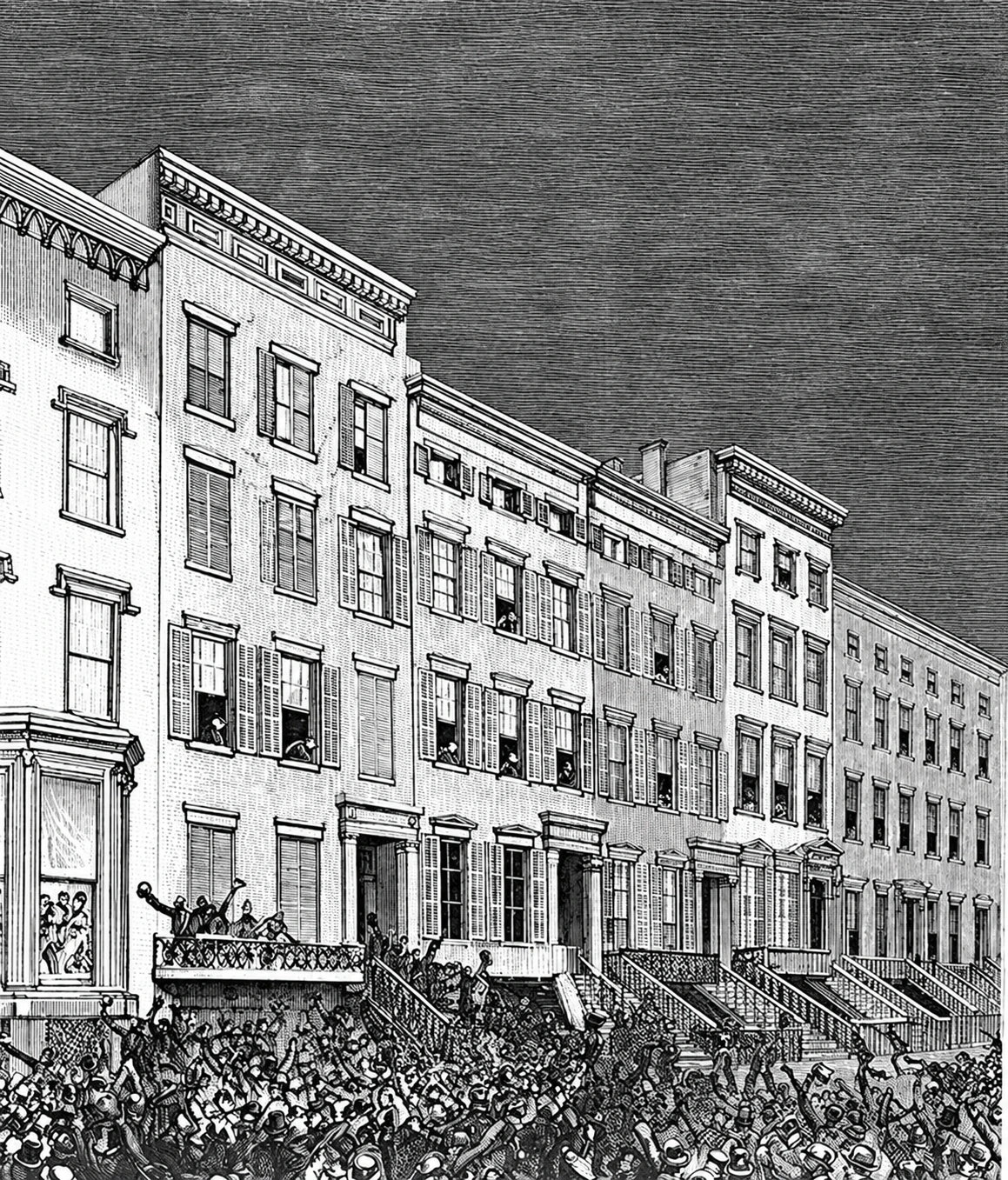
- Gramercy Park South, 1877. Detail of a nineteenth-century engraving of the serenade at Samuel J. Tilden’s neighboring residence, reproduced in Tom Miller’s history of No. 11; credited there to the New York Public Library. Public domain.
- America locomotive. Engraving published in Engineering, July 26, 1867, p. 64. Linda Hall Library. Public-domain nineteenth-century illustration.
- Ernesta, 1914. Cecilia Beaux, oil on canvas. The Metropolitan Museum of Art, Arthur Hoppock Hearn Fund, 1915, accession 15.82. Museum record · Open-access image record. Public domain / CC0. This is a portrait from before the Barlow marriage, not a scene inside No. 11.
- Living room, April 9, 1931. Samuel H. Gottscho, Gottscho-Schleisner Collection, Library of Congress, Prints and Photographs Division. LC-G612-T-15596; digital ID gsc.5a01858. Source record. “No known restrictions on publication.” Original service image and catalog record linked above.
- Upper hall and view through doorways. Attributed to Samuel H. Gottscho, Library of Congress, in Miller’s illustrated history. Individual catalog identifiers have not been recovered; the Gottscho-Schleisner Collection rights statement reports no known publication restrictions. These are historical views of the Barlow apartment, not current interiors.
- Diary title page, 1917. Ernesta Drinker Bullitt, An Uncensored Diary from the Central Empires, Doubleday, Page & Company. Library of Congress copy digitized by Internet Archive, image 9. Public domain.
Images have been digitally cleaned for this presentation. Original reproductions remain available through the source links. The archival views show the rooms at the dates indicated.
Research and current-use check: October 2, 2026.