
Samuel Bulkley Ruggles
The city he saw coming
Founder of Gramercy Park · Lawyer, developer and public advocate
A sidewalk and a city
In July 1832, Samuel Ruggles was thinking about a sidewalk.
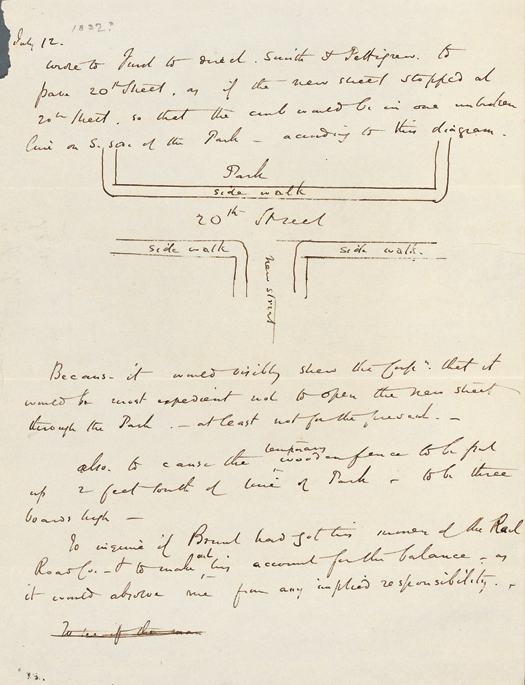
He had committed land to Gramercy Park, but a new avenue threatened to cut through it. In a handwritten memorandum, he considered how a continuous curb and sidewalk could make Irving Place end at the garden—and encourage the city to leave it there.
It was a small intervention in a large undertaking. Ruggles had bought pieces of an old estate, moved earth, planned streets and set aside a garden.
The man behind Gramercy was a lawyer and developer whose investments would eventually bring him a serious financial crisis.
A young man with a city in mind
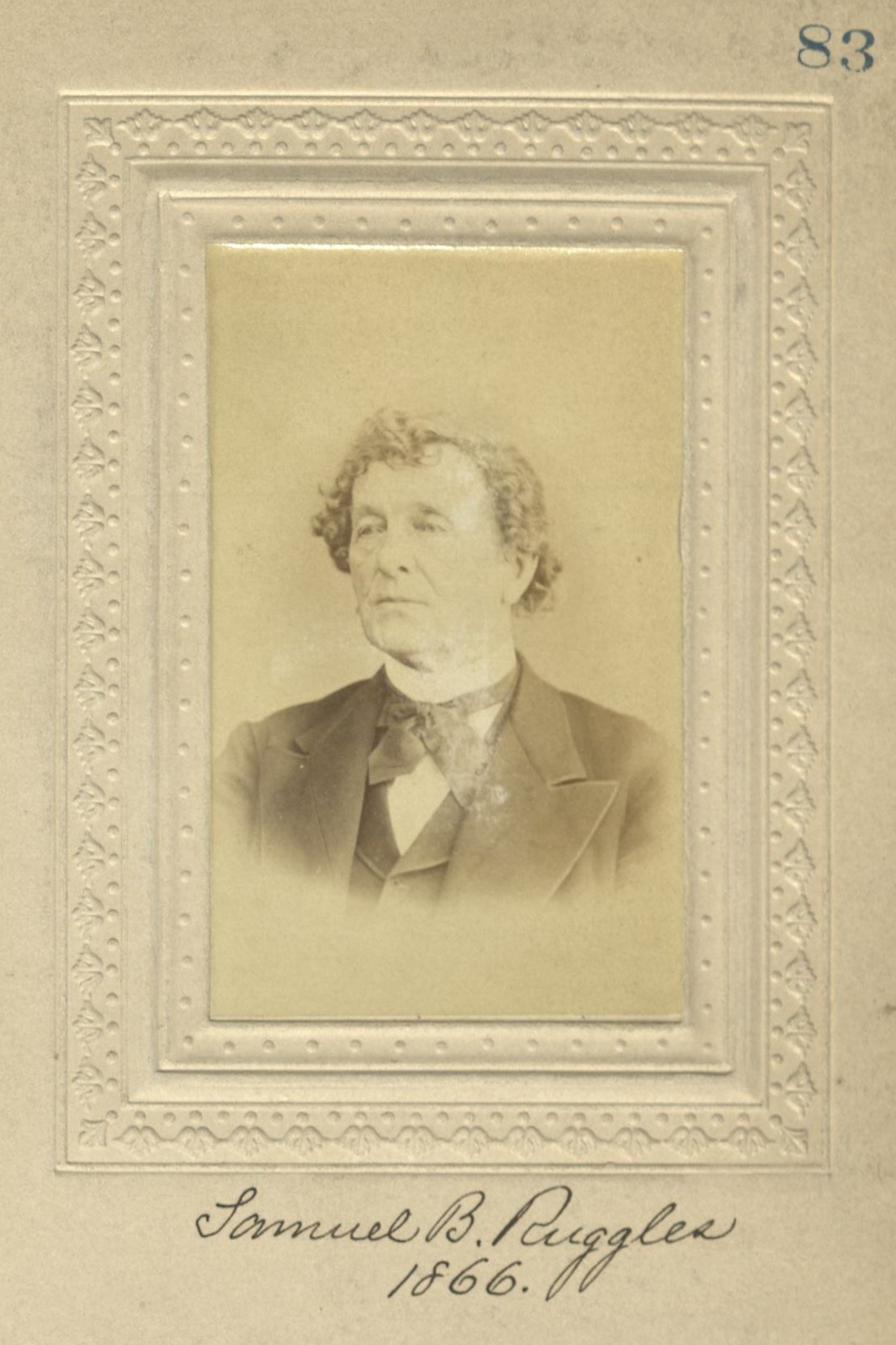
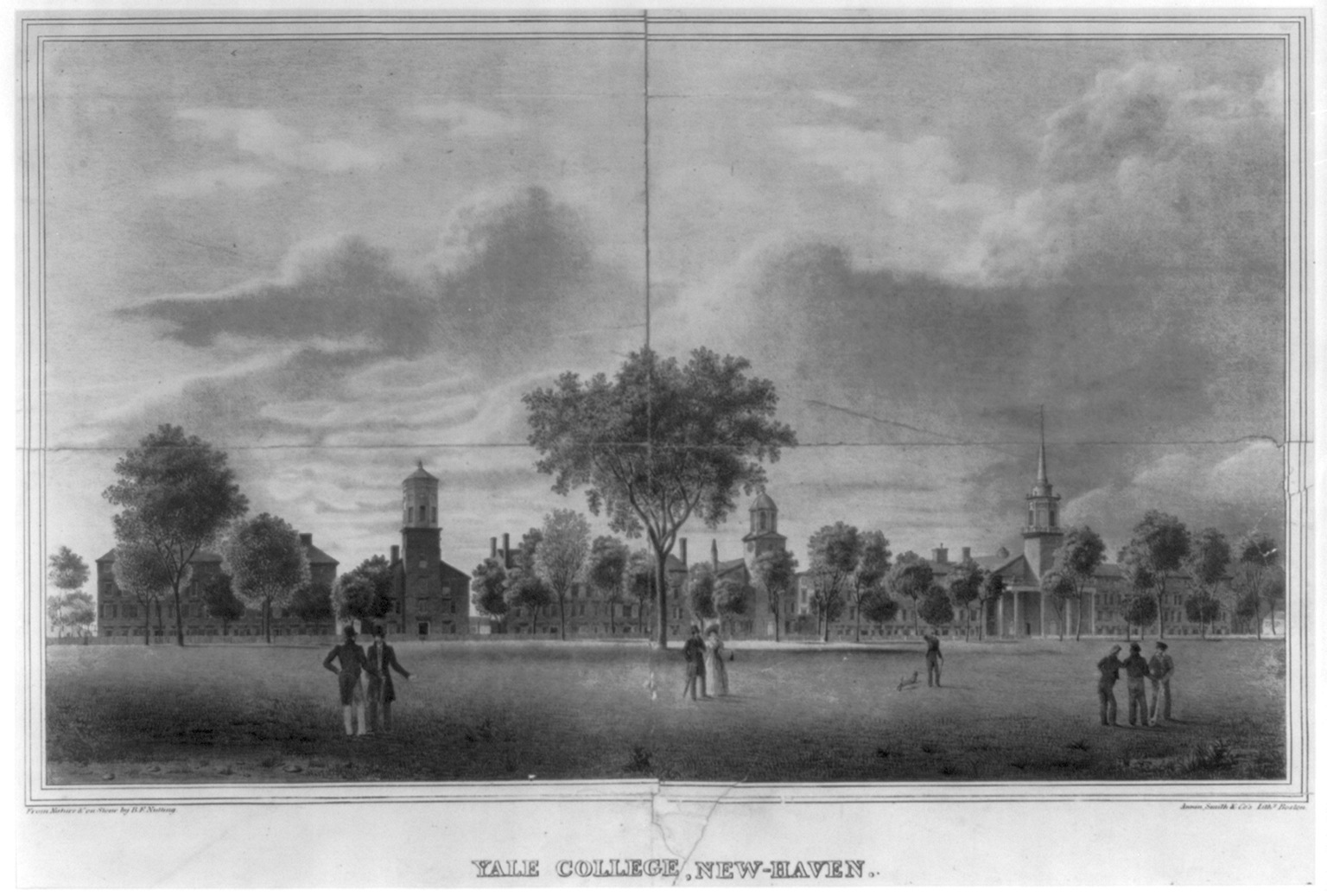
Samuel Bulkley Ruggles graduated from Yale in 1814, at fourteen or fifteen years old. Born in New Milford, Connecticut, and raised in Poughkeepsie, he had entered the college’s senior class the previous August. His father, Philo, was a lawyer; Samuel followed him into the profession and established a practice in New York in 1821.
The next year he married Mary Rosalie Rathbone. They would have three children: John Rathbone, Ellen Caroline and James Francis. The young family’s fortunes became tied to a city expanding northward, where old farms were being divided into streets and building lots.
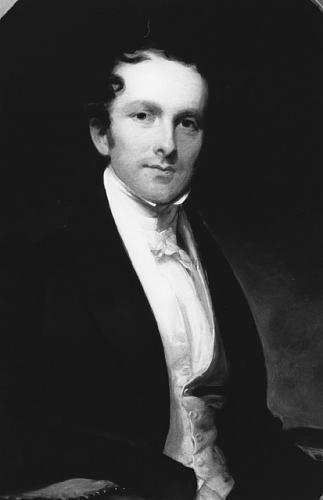
Augustus R. Macdonough, writing after Ruggles’s death for the Century Association, recalled a companion whose conversation could fascinate even people who did not share his excitement. He “belonged, if ever human spirit did belong, to the future.”
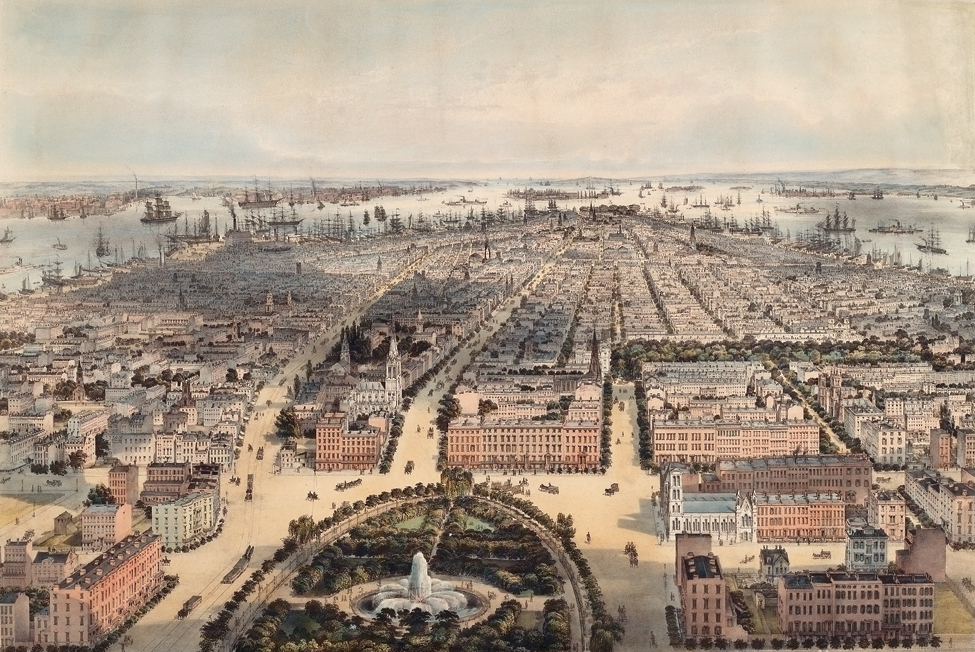
The city offered ample material for such a temperament. The Commissioners’ Plan of 1811 had laid a grid across Manhattan’s farms and country estates, with relatively little space for neighborhood squares. Buying land in the path of those streets offered the prospect of profit. Ruggles went further: he would alter the streets themselves and make a garden the reason people wanted to live beside them.
A hill, a swamp and a garden
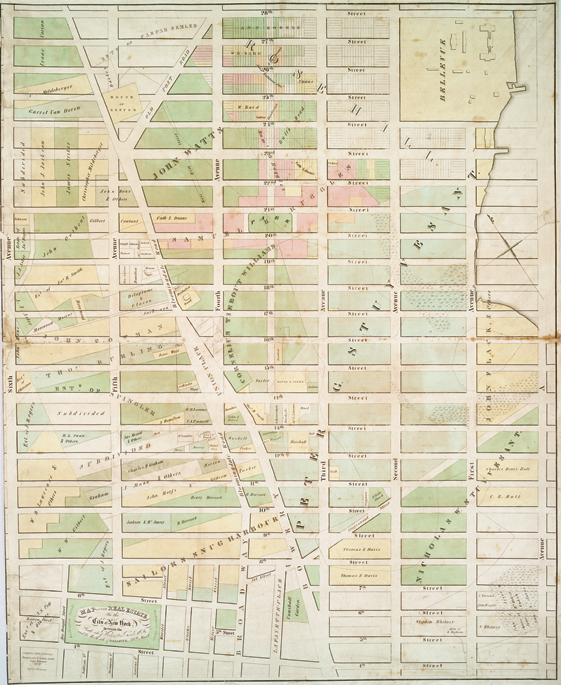
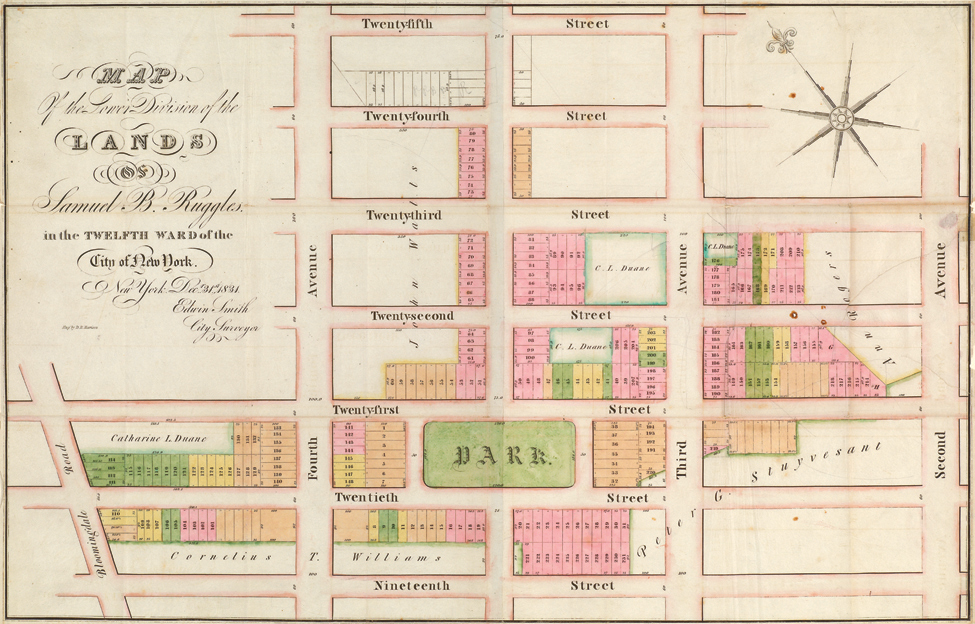
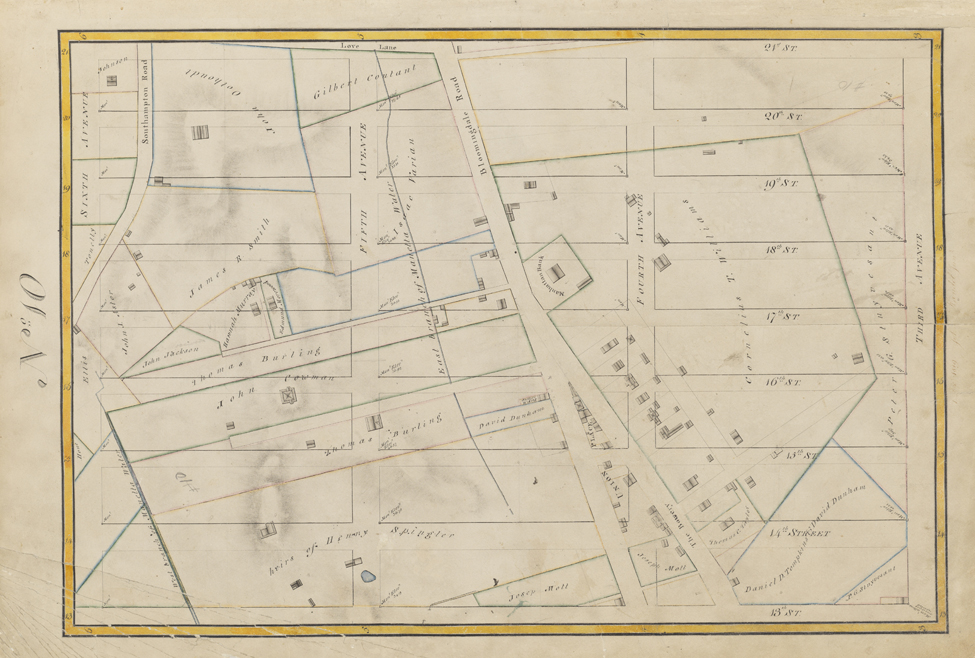
In 1831, Ruggles acquired part of the old Duane estate, known as Gramercy Seat. James Duane had been New York’s first mayor after the Revolution; his heirs’ property still bore the awkward shapes of an older landscape. On the surviving survey, long, narrow holdings cut across the city’s proposed blocks. Before Ruggles could offer attractive building lots, he had to buy, exchange and combine pieces of ground.
He also had to change the ground itself. Between the property and the built-up city stood the Bowery Hill, some twenty feet above street level. Beyond lay marshy land. Ruggles acquired both and moved the hill into the low ground. Charles King’s contemporary account estimated three million loads of earth, costing $180,000, across the larger development of more than fifty acres. The quiet rectangle we know was part of an enormous exercise in reshaping the landscape.
At its heart he reserved ground that could otherwise have held buildings. A garden would give the surrounding houses light, air and a view—and make the lots more desirable. The founding deed was explicit about that connection. Gramercy combined a gift of open ground with a real-estate proposition: the land around the garden would benefit from having the garden there.
On December 17, 1831, Samuel and Mary conveyed forty-two lots, including the Park’s approaches, to five trustees. The essential arrangement was simple. The trustees would hold the garden; the neighboring properties would enjoy its use and pay for its care. The right belonged to the property and could pass to the next owner. A second deed in 1833 secured that continuing relationship.
The restrictions show the neighborhood he had in mind. The garden was to remain free of buildings. Around it, the deed called for substantial brick or stone houses and excluded such neighbors as slaughterhouses, breweries, tanneries and livery stables. The purchase offered a measure of certainty about what might appear across the fence—or next door.
A city guide of 1833 compared the intended garden to London’s private squares. Ruggles had adapted that familiar idea to Manhattan, then used his legal training to make it survive the sale of his lots. Long before the trees were mature, he had arranged who would look after them.
The founding deed in detail
The original trustees were Charles Augustus Davis, Thomas L. Wells, Robert D. Weeks, Thomas R. Mercein and Philo T. Ruggles. The deed acknowledged ten dollars in consideration. The full parcel measured 520 feet east–west by 184 feet north–south, including walks and carriageways; the enclosed garden’s permitted length was between 400 and 420 feet.
An iron fence on stone coping, with ornamental gates, was required by May 1, 1833, and walks, trees and shrubs by January 1, 1834. These were the deed’s deadlines. Within forty feet of the surrounding property fronts, permitted houses had to be brick or stone and at least three stories high.
The numbered lots, 1 through 60, each carried one-sixtieth of the trustees’ lawful expenses, including maintenance and taxes. Six additional parcels, lettered A through F, were reserved for possible streets. They were not additional maintenance shares. Access extended to the owners, their families and tenants. The confirmatory deed of December 24, 1833, secured the garden easements for succeeding owners.
Read the original founding deed for its full terms.
Room for a growing city
Ruggles’s garden also required better ways to reach it. Third and Fourth Avenues were separated by unusually long blocks. He promoted a new route through their middle: Irving Place would approach from the south, and Lexington Avenue from the north.
There was a difficulty. The avenue authorized in 1832 threatened to run straight through his garden. His memorandum of July 12, reproduced here, shows him working through the problem at the scale of a curb and a crossing. An unbroken sidewalk along the southern edge would make Irving Place end at the Park. He hoped that the arrangement would help persuade officials to leave the garden intact.
He needed streets to make his property accessible, but a continuous street would undo the square. Lexington Avenue opened north of the Park in 1835. Today the two approaches still offer a view of the garden while sending traffic around it.
Ruggles named Irving Place for Washington Irving and Lexington Avenue for the Revolutionary battlefield. Charles King, his admiring contemporary, noticed that he had passed up the opportunity to put his own name on either street. Gramercy, too, kept the name of the old estate.
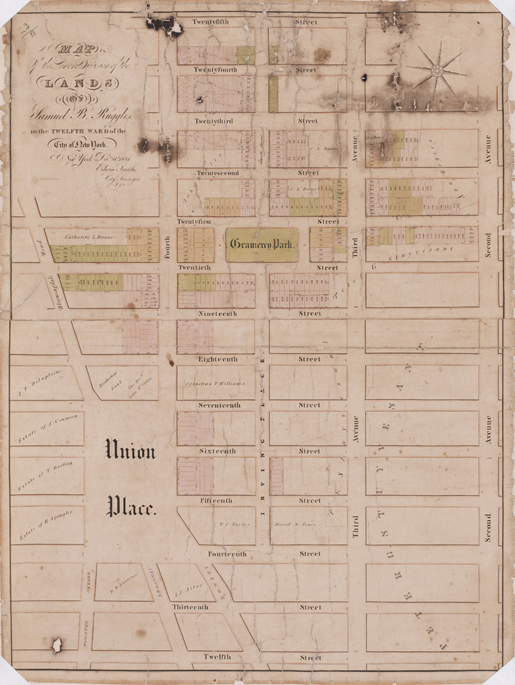
His work reached southwest to Union Place, an awkward junction of roads already marked on the city’s plan. In 1830, he joined other property owners in petitioning for its improvement. Authorization followed in 1831, and enlargement and landscaping began in 1832. The resulting public square offered a different kind of space from private Gramercy, but both gave the growing district room to breathe.
He paid as well as petitioned. Assessments for Union Square reached properties as far away as Gramercy, where he owned many lots. His investments and his enthusiasm for the city were closely intertwined.
King preserved a conversation during a walk around Union Square with the Rev. Dr. Hawks. Ruggles pictured towers and palaces crumbling while the open ground remained:
“space—free, glorious, open space—will remain to bless the City forever!”
Samuel B. Ruggles, as recalled by Charles King in 1851
Hawks supplied the reply often associated with Gramercy: “Man makes buildings, but God makes space.” Ruggles had made it his business to ensure that a few pieces of Manhattan stayed unbuilt.
At home in Union Square
For all his association with Gramercy Park, Ruggles made his home beside Union Square. After building a house at 36 Bond Street in 1833, he moved uptown to 24 Union Place, where an inventory of his books survives from 1842. The two squares he had helped shape were now his own neighborhood.
Gramercy took longer to become the place he had imagined. The Panic of 1837 slowed building. In November 1844, its trustees engaged James Virtue to plant a thousand privets and a hundred trees. Thirteen years after the founding deed, the garden was still acquiring its hedge and shade.
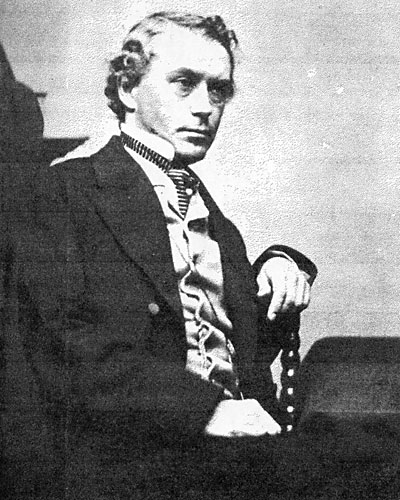
On May 15, 1848, Ellen Caroline Ruggles married George Templeton Strong, a lawyer and prodigious diarist. It was her parents’ twenty-sixth wedding anniversary. Ellen and George made their home on the north side of Gramercy Park, just west of Lexington Avenue, a short walk from Samuel and Mary at Union Square.
In his diary, Strong recorded an evening visit on May 25, 1850. He was taking tea at the Ruggles house when Samuel was called into the hall. He soon summoned his son-in-law. A traveler returning from California had brought news of John, Samuel and Mary’s eldest son: he had died aboard ship nineteen days earlier, on his way home after illness. That night, Mary and Ellen learned of his death.
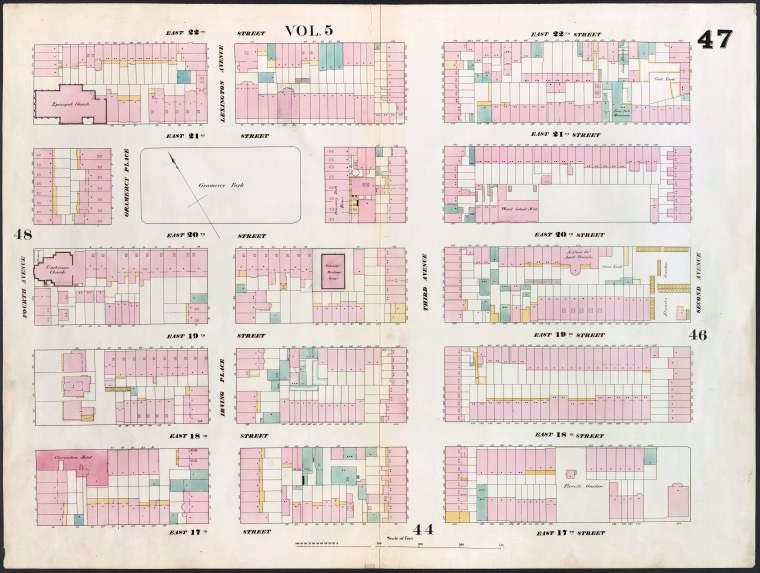
On the map today: Where Ruggles and the Strongs lived
The family’s two households were a short walk apart. Here is where to look in today’s neighborhood:
The Strongs: north of the Park, west of Lexington Avenue. Ellen and George’s address was 74 East Twenty-first Street, later 113. That parcel became part of the Gramercy Park Hotel’s westward expansion: the hotel company acquired 111–113 and 115 East Twenty-first Street in 1928. The landmark to look for today is 50 Gramercy Park North, which incorporates the former hotel annex, beside the corner hotel at 2 Lexington Avenue.
Ruggles: Union Square East, near East Fifteenth Street. His home at 24 Union Place was also recorded as 24 Union Square, on the square’s east side between East Fifteenth and East Sixteenth Streets. His house faced the public square he had helped improve; Ellen and George lived beside the private garden he had founded. His former stable was nearby at 103 East Fifteenth Street.
A fortune under strain
Ruggles had built his career on the expectation that New York would grow. In the Assembly in 1838, he urged borrowing against future canal revenues to speed improvements. Better transport would bring more traffic, he argued, and that traffic would help pay for the work. As with his streets and building lots, the investment had to come before the return.
He served as a canal commissioner from 1839 to 1842 and briefly again in 1858.
In 1851, creditors demanded money he could not produce. He had borrowed heavily for investments that included warehouses at Brooklyn’s Atlantic Docks, developed with Edward Curtis. Valuable property was not the same as cash in hand. At Union Square, Strong watched his father-in-law suffer over the losses his failure might inflict on others.
Strong thought his father-in-law’s optimism had led him into the crisis, and his excessive amiability kept him from firmly rebutting accusations against his honesty. Strong rejected those accusations.
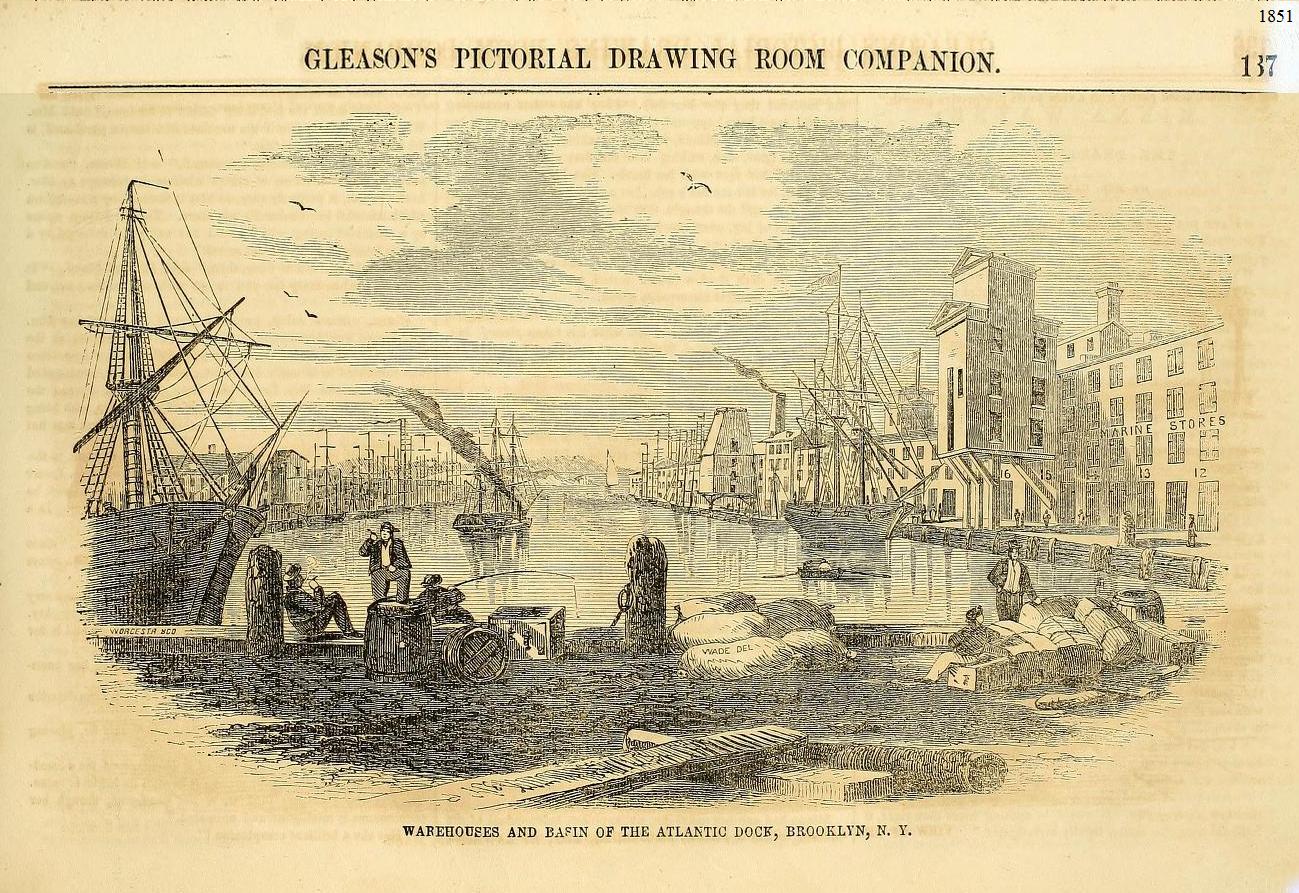
By July, Ruggles had taken an office, put up a tin sign, advertised and resumed practicing law. In December, Charles King publicly defended his friend. Ruggles could have sought quicker returns from cheaper buildings and temporary uses of his indebted land around Gramercy and Union Square, King said. He had held to the neighborhood he wanted to create.
The financial story did not end in 1851. In May 1853, Strong attended a settlement with a major creditor’s estate. The account was settled in full, and the warehouses were transferred back under an arrangement Strong helped finance with a $5,000 second mortgage. It was a recovery of property still carrying debt, with his son-in-law’s money now tied up in it.
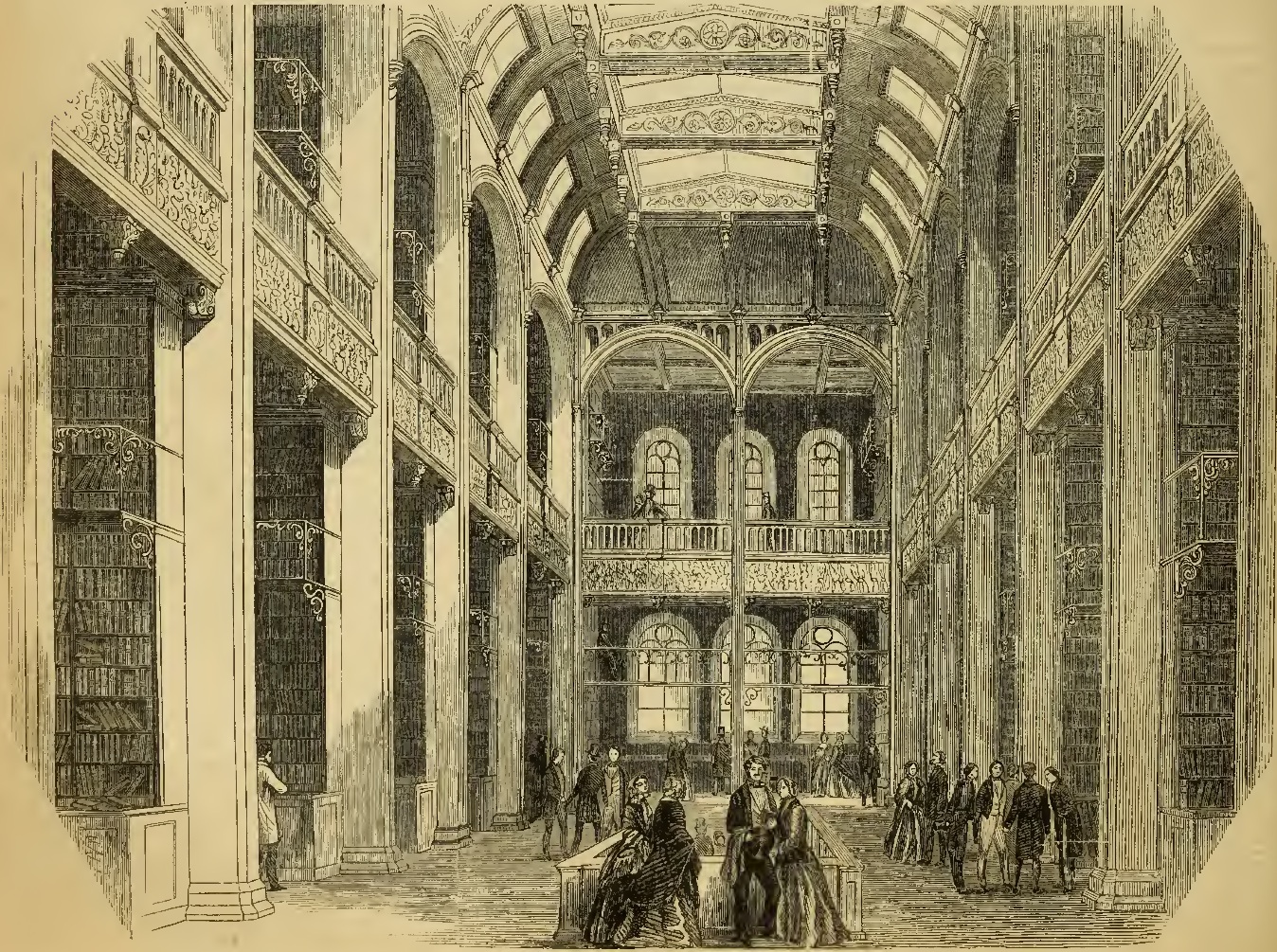
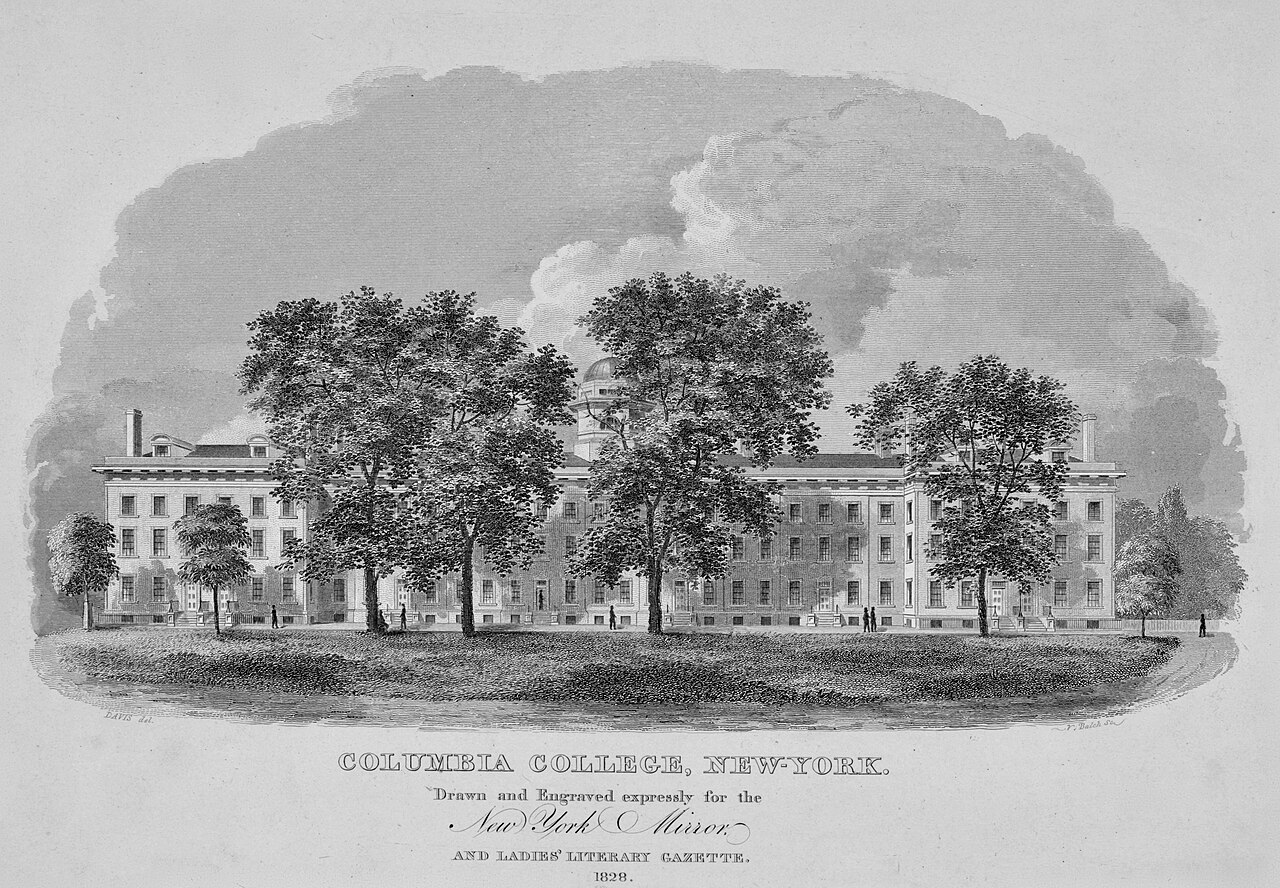
Public commitments continued through these upheavals. Ruggles was an original trustee of the Astor Library, which opened its reference collections free to the public in 1854 and would eventually become part of the New York Public Library. He had also been a Columbia trustee since 1836. There, a disagreement over a scientist’s religion was about to test how far he would go in arguing with his colleagues.
A man prepared to make his case
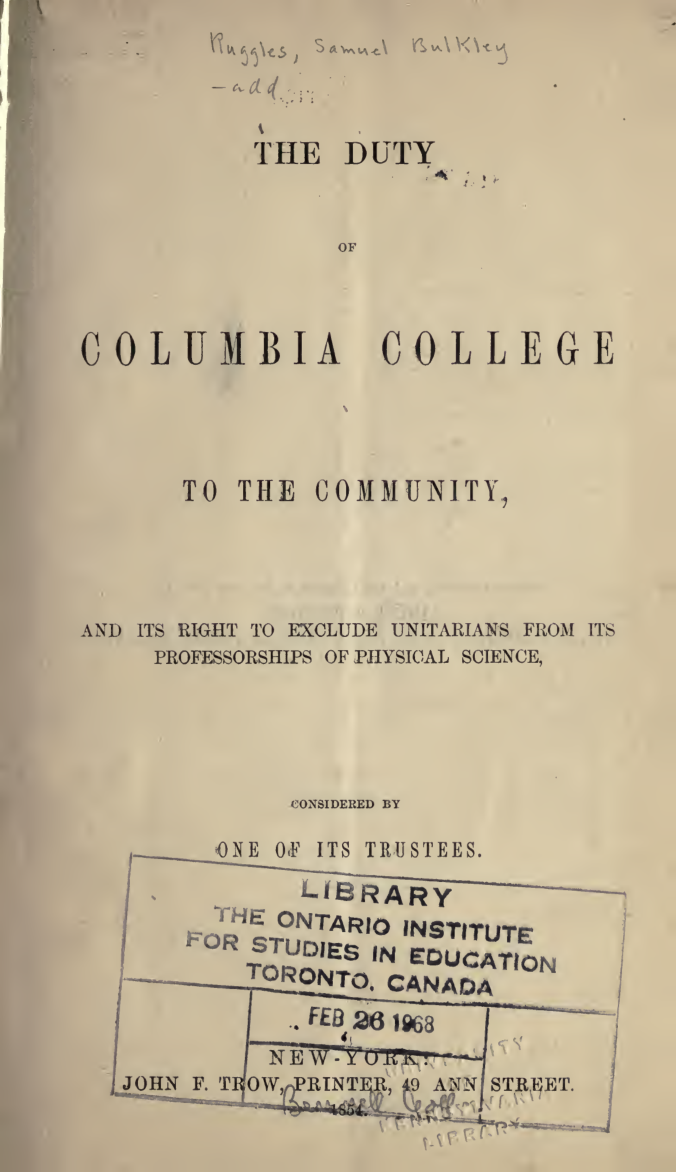
Wolcott Gibbs was a chemist and a Unitarian. In 1854, his beliefs became an obstacle to an appointment at Columbia. Ruggles, himself an Episcopalian, took up his cause. The college’s obligation, he argued, was to secure the strongest scientific teaching it could. A candidate’s religious differences should not disqualify him.
He first made his case in a letter to a fellow trustee. The reply was distinctly unwelcoming: according to Ruggles’s account, the recipient could not see why the argument applied to him, why it had been addressed to him, or what its object was. Ruggles answered by printing it for the other trustees. Their responsibilities were public, he insisted, and open to discussion.
His pamphlet joined the defense of Gibbs to a larger demand that Columbia take science seriously. He lost the immediate battle: Gibbs was rejected.
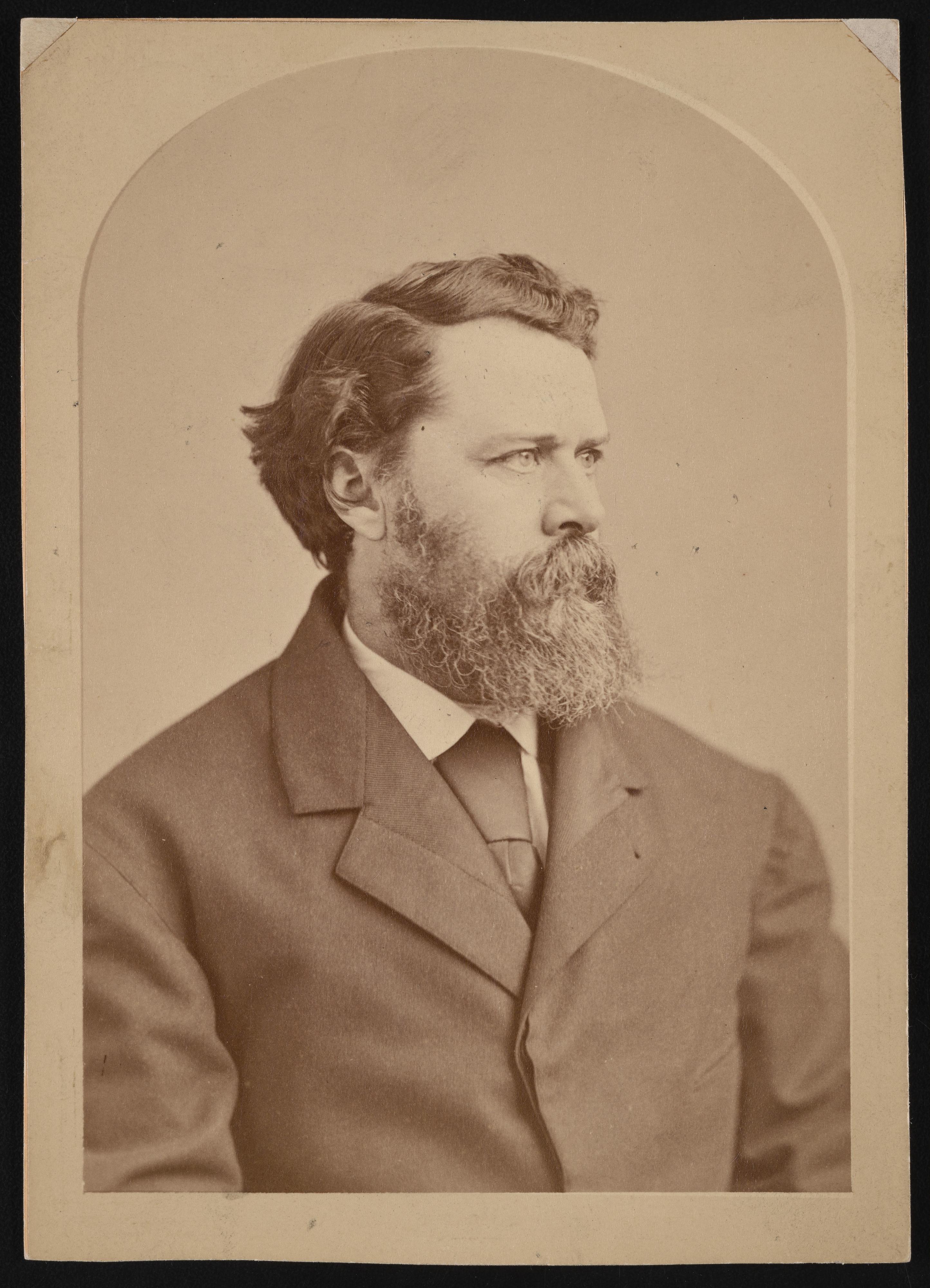
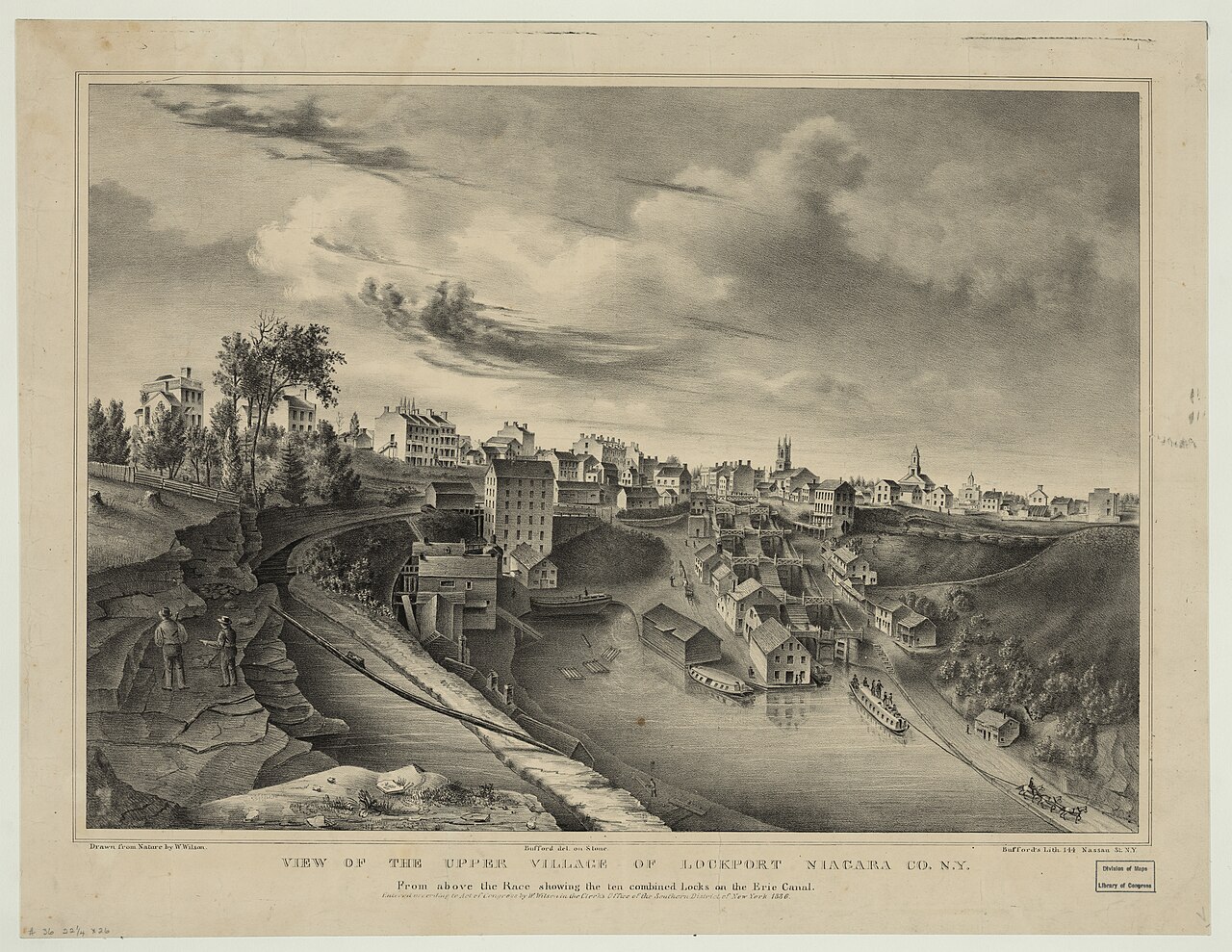
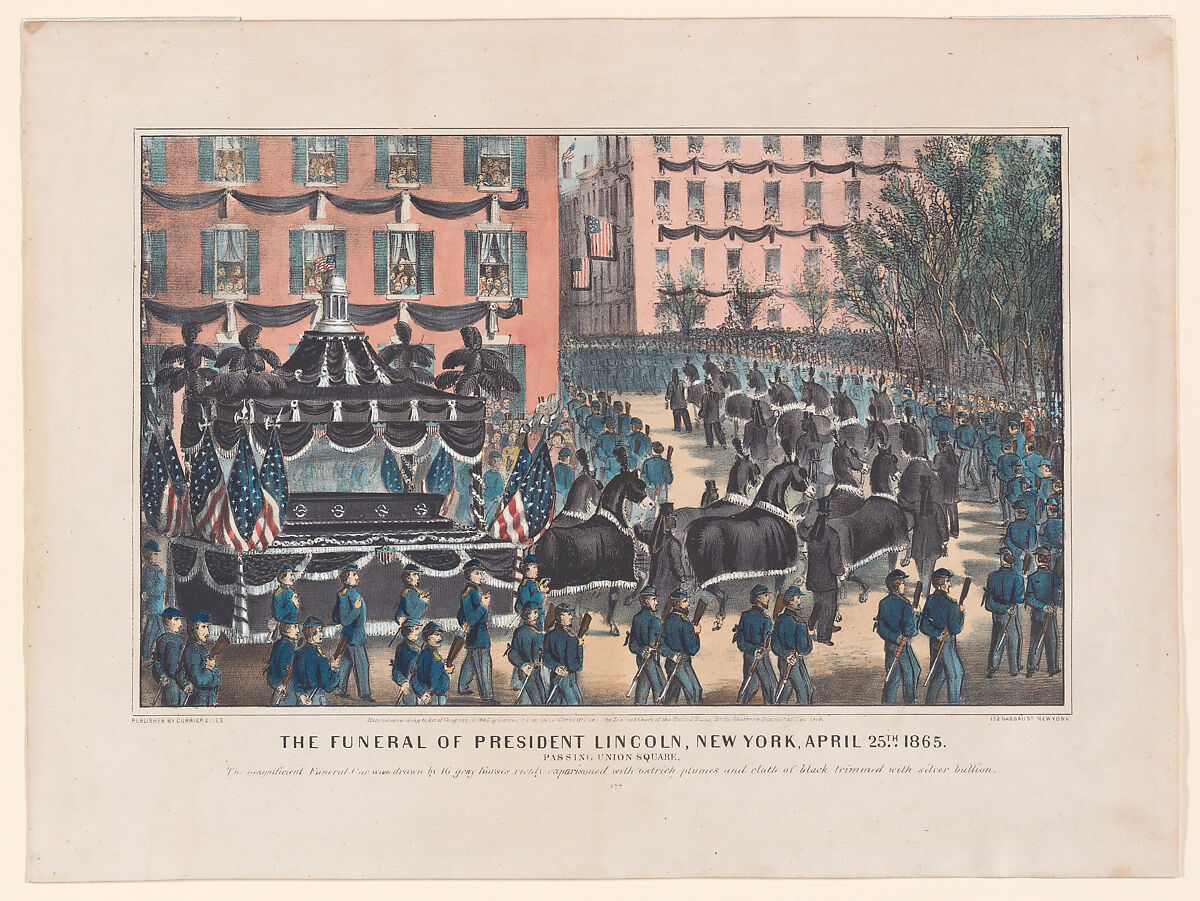
In January 1860, Ruggles fell seriously ill while away on railroad business and stayed at Governor Washington Hunt’s home in Lockport. Mary prepared to join him; the family waited anxiously for telegrams. By the end of February, he was back at Union Square. Strong visited twice in one day and found him “full of life and vigorous thought,” already absorbed in another proposal involving church and politics.
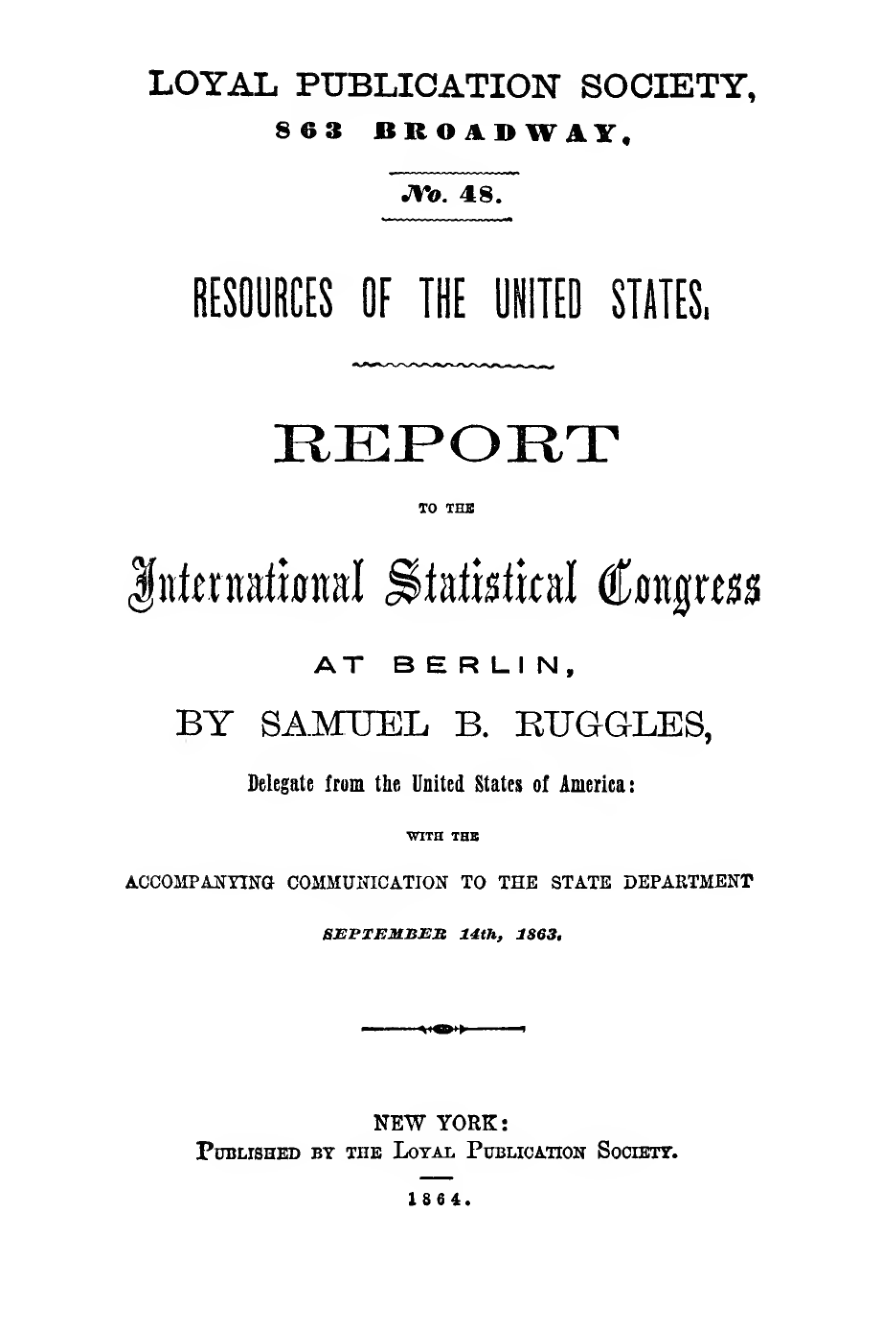
Ruggles arrived at the international statistical congress in Berlin in September 1863 after a fog-delayed Atlantic crossing. A committee discussing the metric system had listed the Confederate States separately in its report. Representing the United States, he objected: those states remained part of the Union. The committee changed its wording.
The war gave his statistics a political purpose, too. His report described American population, agriculture and mineral resources for a European audience. While the country fought over its survival, Ruggles was making a case abroad for its strength and prospects.
Paris and The Hague: two later missions
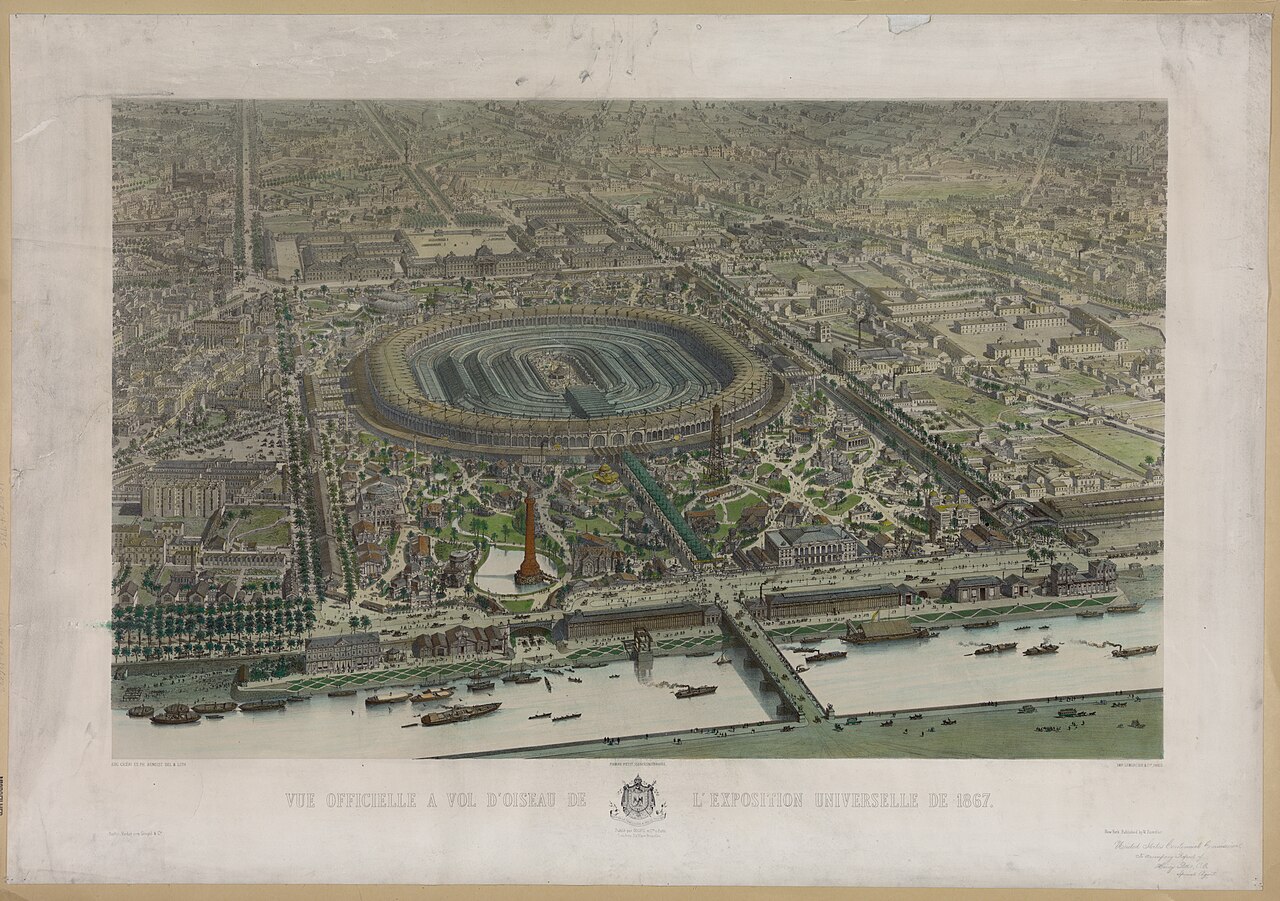
At Paris in 1867, Ruggles advocated compatible gold coinages to ease international exchange. The scheme never became a universal system. At The Hague in 1869, he sought agricultural figures that countries could compare, including grain measured by weight rather than volume.
“Go ahead”
In 1875, his grandson John Ruggles Strong placed a stone tablet in the pavement before Gramercy Park’s western gate. It named the founder and recalled his gift of 1831.
The following year, Ruggles attended every lecture in a series given at Columbia by the young scholar John W. Burgess. He was about seventy-five. According to Burgess’s later memoir, he then spent months helping persuade him to join the college.
Mary died in 1878, after more than half a century of marriage. In the spring of 1880, Burgess was still visiting Ruggles at the house on Union Square.
On April 5, Burgess arrived with a problem: history, politics, economics and public law had too little room in the college. He had considered proposing a separate school but hesitated. Ruggles listened, then said they would have to found one.
Burgess went home and worked through the night on a plan. Ruggles carried it to the trustees, who approved the School of Political Science on June 7. Burgess was in Paris, studying a model for the new institution, when a cable arrived at about five the next morning. His memoir preserves the message:
“Thank God, the university is born. Go ahead.”
Samuel B. Ruggles to John W. Burgess, June 1880, as recalled by Burgess
Ruggles was about eighty when he sent it. He suffered a stroke in June 1881 and died on Fire Island on August 28. Nearly fifty years had passed since he and Mary signed the Gramercy deed. The garden was no longer a promise on a plan; it stood among houses whose occupants had grown accustomed to looking out on it.
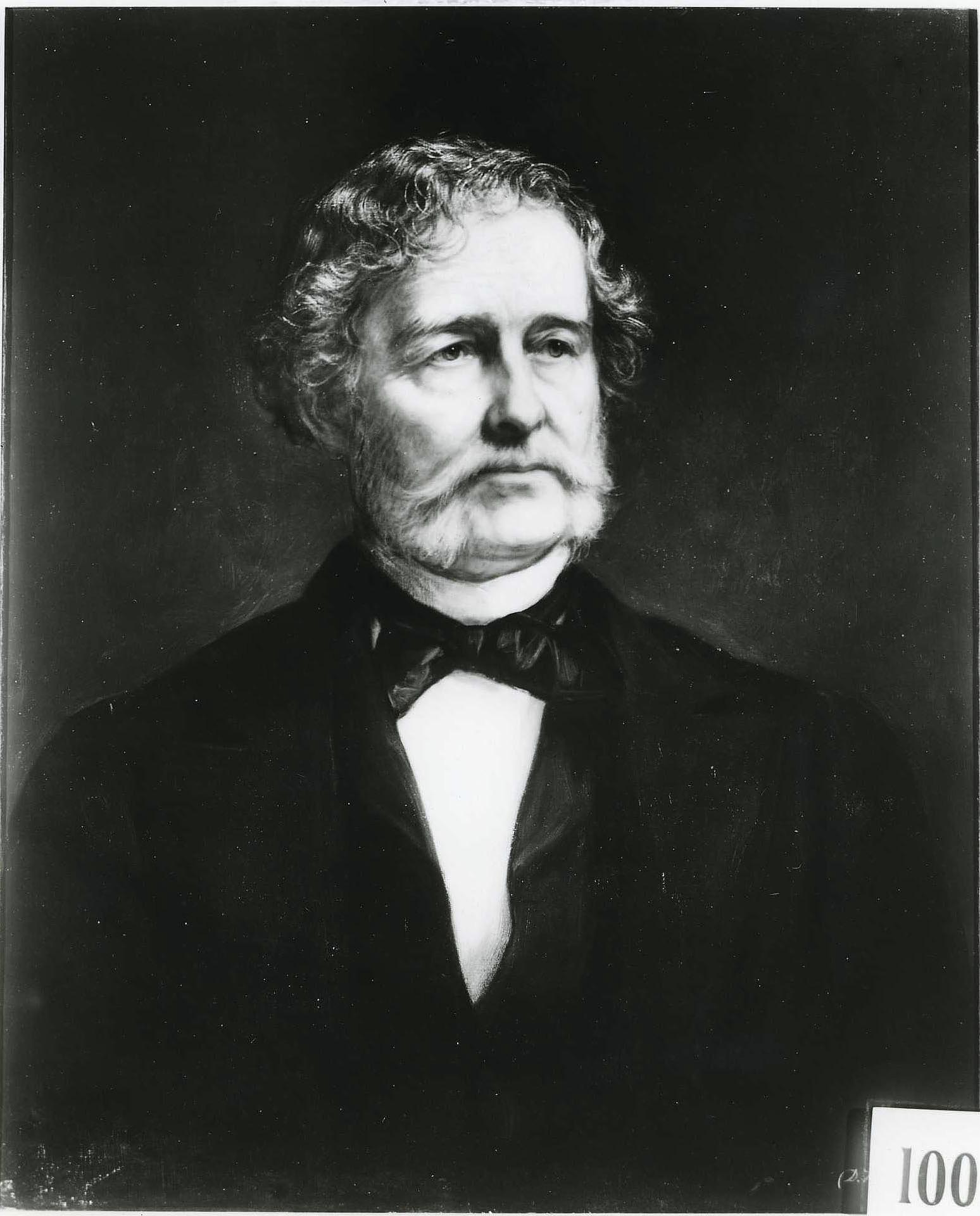
The man at the western fountain
The shortcut Ruggles had worried about in 1832 kept tempting his successors. A cable-railway proposal threatened Gramercy Park in 1890; an extension of Irving Place through the garden followed in 1912. Opposition from trustees and residents helped preserve the open ground. Ruggles’s legal arrangements mattered, but so did the people prepared to defend them.
His grandson John Ruggles Strong gave the memorial fountain at the garden’s western end. By 1921, Edmond T. Quinn’s bronze portrait of Ruggles stood above the basin and pedestal designed by Charles I. Berg. Quinn had also sculpted the Park’s Edwin Booth statue. The fountain’s history and restoration tell the later story of that family gift.
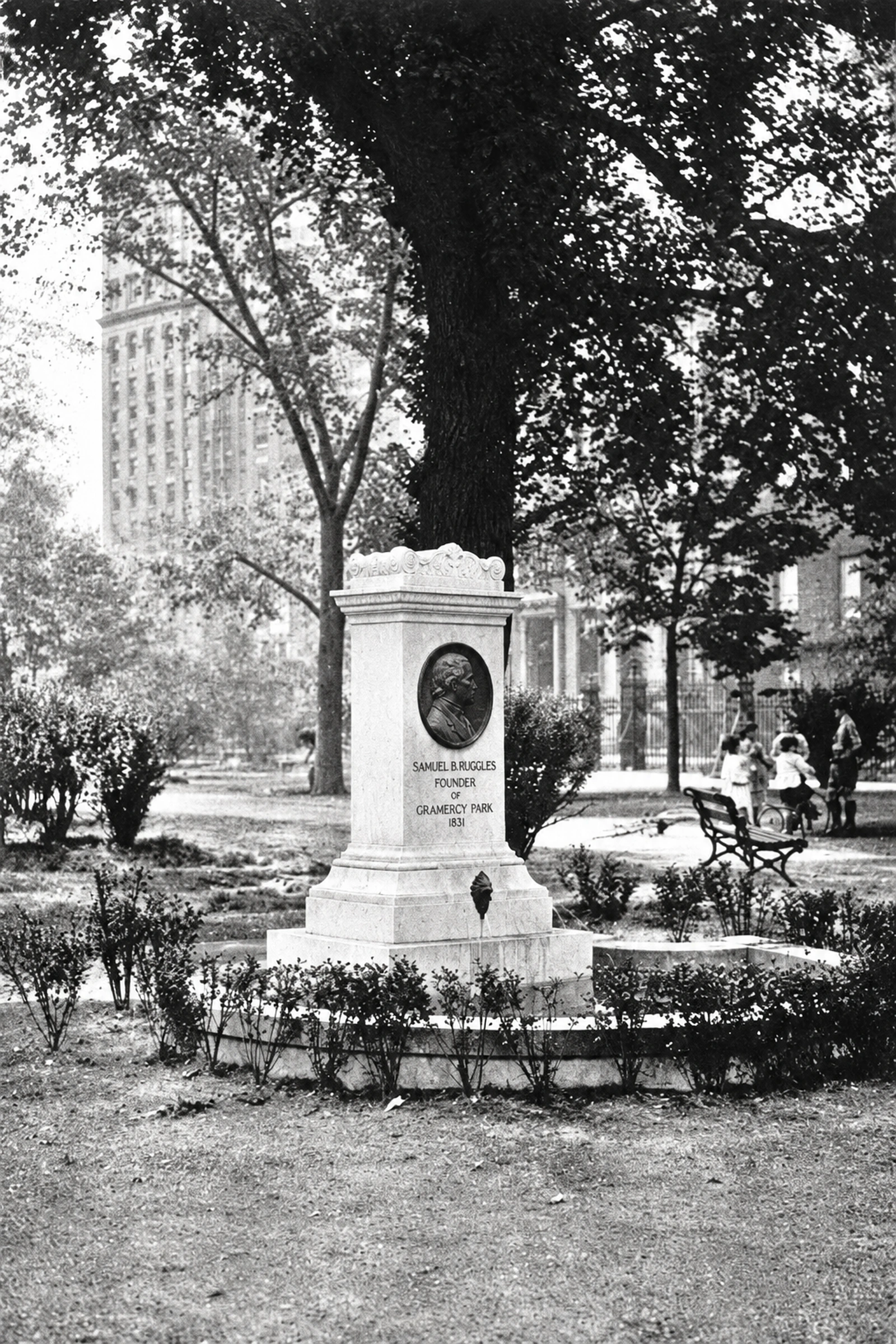
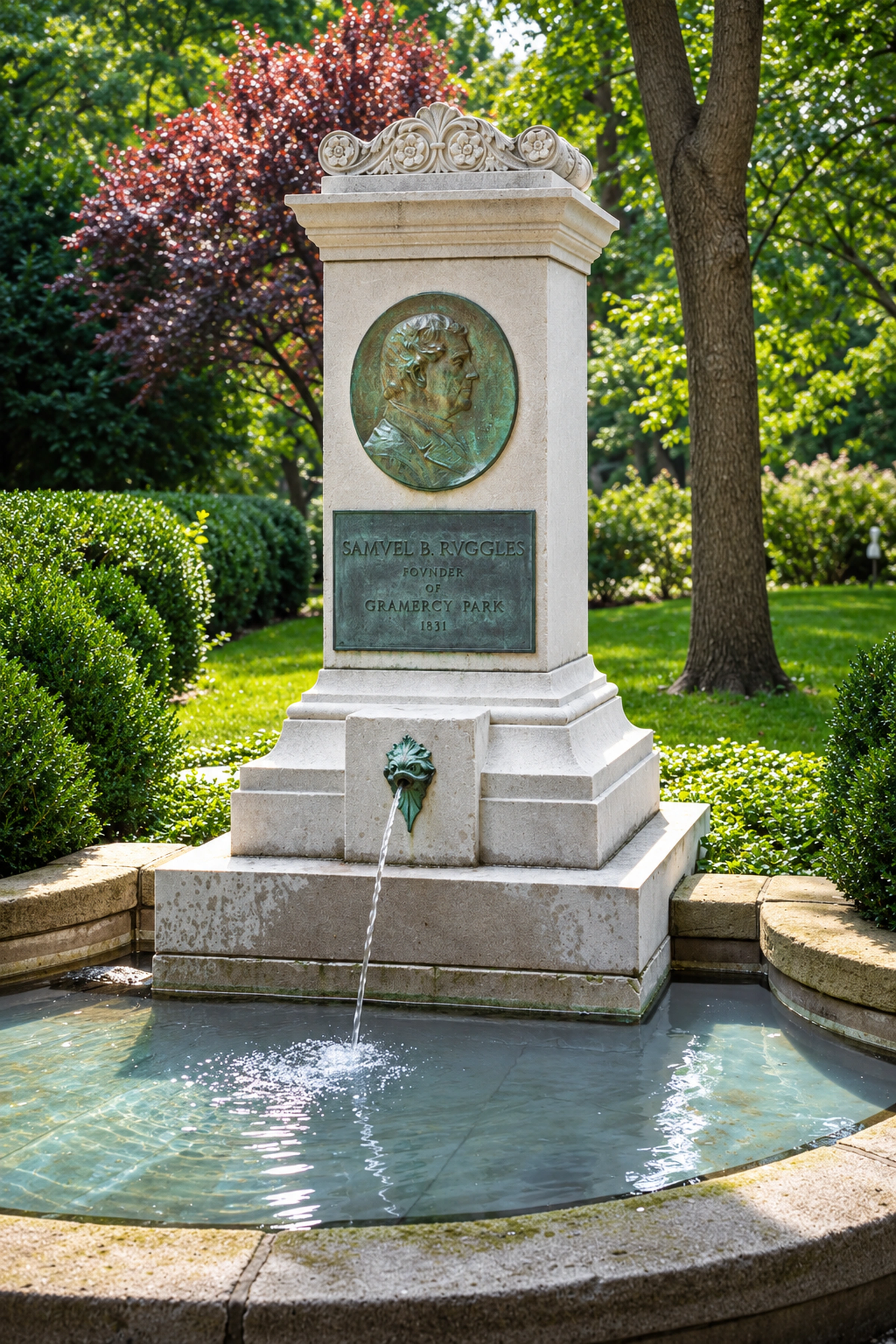
To find his work, walk to the end of Irving Place. The street stops at the garden, and the traffic turns. Behind the fence, trees occupy ground on which he could have built houses. Nearly two centuries after Ruggles considered that sidewalk, you can still see what he was trying to do.
Life at a glance
- Full name
- Samuel Bulkley Ruggles
- Known for
- Establishing Gramercy Park’s trust in 1831 and shaping its surrounding streets; a wider career in transport, education and international affairs.
- Education
- Entered Yale’s senior class in August 1813; graduated in 1814.
- Family
- Married Mary Rosalie Rathbone in 1822. Three children: John Rathbone, Ellen Caroline and James Francis.
- New York homes
- 36 Bond Street, then 24 Union Place, near Union Square.
- Public service
- New York State Assembly, 1838; canal commissioner, 1839–42 and briefly in 1858; Columbia trustee, 1836–81.
- Gramercy connection
- Samuel and Mary Ruggles executed the founding conveyance on December 17, 1831: forty-two lots for the Park parcel and its approaches, with upkeep charged to sixty numbered surrounding lots.
- Died
- August 28, 1881, on Fire Island.
Sources cited
This profile draws on Ruggles’s own publications, the founding deed, contemporary recollections, institutional records and later historical scholarship.
- The sidewalk memorandum. Samuel B. Ruggles, memorandum and sketch, July 12, 1832, Samuel B. Ruggles papers, New York Public Library. Reproduced and interpreted in the Museum of the City of New York’s The Greatest Grid, image 15.
- Family, education and death. Yale, Obituary Record of Graduates, June 1882, printed pp. 63–64, class of 1814. The obituary gives April 11, 1799; NYPL, the Century Association and other accounts give April 11, 1800. Strong’s diary records Ruggles’s sixtieth birthday on April 11, 1860 (vol. III, p. 20), supporting the latter date.
- The personal and business archive. Jim Moske, Samuel B. Ruggles Papers, 1801–1881: Finding Aid, New York Public Library, 2000; biographical note and collection inventory. Documents the family, the 1851 financial crisis and surviving personal materials. Strong’s diary supplies the subsequent 1853 warehouse settlement.
- Assembling Gramercy. Edwin Smith, property plan, December 31, 1831, engraved by D. R. Harrison; NYPL. MCNY, The Greatest Grid, image 13, explains the map’s irregular boundaries and land exchanges. The wider plan, image 14, shows the relationship to Union Place. The exhibition also supplies context for the Commissioners’ Plan.
- A contemporary portrait of the improver. Charles King, Progress of the City of New-York, During the Last Fifty Years (1852), pp. 60–65; lecture delivered December 29, 1851. The Union Square conversation appears on printed p. 62. It is undated and reported by an admiring friend. Hawks, not Ruggles, speaks the line about God making space. King’s estimates of three million loads, $180,000 and more than fifty acres concern the wider development, not the garden alone. Pine reproduces this account in his history. On pp. 64–65, King explicitly defends his friend after the 1851 financial crisis, including his resistance to cheaper uses of the indebted Gramercy and Union Square land.
- The founding instrument. Indenture of Samuel B. and Mary R. Ruggles to the Trustees of Gramercy Park, December 17, 1831, reproduced on the GPBA website. The original language supplies the five trustees’ names, ten-dollar consideration, 520-by-184-foot parcel, enclosure and planting deadlines, sixty numbered maintenance shares, six lettered lots, access and building conditions. The property-value purpose is explicit.
- The garden’s early development. John B. Pine, The Story of Gramercy Park, 1831–1921 (1921), especially the discussion of the first recorded trustees’ meeting in 1844. Also used for the Duane estate, the name’s derivation, the suggested London parallel, street names, the 1875 western-gate tablet, the two end fountains designed by Charles I. Berg, John R. Strong’s gift, Edmond T. Quinn’s portrait medallion, early planting and maintenance, and the later railway, subway and tax disputes. References are to Pine’s original text, distinguished from modern introductory material.
- Union Square. MCNY, The Greatest Grid, image 8, on the 1830 property-owner petition, 1831 authorization and 1832 work; and image 9, the 1849 view. Ruggles’s role is distinguished from the square’s earlier existence and later redesigns. The exhibition’s Gramercy Park view, image 16 places the neighborhood’s growth in the context of the Panic of 1837 and the recovery of the later 1840s.
- The canal policy in context. Noble E. Whitford, History of the Canal System of the State of New York (1906), chapter III, and chronological summary. Prepared for the state’s engineering administration; establishes the enlargement’s authorization, borrowing, stoppage and completion.
- Ruggles’s offices and canal argument. “Ruggles, Samuel Bulkley,” Appletons’ Cyclopædia of American Biography, vol. 5 (1888), pp. 343–344, transcribed by Irwin Collier; checked against Yale’s obituary for the 1839 appointment. Appletons dates active canal service from 1840 through 1842 and records the separate 1858 term. Its Assembly date is mistranscribed as “1888” on the transcription page; the correct year is 1838. Ruggles’s original 1838 report, especially printed pp. 38–41, distinguishes the hypothetical forty-million-dollar borrowing calculation from a recommendation to make all the listed investments.
- Columbia and the Gibbs controversy. Samuel B. Ruggles, The Duty of Columbia College to the Community, and Its Right to Exclude Unitarians from Its Professorships of Physical Science (1854), opening Note and especially printed pp. 11–17 and 24. Columbia’s 250th-anniversary historical timeline confirms Gibbs’s rejection. The university’s history of Columbia and New York City documents the campus move in May 1857.
- The School of Political Science. John W. Burgess, Reminiscences of an American Scholar (1934), pp. 150–153, 187–195; trustees’ resolution, June 7, 1880; and Joseph Dorfman, “The Department of Economics,” in A History of the Faculty of Political Science, Columbia University (1955), pp. 169–172. Transcriptions and source references collected by Irwin Collier. The recruitment of Burgess, April 5, 1880 home conversation and June cable are attributed to Burgess’s retrospective memoir.
- Berlin, 1863. Samuel B. Ruggles, Resources of the United States: Report to the International Statistical Congress at Berlin, presented September 11, 1863; Loyal Publication Society edition, 1864. Includes the transmittal letter and the statistical report.
- The diplomatic incident. Norman Judd to William H. Seward, September 9, 1863, Foreign Relations of the United States, 1863, part II, document 339; Office of the Historian, U.S. Department of State.
- Paris and monetary coordination. Ruggles to Seward, November 7, 1867, Foreign Relations of the United States, 1867, part I, document 313. For the conference’s limits and failure to reassemble, see the contemporary “Paris Monetary Conference,” in Lalor’s Cyclopaedia, reproduced by Econlib.
- The Hague and comparable statistics. Samuel B. Ruggles, Internationality and International Congresses (1871), report on the 1869 congress, especially printed p. 72 for the adopted agricultural-statistics resolutions.
- Bond Street and Union Place. Sara Mascia, Historical Perspectives, Inc., Stage 1A Archaeological Assessment: 32–40 Bond Street, Manhattan, New York (January 2003), printed p. 13 (PDF p. 17), property history of 36 Bond Street; read alongside NYPL’s inventory of books at 24 Union Place in 1842. The report’s narrative and land-transfer appendix disagree on the sale year.
- A friend’s recollection. Augustus R. Macdonough, memorial in the Century Association Reports (1882), reproduced in the Century Association Archives member entry. A recollection of his character and family connections.
- The Astor Library. Astor Library Records, 1839–1911, New York Public Library Archives, collection history. Lists the original trustees, incorporation, public opening and eventual consolidation into NYPL.
- Remembering the founder in 1931. James Thurber, “Ruggles,” The New Yorker, print issue May 16, 1931. A short centenary portrait, used here for its observation about Ruggles’s remembered reputation. Its description of the Park as a gift to the city is superseded by the original deed.
- The grid’s dimensions and rationale. Gouverneur Morris, Simeon De Witt and John Rutherfurd, Remarks of the Commissioners, March 22, 1811, transcribed in MCNY’s The Greatest Grid. Explains the limited open spaces, block depths and 920-foot interval between Third and Fourth Avenues.
- The 1833 confirmation and later interpretation. People ex rel. Poor v. Wells, 139 A.D. 83 (1910), pp. 84–88. Reproduces the founding maintenance obligations and describes the confirmatory deed of December 24, 1833; distinguishes the value of the Park easements in surrounding properties from a separate assessment of the encumbered garden.
- A contemporary description of the planned garden. New-York as It Is, in 1833, printed p. 182. Describes Gramercy’s intended planting by comparison with London’s private squares and records Irving Place’s seventy-five-foot width and legislative establishment in 1832.
- The Strong family connection. Benjamin W. Dwight, The History of the Descendants of Elder John Strong (1871), vol. 1, printed pp. 635 and 639. Gives the May 15, 1848 marriage of Ellen Ruggles and George Templeton Strong, the May 15, 1822 marriage of her parents, and their son John’s death at sea on May 6, 1850. The author acknowledges Strong’s assistance with family particulars.
- The family and the financial crisis, in Strong’s diary. George Templeton Strong, The Diary of George Templeton Strong, edited by Allan Nevins and Milton Halset Thomas (1952), vol. II, The Turbulent Fifties. May 26, 1850, pp. 14–15, describes the previous evening’s news of John’s death; May–June 1851, pp. 43–54, records the financial crisis and Strong’s June 24 assessment of Ruggles’s temperament. The financial overview on p. 43 is the editors’ account. July 8, 1851, pp. 57–58, records his return to law; May 7, 1853, p. 124, records the settlement with Francis Griffin’s estate, reconveyance of the warehouses and Strong’s $5,000 second-mortgage contribution. Strong was an involved son-in-law, not a detached observer.
- Illness, recovery and a birthday. Strong, vol. III, The Civil War, January 17–22 and February 29, 1860, pp. 4–5 and 11–12, for Ruggles’s illness at Washington Hunt’s Lockport home, Mary’s intended journey and his recovery at Union Square; April 11, p. 20, for his sixtieth birthday.
- The neighboring households. Columbia College, Statutes (1866), printed pp. 7 and 9: Ruggles at 24 Union Square, George T. Strong at 74 East Twenty-first Street, and their membership on the School of Law committee. Historical addresses are given as printed. Columbia’s Catalogue of the Governors, Trustees, and Officers … from 1754 to 1870 (1871), printed p. 35, lists Strong at 113 East Twenty-first Street.
- Neighbors arriving over time. Pine on James Harper at No. 4, 1847–1869; Isabella Field Judson, Cyrus W. Field: His Life and Work (1896), chapter III, on the surroundings of his East Twenty-first Street house; the National Arts Club’s history of the Tilden mansion, documenting his 1863 purchase of No. 15.
- The Strong house site and the hotel annex. “Sage Foundation Buys,” The New York Times, December 11, 1928, records the hotel company’s acquisition of 111–113 and 115 East Twenty-first Street. John Pawson’s 50 Gramercy Park project record identifies the remodeled 1930 hotel annex as part of today’s 50 Gramercy Park North. Read together with Columbia’s address records, these sources connect the Strong household to the later annex site; they do not establish the exact outline of the nineteenth-century house.
- Union Square’s east side and the former stable. Joanna Merwood-Salisbury, Design for the Crowd: Patriotism and Protest in Union Square (University of Chicago Press, 2019), p. 34, places Ruggles’s house at 24 Union Place in the row between East Fifteenth and East Sixteenth Streets. New York City Landmarks Preservation Commission, Union Square Savings Bank designation report (1996), pp. 2–3, locates the neighboring houses at 20 and 22 Union Square East, beginning at East Fifteenth Street. New York Historical, Gramercy Neighborhood Associates Records, Series IV.A, Box 6, Folder 8, identifies photographs of Ruggles’s former stable at 103 East Fifteenth Street.
For a deeper archival study
Daniel Garrison Brinton Thompson’s Ruggles of New York: A Life of Samuel B. Ruggles (Columbia University Press, 1946) is a dedicated biography and a guide to further sources. The NYPL papers offer the next step for a closer reconstruction of the Atlantic Docks business and Ruggles’s private correspondence.
The New York Times review of Thompson’s biography, April 6, 1947, discusses Thompson’s biography.
Further reading and listening
On the GPBA website, “Samuel B. Ruggles’s vision for Gramercy” explores the neighborhood plan and its continuing care. It is a companion to this fuller biography.
The Bowery Boys’ “The Secrets of Gramercy Park” (2014) and Ruggles collection offer neighborhood context and walking-tour perspectives. The Wikipedia entry is useful as a starting point for references; biographical claims in this profile have been checked against the sources above.