
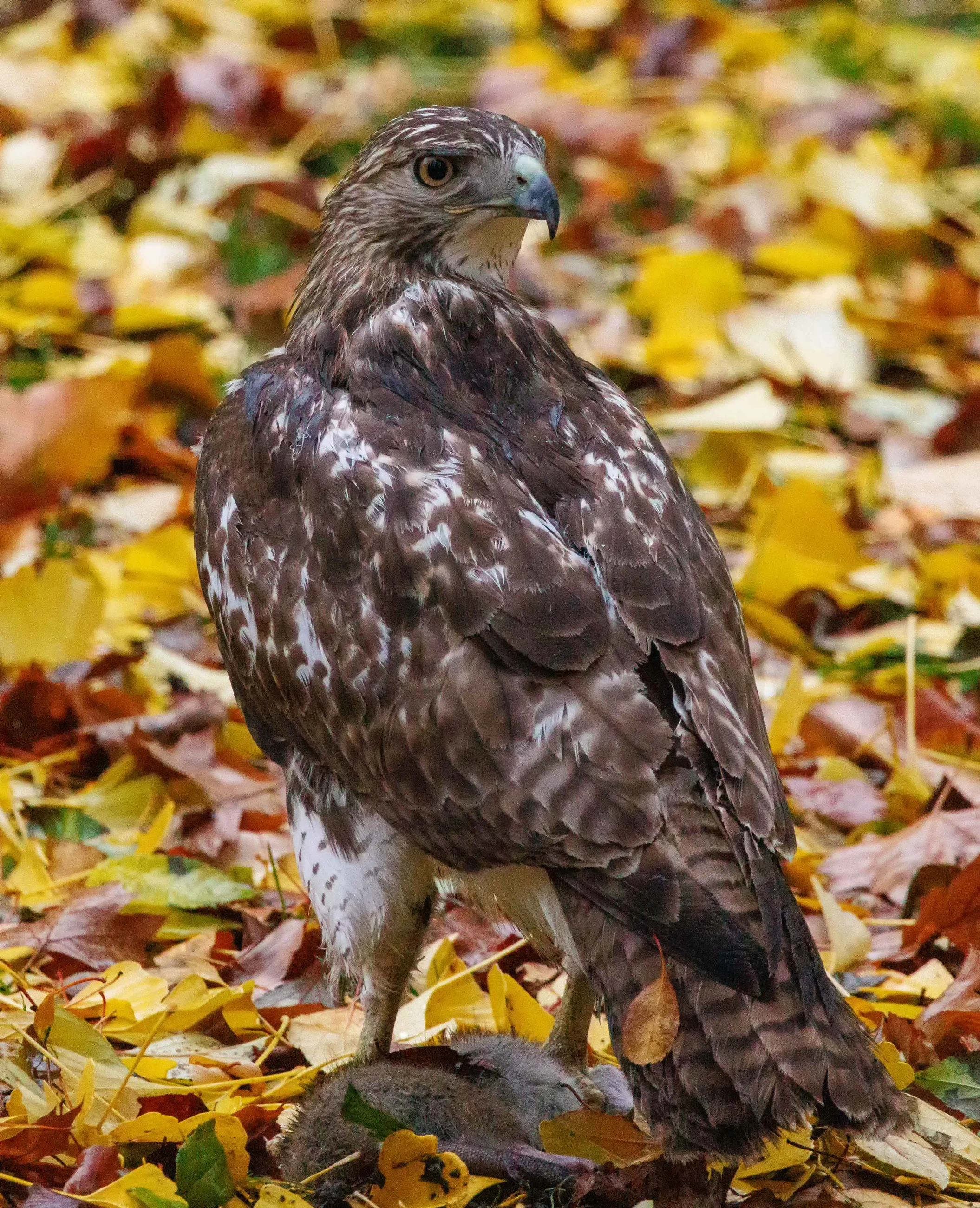
A hawk called Ruggles
How Ruggles got its name
July 2009
Read the original announcement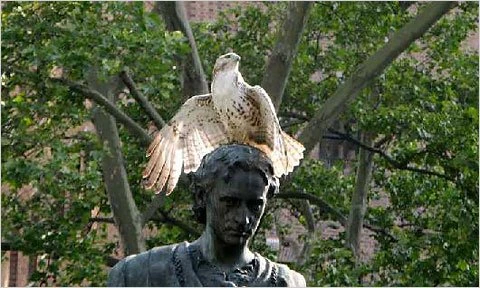
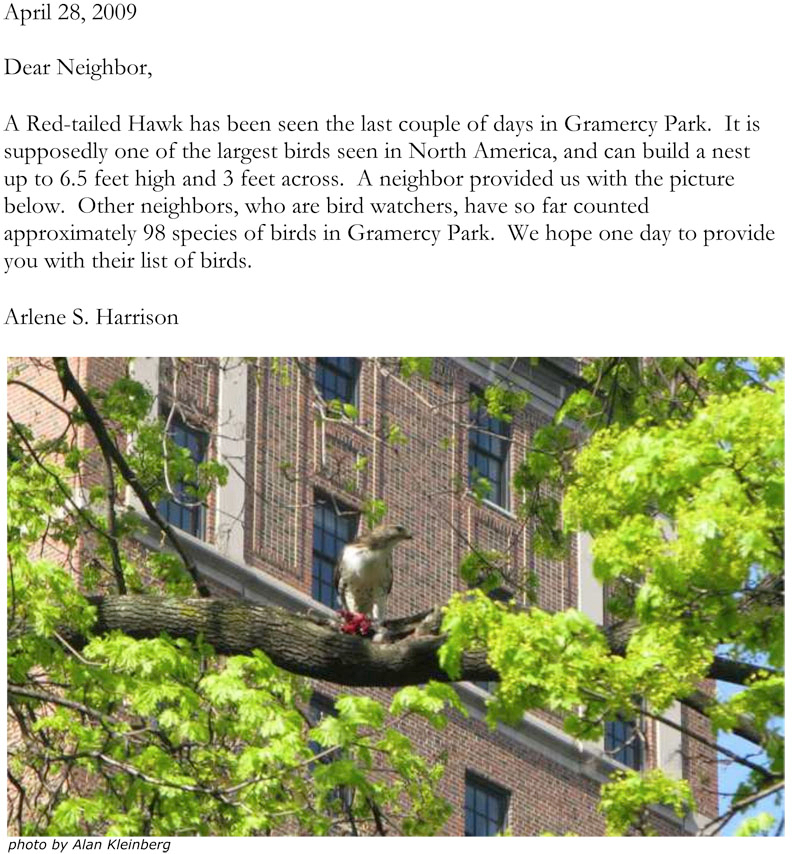
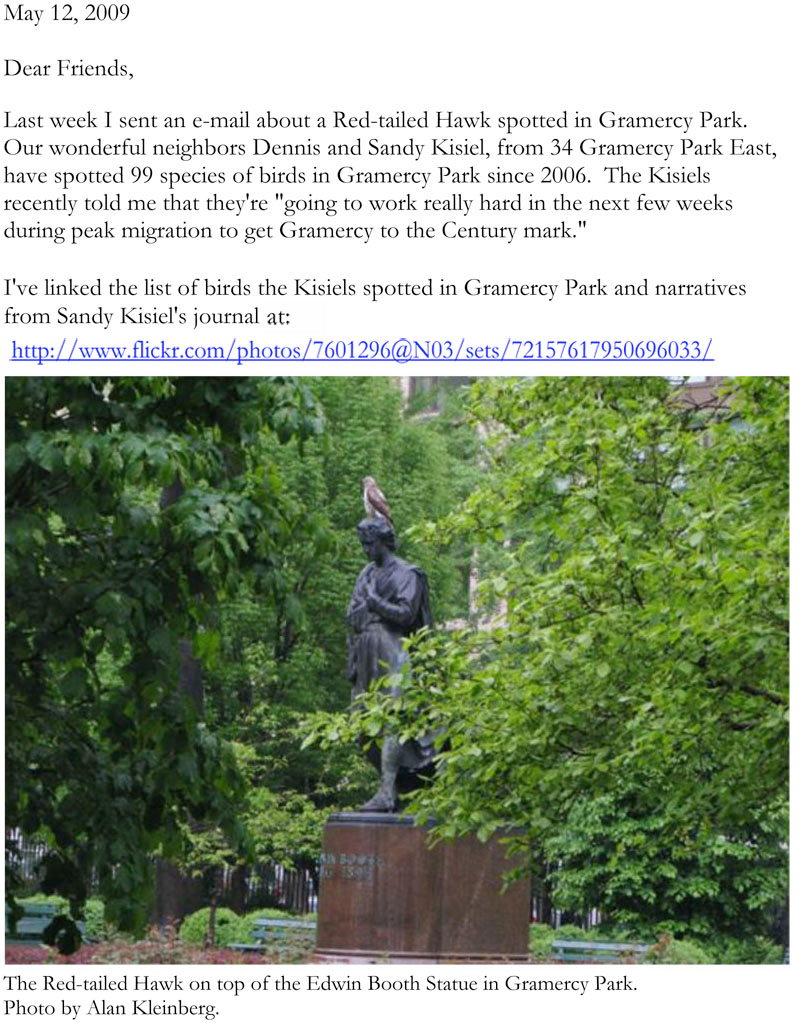
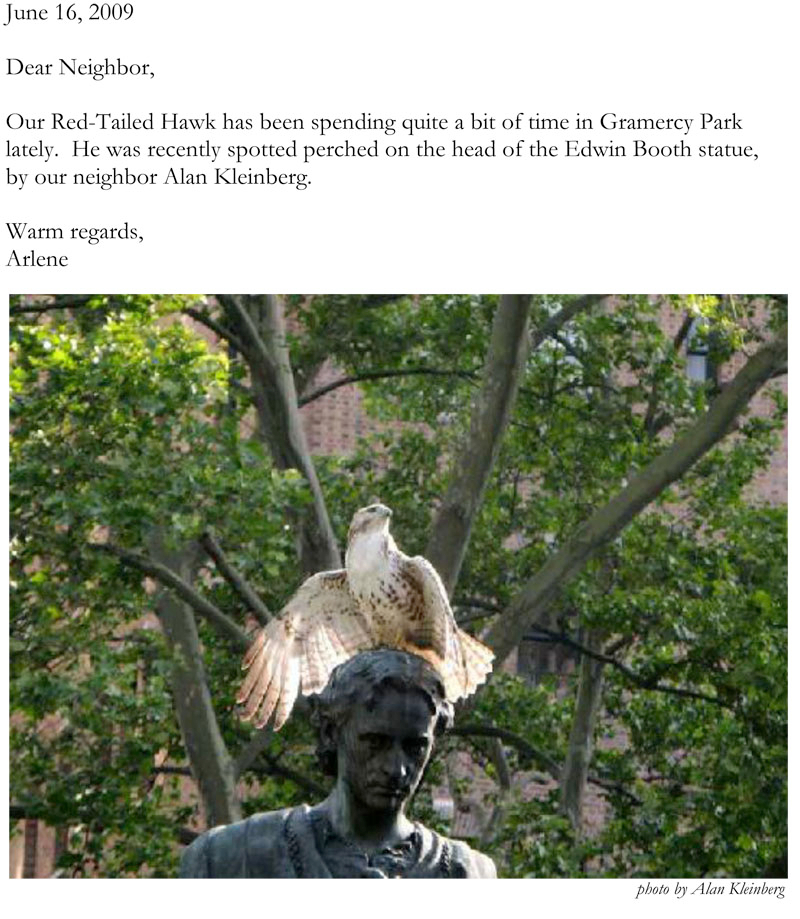
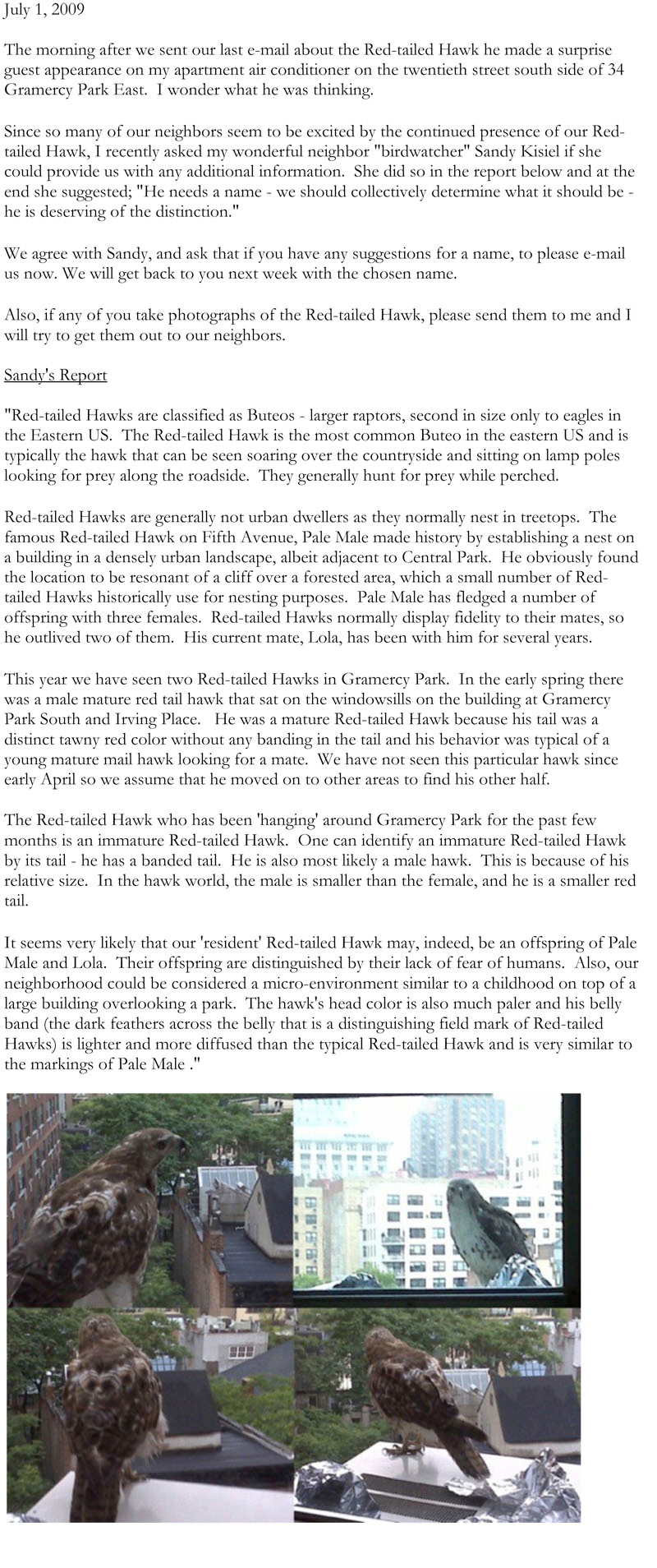
In the spring of 2009, a red-tailed hawk became a regular presence in Gramercy Park. It perched on Booth’s head and, one morning, on an air conditioner outside an apartment window. Hawks had been recorded here as early as 1998, but this one was attracting enough attention to warrant a name.
A naming contest brought hundreds of suggestions. Edwin honored the actor beneath the hawk’s feet; Edwing Booth added a wing. There was also Feather Hawkins.
Ruggles, Edwin, and Graham were the three leading suggestions. On July 6, Ruggles was announced as the name proposed most often, after Samuel B. Ruggles, who laid out the Park.
The contest made The New York Times. Its July 16 report introduced Gramercy’s hawk alongside Central Park’s famous Pale Male. There was speculation that the birds were related, though no connection was confirmed.
Wildlife in Manhattan
Two acres of hunting ground
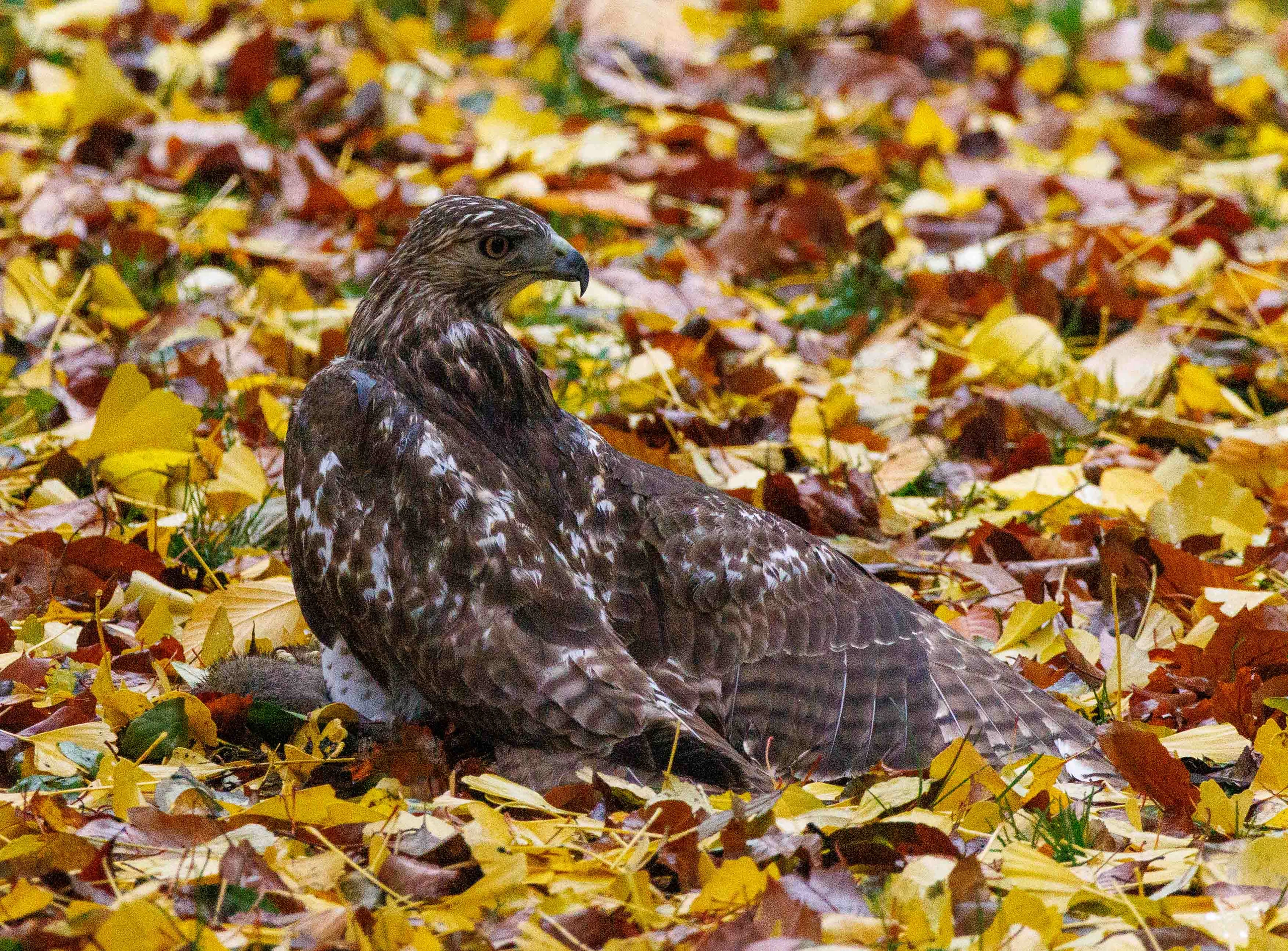
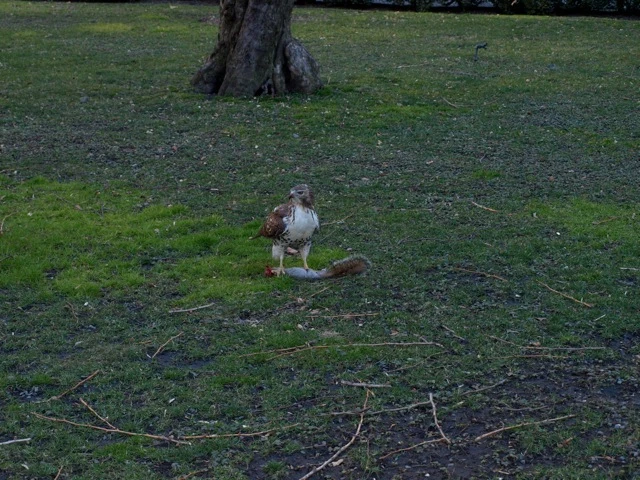
The ginkgo leaves make a bright setting for a hawk’s brown feathers. Look closer at the photographs and there is a squirrel beneath its talons. With its wings spread over the prey, the bird is feeding in the middle of Manhattan.
Gramercy is part of a larger territory. A 2012 report in DNAinfo described a visiting hawk that also frequented Union Square and Stuyvesant Square.
The same report noted that Gramercy was kept free of rat poison at the time—a protection for hawks, which can be poisoned by eating rodents that have consumed it.
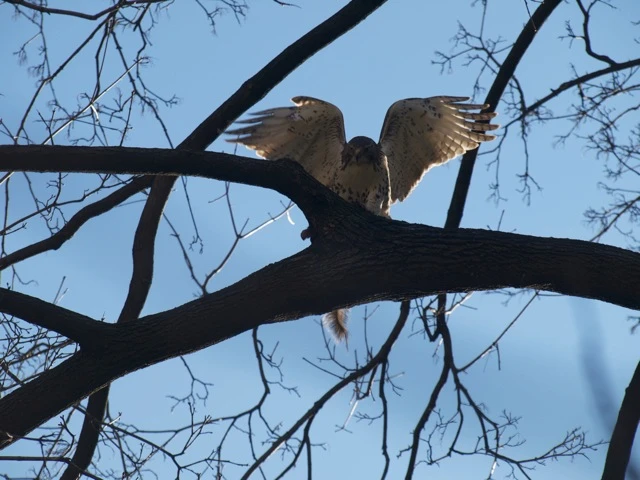
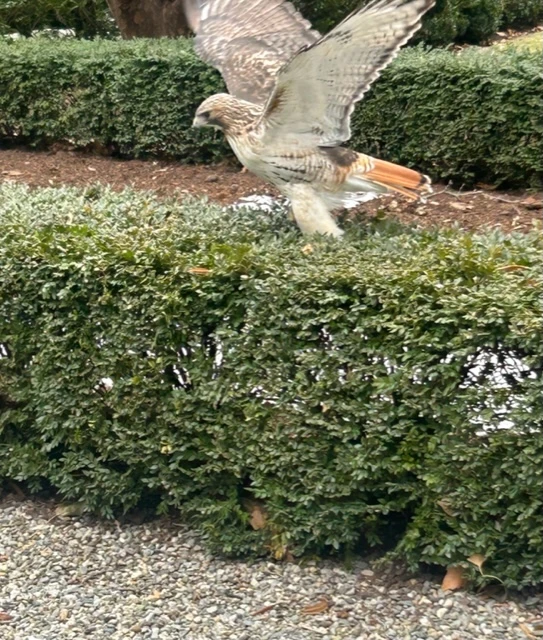
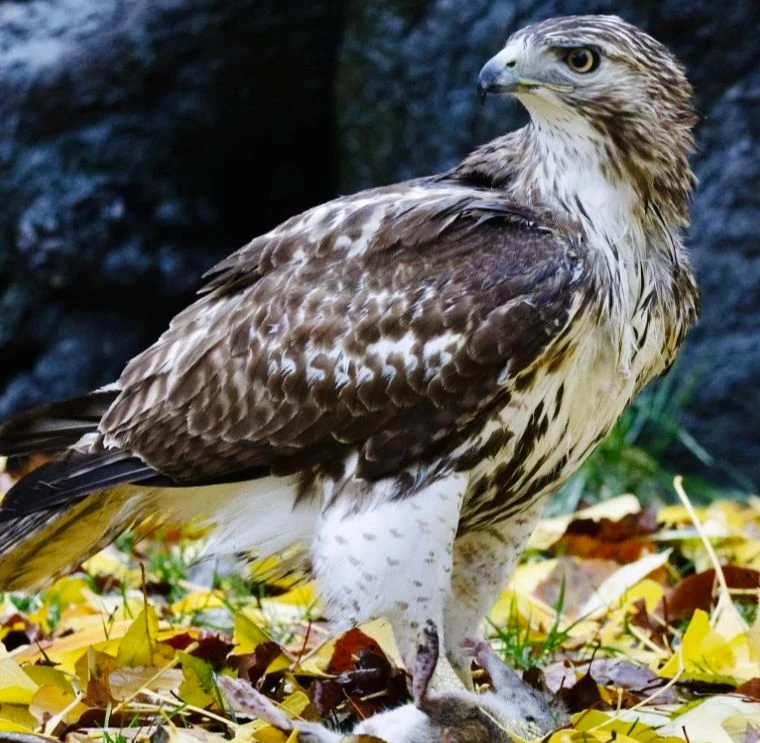
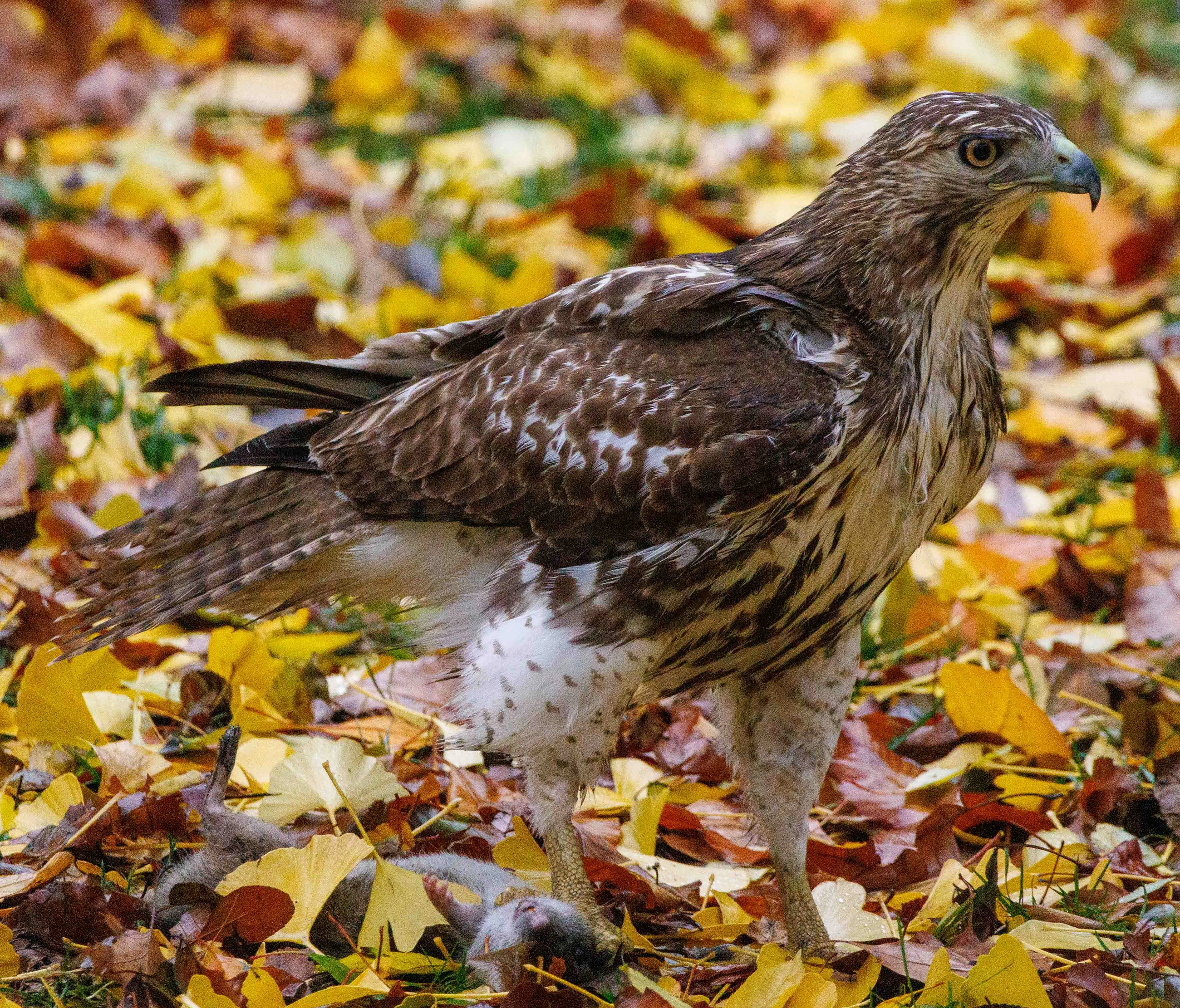
Above the paths
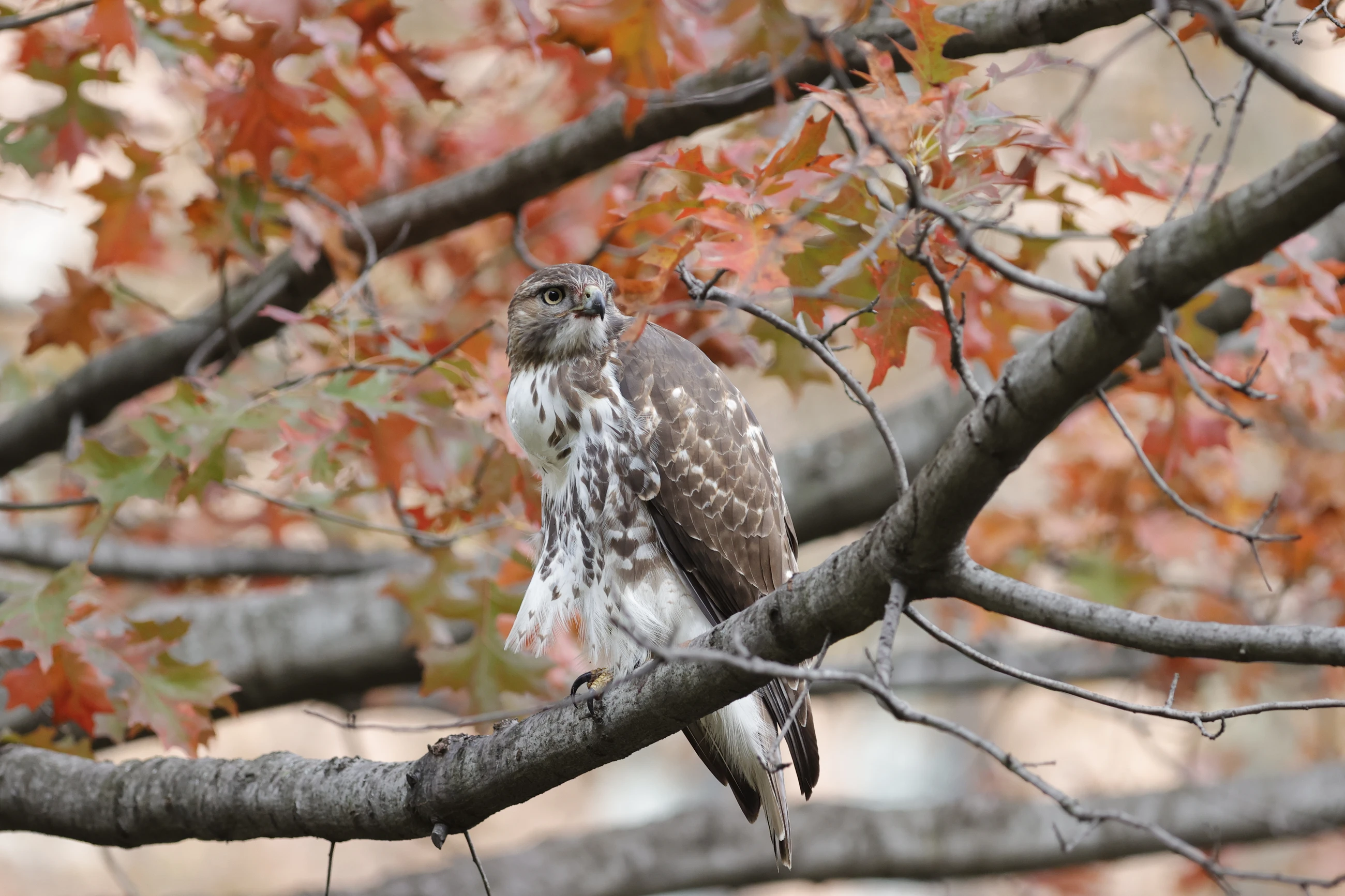
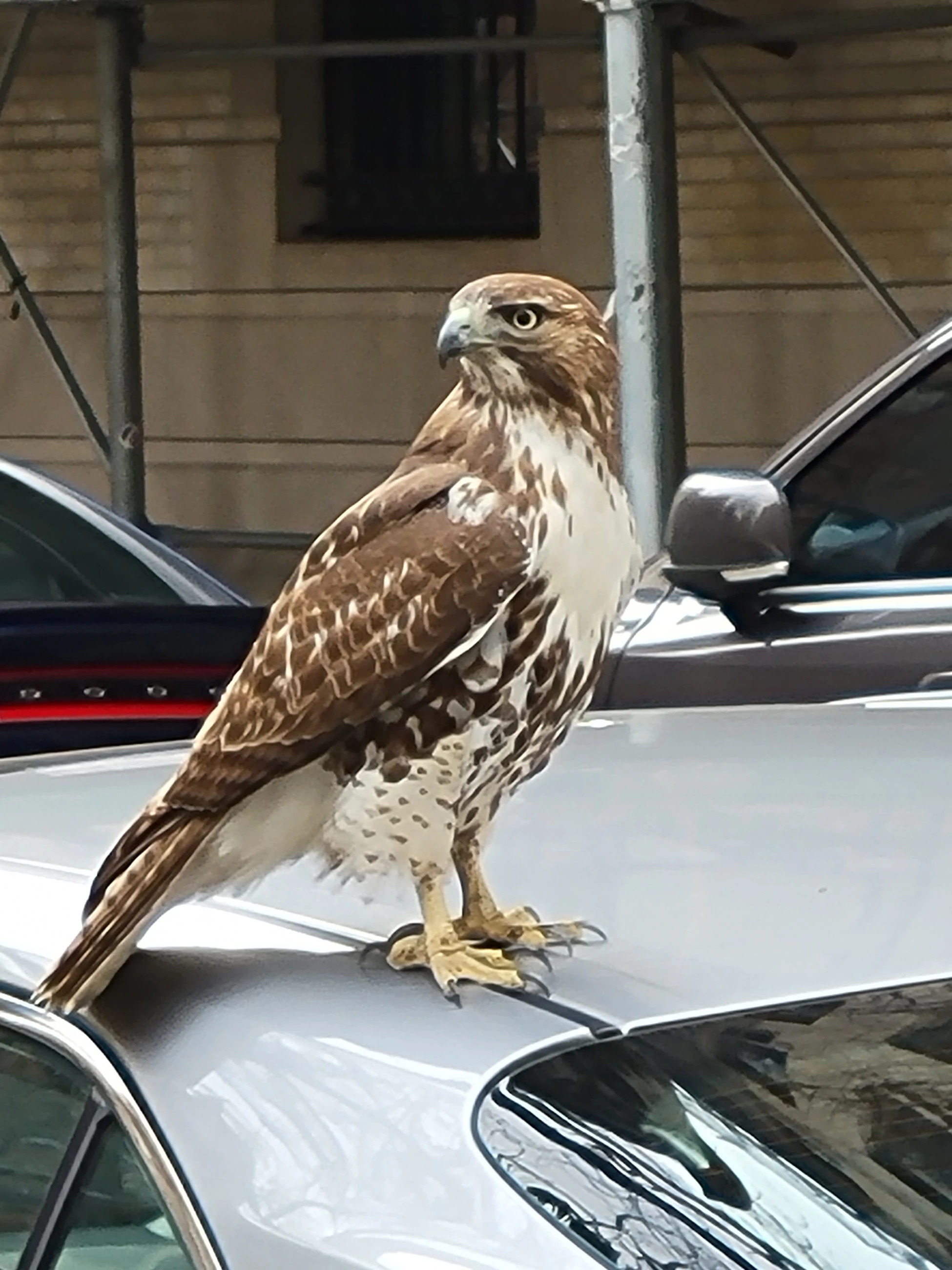
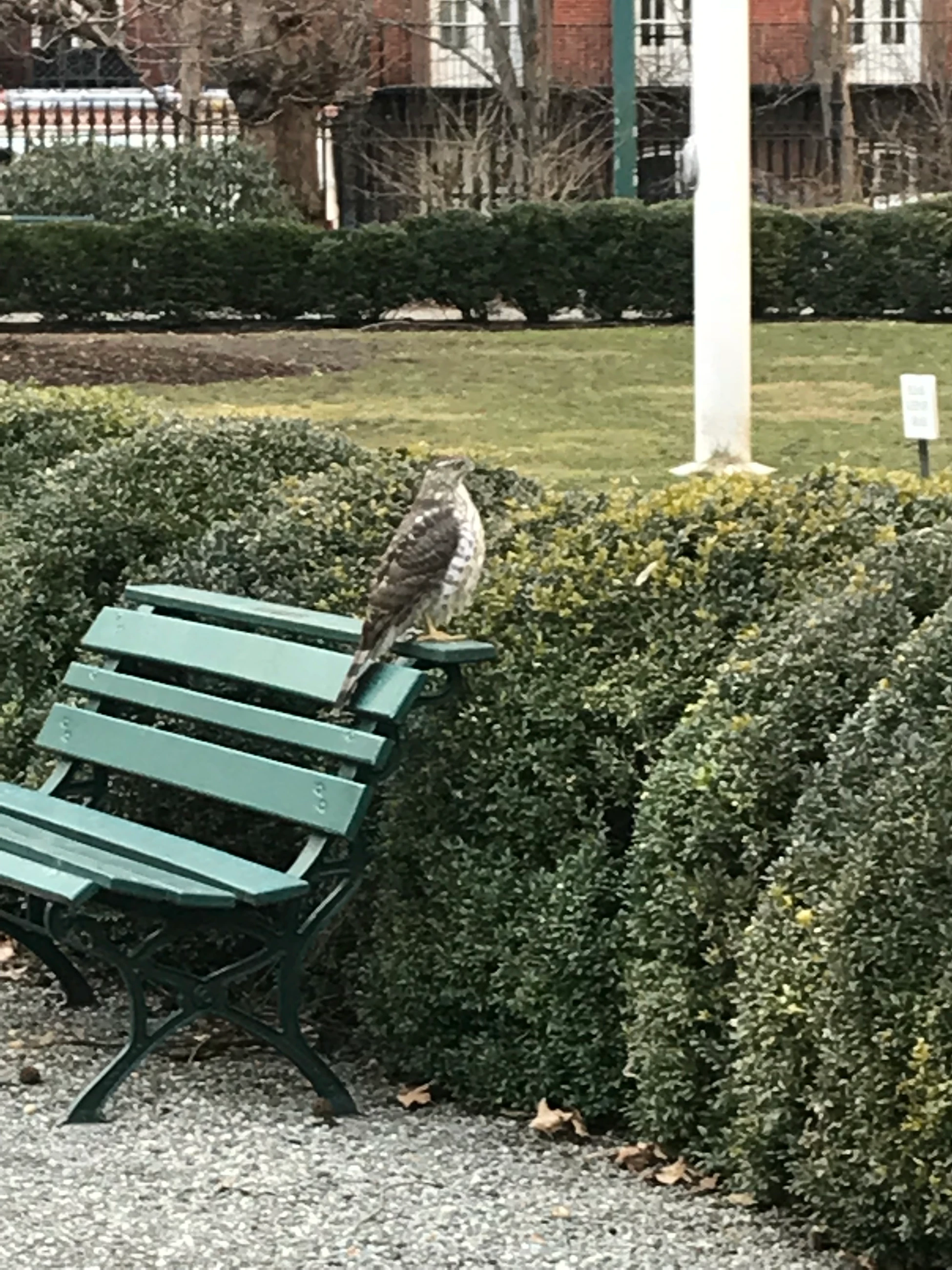
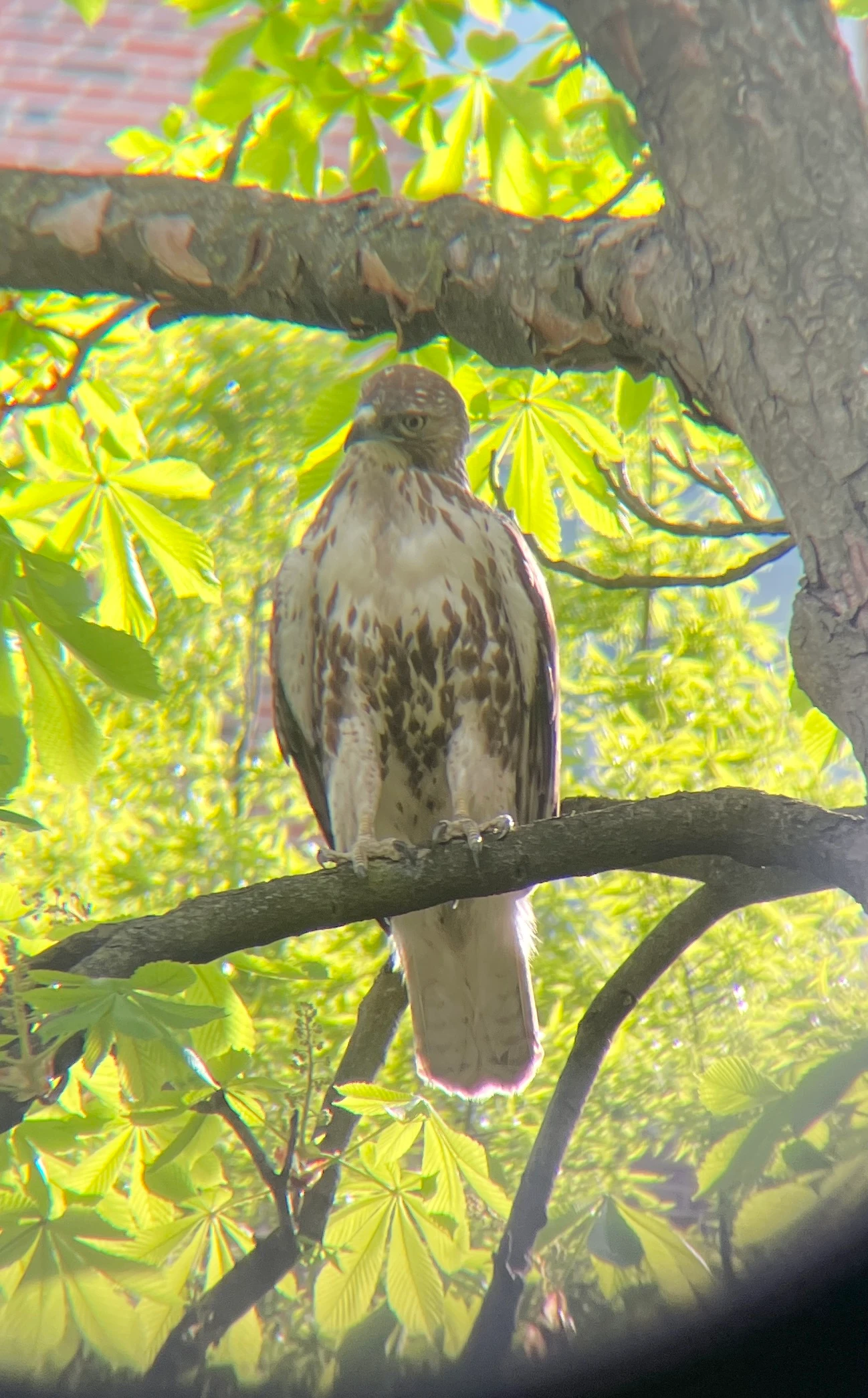
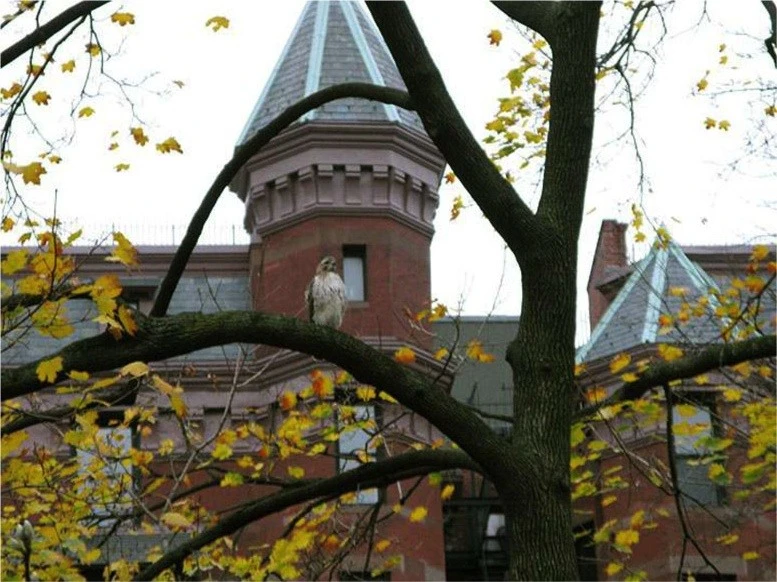
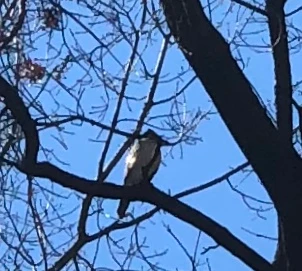
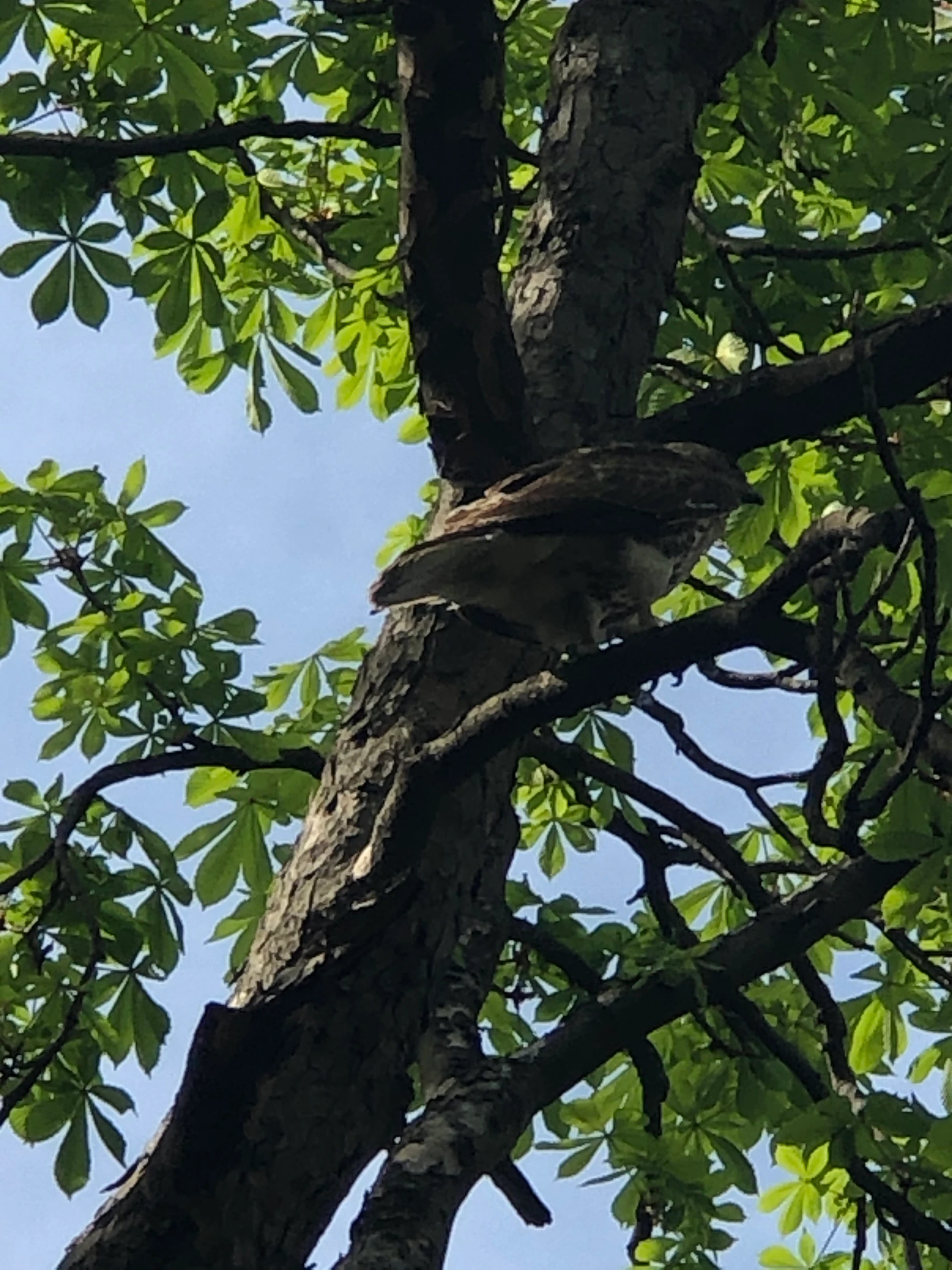
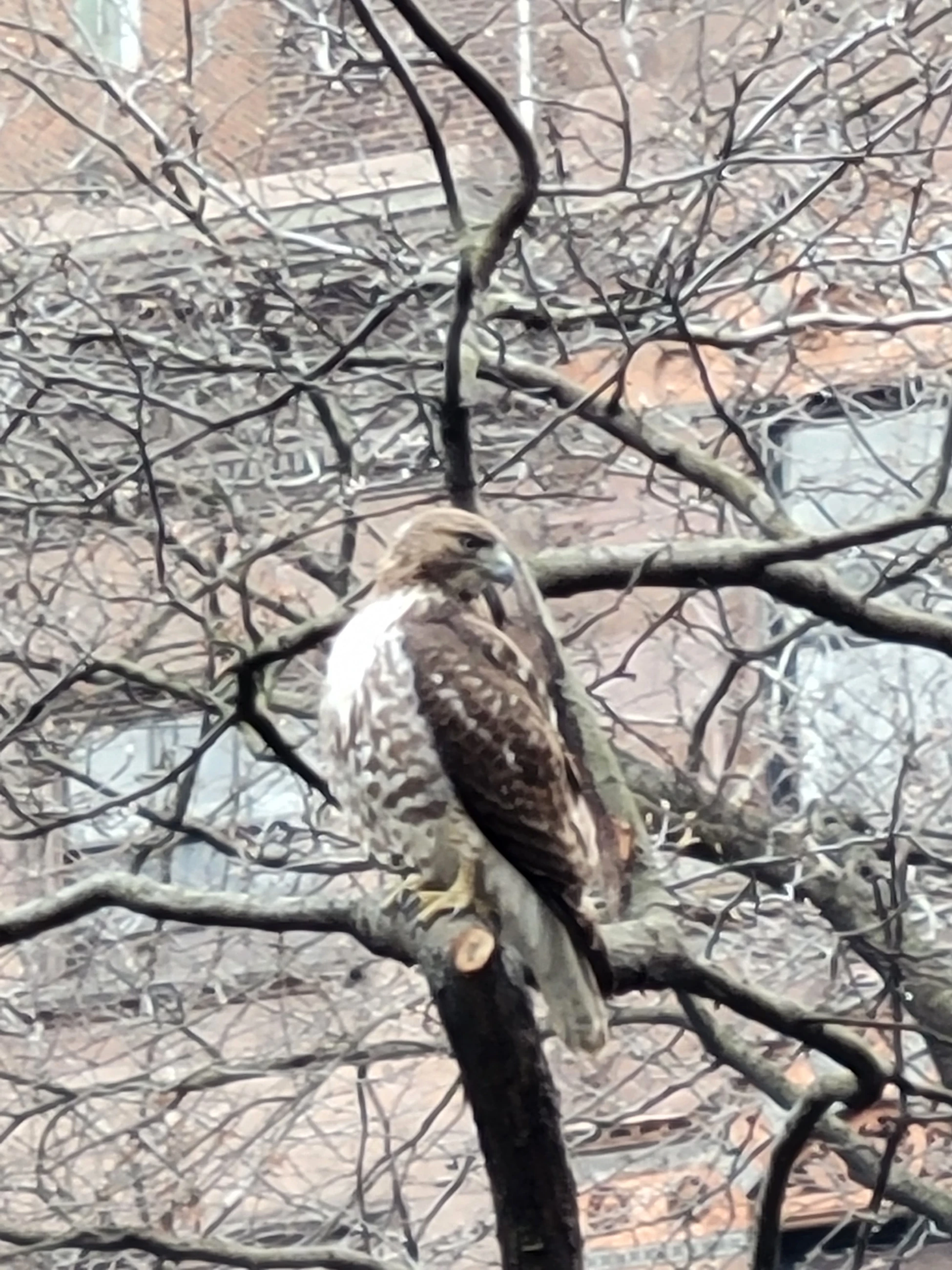
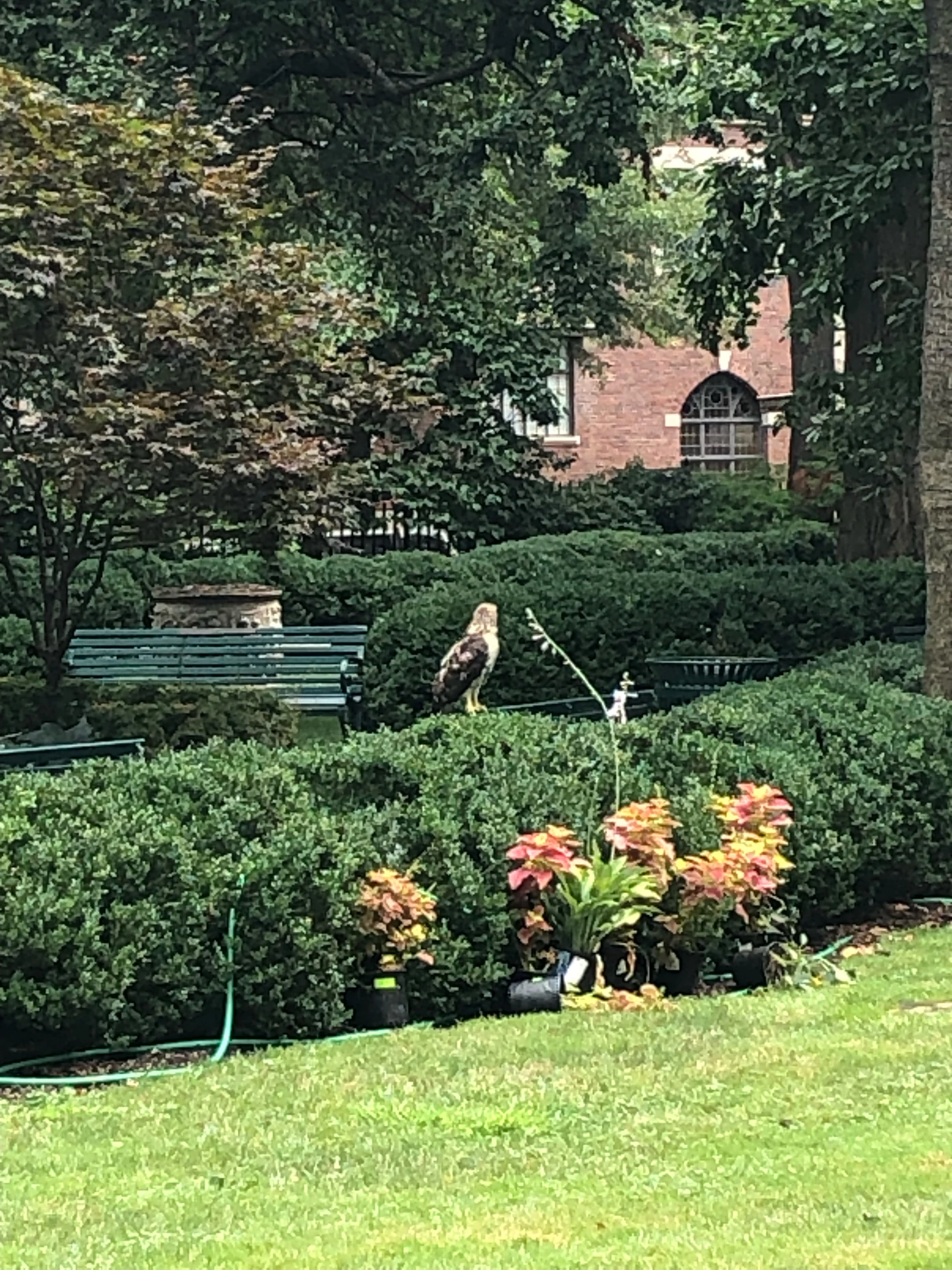
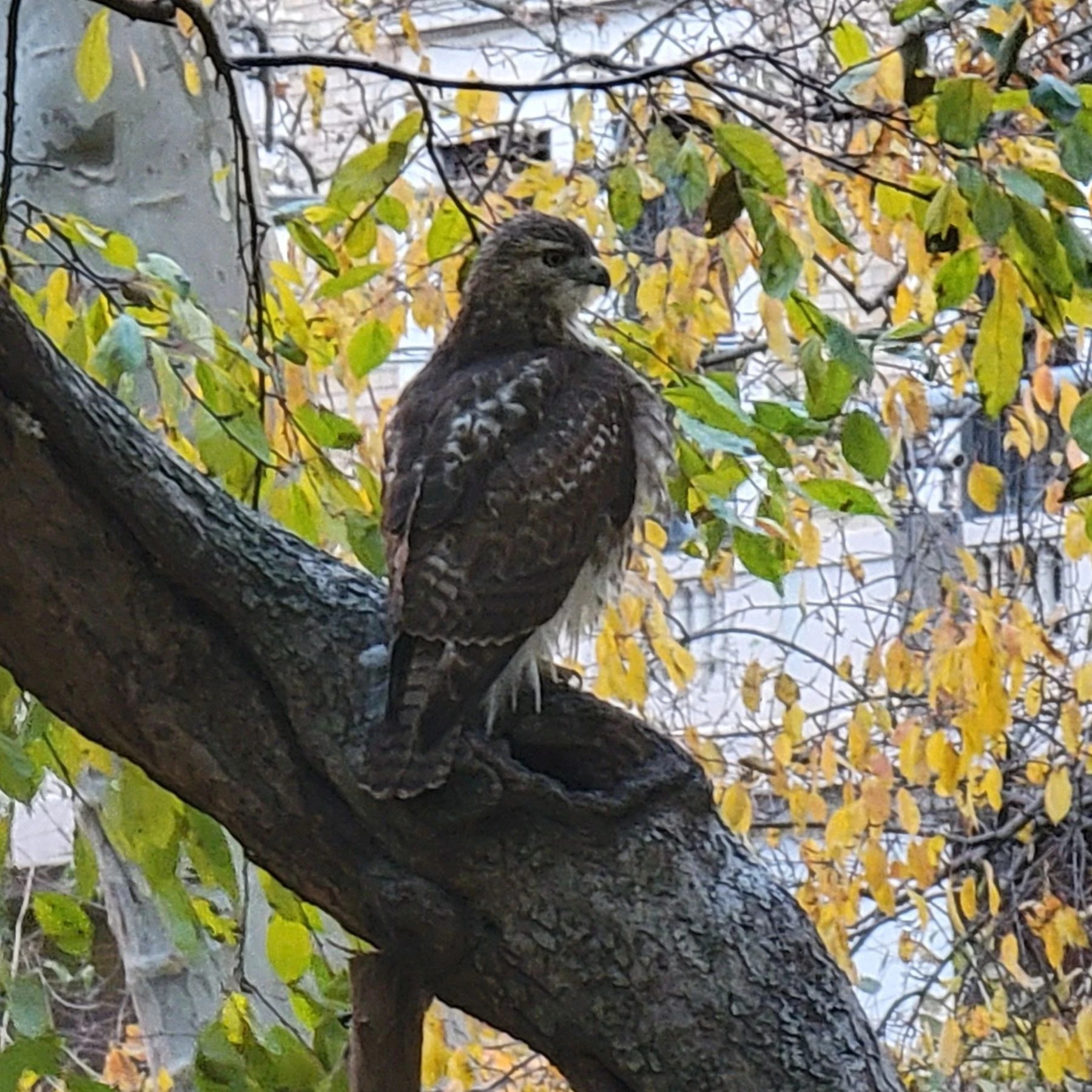
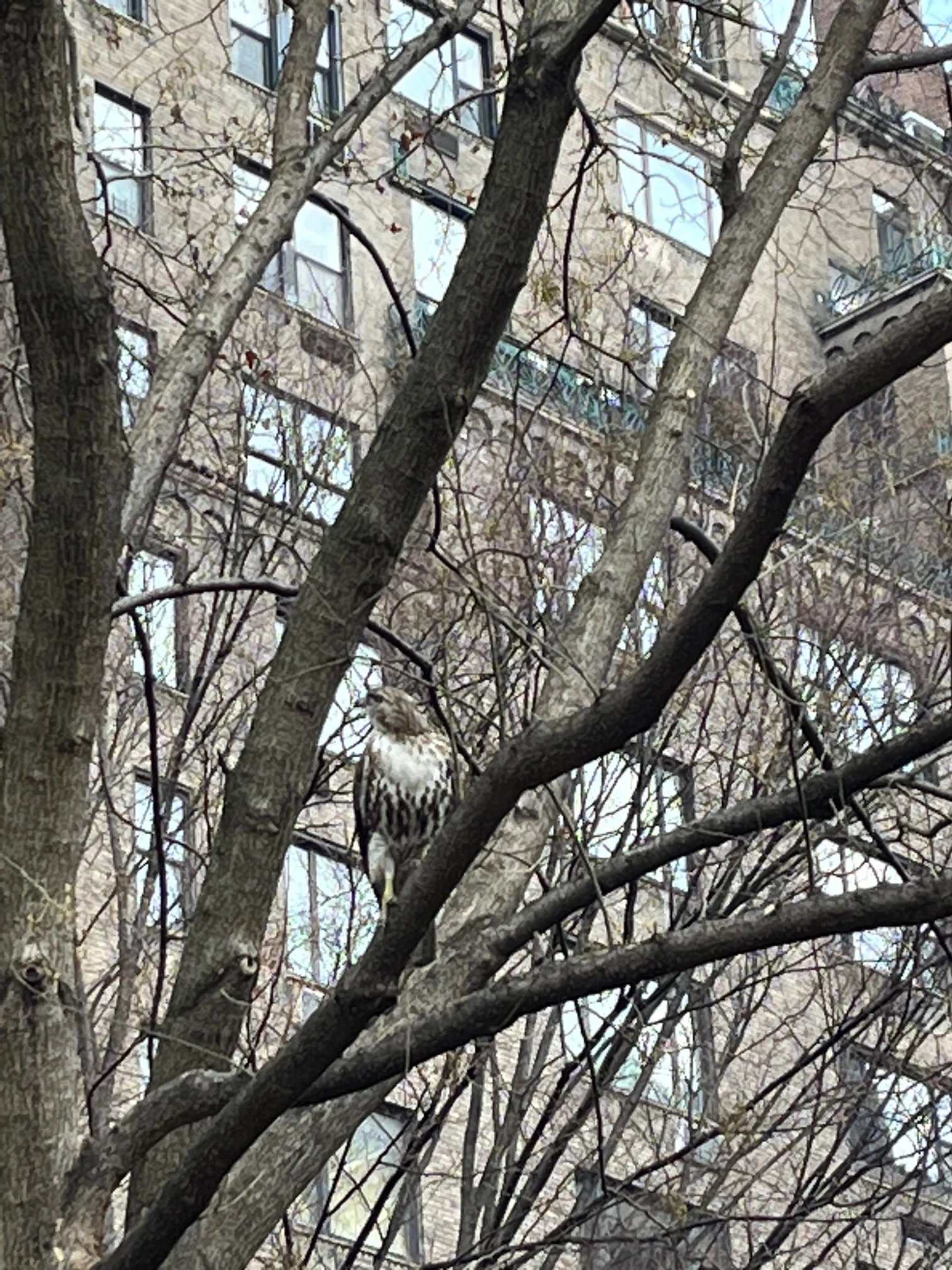
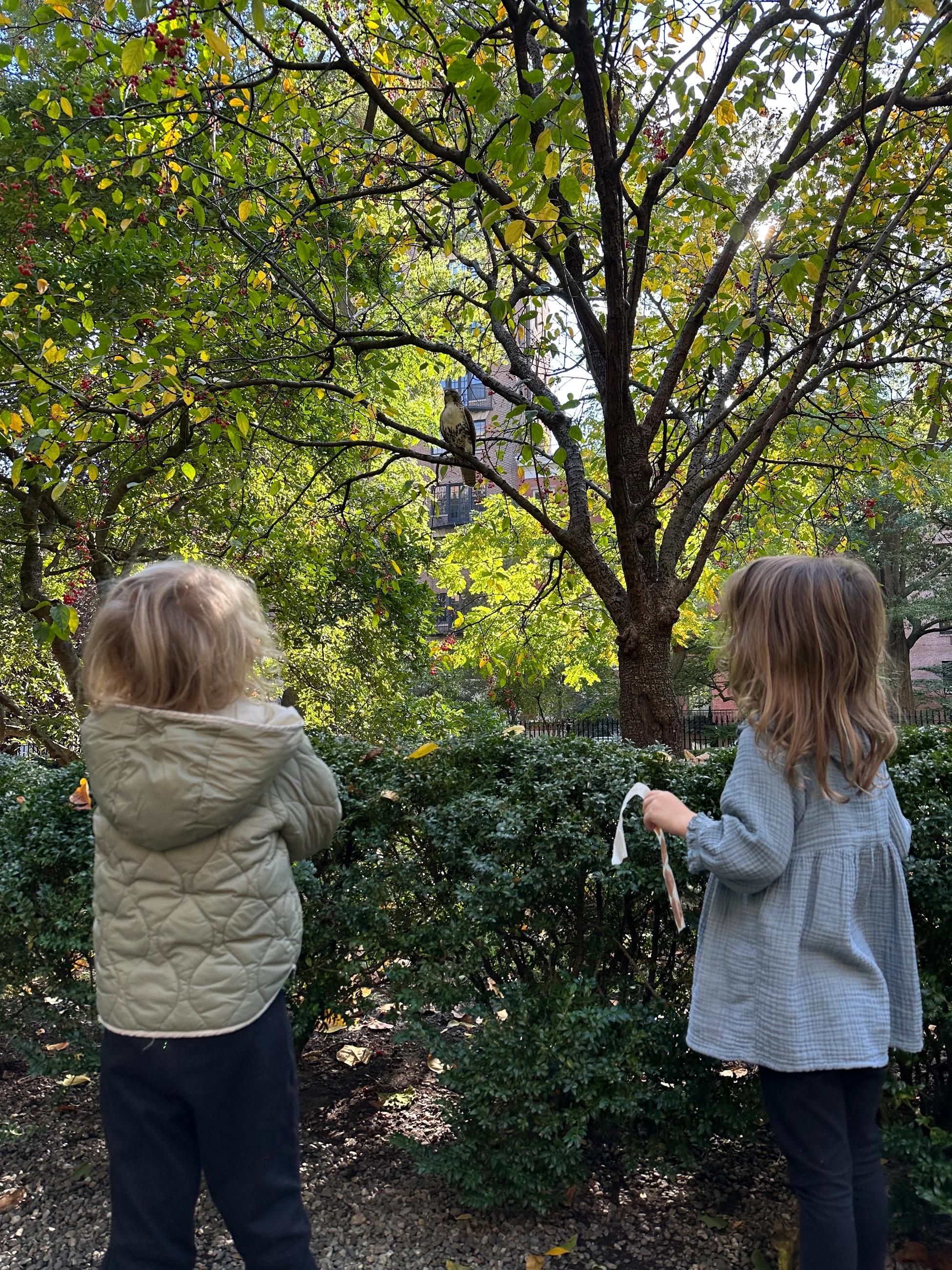
A hawk can be surprisingly hard to see among the branches. Brown feathers merge with bark; a turn of the head gives the bird away. On a bench or the roof of a parked car, it is much harder to overlook.
Different hawks have visited over the years, though neighbors still call them Ruggles. In September 2026, a hawk was filmed on Booth’s shoulder, turning its head above the Park—seventeen years after the naming contest.
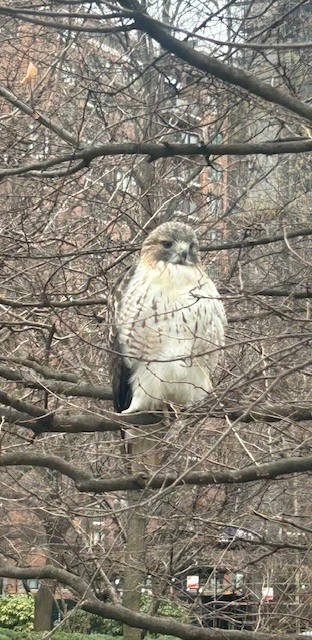
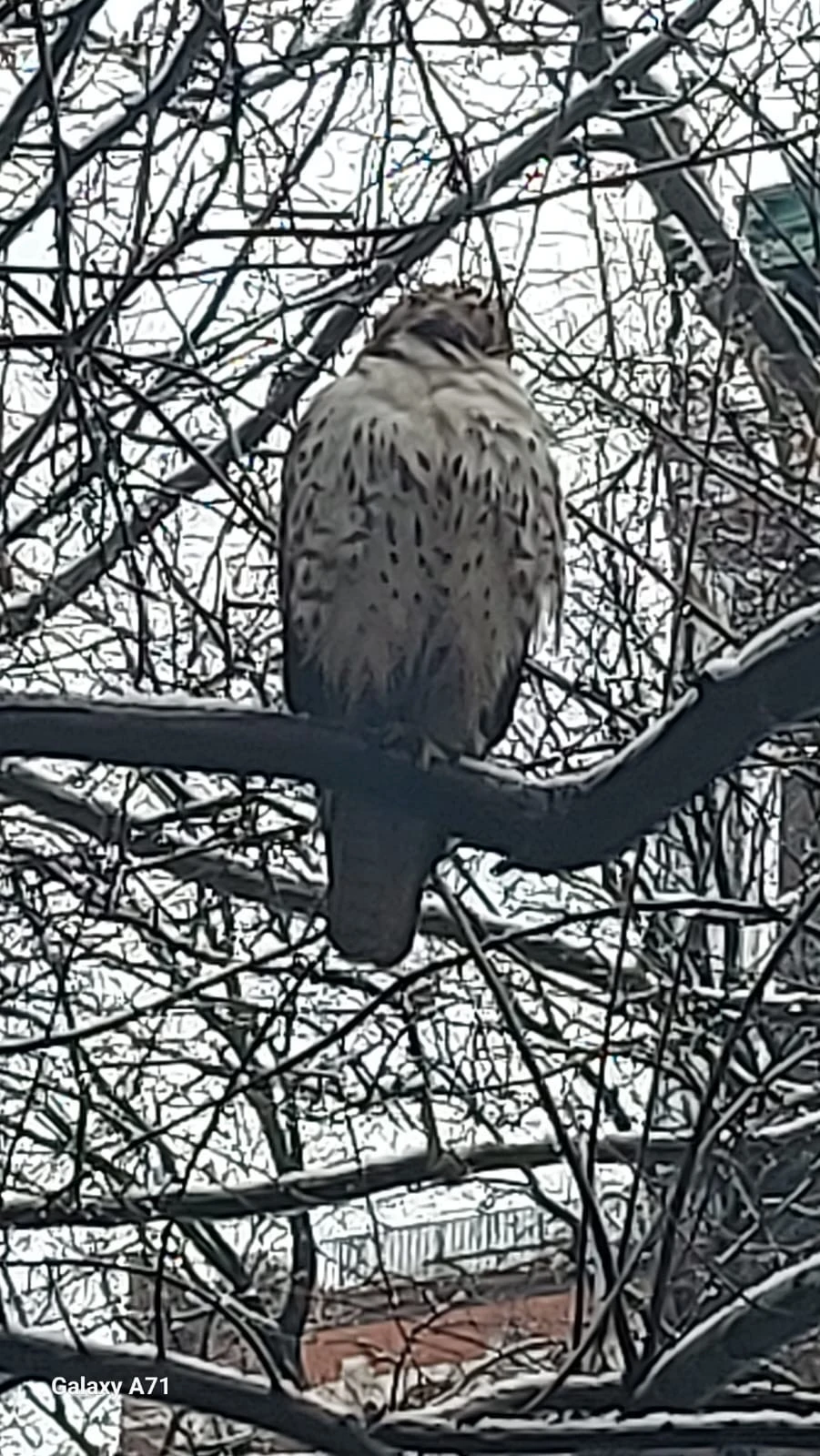
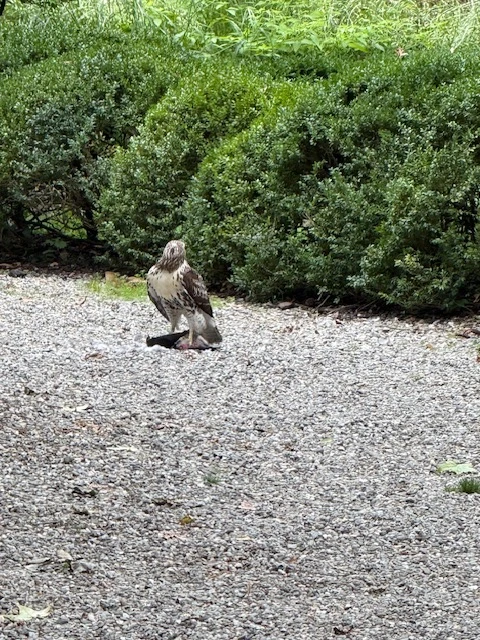
Watch the hawk on Booth’s shoulder 17-second video
Identification
Recognizing a red-tailed hawk
Look for broad, rounded wings and a short, wide tail. Adults usually have a reddish upper tail; young birds have a brown, banded one. Most have a dark “belly band” of streaks across a pale underside. Plumage varies, and a perched bird’s tail may be hidden.
Cornell’s identification guideMigration through Manhattan
The smaller birds
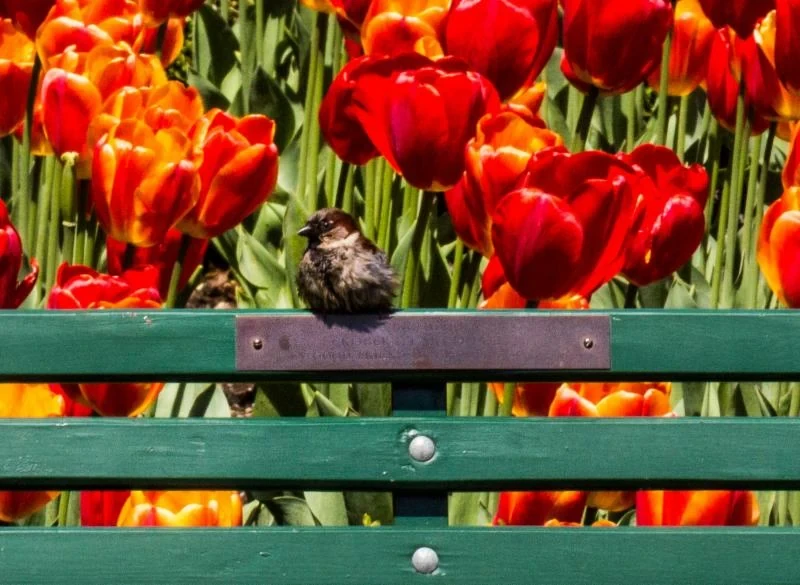
The hawk is only the most conspicuous part of a much larger bird population. Local birders Dennis and Sandy Kisiel began keeping a list in September 2006. Their checklist reached 99 species.
Manhattan lies along the Atlantic Flyway. In spring and autumn, migrating songbirds find food and shelter in the Park’s trees and shrubs. The Kisiels’ notes describe ruby-crowned kinglets in the catalpa beside the shed, six northern waterthrushes using puddles after a heavy rain, and a group of orioles moving from tree to tree before heading north up Lexington Avenue.
Robins, blue jays, and sparrows
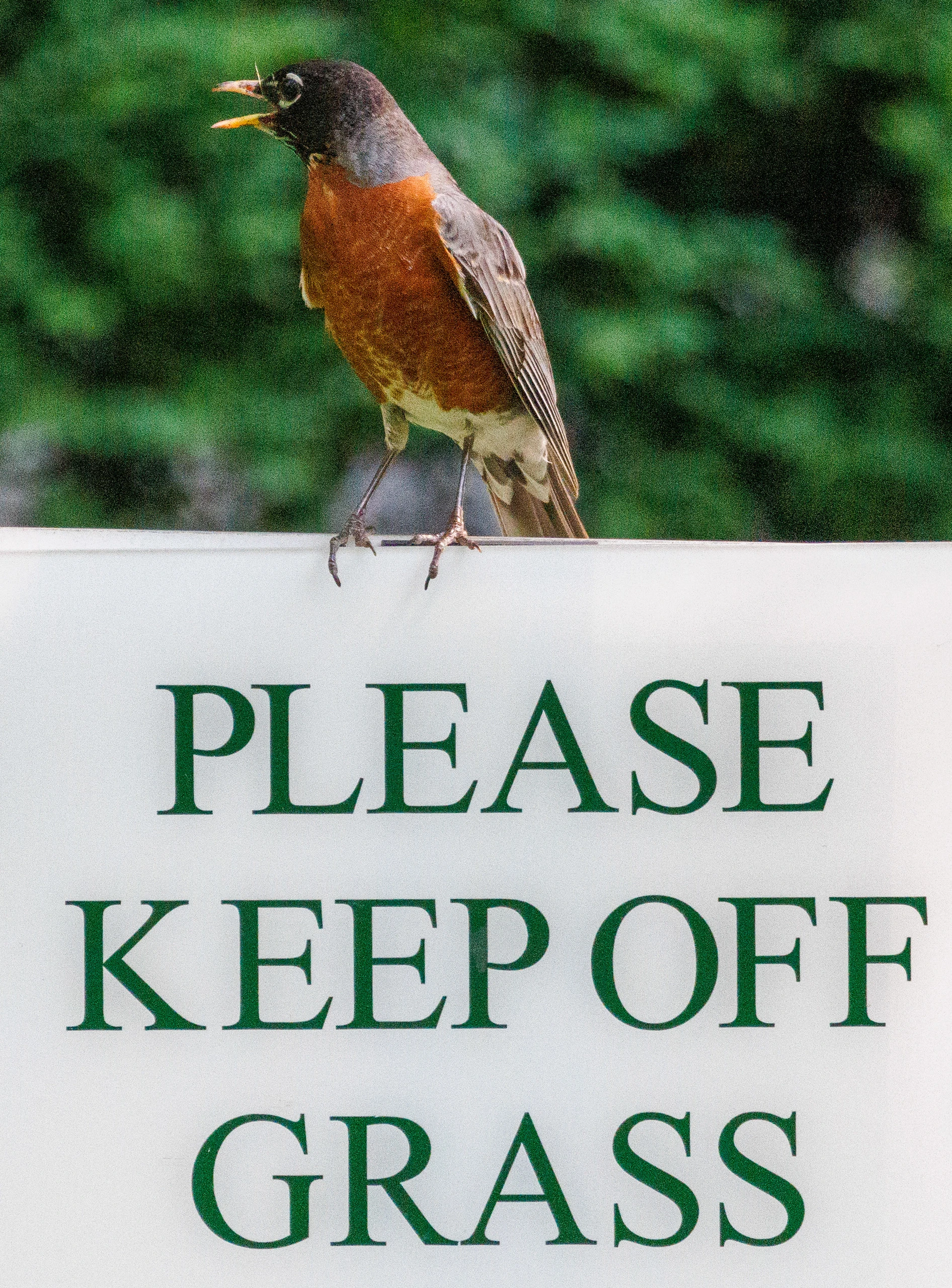
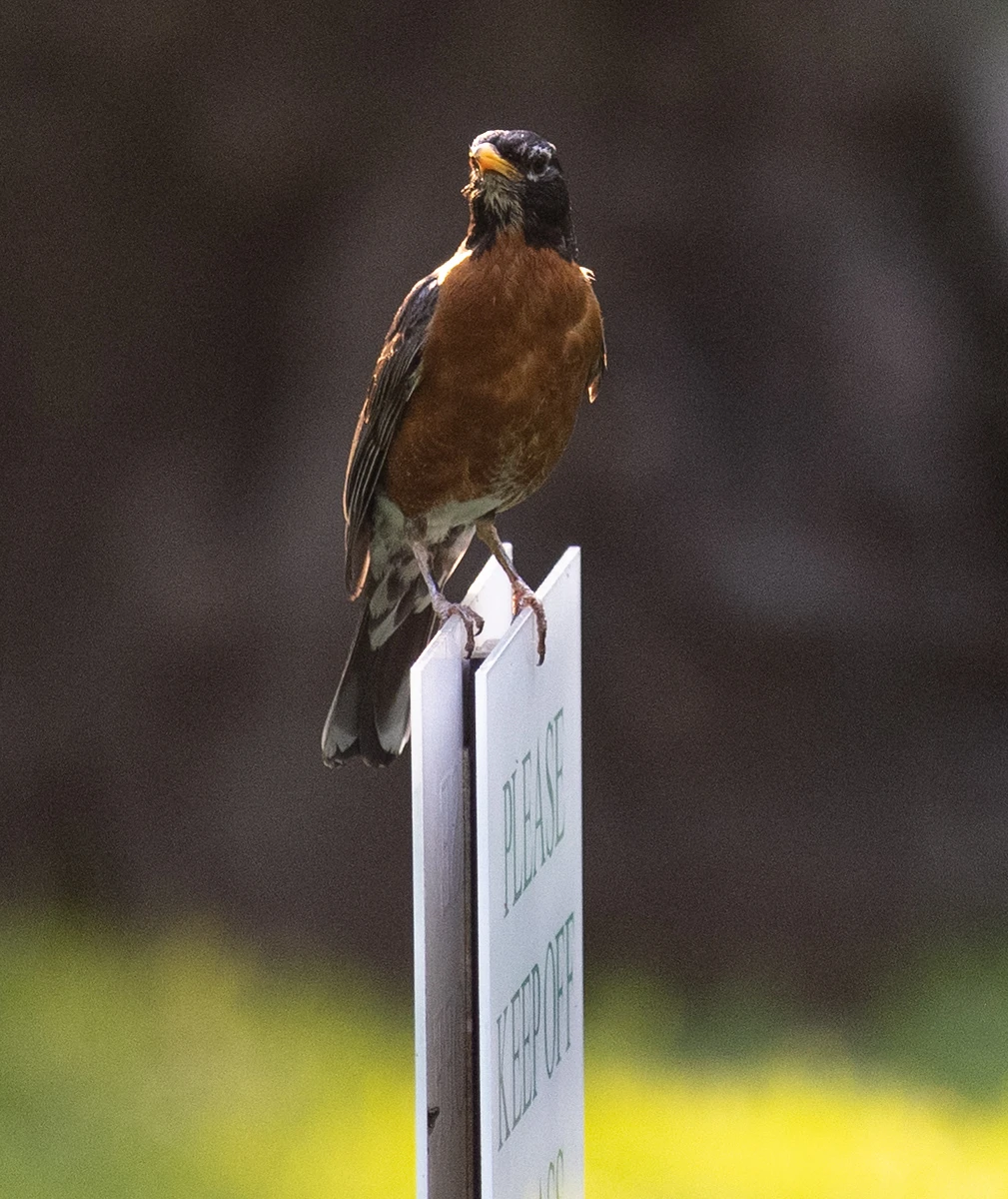
American robin
The orange breast, dark head, and yellow bill identify the American robin. In these photographs, the Park’s “Please Keep Off Grass” sign offers a convenient perch.
Cornell’s identification guide ↗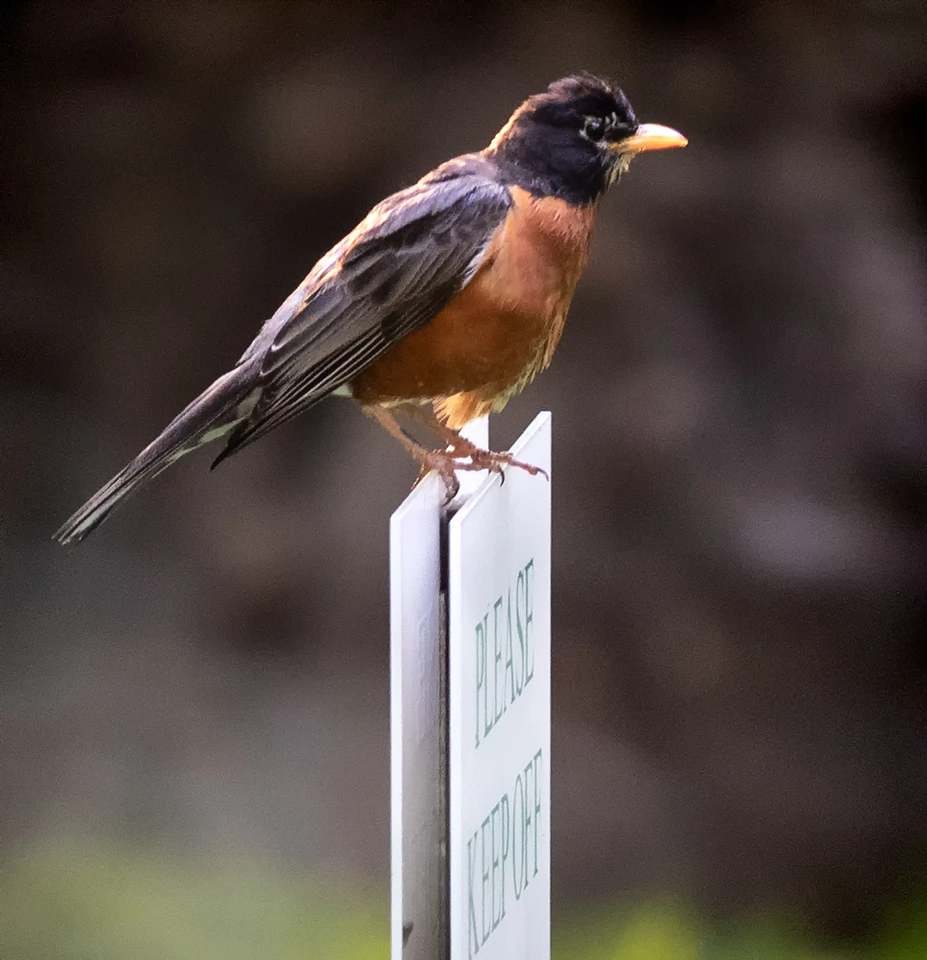
Blue jay
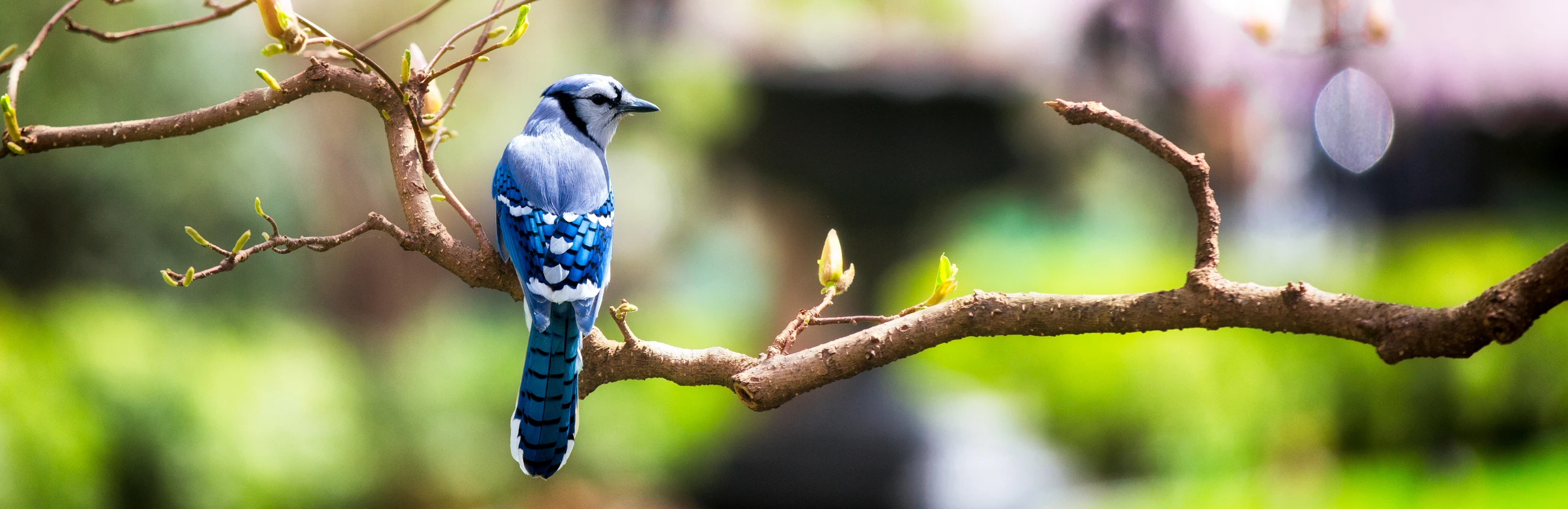
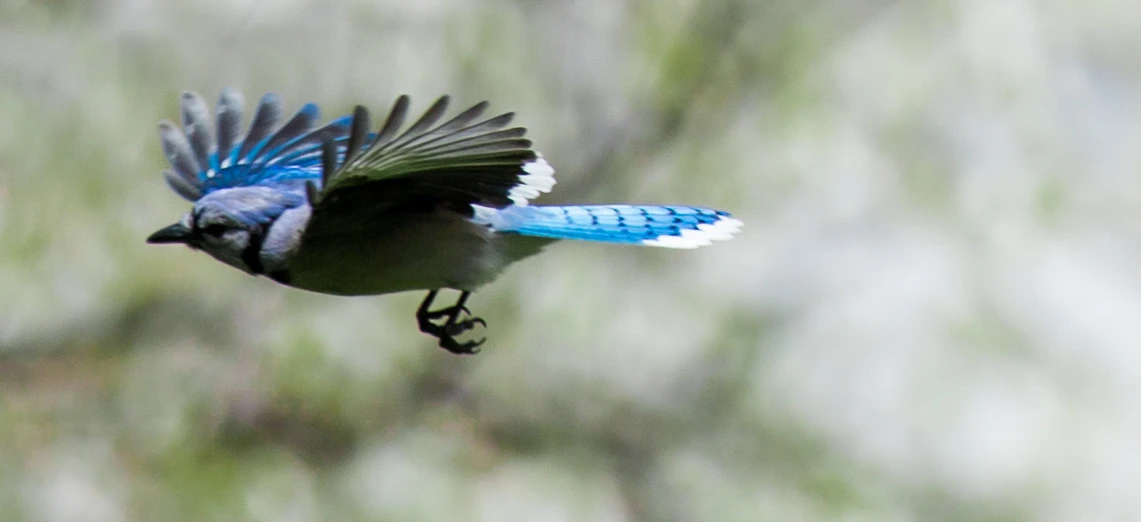
Blue, black, and white feathers and a black collar distinguish the blue jay. These three views show it among blossoms, on a budding branch, and in flight.
Cornell’s identification guide ↗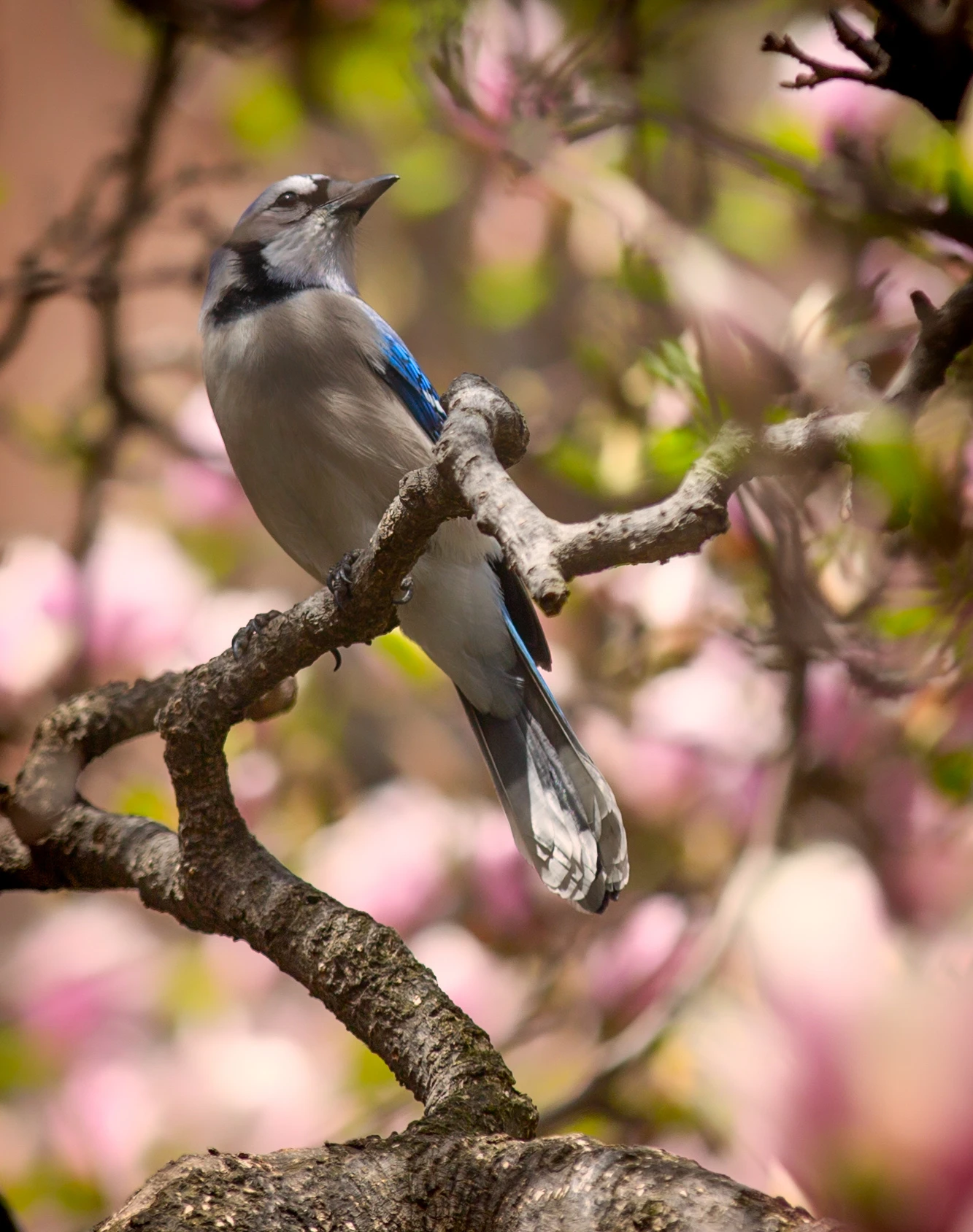
House sparrow
The gray crown, chestnut sides of the head, and black bib identify this bird as a male house sparrow. Its short, thick bill is another useful field mark.
Cornell’s identification guide ↗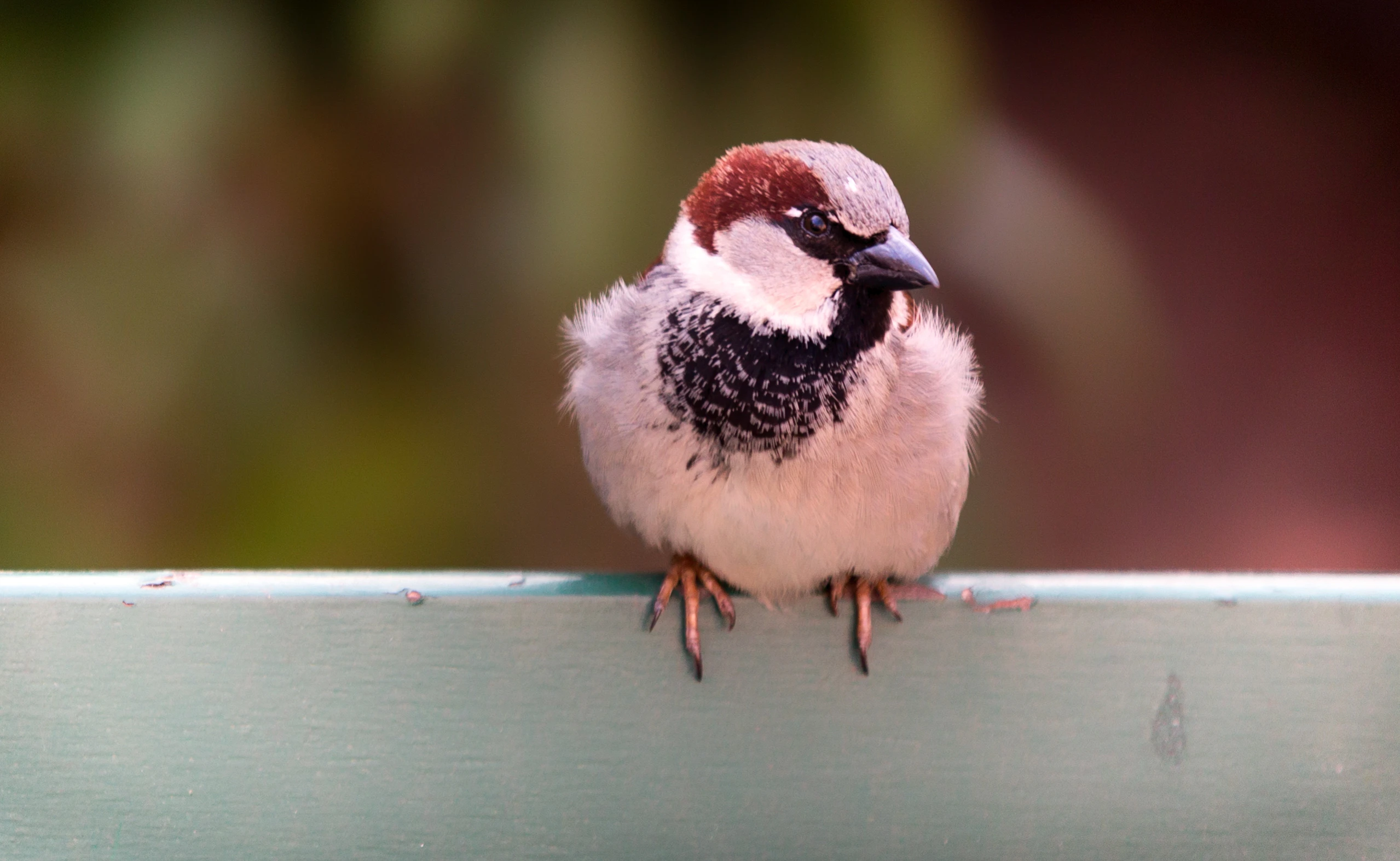
Have a photograph?
Share a sighting
Send the Block Association your photograph, the date and location, and the photographer’s name. A description is welcome too, even if you are unsure of the species.
Please watch from a distance and leave the birds to find their own food.
Share a bird sightingSources
- Trustees of Gramercy Park notices, 2009: April 28; May 12; June 16; July 1; July 6; December 8.
- Jennifer 8. Lee, “Gramercy Park’s Amiable Hawk Gets a Name,” The New York Times, July 16, 2009. Article scan.
- The Kingbird, June 1998, vol. 48, no. 2, p. 178.
- Dennis and Sandy Kisiel, Gramercy Park bird list and The Birds of Gramercy Park; GPBA September 18, 2014 retrospective.
- Caroline Jumpertz, “Hawk Returns to Gramercy Park as Mild Winter Draws Wildlife and Vermin,” DNAinfo, March 6, 2012.
- GPBA newsletters: December 7, 2022; November 9, 2023; January 9, 2026. Photographs and correspondence from the GPBA archive, 2009–2026.
- Michael Gerbino, hawk video, 2021.
- Cornell Lab of Ornithology: Red-tailed Hawk; American Robin; Blue Jay; House Sparrow.
- U.S. Environmental Protection Agency, Rodent Control Pesticide Safety Review.

Photograph credits
Hawks through the years
- Sean Brady. Opening portrait and the December 6, 2022 hunting photographs; another hawk portrait appeared in the December 7, 2022 newsletter. Hawk gallery.
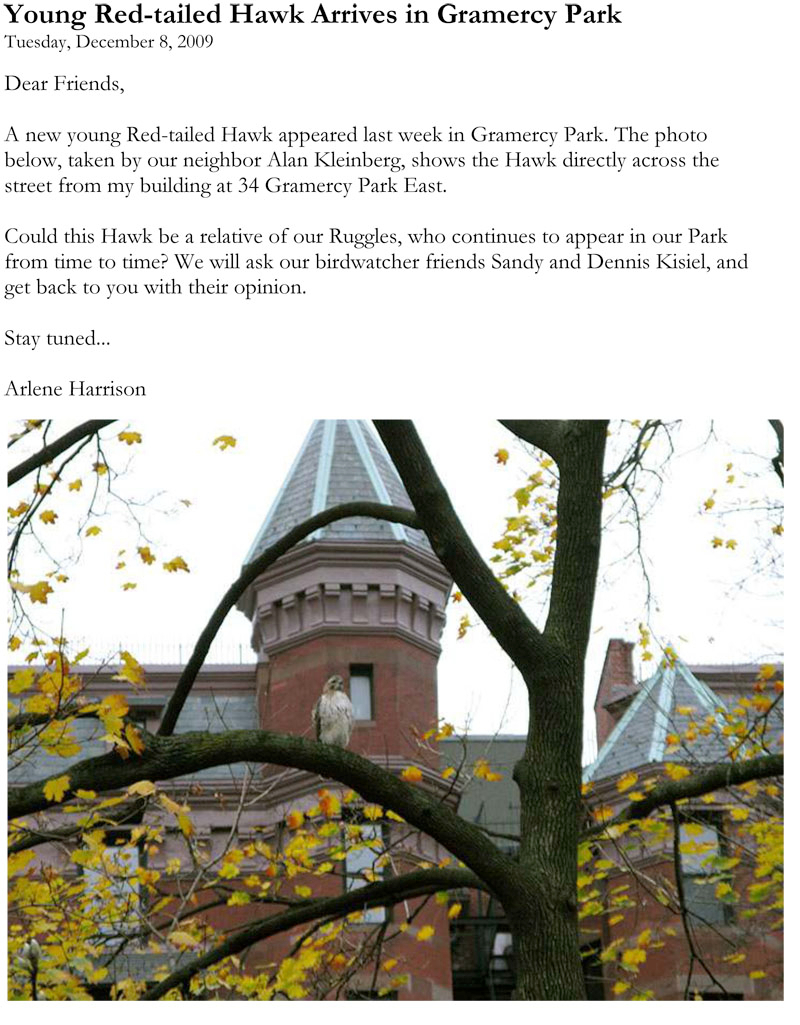
- Alan Kleinberg. Hawk on Booth’s head, published June 16, 2009; young hawk photographed for the December 8, 2009 Trustees’ notice.
- Patricia Pillette. Breakfast on the lawn and wings raised in the branches, March 5, 2012.
- Joan Feeney. Hawk on a green bench, shared February 21, 2018.
- Kathleen Scupp. Hawk in the branches, March 23, 2019.
- Sergio Noriega and Grace Dabi. Spring foliage photographs, May 2, 2021.
- Marc A. Lewinstein. Hawk on a car and in a tree, March 10, 2022.
- Alyson F. Breier. Hawk on the bench near the gardener’s shed, August 11, 2022.
- Col. Tom Pike Jr. Hawk on a sloping branch among yellow leaves, published December 7, 2022.
Recent visits & other birds
- Susanna Porter. Winter tree photograph, January 5, 2023.
- Milena Albrecht. Children watching a hawk; shared October 25, 2023, published November 9.
- Michael Gerbino. Autumn portrait, November 15, 2023.
- Amando Flores. Takeoff photograph, January 5, 2026; perched hawk shared that day.
- Judy Vale. Hawk above the fence, January 17, 2026.
- Sebastian and Ines Maria / Santiago family. Hawk on the path and video on Edwin Booth’s shoulder, September 2, 2026.
- Sean Brady. American robins, July 25, 2021 and June 17, 2024; blue jays and male house sparrow from the Spring 2015 album. Summer 2021, 2024 album, Spring 2015.
- GPBA archive. Bird among the tulips, from the September 18, 2014 retrospective; photographer unidentified.