
Trees & Horticulture
The 41 City-owned street trees around the Park have each been measured, brass-tagged and mapped, with individual records and care plans prepared with Bartlett Tree Experts.
Our street trees
We use our comprehensive street-tree inventory to guide pruning, root-collar care, soil treatment, and replacement planting, while tending the sidewalk gardens beneath the trees.
The work protects the living canopy that softens the brick, brownstone, and terra-cotta facades of the square and gives these blocks so much of their character. The Block Association’s street-tree work takes place outside the Park fence. Inside the fence, the garden and its trees are cared for by the Trustees of Gramercy Park.
Meet the trees around the Park
Our interactive tree map, based on Bartlett Tree Experts’ ArborScope inventory, gives each of the 41 perimeter street trees its own digital profile. Small round brass tags numbered 41 through 81 connect a tree on the sidewalk with its exact location on the map, common and scientific names, trunk diameter, age class, and photographs.
The inventory spans ten species—including willow oaks, London planes, ginkgoes, paperbark maples, Japanese zelkovas, goldenrain trees, Callery pears, red maples, bald cypresses, and a dawn redwood. Browse by species or tag number to identify a tree on your daily walk.
Explore the tree mapA record that supports better care
Street trees in Manhattan contend with compacted soil, storm winds, winter salt, and radiant heat from underground utility vaults. Our inventory with Bartlett Tree Experts records structural pruning needs, soil and root-collar concerns, and recommended treatments. Dated assessments let us track the health of each tree year over year.
Read about the inventory and care planPlanting for the next canopy
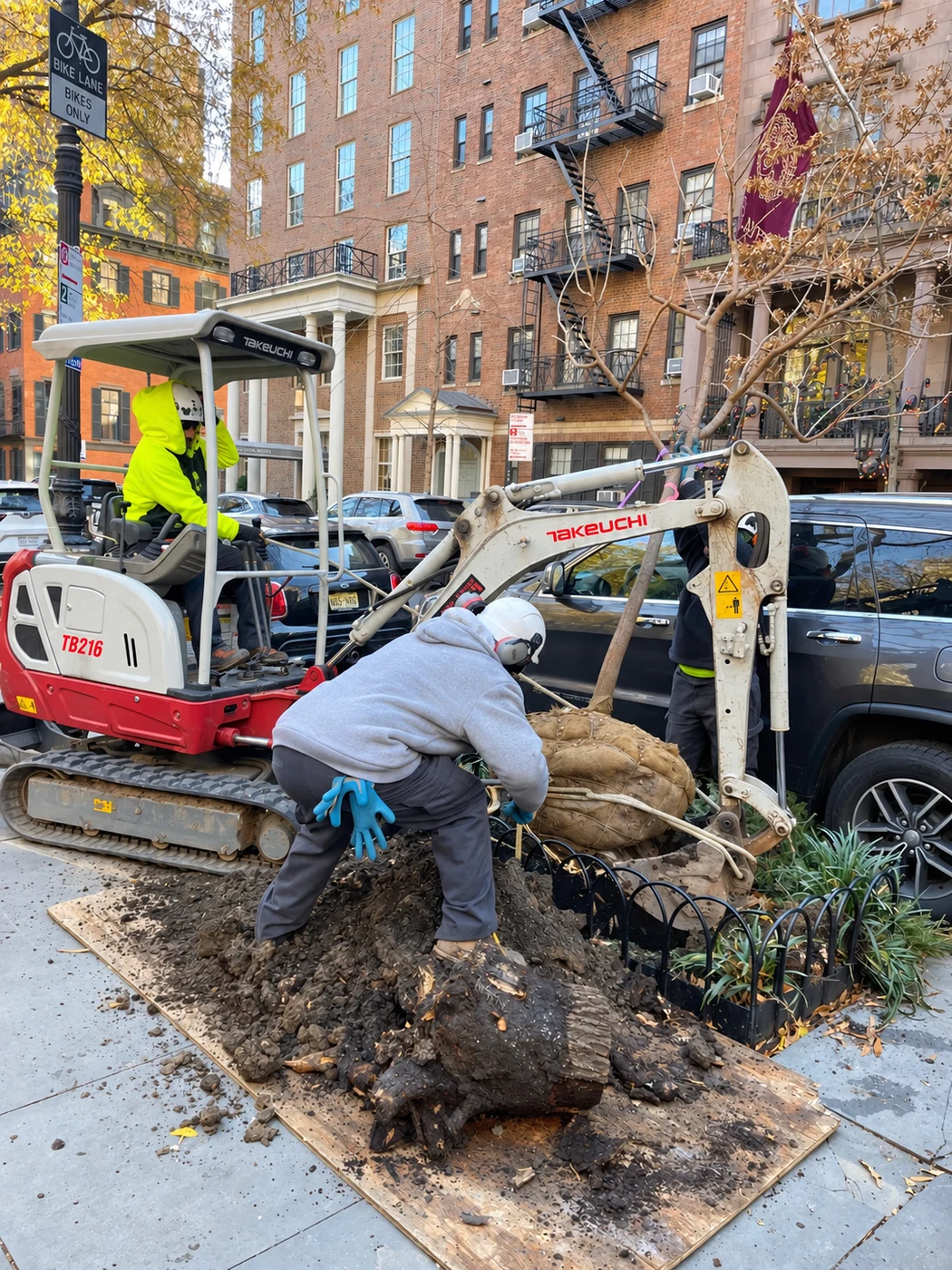
Before replacing a tree, arborists assess the soil, available light and the condition of nearby trees.
A December 2022 report documented three new perimeter trees: two goldenrain trees on the south side and a maple on the east.
An earlier planting problem called for an unusual solution. Outside 18 Gramercy Park South, heat from underground steam vaults had made the Irving Place tree pits inhospitable. Working with an arborist and with the Block Association’s support, Robert A. M. Stern Architects designed custom cast-stone raised planters to lift the roots above the overheated ground. The planters were installed with Sargent cherry trees in 2016.
Forty-one gardens at our feet
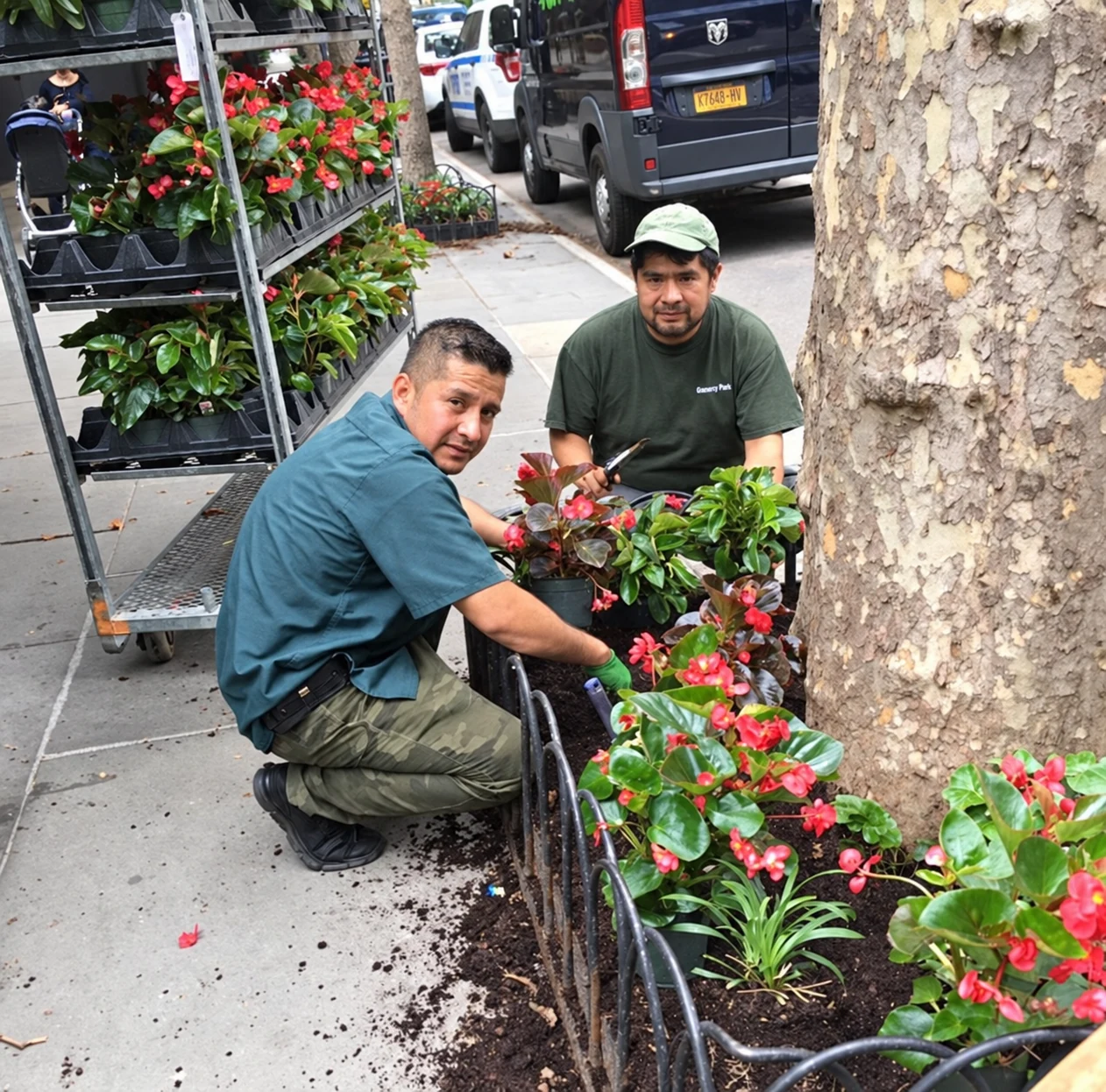
The planted spaces around the street trees form a continuous garden at sidewalk level. Iron fences, cobblestone edges and planting beds frame the trees while giving seasonal color to the walk around the Park.
In 2010, the Block Association restored these perimeter tree gardens. Later seasonal planting included begonias, liriope and bulbs. The Trustees’ caretaker and other neighborhood partners have helped with this work.
Our Clean Streets team removes litter from the gardens and helps maintain their fences.
Explore the tree gardens through the years