
Gramercy Stories
10 Gramercy Park South
From Miss Haines’s school to the home and studio of Robert Henri and Marjorie Organ.
To Charles Sheeler, an invitation to Robert Henri’s studio was a considerable honor. He came to look at paintings and spend time with an artist whose teaching had helped shape a generation of American painters.
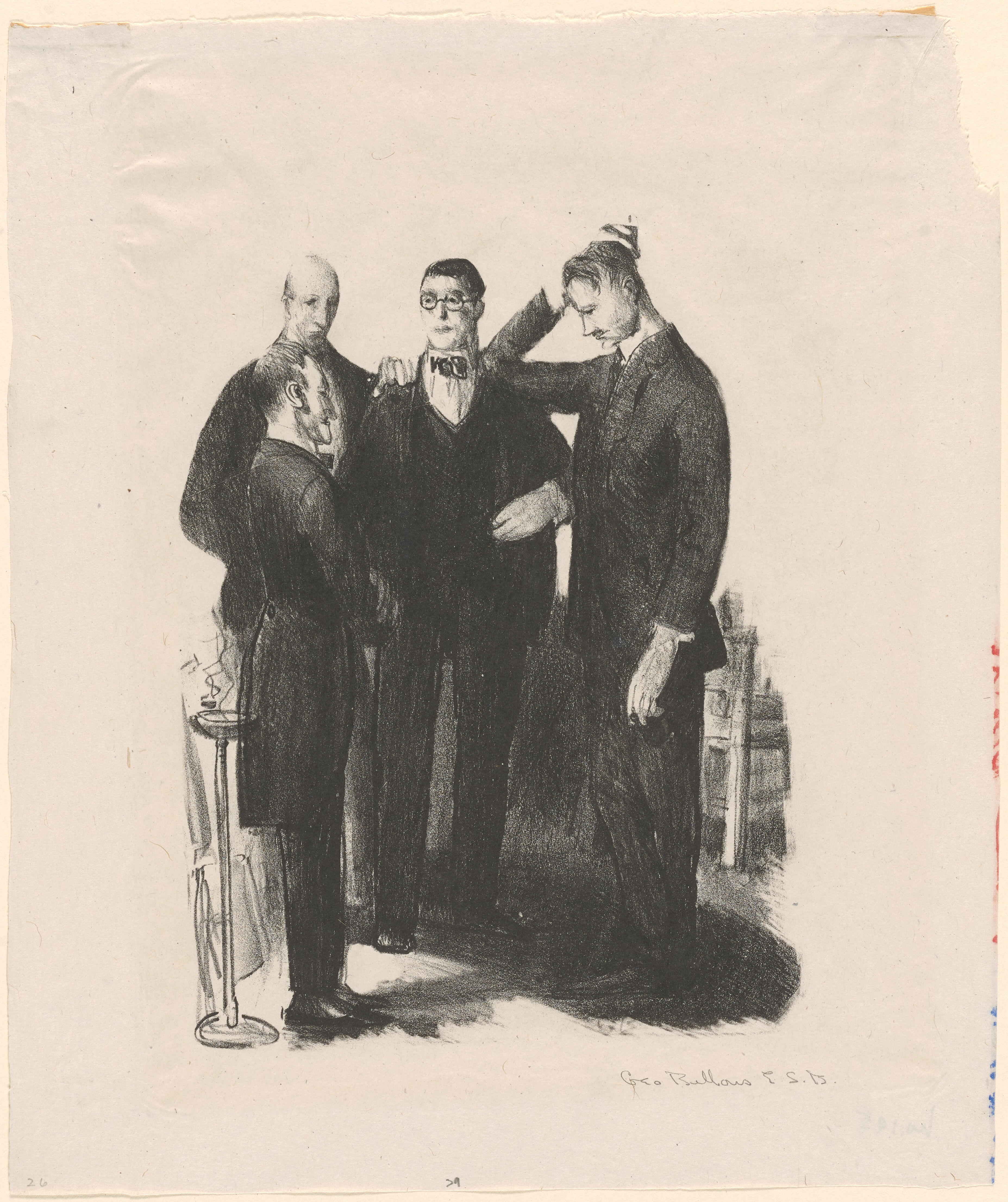
The studio was at 10 Gramercy Park South. Henri shared the address with his wife, Marjorie Organ, an artist who exhibited under her own name. George Bellows’s Four Friends gives a glimpse of their artistic circle: painters gathered together, absorbed in the work and in one another.
Long before those conversations, the house had been filled with pupils. For decades it was Miss Haines’s school, where the future Louise Carnegie studied French, poetry, and science—and where an early New York kindergarten took root.
1848–1916
Inside Miss Haines’s school
The house dates from about 1848, when Henrietta B. Haines was already teaching at No. 10. Gramercy Park itself was still young. Samuel B. Ruggles had laid out the garden and surrounding building lots in 1831; the houses that followed made its edges into a residential neighborhood. One of those houses became a place where New York families sent their daughters to be educated.
Haines’s school offered the accomplishments expected of young women in fashionable society, but its teaching also reached into science, literature, and the education of very young children. Its pupils’ experiences give a more revealing picture than the familiar label “finishing school.”
Louise Whitfield’s school days
Louise Whitfield, later the wife of Andrew Carnegie, entered at six and stayed until she was eighteen, leaving in June 1875. Her route to school led from her family’s house on East 18th Street to the brass school plate at No. 10.
Inside, she and her classmates wrote summaries of chemistry lectures by Robert Ogden Doremus. Arnold Henry Guyot taught them about the earth and living things. They memorized poetry and found further reading in the school library. Surviving reports and lecture digests, described by Louise’s biographers, suggest the range of work expected of the girls.
French was part of the day’s routine. Pupils used it during meals, between classes, and on walks, and each girl reported whether she had kept to the language. Mademoiselle de Janon, Haines’s partner and head of French instruction, became a lasting friend of Louise’s.
A new beginning for the youngest pupils
In 1872, Haines invited Maria Boelté to establish a kindergarten within the school. Boelté had trained with Friedrich Froebel’s widow and taught in Germany and England before coming to New York.
Kindergarten was still a new idea in American education. Froebel’s approach made play and purposeful activity central to young children’s development. Bringing it into an established girls’ school introduced a different kind of learning to No. 10.
After marrying John Kraus, Boelté opened an independent kindergarten and teacher-training class. Mrs. Kriege and her daughter later carried on the work at Haines’s school for two years. The teachers who passed through the house helped carry these methods into American classrooms.
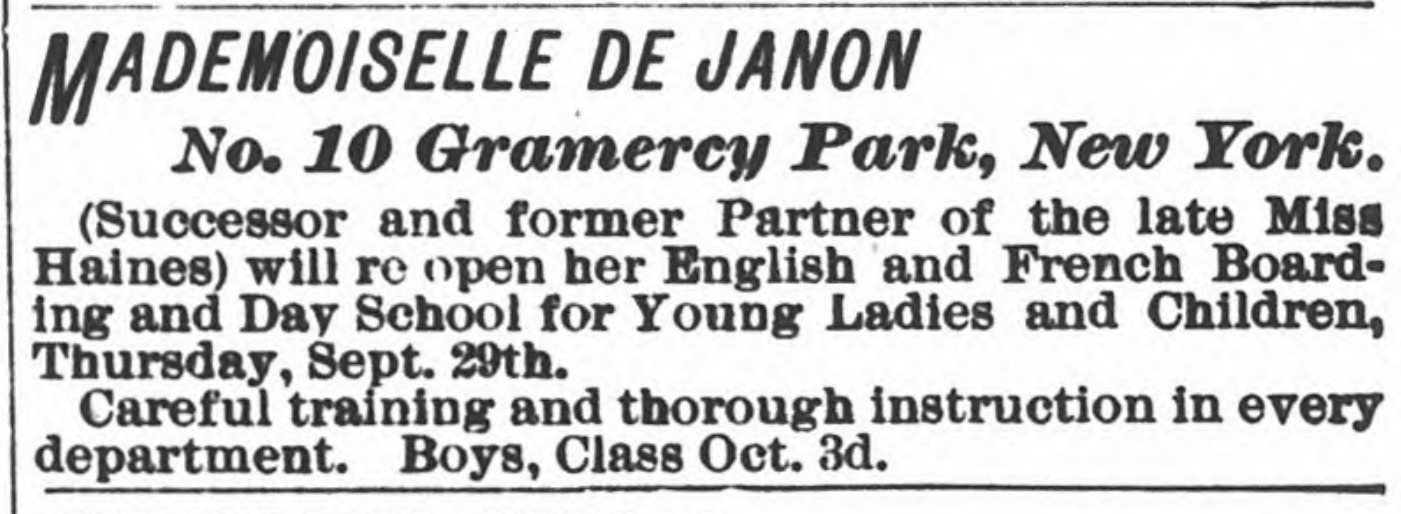
The school continued under de Janon. By 1882, she was advertising at No. 10 as Haines’s successor, offering an English and French boarding and day school for young ladies and children, with a boys’ class as well.
Women making their own professions
In the early twentieth century, women continued to give the address a place in New York’s intellectual life. The Women’s University Club listed No. 10 as its address in 1905, with Maida Castelhun as president.
The physician Beatrice M. Hinkle also lived here after moving to New York. In 1916, she introduced English-language readers to C. G. Jung’s Psychology of the Unconscious as both its translator and the author of a substantial introduction.
Hinkle explained the emerging differences between Freud’s and Jung’s ideas for readers encountering this unfamiliar field. She worked with Helen I. Brayton and drew on Louis Untermeyer’s help with the book’s verse translations. At the end of her introduction she placed her name and her Gramercy address: “Beatrice M. Hinkle. 10 Gramercy Park.”
The artists’ house
A home for two artists
Robert Henri was using No. 10 as his address by 1909. The previous year, he had helped make the exhibition of “The Eight” at Macbeth Gallery a challenge to New York’s established art world. He encouraged painters to look directly at life around them and to develop an individual voice.
At Gramercy Park, his home and studio became a place to see that work taking shape. Friends and younger artists came to look at paintings, exchange ideas, and spend time with him. The studio brought them into direct contact with his paintings, beyond the formality of an exhibition.
Henri’s teaching also reached beyond New York. He announced summer classes in Spain, France, and Holland, asking prospective students to write to him at 10 Gramercy Park. His regular school was on Broadway; the house was a base from which he planned and corresponded.
Marjorie Organ’s own name
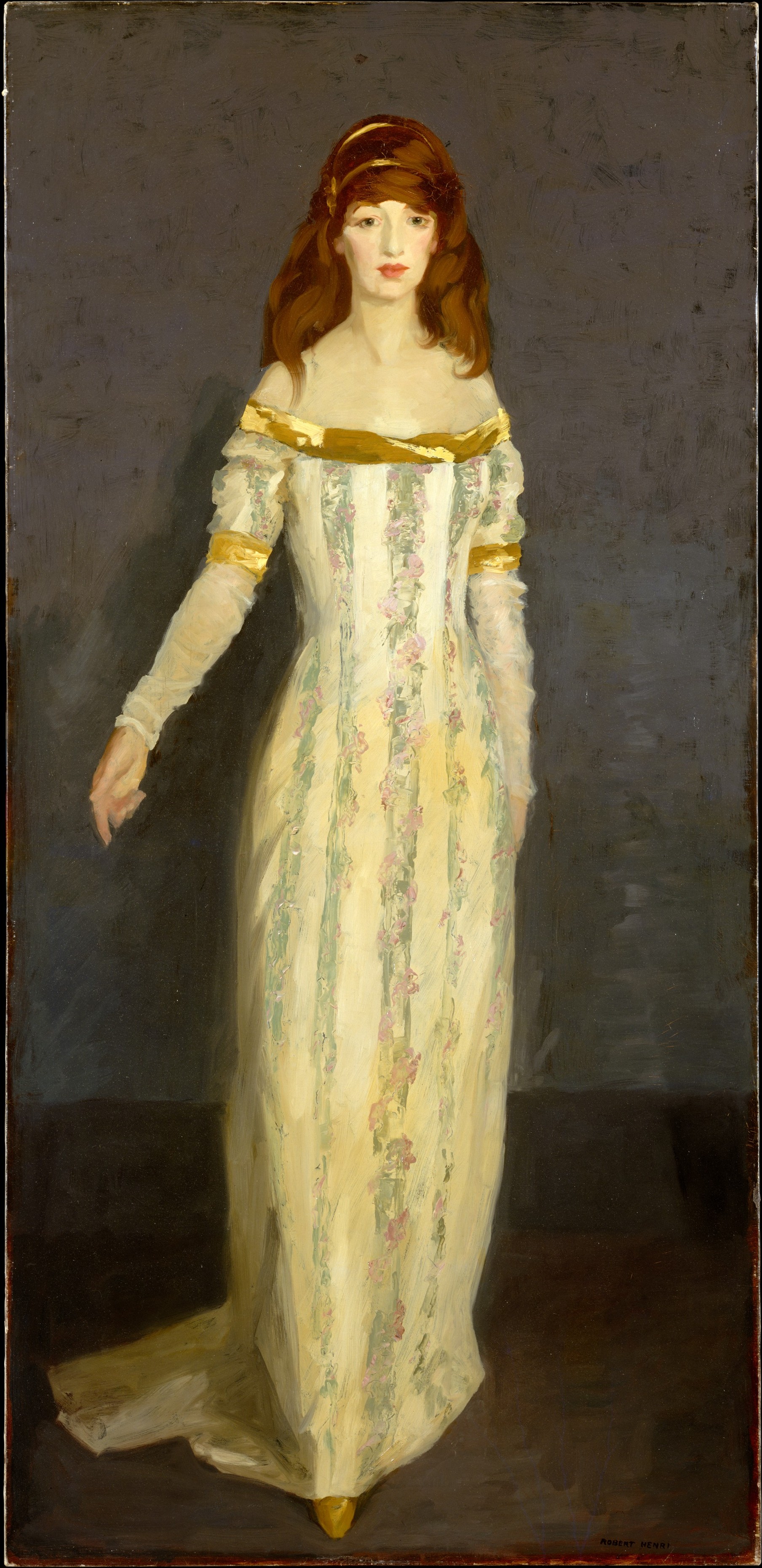
Marjorie Organ was both an artist and one of Henri’s most memorable sitters. In The Masquerade Dress, painted in 1911, her red hair and pale costume stand against a dark background. The tall canvas gives her figure an almost theatrical presence.
She exhibited graphic work and watercolors under her maiden name. At the 1913 Armory Show, six of her drawings appeared under a separate entry for Marjorie Organ. Henri contributed three paintings and two drawings. Both artists gave the same address: 10 Gramercy Park.
Their work traveled only a short distance to the 69th Regiment Armory on Lexington Avenue, between East 25th and 26th Streets. The exhibition brought an extraordinary range of modern art before an American audience. Within it, the Gramercy household had two distinct artistic identities.
Friends around the studio
Bellows’s 1921 lithograph brings four members of Henri’s circle together: Leon Kroll, Bellows himself, Eugene Speicher, and Henri. Its closely grouped figures and exaggerated gestures turn the painters’ arguments about color into an affectionate caricature.
Bellows had a home nearby at 146 East 19th Street. The National Arts Club occupied the Tilden Mansion farther along Gramercy Park South. For the artists at No. 10, the neighborhood offered a close geography of homes, studios, and friendships.
The studio after Henri
Henri died in 1929, but the apartment continued to hold his work. His sister-in-law Violet Organ kept it into the 1950s, and the paintings, diaries, letters, and scrapbooks associated with the address became important to later researchers piecing together his life.
Another painter, Nelson Shanks, later maintained a studio at No. 10. His Gramercy Studio shows the practical world of a working artist: an easel turned sideways, painting materials, stacked canvases, and a costumed model resting beside a small can of soda. The room was still a place for making pictures.
The residential house
Still part of the south-side row
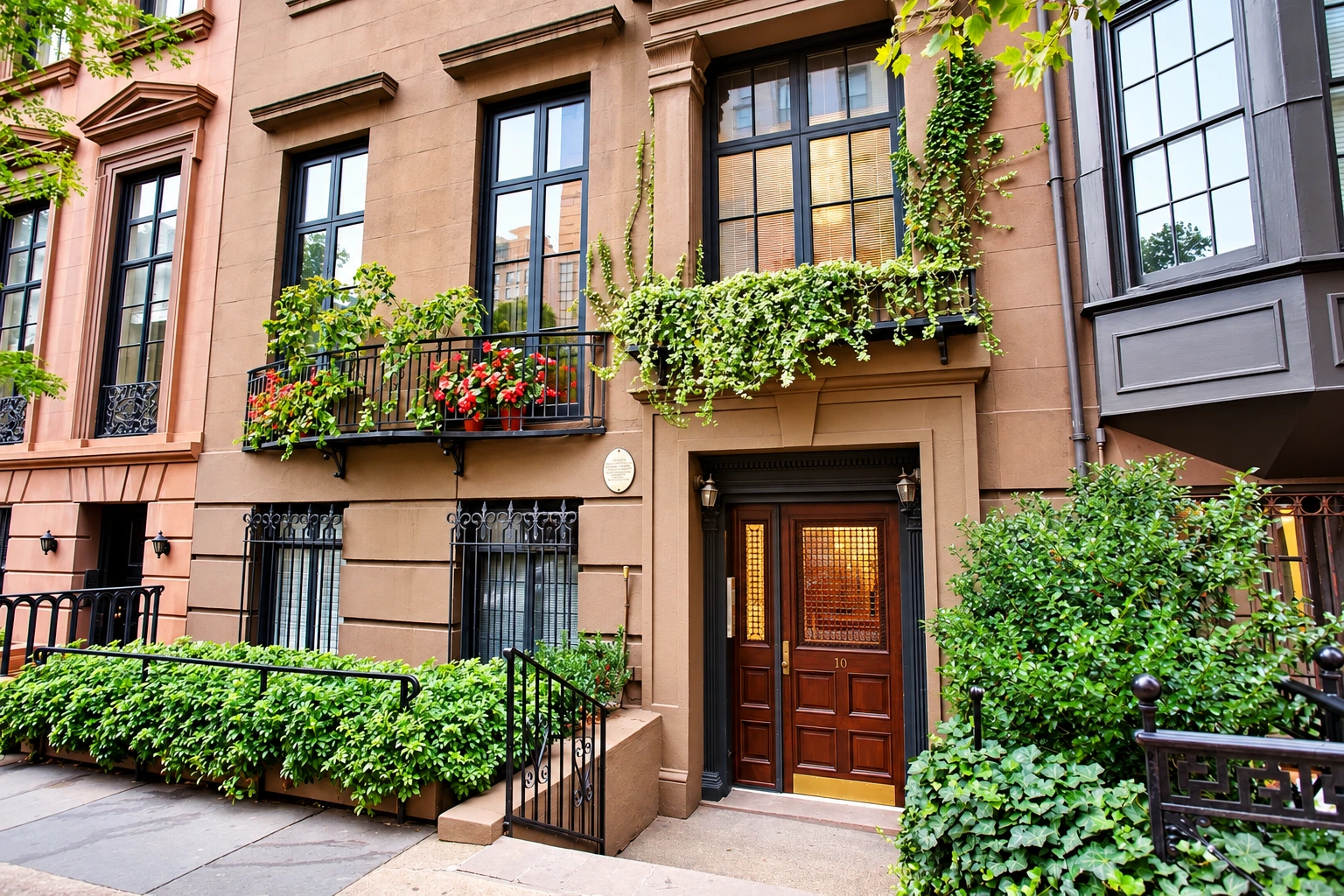
No. 10 occupies a lot just under twenty-seven feet wide. At the entrance, substantial window surrounds, iron railings, and planting give the lower façade a close relationship to the sidewalk. Its narrow frontage belongs to the scale of the Park’s early houses.
The building has been altered over its long life. Its present appearance reflects those changes, while its place in the row remains easy to understand: a small residential property facing the open space of the garden.
Today, it is a four-story residential cooperative with seven apartments. The house has been part of the Gramercy Park Historic District since 1966.
The building at a glance
- Address
- 10 Gramercy Park South
Also 108 East 20th Street - Built
- c. 1848
Original architect not established - Known for
- Miss Haines’s school; Robert Henri and Marjorie Organ’s home and studio
- Today
- Seven-apartment residential cooperative, within the Gramercy Park Historic District
Historical notes & sources
Further reading, the chronology, and documents behind the story.
A chronology of the house
- 1831Samuel B. Ruggles lays out Gramercy Park and its building lots.
- 1848–49Henrietta B. Haines appears at No. 10 in Doggett’s city directory.
- 1860s–1875Louise Whitfield studies at the school, leaving in June 1875.
- 1872Maria Boelté begins a kindergarten within Haines’s school.
- 1882De Janon advertises as Haines’s successor at No. 10.
- 1905The Women’s University Club lists the address.
- 1909Robert Henri is listed at No. 10.
- 1913Henri and Marjorie Organ both exhibit at the Armory Show.
- 1916Hinkle’s English translation of Jung is published, with her introduction signed from No. 10.
- 1921Bellows makes Four Friends.
- 1929Henri dies; the apartment continues to hold his work and papers.
- 1966The house becomes part of the Gramercy Park Historic District.
- 2026Municipal records describe a seven-apartment residential cooperative.
Dates, addresses, and historical notes
The building and its address. No. 10 is also 108 East 20th Street, Manhattan block 875, lot 76. It is separate from No. 9 / 106 East 20th Street and No. 11 / 110 East 20th Street. Contemporary sources commonly omit “South.” Henri’s address is independently established in 1909, 1910, and 1913; the occasional attribution of his studio to No. 11 has not been adopted.
Construction. The approximate date, c. 1848, follows the city’s PLUTO record and Haines’s contemporary directory entry. Pine’s later history remembered the school here by 1851. The LPC describes a mid-nineteenth-century rowhouse. The original architect and commissioner, a complete deed chain, and any predecessor structure have not been established. Property websites’ 1900 date is not used.
The school and its pupils. Louise Whitfield’s school experiences come from the 1950 biography by Burton J. Hendrick and Daniel Henderson, based on family papers and recollections. The 1882 advertisement names de Janon as successor to the late Miss Haines; it does not establish the exact death or succession date. The school’s closing date and the Women’s University Club’s complete tenure remain open questions.
The artists and their visitors. The 1913 Armory catalogue lists six drawings by Organ under no. 107 and Henri’s three paintings and two drawings under nos. 835–839. Bellows, Kroll, Speicher, and Sheeler are associated with the studio as visitors or depicted companions; they are not identified here as residents. In the 1958 oral history, Sheeler describes his earlier visits, while interviewer Bartlett Cowdrey supplies the account of Violet Organ and the apartment. The Delaware finding aid describes later research files and copies. Shanks’s exact occupancy years remain unidentified.
The house today. Current use and unit count were checked against NYC PLUTO 26v2 on October 2, 2026. The district was designated September 20, 1966. A rear-façade application was approved in 2010; this is not treated as proof that the work was completed. PLUTO records alterations in 1988 and 2005 without explaining their scope. No private interiors were inspected, and the original arrangement of rooms remains unverified.
Sources for the story
The school and the women of No. 10
- NYC Landmarks Preservation Commission, Gramercy Park Historic District, September 20, 1966, pp. 1–3. Park development, district boundaries, and neighboring architecture; not an individual architectural history of No. 10.
- NYC Department of City Planning, PLUTO, parcel 1008750076, version 26v2, retrieved October 2, 2026. Year built 1848, dimensions, ownership entity, unit count, use, and recorded alteration years. Dataset record.
- Doggett’s New-York City Directory, 1848–49, p. 180, right column, near the foot. Original scan inspected; the edition is 1848–49, despite the catalogue’s generic 1845 metadata.
- John B. Pine, The Story of Gramercy Park, 1831–1921 (1921), p. 50 (PDF p. 60). Source of the familiar “as early as 1851” account.
- PropertyShark, parcel and address fields, checked October 2, 2026. Confirms 108 East 20th Street; its 1900 construction date conflicts with stronger evidence and is not adopted.
- Burton J. Hendrick and Daniel Henderson, The Life of Mrs. Andrew Carnegie (Hastings House, 1950), pp. 12–18. The online upload’s “Autobiography” label is misleading: this is a biography using family papers and recollections. Used selectively for Louise’s attendance, curriculum, French practice, and surviving papers; unsupported or erroneous neighboring-house anecdotes are not adopted.
- Susan E. Blow, “Kindergarten Education,” in Nicholas Murray Butler, ed., Monographs on Education in the United States (1904), p. 4 / collected p. 36 (PDF p. 40). Haines’s 1872 invitation to Boelté and the latter’s subsequent independent work.
- Henry Barnard, ed., Kindergarten & Child-Culture Papers, revised edition (1890), Peabody’s “Development of the Kindergarten,” pp. 10–11, and “Plea for Kindergartens,” p. 678. Peabody’s account of the transmission of Froebel’s methods; Boelté and the Krieges at Haines’s school.
- The Living Church, February 11, 1882, p. 3, rightmost column: “Mademoiselle de Janon” advertisement. The issue carries an older reopening notice; its September and October dates are not treated as new events in February 1882.
- University of California, register of graduates, 1864–1905, p. 41 (PDF p. 44), Maida Castelhun entry. Original scan inspected.
- C. G. Jung, Psychology of the Unconscious, authorized translation and introduction by Beatrice M. Hinkle (Moffat, Yard, 1916), title page, translator’s note, pp. v–vi, and introduction, pp. vii–xlvi. Primary evidence of Hinkle’s address and credited collaborators.
- Jay Sherry, “Beatrice Hinkle and the Early History of Jungian Psychology in New York,” Behavioral Sciences 3 (2013): 492–500, especially pp. 493–94. Scholarly account of her move to New York and residences at Nos. 10 and 31; DOI.
Henri, Organ, and the studio
- National Academy of Design, Catalogue: Winter Exhibition (1909), p. 59 (PDF p. 99), “Names and Addresses of Artists.” Henri’s No. 10 entry verified against the scanned page.
- The Craftsman, XVII, no. 6 (March 1910), advertising p. viii (PDF p. 10). Distinguishes the Henri School of Art’s Broadway premises from his Gramercy correspondence address.
- Catalogue of the International Exhibition of Modern Art (1913), p. 23 (PDF p. 25), Organ, no. 107; p. 58 (PDF p. 60), Henri, nos. 835–839; front matter for the Armory location.
- Metropolitan Museum of Art, Robert Henri, The Masquerade Dress, 1911, accession 58.157, Arthur Hoppock Hearn Fund, 1958. Identification of Organ and account of Henri’s artistic development and the 1908 exhibition.
- Boston Public Library / Digital Commonwealth, George Bellows, Four Friends, first state (1921), accession 1941.1.57. Identification of sitters and studio; cites Lauris Mason’s catalogue raisonné and Emma Bellows’s 1927 catalogue. The record notes a reversal of state numbering in the earlier catalogue.
- Christie’s, George Bellows, Gramercy Park, lot essay. Henri’s 1909 move and Bellows’s 1910 move to 146 East 19th Street. Used for these connections, not for every historical assertion in the essay.
- Charles Sheeler, oral-history interview with Bartlett Cowdrey, December 9, 1958, Archives of American Art, transcript PDF p. 4. Sheeler’s studio visits and Cowdrey’s separate comments about Violet Organ and the apartment. The endpoint was accessible during research but returned intermittent access errors on recheck.
- Delaware Art Museum, William Innes Homer Collection on Robert Henri, finding aid, PDF pp. 14, 19–20: box 7, folder 3; box 9, folders 14, 23, and 25. These are descriptions of research files and copies, not a claim that all underlying manuscripts have been examined.
- Sotheby’s, Master to Master: The Nelson Shanks Collection, January 27, 2021, lot 133, Gramercy Studio. Building connection and description of the studio painting; exact occupancy years and date of the painting are not supplied.
The building and preservation
- NYC PLUTO 26v2 and the 1966 LPC designation report, linked above. Present data checked October 2, 2026; no private interiors were inspected.
- CityRealty, No. 10 exterior photograph, undated, accessed October 2, 2026. Shows the entrance, lower façade, ironwork, and planting.
- Manhattan Community Board 6, full-board minutes, April 14, 2010, p. 9, “10 Gramercy Park S—Certificate of Appropriateness.” Scope and visibility of proposed rear work.
- LPC annotated hearing calendar, April 20, 2010, p. 4, item 21, application 10-6353. “A rowhouse built in the mid-19th century”; rear-façade application approved, 6–0. The calendar does not certify completion.
Explore the original documents
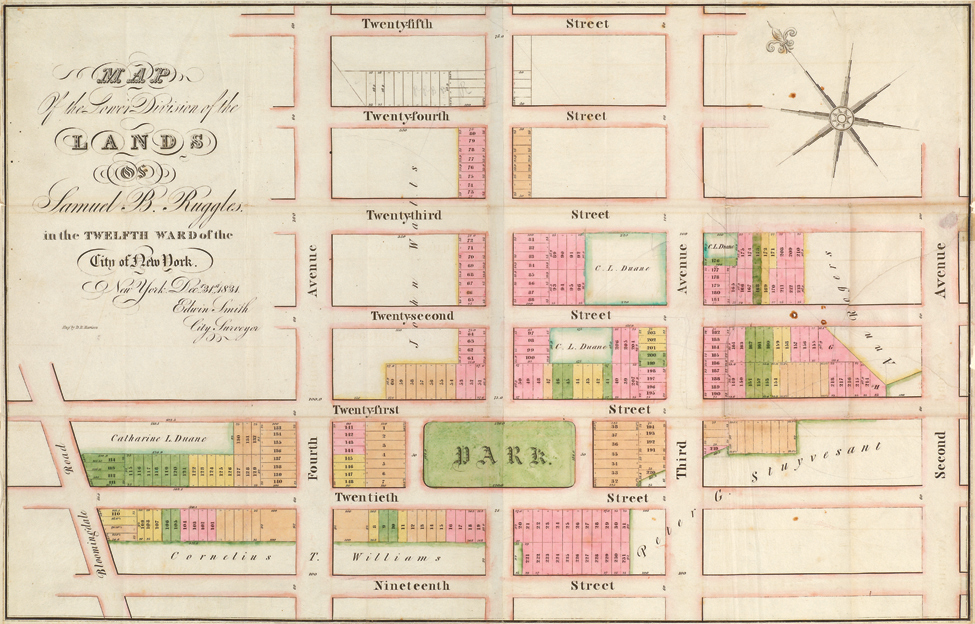
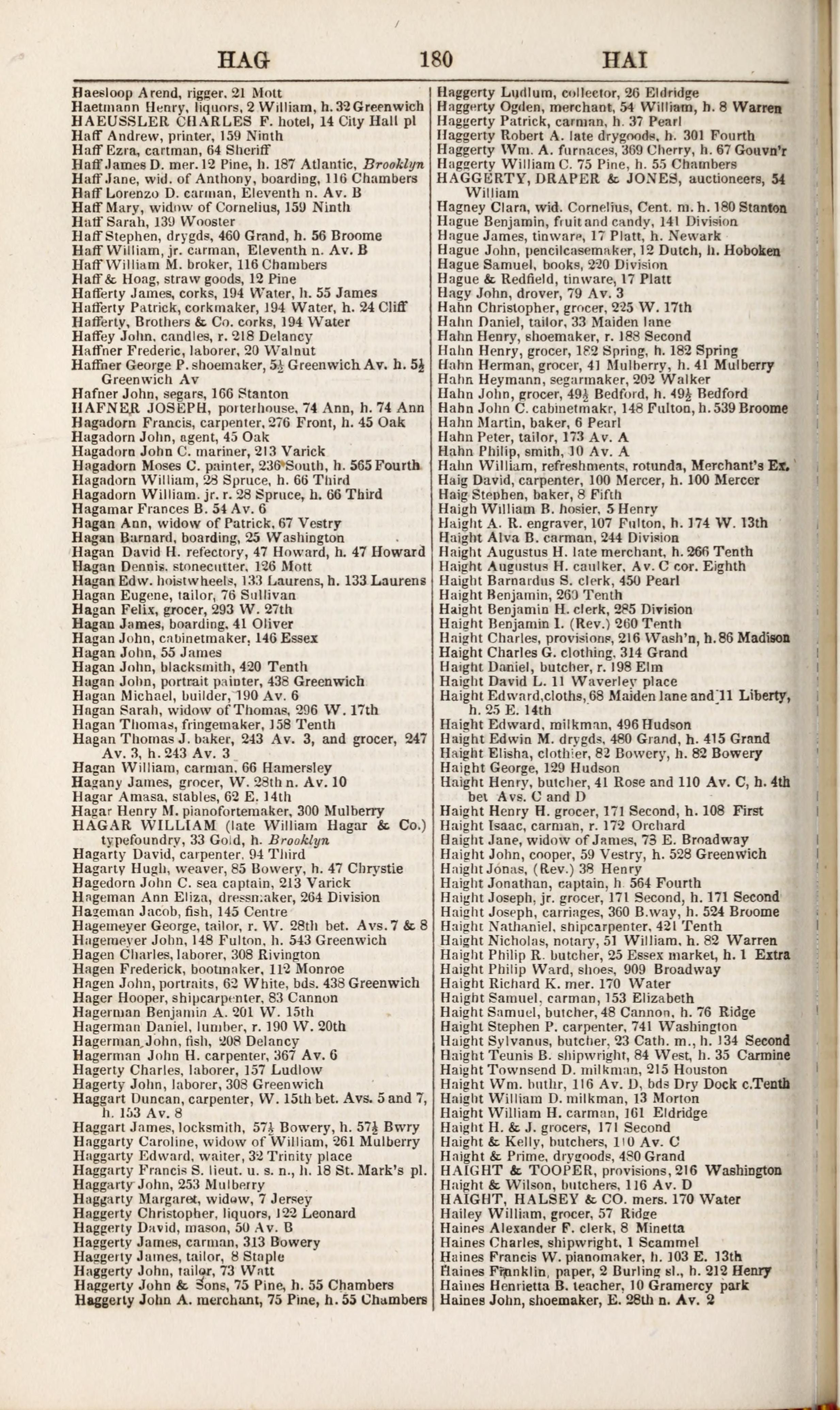
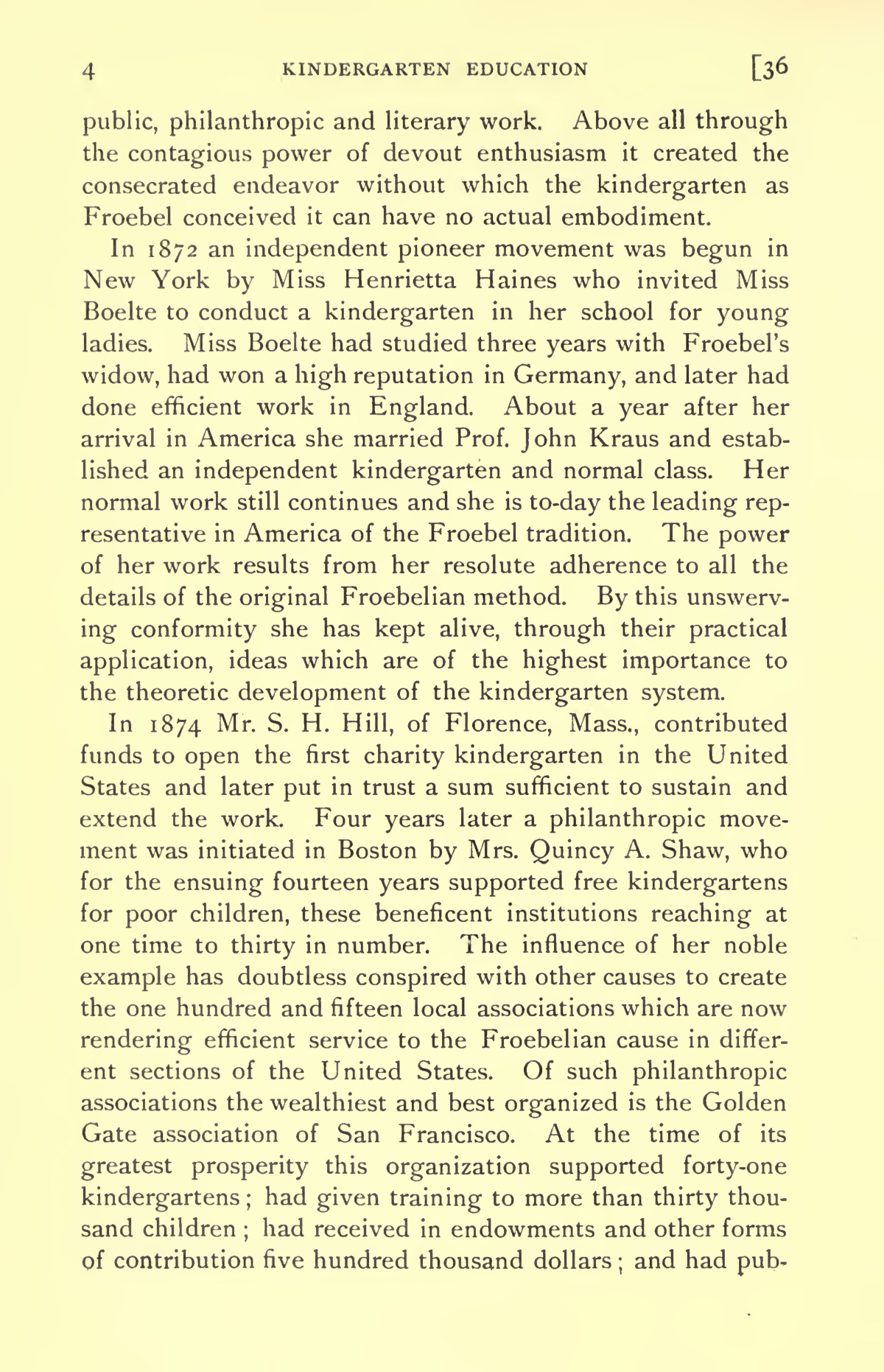
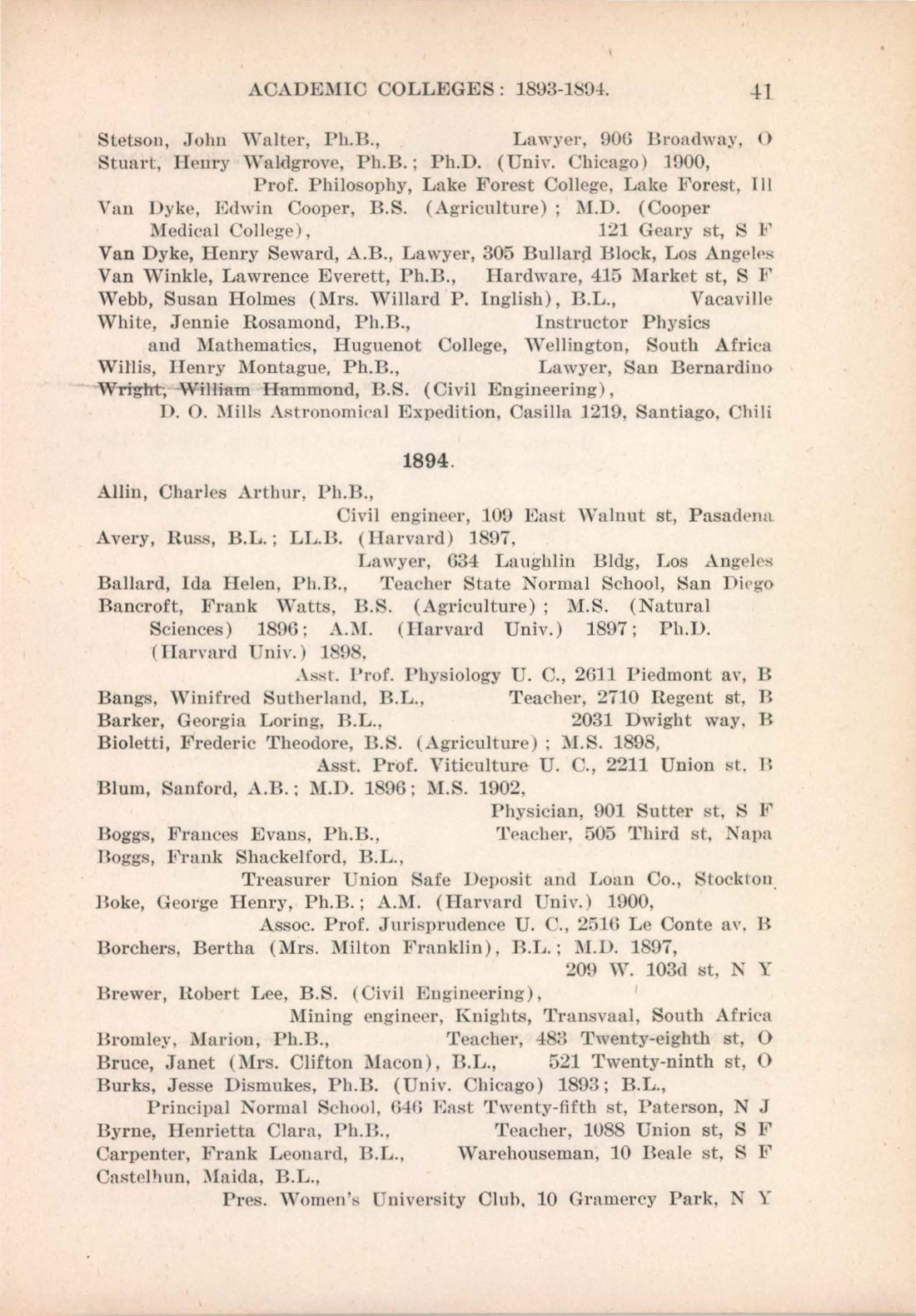
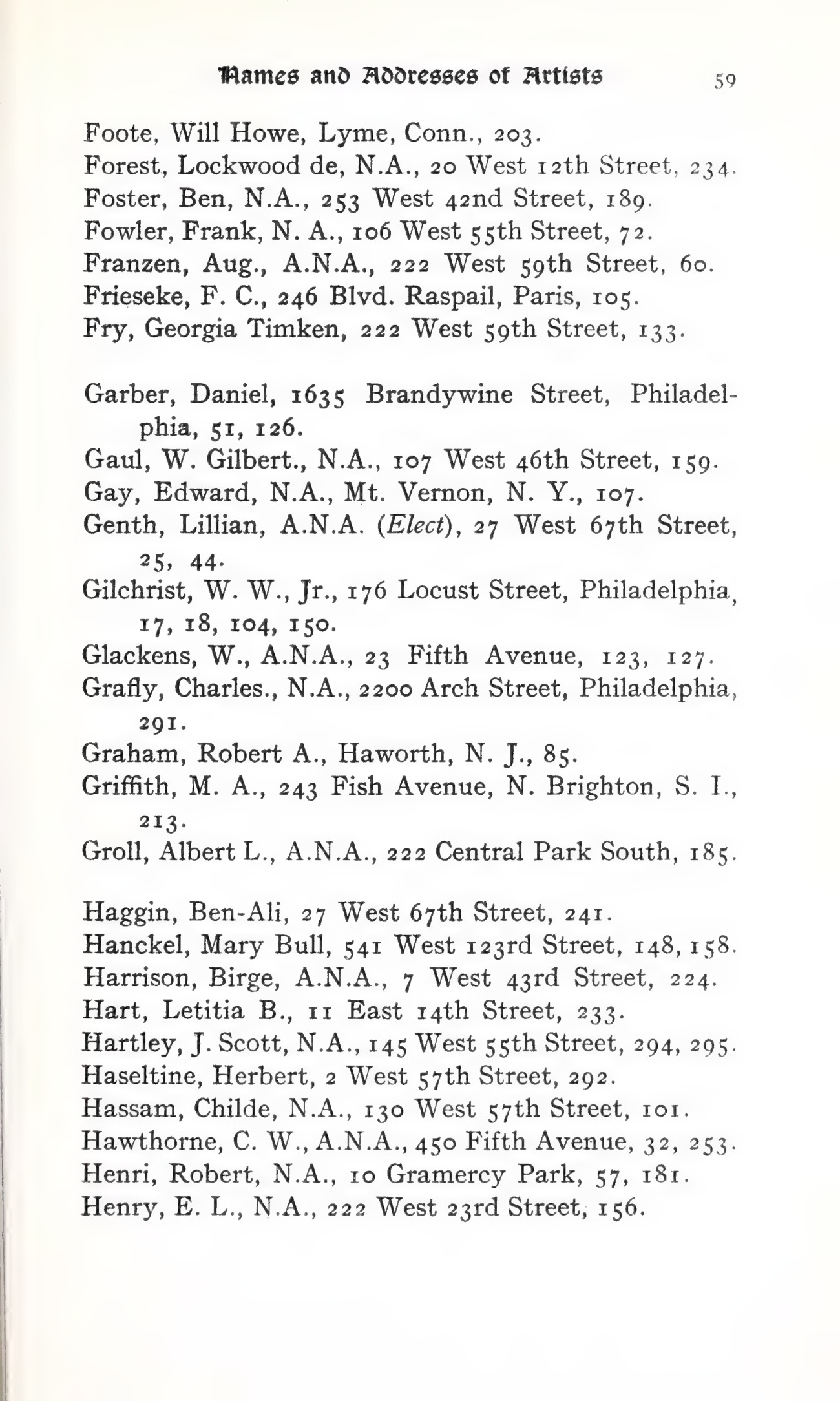
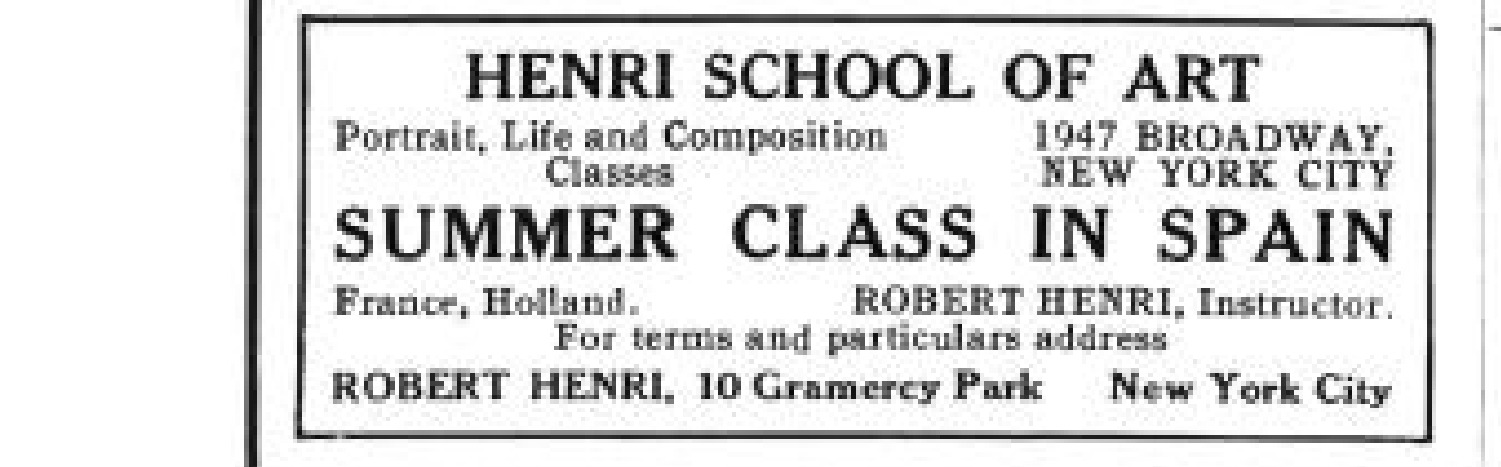
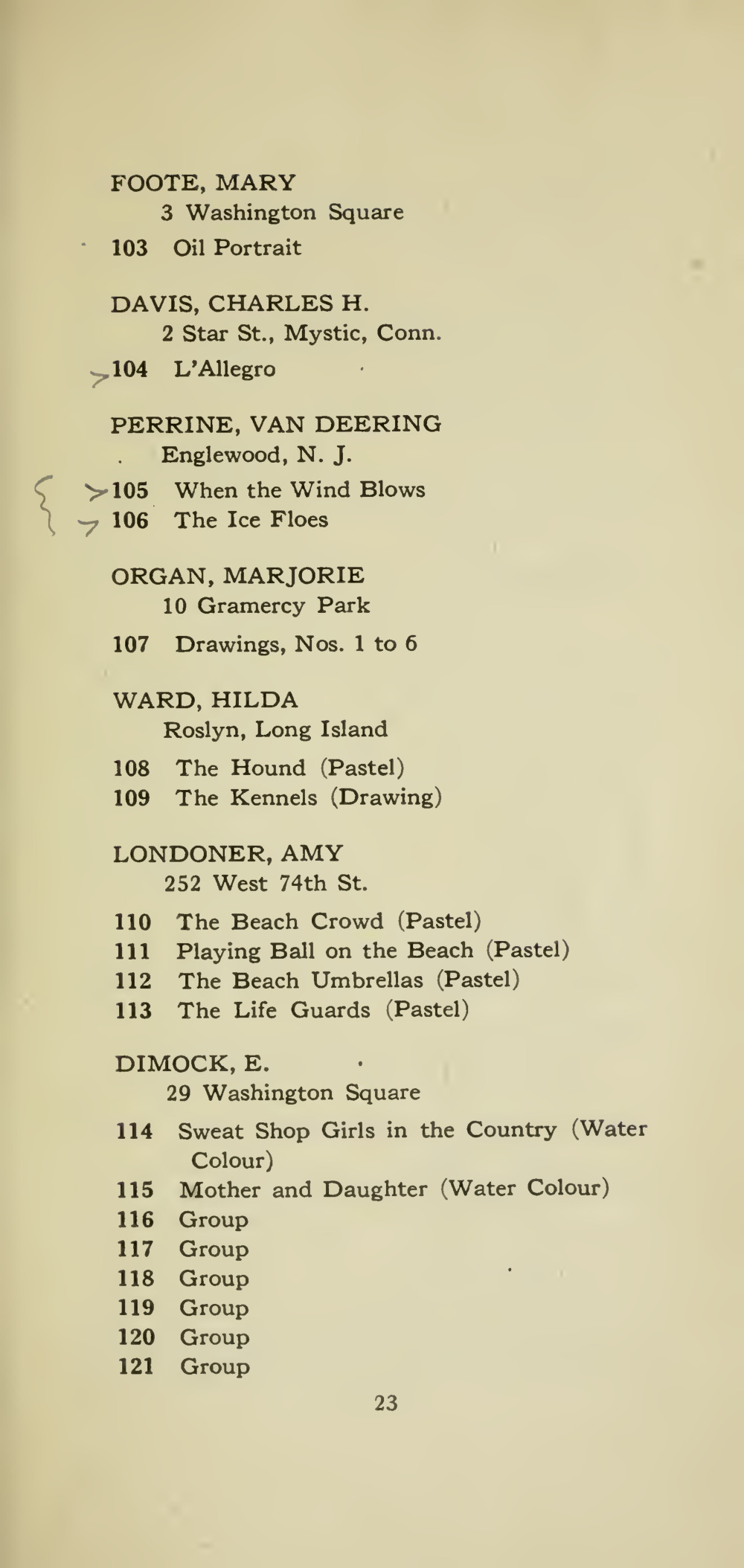
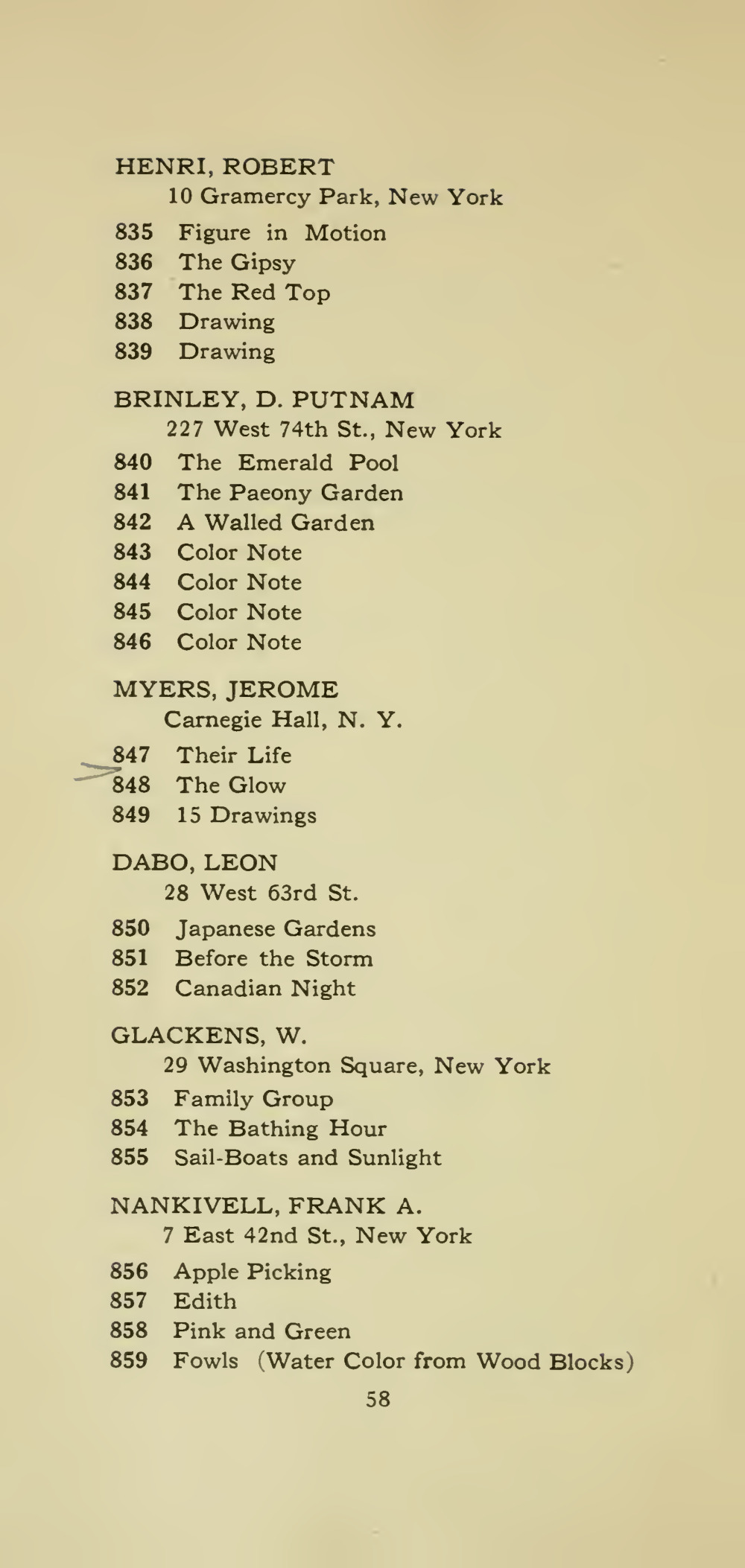
Image credits & sources
- Exterior of No. 10. Photograph published by CityRealty; original photographer and date not identified. Color and clarity adjusted for this presentation.
- Four Friends, first state. Boston Public Library, Print Department, gift of Albert H. Wiggin, 1941.1.57. No known restrictions on use; No Copyright—United States. Source record.
- The school under de Janon. The Living Church, p. 3, rightmost column. Public domain in the United States. Source record.
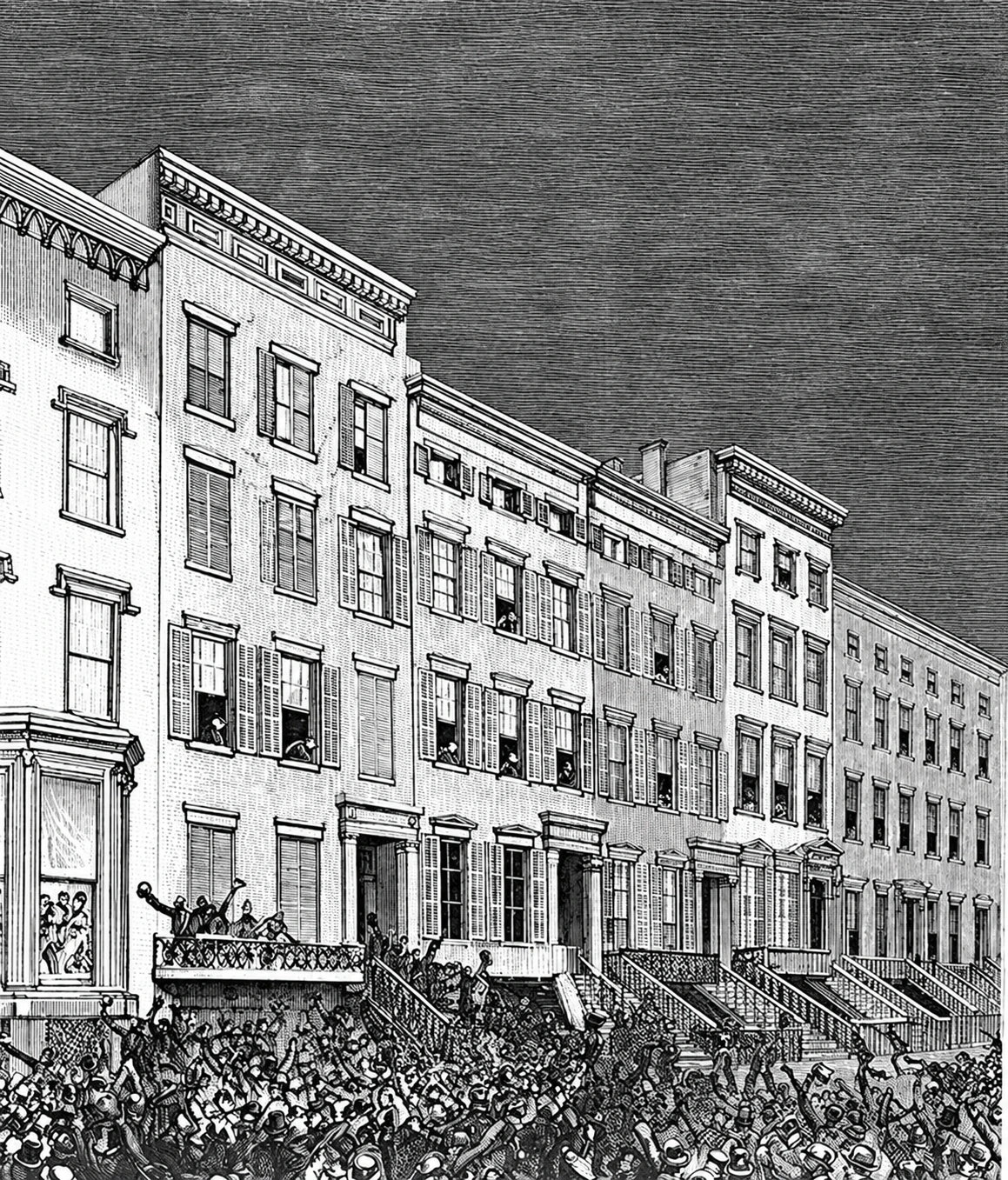
- The school’s neighbors in 1877. Historic engraving credited to New York Public Library in Tom Miller’s Tilden history; original reproduction retained in GPBA’s collection. Public-domain nineteenth-century print and faithful reproduction. Source record.
- Marjorie Organ. Robert Henri, The Masquerade Dress, 1911. Metropolitan Museum of Art, Arthur Hoppock Hearn Fund, 1958, accession 58.157. High-resolution reproduction from the Met’s Wikimedia Commons contribution, CC0. Image record.
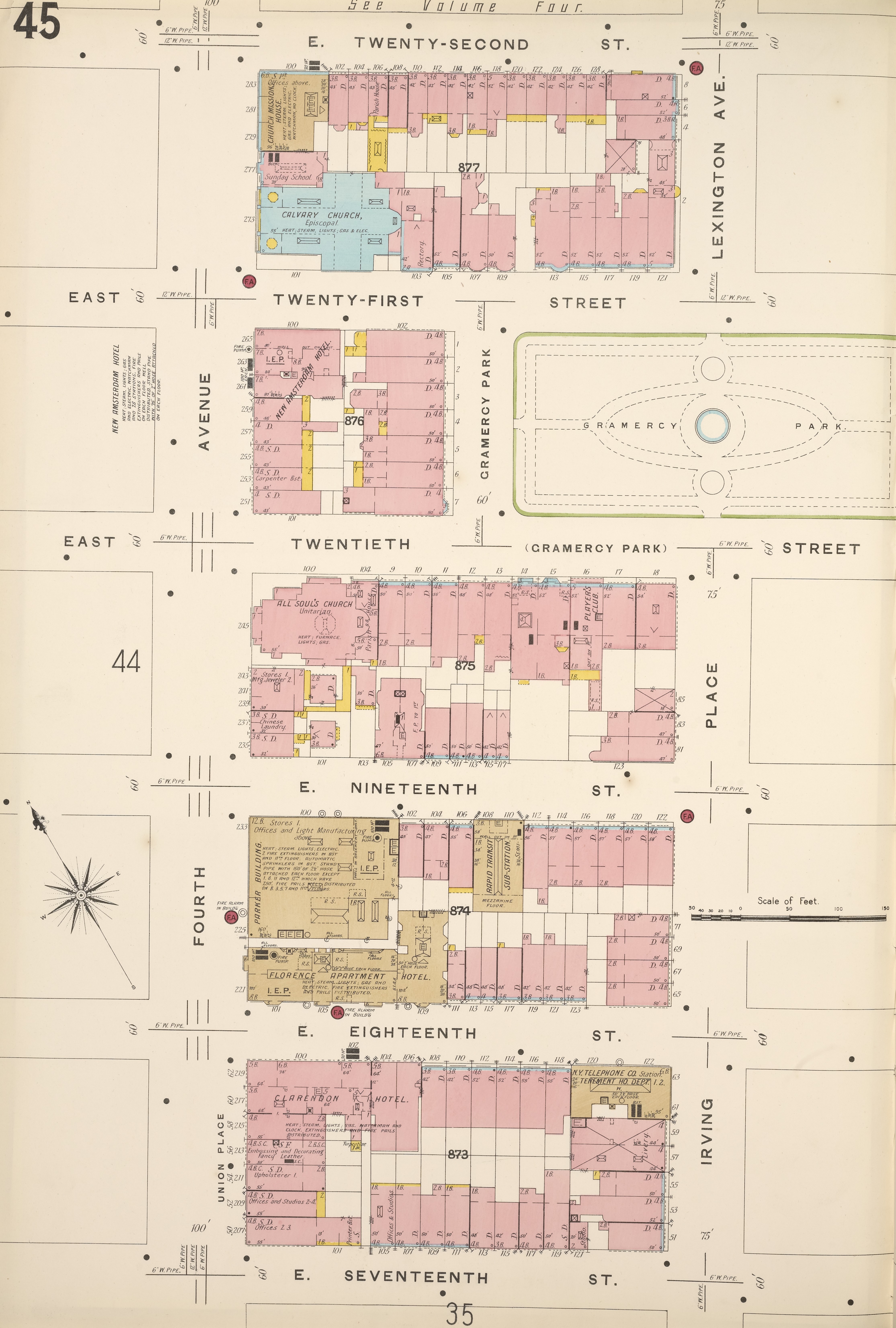
- The south-side lots. Sanborn Manhattan atlas, vol. 2, plate 45. New York Public Library, digital ID 1996145; via Wikimedia Commons. Public-domain map; faithful reproduction. Source record.
- The land before the houses. New York Public Library; reproduction already held in GPBA’s historical image collection. Public-domain nineteenth-century map. Source record.
- An address in 1848–49. Doggett’s New-York City Directory, p. 180. Columbia University Libraries / Internet Archive. Public domain in the United States. Source record.
- A kindergarten pioneer. “Kindergarten Education,” p. 4 (collected p. 36), in Monographs on Education in the United States. Public domain in the United States. Source record.
- A club’s address survives. University of California register of graduates, 1864–1905, p. 41. Scan hosted by SFgenealogy. Public domain in the United States. Source record.
- Henri’s address in 1909. Catalogue of the Winter Exhibition, p. 59. Internet Archive. Public domain in the United States. Source record.
- A school and a home address. The Craftsman, XVII, no. 6, advertising p. viii. UC Berkeley Library. Public domain in the United States. Source record.
- Organ’s six drawings. Armory Show catalogue, p. 23. Digitized copy hosted by VCU’s Blackbird archive. Public domain in the United States. Source record.
- Henri’s five entries. Armory Show catalogue, p. 58. Digitized copy hosted by VCU’s Blackbird archive. Public domain in the United States. Source record.
- Display copies receive modest tonal adjustments. The Bellows print and Sanborn detail are cropped for the page; their full originals open in the viewer. Document excerpts retain the original lettering. No historical detail has been reconstructed.