
George Templeton Strong
A City Kept in Secret
1820–1875 · 74 (later 113) East 21st Street · Gramercy Park North · 1849–1875
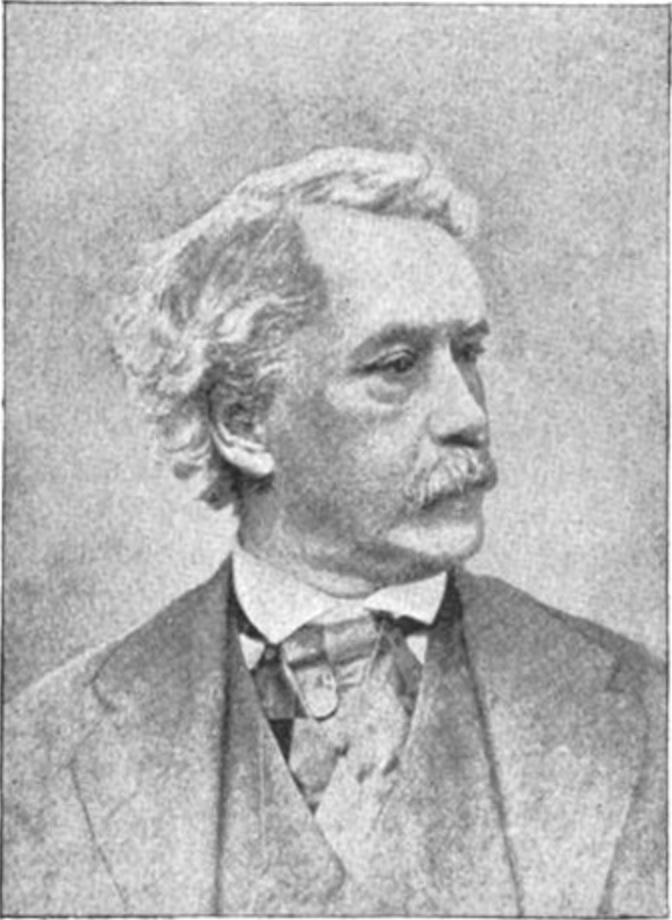
A life in Gramercy
The party inside the pages
On December 31, 1849, George Templeton Strong was preparing to give a party in his new house on Gramercy Park North. The prospect unsettled him. He was accustomed to going out into New York, observing its performances and personalities, and returning to put them on paper. Now the company would come to him. He and his wife, Ellen, had moved into their four-story brownstone only that September; the house was grand enough for entertaining, even if its twenty-nine-year-old owner still found the role of host rather astonishing.
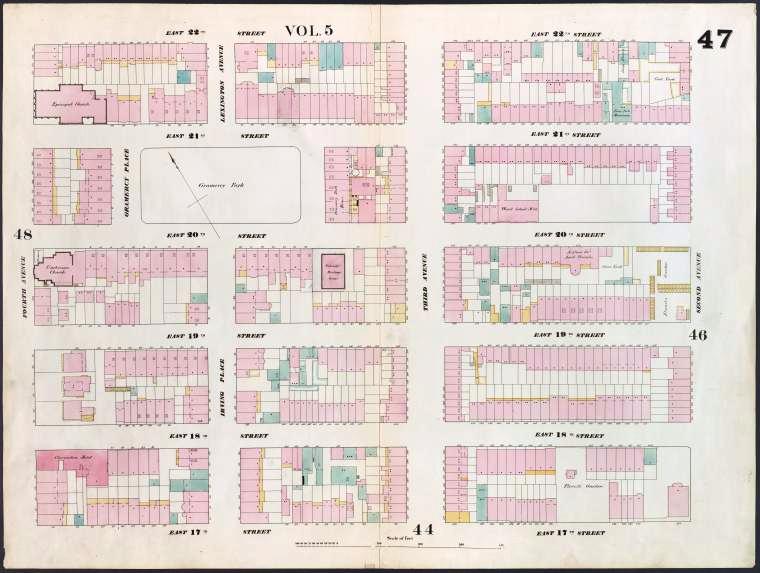
Strong called the house his “palazzo.” It stood at 74 East 21st Street, later renumbered 113, facing the private square Ellen’s father, Samuel B. Ruggles, had created. Within walking distance lived publishers, inventors, merchants, and reformers whose ambitions were reshaping the city. Strong watched them with an eye that was affectionate one moment and merciless the next. The French decorator next door, a disastrous fire downtown, a celebrated novelist’s lecture: all might find their way into the diary he kept apart from his public life.
Then the country went to war. The same rooms that held his books and welcomed his friends became a meeting place for volunteers and a workplace for relief accounts. Strong helped organize the United States Sanitary Commission, while Ellen nursed wounded men aboard a hospital ship. In July 1863, troops took up positions outside the square. The private chronicler had become a participant in the history gathering around his door, leaving an extraordinary account of what it felt like to live through it.
Learning to Notice
A city boy with a notebook
George Templeton Strong was born on January 26, 1820, at 108 Greenwich Street, into a New York where family, profession, and place still fitted closely together. His father, George Washington Strong, was a distinguished lawyer; the son would enter the same profession and spend his working life among the agreements, property, and obligations of a growing commercial city. Yet the inheritance that eventually made him famous was one he created for himself. In October 1835, at fifteen, he began a diary.
He kept going for forty years. The notebook became a place for what a respectable lawyer could hardly announce across a dinner table: irritation, amusement, apprehension, sudden enthusiasm, and judgments he might revise tomorrow. He did not write for a newspaper’s readers or an election’s voters. He wrote in private, with the freedom to be inconsistent and the patience to notice what formal histories usually leave behind. By the end, his tiny handwriting filled more than 2,250 manuscript pages, a formidable storehouse of the city’s daily life.
The lawyer who listened
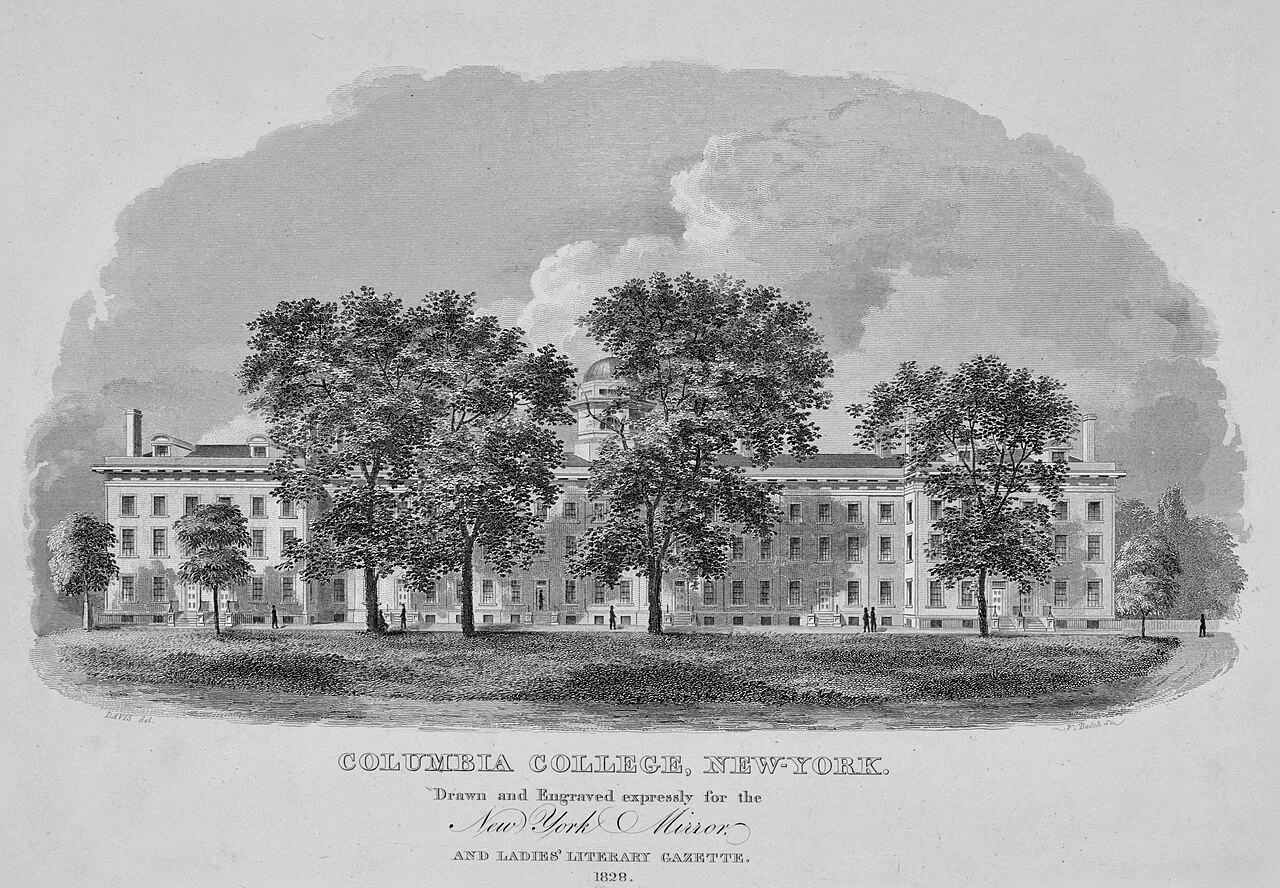
Strong graduated from Columbia College in 1838, when the college still occupied its old grounds near Park Place. He entered the family’s Wall Street practice, Strong, Bidwell & Strong, developing the exactness that colleagues would later value in him. Legal work required him to separate assertion from evidence and to attend to consequences. His diary employed a less restrained version of the same intelligence, testing public reputations against what he saw and heard. No celebrated name was quite safe from an unflattering detail.
Books and music offered worlds larger than an office. Strong collected manuscripts and early printed volumes, read old authors, and listened with the concentration of a musician rather than a fashionable spectator. A performance could give him profound pleasure or send him home indignant at what had been done to a score. His interests ranged across medieval learning, church architecture, opera, and the concert hall. These were enduring commitments, not ornaments of a legal career; they would eventually draw him into the management of institutions as well as the pleasures of collecting.
A walk toward a different life
On June 16, 1845, Strong walked around Gramercy Park at dusk. The quiet caught him. He savored the square’s “delicious silence” and imagined making a home there. It was a striking attraction for a man whose diary depended on the city’s ceaseless activity. He wanted a place from which to enter New York, and a place to withdraw from it. The enclosed garden, with houses beginning to gather around its perimeter, promised both.
Samuel B. Ruggles had set aside the Park in 1831, using a private trust and residential covenants to preserve open ground as the city advanced northward. Strong’s attraction to the square preceded the family connection that would bring him there. At twenty-five, he could picture the address before he knew the life it would contain: marriage, children, a library, evenings of music, and eventually a national relief organization whose business would follow him home.
A Palazzo for Two
Ellen and the new church
By 1847, the idea of a house on the Park had become entwined with Strong’s feelings for Ellen Caroline Ruggles. Born in 1825, Ellen belonged to the family that had given the neighborhood its shape. Their marriage would bring George into Samuel Ruggles’s intimate circle, but the diary gives this turn in his life a more personal scale. The critic of other people’s enthusiasms was now learning the exposure that came with having someone else’s happiness, and health, matter so much to his own.
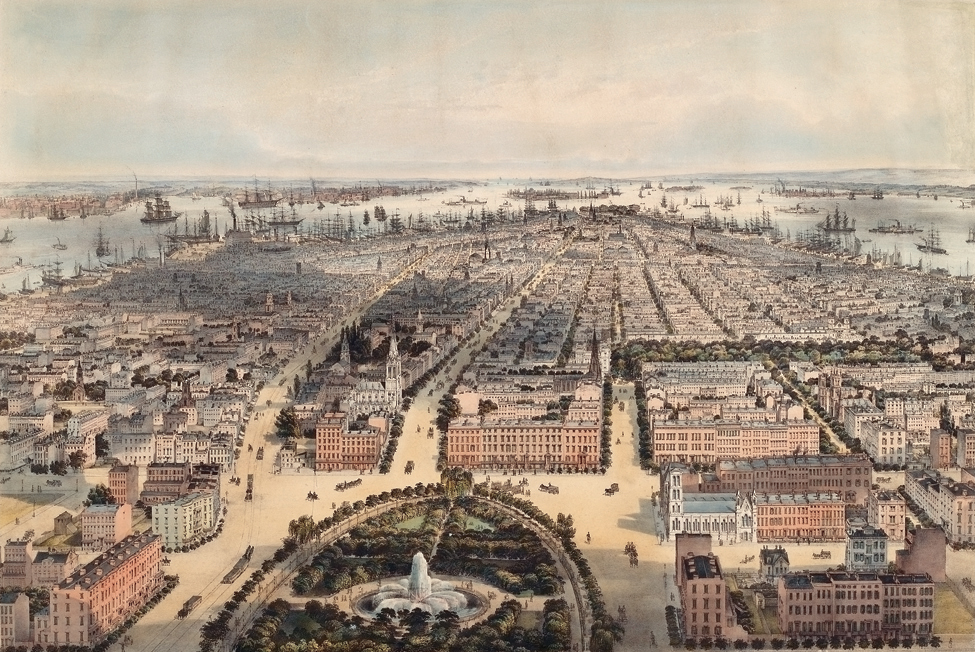
They married on May 15, 1848, at Grace Church on Broadway, the same date as Ellen’s parents’ wedding anniversary. James Renwick Jr.’s Gothic church had been consecrated only two years earlier. Strong had already inspected it while it was under construction, bringing his habitual architectural curiosity to its slender columns. Now he stood there as a bridegroom. Until their own home was ready, Samuel lent the couple a house on Union Square, keeping the newlyweds close to the family while work continued a few blocks away.
Two fathers build a house
The new house rose on the north side of Gramercy Park during 1848 and 1849. George’s father paid more than $30,000 for the construction, a substantial family investment in the young couple’s future. Samuel Ruggles supplied the brownstone front and the western bay window for Ellen’s upstairs sitting room, her “boudoir or snuggery.” The division of gifts is revealing: one father provided the building, the other helped shape its public face and a particularly personal corner within it.
Strong’s playful name, “palazzo,” acknowledged the scale of what they were receiving. Four stories gave room for family, guests, and his growing collection of books. Running water, fitted bathrooms, gas lighting, and central heating brought modern conveniences behind the brownstone façade. The address first appeared as 74 East 21st Street and later became 113. It belonged to the earlier residential streetscape remembered in the histories of 50 Gramercy Park North and the Gramercy Park Hotel, long before hotel construction remade this part of the north side.
The year almost lost
Outside the family’s plans, 1849 was a frightening year. On May 10, the rivalry between actors William Charles Macready and Edwin Forrest erupted into the Astor Place Riot. Strong witnessed the violence surrounding an event that had begun as a dispute over theatrical allegiance and become entangled with class resentment and hostility toward Britain. Militia fire killed spectators and rioters. For someone who loved the theater and knew its patrons, the disaster made the distance between a cultivated evening and a city in uproar terrifyingly short.
Ellen’s near-fatal puerperal fever brought danger still closer. Childbirth exposed the limits of medicine inside even the most fortunate household, while cholera spread through New York during the summer. These experiences shadowed the completion of the new home. When the Strongs finally moved to Gramercy in late September, the achievement meant something more intimate than acquiring an impressive address. They had come through a season in which the future they were building had suddenly seemed fragile.
The Neighborhood in His Notebook
Rooms full of company and books
The New Year’s Eve housewarming announced the Strongs’ arrival as hosts. George’s uneasiness about giving a party belonged to the same personality that could be confident in a judgment and comically doubtful about himself. Entertaining brought the world he examined into rooms he had to manage. Over time, friends in law, literature, music, and public affairs gathered there, and the house became a place where the neighborhood’s private friendships could turn into common undertakings.
The library was its most personal territory. Strong pursued rare books with an appetite that extended from classical and old English authors to medieval manuscripts. He wanted to read them, not merely possess handsome bindings. One treasure was a French Book of Hours once made for Gabriel de Chabannes, inscribed with Strong’s name and the date December 3, 1846. Its later passage through the Astor family to the Morgan Library allows a surviving object to lead us back into the collection that surrounded him at Gramercy.
What the neighbors were doing
A few doors away, Cyrus W. Field brought the assurance of a successful merchant to domestic life. His employment of a French interior decorator caught Strong’s attention, as did the wider transformation of houses into settings for wealth and taste. On this compact square, private expenditure was visible enough to become neighborhood intelligence. Strong’s diary preserved the small novelties beside the large achievements, giving later readers an unusually close view of how New Yorkers furnished both their homes and their reputations.
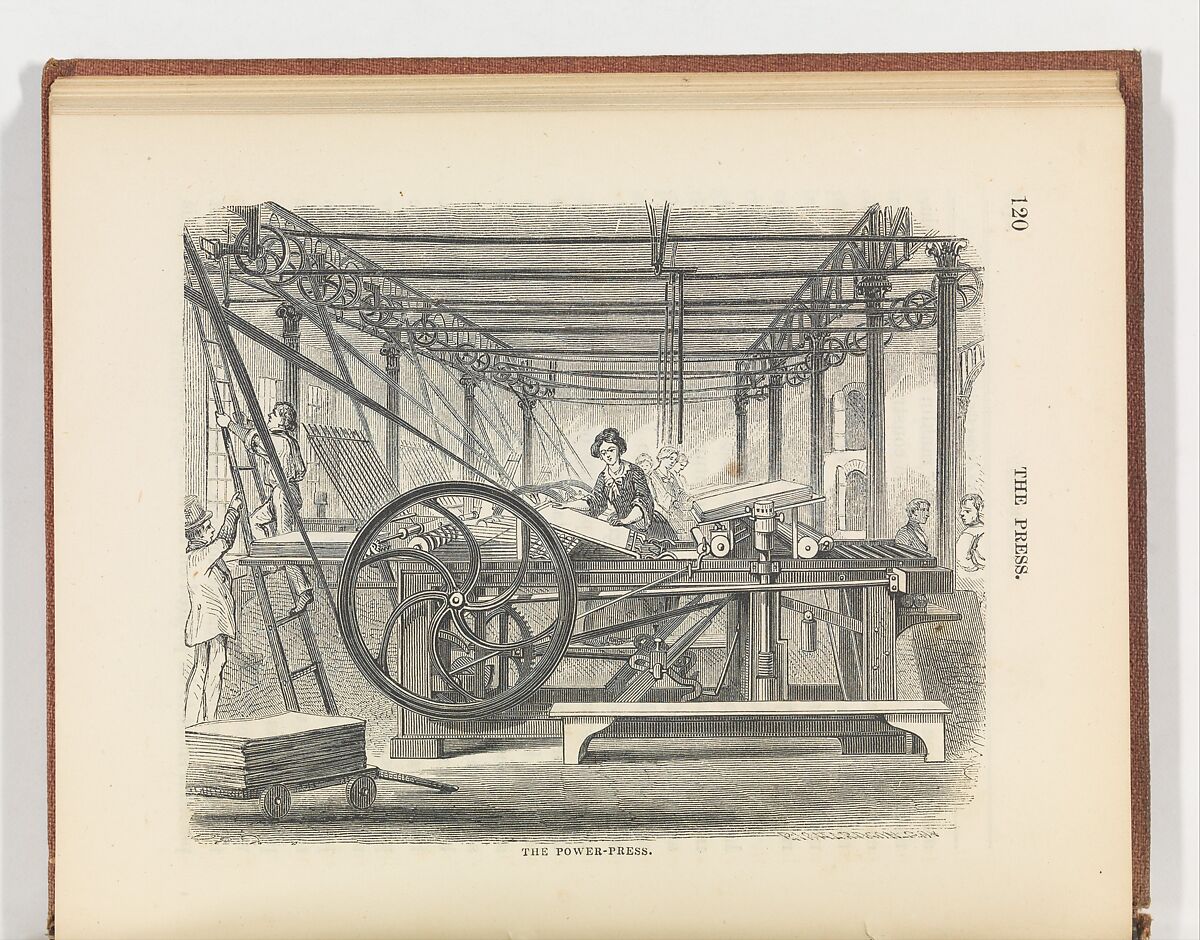
In December 1853, Strong joined the crowds watching the catastrophic fire at Harper & Brothers’ publishing establishment downtown. To him, the loss was also a neighbor’s calamity: James Harper lived at 4 Gramercy Park West. Field offered financial help; Peter Cooper diverted iron intended for Cooper Union to the rebuilding. The episode joined Strong’s love of books to the industrial labor that produced them. The volumes in a private library depended on presses, workers, warehouses, and buildings that could disappear in an afternoon.
A city eager for a spectacle
William Makepeace Thackeray’s lectures in 1852 gave Strong another sort of occasion to record. He heard the novelist speak under the auspices of Henry Whitney Bellows’s congregation, encountering a literary celebrity as a physical presence and a speaking voice. Bellows’s church would soon become a conspicuous part of Gramercy’s landscape, but these first lectures preceded its move to Fourth Avenue and East 20th Street. Strong’s musical and literary evenings connected the square with a larger circuit of audiences, visitors, and visiting reputations.
The Atlantic cable made the connection global. In August 1858, New York celebrated the first messages between Europe and America, and Field, Strong’s neighbor, became the hero of a triumph that seemed to abolish distance. Then the cable failed. Strong watched public excitement turn abruptly to doubt, a cycle repeated whenever the city invested its hopes in a spectacle. The Prince of Wales’s visit in 1860 supplied another grand occasion. In the notebook, royal ceremony, technological wonder, and ordinary social vanity all underwent the same close inspection.
The Work of Saving Lives
From the parlor to the camps
The attack on Fort Sumter in April 1861 turned conversation into action. Strong gathered men at his Gramercy house to organize the New York Rifles, a home-defense unit. He was a nearsighted lawyer in his forties, with neither a soldier’s training nor a soldier’s constitution, but standing aside felt impossible. His useful abilities lay elsewhere: he understood institutions, money, and the unglamorous work of making an undertaking function. The war would call on all three.
Reports from the volunteers’ camps revealed a crisis beyond the battlefield. Bad sanitation, inadequate supplies, and disorganized medical care threatened men before they faced an enemy. Ellen joined the effort to form the Women’s Central Association of Relief at Cooper Union in April. George worked with Henry Whitney Bellows, whose rectory stood at the site now occupied by 8 Gramercy Park South. Neighborhood connections gave the organizers a way to begin; the scale of the need soon demanded an organization reaching far beyond New York.
Accounts with lives behind them
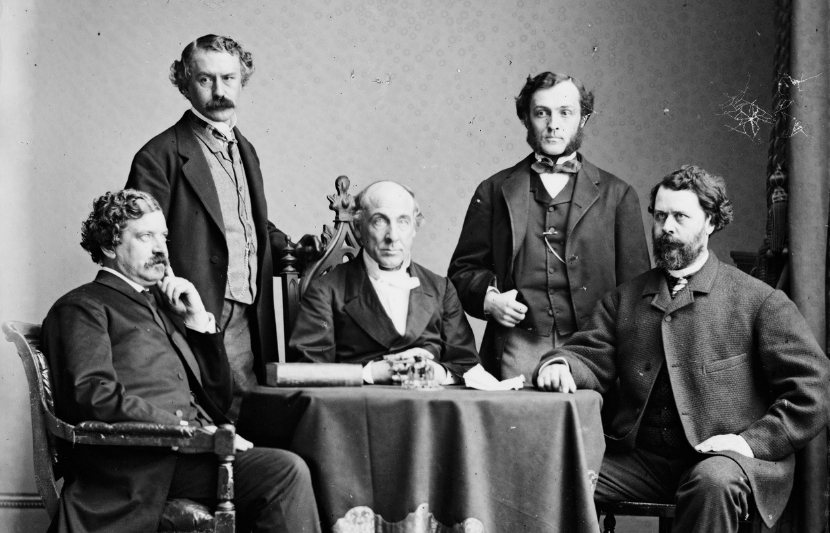
President Lincoln authorized the United States Sanitary Commission in June 1861. At the organizing meeting in Bellows’s Gramercy rectory on June 21, Bellows became president, Strong treasurer, and Frederick Law Olmsted general secretary. The Commission would inspect camps, advise military authorities, distribute supplies, and help care for sick and wounded soldiers. Its civilian status required a difficult balance: it needed access to the army while retaining enough independence to identify failures and press for improvements.
Strong’s share was finance, an assignment that brought the war into his library. He solicited donors, examined expenditures, and dealt with the recurring anxiety of whether money would arrive as quickly as need. Relief finances grew to more than $250,000 a month. Field helped approach New York’s merchants, while contributions came from communities across the country. Figures on a page represented food, transport, dressings, and shelter. The care with which Strong had once scrutinized a legal instrument now helped determine whether assistance could reach an exhausted regiment or an overcrowded hospital.
Ellen goes aboard
The Strongs did not experience this work solely through reports. In May 1862, Ellen volunteered as a nurse aboard the hospital steamer Knickerbocker, working among wounded soldiers during the Peninsula Campaign despite her own uncertain health. George also traveled on Commission business and joined Bellows in pressing Washington for medical reform. Their campaign helped secure a reorganized Army Medical Department and the appointment of William A. Hammond as surgeon general. Dealing with officials required persistence as well as sympathy; charitable intentions alone could not move an army’s bureaucracy.
In 1864, Ellen served as treasurer of New York’s Metropolitan Sanitary Fair, the immense effort that raised more than a million dollars for soldiers’ relief. Exhibitions, donated goods, performances, and sales drew ordinary New Yorkers into the cause beside wealthy subscribers. George also helped found the Union League Club in 1863, strengthening organized support for the Union in a politically divided city. These commitments changed the meaning of his public life. He still judged, complained, and worried in the diary, but he was now responsible for work whose consequences extended far beyond the people he knew.
War at the Garden Gate
The city breaks open
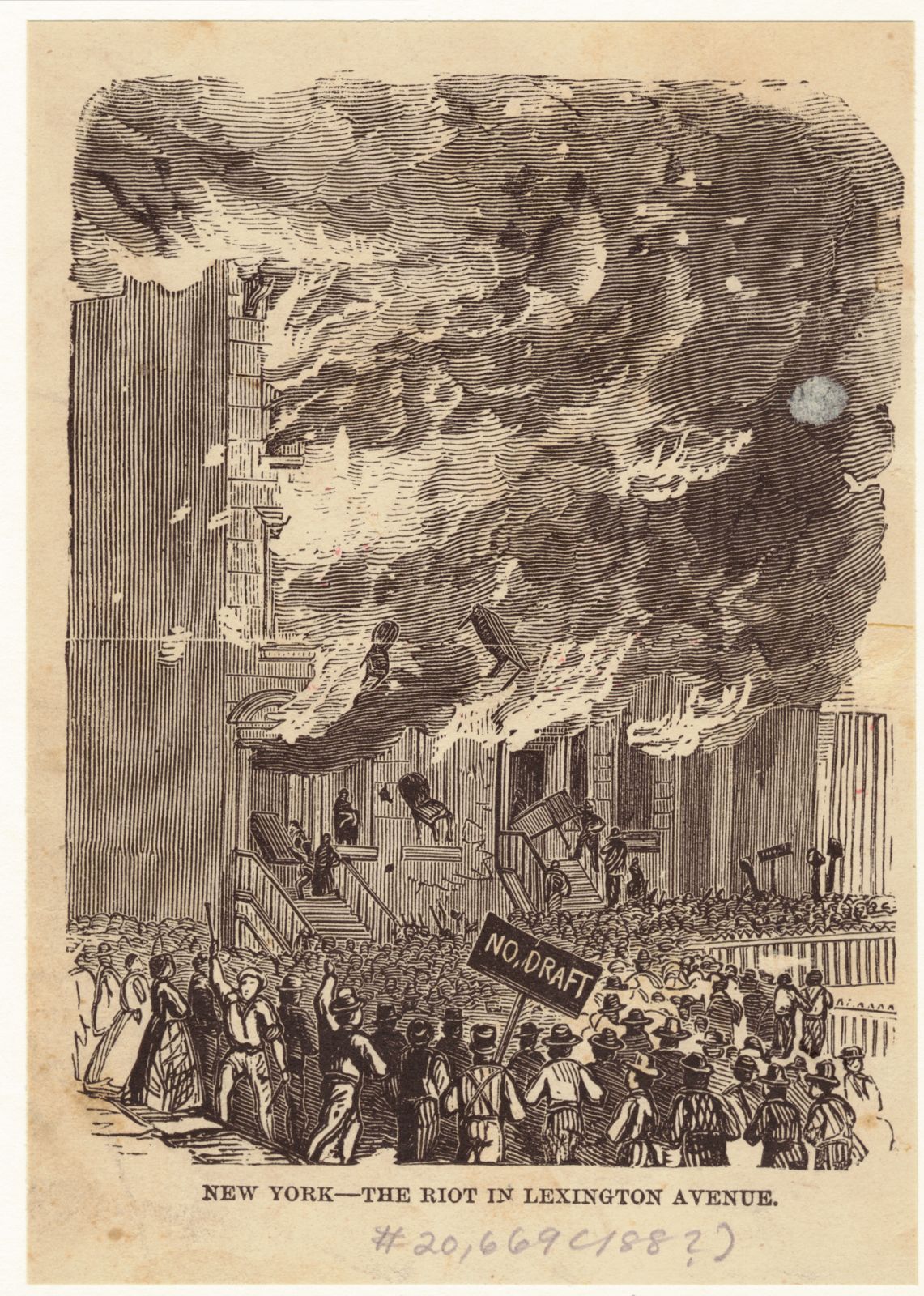
In July 1863, the distance between the war and Gramercy Park vanished. The federal draft provoked bitter anger, intensified by the provision allowing a man to pay $300 to avoid that round of conscription. On Monday, July 13, resistance erupted into days of destruction. Offices, homes, and public buildings came under attack. White mobs also hunted Black New Yorkers, assaulted and murdered people in the streets, and burned the Colored Orphan Asylum. The riots were both an assault on wartime authority and a campaign of racial terror.
Strong followed the news with the urgency of someone whose own commitments made neutrality impossible. The Union League Club, the relief organizations, and the homes of prominent supporters all seemed exposed. He moved between his office, meetings, and the square, carrying each day’s reports back to the diary. The writing shifts between what he personally encountered and the rumors rushing through frightened circles. Its force comes partly from that uncertainty: the people living through the emergency did not know when it would end or where the next attack would come.
Fear reached the Strongs’ own street. The Field households prepared for an attack; Strong heard alarms and watched the signs of fires elsewhere in the neighborhood. The familiar map of calls, dinners, and business acquaintances became a map of vulnerable doors. A man who had chosen Gramercy for its quiet now had to consider how far he could safely walk from home. The garden’s enclosure offered no separation from the conflicts outside it, and the houses around it were recognizable symbols of the wealth the rioters resented.
Troops on Twentieth and Twenty-first Streets
Returning uptown on July 16, Strong found troops across East 20th and East 21st Streets at the eastern end of the square. The men exchanged fire with attackers farther east. At seven that evening, regular soldiers and members of the Seventh Regiment, accompanied by two howitzers, relieved the earlier force. Strong thought some of the men looked unsteady and helped arrange a pail of strong coffee from the nearby hotel. It is a characteristically practical detail in a frightening scene: the relief organizer, confronted by soldiers at his own doorstep, found something useful to provide.
His account does not turn the evening into a cleanly staged battle. It records shots, answering volleys, changing detachments, and a few stray reports after dark, while heavier trouble continued toward the avenues east of the Park. Strong remained anxious about renewed attacks. The next day the main force moved its headquarters toward Third Avenue, leaving a picket guard in sight. These small changes in position mattered to a householder waiting to know whether an ordinary night’s sleep was possible again.
The diary also exposes the limits of its author’s vision. Strong condemned the violence fiercely, but wrote about Irish immigrants with the sweeping contempt of his class and blamed political conspirators for an upheaval with deeper causes. His words preserve that prejudice alongside his horror at what the mobs were doing. Reading him closely means holding both in view. Gramercy’s frightened residents had soldiers to guard their streets; Black families elsewhere in New York faced the destruction of their homes, livelihoods, and place in the city.
The Voice That Outlived the House
A different kind of committee
After the war, Strong returned to the pursuits that had sustained him before it, bringing with him years of organizational experience. Music now claimed more of that energy. He helped found the Church Music Association and served as president of the New York Philharmonic Society from 1870 to 1874. The devoted listener had become a working custodian of performance: someone who had to consider money, programming, players, audiences, and the practical conditions under which a musical ambition could be realized.
The work came home. On June 3, 1870, seven Philharmonic directors met in his library to debate reserved seating. A newspaper soon praised the influence he would wield as president of both a major choral association and the Philharmonic. Strong’s private response punctured the compliment: “Heaven help art.” Four years later, another meeting at his house postponed Beethoven’s Ninth because there was not enough time to rehearse the chorus. The diary preserves the ordinary decisions behind grand music, made by people gathered around a table.
The institutions he kept serving
Columbia continued to draw on Strong’s judgment as a trustee. His colleagues valued his learning and his attention to the college’s development, including its expanding work in science and law. At Trinity Church, he served as vestryman and warden and, in 1872, accepted the position of comptroller. The combination of ecclesiastical commitment and careful accounting was entirely his own. Even as his health weakened, he remained attached to work that depended on regular attention rather than an occasional public gesture.
Strong died at his Gramercy Park home on July 21, 1875, aged fifty-five. Ellen survived him until 1891. Their family included sons John Ruggles Strong and George Templeton Strong, the latter a composer whose musical career would sometimes cause later readers to confuse father and son. Friends remembered the lawyer’s exactness, learning, and quiet usefulness. The private judgments filling his diary were not yet available to complicate that portrait. His public reputation rested on the work he had actually done for the institutions around him.
The books leave, the diary speaks
In November 1878, Bangs & Co. auctioned his library. The catalogue turned a lifetime of searching and reading into lots for other collectors. The Book of Hours he had acquired in 1846 was sold as lot 820 to William Waldorf Astor for $250; today it belongs to the Morgan Library & Museum. Such surviving volumes carry physical traces of Strong’s ownership, but the collection as he knew it was dispersed. The rooms on Gramercy Park North could no longer hold together the intellectual world he had assembled there.
The diary had a different afterlife. In 1952, Allan Nevins and Milton Halsey Thomas published a four-volume selection that brought Strong’s voice to a wide public. The manuscript, now held by the New York Historical, preserves still more: concert programs, family photographs, drawings, and observations too numerous for those volumes. Readers could finally enter the city with him, hearing its arguments and following him home to Gramercy. A nervous host, a delighted listener, a weary treasurer: the man who had kept so much to himself became unusually good company.
Places, people & connections
Around the Park
Samuel B. Ruggles
Strong’s father-in-law created Gramercy Park and helped build the newlyweds’ home, paying for its brownstone front and Ellen’s bay window.
50 Gramercy Park North
The story of this later building recalls the residential north side where Strong lived, collected books, and organized wartime relief.
Gramercy Park Hotel
The hotel and its later expansion transformed the north-side streetscape of Strong’s day. Its history looks back to the earlier row of private houses.
One Lexington Avenue
Cyrus and David Dudley Field’s adjoining houses stood on this corner. Their domestic innovations, cable enterprise, and preparations during the Draft Riots entered Strong’s diary.
4 Gramercy Park West
Publisher James Harper lived across the square. Strong witnessed the 1853 fire that destroyed the publishing works and brought neighboring businessmen to the Harpers’ assistance.
8 Gramercy Park South
The present apartment house occupies the site of All Souls Church and Bellows’s rectory, where Strong helped organize the Sanitary Commission.
Henry Whitney Bellows
The minister and the lawyer became close partners in relief work, combining Bellows’s public advocacy with Strong’s careful stewardship of funds.
Cyrus W. Field
Strong watched the cable pioneer’s triumphs and reversals from a few doors away, then enlisted his help raising money for soldiers’ relief.
James Harper
The neighbor behind Harper & Brothers belonged to Strong’s world of books, theater, and civic affairs.
Peter Cooper
Cooper’s institute hosted the women’s relief meeting that drew Ellen Strong into wartime organizing. His friendship with the Harpers and Fields linked many of the square’s undertakings.
Life at a glance
The biographical record
| Born | January 26, 1820 · 108 Greenwich Street, New York City |
|---|---|
| Died | July 21, 1875 · His home on Gramercy Park North, New York City |
| Gramercy Park address | 74 East 21st Street, later renumbered 113 East 21st Street · North side of Gramercy Park |
| Years on the Park | September 1849–July 1875 |
| Vocation | Lawyer, diarist, amateur musician, and civic and cultural organizer |
| Spouse & family | Married Ellen Caroline Ruggles (1825–1891), daughter of Samuel B. Ruggles, on May 15, 1848; three children, including John Ruggles Strong and composer George Templeton Strong. |
| Key institutions & works | United States Sanitary Commission, national treasurer; New York Philharmonic Society, president, 1870–1874; Church Music Association; Columbia College; Trinity Church; Union League Club; diary, 1835–1875, selected edition published in four volumes in 1952. |
Over time
Born in lower Manhattan
George Templeton Strong is born on Greenwich Street into a family of New York lawyers.
The diary begins
At fifteen, he starts the private record he will keep for forty years.
A walk around Gramercy
The quiet of the square prompts him to imagine a home there.
Ellen and the palazzo
Strong marries Ellen Ruggles; they move into their Gramercy Park North home in September 1849.
The Sanitary Commission
Strong becomes national treasurer as the new organization begins caring for Union soldiers.
Troops at the square
His July diary follows the Draft Riots as armed detachments take up positions outside Gramercy Park.
Music and final years
He leads the Philharmonic, continues serving Columbia and Trinity, and dies at home in 1875.
A private voice becomes public
Nevins and Thomas publish their four-volume selection from Strong’s diary.
Sources cited
- George Templeton Strong, The Diary of George Templeton Strong, edited by Allan Nevins and Milton Halsey Thomas, 4 vols. (New York: Macmillan, 1952): Young Man in New York, 1835–1849; The Turbulent Fifties, 1850–1859; The Civil War, 1860–1865; Post-War Years, 1865–1875. Edition record, Historic New England.
- Carole Klein, Gramercy Park: An American Bloomsbury (Boston: Houghton Mifflin, 1987), sections on Strong, the Ruggles family, the north-side households, and the Sanitary Commission.
- John B. Pine, The Story of Gramercy Park, 1831–1921 (New York, 1921). Digitized history.
- George Templeton Strong, diary entries for July 13–17, 1863, in Civil War 150, Reader No. 6: The War at Home (Library of America, 2013), pp. 44–51. Primary diary excerpts.
- Henry C. Dorr, Henry R. Winthrop, and Augustus R. Macdonough, memorial to George Templeton Strong, Century Association Memorial Notices (1875). Text and biographical record, Century Association Archives Foundation.
- George Templeton Strong, diary, June 3 and June 9, 1870, and February 18, 1874; New York Evening Post, June 9, 1870, p. 2. Transcribed in Music in Gotham: The New York Scene, 1862–1875. Philharmonic directors in Strong’s library; Election as Philharmonic president; Beethoven’s Ninth and the 1874 directors’ meeting.
- The Morgan Library & Museum, Hours of Gabriel de Chabannes, MS M.1200, provenance and catalogue record: Strong’s ownership inscription dated December 3, 1846; Bangs & Co. sale, November 4, 1878, lot 820. Manuscript record.
- The New York Historical, Strong Family Papers, MS 602, 1747–1940. Collection guide.
- Library of America, George Templeton Strong: biographical record; Geoff Wisner, interview on Strong’s diaries, March 27, 2026.
- Library of Congress, U.S. Sanitary Commission, Join In: Voluntary Associations in America, exhibition essay.
- Rachel Williams, The United States Sanitary and Christian Commissions and the Union War Effort, National Museum of Civil War Medicine, May 25, 2017.
- Grace Church in New York, History, the Broadway church, James Renwick Jr., and the 1846 consecration.
Photo credits for this page
- Unidentified engraver, George Templeton Strong, published in The Green Bag, vol. 1, p. 149. Wikimedia Commons. Public domain. Source.
- William Perris, cartographer; Perris & Browne, publisher, Plate 47: Map bounded by East Twenty-second Street, Second Avenue, East Seventeenth Street and Fourth Avenue. The New York Public Library, Lionel Pincus and Princess Firyal Map Division, digital ID 1268337; via Wikimedia Commons. Public domain. Source.
- Alexander Jackson Davis and Vistus Balch, Columbia College, New York, 1828. The New York Public Library, Eno Collection. Public domain. Source.
- C. Bachman, New York, view looking south from Union Square, 1849; lithograph published by John Bachmann. Museum of the City of New York, The J. Clarence Davies Collection, 29.100.1344. Public domain. Source.
- E. Doppler, illustration in Jacob Abbott, The Harper Establishment; or, How the Story Books Are Made (New York: Harper & Brothers, 1855), p. 120. The Metropolitan Museum of Art, accession 42.105.22. Public domain. Source.
- Mathew Brady studio, Executive Committee of the U.S. Sanitary Commission, 1860s. Library of Congress, Brady-Handy Photograph Collection; reproduced by Library of America. Public domain. Source.
- Unidentified artist, New York—the riot in Lexington Avenue, from Great Riots, circa 1880s. The New York Public Library, Miriam and Ira D. Wallach Division of Art, Prints and Photographs: Picture Collection, image 809563. Public domain. Source.
- Unidentified artists, nineteenth-century views of Trinity Church, New York. Reproduced by Library of America. Public domain. Source.