
Peter Cooper
No Sentinel at His Door
1791–1883 · 9 Lexington Avenue, at East 22nd Street (now 7 Lexington Avenue) · 1852–1883
A life in Gramercy
The bell at No. 9
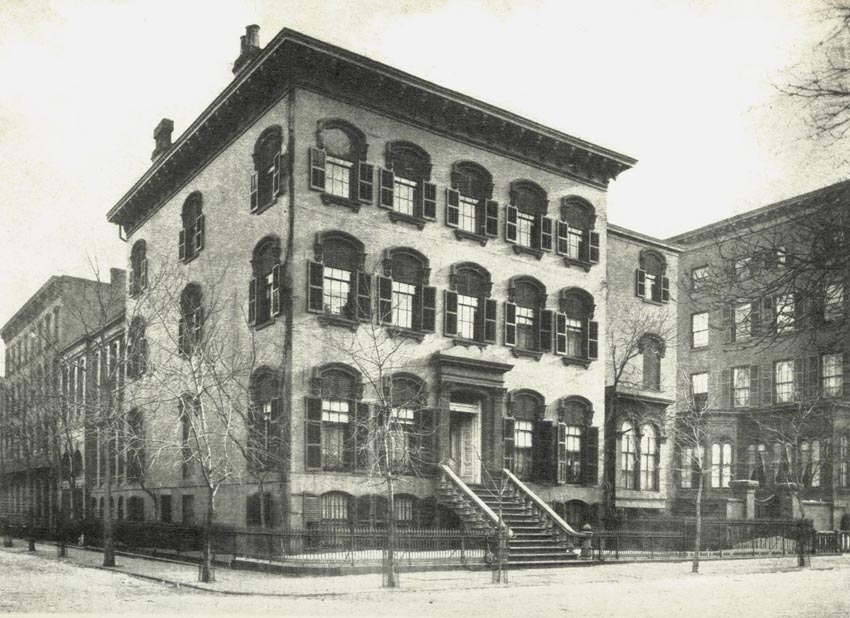
At 9 Lexington Avenue, a visitor did not necessarily meet a servant at the door. Peter Cooper placed his study and bedroom close to the entrance so that he could answer the bell himself. The wide red-brick house at East 22nd Street had a cupola, a garden, and room for an exceptionally busy family, but its owner disliked the idea of a gatekeeper standing between him and someone who needed help. He wanted “no sentinel” at his door.
Cooper had arrived at the edge of Gramercy Park with money earned from things people used: glue, iron, machinery, telegraph lines. His inventions ranged from a locomotive to a cradle that could rock a baby and play a tune. He had never acquired much formal education. He had acquired an enduring curiosity about how things worked and an impatience with any arrangement that prevented another person from learning.
From this house he walked into an unusually productive neighborhood. Cyrus Field wanted to put a telegraph cable beneath the Atlantic. James Harper needed to rebuild a publishing plant after a disastrous fire. Henry Whitney Bellows was organizing relief for Union soldiers. Cooper brought each undertaking something practical: money, iron, a meeting place, or the conviction that a discouraging first attempt was no reason to stop.
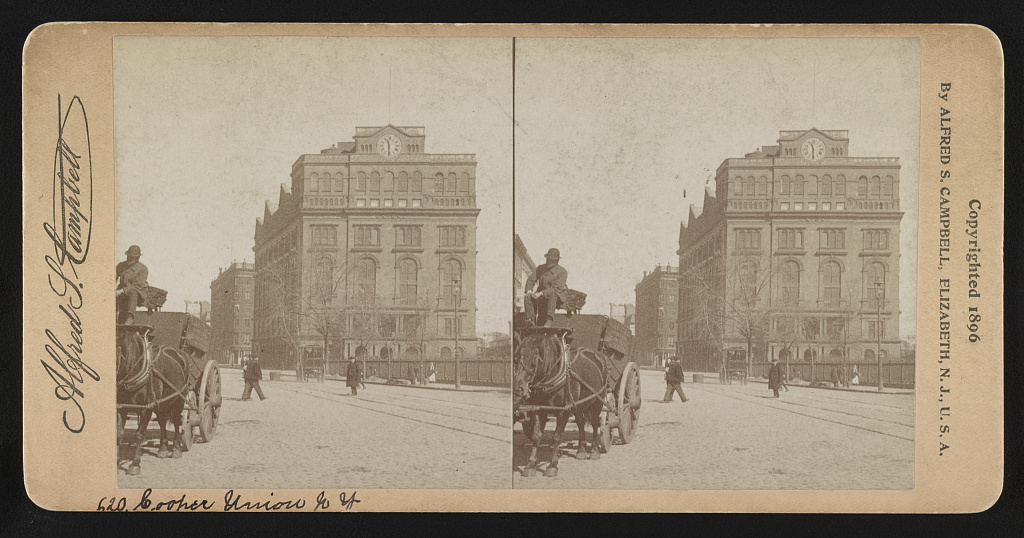
His greatest undertaking stood farther downtown, at the meeting of Third and Fourth Avenues. Cooper Union gave working New Yorkers access to classrooms, books, and public debate without requiring a fortune at the entrance. The institution and the Lexington Avenue house expressed the same habit on different scales. Cooper kept opening the door.
A Living Made by Making
The education of a pair of hands
Before he could offer anyone an education, Cooper had to assemble his own. Born in New York on February 12, 1791, he grew up in a household in which children worked and money seldom remained long. He carried grocery baskets, helped in his father’s enterprises, and received less than a year of formal schooling. Books would matter enormously to him, but his first lessons came through materials: how wood joined, how a tool cut, how much labor an awkward process consumed.
An apprenticeship to the coachmaker John Woodward gave that curiosity a trade. Cooper learned to build coaches and improved the work with a machine for mortising wheel hubs. When Woodward offered to lend him the money to establish his own business, he hesitated. A wealthy customer had just died insolvent, leaving an expensive coach unpaid for. In a city where debt could still mean imprisonment, the young craftsman preferred a smaller beginning to the possibility of becoming a debtor for life.
A factory, a household, and an idea
On Long Island, he turned to machines for shearing cloth. The War of 1812 helped American woolen manufacturers, and Cooper improved and sold equipment to them. In 1813 he married Sarah Bedell. Their household became another workshop: one contrivance rocked a cradle, drove away flies, and supplied a lullaby. Later came a pneumatic chair cushion, manufactured by Charles Goodyear, that made sitting more comfortable. Grand schemes and small domestic inconveniences could both catch his attention.
When peace brought renewed competition from imported cloth, Cooper changed businesses. He ran a grocery and then found a more durable livelihood in glue and isinglass, with a factory in the Kips Bay district near Sunfish Pond. He improved the product and its manufacture, rose early to start the factory fires, and went downtown to sell what he made. His later packaged gelatin brought another factory product into the kitchen, accompanied by recipes prepared by Sarah. The household shared in the work behind the celebrated inventor.
A small engine with a large job
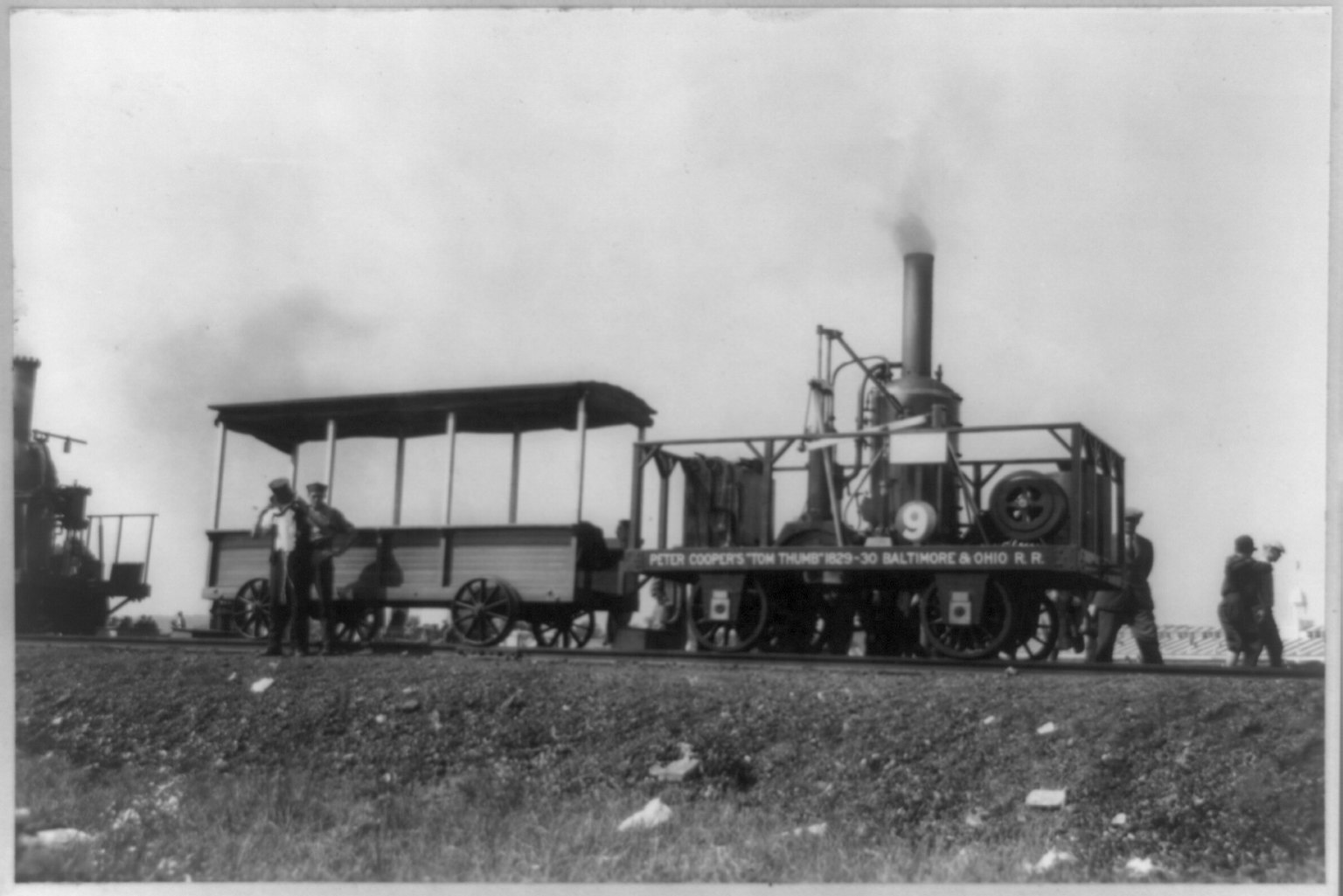
By 1830, Cooper’s investments had carried him to Baltimore, where the future of his property depended in part on the new Baltimore & Ohio Railroad. Its sharp curves and gradients raised a difficult question: could a steam locomotive run the line effectively? He built a compact experimental engine, the Tom Thumb, to find out. Its upright boiler and improvised components gave it little of the imposing appearance that later generations would associate with a locomotive.
The engine hauled a car of passengers between Baltimore and Ellicott’s Mills, demonstrating that steam could do useful work on the road. Cooper did not need to invent every part of the railway to advance it; he needed to solve the problem in front of him. That distinction mattered. Throughout his life he moved readily between mechanics and finance, asking what would make an undertaking possible, then supplying the missing piece. The little engine was an early expression of a method he would bring to Gramercy Park.
The House with an Open Door
Away from the cattle cars
Cooper had lived near Fourth Avenue and 28th Street, close enough to his manufacturing world to keep an eye on its practical demands. The New York & Harlem Railroad made that convenience increasingly disagreeable. Cattle cars passing his home encouraged a move south, toward the quieter streets around Gramercy Park. During 1850–1852 he established the new family house at the southeast corner of Lexington Avenue and East 22nd Street, one block north of the square.
The house known as No. 9 occupied a broad corner plot. Red brick, a central entrance, a high stoop, and a rooftop cupola gave it the air of a substantial country residence brought into town. A garden provided breathing room. The neighboring square offered another kind of space, protected by Samuel Ruggles’s arrangements against the endless subdivision of Manhattan land. Cooper had spent much of his life adapting to the growing city; here he could settle his family without withdrawing from it.
The caller came first
Inside, Cooper made an unusual choice. His own study and bedroom lay immediately beside the entrance, where he could hear and answer the bell. A man with numerous businesses and a large household could easily have placed several people between himself and an unsolicited caller. He preferred direct contact. The arrangement exposed him to interruption, but interruption was often how a useful request, a struggling inventor, or a new civic enterprise reached him.
The family had known helplessness as well as prosperity. Years before the move, their infant daughter Sarah Amanda lost her sight following an operation by the celebrated surgeon Valentine Mott, performed before the era of surgical anesthesia. She died in childhood. Mott later lived across the neighborhood at 1 Gramercy Park West. The episode belongs to the earlier Cooper household, behind the prosperous family portrait: money and ingenuity had not protected them from the losses familiar to nineteenth-century parents.
Two families under one roof
Of Peter and Sarah’s six children, only Edward and Sarah Amelia survived to adulthood. Cooper kept both close. Edward entered the iron business, working with his friend Abram S. Hewitt; in 1855 Hewitt married Sarah Amelia. The Cooper and Hewitt households became interwoven at No. 9 and at Ringwood Manor in New Jersey. Business, family life, and the education of the next generation often occupied the same rooms.
The Lexington Avenue house grew into a place of books, lessons, experiments, visitors, and children’s games. Its library and gymnasium offered very different forms of instruction, while proximity to the Park gave the grandchildren room to play. Cooper’s own scant schooling did not lead him to distrust education. It made him unusually alert to what children and young workers could accomplish when useful things, interested adults, and time to learn were placed within reach.
Iron Beams and Open Classrooms
A neighbor’s fire interrupts a dream
Cooper had long intended to build an institution for people whose work left them little chance of attending an ordinary college. As he assembled land and began construction downtown, his iron enterprises offered a new building material: rolled wrought-iron beams. These could replace vulnerable timber supports and help make large public buildings safer. Cooper Union would embody his faith in useful knowledge in its structure as well as its classrooms.
Then, on December 10, 1853, fire destroyed the Harper & Brothers publishing establishment at Pearl and Cliff Streets. The disaster reached directly into Cooper’s circle: James Harper lived at 4 Gramercy Park West. With only two tiers of iron beams in place at his own building, Cooper stopped work so that the Harpers could obtain the iron they needed to rebuild. A neighboring publisher’s immediate need took precedence over the timetable of the monument that would carry his name.
Building for what might come next
Construction resumed, survived financial strain, and produced an institution whose land and building cost Cooper more than $600,000. The Cooper Union for the Advancement of Science and Art opened in 1859. Its ambitious internal arrangements included a circular shaft reserved for an elevator, planned before passenger elevators became a practical feature of New York buildings. Cooper expected technology to catch up with the space he had left for it.
His educational plans changed more substantially than the shaft. Early ideas for curiosities, informal discussion rooms, and rooftop recreation gave way to classrooms, laboratories, lectures, and a great free reading room. What mattered was whether people could use them. Evening instruction allowed a wage earner to study after a working day; books and periodicals offered an entrance into subjects that a young mechanic might otherwise encounter only by chance. Cooper took particular pleasure in reports that a student’s improved skills had brought better pay.
Who was allowed to learn?
The institution welcomed women as well as men, making artistic training a possible source of livelihood rather than merely a drawing-room accomplishment. Its Woman’s Art School employed Henrietta Desportes Field, whose earlier teaching connected her with Miss Haines’s school and whose later home stood at 22 Gramercy Park South. Cooper’s network crossed the familiar boundaries between industry, education, and the domestic lives of his neighbors.
A rule could be reconsidered when it obstructed the purpose of the school. Augustus Saint-Gaudens, a neighborhood shoemaker’s son apprenticed to a cameo cutter, wanted to attend the evening classes but was only fourteen; the stated minimum age was sixteen. Abram Hewitt admitted him. The boy’s days remained devoted to earning and learning a trade, but the evenings widened his training. Decades later, he would give New York its enduring bronze image of the man who had made those classrooms possible.
We Will Go On
An ocean between neighbors
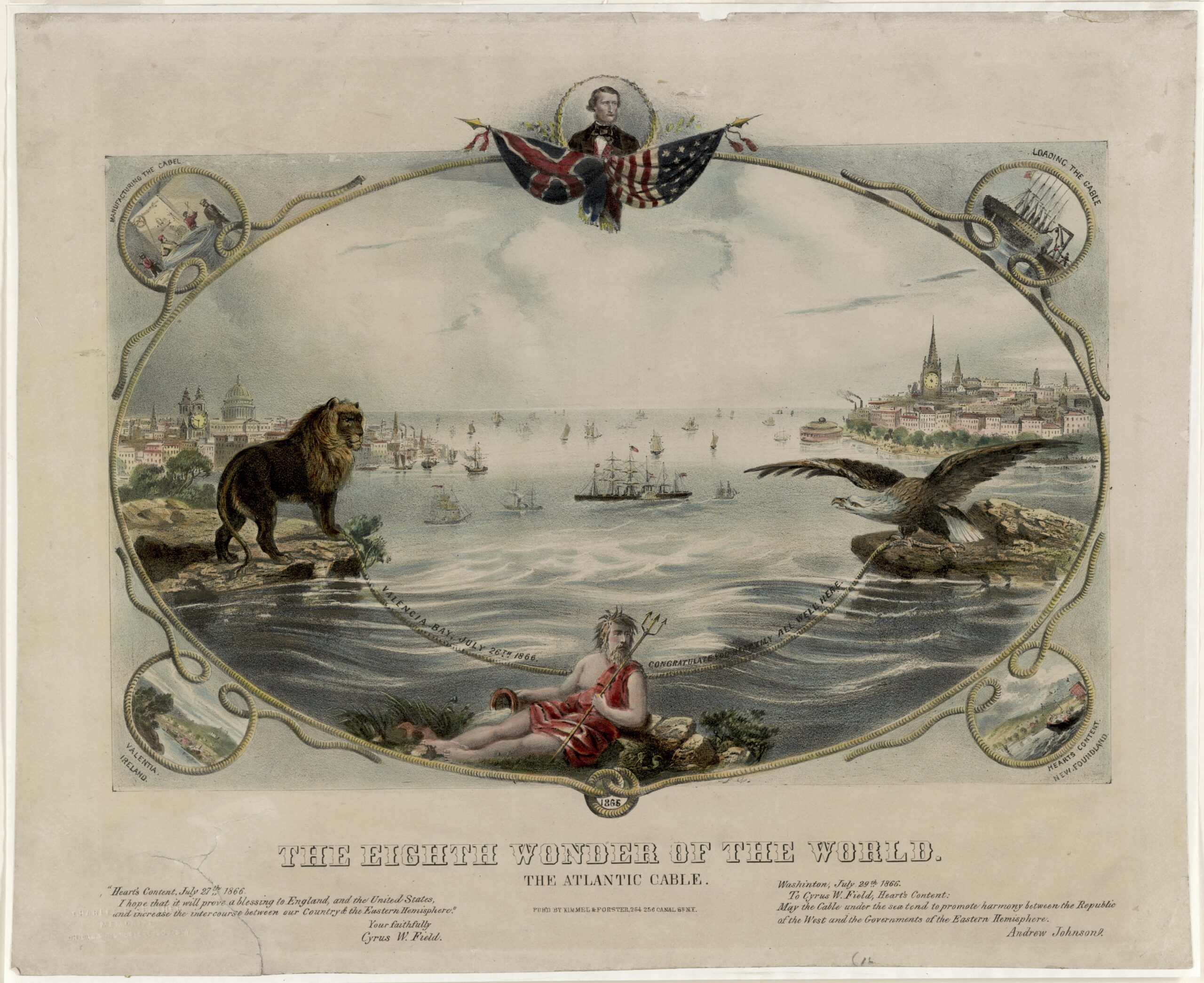
At the Field houses on Gramercy Park North, Cyrus Field was studying a problem vastly larger than a railway curve. A telegraph line across Newfoundland might shorten the journey of news from Europe. Looking farther, he imagined a cable continuing beneath the Atlantic itself. In 1854 he brought Cooper into the undertaking. The older man had already invested in telegraphy; he understood both its promise and the expensive gap between an ingenious proposal and a working system.
Cooper joined Field, Moses Taylor, Marshall O. Roberts, and Chandler White, with David Dudley Field supplying legal skill. Early meetings fitted around the businessmen’s working days. In May 1854, Cooper walked over before breakfast to David Dudley Field’s house for the company’s organizing business. As president of the New York, Newfoundland, and London Telegraph Company, he placed his standing behind an enterprise that could easily invite ridicule. To put a wire under an ocean sounded to many people like an elaborate way to lose money.
A serenade, then silence
There was hard work on land before a cable ship could unite the continents: surveying routes, cutting through Newfoundland, establishing connections, and raising more capital. The ocean added difficulties of weight, depth, weather, electrical resistance, and the handling of a line that might break at any moment. Cooper’s role was less theatrical than Field’s repeated Atlantic crossings, but essential. He subscribed, advanced money, and helped keep the undertaking alive through setbacks that steadily exhausted its original confidence.
In August 1858, signals finally passed across the Atlantic. New York celebrated as though distance itself had been defeated. A city band serenaded Cooper near his Gramercy home; illuminations, speeches, and processions made the cable a public triumph. Then the signals weakened and ceased. The men who had been applauded as benefactors found themselves accused of deception or folly. Field, who had carried the campaign most visibly, bore the most visible humiliation.
The longer measure of success
Cooper met that collapse with the answer Field needed: “We will go on.” Persistence meant more than optimism. It required further subscriptions, renewed experiments, and the willingness to be associated with a failure while engineers learned what had gone wrong. The cable itself, its insulation, and the equipment used to test and operate it all demanded improvement. The two neighbors continued to share an ambition that the celebrations of 1858 had declared accomplished much too soon.
An expedition in 1865 lost its cable in the Atlantic. In 1866 the enormous Great Eastern laid a successful new line and then recovered and completed the previous year’s cable. Europe and North America now had lasting telegraphic communication. At the Chamber of Commerce celebration, Cooper’s toast was characteristically brief: “God rewards patient industry.” It suited a career spent lighting factory fires, improving machines, and making another attempt. The cable had required twelve years of work after the first Gramercy conversations.
A Platform for the Nation
An unfamiliar lawyer in the Great Hall
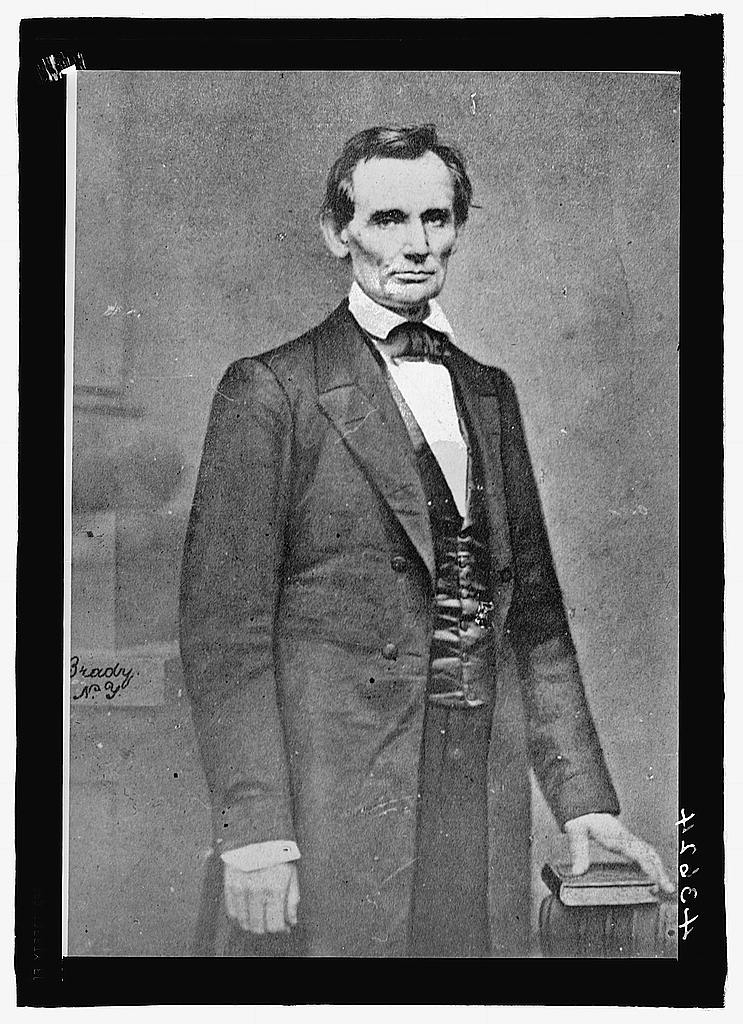
On February 27, 1860, Abraham Lincoln came to Cooper Union through a snowy New York evening to address an audience of eastern Republicans. Cooper welcomed the tall Illinois lawyer to the Great Hall. Lincoln’s carefully constructed argument against the extension of slavery introduced him to a national audience at a decisive moment. The room beneath Cooper’s school became the setting for a speech that helped make a president.
Cooper had been a Jacksonian Democrat, and his support was not a simple matter of party loyalty. He wanted to preserve the Union and opposed slavery. Before the fighting began, he entertained hopes of a peaceful settlement, including compensated emancipation. Fort Sumter ended the prospect of avoiding the immediate crisis. At the great Union Square rally in April 1861, the seventy-year-old inventor stepped forward to urge his fellow citizens to sustain the government with men, money, and determination.
Relief, recruiting, and a black buggy
Later that month, Cooper Union supplied a meeting place for the women organizing soldiers’ relief. The work drew together neighbors who would help create the United States Sanitary Commission: Henry Whitney Bellows, George Templeton Strong, Ellen Ruggles Strong, physicians, organizers, and donors. The free school’s public hall became useful machinery in another sense. It could gather people quickly, give a scattered impulse a common purpose, and turn concern into an organization.
Cooper bought government bonds, supported recruiting, and remained committed when northern enthusiasm weakened. During the 1864 election campaign, a caller at No. 9 asked him for letters introducing the visitor to influential War Democrats. Cooper supplied himself instead. He put the man into his old black buggy and drove downtown at high noon, making the calls in person. At seventy-three, he still preferred direct action to correspondence when an urgent task could be settled by getting out of the house.
Room for an unwelcome opinion
The Great Hall’s usefulness depended on more than accommodating people Cooper already liked. He defended a platform for controversial speakers, including Victoria Woodhull, advocate of women’s rights and an unconventional sexual morality, and the outspoken religious skeptic Robert G. Ingersoll. By escorting such speakers to the platform himself, he made the welcome visible. A deeply religious man could believe that public discussion should extend beyond the opinions with which he agreed.
In 1876 he entered the presidential race as the Greenback Party’s candidate, aged eighty-five. The campaign grew from his concern that the nation’s monetary arrangements served financial power at the expense of ordinary producers. He favored a government-issued paper currency and challenged the contraction of money after the Civil War. He did not come close to winning. Yet the candidacy completed a recognizable pattern: the inventor who tried to improve a machine also believed that arrangements made by people could be remade when they inflicted hardship.
The Chair at Cooper Square
The last visitor
Cooper remained curious into his nineties. Near the end of his life he was still discussing ideas with members of the school’s faculty, still interested in what might be improved or tried. On April 4, 1883, he died at the Lexington Avenue house, aged ninety-two. He had been born in George Washington’s first presidential term and lived long enough to hear the voice carried by a telephone. Much of the intervening change had engaged his hands, his money, or his attention.
New York’s response reached far beyond his business associates. Flags flew at half-staff and crowds came to mourn. His funeral at All Souls, the Unitarian church at Fourth Avenue and East 20th Street, joined the family’s religious world to the wider city that regarded him as a benefactor. Students and workers had reasons of their own to remember him. They had used a reading room, attended a lecture, or sat in a classroom that would not otherwise have been open to them.
What the family kept building
Life continued at No. 9 under Abram and Amelia Hewitt. In the 1880s Stanford White remodeled the house, giving a more elaborate architectural setting to its crowded family life and collections. Hewitt, elected mayor of New York in 1886, carried the household’s public obligations into City Hall. Edward Cooper had already served as mayor. The sons and daughters of an inventor with little schooling had become participants in the government and cultural life of the city.
Cooper’s granddaughters Sarah and Eleanor Hewitt took the family’s interest in useful education in another direction. In 1897 they opened a museum at Cooper Union where designers and students could examine objects, patterns, and examples of craftsmanship. The collections accumulated through family travel and curiosity became working tools for other people. This was a fitting use for things acquired in a house where mechanical experiments, books, and art had always competed for attention.
A student returns the gift
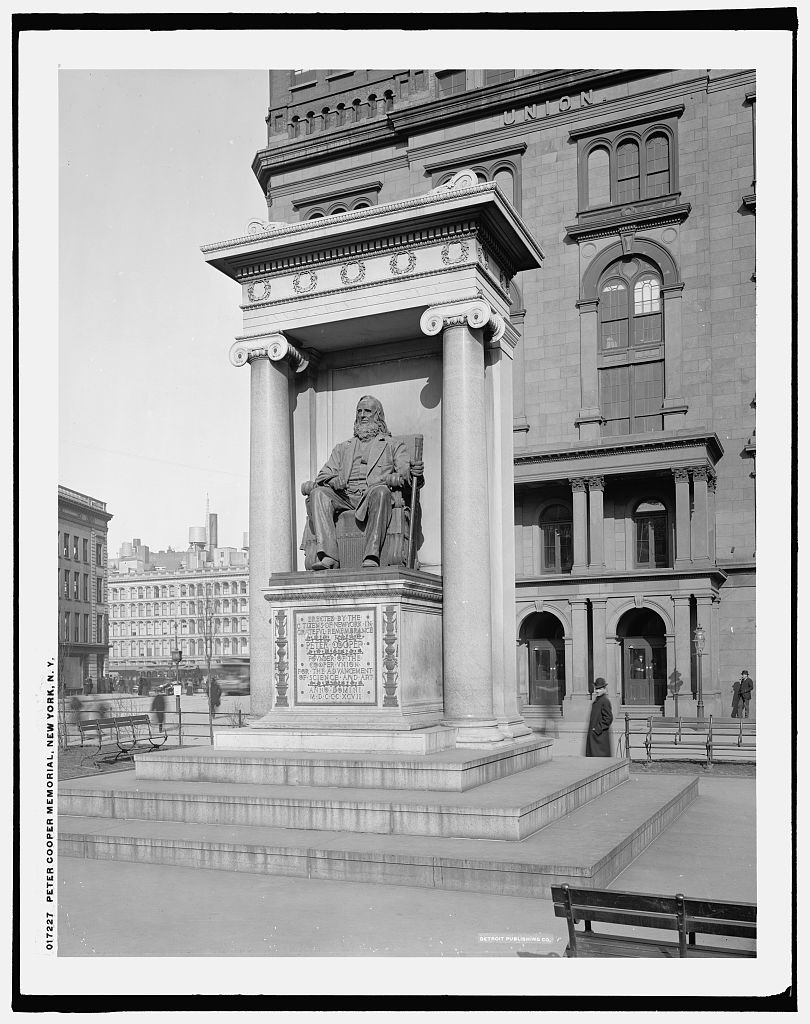
In the same year, New York unveiled the Peter Cooper Monument at Cooper Square. Augustus Saint-Gaudens, the boy once admitted to evening classes despite his age, modeled the seated figure; Stanford White designed its architectural setting. Saint-Gaudens’s own early neighborhood belongs to the history of 48 Gramercy Park North. A childhood connection to the square had grown into one of the city’s most accomplished sculptural careers.
The memorial was dedicated on May 29, 1897. Beneath its canopy Cooper sits in a substantial chair, a cane at his side, his bearded face turned toward the life of the street. There is no locomotive at his feet and no Atlantic cable wound around the pedestal. The figure is an old man available to be approached. The setting is grander than his doorway on Lexington Avenue, but the posture remains familiar: someone might still have a question for him.
Places, people & connections
Around the Park
7 Lexington Avenue
The present building occupies the site of No. 9, Cooper’s open-door family home and the later Cooper–Hewitt mansion.
48 Gramercy Park North
The early neighborhood of Augustus Saint-Gaudens, who studied at Cooper Union and later modeled Cooper’s memorial.
One Lexington Avenue
Cyrus and David Dudley Field’s adjoining houses stood here. Cooper joined the meetings that helped launch the Atlantic cable.
4 Gramercy Park West
James Harper lived behind its famous lamps. Cooper delayed his own building to provide iron for the burned publishing plant.
1 Gramercy Park West
Home of surgeon Valentine Mott, whose connection to the Cooper family began with the tragic illness of their daughter Sarah Amanda.
10 Gramercy Park South
Miss Haines’s school employed Henrietta Desportes before her work at Cooper Union’s Woman’s Art School.
22 Gramercy Park South
Henrietta Desportes Field’s later address connects the square’s teaching and literary circles with Cooper’s educational enterprise.
Cyrus W. Field
The younger neighbor whose ocean-spanning ambition depended on Cooper’s patient financial and personal support.
James Harper
Publisher, former mayor, and the neighbor whose rebuilding Cooper helped make possible after the 1853 fire.
Henry Whitney Bellows
The Unitarian minister and relief organizer who helped turn Cooper Union into a gathering place for wartime service.
George Templeton Strong
The Gramercy diarist and Sanitary Commission treasurer shared Cooper’s wartime civic circle and watched the cable celebrations.
Life at a glance
The biographical record
| Born | February 12, 1791 · New York City |
|---|---|
| Died | April 4, 1883 · 9 Lexington Avenue, New York City; buried at Green-Wood Cemetery, Brooklyn |
| Gramercy Park address | 9 Lexington Avenue, southeast corner of East 22nd Street; site of today’s 7 Lexington Avenue |
| Years on the Park | 1852–1883; the family house was established during 1850–1852 |
| Vocation | Inventor, manufacturer, industrialist, philanthropist, and reform advocate |
| Spouse & family | Married Sarah Bedell in 1813. Six children; Edward Cooper and Sarah Amelia Cooper Hewitt survived to adulthood. Son-in-law Abram S. Hewitt was his business associate and a mayor of New York. |
| Key institutions & works | Tom Thumb locomotive (1830); Cooper Union (1859); New York, Newfoundland, and London Telegraph Company; Atlantic cable; Greenback presidential candidacy (1876) |
Over time
Born into a working household
Peter Cooper is born in New York on February 12. Short schooling and early work begin a lifelong practical education.
Tom Thumb proves a point
His experimental locomotive demonstrates steam traction on the Baltimore & Ohio Railroad.
A home on Lexington Avenue
The Cooper family settles at No. 9, the broad corner house now replaced by 7 Lexington Avenue.
Backing the Atlantic cable
Cooper joins Cyrus Field and becomes president of the New York, Newfoundland, and London Telegraph Company.
Cooper Union opens
Free instruction and a reading room bring education within reach of working New Yorkers.
A public hall and a working cable
Lincoln speaks at Cooper Union in 1860; six years later the Atlantic cable achieves lasting success.
A presidential campaign at eighty-five
Cooper runs on the Greenback ticket, advocating monetary reform.
A city remembers its neighbor
Cooper dies at No. 9 in 1883. Saint-Gaudens and White’s monument is dedicated fourteen years later.
Sources cited
- Rossiter W. Raymond, Peter Cooper (Boston and New York: Houghton, Mifflin and Company, 1901), especially chapters II–VIII: childhood, manufacturing, the railroad, telegraph enterprises, Cooper Union, and national politics. Full text.
- Carole Klein, Gramercy Park: An American Bloomsbury (Boston: Houghton Mifflin Company, 1987), pp. 37–58, 91, 130–132, 152: the Cooper household, inventions, Atlantic cable circle, wartime activity, Saint-Gaudens, and memorial.
- Stephen Garmey, Gramercy Park (New York: Balsam Press, 1984), pp. 68–79: the Lexington Avenue property, Cooper and Hewitt family life, visitors, and later alterations.
- John B. Pine, History of Gramercy Park, 1831–1921 (New York: privately printed, 1921): the square’s nineteenth-century residents and neighborhood institutions. Digitized volume.
- The Cooper Union, “Peter Cooper”; institutional history; and Foundation Building history.
- Historic American Engineering Record, The Cooper Union for the Advancement of Science and Art, HAER NY-20. Library of Congress. Architectural and industrial history, including the iron structure and Cooper’s inventions. Historical report.
- Margery Masinter and Sue Shutte, “Meet the Hewitts: Part Two” (December 4, 2013), Cooper Hewitt, Smithsonian Design Museum; drawing on Edward R. Hewitt, Those Were the Days: Tales of a Long Life (1943), and Eleanor Garnier Hewitt, The Making of a Modern Museum (1919).
- Cooper Hewitt, Smithsonian Design Museum, “Meet the Hewitts: Part Four” (February 5, 2014), on the house, collections, and Stanford White; “Hewitt Sisters Collect”, on the museum founded in 1897.
- The Cooper Union, “Abraham Lincoln at The Cooper Union”, with the speech of February 27, 1860.
- National Museum of Railroad History & Innovation, “Tom Thumb”: the 1830 experimental locomotive and the later reconstruction.
- Smithsonian American Art Museum, Inventories of American Painting and Sculpture, “Peter Cooper Monument”: Augustus Saint-Gaudens, Stanford White, and the dedication of May 29, 1897.
Photo credits for this page
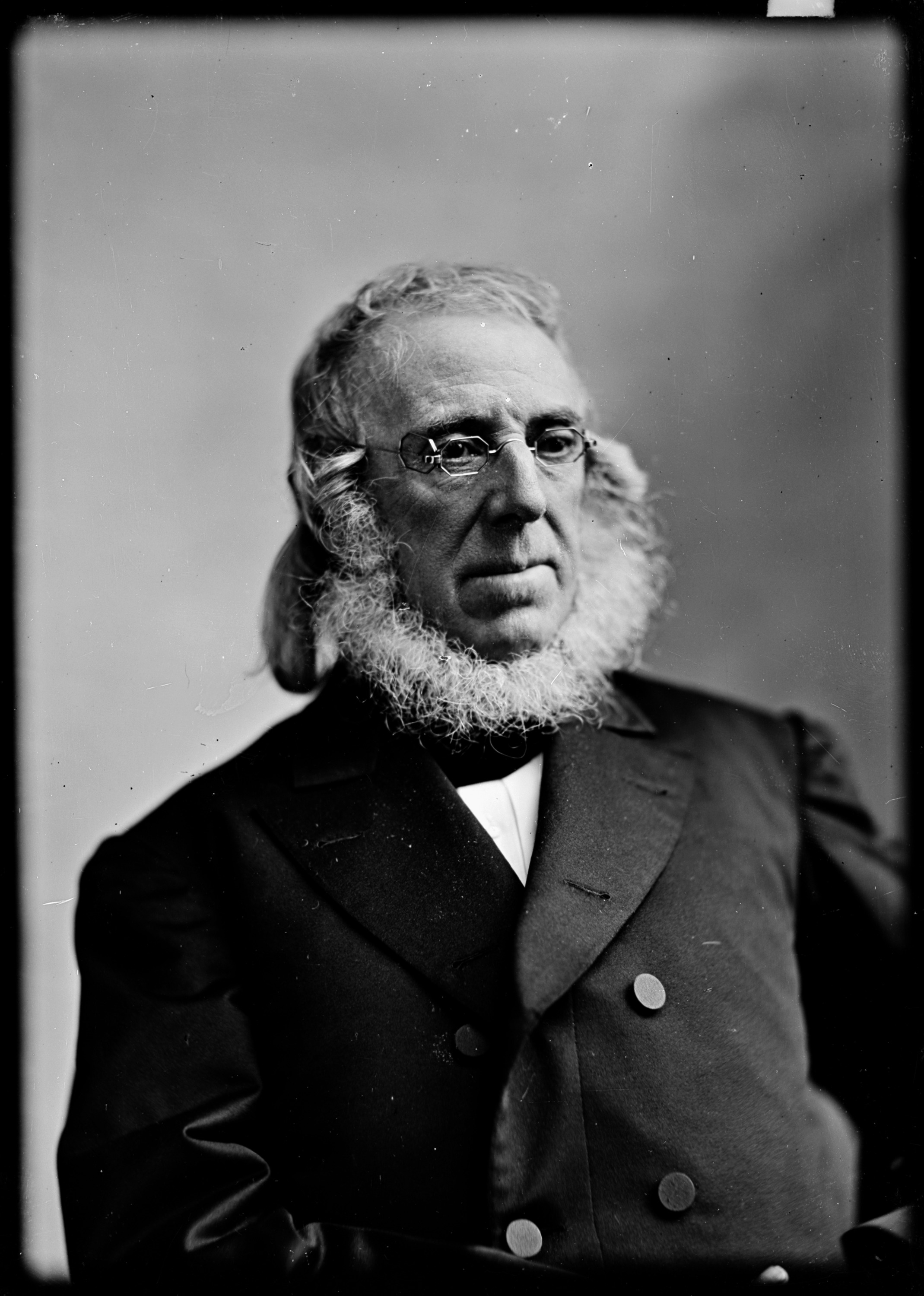
- Mathew Brady studio, Peter Cooper, c. 1860–1865. National Archives and Records Administration, NAID 526793, 111-B-2605. Public domain. Source.
- Unidentified photographer, 9 Lexington Avenue, before 1883. Historic photograph reproduced by Cooper Hewitt, Smithsonian Design Museum. Public domain. Source.
- Bureau of Public Roads, U.S. Department of Commerce, Replica of Peter Cooper’s “Tom Thumb” locomotive, after 1927. Library of Congress, Prints and Photographs Division, digital ID cph.3b44538. Public domain; no known restrictions on publication. Source.
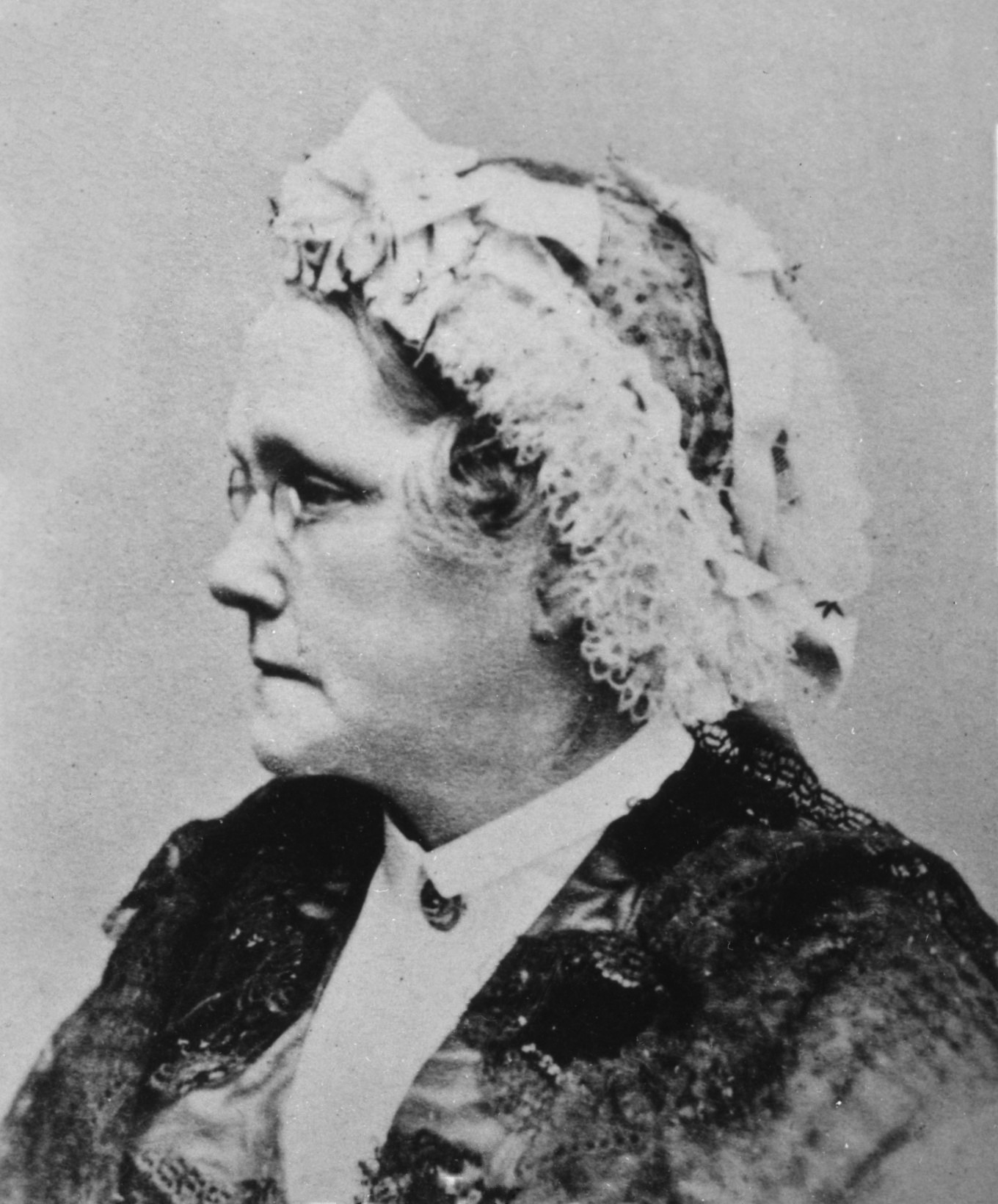
- William R. Howell, Sarah Bedell Cooper, c. 1860. Public domain. Source.
- Alfred S. Campbell, Cooper Union, N.Y., 1896, stereograph. Library of Congress, Prints and Photographs Division, LC-DIG-stereo-1s07232. Public domain; no known restrictions on publication. Source.
- Kimmel & Forster, The Eighth Wonder of the World—The Atlantic Cable, 1866. Library of Congress, LC-DIG-ds-04508. Public domain; no known restrictions on publication. Source.
- Mathew Brady, Abraham Lincoln, February 27, 1860; National Photo Company copy photograph, c. 1909–1940. Library of Congress, Prints and Photographs Division, LC-DIG-npcc-28318. Public domain; no known restrictions on publication. Source.
- Detroit Publishing Co., Peter Cooper Memorial, New York, N.Y., c. 1900–1906. Library of Congress, Prints and Photographs Division, Detroit Publishing Company Collection, LC-DIG-det-4a11532. Public domain; no known restrictions on publication. Source.