
Robert Henri
An Open Door Above the Park
1865–1929 · 10 Gramercy Park South · Studio and home, 1909–1929
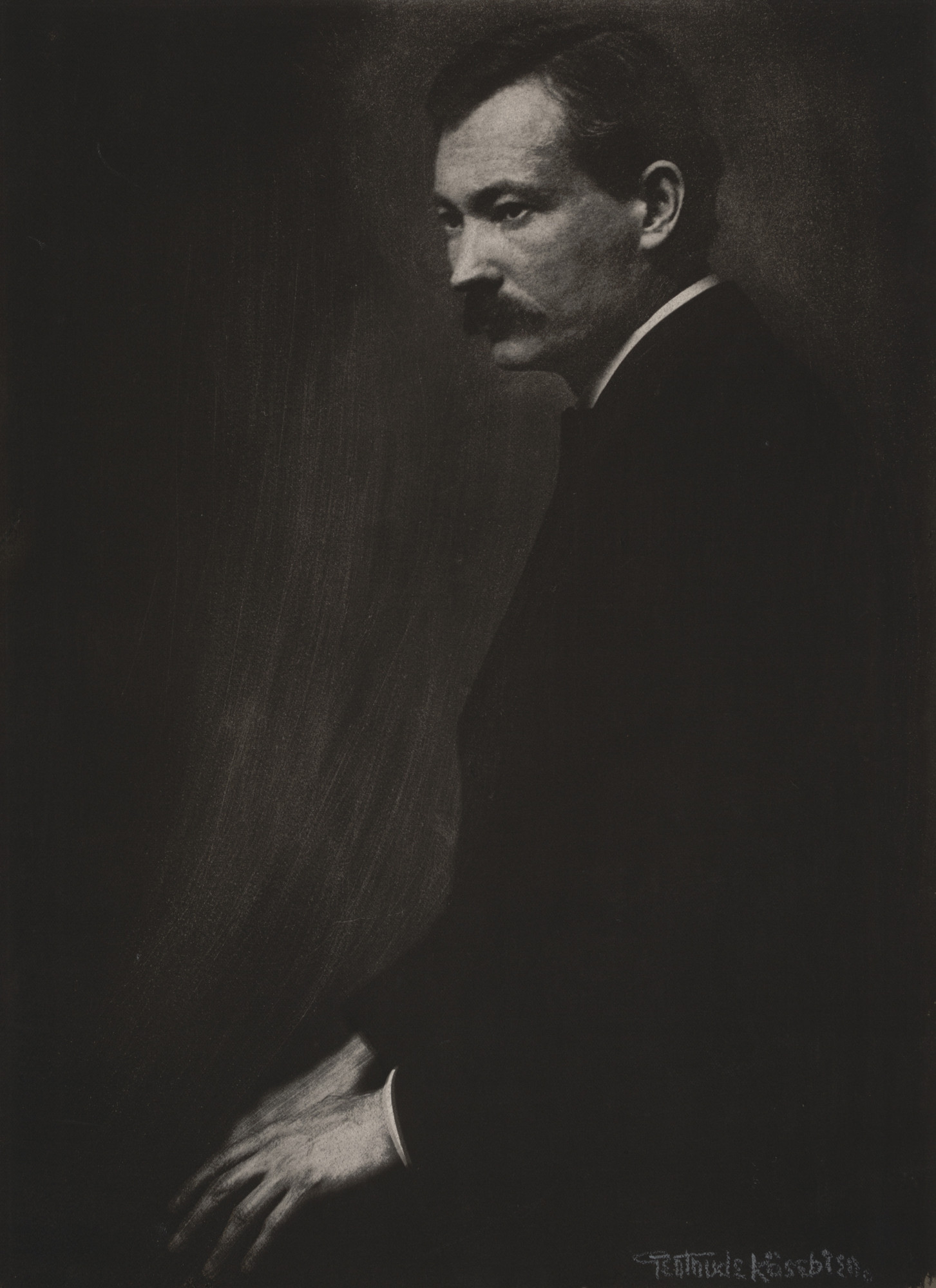
A life in Gramercy
Upstairs at number ten
The high windows of the top-floor studio at 10 Gramercy Park South faced north across the trees and iron fence. Robert Henri and Marjorie Organ moved into this duplex in the autumn of 1909. They had room to work, room to entertain, and a view of a square whose quiet appearance gave little indication of the arguments taking place above it. For the next twenty years, the address was both their home and one of the gathering places of American painting.
On Tuesday evenings, friends came upstairs. There were painters whose names would become inseparable from New York: John Sloan, William Glackens, George Luks, Everett Shinn, and Henri’s former student George Bellows. Talk moved between pictures, politics, and the practical difficulties of making a living. Coffee, beer, and pipe tobacco accompanied evenings that could turn into costumed performances or drawing contests. The man at the center of the company had already helped artists challenge the authority of an exhibition jury. At home he encouraged them to challenge one another.
Henri’s gift as a teacher was to make a student’s own experience seem worth painting. A crowded street, a child’s face, the movement of a boxer, or a familiar room could sustain a picture if the artist saw it with sufficient force. European masters mattered enormously to him, but their example was an invitation to work, not a set of surfaces to copy. His students would become strikingly different painters. Their differences were part of his success.
Gramercy gave that teaching a daily geography. Bellows established his household around the corner on East 19th Street. The National Arts Club occupied the Tilden mansion a few doors east. In Henri’s studio, a circle first formed among Philadelphia newspaper artists widened to include younger painters, writers, and visitors. The rooms above the Park made a generous idea tangible: an artist could take the work seriously without surrendering the pleasures and arguments of company.
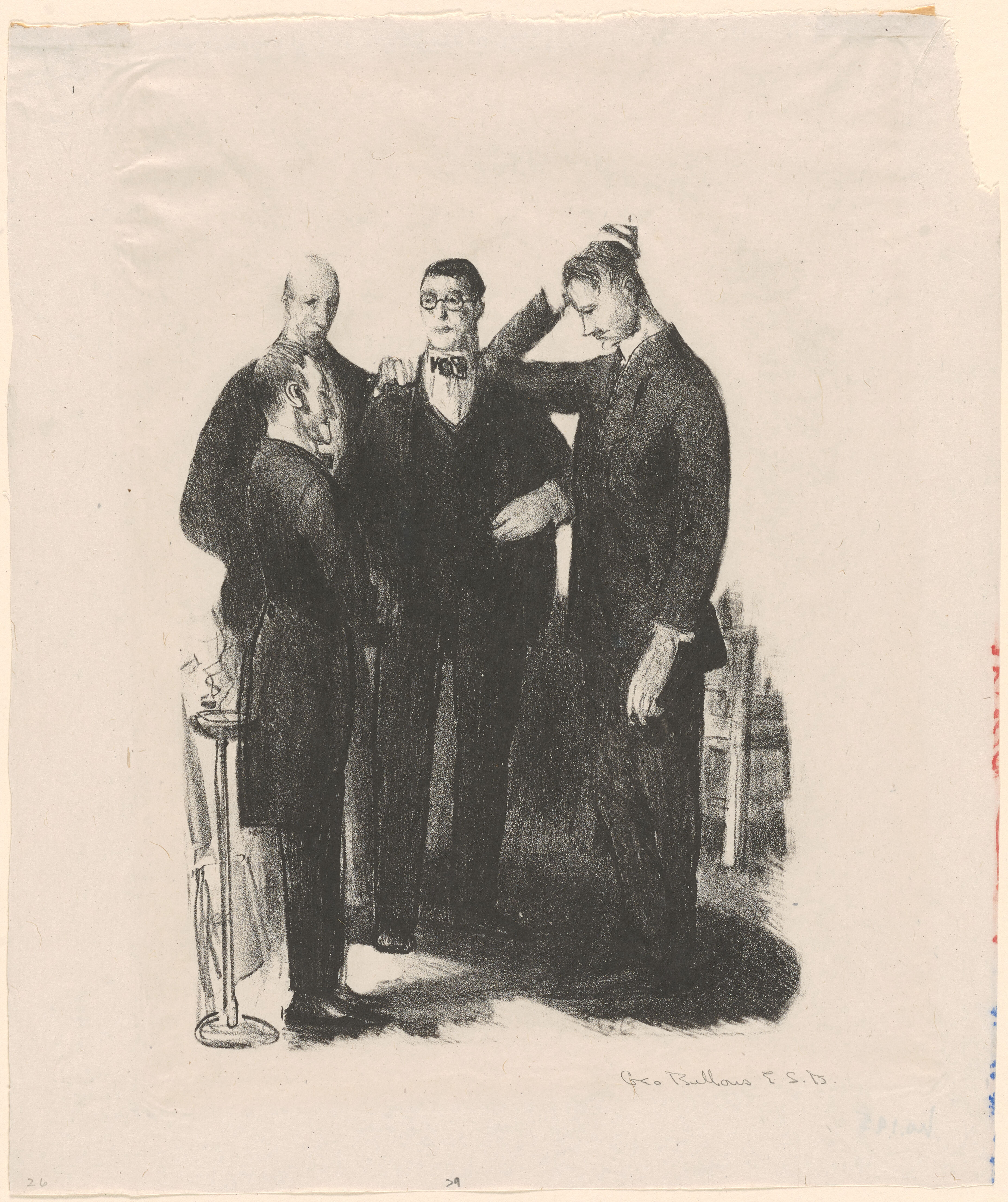
A new name, a wider world
The boy called Cozad
Robert Henri began life as Robert Henry Cozad, born in Cincinnati in 1865. His childhood carried him west to Nebraska, where his father was involved in the settlement of the town that bore the family name. The frontier was not a picturesque subject encountered at a safe distance. It was the landscape of his upbringing, with the ambition, conflict, and uncertainty that accompanied a new community. His eventual life among painters in Philadelphia and Paris began far from an established artistic household.
A fatal shooting involving his father broke that life apart. The family left Nebraska and adopted new names; the boy who had been Robert Henry Cozad became Robert Henri. The change severed an obvious connection to the family’s past. It also gave the future painter the name under which he would ask others to discover an individual voice. He did not arrive at adulthood along a straight, protected path. Before any dispute with an art institution, he had experienced how abruptly a settled identity could become untenable.
Learning to look at a body
At the Pennsylvania Academy of the Fine Arts, Henri studied under Thomas Anshutz. Serious attention to the human figure gave the young painter a discipline that would remain beneath his later attacks on convention. Learning anatomy, drawing from life, and studying the relation of one part of a figure to another required patience. Henri’s eventual insistence on freedom did not mean that a painter could dispense with knowledge. It meant that knowledge should help an artist express a perception instead of substituting for one.
Paris expanded his education at the Académie Julian and in the museums. He encountered a culture in which the achievements of earlier painters stood close to the experiments of the present. Velázquez and Frans Hals offered lessons in the authority of a brushstroke and the presence of a sitter; Manet and Degas made modern life available to painting in new ways. Henri absorbed these examples without finding a single manner in which he wished to remain. His early work included landscapes and quiet figures as well as the forceful portraits that would become familiar.
Friends from the newspaper offices
Back in Philadelphia, he formed lasting friendships with newspaper artists John Sloan, William Glackens, George Luks, and Everett Shinn. Their jobs demanded speed, observation, and a willingness to go where something was happening. They knew streets, crowds, performances, and the expressive possibilities of an ordinary gesture. Henri encouraged them to bring that experience into painting. The exchange worked in both directions: their companionship gave his ideas a practical setting among people already trained to notice the life around them.
He settled in New York in 1900 and became an influential teacher at the New York School of Art, associated with William Merritt Chase. Students encountered a man for whom discussion of a picture could become discussion of how to live. “An artist who doesn’t use his imagination is a mechanic,” he insisted. The warning did not disparage craft. It challenged the student who could render what was in front of him while leaving his own attention and feeling entirely out of the result.
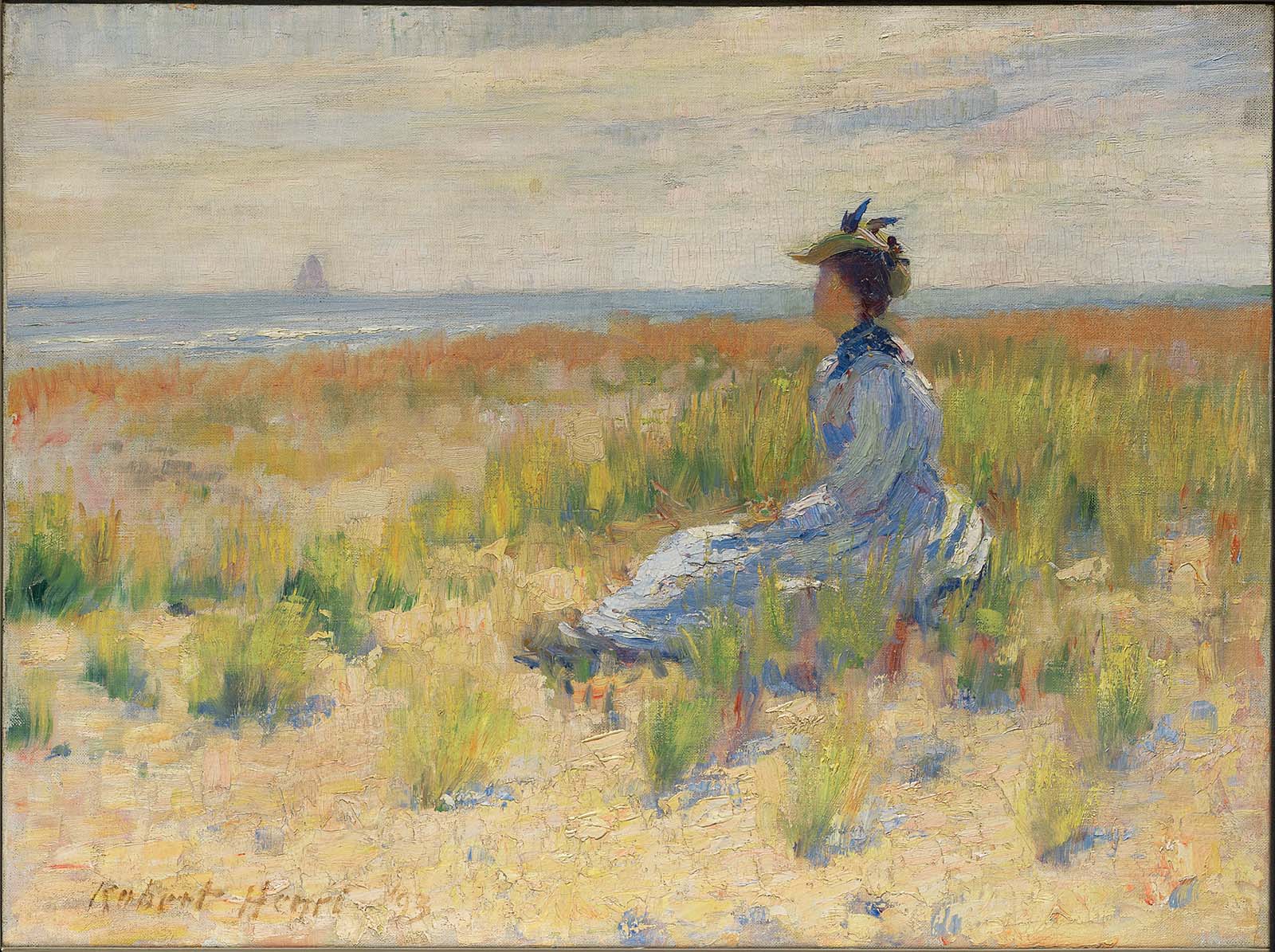
Eight painters make their own invitation
A classroom without one destination
George Bellows entered Henri’s orbit in 1904. Edward Hopper, Rockwell Kent, Guy Pène du Bois, and, later, Stuart Davis also studied with him. It is difficult to look at their mature paintings and mistake one artist for another. That variety says something essential about the teaching. Henri could be an imposing presence, but his purpose was not to populate the city with replicas of his own work. He wanted students to become alert to what moved them and exacting about how they gave it form.
He sent their attention outward, toward streets, rivers, tenements, and the people who occupied them. Daumier could show how a body carried the weight of its work; Hals could make a sitter seem startlingly present. Such examples were useful because they sharpened a student’s eyes. They were not instructions to disguise New York as a European city. “There is beauty in everything if it looks beautiful to your eyes” placed responsibility where Henri believed it belonged: with the person doing the looking.
Who decided what reached the wall?
The National Academy of Design controlled an important route to public recognition. Its juries could accept a painting, place it before an audience, and help establish a career, or refuse it and leave the artist outside. In 1907, the rejection of work by members of Henri’s circle brought a long argument into the open. He objected to more than an unfavorable decision about particular pictures. A narrow standard of acceptability was determining what American experience could look like in an exhibition.
Henri had earned a place within the institution, which made his break with its judgment consequential. He could argue from experience rather than from simple exclusion. The question became practical: if the approved exhibition did not offer a fair hearing, where else might these painters show together? Their answer required a gallery, an audience, and the confidence to let quite different pictures stand beside one another without a jury first making them resemble a common ideal.
Two weeks at Macbeth’s
In February 1908, William Macbeth’s Fifth Avenue gallery presented the exhibition that gave “The Eight” its name. Henri, Sloan, Glackens, Luks, and Shinn were joined by Arthur B. Davies, Ernest Lawson, and Maurice Prendergast. Seven thousand visitors came in two weeks. The interest made a local dispute into a public event. People could see the pictures, compare their differences, and decide for themselves whether the painters’ independence had produced something worth attending to.
The Eight were never one uniform school. Davies’s imagined worlds and Prendergast’s patterned color differed markedly from the street life associated with Sloan and Luks. Their alliance was strongest on the question of who should be permitted to show. Later use of the name Ashcan School has sometimes blurred that distinction. Henri’s achievement in 1908 was to help create an opening broad enough for artists who did not all paint the same subjects or seek the same effects. The disagreement on the walls was part of the exhibition’s meaning.
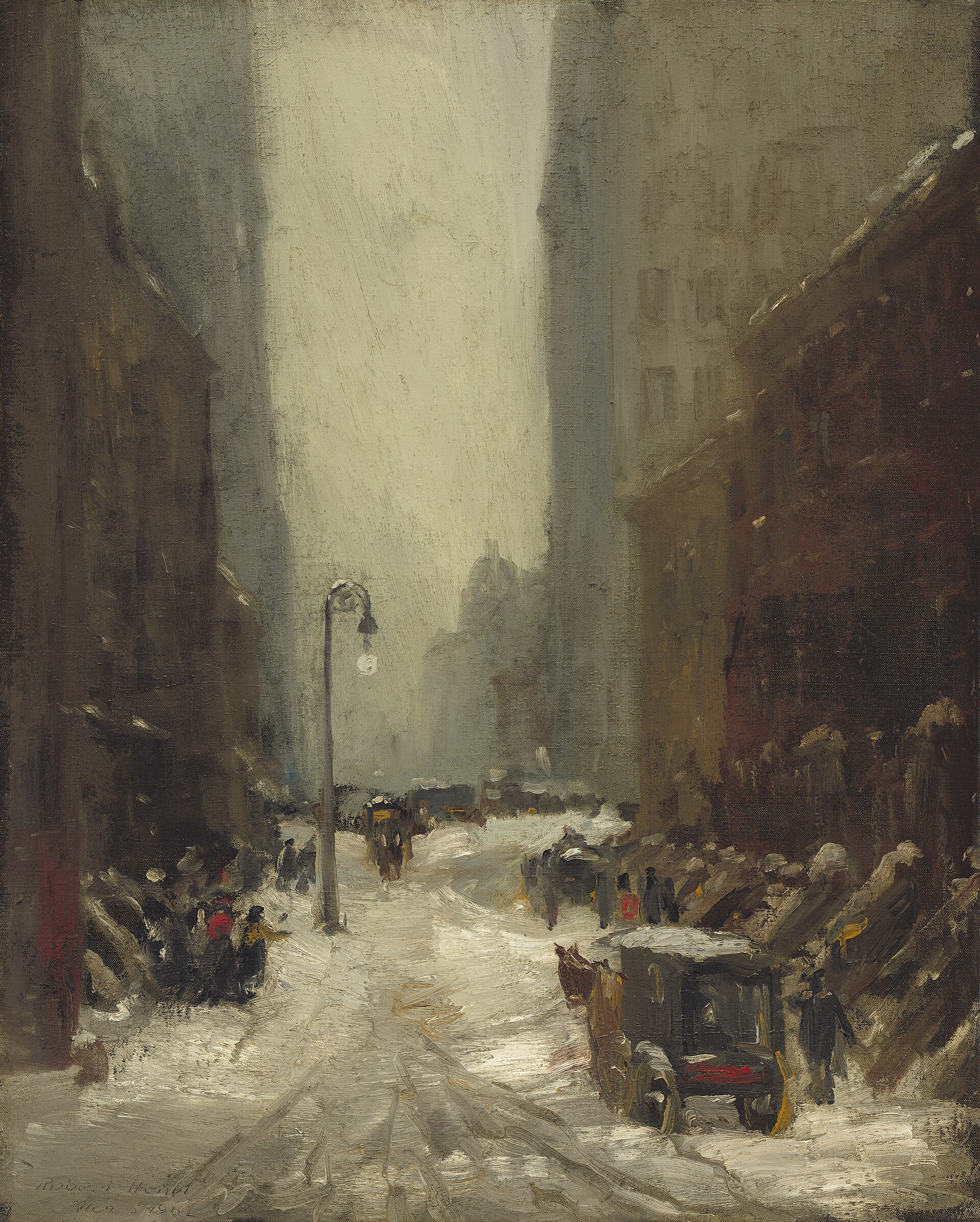
Two artists above the trees
Marjorie had her own public
When Henri married Marjorie Organ in May 1908, she was twenty-one and already a professional artist. Her newspaper work included the comic strip Reggie and the Heavenly Twins, and her drawings had appeared in the New York World and the New York Journal. The economy of a comic drawing demanded a particular skill: character and action had to become legible quickly. She entered the marriage with an audience, a working practice, and experience of the city’s competitive illustrated press.
Henri would paint her repeatedly, sometimes in costumes that gave a portrait the animation of a performance. Those pictures made her face familiar, but they should not obscure the hand that made her own drawings. Their household brought together two artists with different kinds of experience. A newspaper cartoon and an oil portrait could both turn on the telling angle of a head, the suggestion of a mood, or the ability to make a figure occupy a page with conviction.
The old school at number ten
In the autumn of 1909, they moved to the top-floor duplex at 10 Gramercy Park South, also known as 108 East 20th Street. The building had once housed Miss Haines’s School. Its educational history would continue in an unexpected form: pupils now came to a painter’s rooms, and instruction frequently took place in conversation. The high north-facing windows offered a painter’s steady light and a view across the Park. The studio was large enough to accommodate work and the company that gathered around it.
The address placed Henri within a short walk of two established clubs, The Players and the National Arts Club. His own rooms supplied a less formal gathering place. Visitors came to the top floor to see pictures, talk, and try out ideas among friends. The arrangement lasted. For the remaining twenty years of his life, journeys and summer painting campaigns would end with a return to Gramercy. The studio gave a fixed New York center to a restless professional and intellectual life.
A portrait made in shared rooms
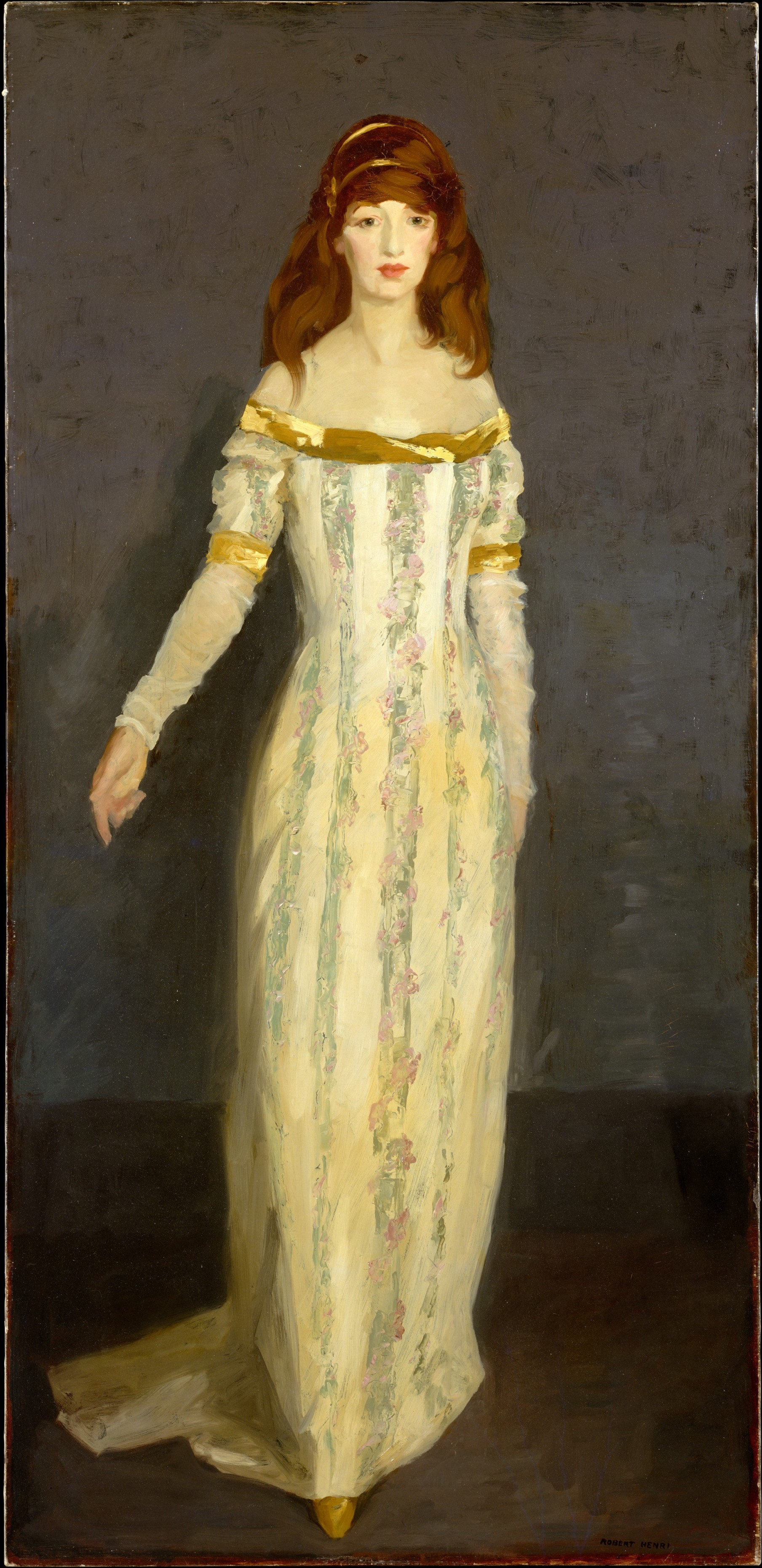
In The Masquerade Dress, painted in 1911, Marjorie appears in a brilliant costume against a dark background. The paint gives the fabric weight and movement, while her expression keeps the figure from dissolving into a display of color. The portrait belongs to the life of the studio: a familiar sitter, the possibility of dressing up, and a painter who could turn a domestic encounter into an ambitious canvas.
Henri’s interest in costume did not require him to surrender his insistence on personality. Clothing could give the sitter a role to inhabit, but the person still had to hold the picture. At Gramercy, that balance was particularly intimate. Marjorie was a partner in the rooms where he worked, an artist who understood the choices involved, and a recurring subject whose presence could sustain very different paintings. The portrait remains one of the clearest ways to imagine the artistic household inside No. 10.
The argument travels beyond the studio
Tuesday evenings upstairs
Henri’s Tuesday gatherings combined serious argument with considerable play. Sloan, Glackens, Luks, Shinn, Bellows, and Leon Kroll belonged to the company that filled the studio. Politics entered discussions of art because many of these painters were interested in who had access to education, work, and public attention. Yet the evenings did not follow a seminar’s orderly agenda. A debate could give way to an improvised skit, a costume, or a contest at the drawing boards.
Timed drawing races made an amusement of a professional necessity. A painter had to commit to a mark, recognize what mattered, and act before hesitation consumed the opportunity. Among friends, that pressure could be funny. It also removed some of the solemnity from the making of art. Henri’s studio allowed artists to take risks in company, with the knowledge that the person laughing at a hurried sketch might be the one who offered the most useful criticism of a serious picture the following day.
No jury, no prizes
The 1910 Exhibition of Independent Artists carried the principle of the Macbeth show further. Approximately a hundred artists contributed some five hundred works, and about two thousand visitors crowded the opening night. “No jury, no prizes” challenged the familiar machinery by which an institution ranked artists before the public could see them. Henri wanted the encounter between picture and viewer to take place without a committee’s prior verdict determining the entire field of possibilities.
He also gave time to teaching at the Ferrer Modern School, an experiment in education associated with the anarchist movement and Emma Goldman. Bellows and Sloan participated as well. The classes extended artistic instruction beyond the ordinary boundaries of a professional academy, reaching working people and younger students. For Henri, the belief that people should develop their own powers of observation could be practiced in a classroom as well as proclaimed in an exhibition. Independence needed opportunities in which to begin.
Six blocks north in 1913
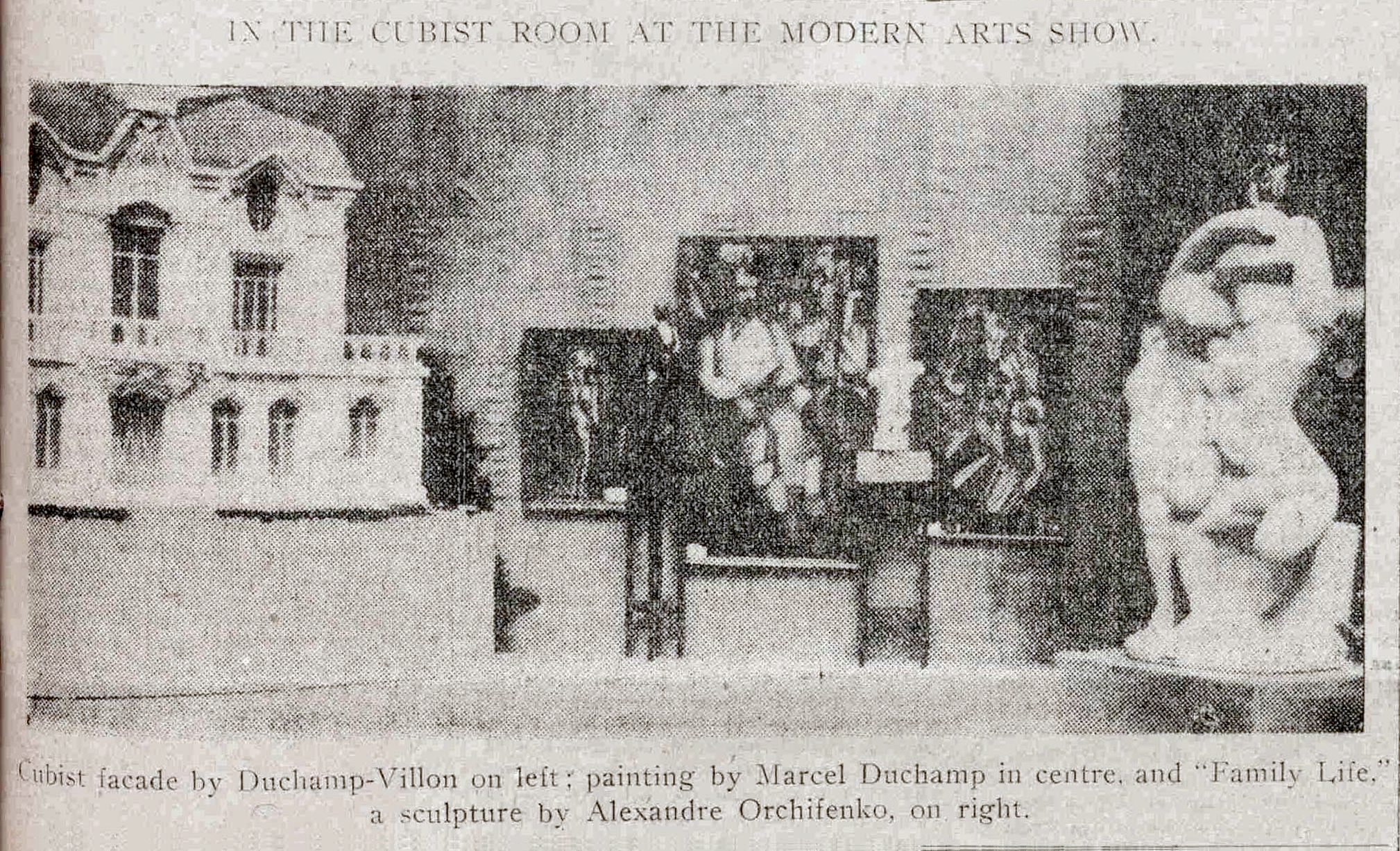
The International Exhibition of Modern Art opened at the 69th Regiment Armory in February 1913. Henri sent five works; Marjorie Organ contributed six drawings. Both gave 10 Gramercy Park South as their address in the catalogue. Their shared household thus appears in the exhibition as the working address of two distinct exhibitors. The Armory stood only a short walk north, bringing an international argument about the future of art into the artists’ own neighborhood.
Henri’s enthusiasm for independent exhibition did not require him to welcome every decision made by its organizers. He worried that the extensive European section assembled under Arthur B. Davies’s leadership would overshadow American painters. The tension was revealing. A rebellion against one set of authorities could find itself confronting a new measure of prestige. Henri continued to ask that American work be judged with attentive eyes. His position was less simple than either wholehearted resistance to modernism or an automatic endorsement of everything newly arrived from Paris.
A teacher’s voice leaves the room
A neighborhood of working artists
The National Arts Club recognized Henri as an Artist Life Member. Its home at 14–15 Gramercy Park South lay a few doors from his studio, offering exhibitions and another circle of conversation. Around the corner, George and Emma Bellows had bought 146 East 19th Street. The former student was now a successful painter with a family, a studio, and students of his own. Teacher and pupil could meet as neighbors whose artistic lives remained closely entangled.
Other conversations carried Henri farther downtown, including the gatherings at Mabel Dodge’s Washington Square home. His interests crossed the lines between art, education, and social change. The important continuity was the exchange among people willing to examine how they worked and what they believed. In Gramercy, that exchange rested on familiar distances: a few doors to a club, a corner to a friend’s studio, and stairs back to his own paintings. Friendship had a place within the ordinary working week.
Faces beyond New York
Travel supplied Henri with other subjects and other kinds of light. He painted in Ireland, including on Achill Island, where Corrymore House became an important base. He also worked in New Mexico and on Monhegan Island. These journeys complicate the convenient image of an artist concerned only with New York streets. The city mattered to him, but so did encounters with people whose surroundings, clothing, and ways of occupying a room differed from those he knew at home.
His portraits of children gave particular scope to his interest in individual presence. A child could sit awkwardly, look directly at the painter, or seem impatient with the entire business of being painted. Henri sought the energy of that particular person. His broad brushwork and strong contrasts were means of holding an encounter together on canvas. Returning to Gramercy, he brought paintings and observations into rooms where discussion had never been confined to a single school or a single place.
The notes become The Art Spirit
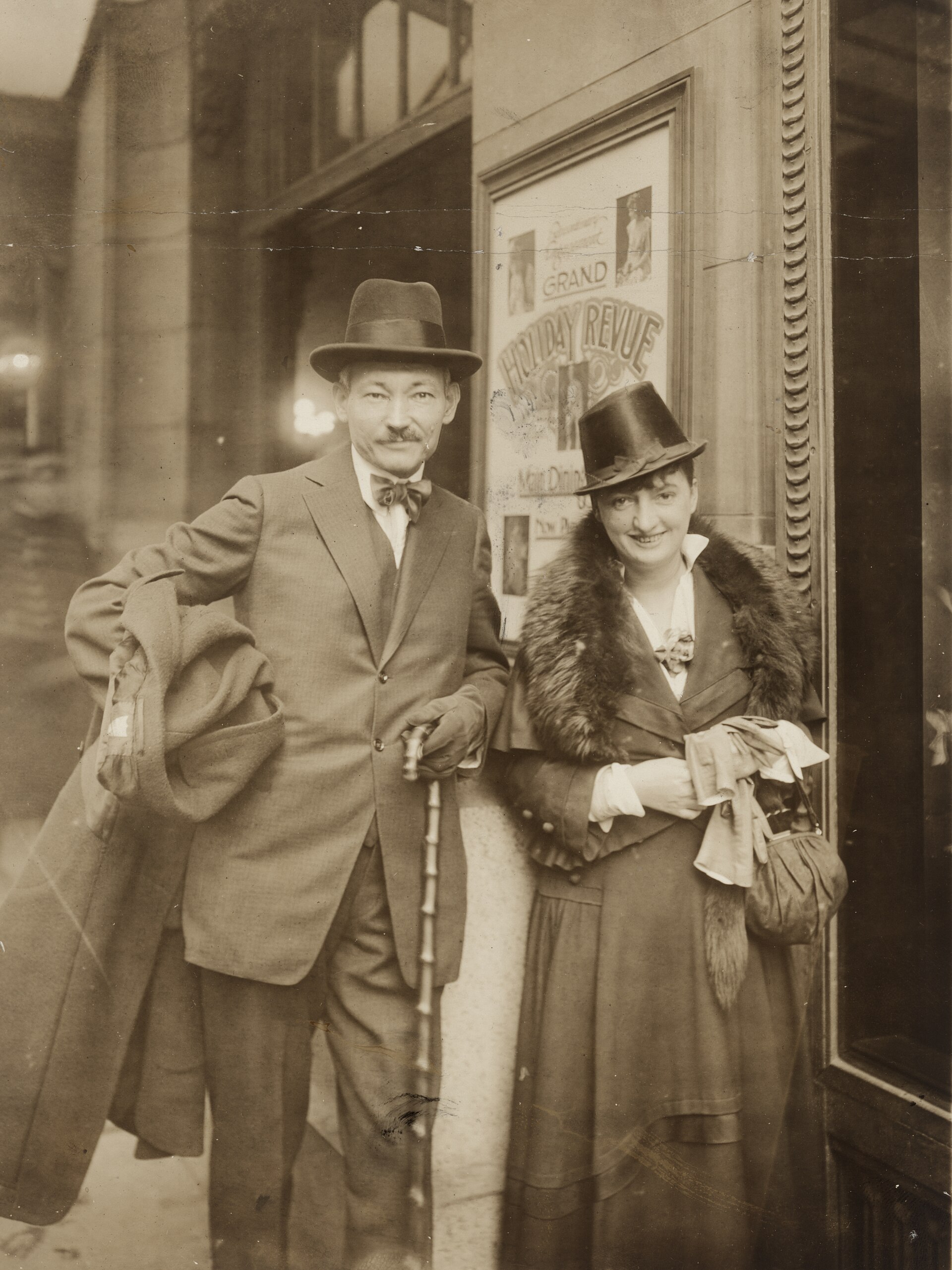
Former pupil Margery Ryerson helped gather Henri’s teaching into The Art Spirit, published in 1923. The book drew on talks, notes, and the accumulated counsel of the studio. It did not offer a sequence of mechanical instructions guaranteed to produce a good picture. Henri asked the reader to cultivate attention, judgment, and an appetite for the work. Technique mattered because something had to be expressed through it. A rule had value only while it helped the artist see and act.
“Like any hunter, the artist hits or misses,” he wrote. “He is looking for what he loves, he tries to capture it.” The language allowed for failure without making failure comfortable. A painter had to keep searching and had to care about the quarry. In print, the voice that students remembered could reach people who would never climb the stairs at No. 10. The book carried the intimacy of a teacher’s encouragement into workshops, classrooms, and solitary studios far from Gramercy Park.
The teacher outlives his brilliant pupil
A funeral within walking distance
George Bellows died suddenly in January 1925, aged forty-two. For Henri, the loss joined affection to the shock of an unfinished career. The young man who had entered his classroom in 1904 had become one of the most forceful painters in the country, a neighbor, and a friend. There was no comfortable sequence in which the older teacher could prepare to be outlived. Bellows’s household on East 19th Street was left with Emma and their two young daughters.
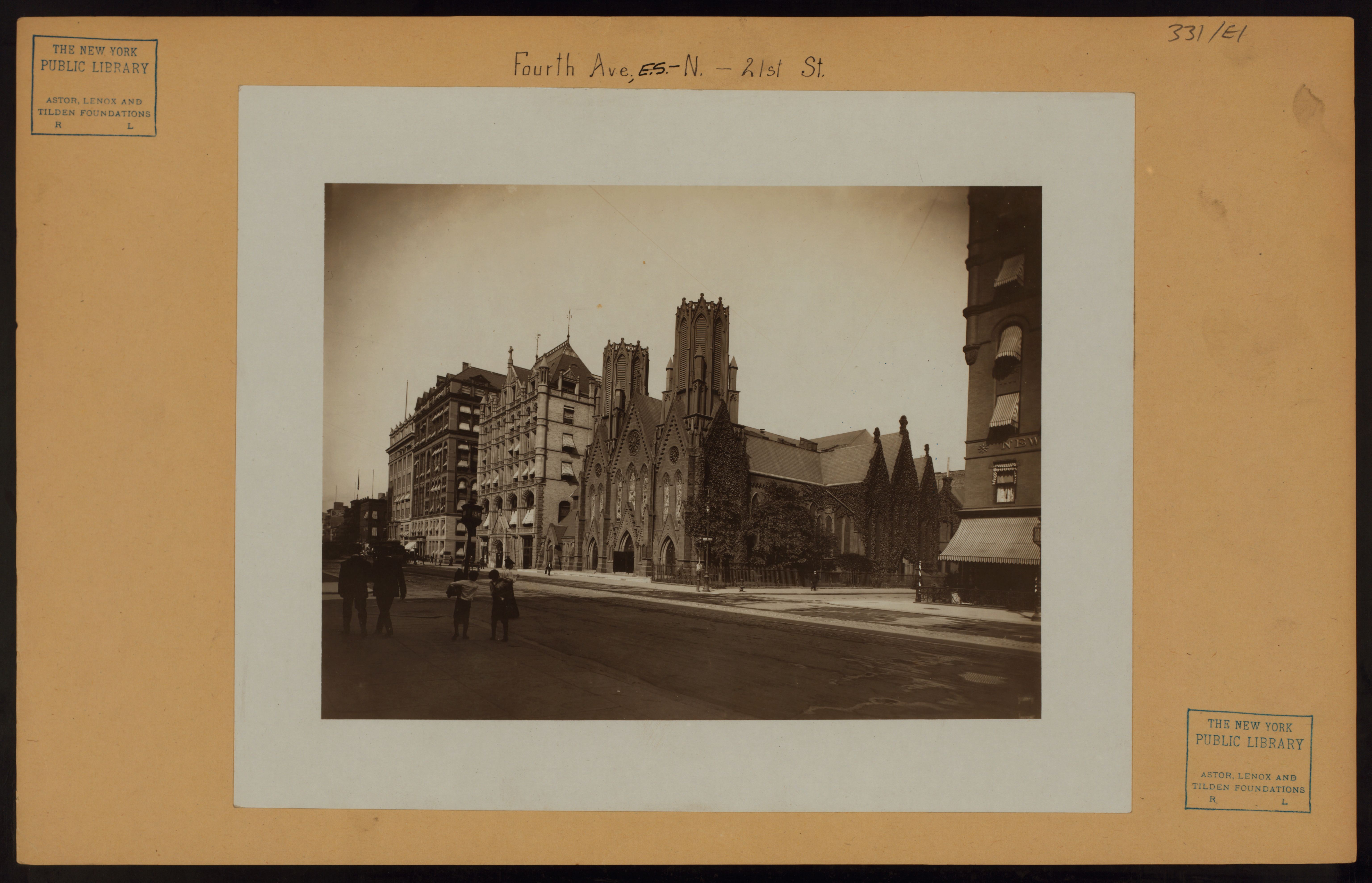
Henri served as a pallbearer at the funeral at Calvary Church, on Fourth Avenue at East 21st Street, just northwest of the Park. Fellow artists and friends filled the church. The short neighborhood journey gathered many of the relationships that had animated the Gramercy studios. Men who had argued, exhibited, and entertained together now accompanied a friend whose work had seemed to promise many more years. The proximity made the absence part of daily life.
The last years at number ten
Henri continued to work, with Gramercy remaining his New York home. His career could no longer be measured only by his own pictures. Students had carried his encouragement into paintings that he could not have predicted; The Art Spirit had given his teaching another audience. None of that made the physical work of painting unnecessary to him. The authority of the teacher had always depended in part on his willingness to return to the canvas and confront the same difficulties he discussed with others.
He died of cancer at St. Luke’s Hospital in July 1929, aged sixty-four. Marjorie died the following year. Their deaths ended the long household at 10 Gramercy Park South, where a marriage, two artistic careers, and a remarkable social circle had shared the upper floors. The building remained, but the familiar arrangement of Tuesday visitors and working days belonged to memory. What could be carried forward was dispersed among pictures, drawings, letters, students, and the printed words of the teacher.
The paintings and the open door
The Metropolitan Museum of Art mounted a memorial exhibition in 1931. For an artist who had fought the exclusion of vital work from official exhibitions, the museum’s retrospective offered a different kind of public judgment. It allowed viewers to encounter the painter across a career rather than through the simplified identity of a rebel or a school’s leader. The portraits, in particular, returned attention to the individual people whose presence had required all his concentration.
No. 10 still gives that career an address beside the Park. Its earlier life as a school and its later association with the childhood world behind Ludwig Bemelmans’s Madeline belong to other stories within the same building. Henri’s is the story of the top floor: a place to paint, a place to welcome friends, and a place where a young artist could be urged to trust an unfamiliar idea. The door that mattered was the one people kept coming upstairs to enter.
Places, people & connections
Around the Park
10 Gramercy Park South
The top-floor home and studio Henri shared with Marjorie Organ from 1909 until his death in 1929.
George Bellows
Henri’s student became a close friend and a neighbor, with his own studio around the corner on East 19th Street.
The National Arts Club
The Tilden mansion housed the club that welcomed Henri as an Artist Life Member.
Calvary Church
Henri served as a pallbearer at George Bellows’s funeral here in January 1925.
The Players
Edwin Booth’s club was another gathering place for the arts on the same short stretch of Gramercy Park South.
Ludwig Bemelmans
The school in Henri’s former building later helped inspire the setting of Madeline through Bemelmans’s daughter’s childhood.
Life at a glance
The biographical record
| Born | June 24, 1865 · Cincinnati, Ohio; born Robert Henry Cozad |
|---|---|
| Died | July 12, 1929 · New York City |
| Gramercy Park address | 10 Gramercy Park South, also 108 East 20th Street · top-floor duplex studio and residence |
| Years on the Park | 1909–1929 |
| Vocation | Painter, teacher, exhibition organizer, and author |
| Spouse & family | Linda Craige, married 1898, died 1905; Marjorie Organ, artist, married 1908, died 1930 |
| Key institutions & works | Pennsylvania Academy of the Fine Arts; New York School of Art; The Eight (1908); Exhibition of Independent Artists (1910); Armory Show (1913); National Arts Club; The Art Spirit (1923) |
Over time
Born Robert Henry Cozad
His early life takes him from Cincinnati to the Nebraska frontier.
An artist’s education
Study in Philadelphia and Paris leads to lasting friendships with newspaper artists.
New York becomes home
Henri settles in the city and develops an influential teaching career.
The Eight exhibit
The Macbeth Gallery exhibition challenges the authority of the academic jury.
The Gramercy studio
Henri and Marjorie Organ move to 10 Gramercy Park South.
Two artists at the Armory
Henri and Organ both exhibit at the International Exhibition of Modern Art.
The Art Spirit
Margery Ryerson helps bring Henri’s teaching to a wide readership.
A life remembered
Henri dies in 1929; the Metropolitan Museum holds a memorial exhibition in 1931.
Sources cited
- Carole Klein, Gramercy Park: An American Bloomsbury (Boston: Houghton Mifflin, 1987), especially pp. 217–233 and 248: Henri, Marjorie Organ, the Gramercy studio, and the neighborhood circle.
- Stephen Garmey, Gramercy Park: An Illustrated History of a New York Neighborhood (New York: Balsam Press, 1984), especially pp. 82–83, 97–98, and 170–173: buildings, artists, and club life.
- Robert Henri, The Art Spirit, compiled by Margery Ryerson (Philadelphia: J. B. Lippincott, 1923): classroom talks, notes, and statements on artistic practice.
- William Innes Homer, Robert Henri and His Circle (Ithaca, New York: Cornell University Press, 1969): the artist’s education, teaching, exhibitions, and artistic friendships.
- Archives of American Art, Smithsonian Institution, Robert Henri papers, finding aid: correspondence, writings, photographs, and biographical materials.
- Association of American Painters and Sculptors, International Exhibition of Modern Art (New York, 1913), catalogue entries for Marjorie Organ, p. 23, and Robert Henri, p. 58.
- The Metropolitan Museum of Art, The Masquerade Dress, 1911, accession 58.157: work, sitter, provenance, and collection information.
- National Gallery of Art, Robert Henri: artist record and collection works.
- The Metropolitan Museum of Art, Memorial Exhibition of the Work of Robert Henri (New York, 1931).
- Boston Public Library, Print Department, George Bellows, Four Friends, 1921, accession 1941.1.57: identification of Leon Kroll, Bellows, Eugene Speicher, and Henri.
Photo credits for this page
- Robert Henri, ca. 1907. Gertrude Käsebier, gum bichromate print. The Museum of Modern Art, New York; gift of Hermine M. Turner, object 167.1963. Collection record and image. Public-domain photograph.
- Four Friends, 1921, first state. George Bellows, lithograph. Boston Public Library, Print Department; gift of Albert H. Wiggin, accession 1941.1.57. Digital Commonwealth collection record. Public domain.
- Girl Seated by the Sea, 1893. Robert Henri, oil on canvas. Museum of Fine Arts, Boston, accession 2007.606. Museum record; image via Wikimedia Commons. Public-domain artwork.
- Snow in New York, 1902. Robert Henri, oil on canvas. National Gallery of Art, Washington. Collection image and source record, Wikimedia Commons. Public domain.
- The Masquerade Dress, 1911. Robert Henri, oil on canvas. The Metropolitan Museum of Art; Arthur Hoppock Hearn Fund, 1958, accession 58.157. Collection record. Met Open Access, CC0.
- The Cubist room at the Armory Show, 1913. Photographer unidentified; New York Tribune, February 17, 1913, p. 7. Wikimedia Commons source record. Public domain.
- Robert Henri and Marjorie Organ, ca. 1920. Photographer unidentified. National Portrait Gallery, Smithsonian Institution, NPG.77.182. Smithsonian collection image via Wikimedia Commons. Smithsonian Open Access, CC0.
- Calvary Church, 1906. Brown Brothers. The New York Public Library, Irma and Paul Milstein Division of United States History, Local History and Genealogy; digital ID 708211F. Digital Collections record. Public domain.