
O. Henry
The Storyteller Behind the Bay Window
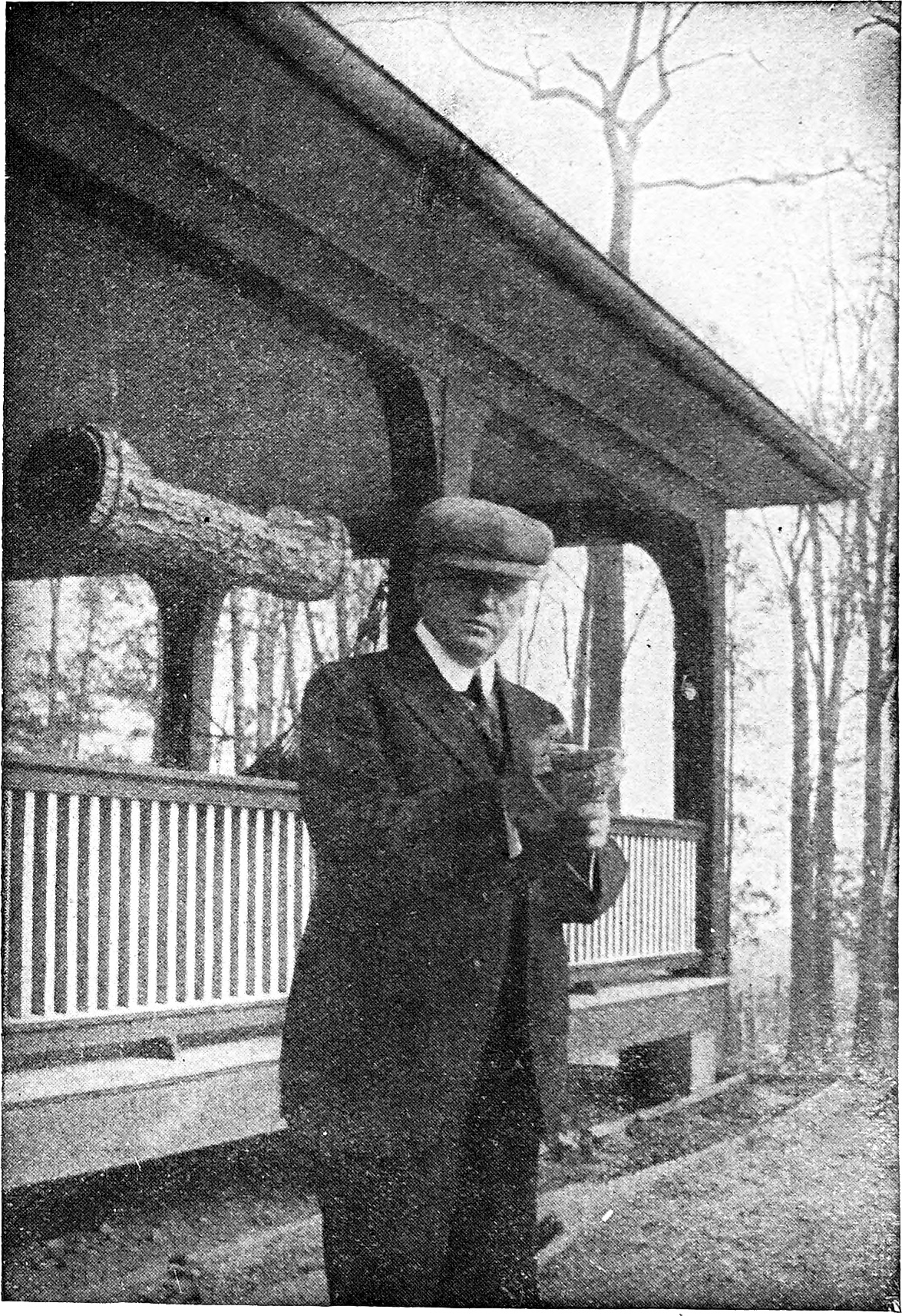
1862–1910 · 55 Irving Place · Healy’s Café at East 18th Street · Irving Place, 1904–1907
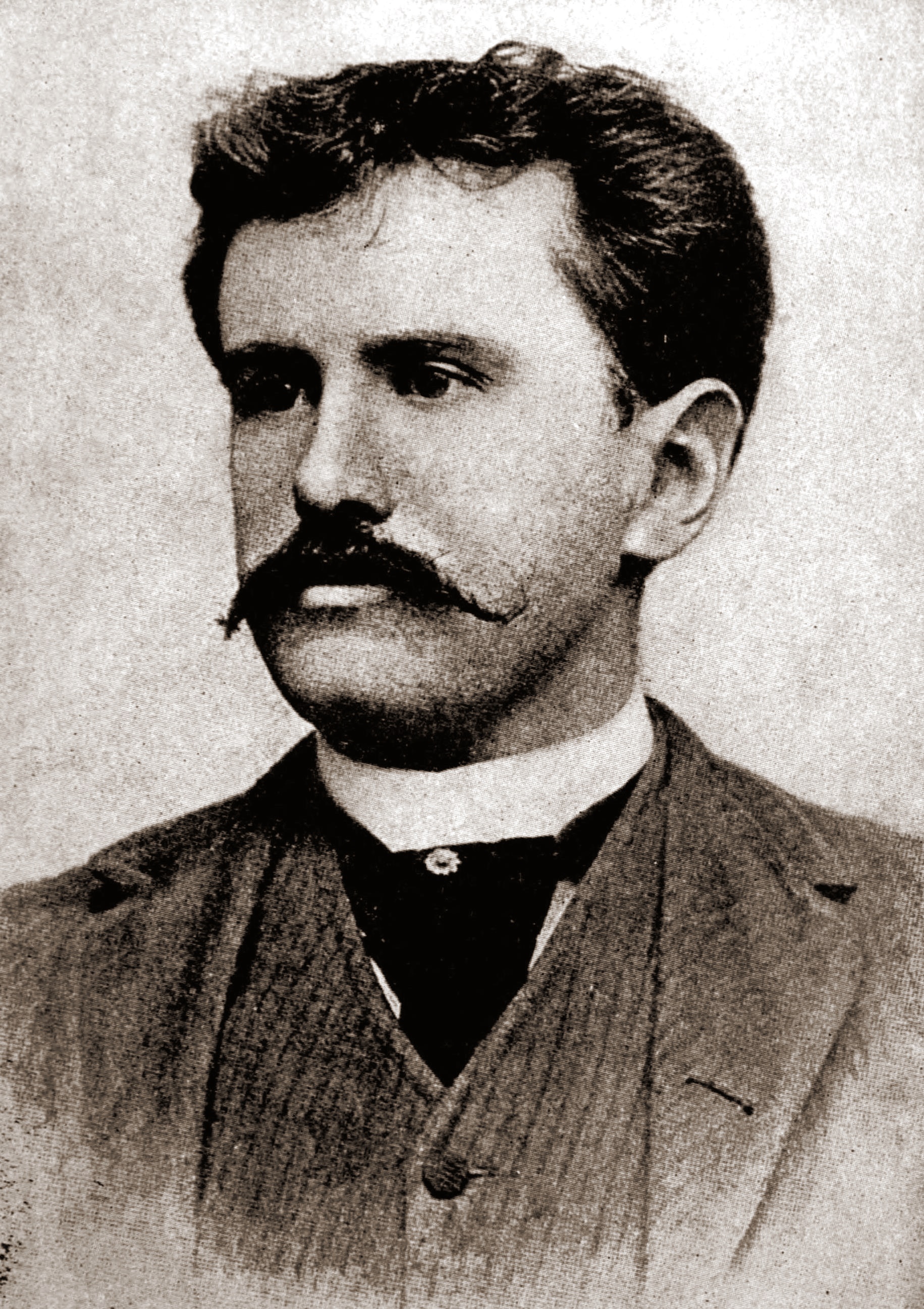
A life in Gramercy
A room above the passing city
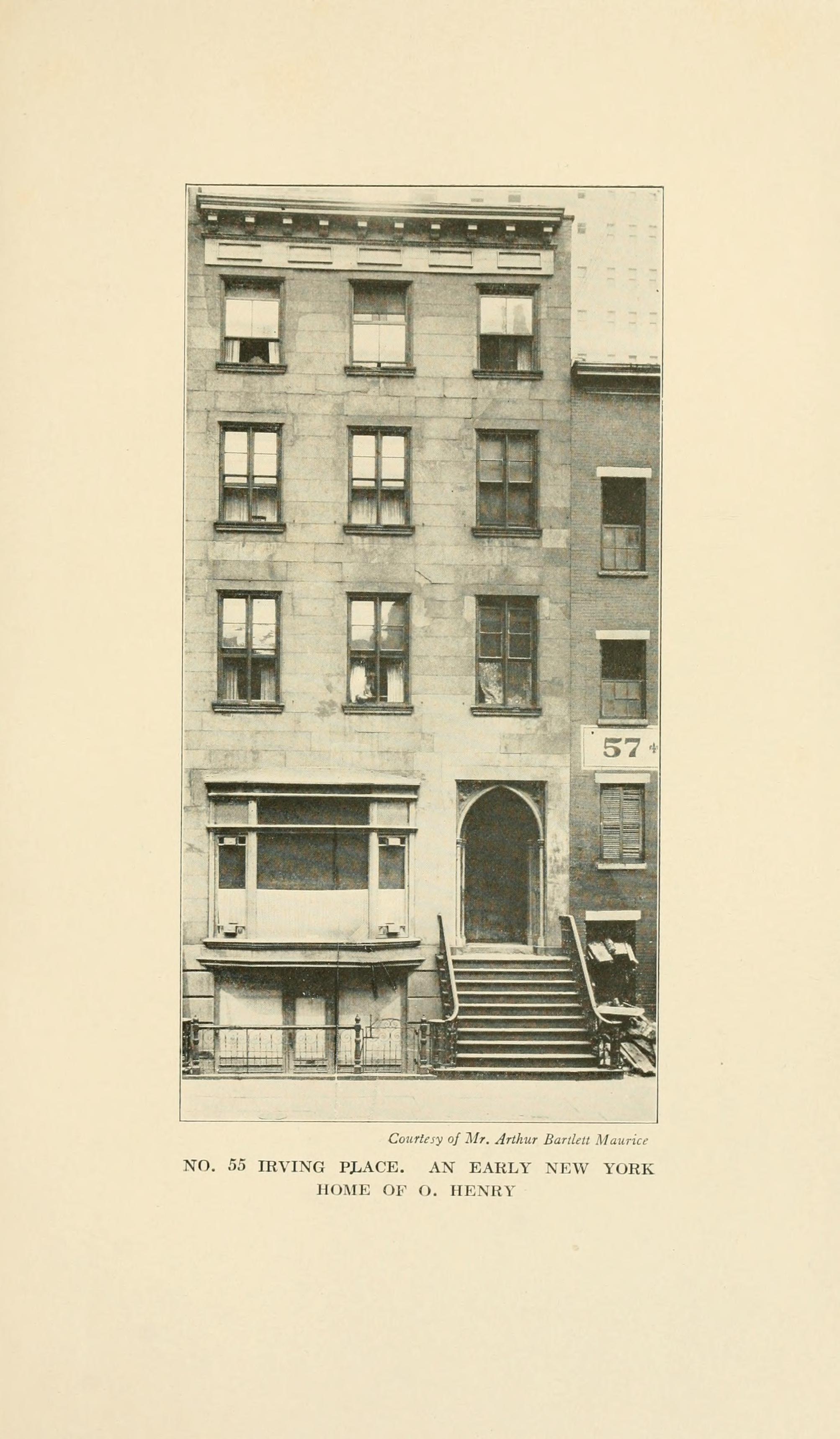
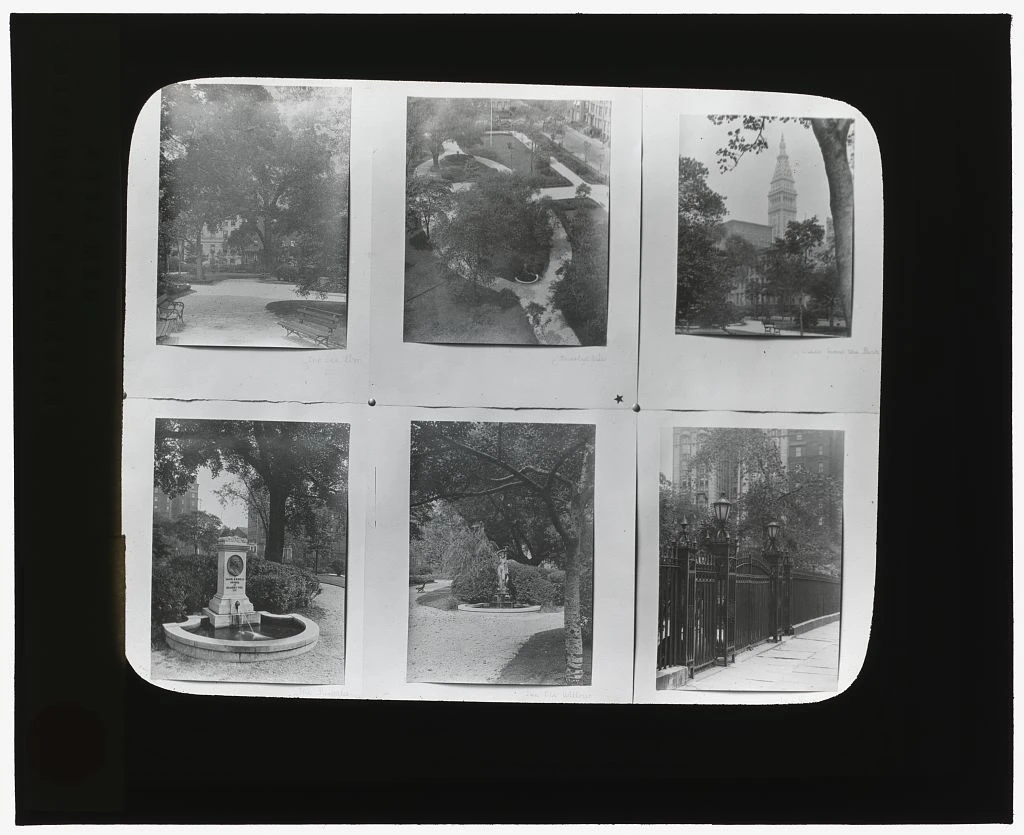
The bay window at 55 Irving Place gave O. Henry a view of a city that never needed to arrange itself for a novelist. People passed on errands, on their way to work, or with no obvious destination. Around the corner was Healy’s Café, where a man could sit over a drink and listen. Two blocks north, Gramercy Park’s iron fence drew a particularly legible line between those who possessed a key and those who could only look through. Within this small territory, William Sydney Porter found an inexhaustible supply of beginnings.
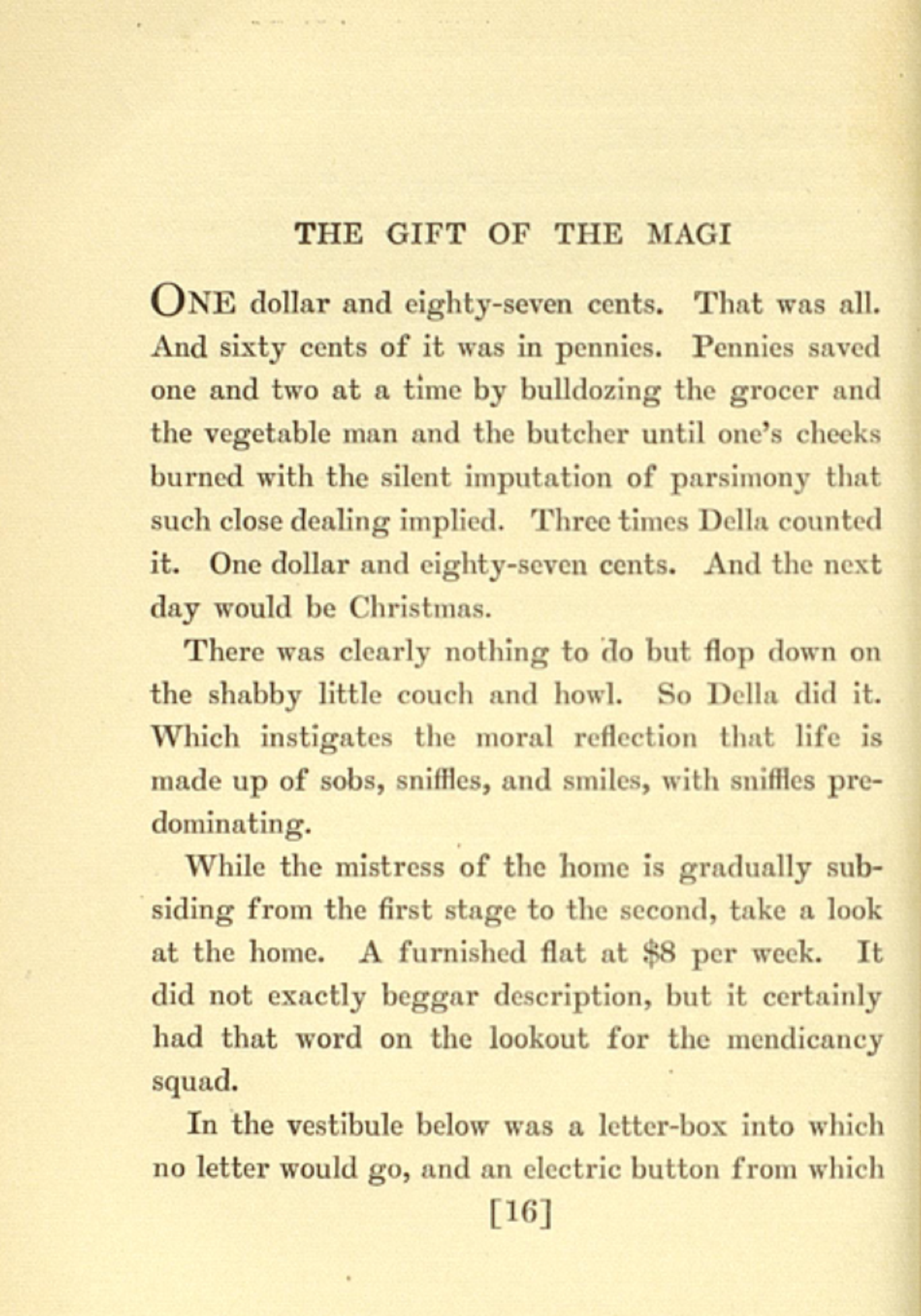
He lived at No. 55 from 1904 to 1907, during the extraordinary burst of work that made his adopted name, O. Henry, familiar to newspaper readers. His apartment had a fireplace and a broad projecting window. The weekly story was a pressing obligation, the rent a continuing expense, and the next conversation a possible escape from both. The Gift of the Magi emerged from these Irving Place years, giving a furnished room and two inexpensive possessions a place in the Christmas imagination.
Porter had arrived in New York with much to conceal. He had been a pharmacist, ranch hand, draftsman, bank teller, newspaper humorist, fugitive, and prisoner. The quiet lodger was therefore unusually well equipped to recognize how little a stranger’s appearance revealed. His fiction repeatedly gives the apparently foolish, unsuccessful, or disreputable person a chance to surprise everyone else. The surprise could be comic, but it could also expose the poverty of a comfortable judgment.
Irving Place supplied more than picturesque surroundings. It put him near the editors who bought his work, the people whose speech enlivened it, and the enclosed square against which he could measure the city’s promises. His New York is crowded with people trying to make a living and still have something left for love. Gramercy’s fence remains one of the places where those two ambitions meet.
The life before the signature
A drugstore education
William Sidney Porter was born in Greensboro, North Carolina, on September 11, 1862, the son of physician Algernon Sidney Porter. His aunt Evelina Maria Porter, known as Miss Lina, taught him. Books and the life around him supplied parallel educations. He liked drawing, mimicry, and the oddity of a telling phrase. At fifteen he began working in his uncle’s drugstore, learning the trade in which he would later qualify as a pharmacist.
A drugstore offered an excellent station for watching people. Customers brought ailments, anxieties, gossip, and news; a boy behind the counter could hear how a story changed with its teller. Porter’s cartoons and humorous observations belonged to this early habit of attention. He had not yet found the publishing machinery that would carry his writing nationally, but he was learning to recognize character in an occupation, a gesture, or a manner of speaking.
Texas gives him several professions
Concern for his health took him to a Texas ranch in 1882. The change brought open country, unfamiliar work, and a new range of voices. Austin followed, with employment that included drafting at the General Land Office and work as a bank teller. In 1887 he eloped with Athol Estes, whose family had reservations about the match. Their daughter Margaret would become the central responsibility of a life increasingly unsettled by money and illness.
He also tried to earn his living by making people laugh. His newspaper The Rolling Stone mixed sketches, jokes, and cartoons; subsequent work for the Houston Daily Post demanded quick observation and a steady flow of copy. In six months he produced fifty-nine stories and sketches for the paper. That apprenticeship in deadlines mattered. The later New York writer did not have to learn from scratch how to turn a passing incident into something that could fill a column.
A departure, and a return
Trouble at the First National Bank of Austin overtook these ambitions. Shortages in its accounts led to an embezzlement charge, and in 1896 Porter fled rather than face trial. New Orleans and Honduras carried him far from the routine of family life. The tropical ports, expatriates, political schemes, and unstable fortunes he encountered would eventually enter Cabbages and Kings. Flight gave him material, but it also left Athol and Margaret behind.
When he learned how seriously Athol was ill with tuberculosis, he came back in early 1897. She died that July. The return ended his attempt to evade the proceedings against him and placed bereavement beside the prospect of prison. His later stories are full of people who make one decision too late, or discover that escape has not removed an obligation. His own Texas years had supplied painful knowledge of both situations.
A name written after lights-out
The night pharmacist
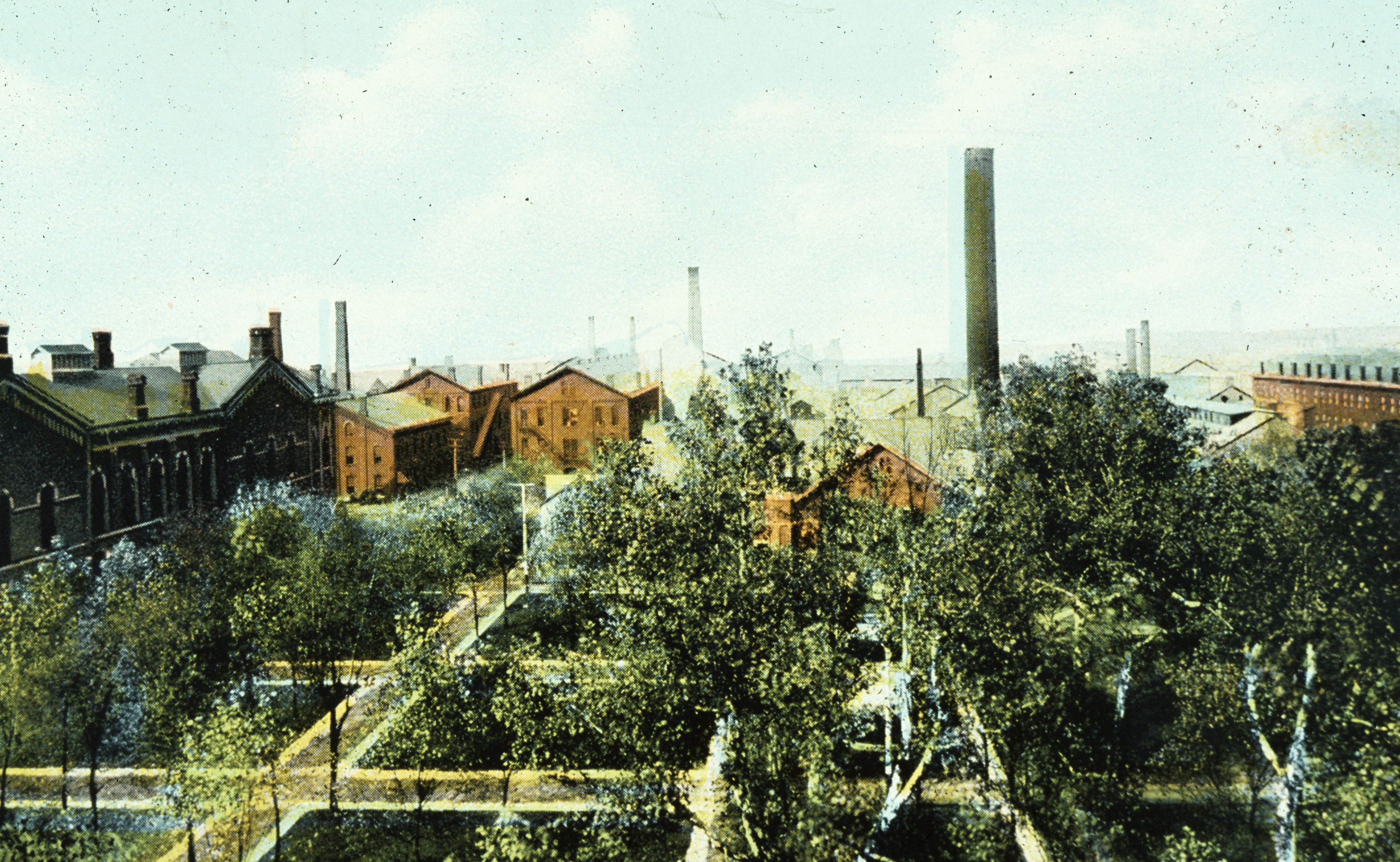
In 1898 Porter was convicted and sentenced to five years in the Ohio Penitentiary at Columbus. He served three years and three months. His pharmaceutical training secured him work in the prison hospital, including the night assignment. The skill acquired behind a Greensboro counter now gave him a particular place within a closed institution. He tended ailments, moved among prisoners, and listened to lives that had reached their own catastrophic turning points.
Prison was a humiliation he would spend much of his remaining life concealing. Yet it did not put an end to his writing. During his confinement he produced fourteen stories, arranging for manuscripts to reach publishers without advertising where they had been written. The earnings helped support Margaret. She was told that her father was away at work, a protective fiction that made each successful sale both an act of provision and part of the concealment.
A second chance on the page
The name O. Henry allowed the story to arrive ahead of the man’s history. Its precise origin became the subject of competing explanations, but its practical value was clear: an editor could accept the manuscript without knowing the circumstances of its author. Porter had used other signatures before. This one acquired the career. The brisk, impersonal pair of words would become attached to some of the most intimate bargains and disappointments in American popular fiction.
The prison stories often turn toward the possibility that a person might cease to be what the world has decided he is. A thief may have tenderness, a respectable citizen may lack it, and an apparently conclusive history may leave room for a different ending. Porter did not have to make every character autobiographical to understand the pressure of a label. He knew how completely a single fact could swallow the rest of a life.
The city at the other end of the journey
He left prison in 1901, wearing a brown worsted suit and carrying the help of people who had known him inside. After a period in Pittsburgh, where Margaret was living with relatives, he reached New York in 1902. The city put editors within visiting distance and supplied an audience large enough to reward his peculiar gifts. He was nearly forty. The career for which he would be remembered still lay almost entirely ahead of him.
He called his adopted city “Bagdad-on-the-Subway,” a place where romance and deception could be reached for the price of an ordinary journey. Its promise was not restricted to the prosperous. A boardinghouse, a restaurant table, or a bench might produce an encounter as surprising as anything in a travelers’ tale. New York gave his fiction a density he could exploit: strangers were continually close enough to misunderstand one another, help one another, or fall in love.
Two gifts in an Irving Place room
One hundred dollars, one story
At the end of 1903, the Sunday New York World engaged him to supply a weekly story for one hundred dollars. He produced 113 stories for the paper in two years, while continuing to write for magazines including McClure’s, Everybody’s, Munsey’s, and Ainslee’s. This was an astonishing rate of invention. It also meant that the private habits of a reluctant, sociable writer had to coexist with an institution that expected a finished piece on schedule.
Money often arrived in installments. An introduction might persuade an editor to advance fifty dollars; completing the story released the other fifty. The arrangement made the first paragraph a negotiable asset. It also helps explain the energy of his openings. A reader had to be caught quickly, but an editor sometimes had to be convinced first. Porter could postpone the labor, bargain over it, and then produce a story whose apparent ease concealed the pressure under which it had been made.
The window at number fifty-five
In 1904 he took the front apartment at 55 Irving Place, between East 17th and East 18th Streets. The projecting bay window brought the passing street into his working day. The setting was domestic rather than grand: a fireplace, rented rooms, a familiar café close by. From here he could move easily between the quiet necessary for writing and the company that supplied him with speech, incidents, and excuses to remain out a little longer.
An overdue Christmas assignment brought the World illustrator Dan Smith to the apartment in December 1905. Smith needed a scene to draw before the newspaper could go to press. Porter gave him a shabby room, a young husband associated with a watch, and a young wife whose long hair was central to the composition. The story that followed made those objects inseparable. A practical production problem had helped fix the visual economy of The Gift of the Magi.
What Jim and Della could afford
Della sells her hair to buy a chain for Jim’s watch. Jim sells the watch to buy combs for Della’s hair. The gifts have become temporarily useless by the time they are exchanged, and the story asks the reader to reconsider what usefulness might mean. Their poverty is precise: money is counted, shops are visited, and a treasured possession has a market price. Their generosity is equally concrete. Each gives up something that belongs intimately to the self.
The ending is often remembered as a mechanism, a neat crossing of two secrets. Its durability also depends on the room around it and the tenderness with which Porter allows the couple to remain foolish. Neither has made a sensible purchase. Both have understood something that an account book cannot register. Published in the World in 1905 and collected in The Four Million in 1906, the story carried the concerns of his Irving Place years far beyond the street where he wrote.
The club with no imposing doorway
Company at Healy’s
The Players and the Lotos Club offered literary and theatrical distinction, but Porter preferred the less ceremonious company of Healy’s Café at Irving Place and East 18th Street. Regulars called it “the Club.” The establishment survives as Pete’s Tavern, at 129 East 18th Street. It lay close enough to his rooms for a visit to become a habit, and its conversation did not require anyone to arrive with a published book or an introduction.
A hack driver, a shoemaker, and a church janitor could hold the floor. Porter listened to the particular turns by which an occupation became a personality. His people are rarely anonymous representatives of a class; even a very brief appearance may carry a profession, an accent, and a private theory of the world. The café supplied a social scale on which the stranger could be interesting before he was important. For a writer of short stories, that was a considerable advantage.
The doctor’s bill
His sympathy could become expensive. He kept an account with Dr. Colin Luke Begg and sent people who needed medical help with an instruction that the bill should come to him. Money earned from a story might therefore pass quickly to someone whose story would never be printed. Porter’s own finances were not secure enough to make this generosity effortless. The gesture belongs beside the recurring shortages and advances, rather than in a separate legend of untroubled success.
The same attention shaped his treatment of working women. He objected to reducing a woman to her employment with the label “shopgirl,” observing that society did not call the women of Fifth Avenue “marriage-girls.” The joke presses on an inequality in naming. One group is defined by how it earns its living; another is permitted a complete identity. His fiction gives saleswomen ambitions, judgment, vanity, and courage, sometimes within a few pages and always under the constraint of what a wage will buy.
The other New York
The Four Million announced its argument in its title. Against the idea that a tiny fashionable circle contained the city’s interesting people, Porter set the millions who lived outside it. The claim was literary as well as democratic. There were stories in cheap furnished rooms and behind counters, among people waiting for work or trying to afford an evening out. To find them, a writer needed curiosity more than social access.
The working woman became one of the people through whom he could test the city’s offers. A fine dress, a restaurant meal, or an invitation might carry a cost concealed by its attractiveness. He understood the appeal of such things without treating the woman who wanted them as contemptible. His sympathy reached readers far removed from those choices, including Theodore Roosevelt. The café listener had found a way to make an ordinary wage and an ordinary disappointment command a national audience.
What the iron fence could tell
An inheritance measured in keys
Gramercy Park gave Porter a ready-made setting in which geography could become social comedy. A fence, a locked gate, and a household across the street could establish a distinction without a long explanation. In “The Discounters of Money,” the aristocratic Van der Ruysling family’s standing is tied to its history beside the Park and to possession of its first key. The absurd precision of that claim makes inherited importance both recognizable and vulnerable.
Porter enjoyed the vocabulary with which families defended their rank. Names and possessions could become little certificates of superiority, handed down until no one remembered to question their value. Yet the story’s interest lies in what happens when such a world encounters people whose resources and expectations are different. The Park does not have to stand for one fixed moral. It provides a small, enclosed territory against which the bustle and improvisation of the surrounding city can be set.
Nancy and Lou outside the railings
In “The Trimmed Lamp,” the fence becomes the setting for a much more painful encounter. Nancy and Lou are working women whose friendship is tested by different choices about money and desire. Lou’s furs and jewels announce an escape from the limits of wages, but their apparent triumph does not survive the meeting outside Gramercy Park. The clothes that ought to proclaim happiness instead make the emotional cost of her situation visible.
When Lou sinks against the railings in tears, a young policeman tactfully looks away. That small decision matters. Authority has the power to intrude, but compassion consists in withholding it. Porter lets the public street contain a moment of privacy. The Park remains closed behind the women, yet the human action takes place outside it: recognition, shame, affection, and the mercy of someone who chooses not to make a spectacle of distress.
Spring reaches a respectable house
“The Marry Month of May” moves indoors, to a house facing the Park’s northwest corner, where spring unsettles the arrangements of an older household. The neighborhood’s settled appearance makes it a useful stage for a comedy of unexpected desire. Servants and family members have interests of their own, and the atmosphere that encourages one person’s romance may threaten another’s expectations. Domestic order proves less permanent than the façade suggests.
These stories use a familiar few blocks in sharply different ways. Gramercy can signify lineage, offer a place for a difficult conversation, or surround a house in which everyone is suddenly susceptible to May. Porter’s invention is in the people and their reversals; the physical setting gives those inventions something solid to press against. A reader can still walk the perimeter and recognize why the boundary itself attracted him. There is a story on either side, and another in the encounter between them.
The city he wanted to see
Another address, the same demands
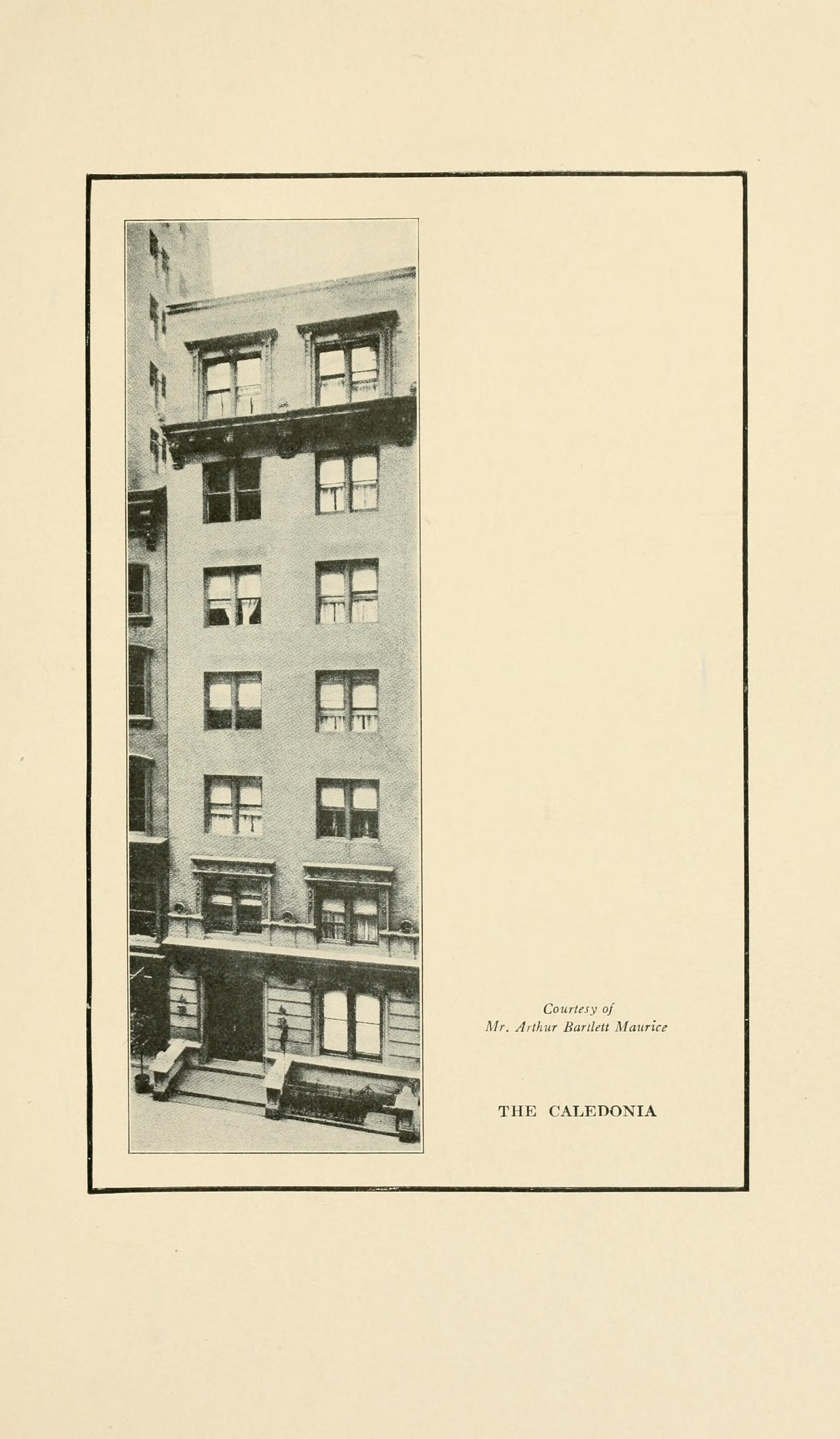
In 1907 Porter left Irving Place, moving with his landlady to East 24th Street. That November he married Sara Lindsay Coleman, whom he had known in his youth in North Carolina. Marriage offered the possibility of a less solitary life, but it did not easily accommodate his New York habits. He retained a separate writing room at the Caledonia Hotel on West 26th Street, where the need to produce another story followed him upstairs.
His health was deteriorating. Drinking, irregular hours, and the exhaustion of sustained production narrowed the possibilities that success seemed to have opened. The stories continued to appear, and his reputation continued to grow, but the life that supported them became increasingly difficult to manage. The man who could arrange a sudden rescue for a character could not impose the same economy on his own affairs. Friends, editors, family, and creditors encountered different parts of the strain.
The hospital window
He collapsed in early June 1910 and was taken to Polyclinic Hospital. He died on June 5, aged forty-seven. The remembered request to keep the room light, ending with “I don’t want to go home in the dark,” joined his biography almost immediately. It has the cadence of the popular song from which the phrase came, and the poignancy of a New Yorker reluctant to surrender the city beyond the window.
Death left a remarkably compressed body of achievement. Most of the work that made him famous had been written in the eight years after his arrival in New York. Collections continued to gather the stories, and their readership grew into the millions. Young writers such as John Reed and readers as different as the philosopher William James found something to admire in him. The ending was his trademark, but the city he had made available to fiction was the larger accomplishment.
A short walk back to Irving Place
Pete’s Tavern keeps his association with the corner visible. No. 55 preserves the address of the rented rooms from which a weekly newspaper assignment became enduring literature. Nearby, Ludwig Bemelmans would find another route from New York working life to an international readership. Their careers were different, but the neighborhood remembers both through places where meals, conversation, observation, and the necessity of earning a living entered the making of stories.
The most useful memorial to Porter may be the walk between the café and the Park. It is short enough to take without a plan and varied enough to suggest several. A person with a key disappears through the gate; another waits outside; a window gives a view of both. O. Henry made his living by noticing what such arrangements failed to explain about the people inside them. His Irving Place room is gone as a working household, but the street continues to supply the beginnings.
Places, people & connections
Around the Park
Ludwig Bemelmans
Another Gramercy storyteller whose working life in New York supplied the material for books read around the world.
19 Gramercy Park South
The Fish mansion opens onto the social world that O. Henry viewed from the surrounding streets and examined through fiction.
The Players
Edwin Booth’s clubhouse represents the more formal literary and theatrical fellowship near Porter’s preferred café.
The National Arts Club
The club moved into the Tilden mansion during Porter’s Irving Place years, adding another artistic gathering place beside the square.
The Irving
The apartment house at Irving Place and Gramercy Park South stands at the northern end of the street Porter walked from his rooms.
Samuel B. Ruggles
Ruggles created Gramercy Park and Irving Place, shaping the streets and boundaries that later entered O. Henry’s stories.
Life at a glance
The biographical record
| Born | September 11, 1862 · Greensboro, North Carolina |
|---|---|
| Died | June 5, 1910 · New York City |
| Name | William Sidney Porter; later William Sydney Porter; published as O. Henry |
| Gramercy Park address | 55 Irving Place; Healy’s Café at Irving Place and East 18th Street; later East 24th Street |
| Years in the neighborhood | At 55 Irving Place, 1904–1907; in New York, 1902–1910 |
| Vocation | Short-story writer, newspaper humorist, and former pharmacist |
| Spouse & family | Athol Estes, married 1887, died 1897; Sara Lindsay Coleman, married 1907; daughter Margaret Worth Porter |
| Key institutions & works | Sunday New York World; Cabbages and Kings (1904); The Four Million (1906); The Trimmed Lamp (1907); Whirligigs (1910) |
Over time
Born William Sidney Porter
His childhood and apprenticeship unfold in Greensboro, North Carolina.
Marriage in Texas
He marries Athol Estes; their daughter Margaret is born in 1889.
The prison years
Pharmaceutical work and writing help him endure confinement in Columbus.
New York begins
He moves to the city that will become the center of his fiction.
The Irving Place window
He takes rooms at No. 55 while producing stories for the Sunday World.
The Gift of the Magi
His Christmas story appears in the New York World.
The four million find readers
The Four Million and The Trimmed Lamp collect stories of working New York.
A final New York spring
Porter dies on June 5; his stories continue to reach new generations.
Sources cited
- Carole Klein, Gramercy Park: An American Bloomsbury (Boston: Houghton Mifflin, 1987): O. Henry’s Irving Place years, neighborhood companions, and Gramercy settings.
- C. Alphonso Smith, O. Henry Biography (Garden City, New York: Doubleday, Page & Company, 1916): family, early employment, imprisonment, New York addresses, correspondence, and contemporary recollections.
- O. Henry, Cabbages and Kings (New York: McClure, Phillips & Co., 1904): the linked Central American stories.
- O. Henry, The Four Million (New York: McClure, Phillips & Co., 1906), including “The Gift of the Magi” and the collection’s introductory note.
- O. Henry, The Trimmed Lamp and Other Stories of the Four Million (New York: McClure, Phillips & Co., 1907), including the title story.
- O. Henry, Whirligigs (Garden City, New York: Doubleday, Page & Company, 1910), including “The Marry Month of May.”
- O. Henry, Strictly Business: More Stories of the Four Million (Garden City, New York: Doubleday, Page & Company, 1910), including “The Discounters of Money.”
- Austin History Center, Austin Public Library, digitized copy of C. Alphonso Smith’s O. Henry Biography, University of North Texas Libraries, The Portal to Texas History.
Photo credits for this page
- William Sydney Porter (O. Henry). Photographer unidentified; portrait reproduced in Katherine M. H. Blackford and Arthur Newcomb, Analyzing Character. Wikimedia Commons source record. Public domain.
- 55 Irving Place. Photographer unidentified; photograph credited to Arthur Bartlett Maurice in C. Alphonso Smith, O. Henry Biography (Doubleday, Page & Company, 1916), plate facing p. 200. Internet Archive edition. Public domain.
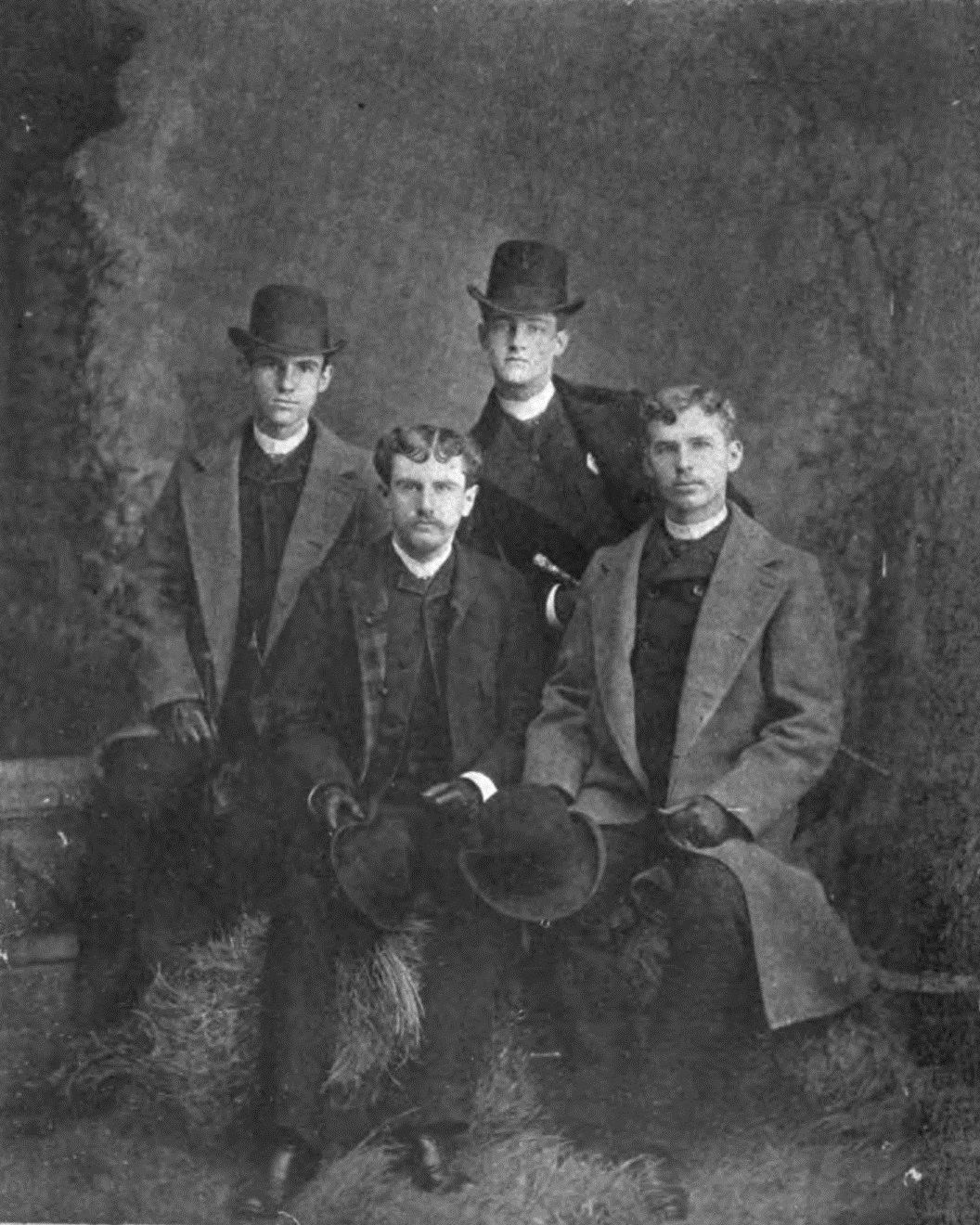
- O. Henry with the Hill City Quartette, 1886. Photographer unidentified; reproduced in The Bookman. Wikimedia Commons source record; periodical reproduction, HathiTrust. Public domain.
- Ohio State Penitentiary, Columbus, 1910. Postcard, creator unidentified. Columbus Metropolitan Library; Ohio Digital Network and Digital Public Library of America, DPLA identifier c7e66f00cbd43d96e416b30eb9f96528. Collection contribution to Wikimedia Commons. No Copyright—United States.
- “The Gift of the Magi,” 1906. O. Henry, The Four Million (New York: McClure, Phillips & Co.), p. 16. The Portal to Texas History, University of North Texas Libraries; image via Wikimedia Commons. Public domain.
- O. Henry, frontispiece to Whirligigs, 1910. Photographer unidentified. Doubleday, Page & Company, Garden City, New York. Wikimedia Commons source record. Public domain.
- Gramercy Park, 1922. Exhibition panel from the Frances Benjamin Johnston Collection. Library of Congress, Prints and Photographs Division, digital ID LC-DIG-ppmsca-16306. Collection record. No known restrictions on publication.
- The Caledonia Hotel, New York. Photographer unidentified; reproduced in C. Alphonso Smith, O. Henry Biography (Doubleday, Page & Company, 1916), plate facing p. 186. Internet Archive edition. Public domain.