
Edith Wharton
The New York She Carried Away
1862–1937 · West 23rd Street & Calvary Church · A Gramercy family and childhood
A life in Gramercy
A small hand in a white mitten
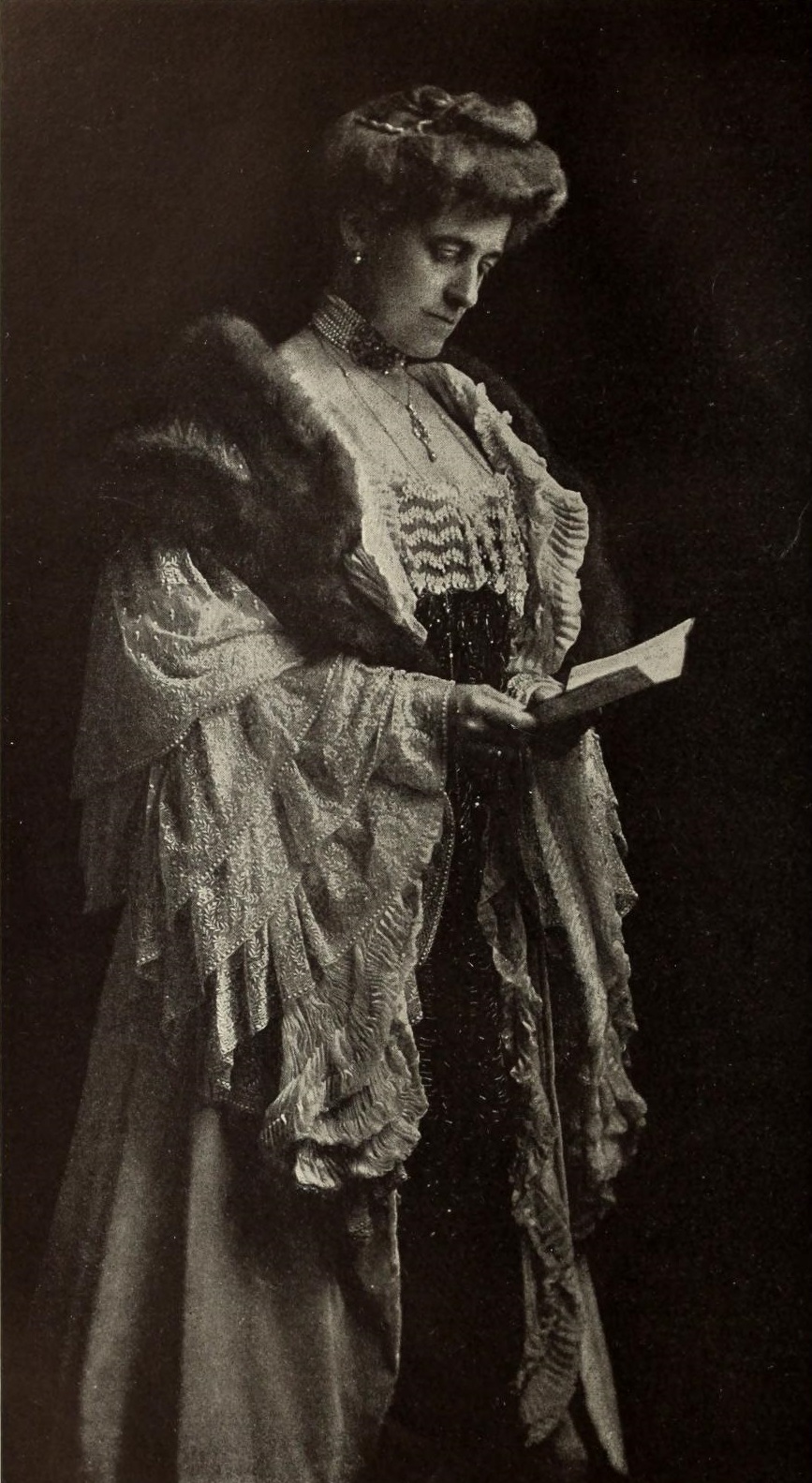
Long before Lily Bart entered a drawing room or Newland Archer settled into his place at the opera, there was a little girl walking beside her father. In A Backward Glance, Edith Wharton remembered his bare hand inside her white woolen mitten: a small arrangement that let him guide her without making her stretch uncomfortably upward. The father was George Frederic Jones; the child, born Edith Newbold Jones in 1862, would make the New York of his generation both famous and unsettlingly recognizable.
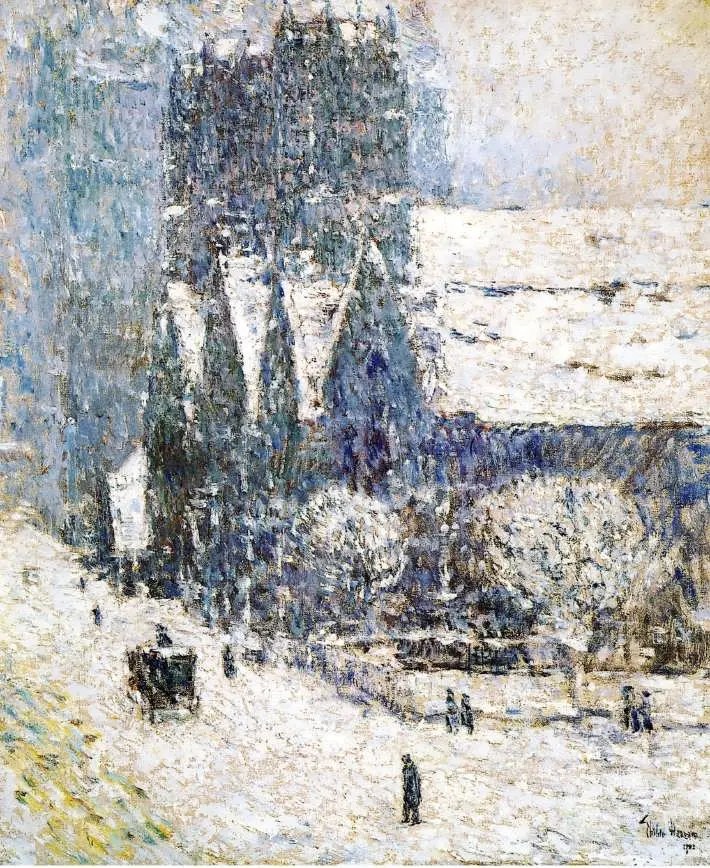
For Gramercy, the connection is close and particular. Her parents had lived on East 21st Street before moving to the West 23rd Street brownstone where she was born. The family belonged to the social world surrounding the Park, and Calvary Church, at East 21st Street and what is now Park Avenue South, became part of her childhood. In its rectory she found an unusually encouraging library and a friend with whom she could read far beyond the approved accomplishments of a young lady.
Wharton eventually settled in France. Her books, however, kept returning to the houses, churches, family alliances and formidable conventions of the city she had left. She understood the pleasure of belonging to that world as well as the price it charged. Her people suffer not only because others are cruel, but because kindness, loyalty and good breeding can become wonderfully efficient instruments of exclusion.
The surviving church offers a useful place to begin. Behind the familiar public life of sermons and Sunday clothes lay the private discovery of books. That distinction—between the rules a society announces and the lives unfolding behind its doors—would become one of Wharton’s great subjects.
The family before the novelist
A neighborhood of family connections
Edith’s father belonged to a New York whose relationships had been established long before she arrived. George Frederic Jones graduated from Columbia College in 1838 alongside George Templeton Strong, the lawyer, music lover and indefatigable diarist. Their friendship places the Jones family within a particularly well-documented Gramercy circle. When Strong became engaged to Ellen Ruggles in March 1848, Jones was among the people to whom he hurried with the news.
Ellen was a daughter of Samuel B. Ruggles, who had laid out Gramercy Park. Strong and Ellen’s own household would become part of the history of 50 Gramercy Park North. Such connections matter in Wharton’s story because the families of her fiction do not meet as strangers. Their judgments come furnished with earlier marriages, remembered slights, school friendships and inherited expectations. Before a young person speaks, a room already knows something about the family.
Fourteen West 23rd Street
George Frederic Jones and Lucretia Rhinelander Jones lived for years on East 21st Street before moving to 14 West 23rd Street, where Edith was born on January 24, 1862. The distinction is worth keeping: East 21st Street belongs to the family’s earlier history, while West 23rd Street was her birthplace. The move did not take them into a wholly different social landscape. It placed them in another brownstone within the neighboring world of Gramercy and Madison Square.
These houses offered a confident outward sameness. The rooms within could be comfortable, ceremonious and carefully guarded against the wrong influence. Wharton later made their appearance an object of close criticism, but the child first knew them as the settings of family life. Her earliest remembered New York was measured at walking pace, beside an adult whose size and manner remained vivid decades later. The father’s hand in the mitten survived more clearly than any formal genealogy.
The first journeys
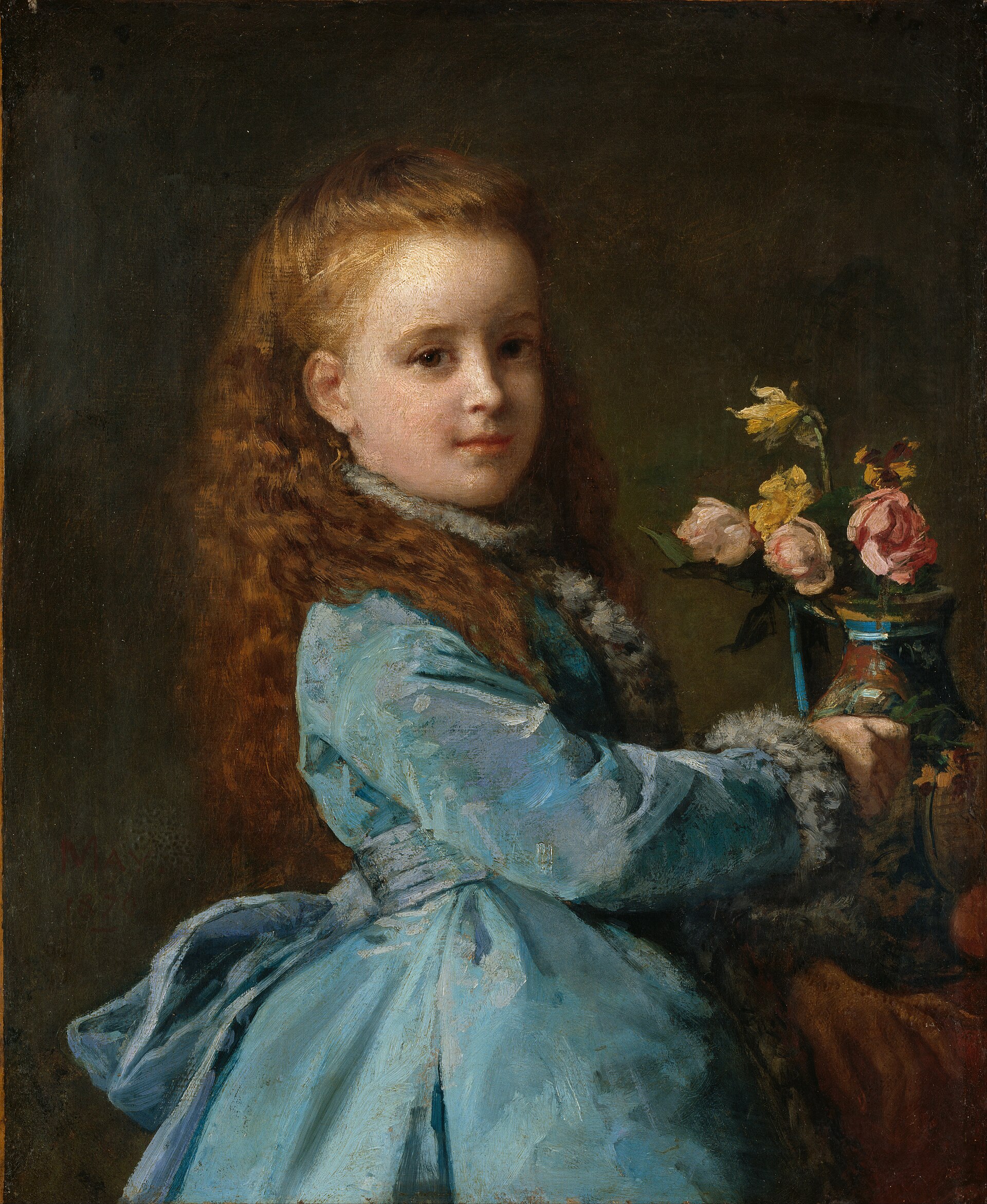
The Jones family’s departure for Europe in 1866 enlarged Edith’s childhood beyond those neighboring squares. Languages, pictures and the appearance of other cities entered her experience early. The portrait painted by Edward Harrison May in Paris in 1870 shows her at eight, dressed and posed with the composure expected of a prosperous family’s daughter. It records the polished exterior of a child whose imaginative activity was already considerably less orderly than that exterior suggests.
In the memoir written near the end of her life, Wharton approached childhood through sharply remembered particulars rather than a procession of family achievements. A gesture, a book or a room could recover an entire atmosphere. The winter walk was affectionate without becoming a claim that old New York had been an uncomplicated paradise. She could remember the warmth of her father’s companionship and still become the most searching critic of the society he inhabited.
An education behind the church
The trouble with making things up
Lucretia Jones did not share her daughter’s enthusiasm for literary invention. In a household where accomplishments had their accepted uses, the compulsion to make up stories could seem an awkward excess. Edith’s recollections describe an imagination that needed material on which to work and encountered little encouragement from her mother. Denied the writing paper she wanted, she asked for the brown paper wrapped around delivered parcels. Spread on the bedroom floor, it became a surface for her blank verse.
The episode has the comic scale of a determined child making a practical arrangement, and Wharton retained its physical particulars: the wrapping paper and the floor. It also shows the distance between two ideas of a girl’s education. Reading could improve manners or fill an appropriate hour. Writing demanded something less containable—the freedom to invent a world and to keep working at it when nobody had asked. She acquired that freedom in pieces, through books, friendships and persistence.
Dr. Washburn’s library
At Calvary Church, the Reverend Dr. Edward Abiel Washburn offered access to a different intellectual atmosphere. Rector from 1865 until his death in 1881, Washburn was a scholar whose books made the rectory a place of discovery. Edith’s friendship with his daughter, Emelyn Webster Washburn, took her inside. The girls could read in large chairs on winter afternoons, finding subjects considerably more adventurous than the limited literary diet a cautious household might have prescribed.
Old Norse and Icelandic sagas were among their discoveries. The attraction was not simply that these were difficult or unusual books. They offered people living by unfamiliar loyalties, facing danger and acting with an intensity far removed from the correct exchanges of a New York visit. The rectory supplied both the books and the companionship in which to enjoy them. Emelyn mattered as a fellow reader, someone with whom the excitement could be shared rather than explained away.
Dante above the rooftops
In warmer weather, the two friends found another reading place: the roof of an adjoining building, where they read Dante aloud. The scene comes down through Wharton’s recollection, a glimpse of literary enthusiasm escaping the drawing room without leaving the neighborhood. Their movement between the rectory library and the rooftop gives this part of her education a small, precise geography. A church best known from the street for its architecture also sheltered an important part of a future novelist’s private life.
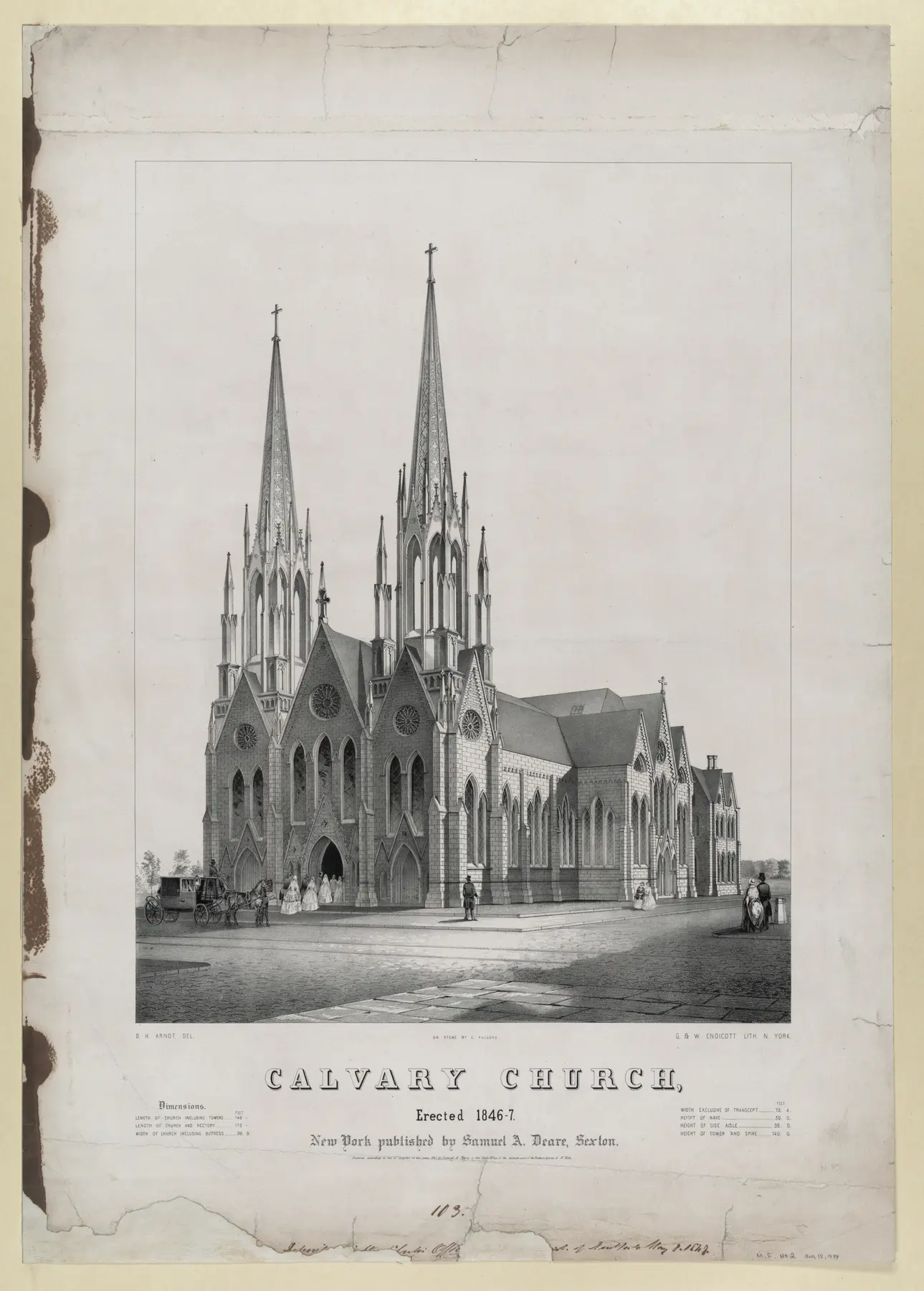
Calvary’s appearance changed over time; the church Wharton knew should not be imagined as identical in every detail to the building seen today. Yet the corner remains recognizable, and its history preserves the association with Washburn. When Wharton later created a learned clergyman within the formal world of The Age of Innocence, the memory of this rector was available to her. The man of books and the guardian of an institution could occupy the same study.
Rooms, rules and Lily Bart
The work behind the married name
In 1885 Edith Jones married Edward “Teddy” Robbins Wharton. The name under which she would publish came from the marriage, but a literary career did not arrive with it fully formed. Poems and stories appeared in magazines including Scribner’s and The Century. Publication brought the private habit of writing into a professional world of editors, readers and competing judgments. It required a different kind of confidence from the social assurance with which she had been raised.
Among her perceptive supporters was Richard Watson Gilder, editor of The Century and later a founder of the cooperative at 24 Gramercy Park South. In 1904 he argued with his associate Robert Underwood Johnson over Wharton’s fiction touching on divorce. Johnson was uneasy; Gilder believed she stood on the brink of a major popular success. His concern was practical as well as literary: if the magazine hesitated, it might soon lose the chance to secure her work.
What a room should do
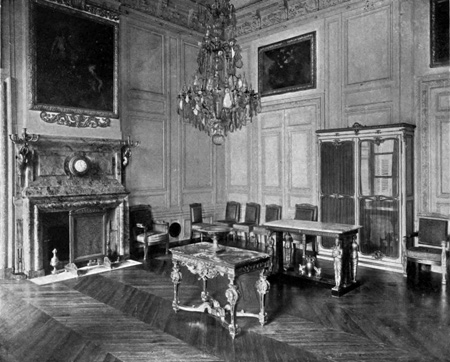
Wharton had already published a substantial book outside fiction. The Decoration of Houses, written with architect Ogden Codman Jr. in 1897, took rooms seriously as architecture. Its concern with proportion, doors, windows and the relation of one space to another challenged interiors overwhelmed by upholstery and miscellaneous ornament. The authors asked readers to look at the room itself before accumulating things inside it. Wharton’s attention to a setting was exact long before her best-known characters entered theirs.
This placed her within the wider rethinking of American domestic interiors associated with figures such as Elsie de Wolfe and Stanford White, although their tastes were not interchangeable. White could delight in richly layered decoration; Wharton and Codman argued for a disciplined architectural order. The social boundaries around these innovators were equally revealing. Mrs. William Astor’s remark to de Wolfe that a gathering including J. P. Morgan and Wharton was a “Bohemian party” suggests how elastic—and how pointed—that label could be.
The woman who could not afford her world
Gilder’s prediction was soon justified. The House of Mirth, published in 1905, established Wharton as a major novelist. Lily Bart belongs by training and taste to an expensive society without possessing the fortune needed to remain securely within it. Her beauty and charm are valuable there, but they do not give her independence. Decisions that might appear small to a comfortable observer become consequential when a woman’s future depends upon the interpretation of a visit, a debt or a friendship.
Wharton’s knowledge of rooms and possessions deepens the predicament. An invitation tells Lily where she stands; a luxurious interior reveals both the pleasures she wants and the arrangements that purchase them. The novel understands her susceptibility without treating it as a simple moral failure. Its force comes from that double vision: the world is attractive, and its conditions can be ruinous. The author who had explained how houses should be organized now showed how effectively a social order could leave someone without a place.
The city behind the novels
Returning by way of fiction
Wharton’s stories repeatedly brought readers back to the social geography of her youth. In “Autres Temps…” she placed a hotel near Gramercy Park, naming it the Hotel Franklin. Published in 1911, the story considers changed attitudes toward divorce through a woman for whom exclusion has been an established fact. The setting is part of its precision. An apparently familiar city can contain unfamiliar rules, while the person returning to it may discover that rules have changed less completely than optimistic friends suppose.
The Custom of the Country, published in 1913, approaches social ambition with a more abrasive energy. Undine Spragg is intent on advancing, and the people and institutions around her become instruments in that effort. Wharton’s eye for badly understood decoration belongs to the same criticism. Objects selected as signs of success can be misplaced or misread; the desire to possess the right surroundings does not guarantee an understanding of the life supposedly represented by them.
Calvary and Dr. Ashmore
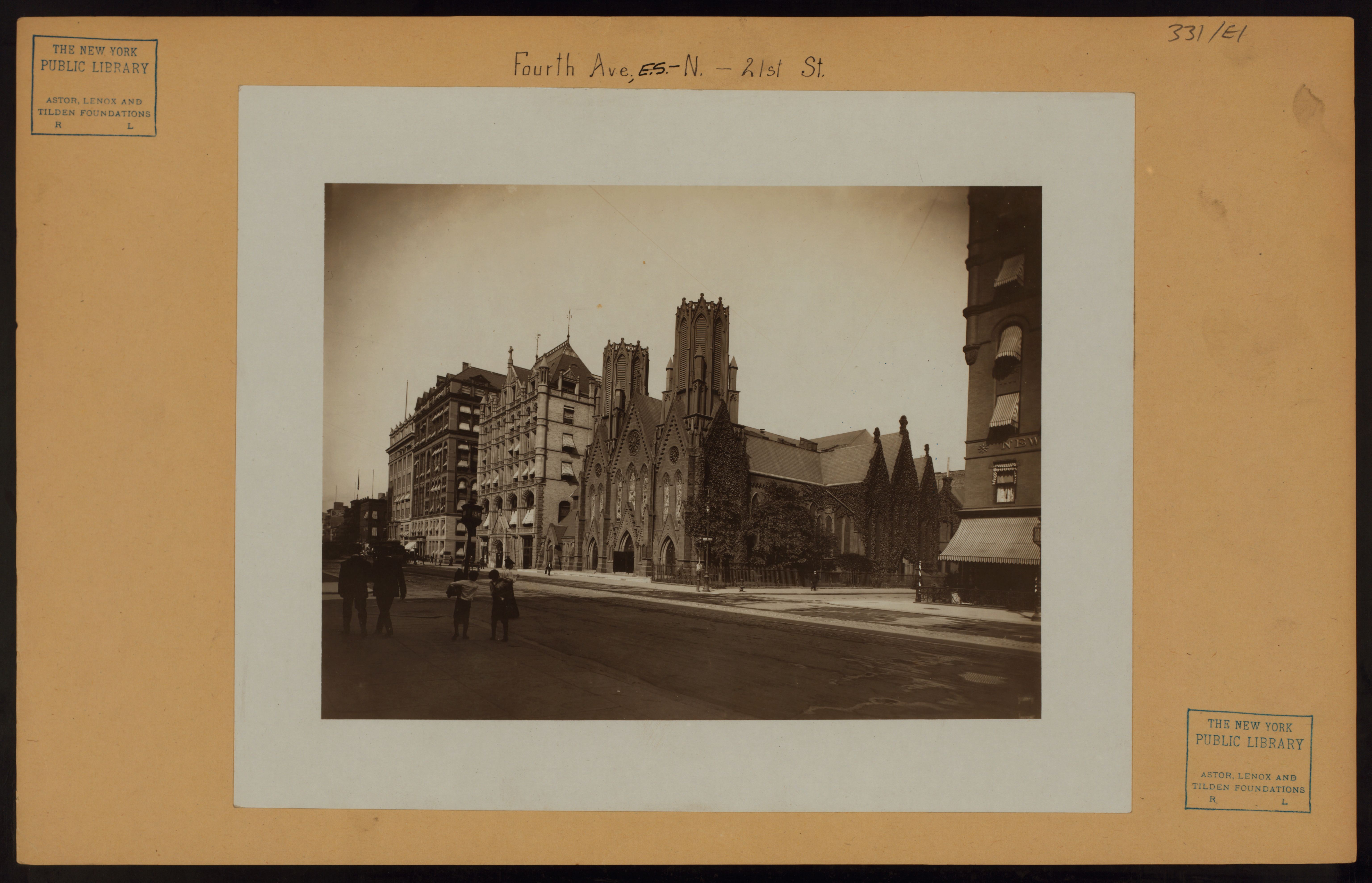
In The Age of Innocence, published in 1920, Wharton returned to New York in the 1870s. Newland Archer, May Welland and Ellen Olenska inhabit a world in which family and convention can exert pressure without anyone needing to issue an order. Calvary Church is among the recognizable places in this landscape. The scholarly Dr. Ashmore draws on the remembered figure of Washburn, linking the novelist’s invented society with the rector whose library had welcomed her as a girl.
The church’s presence is more than a convenient local landmark. Marriage, respectable attendance and clerical authority belonged to the public structure of this society. Wharton knew how such institutions helped make personal choices legible to everyone else. Her novel follows the difference between what a person wants, what that person can admit wanting, and what the surrounding circle has already decided is possible. The pressure is often most effective when expressed as concern for someone’s happiness.
A prize, and an uneasy innocence
The Age of Innocence received the Pulitzer Prize for the Novel in 1921, making Wharton the first woman to win the award in that category. The honor recognized a novel written from the distance of another country and another era. Wharton had recovered the texture of an earlier New York while allowing affection, irony and dissatisfaction to remain in difficult company. The remembered city was both a source of belonging and a place whose certainties demanded scrutiny.
The neighborhood associations should not turn its characters into disguised entries in an address book. Wharton transformed experience through selection and invention. What Gramercy offers is a way to recognize some of the materials: a familiar church, the proximity of households, the small distances across which news and judgment could travel. From Washington Square through Gramercy to Madison Square, her social map is made of places whose meaning depends upon who may enter, who is expected and who has been quietly left out.
War abroad, New York remembered
A different use for her abilities
Wharton made France her permanent home, living in Paris on the rue de Varenne and later at Pavillon Colombe in Saint-Brice-sous-Forêt. When the First World War began, she put her organizational abilities and extensive connections to work in relief. The scale and urgency were far removed from the social negotiations of her fiction. Women needed employment, displaced families needed shelter, and illness demanded care. Her response involved establishing and supporting institutions that could meet particular needs.
She organized workrooms for unemployed women, helped provide hostels for Belgian refugees and supported tuberculosis hospitals. Such projects required sustained administration as well as sympathetic publicity: money had to be raised, people enlisted and assistance continued after the first wave of enthusiasm. France recognized her service with the Legion of Honour. The novelist’s public standing gave her access to influential supporters; she used it to make the suffering of people displaced by war harder for those supporters to overlook.
A book put to work
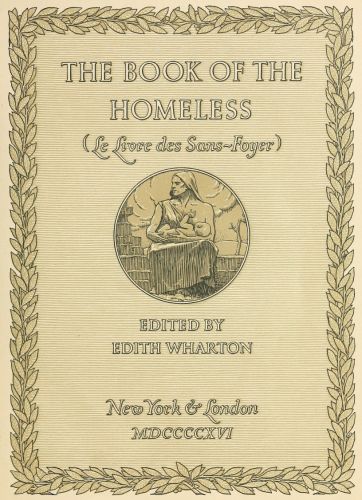
The Book of the Homeless, which Wharton edited in 1916, offers a tangible example. It brought together original writing and pictures by an international group of contributors to raise money for war relief. Its title page explicitly identified the beneficiaries: hostels for refugees and the Children of Flanders Rescue Committee. The collection gave a reader something to buy and keep while directing the purchase toward practical assistance.
The volume also belongs to the history of her profession. An author who understood magazines, publication and the value of distinguished names assembled those resources for a collective purpose. The arts did not substitute for relief; the book helped finance it. Seen beside the fiction she continued to produce, it broadens the picture of Wharton beyond the observer of expensive drawing rooms. She was also an energetic organizer capable of turning literary acquaintance into a demanding public undertaking.
Four earlier New Yorks
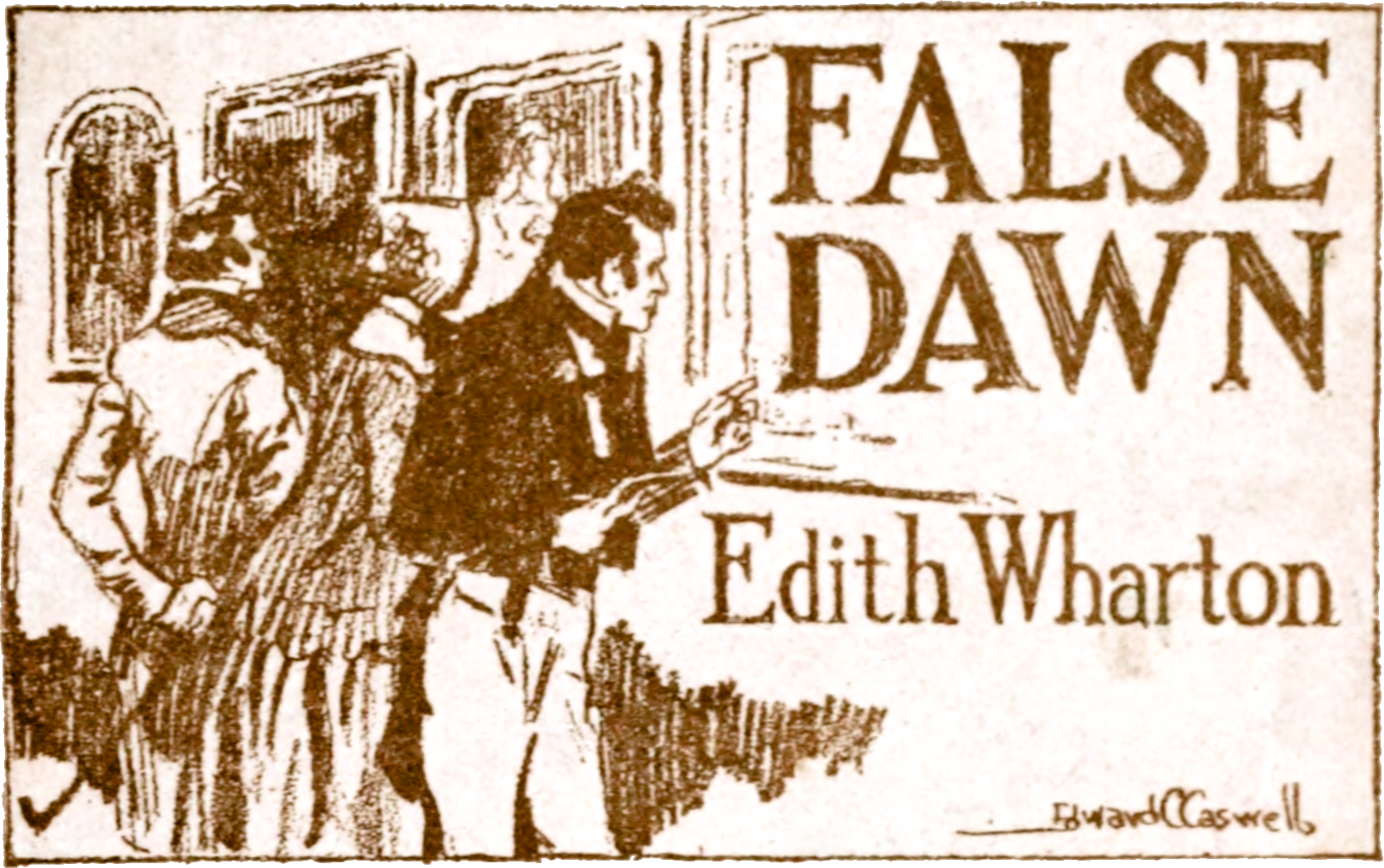
In 1924 Wharton published Old New York, a group of four novellas reaching back through the city of her parents’ generation and her own childhood. False Dawn, The Old Maid, The Spark and New Year’s Day each examine a different portion of the nineteenth century. The sequence lets the reader encounter a society through changes of scale: a family dispute, a concealed history, a remembered act, or a judgment made too quickly from appearances.
Twenty-third Street, the Fifth Avenue Hotel and the rituals of calls and visits help establish its recognizable terrain. Wharton’s return to these places was not an attempt to restore the old arrangements intact. Distance made it possible to consider them again, with an awareness of what had been overlooked and what could no longer be recovered. Small acts in these stories may expose the inadequacy of an entire social verdict. The people most certain of their own correctness are not necessarily those who understand what happened.
The places memory kept
Looking back from France
A Backward Glance appeared in 1934, when Wharton had spent decades making fiction from remembered experience. The memoir allowed her to approach that experience directly, though still with an author’s choice of emphasis. The opening childhood recollections return to New York: the walk with her father, the first imaginative habits, and the books and friendships that enlarged her world. Paris and literary celebrity belong to the larger life, but they do not displace its small beginnings.
The father’s hand remains moving because the arrangement is so ordinary and so specific. It preserves care through an action rather than an announcement. The rectory memories work similarly. A library becomes important because particular books were available there and because another child wanted to read them too. These recollections recover a form of companionship less formal than the family connections recorded in diaries and social lists, yet no less consequential to the person Edith Jones became.
The limits of a final portrait
An autobiography is not a transparent window onto every part of a life. Wharton’s memoir, like her fiction, has its selections, reticences and emphases. It is especially valuable here because it explains what she chose to remember about this part of New York. The streets were associated with parental affection and restrictive custom; the church with public respectability and private intellectual freedom. Holding those experiences together gives a fuller account than treating the neighborhood only as a place from which she needed to escape.
Wharton died at Saint-Brice-sous-Forêt on August 11, 1937. The work she left ranged across novels, stories, poetry, travel, architecture and autobiography. Gramercy occupies a modest but revealing portion of that life. It was neither the setting of everything she wrote nor simply a decorative name in a celebrated career. The family’s early address, Washburn’s rectory and the later appearance of Calvary in her fiction provide specific connections that readers can follow without forcing the rest of her biography into the neighborhood.
At Park Avenue South and East 21st Street
Today the corner of Calvary Church allows the literary history to meet the physical city. Traffic moves along the avenue once called Fourth Avenue, and the surrounding blocks have altered repeatedly since Wharton’s childhood. The church’s brownstone forms remain a visible point of connection. Looking at them, a reader can recall both the ceremonious world of The Age of Innocence and the less public history of two girls discovering Dante and the sagas in and around the rectory.
Her books reward a second kind of neighborhood attention as well: notice the threshold, the invitation, the room arranged to make an impression. Wharton spent a lifetime asking what such things made possible and what they concealed. Yet the memory with which she led readers into her own life required none of that elaborate furniture. It needed a winter street, a white mitten and her father’s hand.
Places, people & connections
Around the Park
Calvary Church
The church and rectory connected to her childhood reading, and the remembered setting of her fiction.
George Templeton Strong
Her father’s Columbia classmate and friend, whose diary records the family world around Gramercy.
50 Gramercy Park North
The Strong and Ruggles family connections in the neighborhood her parents knew.
Richard Watson Gilder
The Century editor who recognized her prospects and argued for publishing her fiction.
24 Gramercy Park South
The cooperative later founded by Gilder and a circle of artists, writers and friends.
Stanford White
Another discerning eye for rooms, with a taste for richness distinct from Wharton’s architectural discipline.
Life at a glance
The biographical record
| Born | Edith Newbold Jones, January 24, 1862, at 14 West 23rd Street, New York. |
|---|---|
| Parents | George Frederic Jones and Lucretia Rhinelander Jones; the family lived on East 21st Street before her birth. |
| Gramercy connection | Childhood associations with Calvary Church and the library of its rector, the Reverend Dr. Edward Abiel Washburn. |
| Marriage | Edward “Teddy” Robbins Wharton, 1885. |
| Selected books | The Decoration of Houses (1897, with Ogden Codman Jr.); The House of Mirth (1905); The Custom of the Country (1913); The Age of Innocence (1920); Old New York (1924); A Backward Glance (1934). |
| Pulitzer Prize | The Novel, 1921, for The Age of Innocence; first woman to win in that category. |
| War service | Refugee, employment and medical relief in France during the First World War; awarded the Legion of Honour. |
| Died | August 11, 1937, Saint-Brice-sous-Forêt, France. |
Over time
Born on West 23rd Street
Edith Newbold Jones is born into a family with earlier roots on East 21st Street.
Childhood in Europe
The Jones family leaves for Europe; Edward Harrison May paints Edith in Paris in 1870.
The rectory library
Books and friendship make Calvary’s rectory an important childhood refuge.
Marriage
Edith Jones marries Edward Robbins Wharton.
The Decoration of Houses
Wharton and Ogden Codman Jr. publish their argument for architectural order in interiors.
Gilder’s encouragement
The Century editor argues for publishing her fiction touching on divorce.
The House of Mirth
Lily Bart’s story brings Wharton a major literary success.
Relief work in France
She organizes and supports employment, shelter and medical assistance during the war.
The Book of the Homeless
An international collection of writing and art raises funds for war relief.
The Pulitzer Prize
The Age of Innocence wins the prize for the Novel.
Four earlier New Yorks
Old New York examines nineteenth-century society in four novellas.
A Backward Glance
The memoir returns to childhood walks, books and the neighborhood’s family world.
Death in France
Wharton dies at Saint-Brice-sous-Forêt on August 11.
Sources cited
- Edith Wharton, A Backward Glance (D. Appleton-Century, 1934), especially the opening childhood recollections, family addresses and friendship with Emelyn Washburn.
- Carole Klein, Gramercy Park: An American Bloomsbury (Houghton Mifflin, 1987), for the neighborhood’s literary circle and the Jones, Strong, Gilder and Washburn connections.
- Edith Wharton and Ogden Codman Jr., The Decoration of Houses (1897; illustrated 1914 edition, Project Gutenberg).
- Edith Wharton, The House of Mirth (Charles Scribner’s Sons, 1905); “Autres Temps…” (1911); The Custom of the Country (Charles Scribner’s Sons, 1913).
- Edith Wharton, The Age of Innocence (D. Appleton, 1920), for Calvary Church, Dr. Ashmore and the social landscape of 1870s New York.
- Edith Wharton, editor, The Book of the Homeless (Charles Scribner’s Sons, 1916), including its statement of the relief funds supported by sales.
- Edith Wharton, Old New York (D. Appleton, 1924): False Dawn, The Old Maid, The Spark and New Year’s Day.
- National Portrait Gallery, Smithsonian Institution, Edith Wharton by Edward Harrison May, 1870, collection record and biographical note.
- Edith Wharton Society, Edith Wharton chronology, for publication and biographical dates.
- GPBA, Calvary Church and 24 Gramercy Park South, for the church’s history and the timing of Gilder’s later cooperative residence.
Photo credits for this page
- Edith Wharton, 1905. Photographer unidentified; photograph credited to Charles Scribner’s Sons in The World’s Work, 1905, p. 7000. Wikimedia Commons source record. Public domain in the United States.
- Calvary Church in the Snow, 1893. Childe Hassam, oil on canvas. Wikimedia Commons source record. Public domain.
- Edith Wharton, 1870. Edward Harrison May, oil on canvas. National Portrait Gallery, Smithsonian Institution, NPG.82.136. Collection record; image via Wikimedia Commons / Google Art Project. Public-domain artwork.
- Calvary Church, 1847. Lithograph, G. W. Endicott & Co., copyright May 1847. Library of Congress, Prints and Photographs Division, digital ID LC-DIG-pga-01165. Source record. Public domain.
- Room in the Grand Trianon, Versailles. Plate V in Edith Wharton and Ogden Codman Jr., The Decoration of Houses (Charles Scribner’s Sons, 1914 edition; first published 1897). Photographer unidentified. Project Gutenberg, from Internet Archive scans. Public domain.
- Calvary Church, 1906. Brown Brothers. The New York Public Library, Irma and Paul Milstein Division of United States History, Local History and Genealogy; digital ID 708211F. Digital Collections source record. Public domain.
- The Book of the Homeless, 1916. Illustrated title page; Edith Wharton, editor (Charles Scribner’s Sons, New York). Project Gutenberg edition. Public domain.
- Old New York: False Dawn, 1924. Cover artwork by Edward C. Caswell for Edith Wharton’s novella (D. Appleton and Company). Wikimedia Commons source record. Public domain in the United States.