
Richard Watson Gilder
The Editor Who Brought His Friends Home
1844–1909 · 103 East 15th Street · 24 Gramercy Park South · The Studio, 1874–1889 · On the Park, 1909
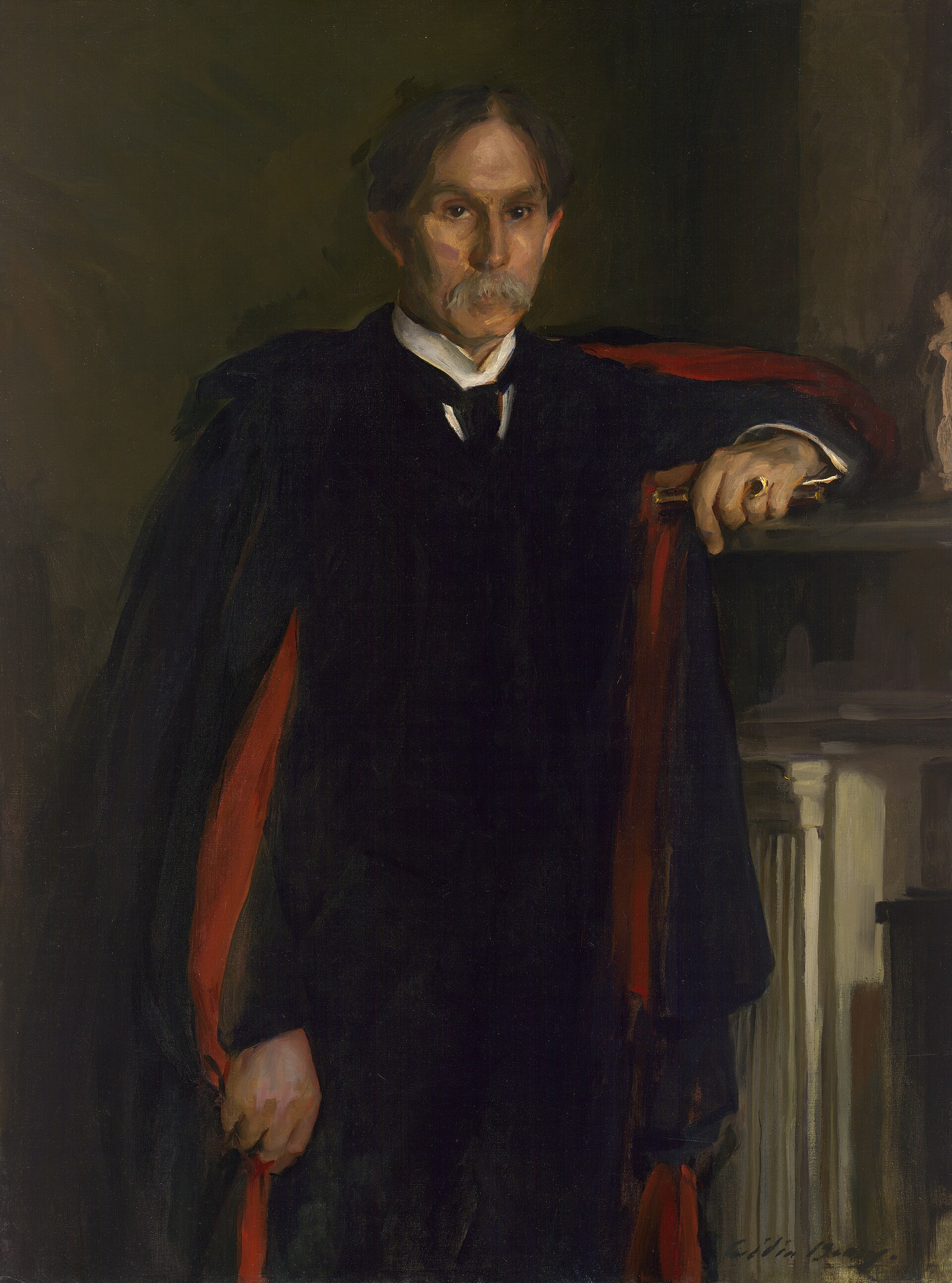
A life in Gramercy
A new apartment for an old circle
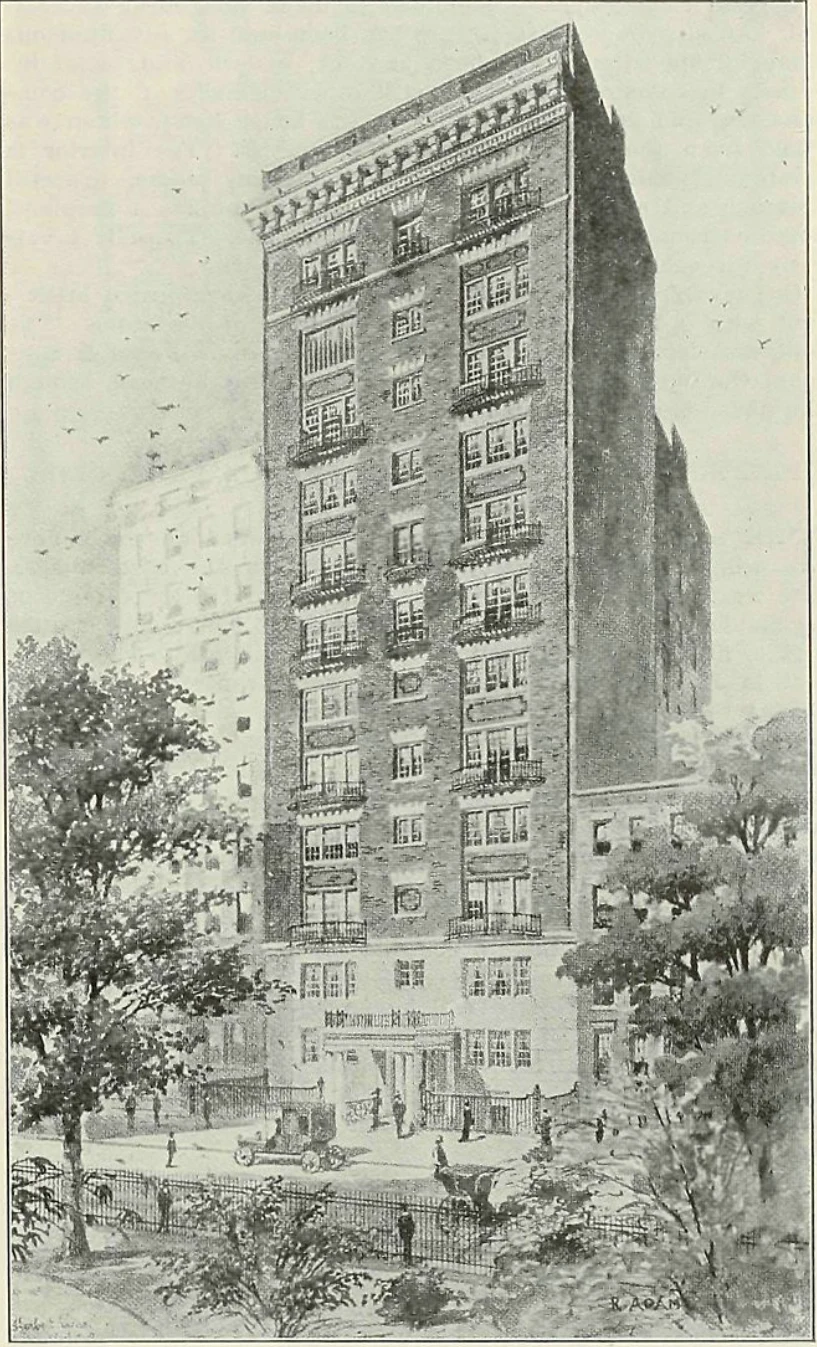
On Easter Sunday in 1909, Richard Watson Gilder and his family moved into their unfinished duplex at 24 Gramercy Park South. The editor had spent decades making rooms hospitable to other people’s talents. Now he was helping make an entire apartment house on the same principle. Actor Francis Wilson, artist Jules Guérin, and architect Herbert Lucas belonged to the circle behind the venture. Gilder had written eagerly to his friend John B. Pine about joining them. A cooperative, with congenial neighbors chosen at the beginning, offered a new setting for a familiar way of life.
The move carried a piece of the old household into the new one: a fireplace and overmantel designed by Stanford White. Long before the Gramercy apartment, Richard and his wife, the painter Helena de Kay Gilder, had welcomed artists and writers to a converted stable on East 15th Street. Their Friday evenings helped bring American painting, sculpture, theater, and literature into conversation. At The Century Magazine, Gilder exercised a similar gift on a much larger scale, arranging a monthly meeting of voices for readers across the country.
He would enjoy his Park views for only seven months. Yet the apartment was neither an incidental last address nor simply a memorial to an influential editor. It brought together his faith in friendship, his concern with the places people inhabited, and his willingness to organize something practical. His daughter Rosamond would keep the Gilder name connected with this house and with the theater for much of the twentieth century. To follow him to Gramercy is to follow the passage from a printer’s composing stick to a magazine, a reform commission, and a home built among friends.
A printer learns to make a world
The boy at the type case
Richard Watson Gilder was born in Bordentown, New Jersey, on February 8, 1844, into a household where teaching, religion, and language were serious occupations. His father, the Reverend William Henry Gilder, was a Methodist minister and educator. The son learned early that words could do work beyond entertaining a reader. They could instruct, persuade, announce a position, and gather people around a cause. That conviction survived his movement away from the circumstances of his childhood into the artistic and publishing circles of New York.
At twelve he was setting type for the Long Island Times in Flushing. He also produced a newspaper of his own, dedicated with boyish solemnity to the promotion of literature, morality, religion, and science. A printed page required decisions at every stage: which item to include, how to fit it, where to break a line. He encountered publication as a physical craft before it became a position of authority. The grown editor’s attachment to the finished magazine had roots in this small, exacting world of type and paper.
War, Newark, and a monthly magazine
During the Gettysburg campaign of 1863, Gilder served briefly with the Landis Philadelphia Battery. His own military experience was short; the war’s place in American memory would become a much longer professional concern. Years later, the magazine he edited would invite officers from opposing armies to describe the battles in which they had taken part. For his generation, the Civil War was both recent personal history and a national event whose meaning remained unsettled. A monthly periodical could provide room for accounts too expansive for the daily newspaper.
Newspaper work took him to Newark, where he helped launch the Morning Register with Robert Newton Crane, an uncle of the future novelist Stephen Crane. Another assignment brought him into the publishing world of Charles Scribner through Hours at Home. These jobs joined the practical experience of producing copy to the judgment required to choose other people’s work. When Scribner’s Monthly began in 1870, Gilder became assistant editor under Josiah Gilbert Holland. The young printer was now helping assemble an illustrated magazine with national ambitions.
An editor who remained a poet
Gilder never regarded editing as a substitute for writing poetry. Lyric verse remained a central part of his identity, shaped by love, religious feeling, music, and the example of earlier poets. His first collection, The New Day, appeared in 1875, soon after his marriage to Helena de Kay. The title suited a moment when his personal and professional lives were opening together. The couple’s artistic partnership also entered the appearance of his books: Helena’s visual imagination accompanied a husband for whom the printed object mattered as well as its contents.
The poetry helps explain both the warmth of his friendships and the limits of his later editorial taste. He expected art to lift experience into a form worth contemplating. Beauty and moral purpose did not seem natural enemies to him. That expectation would make him an encouraging friend to many writers, but a difficult reader for a younger author who insisted that cruelty and social injury must remain unsoftened on the page. The tension was present before the confrontation. It belonged to the ideals with which Gilder entered literary life.
Friday evenings behind the stable door
A household made by two artists
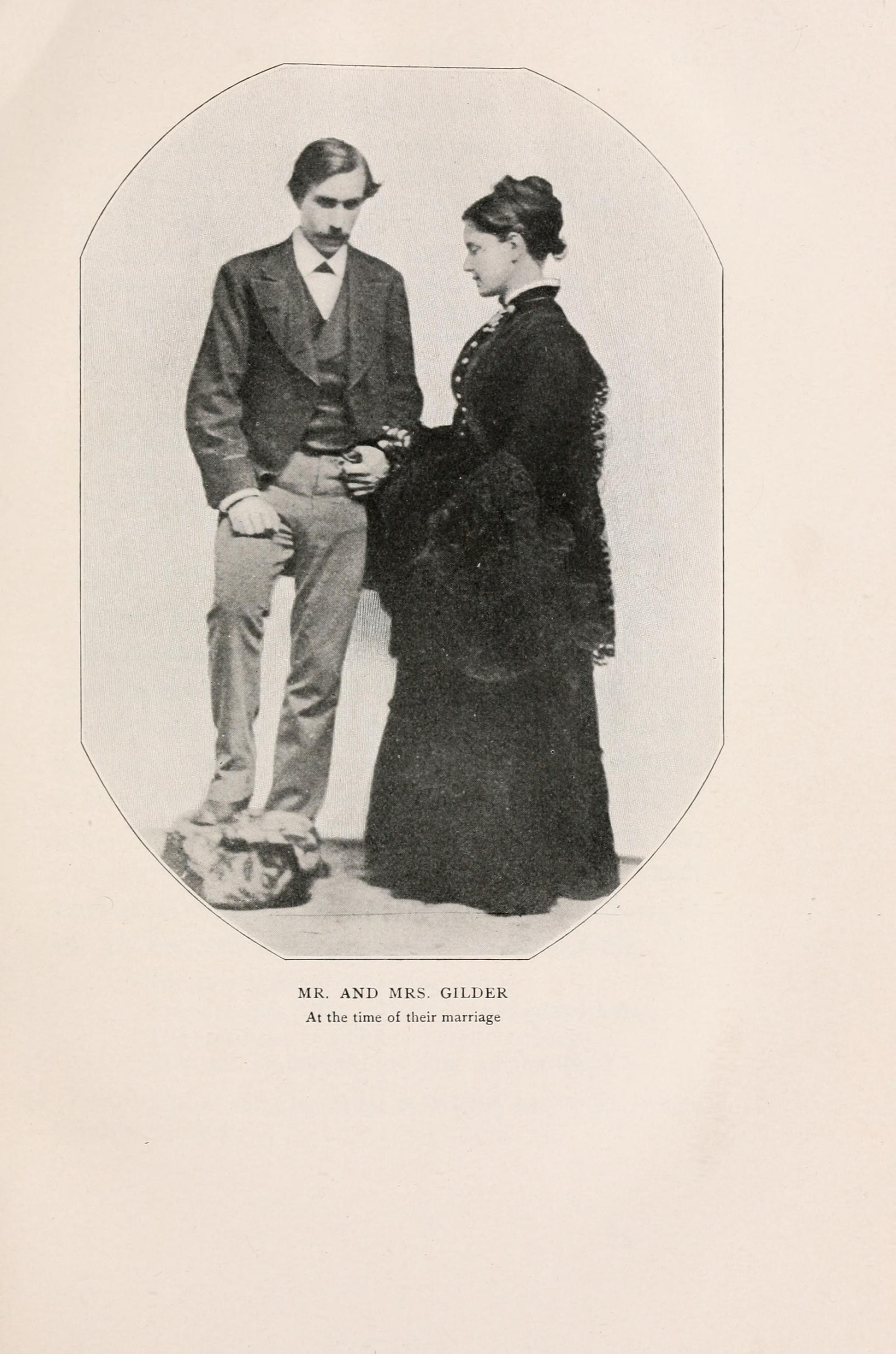
Richard married Helena de Kay in June 1874. She was a painter and translator, a granddaughter of the poet Joseph Rodman Drake, and the sister of Charles de Kay, who would later help found the National Arts Club. These connections mattered, but they do not account for her role merely by naming the men around her. Helena had her own artistic training, friendships, and convictions. She helped establish the Art Students League and was active in the movement that challenged the older institutions governing American art.
Their first home was known as the Studio, at 103 East 15th Street. A former brick stable behind the Union Square house of Samuel B. Ruggles had been adapted for domestic life. The association is a pleasing one: the man who created Gramercy Park also belonged to the history of the little building in which the Gilders made their early home. Later alterations by Stanford White linked the place to a younger generation of artists. Its usefulness came from the life accommodated inside, rather than any imposing street presence.
Who came on Friday
The Gilders’ Friday evenings became a dependable meeting place in a city whose artistic communities could otherwise remain separate. Painters, sculptors, actors, and writers came into the same rooms. Among their friends were Augustus Saint-Gaudens, Stanford White, Cecilia Beaux, John La Farge, and Joseph Jefferson. The gathering did not require everyone to practice the same art or agree about it. Richard’s enthusiasm and Helena’s friendships made it possible for people with different temperaments and reputations to find a place in the conversation.
Walt Whitman remembered being welcomed by the Gilders when other respectable households kept their distance. Their hospitality did not dissolve all the exclusions of nineteenth-century society, but it could cross a boundary that mattered to a particular guest. A poet whose work unsettled polite readers could sit among people who took him seriously. The Studio’s reputation rested partly on such encounters. The social occasion could become a form of recognition, giving an artist companionship and standing before institutions or the wider public had offered much of either.
An association begins at home
In 1877 this circle helped create the Society of American Artists. Saint-Gaudens and others who had absorbed new ideas abroad wanted opportunities beyond the conservative structures of the National Academy of Design. The Gilder household supplied a setting in which dissatisfaction could become an organization. Meetings, introductions, and mutual encouragement were practical resources. Helena’s involvement was integral to this activity. The Studio was not simply the home of a magazine editor receiving distinguished callers; it was part of the working infrastructure of a changing American art world.
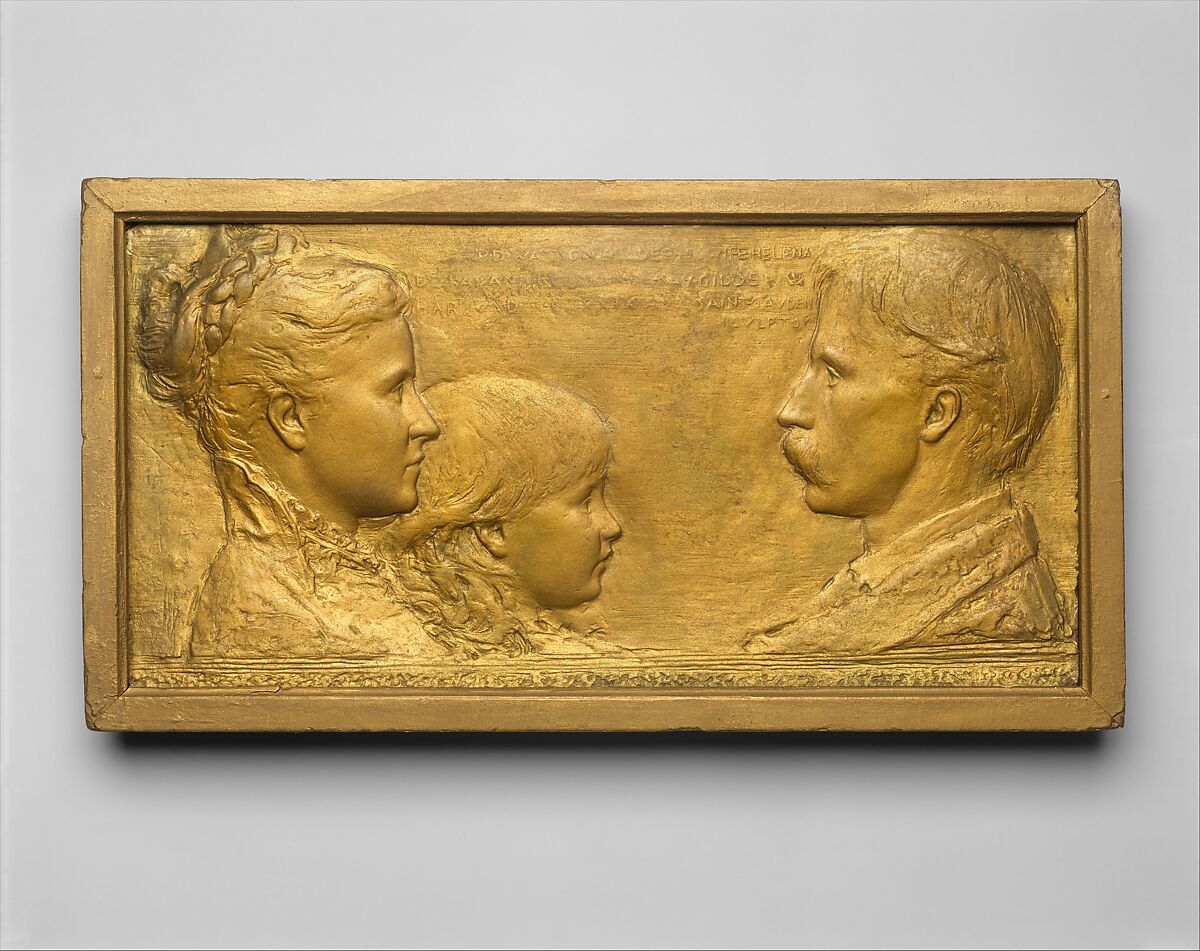
Saint-Gaudens gave the family an enduring place within that world in his relief portrait modeled in 1879. Richard faces Helena and their young son Rodman across a shallow sculpted field. The group is intimate in scale and composition, quite unlike the public monuments for which the sculptor became famous. It records friendship through close attention to familiar faces. Richard and Helena continued their gatherings after leaving East 15th Street, carrying the relationships, habits, and some of the furnishings into later homes.
A nation between magazine covers
Holland’s successor
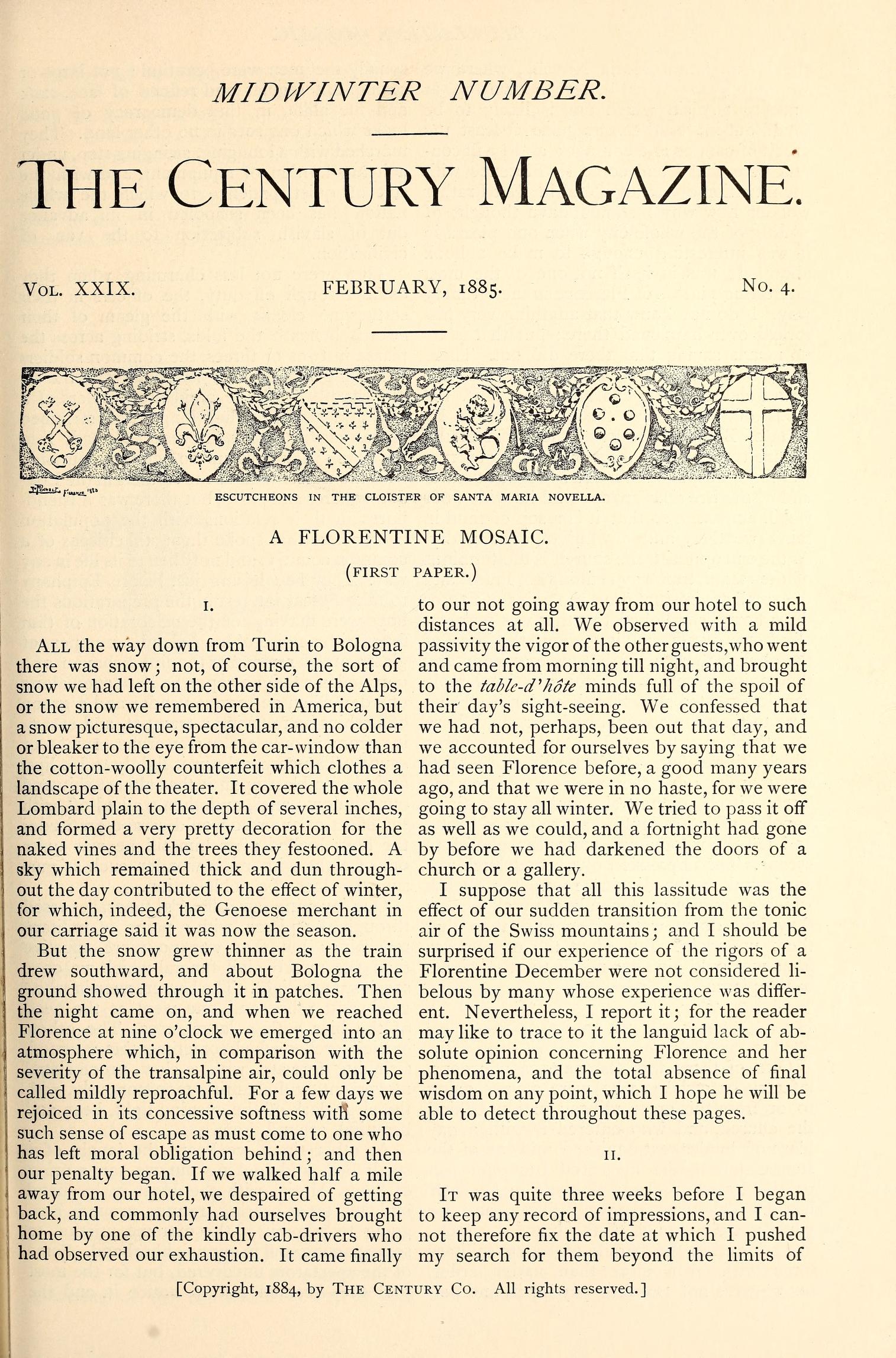
When Holland died in 1881, Gilder became editor of the magazine, now renamed The Century Illustrated Monthly Magazine. Its offices near Union Square placed him within walking distance of the households and institutions that filled his private life. Its readership extended far beyond them. Circulation rose above 150,000, giving an editorial decision substantial commercial and cultural consequences. The magazine could carry a painter’s work, a novelist’s new installment, a historical argument, and a poem into homes that would never receive their authors as guests.
The February 1885 issue shows the range Gilder could bring together. Readers encountered installments associated with William Dean Howells’s The Rise of Silas Lapham, Henry James’s The Bostonians, and Mark Twain’s Adventures of Huckleberry Finn. Each writer had a different ear for American speech and social behavior. Serial publication made the magazine a place of repeated return: an unfinished story brought a reader back the following month. Gilder’s table of contents combined personal relationships with a finely consequential judgment about what the reading public might follow.
A war remembered and writers remembered
The great Civil War series, later collected as Battles and Leaders of the Civil War, offered another reason to return. Participants described campaigns and commanders from the Union and Confederate sides, producing a vast illustrated record of military memory. The enterprise was influential, though the veterans’ accounts were also arguments about their own actions and reputations. The authority of firsthand experience did not remove the need for judgment. By bringing those accounts together, The Century helped shape how a generation would picture the conflict after the fighting had ended.
The magazine also participated in the quieter work of literary remembrance. After Herman Melville’s death in 1891, it published memorial verse for a writer whose final years on East 26th Street had been far removed from broad popular acclaim. Around Union Square, Gramercy, and Madison Square, literary geography was unusually compressed. Howells had lived on East 17th Street; James had lodged on East 25th Street. Gilder’s monthly could make a national presence out of work produced within a few blocks, while also looking far beyond the neighborhood for its subjects and contributors.
The labor behind a book
Gilder’s concern for authors extended to the terms on which their work circulated. As a co-founder of the American Copyright League, he joined the campaign for international copyright protection. American publishers had long been able to reproduce many foreign works without paying their authors, a practice that also affected the market for American writing. To argue for copyright was to treat literary work as labor with a claim on its proceeds. For an editor who depended on manuscripts, the question reached into the everyday economics of his profession.
His associate Robert Underwood Johnson spent three years working in Washington toward legislation. The International Copyright Act of 1891 marked an important achievement, although its protections came with limitations and manufacturing requirements. The campaign required patience of a different kind from literary judgment: organizing supporters, answering objections, and maintaining pressure through repeated disappointments. It belonged to the same side of Gilder’s character that later undertook municipal reform and a cooperative apartment house. An attractive idea was a beginning; someone still had to assemble the people who could put it into effect.
What an editor could—and could not—see
The manuscript he refused
In 1892 the young Stephen Crane brought Gilder a story from a New York very different from the Studio’s Friday evenings. Maggie: A Girl of the Streets followed a young woman through poverty, violence, and social judgment without supplying the consolations a respectable magazine reader might expect. Crane was twenty-one, and he was connected by family to Gilder’s old newspaper partner. Neither youth nor that connection secured acceptance. Gilder found the book too cruel; Crane’s challenge was whether the cruelty belonged to his story or to the life it described.
The refusal makes Gilder’s position unusually clear. He could care intensely about poverty while resisting a literary method that exposed it without an uplifting counterweight. His objection was not equivalent to indifference toward the people Crane portrayed. Nor did his good intentions make his judgment adequate to the new fiction. The encounter reveals how difficult it can be for an influential editor to recognize a form that unsettles the standards through which he acquired influence. Crane would publish Maggie outside the route Gilder controlled.
An argument for Edith Wharton
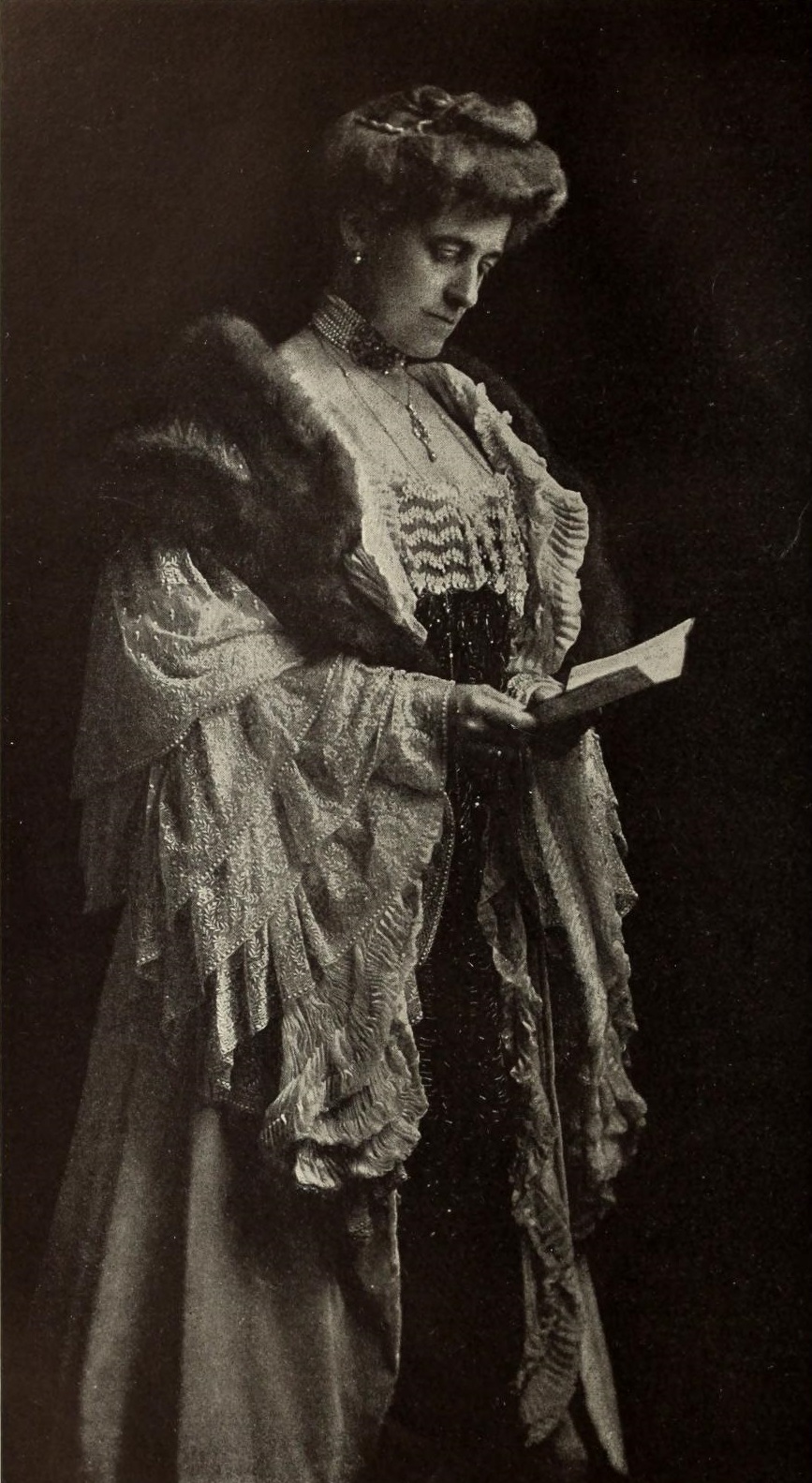
A dozen years later, Gilder was on the more adventurous side of an editorial dispute. Edith Wharton was writing about marriage, divorce, and the penalties imposed by respectable society. Johnson worried about material whose implications disturbed the magazine’s customary boundaries. Gilder urged him to look again. In 1904 he recognized an author approaching a much wider success and feared that hesitation would cost the magazine its opportunity to publish her. His judgment was vindicated by the reception of The House of Mirth in 1905.
Wharton had grown up within the brownstone world Gilder’s circle knew well, but familiarity did not make her account of it reassuring. She examined the financial bargains, exclusions, and evasions beneath its manners. Gilder’s willingness to champion her complicates any simple division between an old-fashioned editor and modern writers. Taste was neither fixed nor consistent. He could turn away from one unsettling manuscript and fight for another. The magazine was made through such individual choices, not through a single rule that explained every acceptance and refusal.
His own place on the shelf
Gilder continued to publish poems while he managed these competing demands. In 1908 Houghton Mifflin gathered his verse in a Household Edition, placing the living editor within a familiar publishing tradition associated with established American poets. The volume confirmed the standing he had achieved in his own time. His poems supplied friends and readers with expressions of love, loss, faith, and public feeling. They also preserve a literary ideal whose centrality was already being challenged by the work appearing around it.
Today his editorial encounters can seem more vivid than much of the poetry that secured his reputation. That change in emphasis would have been difficult to predict from inside his career. To contemporaries he was at once poet, host, reformer, and editor, with none of those roles necessarily subordinate to the others. Cecilia Beaux’s portrait catches a concentrated, responsive presence rather than an impersonal literary gatekeeper. The same man could decide what reached a national audience and worry over a line of his own verse.
Rooms that the magazine could not repair
Inside the tenements
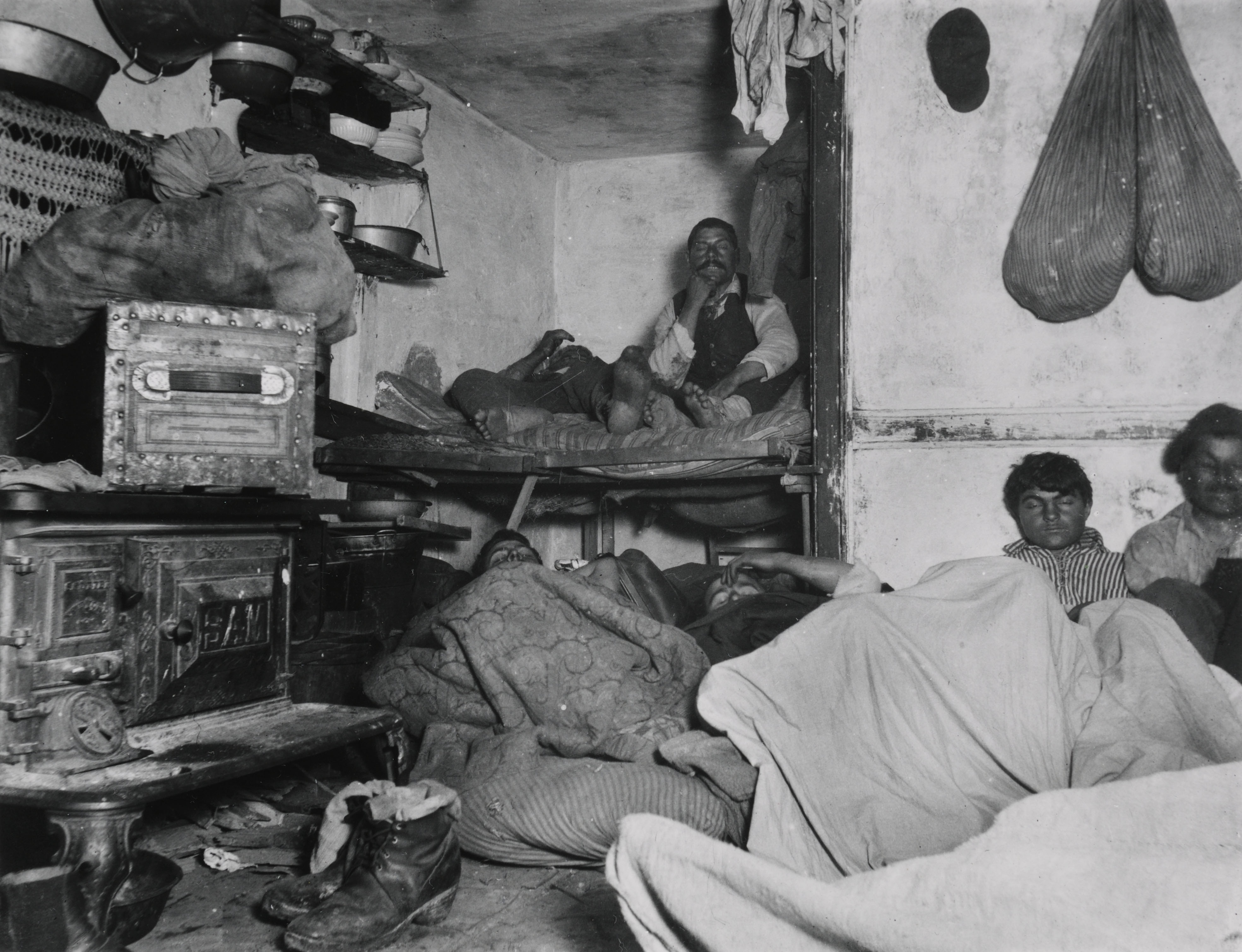
Gilder’s social conscience became particularly demanding during his chairmanship of the New York Tenement House Commission in 1894. The inquiry took him into a city of dark rooms, overcrowding, inadequate sanitation, and dangerous buildings. These were matters of construction, ownership, regulation, and enforcement as well as individual hardship. Investigating them required attention to conditions that a charitable visit could not by itself change. The editor who valued the atmosphere of a room now had to consider what happened when a household lacked light, air, or a safe way out.
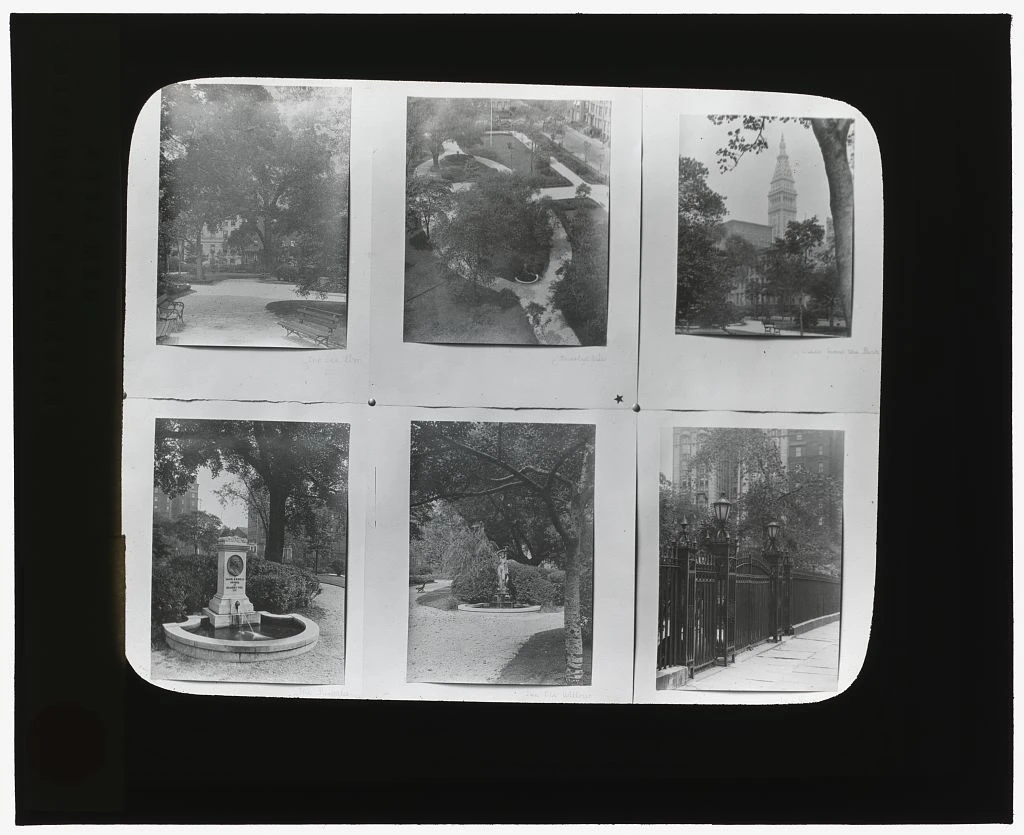
The commission’s work helped produce the Tenement House Act of 1895 and further pressure for better building standards and small neighborhood parks. These measures did not solve New York’s housing problems, and the reforms of 1901 would carry the effort farther. Gilder’s contribution belongs within that continuing struggle. The investigations made the gap between a cultivated private interior and an unhealthy dwelling impossible to regard as a difference of taste alone. The city’s built environment distributed comfort, opportunity, and danger with consequences that reached directly into family life.
A place for the youngest children
Kindergartens were another practical interest. As a co-founder of the New York Kindergarten Association, Gilder supported early education at a time when access was far from universal. The movement treated young children as learners whose play, surroundings, and relationships deserved deliberate care. This was work suited to people willing to raise money, organize classes, and sustain an institution after the first enthusiasm had passed. It linked household experience to a broader civic question: what forms of nurture should be available beyond families able to purchase them?
The connection ran back to Gramercy through Angeline Brooks, whose pioneering kindergarten at 10 Gramercy Park South belonged to the neighborhood’s educational history. Gilder’s interests were not confined to the artists invited into his own rooms. Schools, housing, and public space concerned people he would never know socially. There were paternal assumptions in the reform culture of his generation, but also considerable labor. His letters and committee work show how much of an ostensibly literary life could be consumed by meetings, appeals, and administrative detail.
Clubs with different purposes
As the first president of the City Club, Gilder joined a reform movement concerned with municipal government. His club life also included institutions organized around art and fellowship. He was a charter member of The Players, Edwin Booth’s experiment in bringing actors together with men from other professions. The National Arts Club, associated with his brother-in-law Charles de Kay and later housed in the Tilden mansion, offered another setting in which artists and patrons could meet.
These organizations were distinct, and their purposes should not be collapsed into a single benevolent circle. A reform club sought changes in government; an arts club cultivated a particular community; a kindergarten association maintained educational work. Gilder moved among them with a talent for making an appeal personal. By 1908, when a group proposed cooperative housing beside the Park, the idea had a ready place within his experience. Choosing neighbors and sharing the obligations of a building could extend an existing fellowship into the arrangements of daily life.
The family at twenty-four
A composite building proposition
In August 1908 Gilder wrote to John B. Pine with an enthusiasm he had not previously felt for a shared building. The scheme brought together Richard and his son Rodman, Francis Wilson, Jules Guérin, Herbert Lucas, and Charles H. Lee, with Pine joining the group. Lucas designed the twelve-story apartment house on the assembled sites of Nos. 24 and 25. The address had an earlier history involving the Parmly household and Thomas Edison’s telegraphic experiments. Cooperative living would give the old residential parcels a different kind of communal purpose.
The arrangement combined custom apartments for seven proprietary owners with eleven rental apartments. Income from the latter helped meet taxes, interest, and operating expenses. These financial details are part of the story: congenial company alone could not keep a building running. Gilder’s proposed fifth-and-sixth-floor duplex offered the space and domestic separation of a house within a larger structure. The cooperative’s organizers hoped to preserve individuality while sharing a roof, services, and the view across Gramercy Park. Their experiment joined architectural design to an unusually deliberate choice of neighbors.
Seven months on the Park
The family entered the unfinished apartment in April 1909. The Stanford White fireplace and overmantel brought a familiar center into the new rooms, a material link with the homes where so many friendships had developed. From East 15th Street to Clinton Place and then Gramercy Park South, the Gilders had moved without abandoning the household’s character. An apartment could contain a history larger than its own recent construction. Books, works of art, furnishings, and visitors carried that history through the door.
Gilder died of heart disease on November 18, 1909, after being taken to the West 10th Street home of his friend Mariana Griswold Van Rensselaer. The move to Gramercy had been a lived experience, though a painfully short one. Helena remained at No. 24 until her death in May 1916. Rosamond’s edition of her father’s letters appeared that year, dedicated to her mother. The book preserved the daily voice behind the public offices: invitations, literary arguments, reform campaigns, family affection, and the delighted planning of the final home.
Rosamond’s long century
Rosamond Gilder, born in 1891, extended the family’s theatrical connections into a professional life of her own. As a critic and editor associated with Theatre Arts Monthly, and through the Federal Theatre Project, she worked with a much broader stage than the drawing-room gathering. She helped found the International Theatre Institute and became an important advocate for exchange across national theatrical cultures. Her career should be understood as work she built, not merely as the continuation of her father’s hospitality. The family’s friendships supplied an inheritance; she gave it new institutional forms.
Her connection with the Gramercy apartment continued until her death in 1986, seventy-seven years after the family’s arrival. During that long interval, the neighborhood and the theater changed around a household rich in earlier associations. Richard’s final building therefore belongs to more than the closing months of his biography. It gave a durable address to a way of bringing people together. The red-brick cooperative still stands across from the Park, with the shared entrance through which Gilder’s chosen neighbors began a new life in 1909.
Places, people & connections
Around the Park
24 Gramercy Park South
Gilder helped organize this cooperative and moved into a duplex in 1909. The building’s story follows its founders and the households that came after them.
Samuel B. Ruggles
The Gilders’ first Studio occupied a converted stable behind Ruggles’s Union Square home. His neighborhood planning also created the Park they eventually overlooked.
The National Arts Club
Helena’s brother Charles de Kay helped found the club, which became another gathering place for the Gilders’ artistic circle.
The Players
Gilder was a charter member of Edwin Booth’s club, a short walk from his final home.
10 Gramercy Park South
Angeline Brooks’s kindergarten connects this house with the early-education movement Gilder supported.
Stanford White
The architect altered the Studio and designed the fireplace that the family carried into its Gramercy apartment.
Augustus Saint-Gaudens
A friend and fellow organizer of the Society of American Artists, Saint-Gaudens modeled a relief portrait of Richard, Helena, and Rodman.
Edith Wharton
Gilder argued for her fiction as her reputation grew, recognizing its importance even when its subjects unsettled his colleagues.
Life at a glance
The biographical record
| Born | February 8, 1844 · Bordentown, New Jersey |
|---|---|
| Died | November 18, 1909 · New York City |
| Gramercy Park address | 24 Gramercy Park South; earlier Studio at 103 East 15th Street, near Union Square |
| Years on the Park | 1909; family association continued through Rosamond Gilder’s death in 1986 |
| Vocation | Magazine editor, poet, and civic reformer |
| Spouse & family | Married painter Helena de Kay in June 1874; their children included Rodman and Rosamond Gilder |
| Key institutions & works | Scribner’s Monthly; The Century Magazine; The New Day; Society of American Artists; American Copyright League; New York Tenement House Commission; City Club; The Players |
Over time
A minister’s son
Born in Bordentown, New Jersey; he enters printing and newspaper work as a boy.
Richard and Helena marry
Their East 15th Street Studio becomes a meeting place for artists and writers.
Artists organize
The Gilders help establish the Society of American Artists.
The editor of The Century
Gilder takes charge of the renamed illustrated monthly after Holland’s death.
International copyright
The campaign supported by Gilder and Johnson helps secure new legal protection for authors.
The tenement inquiry
He chairs the New York Tenement House Commission.
An argument for Wharton
Gilder urges publication of her fiction as a major success approaches.
A home among friends
He helps organize the cooperative at No. 24 and moves in during April 1909.
Gilder dies
He dies on November 18, after seven months in the Gramercy apartment.
The letters appear
Rosamond edits her father’s correspondence, dedicating the volume to Helena, who dies that May.
Rosamond’s final year
The theater critic and international arts organizer dies after a long association with No. 24.
Sources cited
- Carole Klein, Gramercy Park: An American Bloomsbury (Boston: Houghton Mifflin, 1987), especially pp. 165–188 and 299: the Gilder household, literary circle, editorial encounters, and Rosamond Gilder.
- Rosamond Gilder, ed., Letters of Richard Watson Gilder (Boston and New York: Houghton Mifflin, 1916): family life, copyright, tenement reform, and the 1908–1909 cooperative correspondence.
- The New York Public Library, Manuscripts and Archives Division, Richard Watson Gilder papers: editorial, literary, family, and civic records.
- Archives of American Art, Smithsonian Institution, Richard Watson and Helena de Kay Gilder papers, 1874–1878: their joint journal and the founding of the Society of American Artists.
- The Century Illustrated Monthly Magazine, vol. 29 (November 1884–April 1885), including the February 1885 number. Lincoln Financial Foundation Collection, Internet Archive.
- Real Estate Record and Builders’ Guide, October 23, 1909, pp. 719–720: design and organization of the Gramercy Park cooperative. Avery Architectural & Fine Arts Library, Columbia University.
- Herbert Lucas, “Famous Gramercy Park Section Still Retains Individuality,” Real Estate Record and Builders’ Guide, February 3, 1917, p. 73.
- The New York Public Library, Billy Rose Theatre Division, Rosamond Gilder papers, 1887–1986: her theatrical career and family records.
- Stephen Garmey, Gramercy Park (New York: Balsam Press, 1984), especially pp. 112, 153–154, 165–167 and 172.
- Gramercy Park Block Association, 24 Gramercy Park South: the documented cooperative chronology, apartment arrangement, and related archival sources.
Photo credits for this page
- Richard Watson Gilder, 1902–1903. Cecilia Beaux, oil on canvas. National Portrait Gallery, Smithsonian Institution; gift of Rodman and Mary Ellen Gilder, NPG.98.77. Collection record; image via Wikimedia Commons. Smithsonian Open Access, CC0.
- 24 Gramercy Park South, 1909. Architectural illustration published in Real Estate Record and Builders’ Guide, October 23, 1909, pp. 719–720. Architect: Herbert Lucas. Avery Architectural & Fine Arts Library, Columbia University. Public domain.
- Richard and Helena Gilder, 1874. Photographer unidentified. Reproduction of the marriage portrait in Rosamond Gilder, ed., Letters of Richard Watson Gilder (Houghton Mifflin, 1916), plate facing p. 60. University of Toronto copy, Internet Archive. Public domain.
- Richard Watson Gilder, Helena de Kay Gilder, and Rodman de Kay Gilder. Augustus Saint-Gaudens, modeled 1879, cast ca. 1883–1884; plaster. The Metropolitan Museum of Art, gift of David Joshua Gilder, 2002, accession 2002.445. Collection record and image. Public domain, Met Open Access.
- The Century Magazine, February 1885. Opening page of the midwinter number, vol. 29, no. 4, p. 483, with the heading of “A Florentine Mosaic.” The Century Co., New York. Lincoln Financial Foundation Collection, Internet Archive. Public domain.
- Edith Wharton, 1905. Photographer unidentified; photograph credited to Charles Scribner’s Sons in The World’s Work, 1905, p. 7000. Wikimedia Commons source record. Public domain in the United States.
- Lodgers in a crowded Bayard Street tenement, 1889 (also known as Five Cents a Spot). Jacob A. Riis. Library of Congress, Prints and Photographs Division, reproduction LC-USZ62-18572. Library of Congress record; image via Wikimedia Commons. Public domain.
- Gramercy Park, 1922. Exhibition panel from the Frances Benjamin Johnston Collection. Library of Congress, Prints and Photographs Division, digital ID LC-DIG-ppmsca-16306. Source record. No known restrictions on publication.