
16 Gramercy Park South
The PlayersA house full of stories. A living home for the arts.
Behind the columned porch at No. 16, a Gramercy townhouse became a home for artists, conversation and theatrical memory. Since 1888, The Players has kept finding new ways to fill its historic rooms with life.
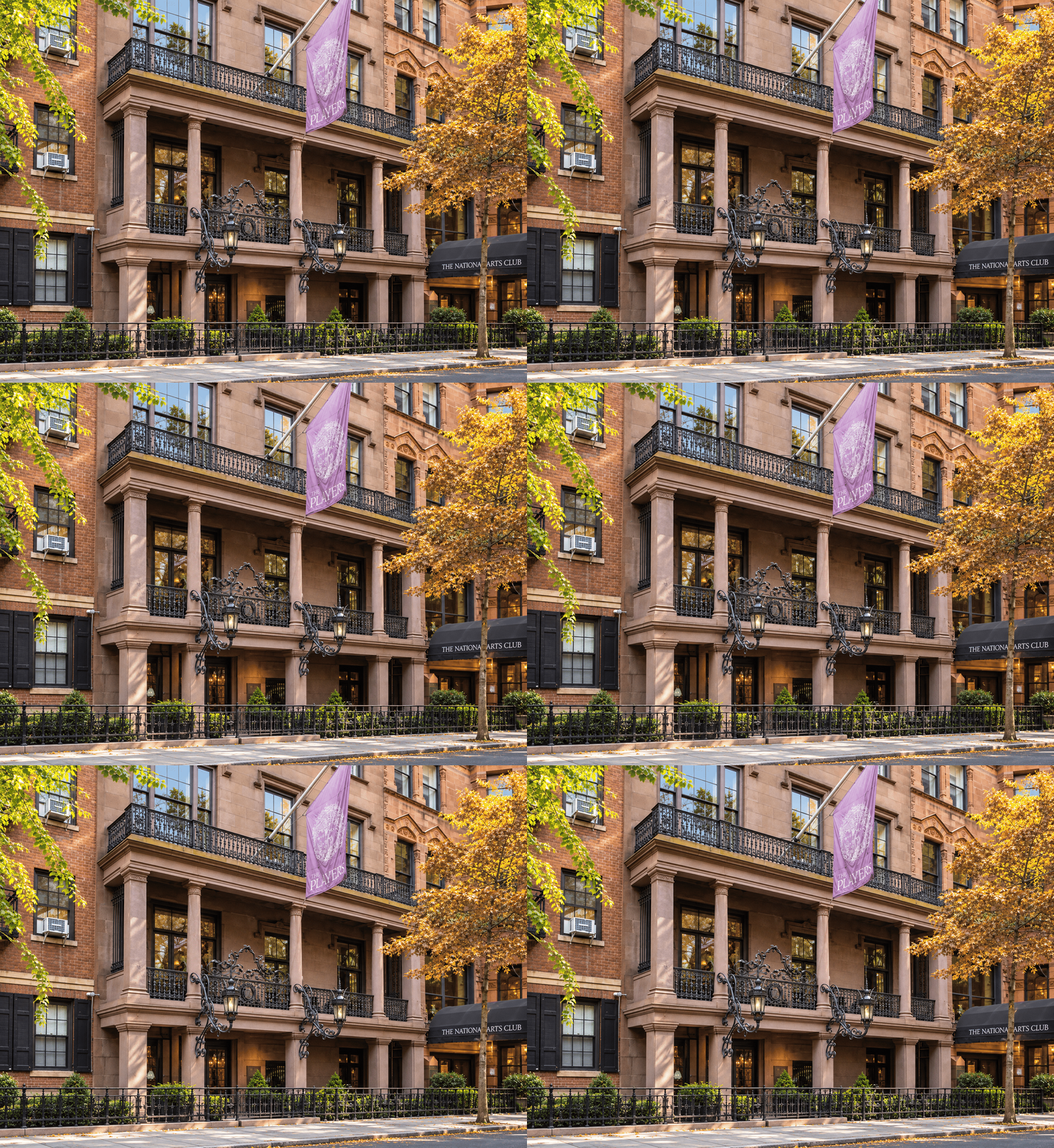
A townhouse becomes a home for the arts
The Players occupies the brownstone just east of the National Arts Club. Elaborate iron lanterns frame its entrance, and a columned porch opens toward the Park.
When the actor Edwin Booth bought No. 16 in 1888, it was already a house of the older Gramercy, built in the 1840s. He purchased it with a particular purpose in mind: a permanent home for a new club. Stanford White adapted the building, replacing the high stoop with an entrance at street level and giving the front its distinctive two-story porch. Behind it, a private residence was becoming a place where people from different creative professions could spend time together.
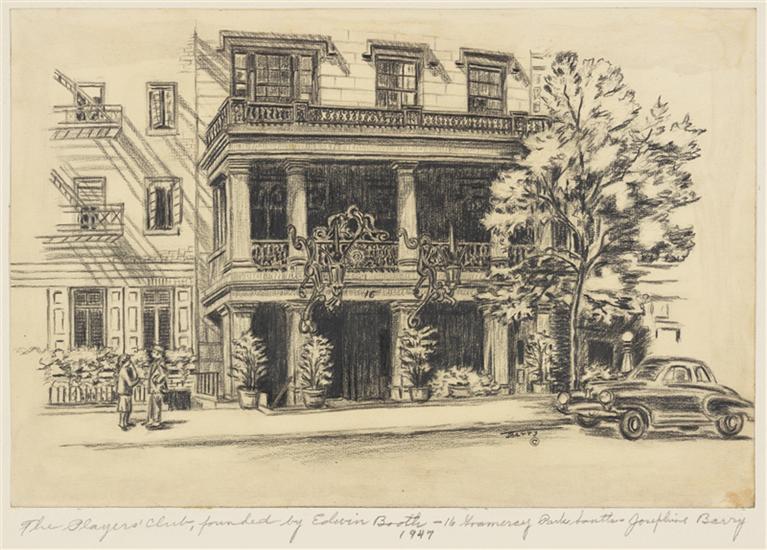
Booth wanted actors to meet writers, artists and people from other walks of life as friends and equals. A profession that could command enormous public admiration still needed places where its members could be known beyond their performances. The club would also gather the evidence of their work: books, portraits, manuscripts and the easily discarded traces of an evening in the theater.
He called it The Players. The name, suggested by the writer Thomas Bailey Aldrich, drew on Shakespeare's observation in As You Like It that all the world's a stage. It was broad enough to accommodate everyone Booth hoped to bring into the house.
A gift at midnight
The idea developed through conversations among Booth and his friends. By early 1888, plans were being discussed at a luncheon at Delmonico's. The founders included Mark Twain and General William Tecumseh Sherman alongside theatrical figures such as Lawrence Barrett and Joseph Jefferson. The mix was deliberate.
On New Year's Eve, 1888, the new clubhouse formally opened. At midnight, Booth presented the deed. In Gustav Kobbé's account, published in 1905, he stood before the Great Hall fireplace beneath a portrait of his father. Booth had paid for the house and its transformation, and furnished it with books, pictures and theatrical treasures. He retained rooms on the third floor for the rest of his life.
The gift carried a practical understanding of an actor's circumstances. Kobbé recorded that actor members were accorded the lower fees and dues of nonresident members. Booth had considered the people who would use the house as carefully as the objects it would hold.
The Players became his home until his death on June 7, 1893. His bedroom and sitting room remained, giving the building an unusually personal center. Downstairs, the club would continue to grow around them.
The company inside the rooms
The portraits at The Players have always belonged to a social world. They depict people whose work was discussed, admired and, sometimes, teased by the people eating and talking beneath them.
Kobbé recorded one particularly good example. A portrait of Booth as Cardinal Richelieu shows him raising three fingers in a dramatic gesture. Around the time Booth and Barrett were attracting attention for charging three dollars a ticket, Maurice Barrymore supplied his own reading of the painting: “there's a picture of the ‘old man’ raising the price to $3!”
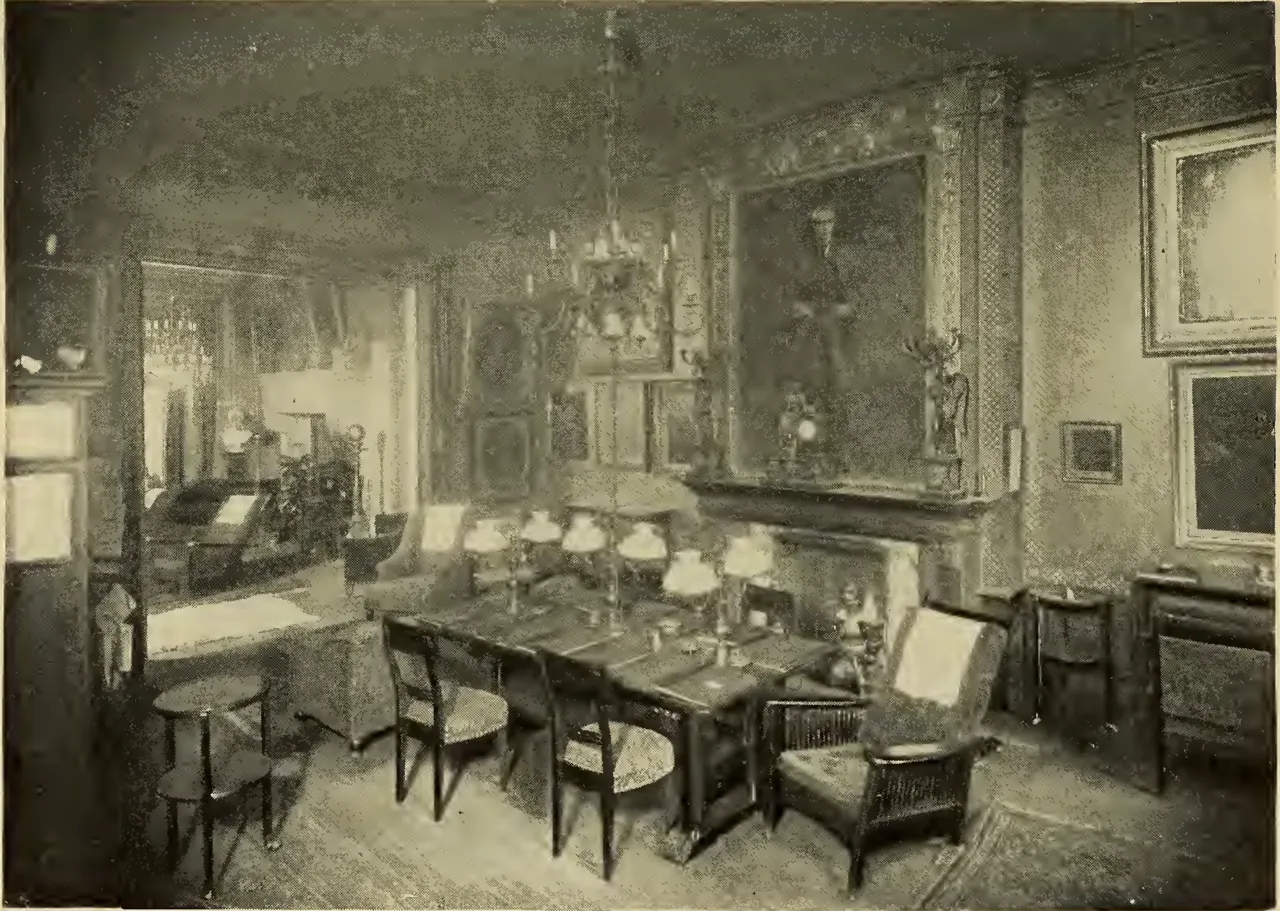
Mark Twain made the club a home on visits to New York. The Players Foundation’s tours include the pool table where he spent hours with friends.
Upstairs, the surviving possessions bring Booth closer. Among them are a portrait of his first wife, Mary Devlin, and a bronze cast of his hand clasping his daughter Edwina's. They reveal the family relationships behind the public figure. Even in a house crowded with theatrical history, these small, personal objects can command attention.
Booth's books and papers also became the nucleus of a much larger collection. The Hampden-Booth Theatre Library holds the material through which a performance can be studied after its audience has gone home: annotated scripts, correspondence, photographs, playbills, costumes and props. The Foundation continues to make that history available to researchers and to add to it.
A tribute across the street
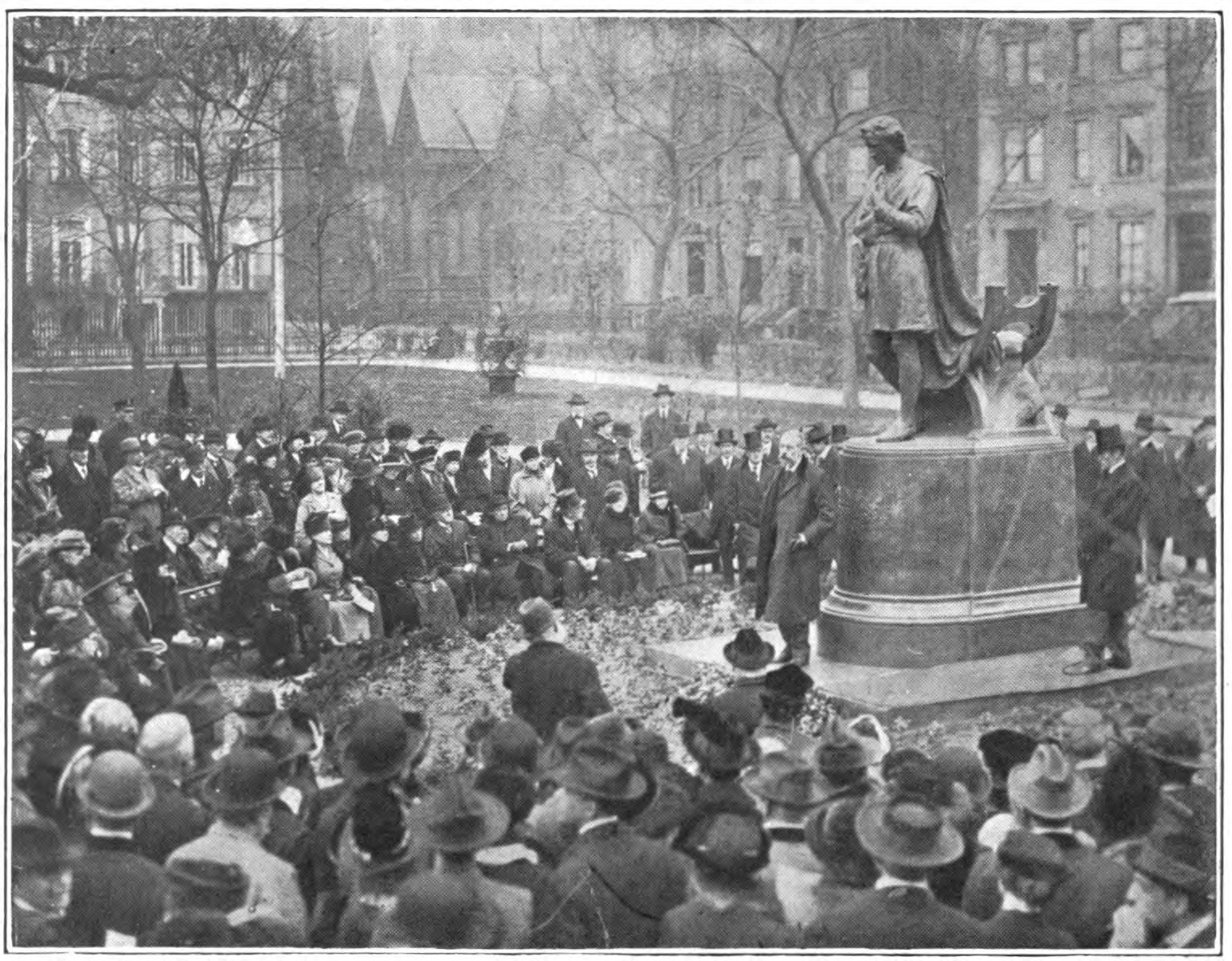
The house’s founding story has a visible counterpart across Gramercy Park South. At the center of the Park, Edmond T. Quinn’s bronze memorial shows Booth in the costume of Hamlet, standing beside a chair with his head inclined in thought. The statue was unveiled twenty-five years after his death, a tribute from the world that the club had helped bring together.
On November 13, 1918, a crowd gathered among the trees for its unveiling. The Armistice had been signed two days earlier. Booth would have turned eighty-five that day; his grandson, Edwin Booth Grossman, helped uncover the memorial. In the photographs, hats fill the foreground and faces turn toward the newly revealed figure. The buildings behind them are recognizably our own Gramercy.
There is an especially fitting detail in the memorial committee's account. The ceremony began at noon because Wednesday was matinee day. Everything was completed in twenty-four minutes, allowing the actors present to get back to work. Even a tribute to one of the great figures of the American stage had to respect the afternoon curtain.
John Drew, president of The Players, accepted the statue as a gift from people who had loved Booth. In the words preserved by John B. Pine in The Story of Gramercy Park, it was the gift of “a company of loyal, loving hearts.” The ceremony made the connection between the club and the Park visible for generations to come.
The house grows with its members
Some of the conversations at The Players had consequences well beyond the dining room. In 1913, actors held organizing meetings here that helped lead to Actors' Equity. The conditions they were challenging included unpaid rehearsals and contracts that left performers with little protection. The room now known as the Equity Room links the house to the long effort to make acting a more secure working life.
The club also developed its own ways of honoring the profession. Its Pipe Nights evolved into tribute dinners in the 1930s, with John Gielgud honored in 1936. The name survived long after smoking ceased to be the point of the evening.
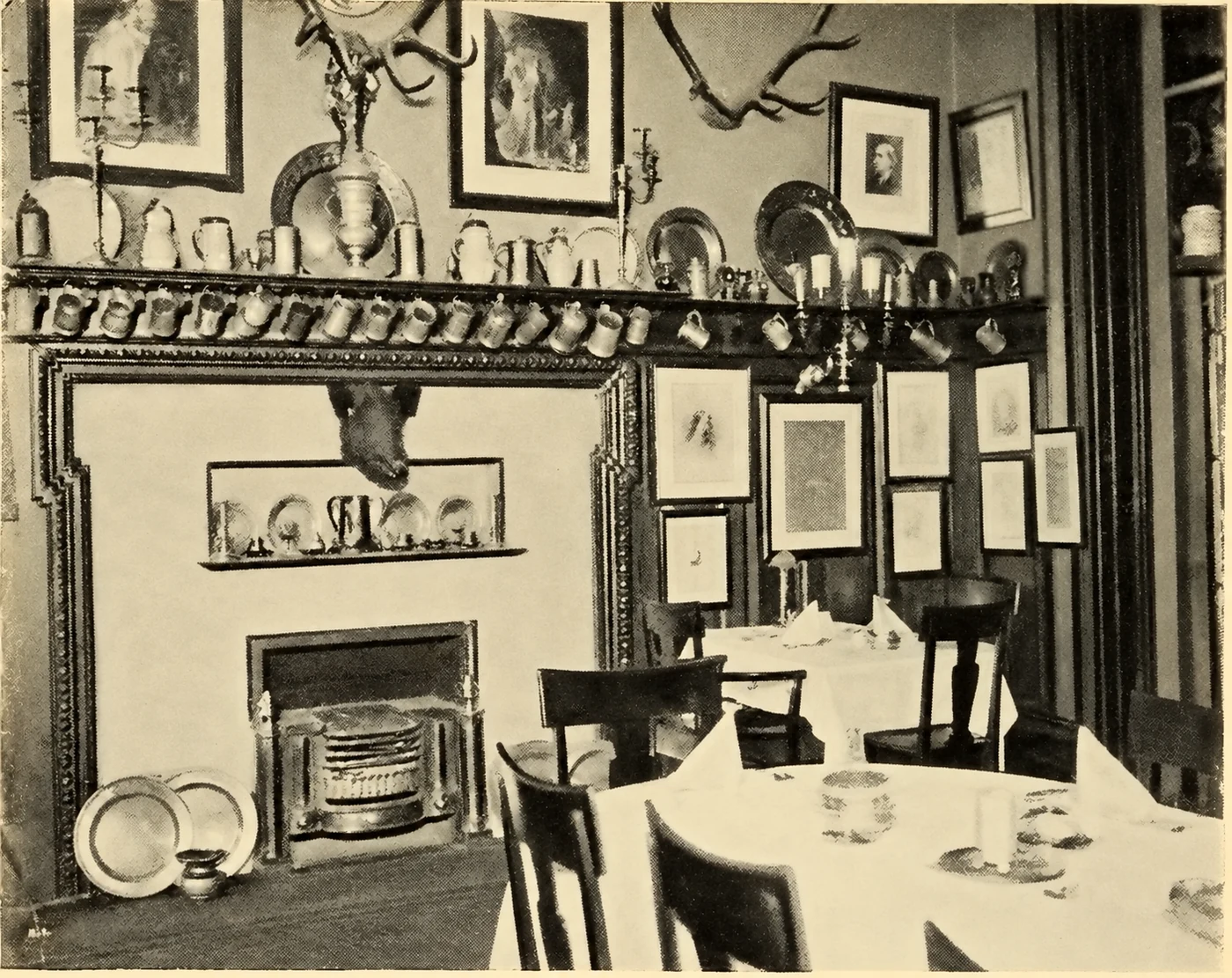
During the presidency of playwright Howard Lindsay, from 1955 to 1965, the dining room expanded over a storm-damaged rear garden, substantially increasing its capacity.
Women became members in 1989, with Helen Hayes and Toni Morrison among the inaugural group.
The work of keeping a house alive
Booth's rooms are often described as though someone simply closed the door in 1893. Their survival has required far more care than that.
During conservation work in 2023, specialists from EverGreene Architectural Arts uncovered a surviving fragment of the bedroom's historic wallpaper behind a sconce. That fragment helped them reconstruct the earlier pattern. They also stabilized plaster, investigated historic finishes and conserved the sitting room's wallpaper. The apparent continuity of a historic room can depend on this kind of patient, highly skilled detective work.
The Players Foundation's restoration continued through a second summer in 2024. Historic window components and glass were retained where possible, while added ultraviolet protection allowed daylight into rooms whose contents had long needed shielding. Furniture, pictures and textiles received individual attention.
The Players Preservation Fund cares for the building. The Players Foundation for Theatre Education preserves the collections and supports their educational use.
The Players Foundation also funded a restoration of the Booth memorial under the Trustees of Gramercy Park.
The Players now
In January 2026, the Hampden-Booth Theatre Library filled for the club's fifth annual Artists Exhibition. Members showed photographs, paintings and drawings. Among the exhibitors was retired physician James Sabetta, showing his first painting after taking up drawing and studying the Impressionists. Booth's idea of bringing artists and people from other professions together had a very recognizable present-day expression.
“This is a personal house where we can all come together.”
Michael Gerbino, exhibition curator · January 2026
The 2026 calendar also includes Gingold Theatrical Group's Project Shaw, with script-in-hand readings at The Players of works by Oscar Wilde, Bernard Shaw, Maurine Dallas Watkins and Noël Coward. The schedule included Watkins's Chicago, the 1926 play that preceded the musical, in its centenary year. Historic writing continues to find actors and an audience in these rooms.
WORDTheatre's Author–Actor series brings another kind of encounter to the house, pairing contemporary short fiction with performers from stage and screen. The Foundation, meanwhile, has been opening its collections through programs on subjects as varied as Maurice Evans's scrapbooks and the changing life of the Grill Room. The archive supplies material for new conversations.
In the renovated fourth-floor Research Room, the Foundation has catalogued more than 2,500 volumes, including books from Booth’s personal library and donations from Walter Hampden.
The Players remains a private club, with a membership that reaches across theater, film, music, publishing and other professions. Its daily life includes meals and conversation as well as readings, interviews, cabaret and music. The Foundation separately arranges guided group tours and provides access for scholarly research.
The Players Foundation offers information about its collections, research access and arranged tours at playersfoundation.org.
The building at a glance
The building record
- Address
- 16 Gramercy Park South
- The Players, beside the National Arts Club.
- Original house
- 1840s
- Stanford White adapted the house for the club in 1888.
- Booth’s gift
- New Year’s Eve, 1888
- The actor gave the house during his lifetime and retained rooms upstairs.
- A living institution
- The Players
- The club, the collections-focused Foundation and the building Preservation Fund sustain different parts of its life.
Over time
A Gramercy townhouse
The private residence that will become The Players is built on the Park’s south side.
A home for The Players
Booth buys the house, White adapts it, and the clubhouse opens on New Year’s Eve.
Booth’s rooms remain
Booth dies on June 7; his bedroom, sitting room and collections become part of the club’s continuing life.
Actors organize
Meetings at The Players help lead to Actors’ Equity.
The statue is unveiled
Neighbors and members gather in Gramercy Park on November 13.
Making room for members
During Howard Lindsay’s presidency, the dining room expands over the storm-damaged rear garden.
Women become members
Helen Hayes and Toni Morrison are among the first women admitted.
Conserving Booth’s rooms
Two phases of restoration recover historic finishes and care for the rooms’ contents.
A working house for the arts
Members exhibit their work, actors gather for readings, and the Foundation opens new conversations through its collections.
Documents & further reading
- 1918Howard Kyle, The History of the Edwin Booth Memorial: April 2nd, 1906 to November 13th, 1918The memorial committee’s account of the statue, unveiling and dedication ceremony.
- 1921John B. Pine, The Story of Gramercy ParkJohn B. Pine’s history of the Park, including Booth, The Players and the memorial.
- 1966New York City Landmarks Preservation Commission, The Players Club designation report, 15 March 1966The Landmarks Preservation Commission’s architectural account of the house and White’s alterations.
- PrincetonJulie Mellby, “The Players,” Princeton University Library Graphic Arts, 4 December 2017The club’s founding, name and early history, from Princeton University Library.
- 1912Albert Bigelow Paine, Mark Twain: A Biography, vol. II, chapter CLXVI, 1912Mark Twain’s biographer records the founding conversations and Booth’s gift.
- The FoundationThe Players Foundation for Theatre Education, “The Collection”The collections, Booth’s rooms and the origins of the library.
- Folger LibraryFolger Shakespeare Library, “Nora Titone shares highlights from the Folger’s Booth collection,” 5 March 2019Booth’s correspondence and the original program for his hundredth Hamlet performance.
- 1909“Edwin Booth and Lincoln,” The Century Magazine, April 1909, pp. 919–920Robert Todd Lincoln’s own account of the railway rescue, with Booth’s 1865 letter.
- NYPLNew York Public Library, Booth-Grossman family papers finding aidA guide to the Booth-Grossman family papers and Edwin Booth’s life.
- National ArchivesRob Crotty, “The curious case of Robert Lincoln,” National Archives, 27 October 2010The National Archives’ account of the Booth and Lincoln connection.
- 1905Gustav Kobbé, Famous Actors and Their Homes, “The Players,” 1905, pp. 203–221A period visit to the club, with interior photographs and stories of its members.
- 1889“Gotham’s Players’ Club,” Savannah Morning News, 1 January 1889, p. 2A contemporary newspaper report of the clubhouse opening and midnight gift.
- The FoundationThe Players Foundation, “Learn About the Collection”Twain’s pool table, the Equity Room and the collections encountered on a tour.
- 2024Lansing Moore Jr., “Edwin Booth’s Curtain Call,” The Magazine Antiques, 23 February 2024Booth’s personal possessions, the club’s traditions and conservation of the rooms.
- The FoundationThe Players Foundation for Theatre Education, “About The Foundation”The Foundation’s educational work and care of the theatrical collections.
- Actors’ EquityActors’ Equity Association, official historyThe working conditions that led actors to organize and form the union.
- Howard LindsayC. Claiborne Ray, “A Classic Player: Howard Lindsay, 1889–1968,” The Brief Chronicles, 26 June 2019The playwright’s presidency and the enlargement of the clubhouse dining room.
- 1989The Players welcomes women members — Los Angeles TimesA contemporary notice of the first women members.
- 2023EverGreene Architectural Arts, “Booth Room, Players Club”The conservators’ account of the historic wallpaper, plaster and decorative finishes.
- 2023–2024The Players Foundation, “Booth Room Restoration”The Foundation’s account of the two restoration phases.
- PreservationThe Players Preservation Fund, “About”The organization caring for the historic clubhouse.
- The statueGPBA newsletter, “Which monument in Gramercy Park is being restored?”An earlier neighborhood account of the Trustees’ restoration of the memorial.
- 2026Victoria L. Dammer, “Inside The Players’ 5th Annual Artists Exhibition,” Opening Night, 3 February 2026Victoria L. Dammer’s report on the members’ fifth annual Artists Exhibition.
- 2026Gingold Theatrical Group, “Project Shaw” — 2026 programmeGingold Theatrical Group’s script-in-hand readings at The Players.
- WORDTheatreWORDTheatre, events archive and Author • Actor SeriesThe Author–Actor series and contemporary fiction in performance.
- 2026The Players Foundation, “News & Events”Programs exploring Maurice Evans’s scrapbooks, the Grill Room and other collections.
- The libraryThe Players Foundation, “The Research Room”The renovated Research Room and its catalogued volumes.
- MembershipThe Players, public membership informationThe club’s professions, traditions and current activities.
- ToursThe Players Foundation, “Docent Tours”Information about arranged docent tours of the house and collections.
Gramercy Stories is a series from the Gramercy Park Block Association about the buildings, addresses and places that give the neighborhood its character.