
Ludwig Bemelmans
Paris on the Ceiling, Gramercy Outside the Window
1898–1962 · Writer, illustrator, painter & Gramercy neighbor
Madeline’s creator painted chestnut leaves on his Gramercy walls, drafted his most famous rhymes on an Irving Place menu, and turned a neighborhood lease dispute into a classic New York picture book.
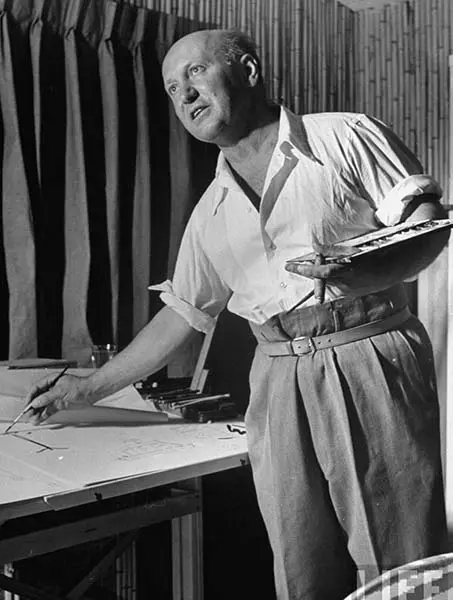
Gramercy outside the window
At Ludwig Bemelmans’s Gramercy Park apartment, Paris was on the ceiling.
Plagued by insomnia, he pasted a large street map of Paris directly above his bed. When sleep would not come, he switched on a flashlight and traced the beam along the quays and bridges of the Seine from his bedroom overlooking Gramercy Park.
Readers around the world know Bemelmans through Madeline—the smallest and bravest of twelve little girls in two straight lines walking through Paris with Miss Clavel. Around Gramercy Park, another geography comes into focus: a painted top-floor apartment at 20 Gramercy Park South, an old-world suite at the Hotel Irving at No. 26, a wooden booth at Pete’s Tavern on Irving Place, and a final residential studio at the National Arts Club.
Here he turned his apartment walls into stage sets, drafted Madeline’s opening rhymes on the back of a tavern menu, painted Edwin Booth’s statue framed by lilies across the Park fence, and transformed a lease dispute with his Gramercy landlord into the 1950 New York picture book Sunshine.
Learning the world from the dining room
An unruly apprentice from the Tyrol
Born on April 27, 1898, in Meran in the Austrian Tyrol (now Merano, Italy), Ludwig Bemelmans grew up in the world of grand hotels before he ever made a book. His father, Lambert Bemelmans, was a Belgian painter and hotelier; his mother, Frances Fischer, was the daughter of a prosperous Bavarian brewer. Raised by a French governess until age six, Ludwig spent his early childhood in the lakeside town of Gmunden in Upper Austria before moving with his mother to her parents’ home in Regensburg after his father left the family. Formal schooling proved a disaster, and he was sent to apprentice in his Uncle Hans’s string of Tyrolean resort hotels—a tumultuous apprenticeship that ended after a violent clash with a tyrannical headwaiter left the sixteen-year-old with a choice between a reformatory and emigration to America.
Busboy at the Ritz-Carlton
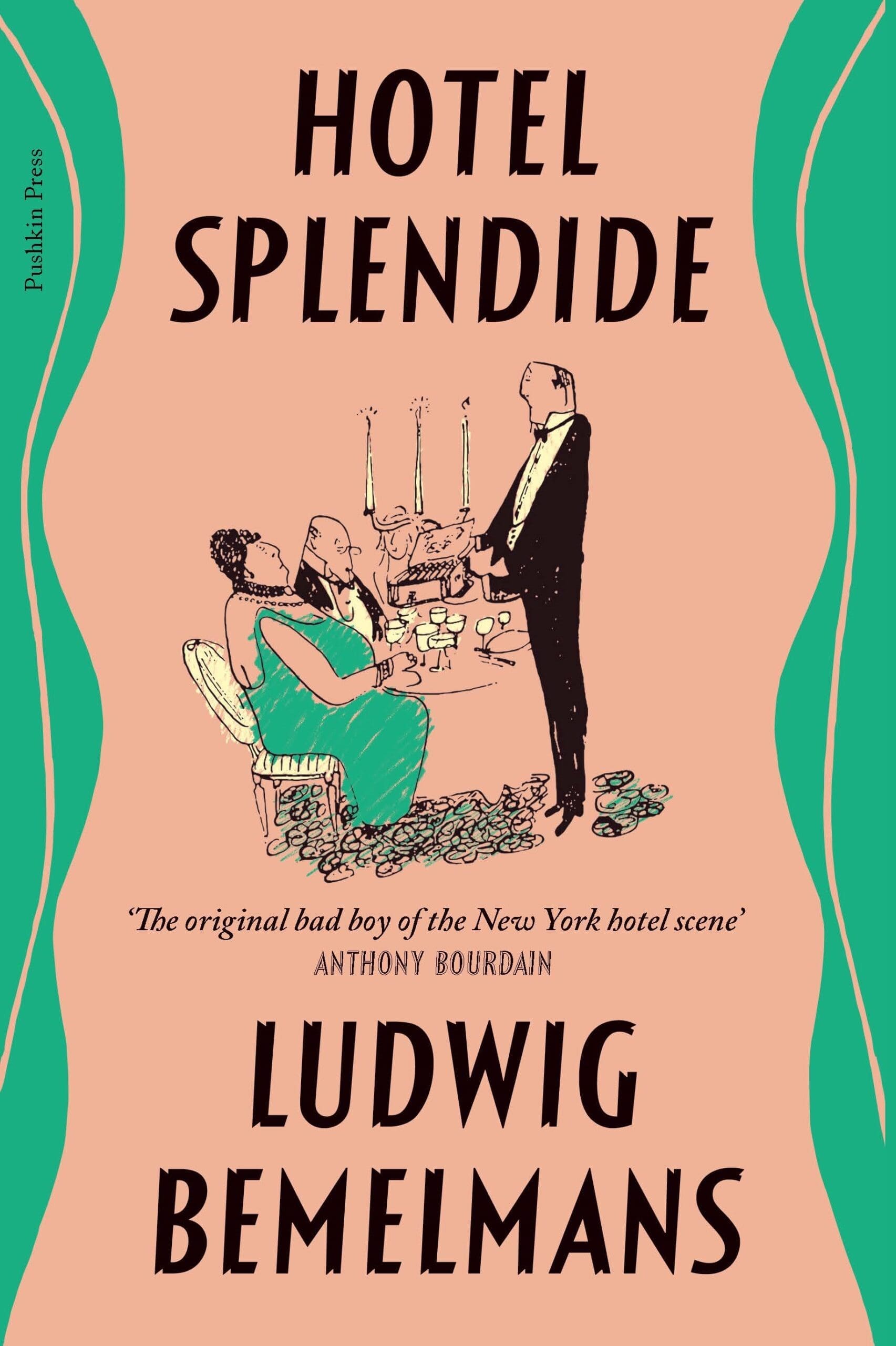
Landing at Ellis Island on Christmas Eve 1914, Bemelmans found work as a busboy and waiter at the original Ritz-Carlton at Madison Avenue and 46th Street, where he broke porcelain, wore mismatched shoes, and filled the backs of order pads with caricatures of millionaire patrons and imperious maîtres d’hôtel. Under the watchful eye of dining-room captains like Monsieur Victor and melancholy waiters who had served European royalty, he absorbed the upstairs-downstairs theater of luxury hotels—material he would mine for decades in The New Yorker, Life Class (1938), and Hotel Splendide (1941).
His war with the United States
When the United States entered the First World War in 1917, Bemelmans enlisted in the U.S. Army. Kept from overseas deployment because of his Austrian birth and German heritage, he served stateside as a hospital attendant, rising to corporal. He became a naturalized American citizen in 1918 and turned his wartime diaries into his first comic memoir for adults, My War with the United States (1937). Before he ever wrote a line for children, he had learned to observe two rigid institutions from the bottom up: grand hotels and the Army, each rich in rules, hierarchies, and small absurdities.
From a menu at Pete’s to an old house in Paris
The editor who noticed the window blinds
Bemelmans’s career in children’s books began with interior decoration. In the early 1930s, while trying his hand as a commercial artist and co-owner of the Viennese-style Manhattan restaurant Hapsburg House, he tired of the bleak brick view from his downtown studio apartment and painted bright Tyrolean mountain scenes across his rolled-down window shades. When his friend Ervine Metzl brought Viking Press children’s book editor May Massee to the studio for dinner in 1933, Massee admired the painted blinds and urged him to make picture books. Hansi appeared in 1934, drawing on his Tyrolean childhood. The Golden Basket followed in 1936, inspired by memories of Belgium shared with Madeleine “Mimi” Freund, a former convent-school pupil whom he married in 1934; it earned a 1937 Newbery Honor and introduced an early row of twelve little schoolgirls in a Bruges cathedral, including one named Madeleine.
An island crash and a tavern booth
His most famous heroine came together two summers later. During a 1938 bicycle trip on the French island of Île d’Yeu, Bemelmans was knocked off his bicycle by a truck and landed in a local hospital. In the next room, a little girl recovering from an appendectomy proudly showed off her stomach scar, while cracks in the plaster ceiling above his hospital bed suggested the shape of a rabbit.
After making preliminary sketches at the Restaurant Voltaire in Paris, Bemelmans returned to Gramercy and sat down in a wooden booth at Pete’s Tavern, two blocks south of the Park at East 18th Street and Irving Place. Turning over a menu, he wrote the opening lines:
In an old house in Paris that was covered with vines
Lived twelve little girls in two straight lines.
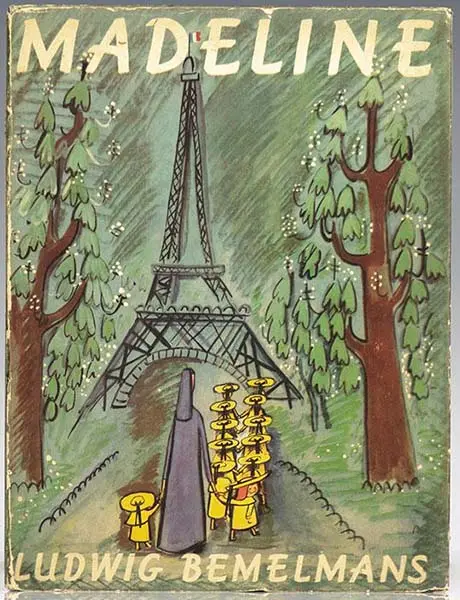
He dropped an “e” from Mimi’s name, Madeleine, to make Madeline easier to rhyme, and gave his smallest schoolgirl a fearless spirit that turned even an emergency appendectomy into a triumph. After May Massee declined the manuscript, Simon & Schuster published Madeline in September 1939. Named a 1940 Caldecott Honor Book, it launched a beloved series whose first sequel, Madeline’s Rescue (1953), won the 1954 Caldecott Medal.
A home that would not stay ordinary
A “Splendide Apartment” at the Hotel Irving
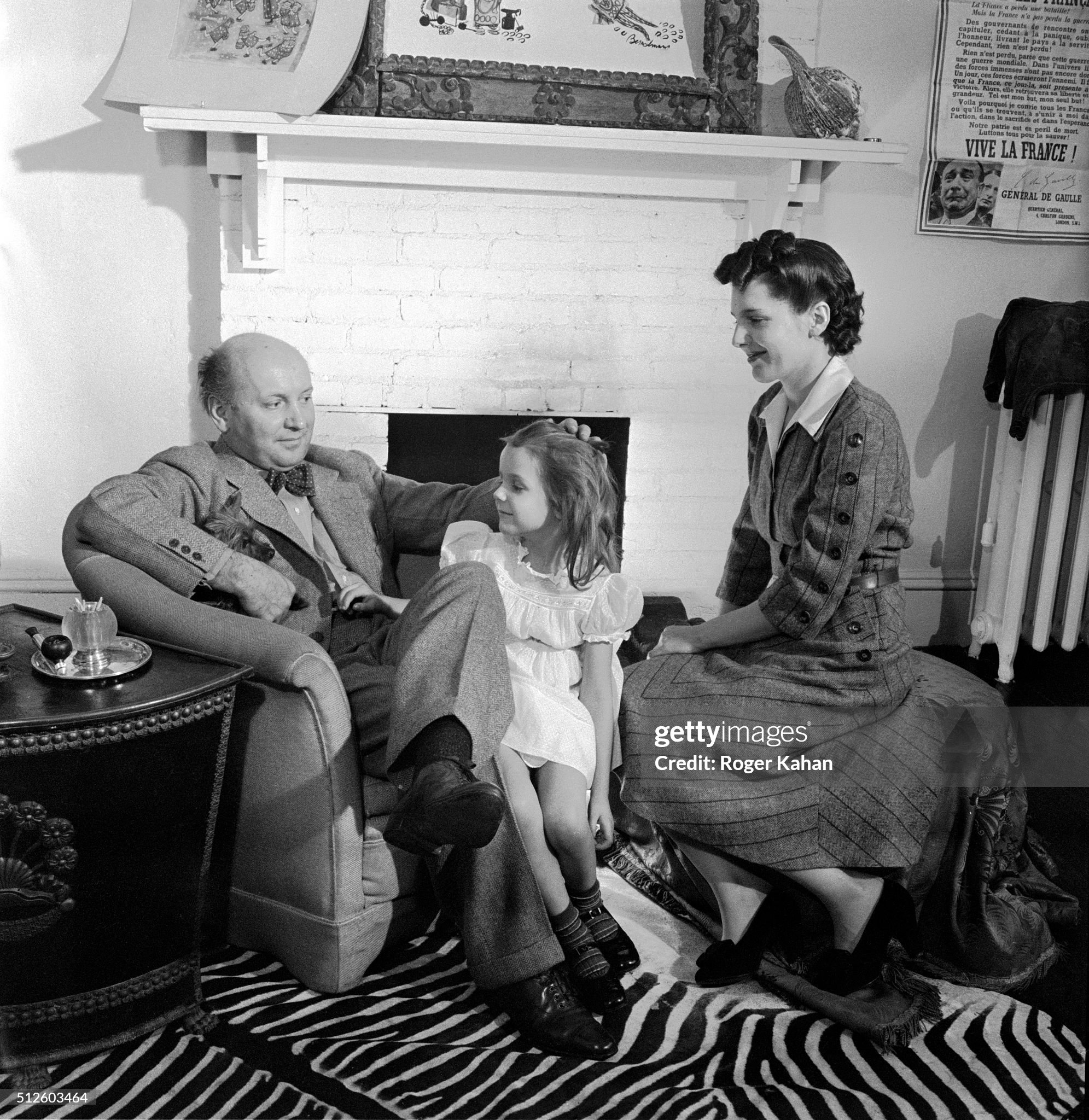
Around Gramercy Park, the Bemelmans household—Ludwig, Mimi, their daughter Barbara (born in 1936), and their black poodle Toots—turned their rooms into extensions of his easel. In 1940, the family lived at 26 Gramercy Park South, then the Hotel Irving. In a 1942 Vogue essay titled “Splendide Apartment,” Bemelmans praised the Gramercy hotel’s quiet and good service, describing a furnished apartment that cost five dollars a day. Barbara later remembered a uniformed doorman walking her across the street to unlock the iron gates of Gramercy Park.
Chestnut leaves on the fifth floor of No. 20
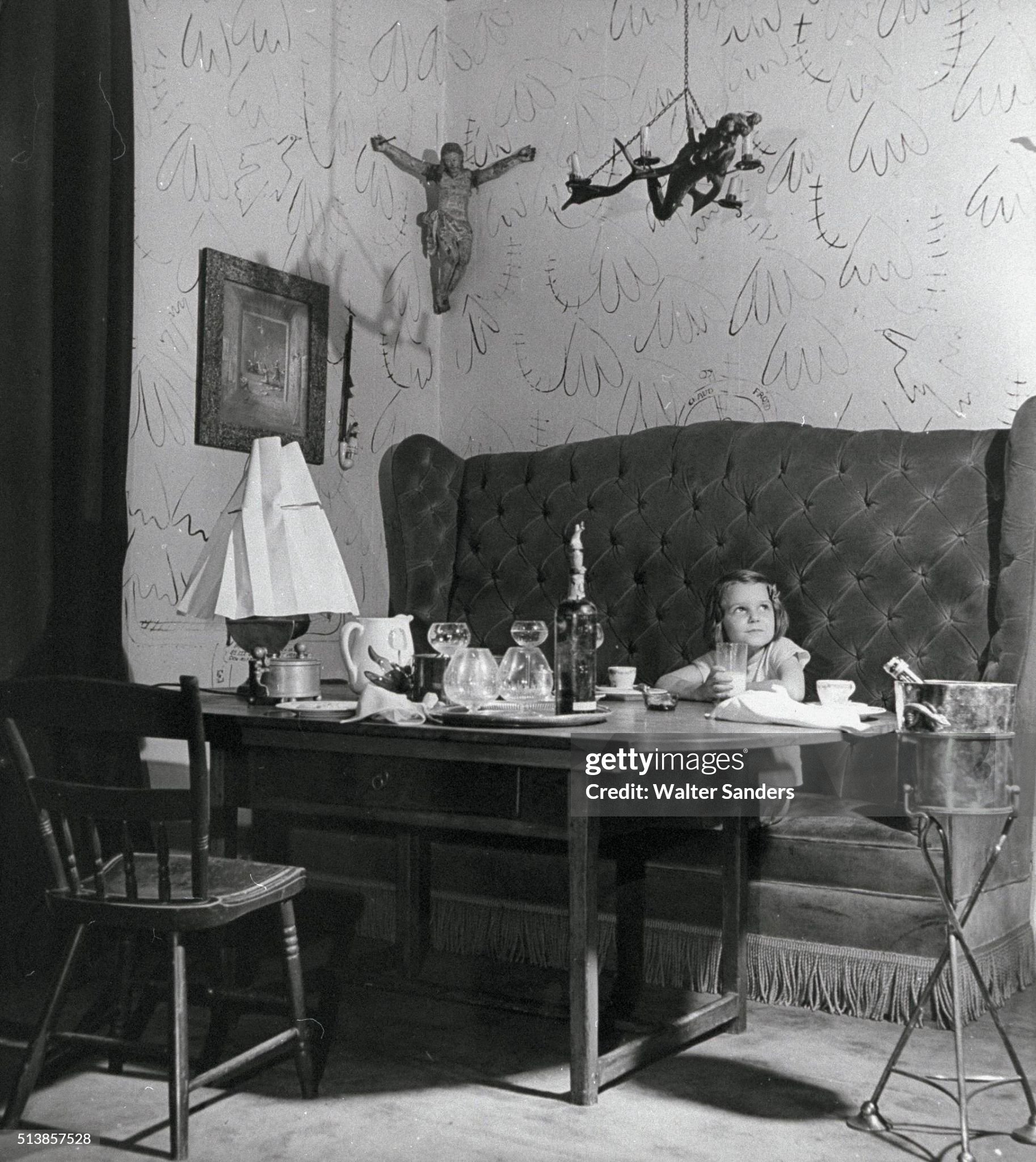
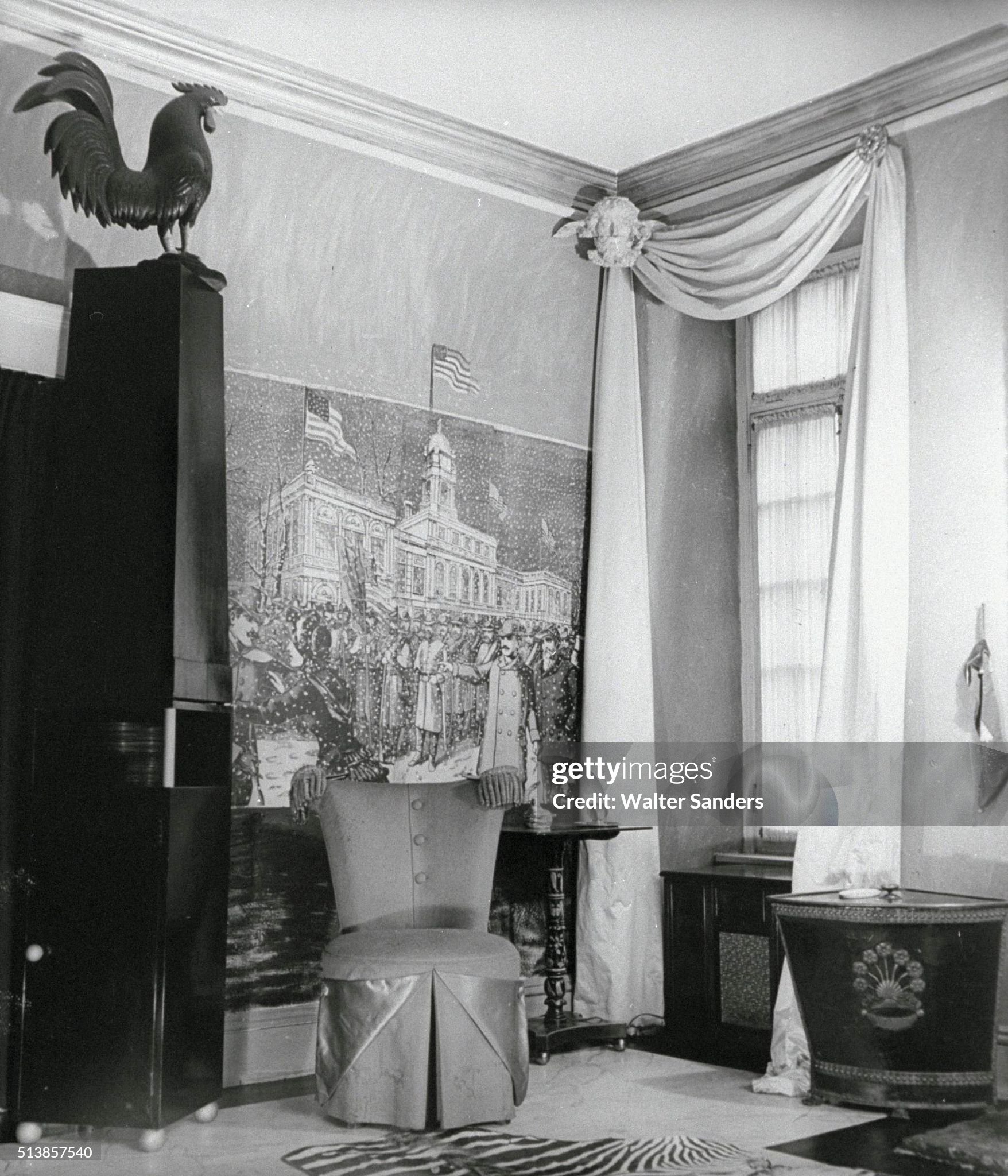
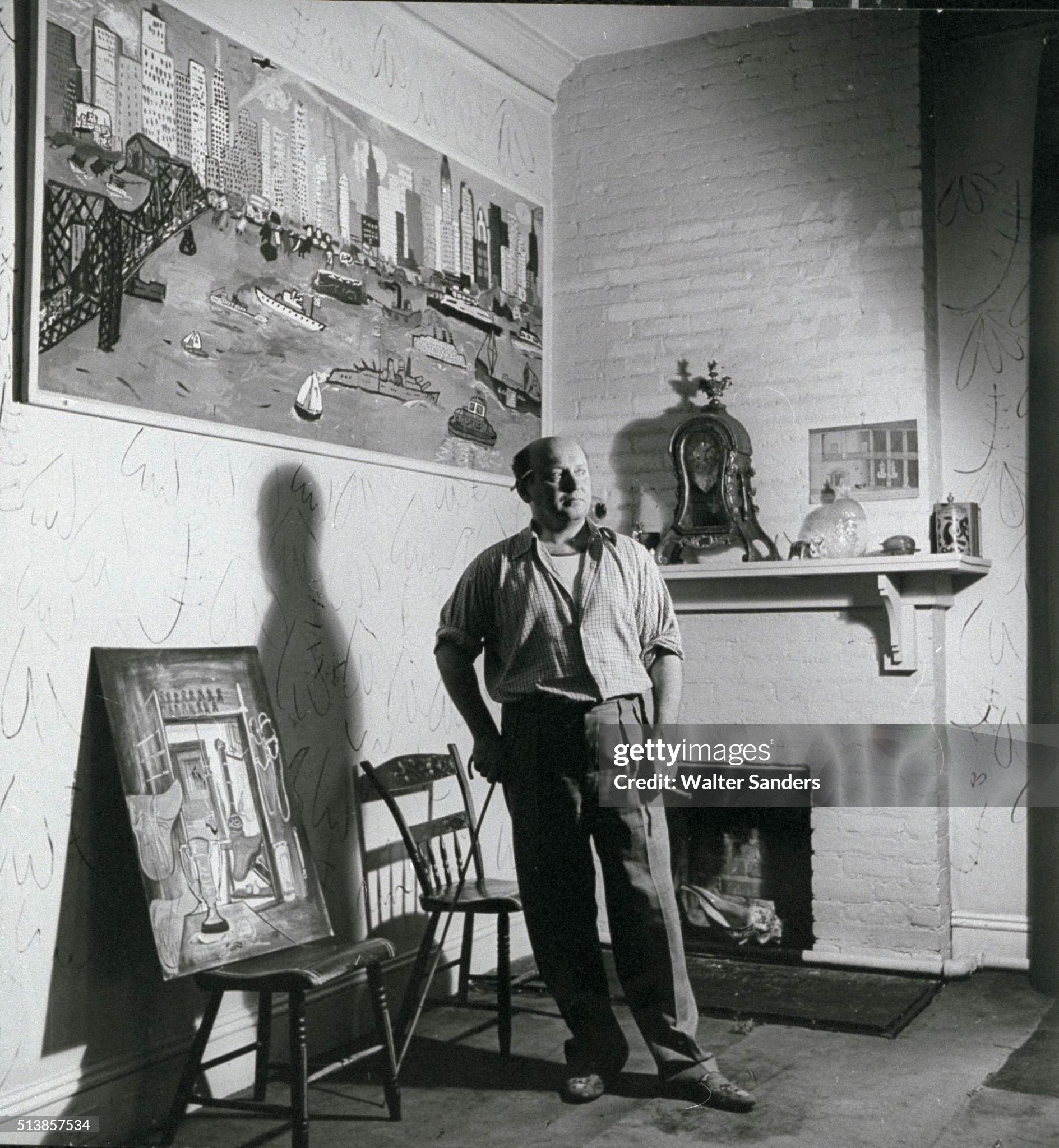
The family also occupied most of the fifth, top floor at 20 Gramercy Park South, on the southeast corner of the Park and Irving Place. Refusing to leave the walls bare, Bemelmans had white paper pasted over the living room walls and painted sweeping green chestnut leaves across them; in the dining room, he painted a parade of donkeys wearing real straw hats affixed directly to the plaster.
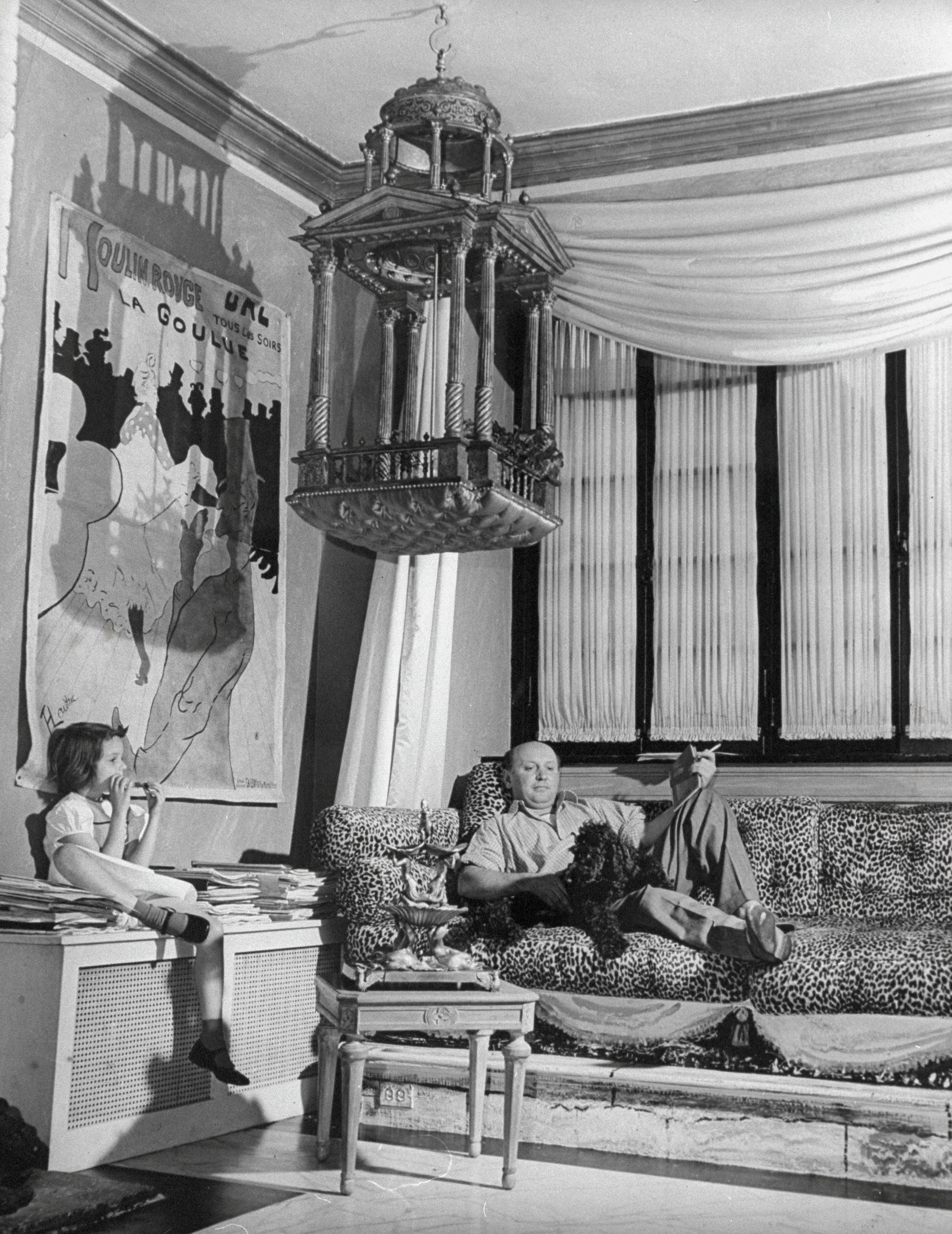
A 1942 House & Garden photograph preserves their domestic world inside the Gramercy apartment: Bemelmans lounging in espadrilles on a leopard-print sofa with Toots in his lap and six-year-old Barbara perched on the radiator cover, surrounded by a zebra-skin rug, a Confederate broadside, and paintings made by children. Here Barbara remembered her father painting for hours at his easel with a bottle of champagne chilling nearby, pecking out manuscripts on his typewriter with two fingers, and tracing his ceiling map of Paris by flashlight at night.
The Gramercy story behind Sunshine
A lease lost to a screening room
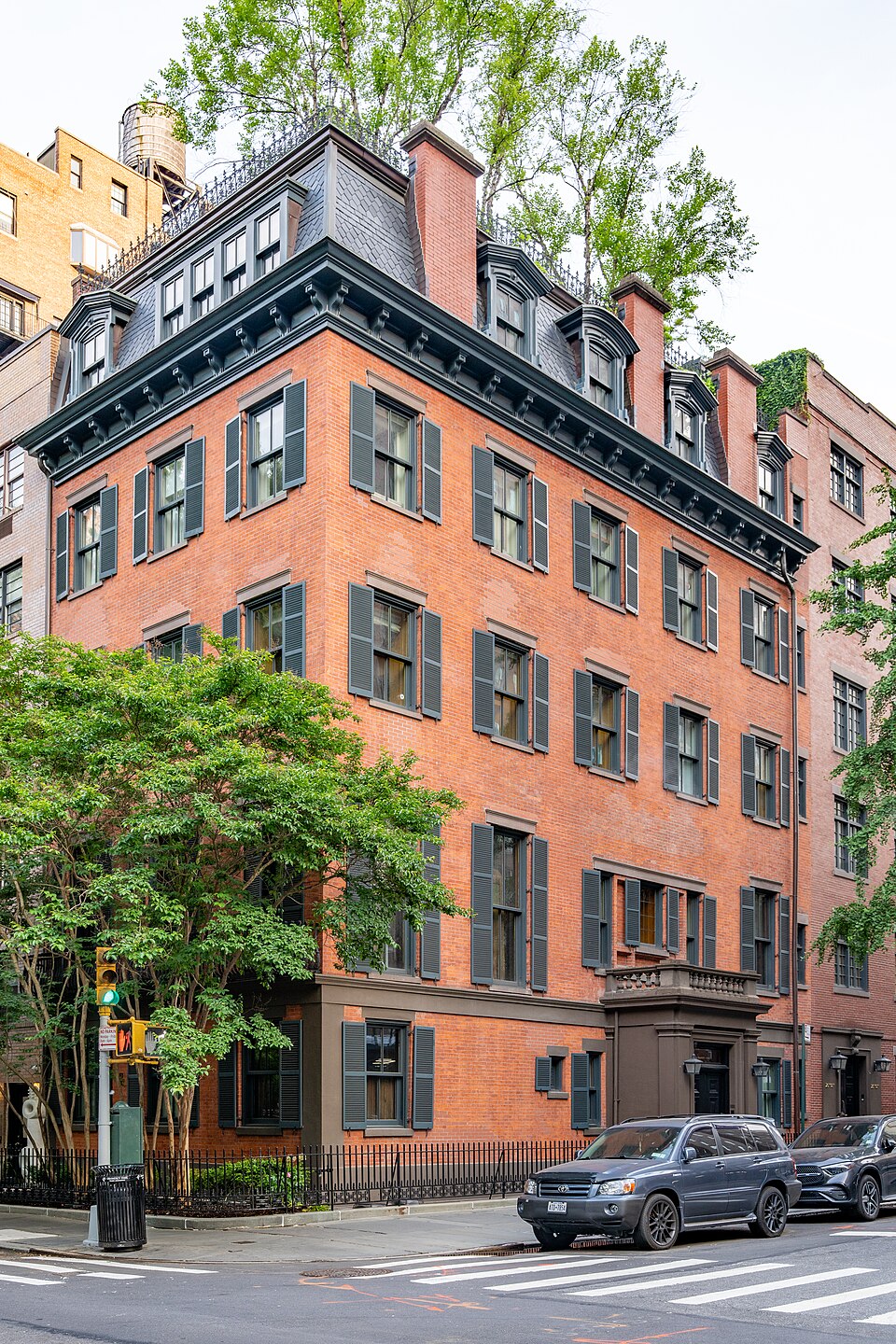
The family’s top-floor home at 20 Gramercy Park South ended in a wartime dispute over a lease. Next door at No. 19 lived publicist and collector Benjamin Sonnenberg, who had rented the lower two floors of the historic Stuyvesant Fish house in 1931. In 1945, he bought both the No. 19 townhouse and the adjoining apartment building at No. 20, uniting the two properties into a thirty-seven-room private mansion.
Barbara Bemelmans later recalled that their landlord refused to renew the family’s fifth-floor lease because he wanted to turn their top-floor apartment into a private screening room for his guests. She believed he inspired Mr. Sunshine.
Revenge at “No. 203 Gramercy Park”
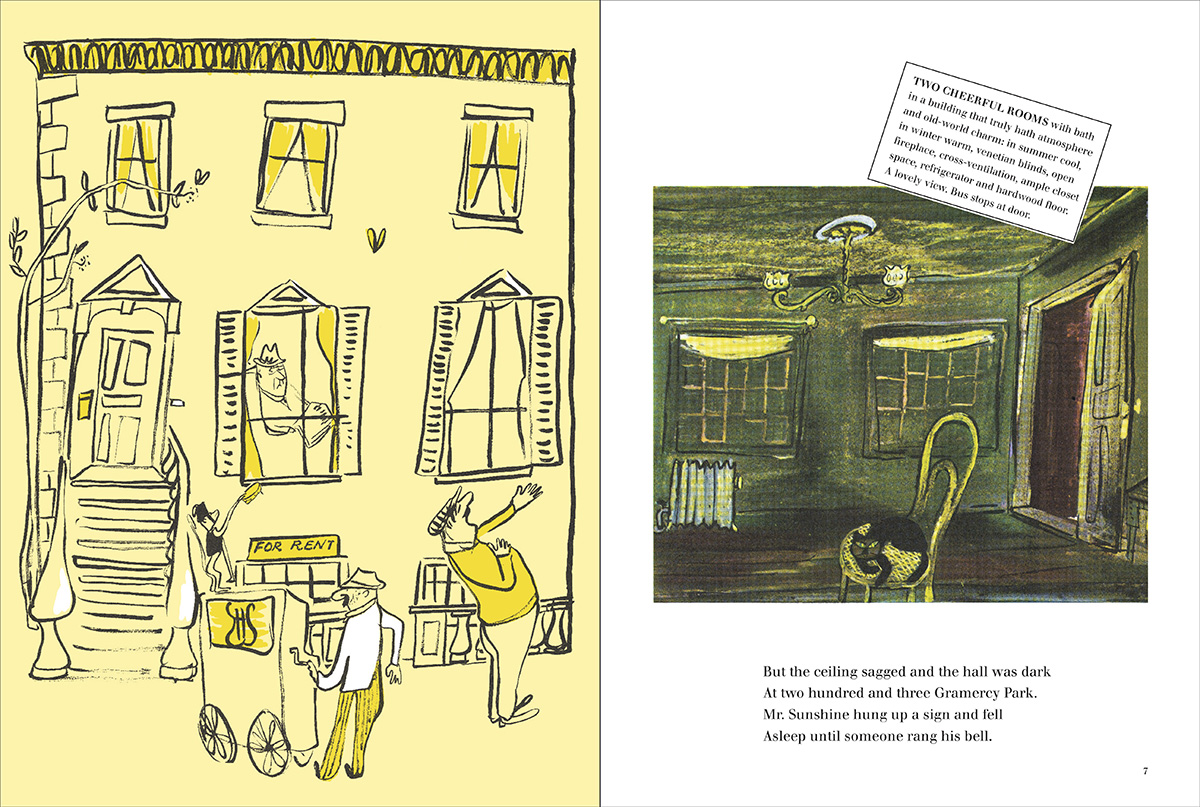
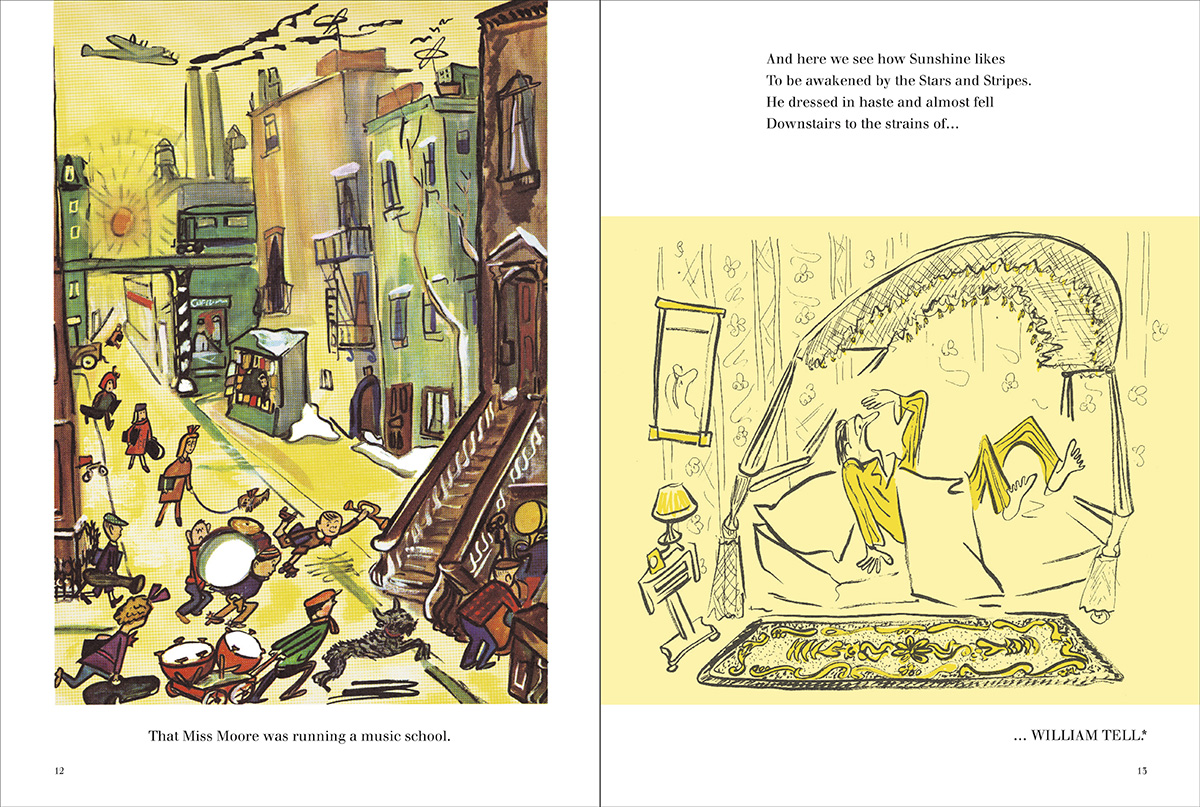
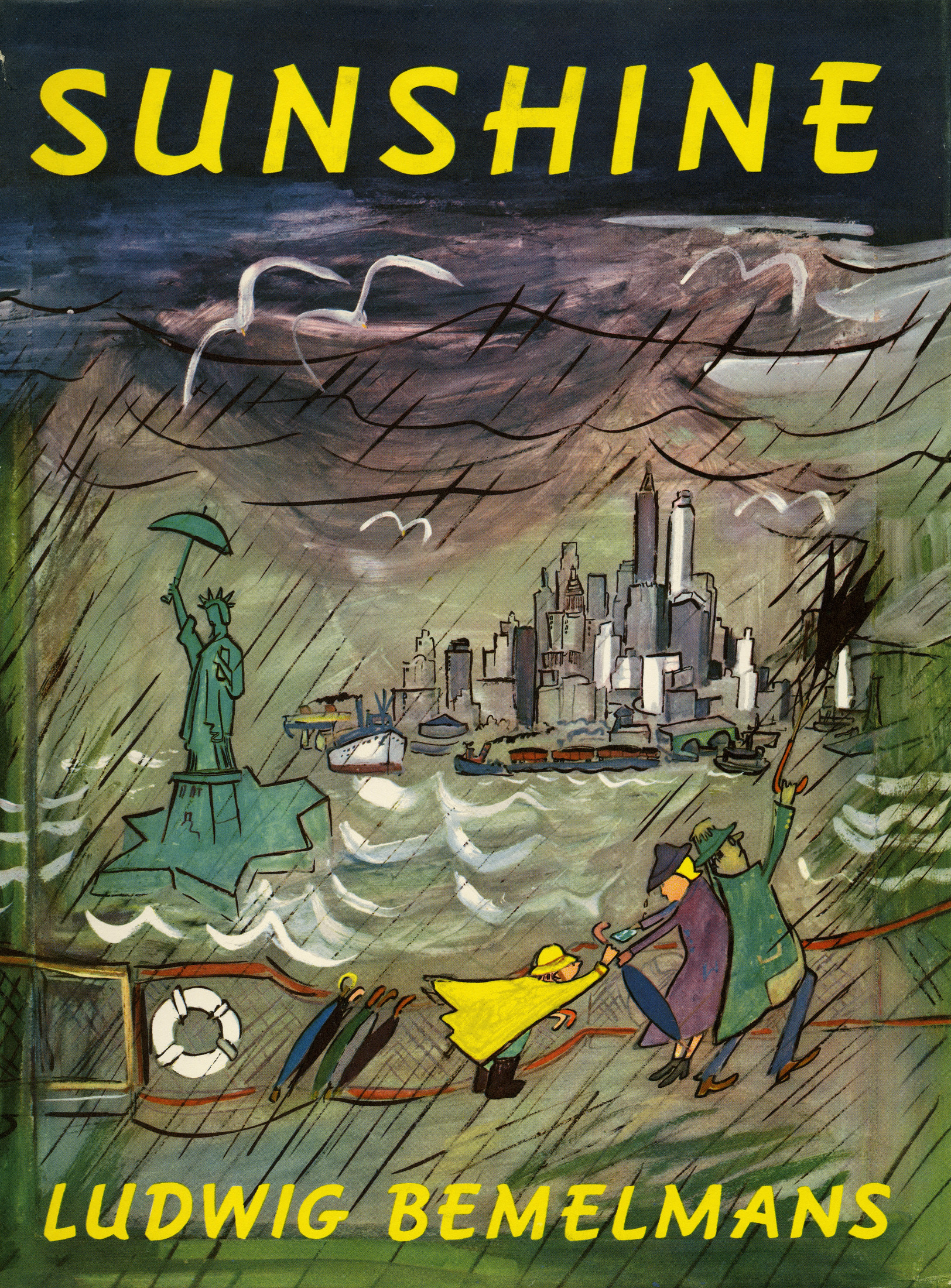
Published by Simon & Schuster in 1950, Sunshine: A Story About the City of New York begins and ends at the iron gates of Gramercy Park. At “No. 203 Gramercy Park,” Bemelmans introduced the penny-pinching landlord Mr. Sunshine, an umbrella magnate who rents his dark upstairs rooms to a gentle tenant, Miss Moore, without realizing she is opening a children’s music school.
Awakened one Thursday morning by a parade of children blasting the overture to William Tell on bassoons, horns, and drums, Mr. Sunshine schemes to evict her. After a comic misadventure involving two thousand yellow umbrellas, a sudden gale on the East River, and a real-estate technicality, Miss Moore triumphs in court—securing a lifetime lease at fifty dollars a month and turning the Gramercy house into a joyful conservatory. What a lease could not save at 20 Gramercy Park South, a picture book happily avenged.
The house has a longer story of its own. Read the GPBA history of 19 Gramercy Park South and the Sonnenberg Mansion →
A writer who thought in pictures
Beyond the nursery shelf
Madeline’s fame can easily overshadow the breadth of Bemelmans’s work for adults. He published hotel memoirs, travelogues, and Hollywood satires such as Dirty Eddie (1947), inspired by his stint writing for MGM, alongside illustrated essays, magazine covers for The New Yorker, and features for Vogue, Town & Country, and Holiday. Behind the seemingly effortless ink line lay relentless revision: his papers at the Library of Congress preserve heavily reworked typescripts and illustrated letters, while museum exhibitions have ranged from his children’s gouaches to fabric designs and the zinc-bar sign he painted for his Paris bistro, La Colombe.
Central Park uptown, Edwin Booth at home
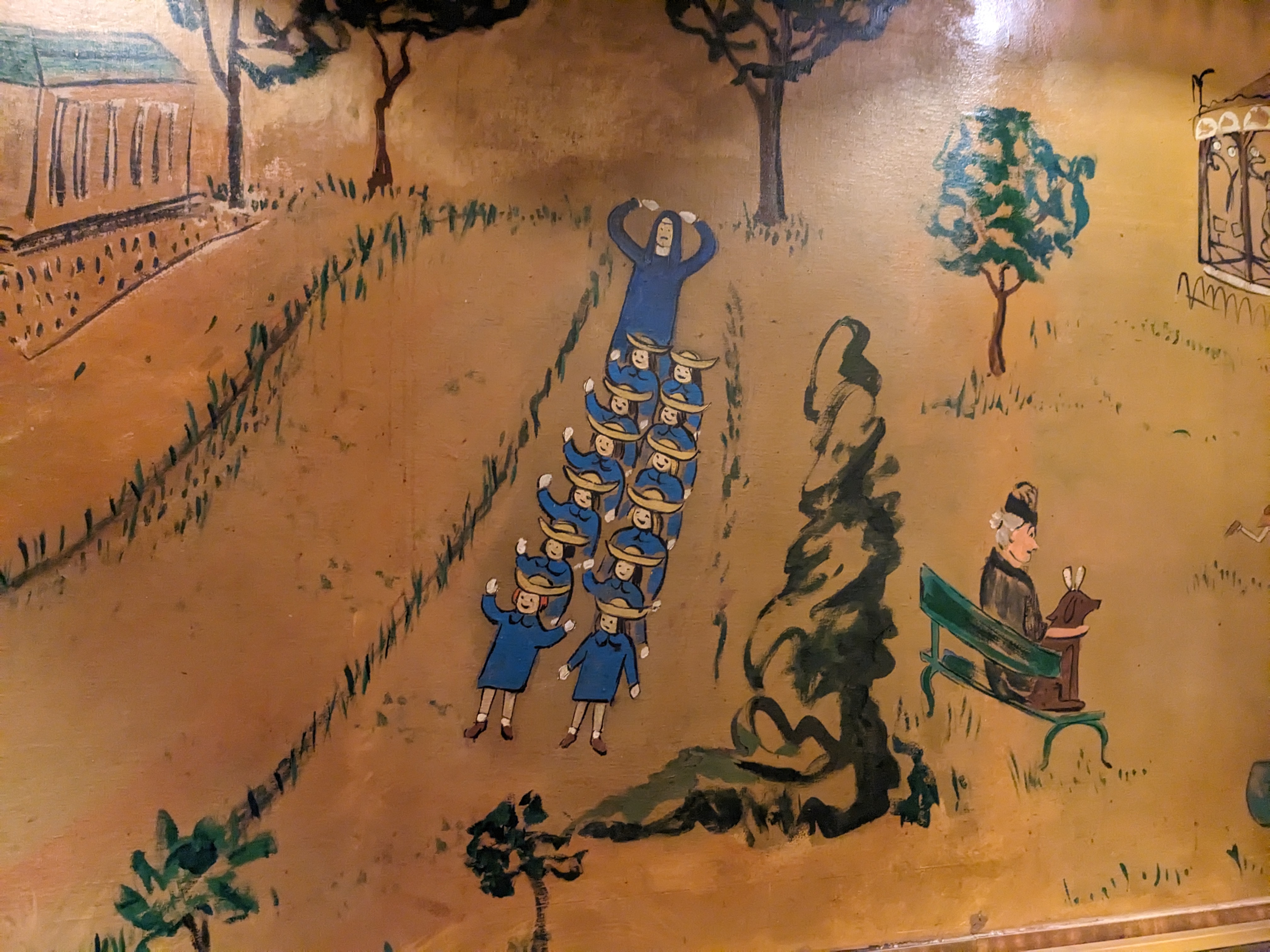
At the Carlyle Hotel in 1947, his brush wrapped an entire room. In exchange for eighteen months of suite accommodations for himself, Mimi, and Barbara, he painted the floor-to-ceiling murals of Bemelmans Bar, turning Central Park into a four-season panorama of ice-skating elephants, picnicking rabbits, and—tucked discreetly into one corner—Miss Clavel and her twelve schoolgirls.
While Central Park belonged to those uptown walls, his own neighborhood took center stage when he turned to oil painting in the 1950s. In December 1959, the Museum of the City of New York mounted the exhibition Bemelmans’ New York, featuring two large oils painted right on the square: Gramercy Park, Statue of Booth and Gramercy Park, Elevated, each measuring 39 by 31 inches. In his foreword to the collection, Bemelmans described placing a pot of white lilies on his windowsill overlooking the winter Park fence, framing Edmond T. Quinn’s bronze statue of Edwin Booth in the lower right corner of the canvas. Remembered through his home at No. 16, his club, and his statue at the center of the garden, Booth had become the still-life subject of another Gramercy artist.
The work that stayed
A final studio behind No. 15
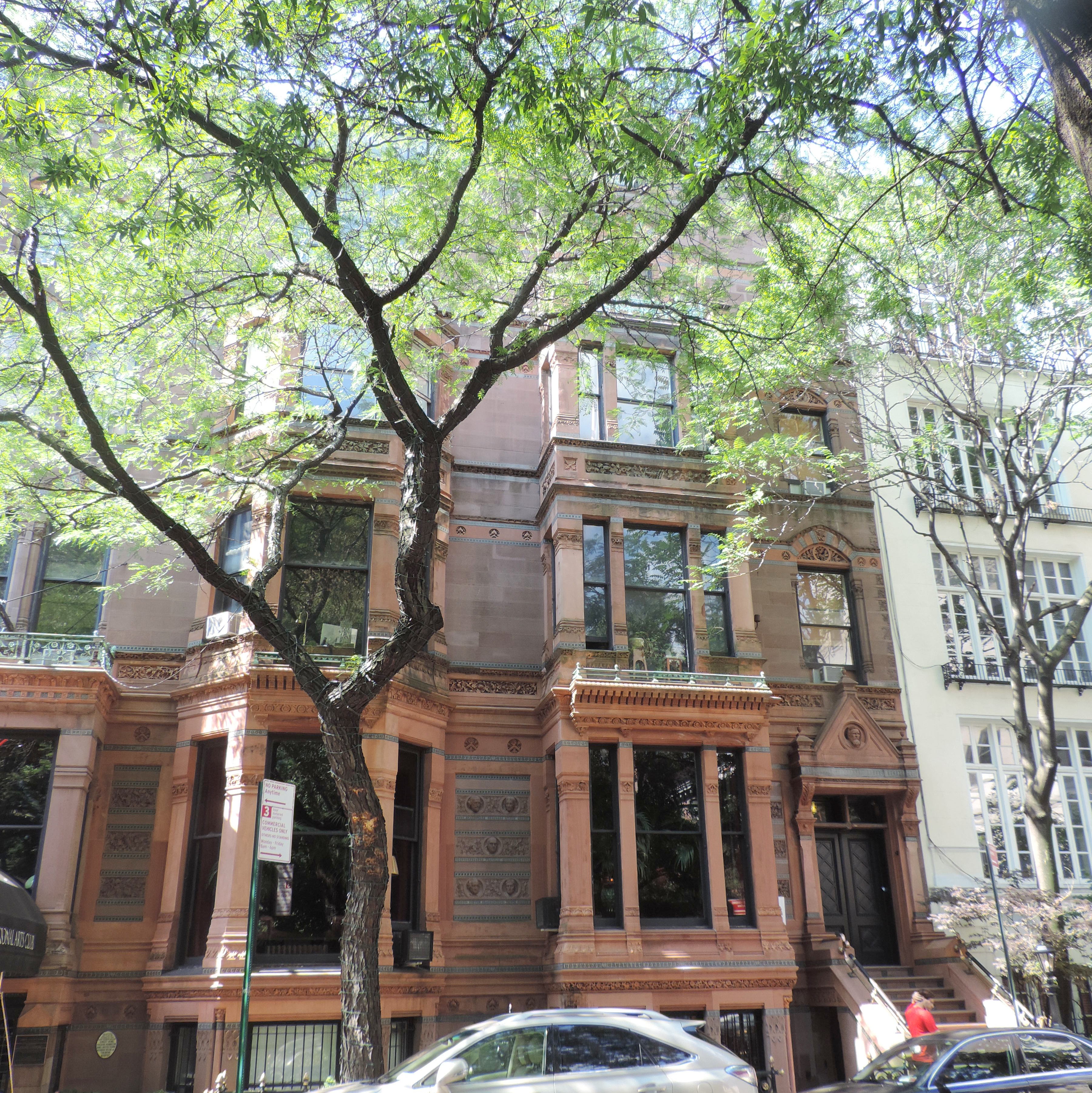
For his last New York home, Bemelmans returned to the south side of the Park. He took a working residential studio within the National Arts Club complex—located in the Club’s Studio Building at 119 East 19th Street, directly behind the Calvert Vaux mansion façade at 15 Gramercy Park South.
Even in the final months of his life, he kept working from the square. On August 5, 1962, writing to lyricist Alan Jay Lerner on stationery headed 15 Gramercy Park, he described plans to sail to Naples, stay in Capri, and bring printer’s proofs so they could “talk or just think.” For decades afterward, Barbara preserved the tools of his studio—his brushes, paints, hotel china, and Olivetti typewriter—like a room whose occupant might return at any moment.
“Tell Them It Was Wonderful”
Bemelmans died in his Gramercy Park studio-apartment on October 1, 1962, at the age of sixty-four, and was buried at Arlington National Cemetery in recognition of his World War I Army service. Years later, his grandson John Bemelmans Marciano wrote a biography of his grandfather and continued Madeline’s adventures for a new generation. In Gramercy, his neighborhood haunt gained a permanent marker in 1999, when the American Library Association unveiled a bronze Literary Landmark plaque outside Pete’s Tavern honoring both O. Henry and Ludwig Bemelmans.
Shortly before his death, Bemelmans wrote to his longtime Viking editor, Pat Covici, asking that his tombstone bear five words: “Tell Them It Was Wonderful.” It is a fitting benediction for an artist who found so much to celebrate right outside his door: a corner tavern table, an obstinate landlord, a bronze statue beyond the lilies, and Paris on the ceiling.
Around the Park · Places in the story
- 20 Gramercy Park South (southeast corner of Gramercy Park South and Irving Place): The Bemelmans family occupied most of the fifth floor, with chestnut leaves painted across the living-room walls. Barbara remembered a wartime lease dispute that she believed inspired Sunshine (1950). Read the history of Nos. 19–20.
- 26 Gramercy Park South (former Hotel Irving): Where the family lived around 1940 and which Bemelmans celebrated in his 1942 Vogue essay “Splendide Apartment.”
- Pete’s Tavern (129 East 18th Street at Irving Place): Two blocks south of the Park, where Bemelmans wrote the opening lines of Madeline on the back of a menu; commemorated since 1999 by a bronze Literary Landmark plaque beside the entrance.
- 15 Gramercy Park South / 119 East 19th Street (the National Arts Club & Studio Building): Where Bemelmans kept his final New York residential studio until his death on October 1, 1962.
Life at a glance
- Life
- April 27, 1898 (Meran, Austrian Tyrol) – October 1, 1962 (Gramercy Park, New York)
- Gramercy addresses
- 20 Gramercy Park South (fifth floor); 26 Gramercy Park South (Hotel Irving); 15 Gramercy Park South / 119 East 19th Street (National Arts Club Studio Building)
- Neighborhood haunt
- Pete’s Tavern, 129 East 18th Street at Irving Place
- Early trade & service
- Apprentice hotelier in the Austrian Tyrol; busboy and waiter at the New York Ritz-Carlton; U.S. Army hospital attendant in World War I
- Best-known works
- Madeline (1939) and its five sequels; Sunshine: A Story About the City of New York (1950); My War with the United States (1937); Hotel Splendide (1941); Bemelmans’ New York (1959); murals at Bemelmans Bar in The Carlyle (1947)
- Honors
- Caldecott Medal for Madeline’s Rescue (1954); Caldecott Honor for Madeline (1940); Newbery Honor for The Golden Basket (1937); ALA Literary Landmark at Pete’s Tavern (1999)
Sources cited
- Jane Bayard Curley, “Ludwig Bemelmans,” Society of Illustrators
- Madeline.com, official author biographies
- Madeline.com, “History”
- NPR, “At 75 She’s Doing Fine; Kids Still Love Their ‘Madeline’,” interview with John Bemelmans Marciano, October 11, 2013
- TIME, “Books: War Diary,” July 5, 1937
- New York City Board of Elections, Transcript of the Enrollment Books (1940), p. 41
- Ludwig Bemelmans, “Splendide Apartment,” Vogue, vol. 99 (1942), pp. 60–61
- Alfred and Joyce Pommer, Exploring Gramercy Park and Union Square (2015), chapter 3
- Museum of the City of New York, Bemelmans’ New York: An Exhibition of Paintings by Ludwig Bemelmans (1959), catalogue and artist’s foreword
- Publishers Weekly, “Madeline in New York: Ludwig Bemelmans at the New-York Historical Society” (2014)
- American Library Association, Caldecott Medal and Honor Books list
- American Library Association, 1999 Literary Landmarks
- Deborah L. Jacobs, “Madeline and the Family Business,” Forbes, November 27, 2013
- Arlington National Cemetery, Culture and the Arts: Ludwig Bemelmans
- The Eric Carle Museum of Picture Book Art, Madeline at 75: The Art of Ludwig Bemelmans
- Publishers Weekly, 1962 notice of Ludwig Bemelmans’s death
- Pushkin Press, Hotel Splendide
- Pushkin Press, Ludwig Bemelmans author biography
- Betsy Bird, “Spread a Little Sunshine: A Classic Returns and an Interview with Barbara Bemelmans,” School Library Journal, October 13, 2020
- New-York Historical Society, Sonnenberg Mansion interior photographs, PR 465: historical note
- University of Minnesota Libraries, “Sunshine: A Story About the City of New York,” The ABC of It exhibition
- American Library Association, Newbery Medal and Honor Books list
- Walter Sanders, Ludwig Bemelmans with Barbara and Toots, House and Garden, August 1, 1942; Condé Nast / Getty Images, 513857530
- Trent Morse, “Ludwig Bemelmans Captures the Thrilling Sight of Coney Island at Night,” 1stDibs, August 2, 2024
- Library of Congress, Ludwig Bemelmans Papers finding aid
- House & Garden, August 1942, the Bemelmans apartment; magazine scan, USModernist Library
- Ludwig Bemelmans, letter to Alan Jay Lerner from 15 Gramercy Park, August 5, 1962; manuscript photographs and transcription, Wittenborn Art Books / ZVAB
- University of Minnesota Libraries, Kerlan Collection, Sunshine (1950), original cover
Photographs & illustration credits
- Ludwig Bemelmans painting. LIFE photograph, photographer unidentified; reproduced by Nocloo.
- Sunshine: A Story About the City of New York (1950), pp. 6–7 and 12–13. Illustrations by Ludwig Bemelmans. Reproductions from the Thames & Hudson edition.
- Hotel Splendide (1941), dining-room illustration. Illustration by Ludwig Bemelmans; cover of the Pushkin Press edition. Text and illustrations © Ludwig Bemelmans LLC.
- Madeline (1939), cover illustration by Ludwig Bemelmans. Reproduction via Nocloo.
- Ludwig Bemelmans with Barbara and Toots, 1942. Walter Sanders / Condé Nast Archive via Getty Images. House & Garden, August 1942. Image 513857530.
- 19 Gramercy Park South, 2025. Ajay Suresh / Wikimedia Commons. Source · CC BY 2.0.
- Bemelmans Bar, The Carlyle, 2023. Murals by Ludwig Bemelmans; photograph by Ɱ / Wikimedia Commons. Source · CC BY-SA 4.0.
- National Arts Club façade, 2015. Jim.henderson / Wikimedia Commons. Source · CC BY 3.0.
- Barbara at the tufted banquette. Walter Sanders / Condé Nast via Getty Images. House & Garden, August 1, 1942. Image 513857528.
- The Bemelmans family, Vogue 1941. Roger Kahan / Condé Nast via Getty Images. Vogue, November 18, 1941. Image 512603464.
- The Gramercy living room. Walter Sanders / Condé Nast via Getty Images. House & Garden, August 1, 1942. Image 513857540.
- Bemelmans in the dining room. Walter Sanders / Condé Nast via Getty Images. House & Garden, August 1, 1942. Image 513857534.
- Sunshine: A Story About the City of New York, original cover, 1950. Illustration by Ludwig Bemelmans; Simon & Schuster. Kerlan Collection, Children’s Literature Research Collections, University of Minnesota Libraries. Collection record.