
George Bellows
The City’s Fury, the Park’s Light
1882–1925 · 146 East 19th Street · Home and studio, 1910–1925
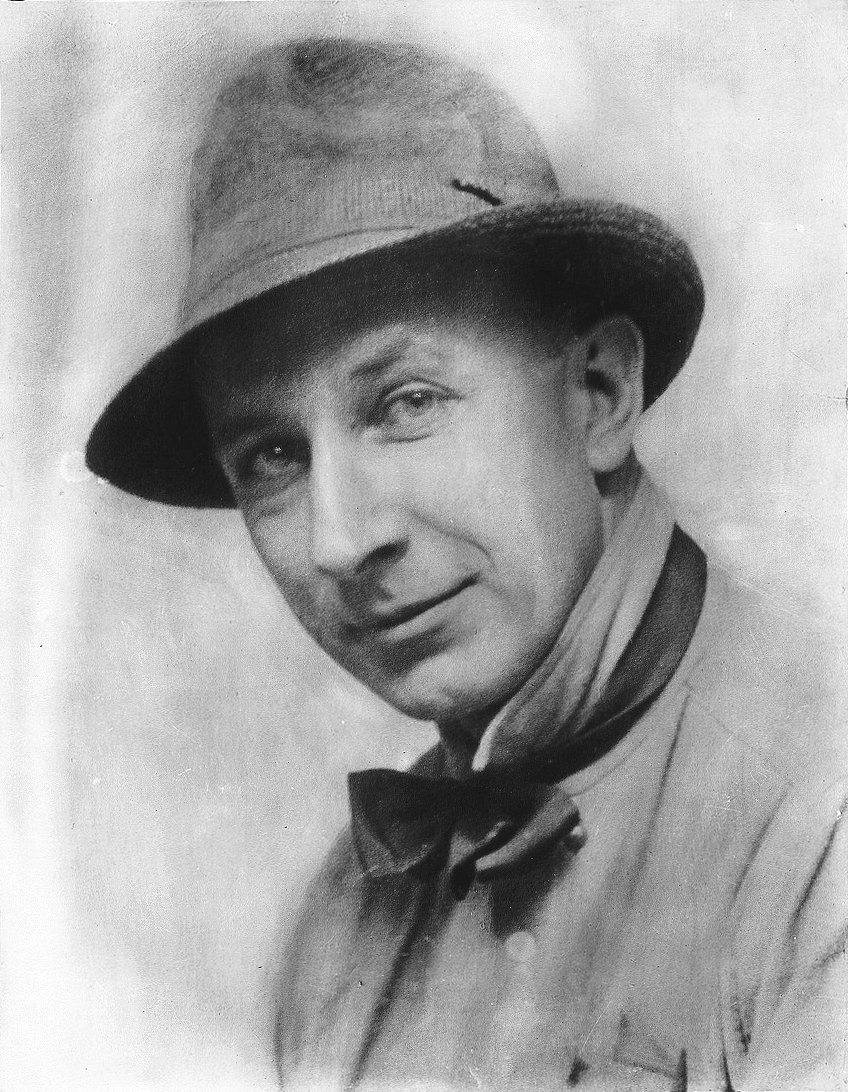
A life in Gramercy
A painter’s house around the corner
At 146 East 19th Street, George Bellows put his studio on the top floor. The family lived below, and a tenant helped make the household’s finances work. He had bought the red-brick house in 1910 with money borrowed from his father, then taken on much of the carpentry himself. When his wedding day arrived, Emma Storey had to retrieve her sawdust-covered groom from the work. Their reception took place around the corner at the National Arts Club, where he ordered coffee, cake, and ice cream.
The arrangement suited a man who moved readily between muscular work and an exacting eye. A few steps brought him to the Park; a few more to his teacher and friend Robert Henri at No. 10. Upstairs on East 19th Street, paintings and lithographs took shape in a household that also accommodated guests, arguments, two daughters, and the demands of a rapidly growing reputation. The city outside supplied boxing clubs, excavation pits, crowds, and waterfronts. The rooms inside supplied faces he returned to again and again.
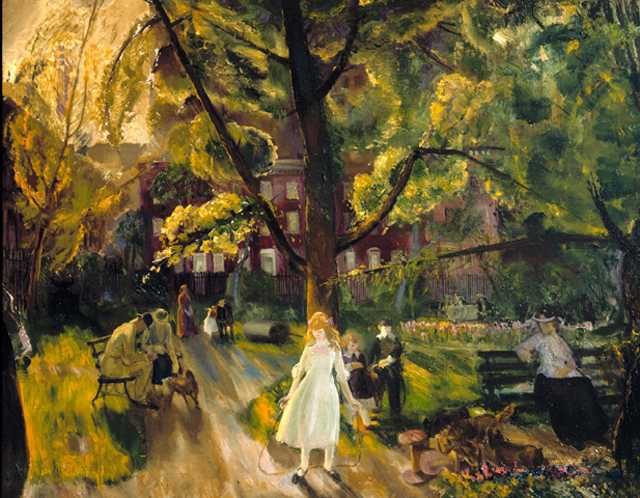
In 1920, he painted Gramercy Park. Children occupy the green interior of the square, with the fence and surrounding buildings holding the space together. His daughters belonged to this world. The picture’s warmth can seem far removed from the blows exchanged in Stag at Sharkey’s, but both depend on his attention to people in motion and to the place that contains them. Bellows could give a ring the force of a collision and a familiar park the fullness of a family afternoon.
He lived on East 19th Street for only fifteen years. By his death at forty-two, the house had become the center of a career that reached museums, illustrated magazines, radical journalism, and the expanding world of American printmaking. Gramercy holds the intimate scale of that achievement: a borrowed sum, a renovated house, a teacher nearby, children at play, and a studio above them all.
A shortstop looks toward New York
Sunday clothes and moving trains
“I arose surrounded by Methodists and Republicans,” Bellows said of his beginnings in Columbus, Ohio. He was born in 1882 to parents who were already well into middle age: his father, George, a builder, was fifty-five; his mother, Anna, was forty-three. The household’s expectations included the solemn observance of Sunday. A boy in his white suit could find that order restrictive, particularly when the world outside offered parades, trains, and other subjects with considerably more movement.
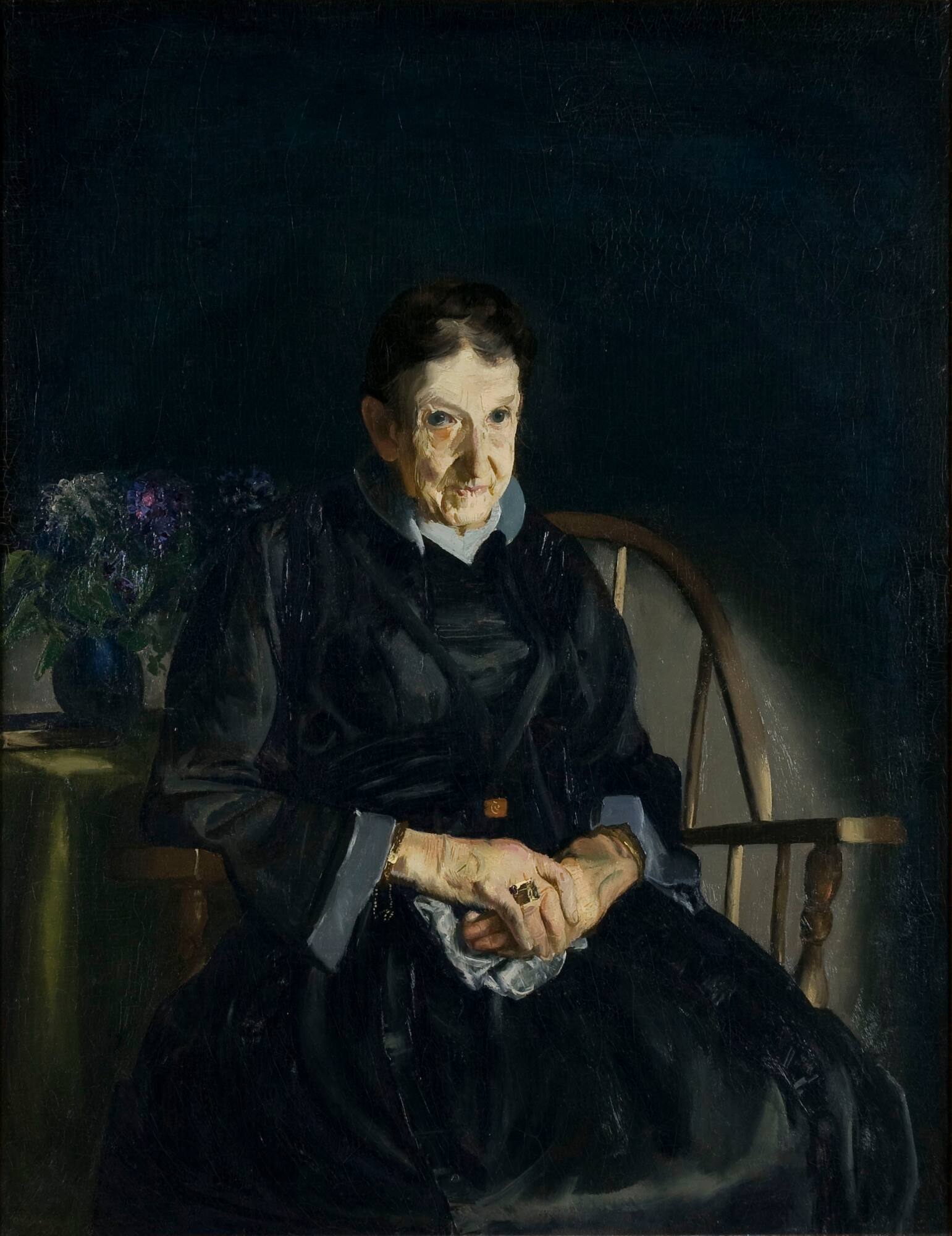
His Aunt Fanny encouraged his drawings. Steam locomotives and parades gave a child’s pencil plenty to pursue: wheels, smoke, advancing bodies, and the arrangement of a crowd. The attention would survive into an adult career, though its subjects grew more complicated. Bellows did not have to become a painter before he discovered the pleasure of putting visible action on paper. Family encouragement mattered because it allowed that pleasure to become a sustained activity rather than a diversion to be outgrown.
A college life in several directions
At Ohio State University, athletics competed seriously with art for his time. He was an accomplished baseball shortstop and a basketball player, while his drawings appeared in campus publications. The two pursuits required different kinds of practice, but both rewarded alertness and quick decisions. A player had to read a developing action and respond before the moment passed. An illustrator had to select the gesture that made an action recognizable. Bellows had reason to believe he could succeed at either.
The home of English professor Joseph Russell Taylor opened another part of his education. He encountered Walt Whitman, George Bernard Shaw, and ideas that placed human experience ahead of inherited respectability. Taylor offered the company of a cultivated household without requiring the young athlete to abandon his energy or curiosity. Books and conversation enlarged the possibilities of the life he might choose. Art could be an intellectual undertaking, an engagement with the world, and a way of working with his hands.
Leaving before the examinations
In 1904, Bellows left Ohio State without completing his degree. He skipped his junior-year final examinations and went to New York to become a painter. The decision was a wager on abilities that were still largely untrained. He had drawn for an audience and had the confidence of a successful athlete, but New York presented a different test. There were schools to enter, rent to pay, and artists against whose work his own would have to be measured.
He carried Columbus with him. His family’s support would later help buy the East 19th Street house, and Aunt Fanny would remain important enough to become the subject of a major portrait. The move east did not erase the older loyalties. It gave him a new place from which to understand them. In the crowded city, the habits and expectations of his childhood became material he could examine, sometimes with affection and sometimes with the pointed amusement of his remark about Methodists and Republicans.
Learning to paint the city’s force
A life begins in the classroom
Bellows found inexpensive lodging at the 57th Street YMCA and entered the New York School of Art. There he encountered Robert Henri, whose name had meant nothing to him before his arrival. “My life begins at this point,” Bellows later said. The force of the recollection lies in the suddenness of the discovery. A young man had come looking for instruction in painting and found a teacher who gave his own experience of the world a new importance.
Henri looked at Bellows’s polished, derivative drawings and asked whether he had seen them before. The question punctured a familiar ambition: to make a picture that looked convincingly like the fashionable work already in circulation. Bellows had absorbed the manner of illustrators such as Charles Dana Gibson. Henri wanted him to find something that could only come from his own looking. The correction was gentle in form and radical in consequence. Imitation could demonstrate ability, but it could not supply a reason for the picture to exist.
Baseball, roommates, and excavation pits
Life outside class remained energetic and improvised. Bellows organized baseball among the art students, whose circle included Edward Hopper and Rockwell Kent, and played semiprofessionally to help pay his way. He briefly shared quarters with the young Eugene O’Neill, another man still some distance from the work that would make his name. Friendship could mean company, argument, and the practical sharing of a roof. These associations began before success gave them the retrospective appearance of a distinguished artistic circle.
The building of Pennsylvania Station offered Bellows a subject on a scale equal to his appetite. In Pennsylvania Excavation and Excavation at Night, the making of the modern city appears as an immense disruption of the ground. Darkness, artificial light, machinery, and the depth of the pit turn construction into a demanding pictorial problem. He was not merely recording a new transportation project. He was finding a way to make its size, violence, and unfamiliar spaces felt on the surface of a canvas.
Two men at Sharkey’s
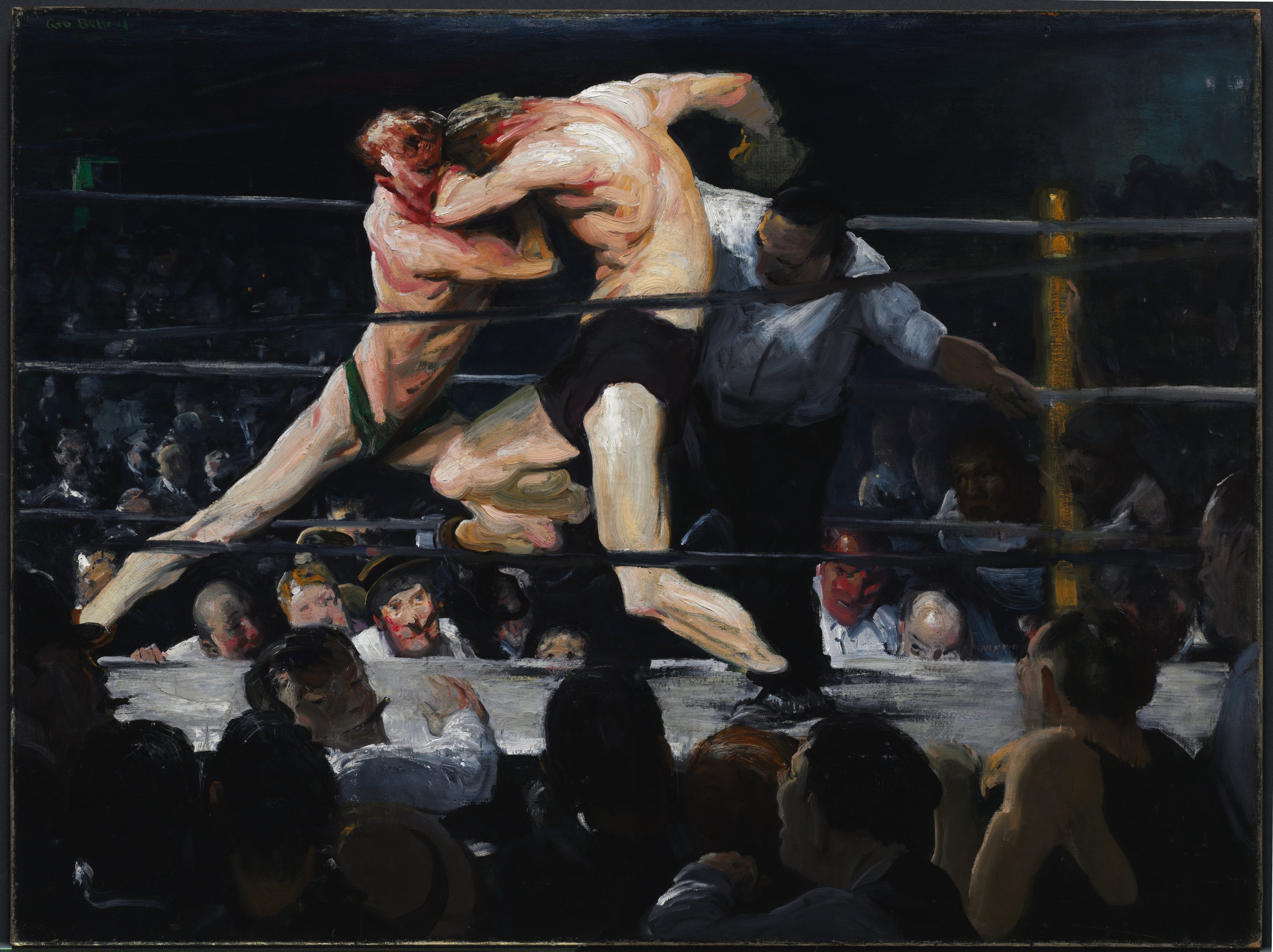
In Stag at Sharkey’s, painted in 1909, two fighters collide beneath the lights while spectators crowd the edge of the ring. The bodies are powerfully specific, but Bellows did not present himself as an expert on the sport. His interest was in the visible contest: weight, pressure, strained balance, and the audience’s appetite for what might happen next. The paint moves with the action, giving the picture a speed that a careful inventory of its parts would not explain.
The ring offered a compact version of the city he was learning to paint. Performers and spectators belonged to the same charged space, though they experienced its risks differently. The audience’s faces make looking itself part of the subject. This was the younger painter’s own answer to Henri’s teaching: an observed New York scene, transformed by selection and invention into something more forceful than a straightforward report. By the end of the decade, Bellows had a public identity as an artist, and it had little resemblance to the borrowed elegance of his student drawings.
Sawdust on the wedding day
A courtship with a determined painter
Emma Louise Storey was an art student with ambitions and a judgment of her own. Bellows courted her for five years. His declaration that he would marry her “or bust” has the bravado of a young man accustomed to throwing himself into a contest, but the long courtship suggests that Emma’s agreement was not something he could simply assume. Their marriage would place a capable, independent partner at the center of a household in which work and family life were closely joined.
By 1910, he could offer more than promise. He became an instructor at the Art Students League and entered the first group of Artist Life Members at the National Arts Club. His painting Summer City became part of the club’s collection through that membership. The recognition gave him a place in an institution whose Gramercy home stood near Henri’s studio. A neighborhood that had been important through a teacher and friends was becoming a practical setting for his own adult life.
Ten thousand dollars and a set of tools
Bellows borrowed ten thousand dollars from his father to buy 146 East 19th Street. The three-story red-brick house stood on the stretch later celebrated as the Block Beautiful, close to Gramercy Park South. Its scale made a mixed arrangement possible: a tenant on the ground floor, the family on the second, and a large studio and gallery above. Rent could support the household, while the upper floor gave the painter a room suited to ambitious work.
He undertook carpentry and alterations himself. The builder’s son was willing to make the house usable with his own labor, and the project competed with preparations for the wedding. On September 23, 1910, Emma had to fetch him from the house, where he was still working in sawdust. The episode belongs to the particular comedy of their marriage: the man preparing a home could become so absorbed in the preparation that he needed reminding to attend the ceremony that would bring the household into being.
A reception around the corner
They were married in a church in the Bronx and celebrated at the National Arts Club. Bellows chose coffee, cake, and ice cream for the reception. The modest menu has outlasted many more elaborate wedding arrangements in the neighborhood’s memory. It fits the beginning of a household in which a large financial commitment had already gone into the house and studio. The club offered friends, familiar surroundings, and a setting associated with the professional life he was building.
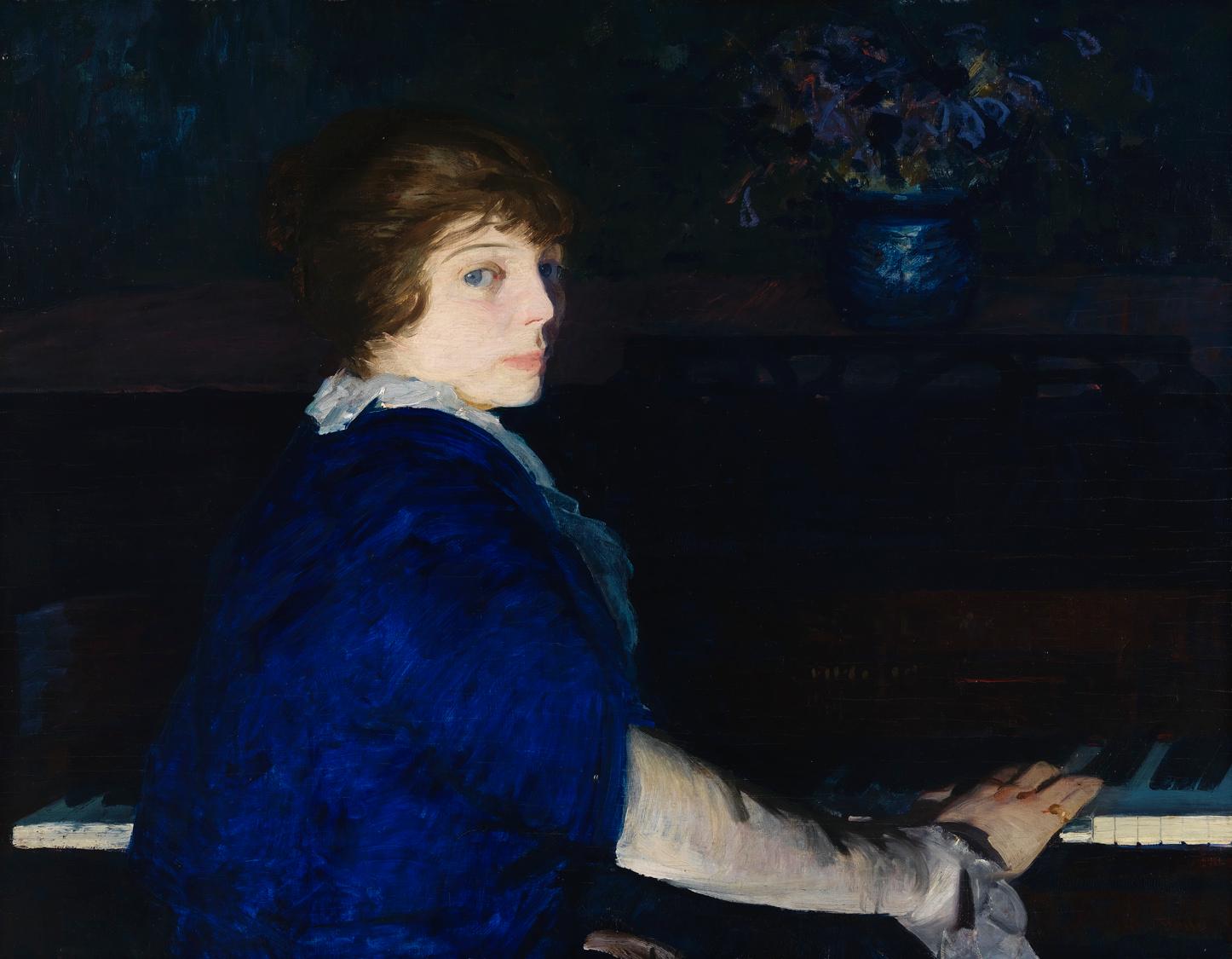
Marriage did not make him instantly domestic in every habit. After an early disagreement, he telephoned Leon Kroll with the dramatic announcement that he was coming back. The story is comic because he did not abandon the shared life taking shape on East 19th Street. Emma became a frequent subject of his paintings, and the home became indispensable to his working routine. Its rooms would hold the quieter subjects through which a painter famous for public spectacle explored concentration, affection, and the changing presence of his family.
The house fills with arguments
Guests below the studio
The house on East 19th Street made room for sociability as well as work. Henri, O’Neill, and Leon Kroll belonged to a widening circle that also included Gertrude Vanderbilt Whitney and Emma Goldman. A dinner could bring together people whose common interest in art concealed sharp differences about politics and public responsibility. Bellows enjoyed vigorous company. His own opinions were energetic, sometimes inconsistent, and seldom protected from challenge by the people around him.
The vertical arrangement of the house kept professional and domestic life close. He could move from the family floor to the studio without crossing the city, yet the top floor remained a distinct workplace. Pictures in progress, visiting artists, and the business of exhibiting entered the same address in which Emma managed a household and the children grew. The house was a practical answer to success: it gave a busy painter space while keeping the people who mattered to him within ordinary reach.
Teaching beyond the art academy
Bellows joined Henri and Sloan in teaching at the Ferrer Modern School. Associated with Emma Goldman and a broader movement for independent education, the school offered an alternative to instruction governed by conventional authority. Working people and younger students could encounter artists who took their efforts seriously. Bellows brought to this setting the conviction he had acquired in Henri’s classroom: the ability to see and to make a drawing was not reserved for people already admitted to a professional circle.
He also contributed to The Masses, the radical magazine associated with Max Eastman and John Sloan. A drawing printed in a periodical reached readers in a different way from a canvas on a gallery wall. It could intervene in an argument about work, poverty, violence, or power. The page required compression and directness, skills his early experience as an illustrator had helped develop. His involvement placed him among artists for whom the freedom to make pictures included the freedom to criticize the society paying for them.
Hammering at the Armory
In 1913, Bellows helped prepare the International Exhibition of Modern Art at the 69th Regiment Armory. The work included the unglamorous business of making an exhibition physically possible: handling, hanging, and arranging an enormous body of material. Some thirteen hundred works brought American art into the company of European painting and sculpture that startled many visitors. The carpenter who had worked on his own house could be useful in an exhibition hall as well as in the studio.
Bellows exhibited his own work and encountered the challenge of European modernism at close range. The event did not convert him into a painter who abandoned recognizable people and places. It widened the questions he was willing to ask about composition, color, and the construction of a picture. Henri worried about American painters being overshadowed; Bellows could share the excitement of the encounter without ceasing to be himself. The Armory’s upheaval entered a career still growing, with experiments to make and no reason to settle prematurely into a fixed manner.
Black ink and a green square
Another way to make the image travel
Bellows began working seriously in lithography in 1916. Drawing on stone offered a new range between a quick line and a dense field of black. With the help of skilled printers, including George C. Miller and later Bolton Brown, he developed a substantial body of prints. A press in the East 19th Street studio made the medium part of his working life. Nearly two hundred lithographs would carry his subjects into multiple impressions, each one an original print rather than a reproduction of a painting.
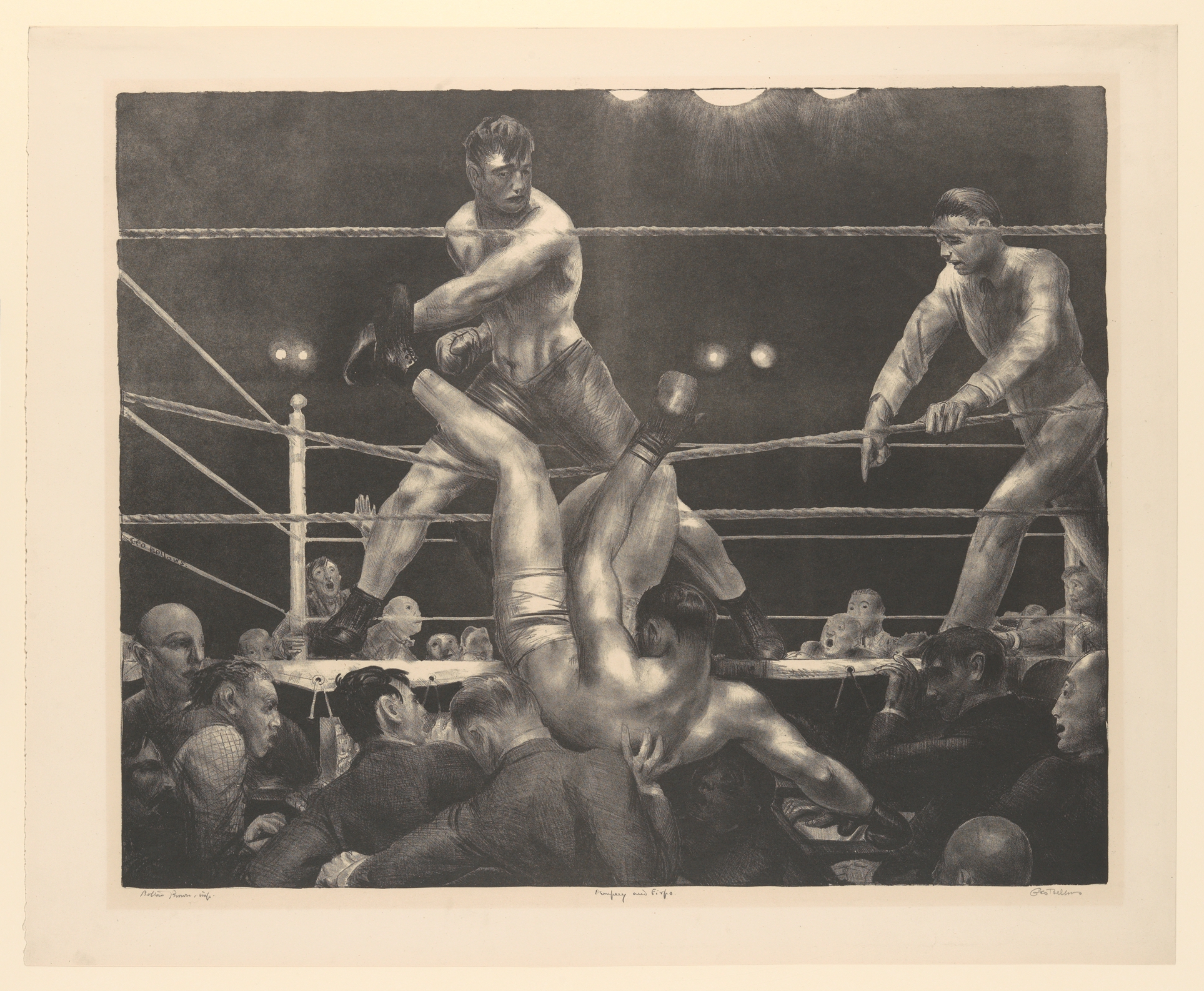
Boxing returned in this form, including A Stag at Sharkey’s and the 1924 Dempsey and Firpo. The latter caught a celebrated contest in an image whose movement reaches beyond the ropes. Other prints made a more openly accusatory use of his command of bodies and crowds. The Law Is Too Slow confronted racial terror and lynching. The medium could hold an athletic spectacle or force a viewer to face brutality. Its relative portability gave these images a life beyond the single wall on which a canvas might hang.
A patriot for beauty
The First World War tested friendships and political commitments within Bellows’s circle. He called himself “a patriot for beauty” and described democracy as “the Big Idea.” These declarations did not resolve every conflict between his enthusiasm for democratic ideals, his response to the war, and his loyalty to friends who opposed it. He defended freedom of expression and stood by people, including the embattled editors of The Masses, whose positions exposed them to official hostility.
His wartime pictures also drew on reports of German atrocities, giving terrible events a forceful and sometimes theatrical form. They belong to the same difficult history as his defense of dissent. Bellows could condemn cruelty, support the Allied cause, and resist the silencing of antiwar friends without making those positions into a seamless program. The work is more revealing when the tensions remain visible. He approached public life with the urgency of a painter who wanted to act, even when action left contradictions behind.
Anne and Jean inside the gates
Anne was born in 1911 and Jean in 1915. By 1920, the girls were part of the ordinary life of Gramercy Park, where their father could watch children play in a space enclosed by trees and familiar buildings. His Gramercy Park, painted that spring, places childhood activity within the square’s sheltered interior. Anne appears prominently in white, with Jean behind her in purple. The scene belongs to a family’s knowledge of a place, accumulated through repeated visits rather than a single spectacular event.
The painting gives the Park an inhabited warmth. Figures move through the green, the surrounding architecture remains present, and the fence marks a boundary without dominating the scene. Here Bellows’s appetite for movement finds a gentler subject. The same painter who understood the crowd around a ring could attend to children occupying their own small public world. From his house nearby, the distance to this subject was short. Familiarity gave him something that a distant expedition could not: the chance to watch the place change as his daughters grew.
A full studio, an unfinished life
Another house, another landscape
In his final years, Bellows divided his time between East 19th Street and Woodstock, New York, where he built another house. The move into the country did not replace his urban identity. It added landscapes, neighbors, and a different pace of family life to an already varied practice. Portraits, prints, boxing pictures, and rural scenes could coexist in the work of a painter still willing to change the terms of a composition and test a new arrangement of color.
National recognition made these years look like the beginning of a long maturity. Museums and collectors knew his work, younger artists knew his name, and he had the facilities and experience to pursue ideas at scale. The Gramercy house remained a New York base. Its rooms had acquired the density of fifteen years of living: a marriage, children, visitors, paintings, and the equipment of printmaking. Nothing in that accumulated activity suggested that the career was approaching its last winter.
January at Calvary
A ruptured appendix brought the end abruptly. Bellows died at Post-Graduate Hospital on January 8, 1925, aged forty-two. Emma was left with Anne and Jean, and with the work of preserving and presenting a career that had stopped while its possibilities still seemed open. For his friends, the loss was difficult to reconcile with the physical energy they associated with him. The painter who had played ball, carried tools, and filled a studio with activity had become the subject of a funeral.
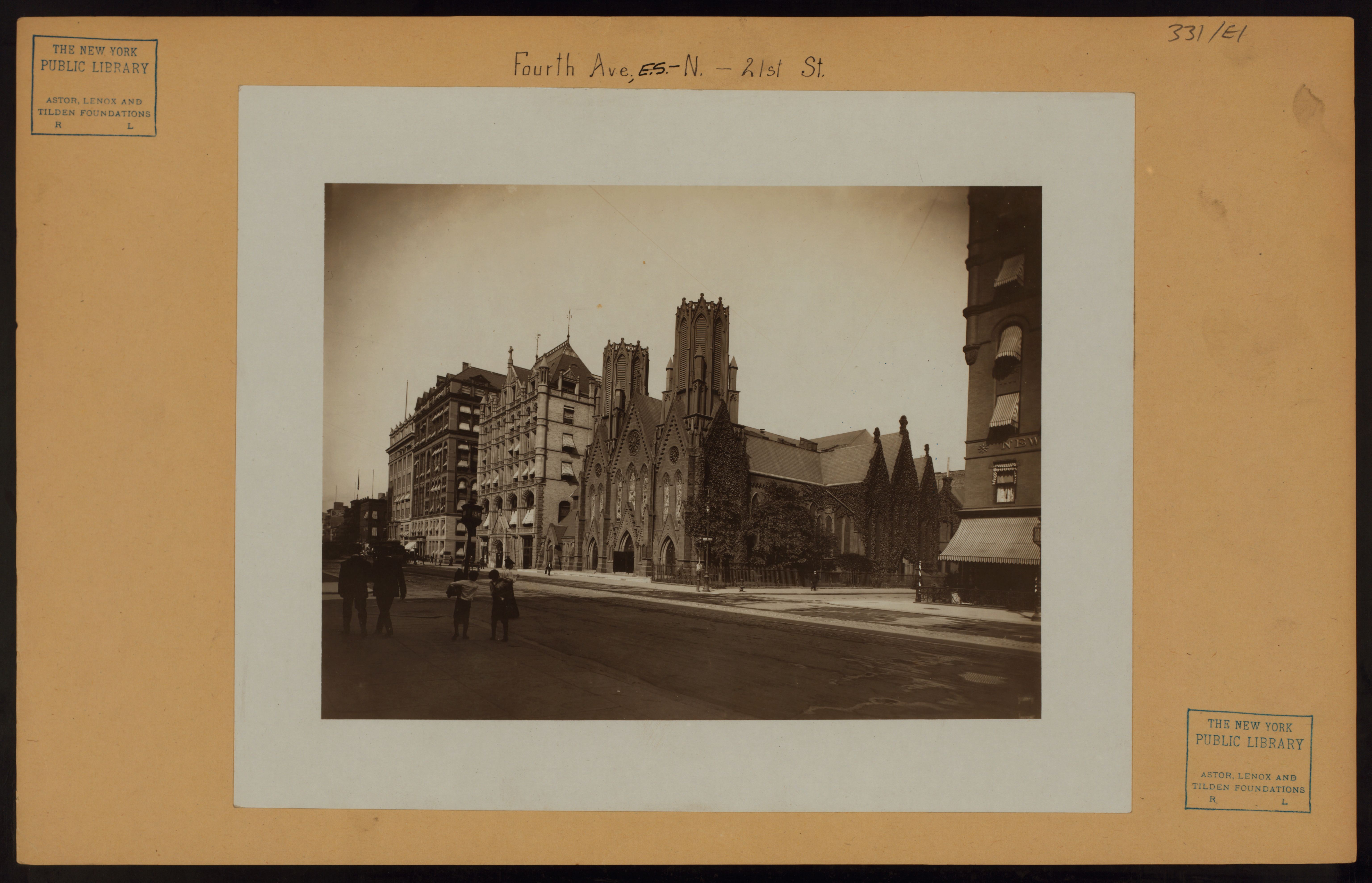
The service was held at Calvary Episcopal Church, on Fourth Avenue at East 21st Street, just northwest of Gramercy Park. Henri, O’Neill, Sloan, Glackens, and Kroll were among the pallbearers. The church filled with mourners from overlapping parts of his life. The neighborhood’s short distances now connected the house to a place of public grief. Henri accompanied a former pupil who should have had years of work ahead of him.
What remained on the walls
The Metropolitan Museum of Art held a memorial exhibition in the autumn of 1925. A career that had developed with extraordinary speed could now be seen as a body of work: the early urban subjects, portraits of family and friends, landscapes, and the pictures that had made his name. The exhibition necessarily presented an ending that the painter had not chosen. Viewers could measure what he had done, but the direction of the next paintings remained unavailable.
On East 19th Street, the house fixes that achievement to a modest stretch of the city. At the National Arts Club, Summer City preserves his connection to an institution that welcomed him at the time of his marriage. And in Gramercy Park, the family’s familiar square remains full of children and spring light. These are fitting neighbors to the famous boxing pictures. They keep Emma, Anne, Jean, and the rooms above East 19th Street within the story of a painter too easily remembered only for the force of his blows.
Places, people & connections
Around the Park
The National Arts Club
Bellows became an Artist Life Member in 1910 and celebrated his marriage to Emma here. His Summer City remains in the collection.
Robert Henri
The teacher who transformed Bellows’s ambitions became a close friend and neighbor.
10 Gramercy Park South
Henri and Marjorie Organ’s top-floor studio was a short walk from the Bellows house on East 19th Street.
The Players
The theatrical and literary clubhouse stood near the Bellows household within Gramercy’s circle of artistic institutions.
Calvary Church
Family, artists, and friends gathered here for Bellows’s funeral in January 1925.
Samuel B. Ruggles
Ruggles’s plan created the Park and surrounding streets that became the setting of the Bellows family’s New York life.
Life at a glance
The biographical record
| Born | August 12, 1882 · Columbus, Ohio |
|---|---|
| Died | January 8, 1925 · New York City |
| Gramercy Park address | 146 East 19th Street · home and top-floor studio; National Arts Club, 14–15 Gramercy Park South |
| Years in the neighborhood | 1910–1925 |
| Vocation | Painter, lithographer, illustrator, and teacher |
| Spouse & family | Emma Louise Storey, married September 23, 1910; daughters Anne, born 1911, and Jean, born 1915 |
| Key institutions & works | New York School of Art; Art Students League; National Arts Club; The Masses; Armory Show; Stag at Sharkey’s (1909); Gramercy Park (1920); Dempsey and Firpo (1924 lithograph) |
Over time
Born in Columbus
Family encouragement and a talent for drawing precede his years at Ohio State.
Henri’s classroom
Bellows moves to New York and enters the New York School of Art.
Stag at Sharkey’s
His boxing canvas makes the collision of bodies and spectators an enduring New York image.
A Gramercy household
He marries Emma Storey, buys 146 East 19th Street, and joins the National Arts Club as an Artist Life Member.
The Armory Show
Bellows helps organize and exhibits in the International Exhibition of Modern Art.
Drawing on stone
He begins a sustained practice of lithography, working with master printers.
Gramercy Park in spring
He paints the square in which Anne and Jean play.
A sudden end
He dies on January 8; Calvary hosts his funeral and the Metropolitan Museum mounts a memorial exhibition.
Sources cited
- Carole Klein, Gramercy Park: An American Bloomsbury (Boston: Houghton Mifflin, 1987): Bellows, Emma, the East 19th Street household, and the neighborhood’s artistic circle.
- Stephen Garmey, Gramercy Park: An Illustrated History of a New York Neighborhood (New York: Balsam Press, 1984): the Block Beautiful, the National Arts Club, and Gramercy’s artists.
- Charles H. Morgan, George Bellows: Painter of America (New York: Reynal & Company, 1965): family, education, friendships, artistic practice, and final years.
- Charles Brock, ed., George Bellows (Washington, D.C.: National Gallery of Art, in association with DelMonico Books/Prestel, 2012), exhibition catalogue; see also the Metropolitan Museum exhibition.
- Smithsonian American Art Museum, George Bellows: artist biography and collection works.
- Association of American Painters and Sculptors, International Exhibition of Modern Art (New York, 1913).
- Cleveland Museum of Art, Stag at Sharkey’s, 1909, accession 1922.1133: painting, collection history, and exhibition information.
- Christie’s, Gramercy Park, American Paintings sale, November 27, 2002, lot 94: date, provenance, and identification of Anne and Jean in the painting.
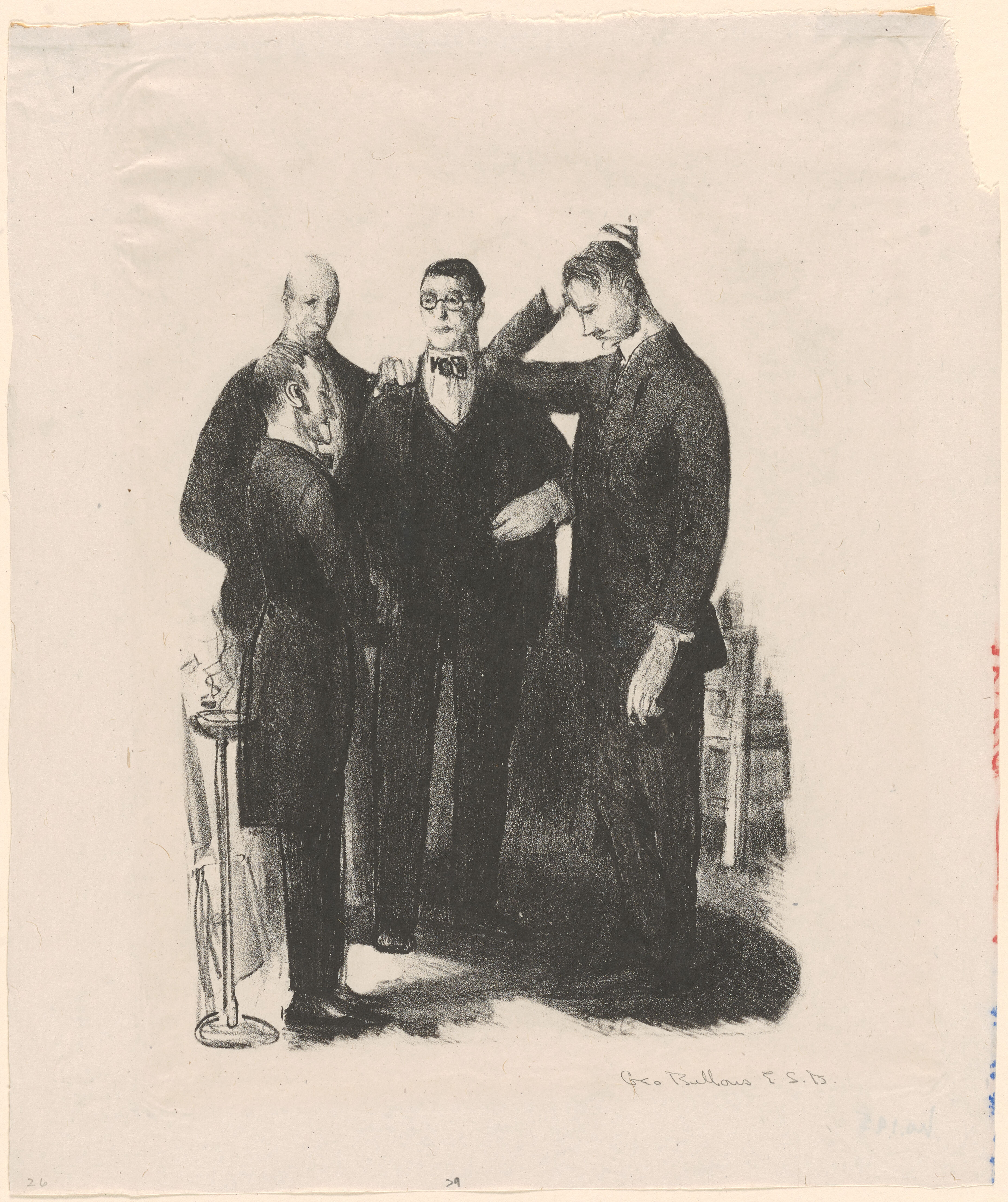
- Boston Public Library, Print Department, Four Friends, 1921, accession 1941.1.57: print and identification of the four artists.
- The Metropolitan Museum of Art, Memorial Exhibition of the Work of George Bellows (New York, 1925).
Photo credits for this page
- George Bellows, ca. 1900. Peter A. Juley & Son. Photograph Archives, Smithsonian American Art Museum. Wikimedia Commons source record. Public domain.
- Gramercy Park, May 1920. George Bellows, oil on canvas, private collection. Digital image from the George Bellows Catalogue Raisonné, compiled by Glenn C. Peck, H. V. Allison & Co. Image and collection record. Public-domain artwork.
- Aunt Fanny, 1920. George Bellows, oil on canvas. Des Moines Art Center Permanent Collections; purchased with funds from the Edmundson Art Foundation, Inc., accession 1942.1. Collection image via Wikimedia Commons. Public-domain artwork.
- Stag at Sharkey’s, 1909. George Bellows, oil on canvas. The Cleveland Museum of Art, Hinman B. Hurlbut Collection, accession 1922.1133. Collection record and image. Cleveland Museum of Art Open Access, CC0.
- Emma at the Piano, 1914. George Bellows, oil on panel. Chrysler Museum of Art, Norfolk, Virginia; gift of Walter P. Chrysler, Jr., accession 71.617. Collection image via Wikimedia Commons. Public-domain artwork.
- Four Friends, 1921, first state. George Bellows, lithograph. Boston Public Library, Print Department; gift of Albert H. Wiggin, accession 1941.1.57. Digital Commonwealth collection record. Public domain.
- Dempsey and Firpo, 1923–1924. George Bellows; printer Bolton Brown; lithograph. The Metropolitan Museum of Art, Harris Brisbane Dick Fund, 1925, accession 25.8.2. Collection record. Met Open Access, CC0.
- Calvary Church, 1906. Brown Brothers. The New York Public Library, Irma and Paul Milstein Division of United States History, Local History and Genealogy; digital ID 708211F. Digital Collections record. Public domain.