
Carl Van Vechten
The Salon Above East Nineteenth Street
1880–1964 · 151 East 19th Street · Top-floor apartment, 1914–1920s
A life in Gramercy
Chinese red, with gold dots
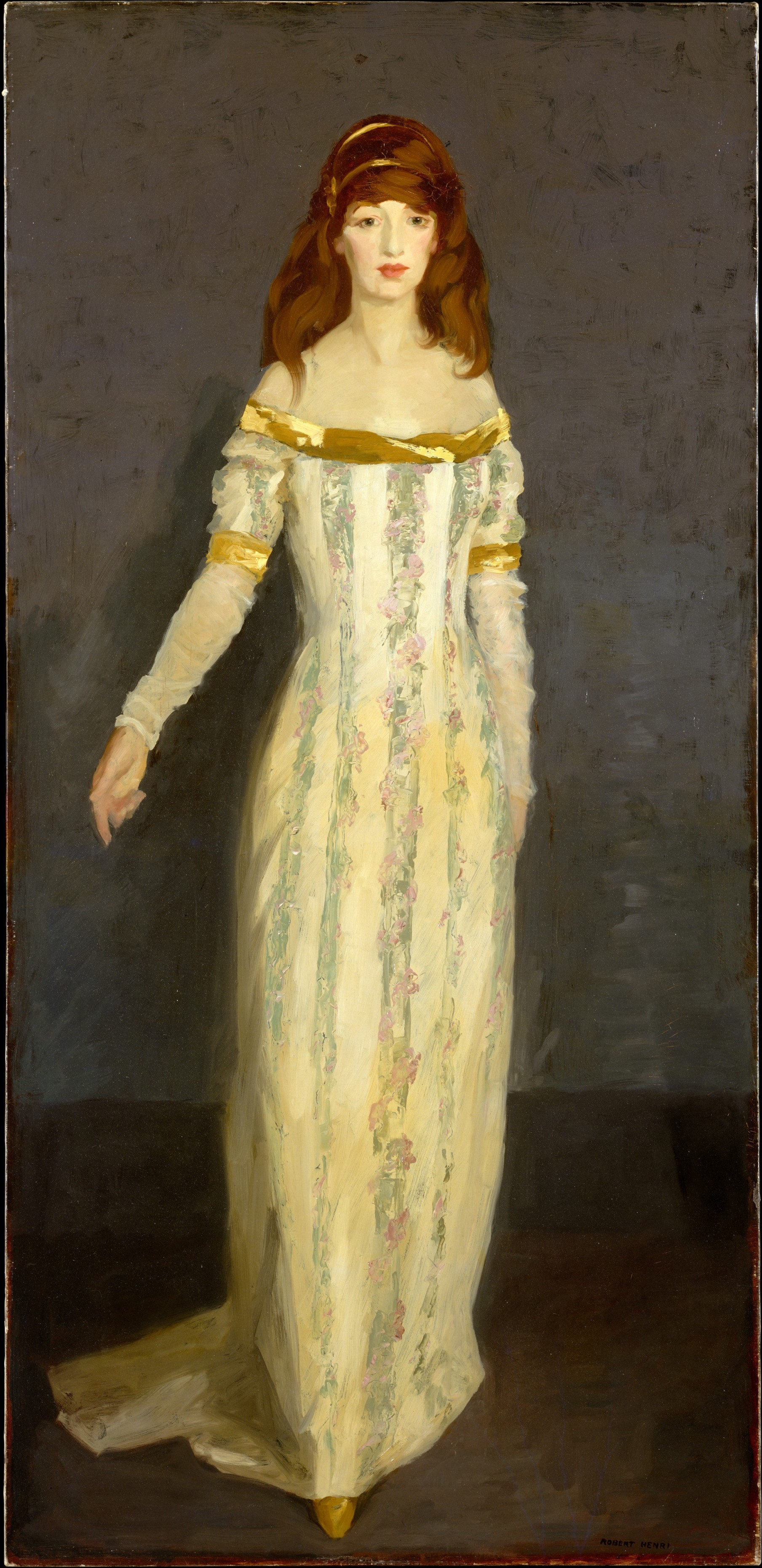
At the top of 151 East 19th Street, Carl Van Vechten and the actress Fania Marinoff had a drawing room papered in Chinese red with gold dots. Across the street, George and Emma Bellows lived at No. 146; close by stood Robert Winthrop Chanler’s exuberant House of Fantasy at No. 147. A visitor to the Van Vechtens entered a household whose host’s stationery offered a useful introduction: “A little too much is just enough for me.” The color scheme was entirely in keeping.
Van Vechten brought several kinds of New York into that apartment. He had written about opera and modern dance, made friends among painters, and learned to hear the city beyond its established concert halls. During the 1920s, fiction made him famous, while his parties brought Black and white writers, singers, actors, and musicians into the same rooms. The address belongs to a period when his work as a critic, his appetite for company, and his new career as a novelist were difficult to separate.
A third career followed with a camera. The man who had introduced performers to readers began making portraits of the performers themselves, and eventually helped preserve the papers of Black writers at Yale. His enthusiasms could be generous, intrusive, perceptive, and controversial. The East 19th Street salon offers a place to begin following them: a particular apartment, in a neighborhood of artists, from which his friendships and interests reached far beyond the Park.
Escape from Cedar Rapids
An impatient Iowan
Carl Van Vechten was born in Cedar Rapids, Iowa, on June 17, 1880. His parents brought an unusual degree of racial respect into the daily conventions of their household. They addressed their Black laundress and gardener as “Mrs.” and “Mr.,” and helped support a school for Black children in Mississippi. These were concrete practices, visible to a child at home. His later friendships with Black artists developed in a much larger world, but that childhood furnished an early example of taking people seriously across the prevailing racial boundaries.
For all that he received there, he felt out of place in Cedar Rapids. “There was no one quite like me in Cedar Rapids; I couldn’t wait to get out,” he recalled. The impatience in that sentence survived the departure. Throughout his working life he moved toward unfamiliar music, new performers, and people whose work had not yet secured an established audience. Leaving Iowa gave him access to those encounters; it also supplied a lasting point of comparison for the cities that followed.
A wider musical education
At the University of Chicago, from which he graduated in 1903, his education extended into the city’s musical life. He heard European modernists at the Chicago Symphony and ragtime in South Side clubs. The range matters. Concert music and popular performance were both part of his listening before he became a New York critic. He could be interested in the formal demands of a composition and in the force of an individual performance, without expecting either kind of music to answer all the questions raised by the other.
Newspaper work gave this appetite an occupation, though not a secure one. In 1906 the Chicago American dismissed him after he wrote about the “clothes horses” at a horse show instead of the show horses. The assignment called for one subject; his attention had settled on another. The incident reads almost like an advance notice of the novelist who would later make social display his material. At the time it meant losing a job, and he answered the setback by heading for New York.
The city became the object of an attachment he expressed without much critical distance: “I shall never be able to do New York justice. I love her too much.” He arrived in 1906 with a university education, newspaper experience, and musical interests that already crossed conventional divisions. Within a few years, opera houses, dance performances, magazine offices, and private gatherings would give those interests a much wider field. The future resident of East 19th Street first established himself by paying attention to what happened on a stage.
Learning to Read a Performance
Opera, scandal, and the newspaper
From 1906 to 1913, Van Vechten worked at The New York Times as assistant music critic to Richard Aldrich, with a period as Paris correspondent in 1908–1909. The job placed him within the routines of professional criticism: performances had to be attended, judgments formed, and copy delivered. Paris enlarged the field. His early career was already moving between the city he loved and the European musical culture that supplied so much of its repertory, as well as many of its arguments.
In January 1907, Theodore Dreiser hired him to cover Richard Strauss’s Salome for Broadway Magazine. The Metropolitan Opera production became a scandal, and J. P. Morgan forced its cancellation after the first performance. For a young critic, the episode exposed how quickly an artistic event could become a struggle over the limits of what an audience should be allowed to see. Van Vechten’s subject was the work onstage, but the people who financed and governed the institution helped determine whether that work would stay there.
The dancer and the person behind the work
By 1910 he was helping establish modern dance as a subject for sustained American criticism. He covered Anna Pavlova’s midnight debut at the Metropolitan and Isadora Duncan’s recitals, attending to performers whose bodies carried the argument of their art. Duncan also belonged to the less formal world he observed: her impromptu nude dance for the conductor Walter Damrosch at the Plaza entered the store of incidents surrounding her public career. In Van Vechten’s experience, a performer’s life did not stop at the edge of the stage.
His “Monday Interviews” made room for conversation as well as judgment. The essays later collected in Interpreters in 1917 preserve the central place of performance in his thinking: a work reached its audience through someone’s voice, body, or instrumental skill. That interest in the individual interpreter continued when he changed occupations. The novelist would watch people in company, and the photographer would study a sitter before a camera. The critic had already learned to look closely at the person through whom an artistic experience took form.
At Mabel Dodge’s gatherings on Washington Square, he came to know painters including Robert Henri and George Bellows. The friendships connected the performing arts to the visual arts, and soon to his own neighborhood. In Paris in 1914 he formed a lasting friendship with Gertrude Stein. She eventually named him her literary executor, a responsibility extending far beyond the excitement of a first encounter. By the time he settled on East 19th Street, he had begun several of the relationships that would shape the rest of his life.
A Little Too Much
Even the jail cell had visitors
Van Vechten’s domestic history included an unhappy first marriage to Anna Elizabeth Snyder and a four-month confinement in Ludlow Street Jail over unpaid alimony. He met that interruption with an extraordinary effort to make himself comfortable. Flowers, Turgenev novels, and a piano transformed the cell into something closer to a private salon. The newspaper headline “CARL VAN VECHTEN HAPPY IN JAIL” caught the incongruity. Confinement remained confinement, but the familiar pleasures of reading, music, and company followed him inside.
The episode is revealing without needing to be made into a triumph. A financial and marital obligation had put him in jail; his response furnished a story that could circulate independently of the trouble that caused it. This combination of difficult private circumstances and memorable public performance would recur in his reputation. The flowers and piano were tangible details, easy to retell. They also suggest how closely his idea of a tolerable daily life was bound to books, music, and the arrangements of a room.
Fania and the top-floor apartment
In October 1914 he married the Russian-born actress Fania Marinoff. Their top-floor apartment at 151 East 19th Street became a setting for a long marriage and an expansive social life. Marinoff brought her own theatrical profession into the household; the salon was the home of an actress as well as a critic. Its Chinese-red wallpaper, dotted with gold, gave the principal room a distinctive character. Van Vechten’s stationery motto, “A little too much is just enough for me,” could hardly have found a more suitable domestic address.
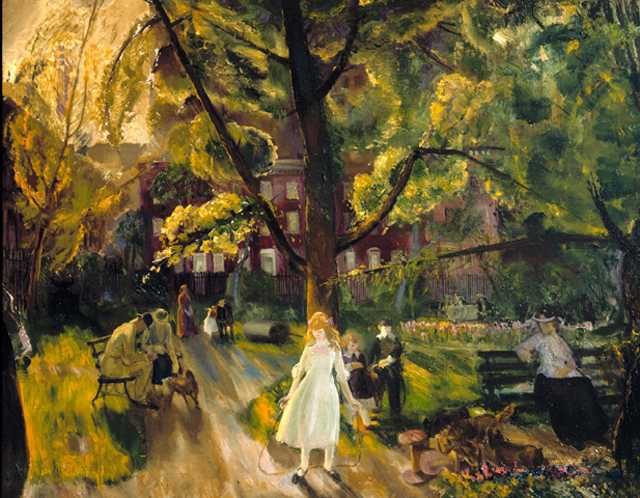
The neighbors supplied company of a kind that no host could have arranged more conveniently. George and Emma Bellows lived across the street at No. 146. At No. 147, Robert Winthrop Chanler’s House of Fantasy extended the neighborhood’s taste for imaginative interiors and elaborate entertainment. In one much-repeated episode, Emma Bellows summoned the police to quiet a party. The sergeant who answered joined the revelers instead and gave Chanler his officer’s cap. The intervention became another piece of the evening’s entertainment.
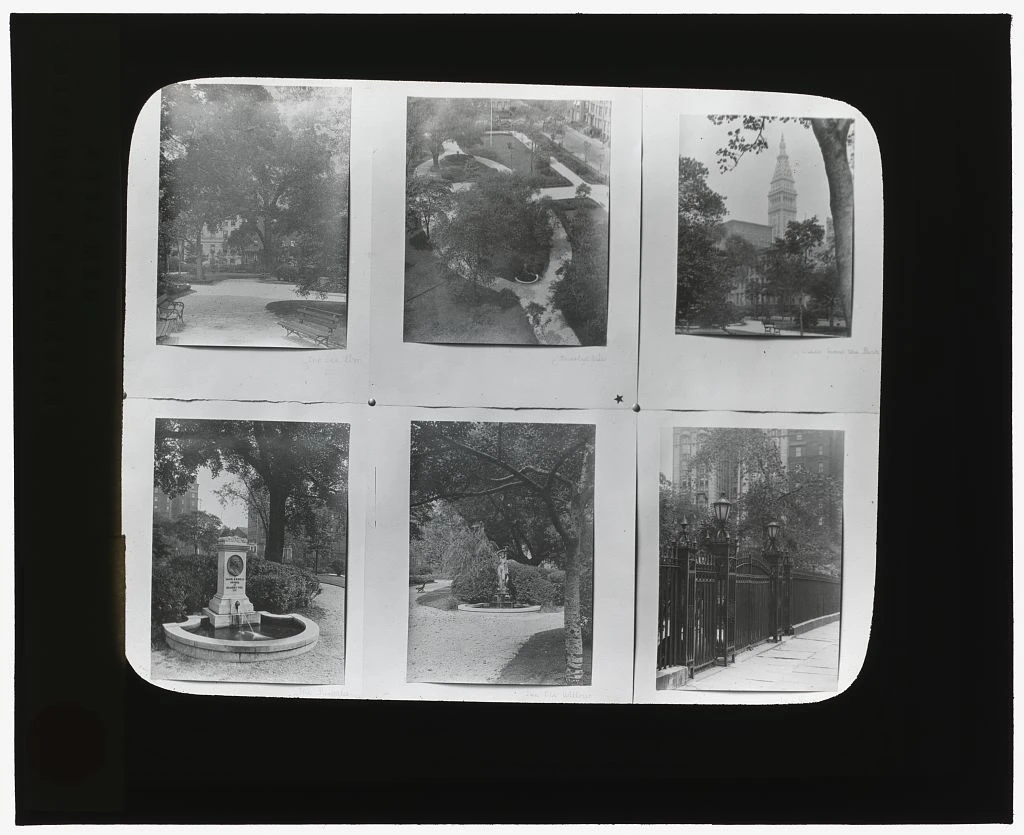
These addresses place the famous sociability on an ordinary street map. Bellows worked in his house; Henri’s studio at No. 10 Gramercy Park South was nearby; the Van Vechtens entertained upstairs on East 19th Street. The neighborhood offered repeated contact among people whose work took very different forms. For Van Vechten, who already knew artists through Dodge’s circle, settling here brought friendship into the routines of home. During the next decade, the apartment would become associated with the new fiction he was writing and the company that gathered around it.
The Novelist Gives a Party
Peter Whiffle arrives
Around the age of forty, Van Vechten turned from criticism toward fiction. Peter Whiffle: His Life and Works, published in 1922, became a bestseller and went through eight printings in its first year. Its form as a roman à clef made the relation between imagined characters and recognizable life part of the attraction. A man who had spent years observing artists and their surroundings now had a different means of arranging what he knew. The reader’s curiosity about a social world could carry a novel as readily as a magazine profile.
He followed it with The Blind Bow-Boy in 1923, winning praise from Sinclair Lewis. The success established fiction as a substantial second career. It also changed the circumstances in which the former newspaper critic met his public: he was now an author whose own books attracted judgments, admirers, and conversation. The East 19th Street household belonged to this moment of overlapping roles. He continued to know the performing arts and their practitioners while acquiring the visibility and expectations that accompanied a successful novelist.
Company, from dinner to the nightclub
The gatherings on East 19th Street, and later uptown, brought together Black and white guests in an unusually wide artistic company. George Gershwin, Theodore Dreiser, Elinor Wylie, H. L. Mencken, Tallulah Bankhead, and Paul Robeson belonged to the world of these parties. The names span composition, fiction, poetry, criticism, acting, and song. Their presence helps explain why descriptions of Van Vechten’s social life so often resemble accounts of his professional interests. Many of the people he wanted to hear and read were also people he wanted at home.
One East 19th Street dinner took place at the critic Ernest Boyd’s home. F. Scott and Zelda Fitzgerald arrived after dinner, fell asleep in their soup bowls, and were transferred to a sofa. On waking, they ordered two cases of champagne and a fleet of taxis to carry the company to a nightclub. The story has the abrupt changes of pace of a comic scene: the dinner is over, the late guests are asleep, and then everyone is expected to go out again. Gramercy supplied the domestic starting point for the excursion.
The “splendid drunken twenties” could be remembered through incidents of this kind, with their extravagant logistics and celebrated participants. Yet the novels and the parties required different kinds of effort, however often their subjects overlapped. Books had to be written; guests had to be brought together. Van Vechten’s publishing success made him a more conspicuous figure in the social world he observed. His growing involvement with Black writers and musicians would soon make the question of how he represented other people much more consequential than a witty account of an evening out.
An Enthusiasm with Consequences
Listening, welcoming, introducing
In 1925 Van Vechten crossed the river to Newark to hear Bessie Smith. His writing for Vanity Fair brought attention to Smith, Clara Smith, and Ethel Waters, treating their performances as work deserving serious notice. These interests also entered his home. He welcomed the singers to his apartment, where Waters marveled at caviar and borscht. The meal belongs to the same history as the published profiles: a critic’s admiration led to personal acquaintance, with all the opportunities and differences that such encounters carried.
His intervention on behalf of Langston Hughes had a direct publishing result. Van Vechten brought the young poet’s work to Alfred A. Knopf, leading to the publication of The Weary Blues in 1926. Here the usefulness of an established writer’s connections is particularly clear. He could put a manuscript before a publisher able to issue and distribute it. The poetry remained Hughes’s achievement; Van Vechten’s role was to help it reach the editorial desk and, through the resulting book, a broader body of readers.
James Weldon Johnson became a lifelong friend. Van Vechten wrote the introduction to the 1927 edition of Johnson’s The Autobiography of an Ex-Colored Man, lending his name and voice to the return of an important novel. Introductions, reviews, personal recommendations, and hospitality were different forms of assistance, operating at different distances from the work itself. His later effort to preserve Johnson’s papers would give the friendship another institutional expression. During the 1920s, the immediate concern was bringing writers and performers before a public that could hear them.
The limits of a patron’s authority
His own 1926 Harlem novel, Nigger Heaven, made that activity bitterly controversial. Its racial slur of a title remains inseparable from the argument around the book. Johnson, Hughes, Walter White, and Ellen Glasgow defended it, but their support did not settle the problem of a white novelist’s representation of Black life. His genuine assistance to particular artists and the offense caused by his fiction belong in the same account. Friendship and access gave him material and opportunities; they could not guarantee agreement with the uses he made of them.
The controversy complicates any easy portrait of Van Vechten as the Harlem Renaissance’s benevolent host. He helped make introductions and secure publication, while also making claims as a novelist that readers were entitled to question. Those roles could reinforce one another or come into conflict. In 1930 he published Parties, his final novel. The title returns to the social occasion that had supplied so much of his public identity, just as his long engagement with people in the arts was approaching another change of medium.
Faces, Then an Archive
A third career, with a Leica
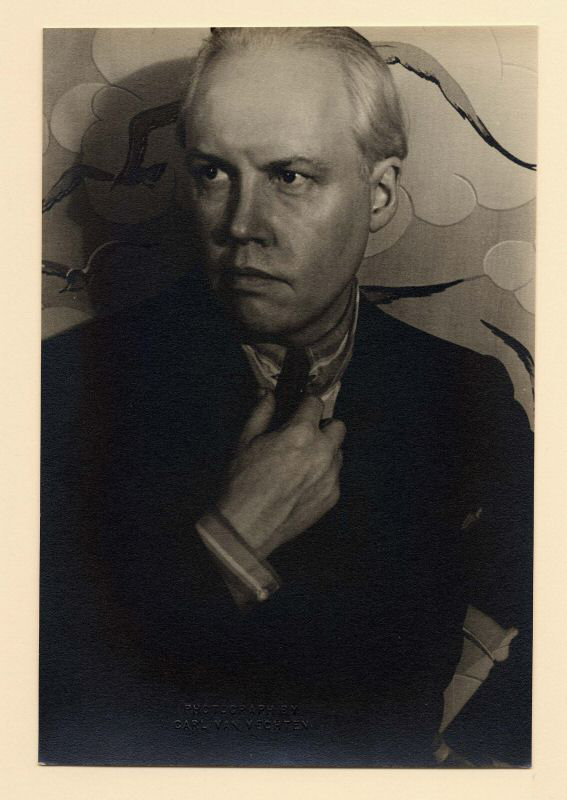
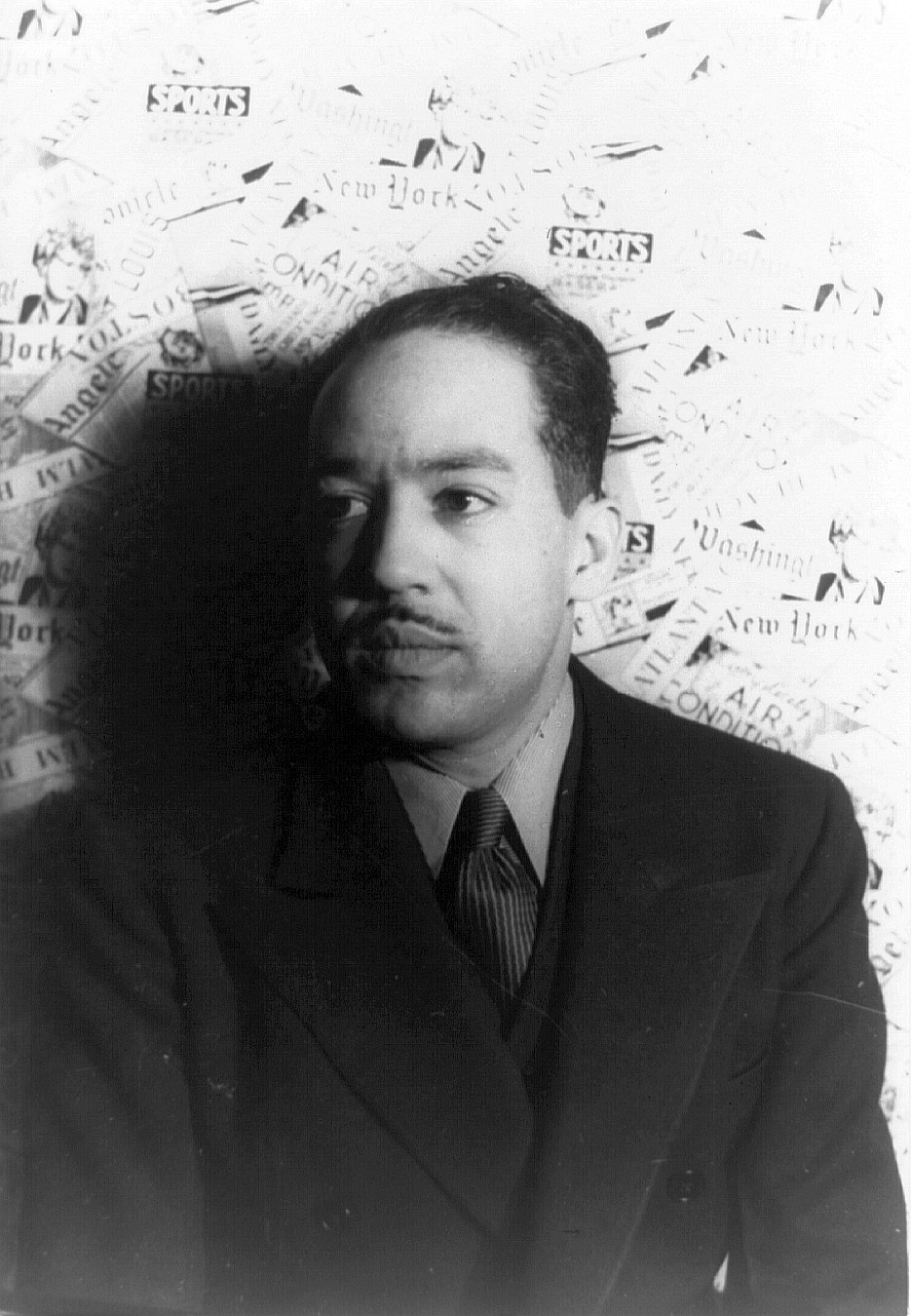
In the 1930s Van Vechten began the photographic work that became his third career. With a Leica camera, he made thousands of portraits, extending an already remarkable acquaintance with the arts into a visual record. The critic who had described a performance and the novelist who had arranged a social scene now worked with a sitter’s appearance before the lens. A portrait could preserve a meeting without requiring the sitter to be a character in a story. The body of work grew through repeated sessions and a sustained attention to faces.
His subjects included Eugene O’Neill, Gertrude Stein, Bessie Smith, F. Scott Fitzgerald, W. C. Handy, Thomas Mann, Henri Matisse, and Marian Anderson. The range echoes the company and interests of the earlier careers: playwrights and novelists, a painter, singers, and a composer. Some were old friends; others belonged to the wider artistic world he had followed for decades. Seen together, the portraits document people whose work reached the public through very different forms, while bringing each into the particular circumstances of a photographic sitting.
The 1936 portrait of Hughes reproduced in the preceding chapter is one instance of that continuity. A poet whose manuscript he had helped bring to Knopf ten years earlier now stood before his camera. The two acts produced different records: a published volume of poetry and a photograph of its author. Neither replaces the other. Their connection makes visible the duration of Van Vechten’s involvement with individual artists, extending well beyond the first review, introduction, or encounter at a party.
The James Weldon Johnson collection
In 1941 he established the James Weldon Johnson Memorial Collection at Yale. The undertaking gave a durable institutional home to the preservation of Black literary and artistic work. His friend’s name attached the collection to a writer whose importance he had long recognized; his own energies now served the keeping of a record as well as its promotion. Papers and other archival materials could remain available after an author’s immediate audience had changed, allowing later readers to ask questions that a contemporary review might never have anticipated.
Van Vechten died in December 1964, aged eighty-four. The East 19th Street years were by then far behind him, but the apartment remains a useful point on the map of his life: close to Bellows, close to Henri, and open to visitors from much farther away. Books, portraits, and collected papers survive the evenings that first brought many of those people together. A reader can still open Hughes’s first Knopf volume, look at the face Van Vechten photographed, and turn to the materials preserved under Johnson’s name.
Places, people & connections
Around the Park
George Bellows
Across East 19th Street, the painter’s home and studio placed family life beside the making of pictures.
Robert Henri
The teacher and painter whose Gramercy studio gathered a wide circle of artists, including Bellows.
10 Gramercy Park South
Follow the history of the house that contained Henri’s studio, a short walk from the Van Vechtens.
The Tilden Mansion
The National Arts Club’s home offers another setting for the neighborhood’s artistic life.
19 Gramercy Park South
A house associated with Benjamin Sonnenberg and another celebrated era of entertaining around the Park.
Benjamin Sonnenberg
Read about the host who made his Gramercy home a gathering place in the decades that followed.
Ludwig Bemelmans
A later Gramercy story of an artist moving between words, pictures, restaurants, and the company of New York.
Life at a glance
The biographical record
| Born | June 17, 1880 · Cedar Rapids, Iowa |
|---|---|
| Died | December 1964 · age 84 |
| Gramercy address | 151 East 19th Street · top-floor apartment |
| Years in the neighborhood | 1914–1920s |
| Vocation | Music and dance critic; novelist; portrait photographer; patron and collector |
| Spouse | Fania Marinoff, actress · married October 1914; earlier marriage to Anna Elizabeth Snyder |
| Selected works | Interpreters (1917); Peter Whiffle: His Life and Works (1922); The Blind Bow-Boy (1923); Parties (1930) |
| Collection | James Weldon Johnson Memorial Collection, established at Yale in 1941 |
Over time
Born in Cedar Rapids
Carl Van Vechten is born on June 17, in a household whose parents support education for Black children.
University of Chicago
Graduation follows years of listening to concert music and ragtime in Chicago.
The New York Times
He works as Richard Aldrich’s assistant music critic, with a Paris posting in 1908–1909.
Modern dance in print
Pavlova and Duncan become subjects of his pioneering attention to modern dance.
Stein, Marinoff, and East 19th Street
A lasting friendship with Gertrude Stein begins; he marries Fania Marinoff in October and makes a home at No. 151.
Interpreters
A collection of essays brings together his interest in the people through whom the arts reach an audience.
Fiction brings success
Peter Whiffle is followed by The Blind Bow-Boy.
Singers, poets, and a disputed novel
He hears Bessie Smith, helps Hughes reach Knopf, publishes his controversial Harlem novel, and introduces Johnson’s reissued autobiography.
The final novel
Parties closes his career as a novelist.
Portrait photography
A Leica opens a third career documenting writers, musicians, performers, and artists.
A collection at Yale
He establishes the James Weldon Johnson Memorial Collection.
Death at eighty-four
Van Vechten dies in December, leaving books, photographs, and an important archival undertaking.
Sources cited
- Carole Klein, Gramercy Park: An American Bloomsbury (Boston: Houghton Mifflin, 1987): Van Vechten, Marinoff, the East 19th Street household, and the neighborhood’s artistic circle.
- Carl Van Vechten, Interpreters (New York: Alfred A. Knopf, 1917).
- Carl Van Vechten, Peter Whiffle: His Life and Works (New York: Alfred A. Knopf, 1922), and The Blind Bow-Boy (New York: Alfred A. Knopf, 1923).
- Langston Hughes, The Weary Blues (New York: Alfred A. Knopf, 1926).
- James Weldon Johnson, The Autobiography of an Ex-Colored Man, with an introduction by Carl Van Vechten (New York: Alfred A. Knopf, 1927).
- Carl Van Vechten, Nigger Heaven (New York: Alfred A. Knopf, 1926), and Parties (New York: Alfred A. Knopf, 1930).
- Library of Congress, Prints and Photographs Division, Carl Van Vechten photographs: self-portrait, May 8, 1934, and Langston Hughes, February 29, 1936.
- Yale University, Beinecke Rare Book and Manuscript Library, Guide to the Carl Van Vechten Papers Relating to African American Arts and Letters, JWJ MSS 1050.
Photo credits for this page
- Carl Van Vechten, self-portrait, May 8, 1934. Photograph by Carl Van Vechten. Library of Congress, Prints and Photographs Division, LC-USZ62-115305. Collection record; digital image via Wikimedia Commons. Public domain.
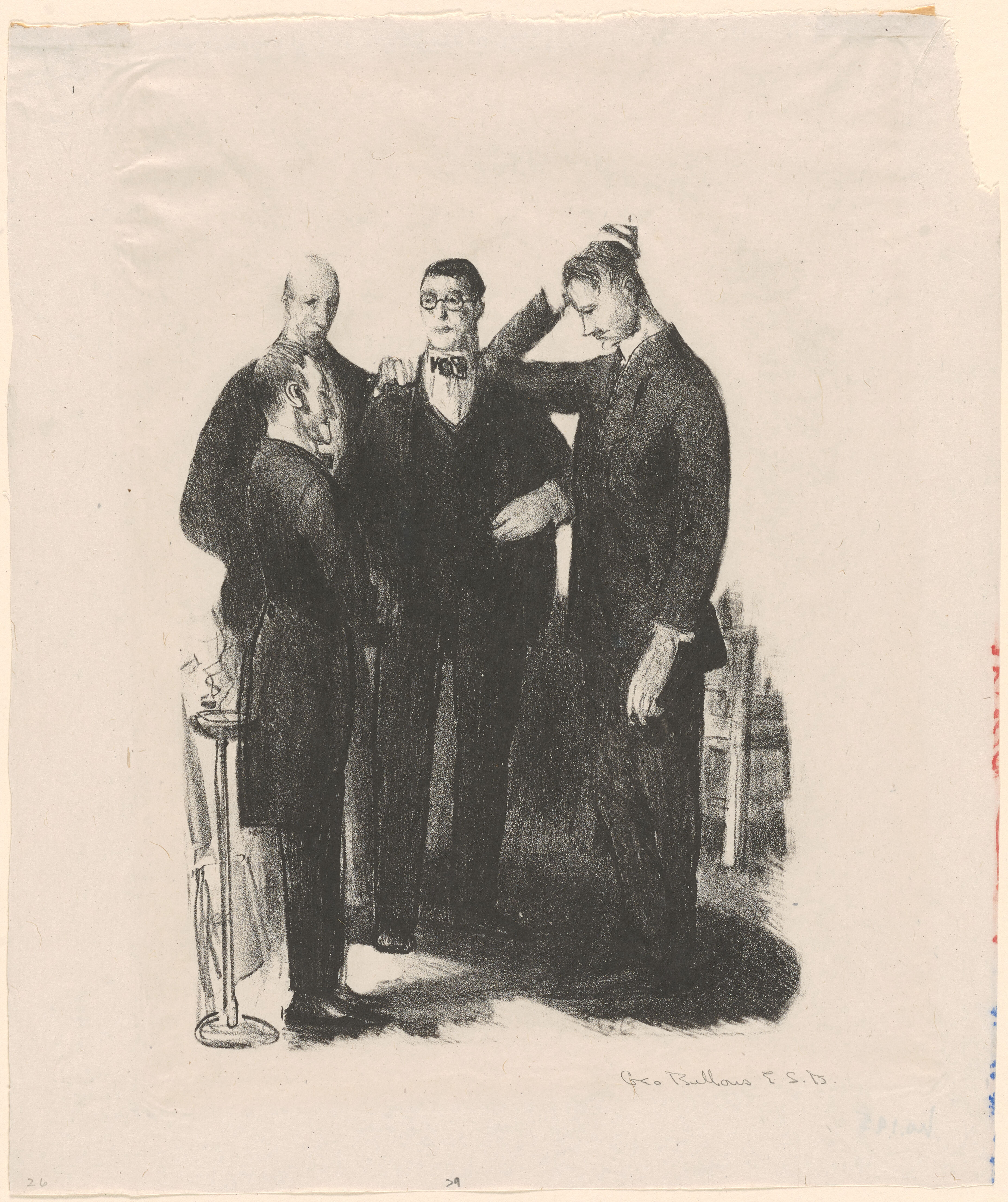
- Four Friends, 1921, first state. George Bellows, lithograph. Boston Public Library, Print Department; gift of Albert H. Wiggin, accession 1941.1.57. Digital Commonwealth collection record. Public domain.
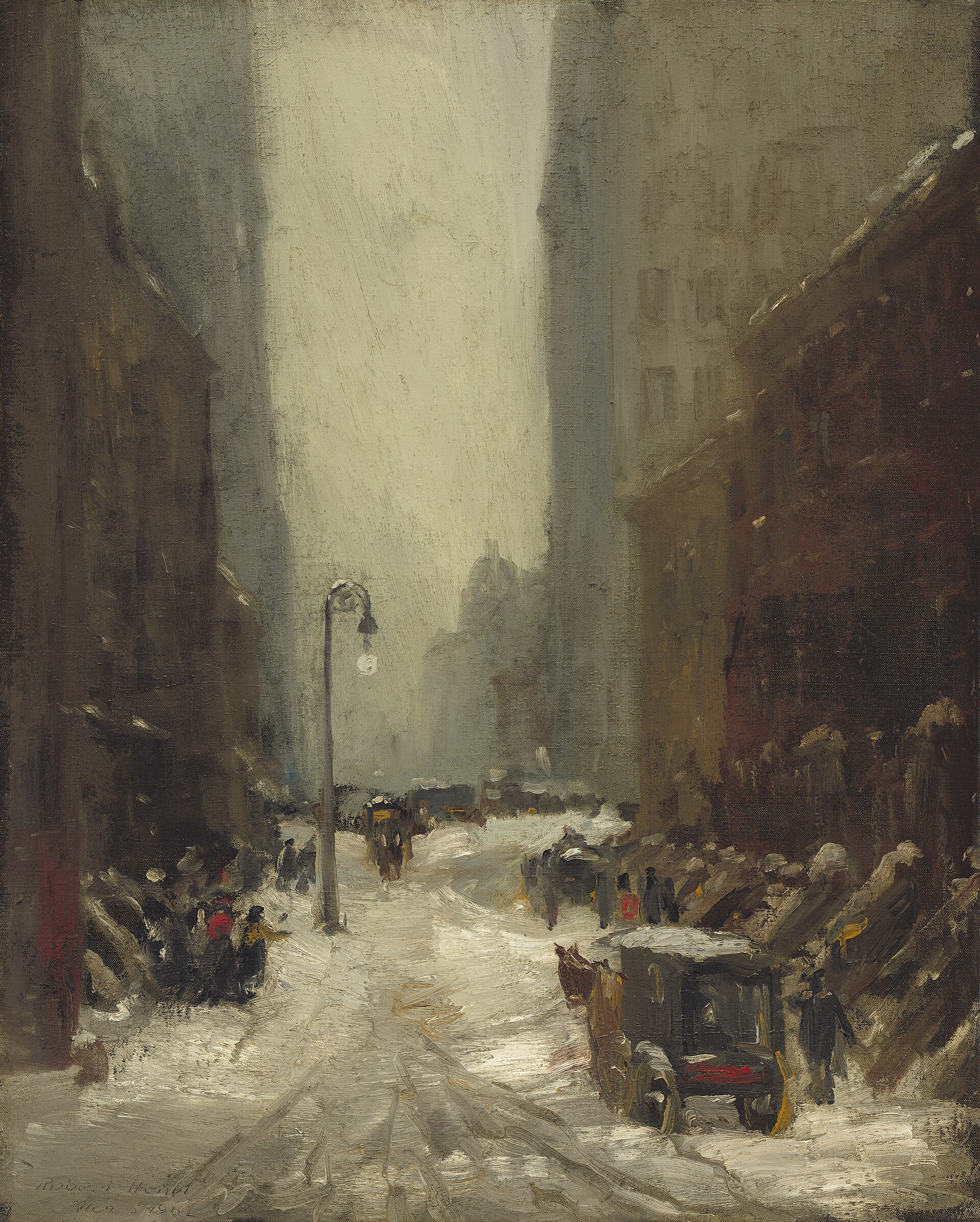
- Snow in New York, 1902. Robert Henri, oil on canvas. National Gallery of Art, Washington. Collection image and source record, Wikimedia Commons. Public domain.
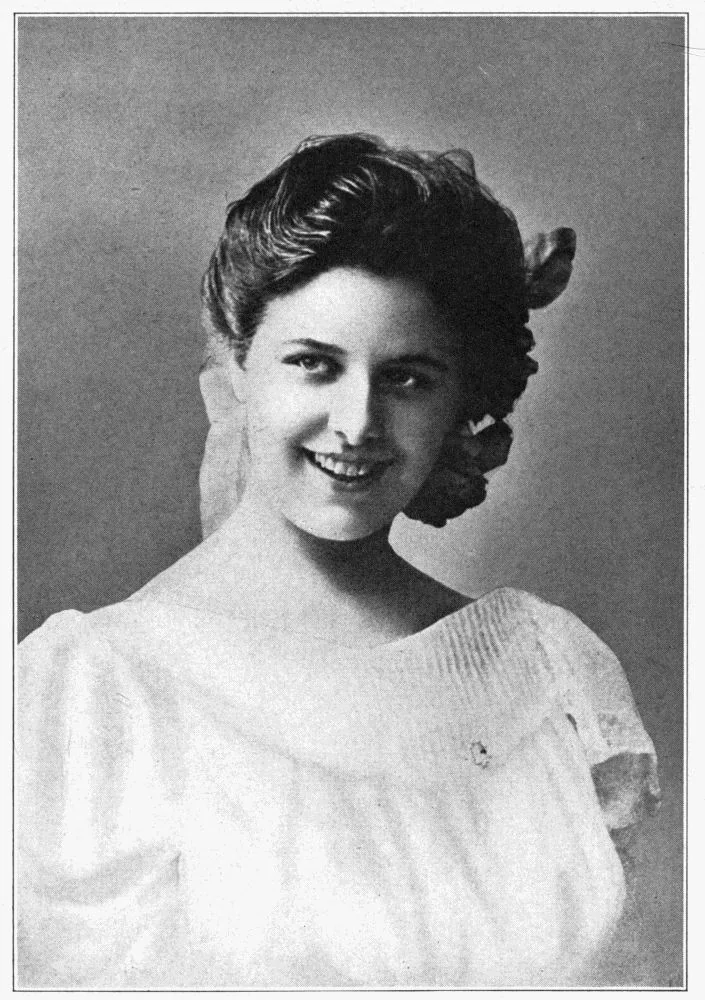
- Geraldine Farrar. Portrait reproduced in Geraldine Farrar: The Story of an American Singer (Boston and New York: Houghton Mifflin Company, 1916). Illustrated memoir, Project Gutenberg. Public domain.
- The Masquerade Dress, 1911. Robert Henri, oil on canvas. The Metropolitan Museum of Art; Arthur Hoppock Hearn Fund, 1958, accession 58.157. Collection record. Met Open Access, CC0.
- Gramercy Park, May 1920. George Bellows, oil on canvas, private collection. Digital image from the George Bellows Catalogue Raisonné, compiled by Glenn C. Peck, H. V. Allison & Co. Image and collection record. Public-domain artwork.
- Langston Hughes, February 29, 1936. Photograph by Carl Van Vechten. Library of Congress, Prints and Photographs Division, LC-USZ62-92598. Collection record; digital image via Wikimedia Commons. Public domain.
- Gramercy Park, 1922. Exhibition panel from the Frances Benjamin Johnston Collection. Library of Congress, Prints and Photographs Division, digital ID LC-DIG-ppmsca-16306. Collection record. No known restrictions on publication.