
21 Gramercy Park South
The house behind the brick: John Bigelow, a public library, and a new audience for the arts.
The John Bigelow House · Built c. 1851 · Refronted 1956
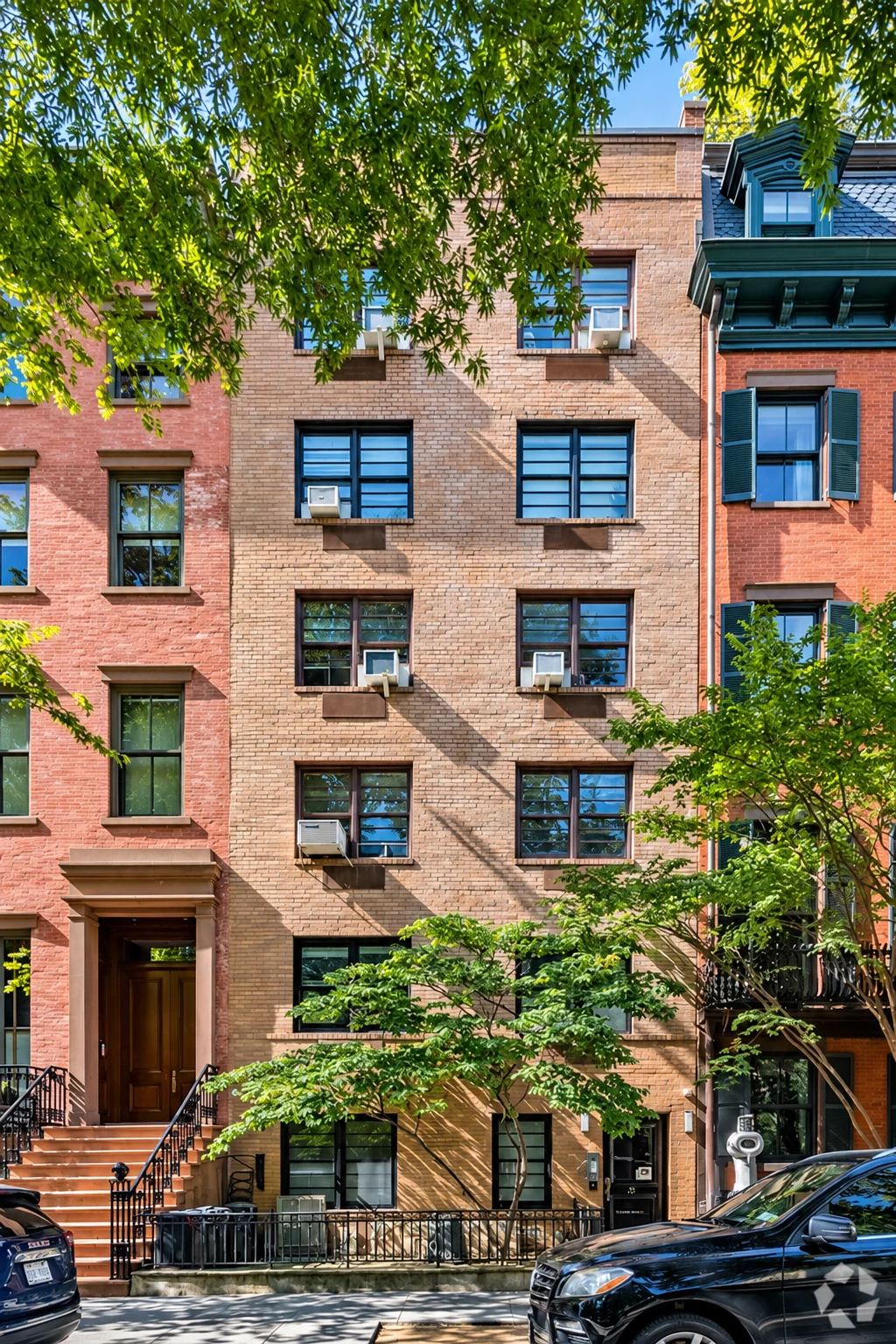
A plain brick front can hide an extraordinary address. At No. 21, John Bigelow spent the last three decades of his life among books, children, grandchildren, and visitors whose interests reached well beyond the Park. The former diplomat had defended the Union’s cause in Paris. From Gramercy, he helped give New York a public library worthy of its ambitions.
The brownstone he knew has disappeared from view, but the story continued after him. His daughter Grace cared for the family’s papers and served as a Trustee of Gramercy Park. Later, the house welcomed music, painting, and dance. Reading No. 21 means looking through its twentieth-century façade to the lives and ideas that occupied the rooms behind it.
One address. A wider world.
A brownstone beside the Park
The first face of No. 21
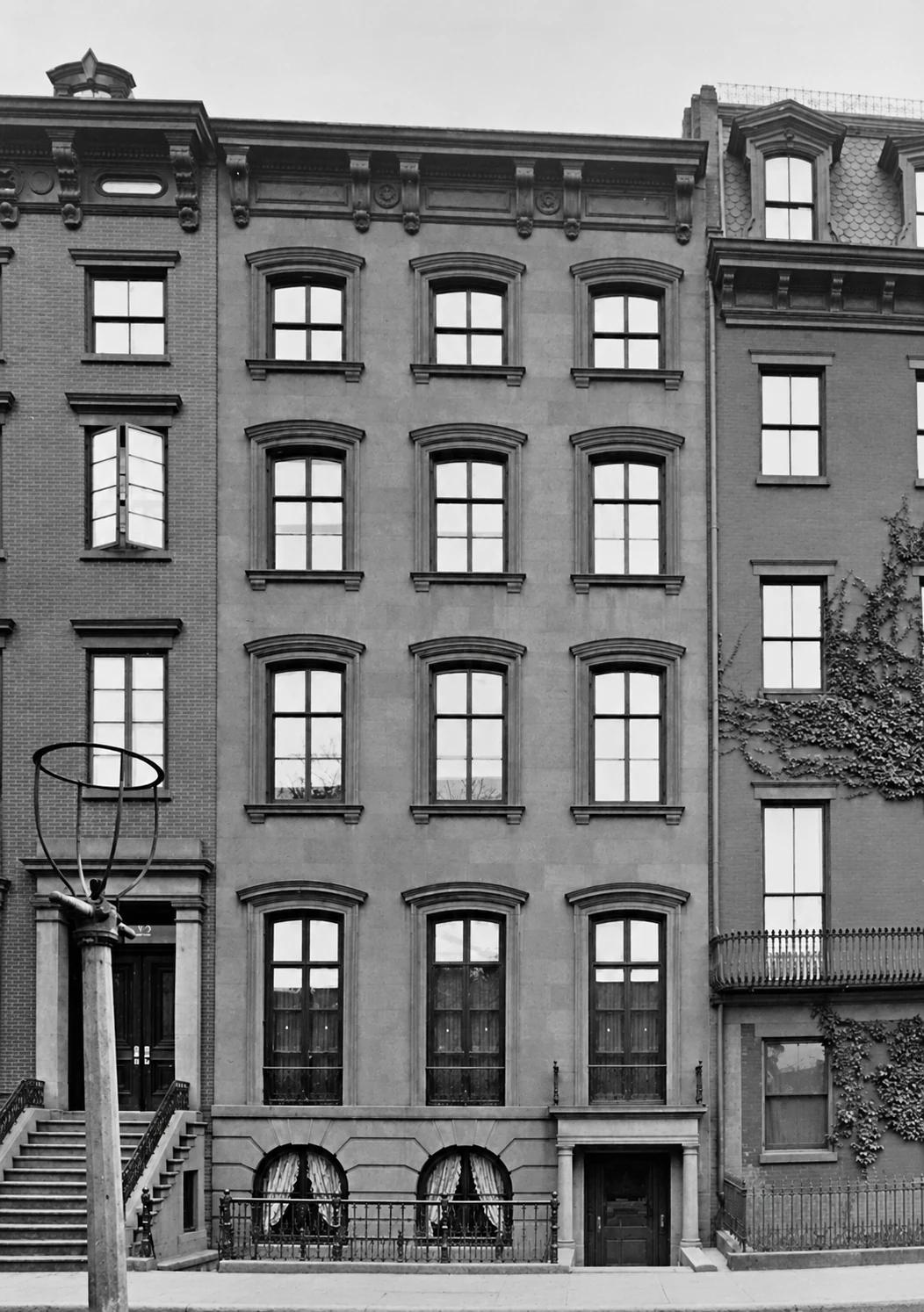
The house began in the early 1850s, as the residential square planned by Samuel B. Ruggles filled with substantial private homes. Its first known owner, dry-goods merchant Henry Trowbridge, built in the Italianate manner: a brownstone front, tall windows, molded surrounds, and a substantial cornice above four principal stories and a basement. A surviving directory places Trowbridge here in 1857.
The photograph published in Old Buildings of New York City in 1907 makes the lost design unusually easy to read. Three ranks of windows climb the façade. Their rounded heads soften its rigid vertical rhythm; the projecting cornice gives the narrow house a definite conclusion against the sky. At the bottom, the entrance sits beside two low arched windows.
A place in a changing row
This was architecture made for close company. No. 21 shared its walls and street line with neighboring houses, while differences in cornices, entrances, and window frames gave each address an identity. Across the roadway, the Park supplied the open space that the narrow lots could not.
Trowbridge offered the house for sale in 1860. The Curtis family followed, before the Bigelows arrived around 1880. By then the square was an established address, and the house was ready for a family whose public life had already unfolded across two continents.
A diplomat comes home
A career carried into the rooms
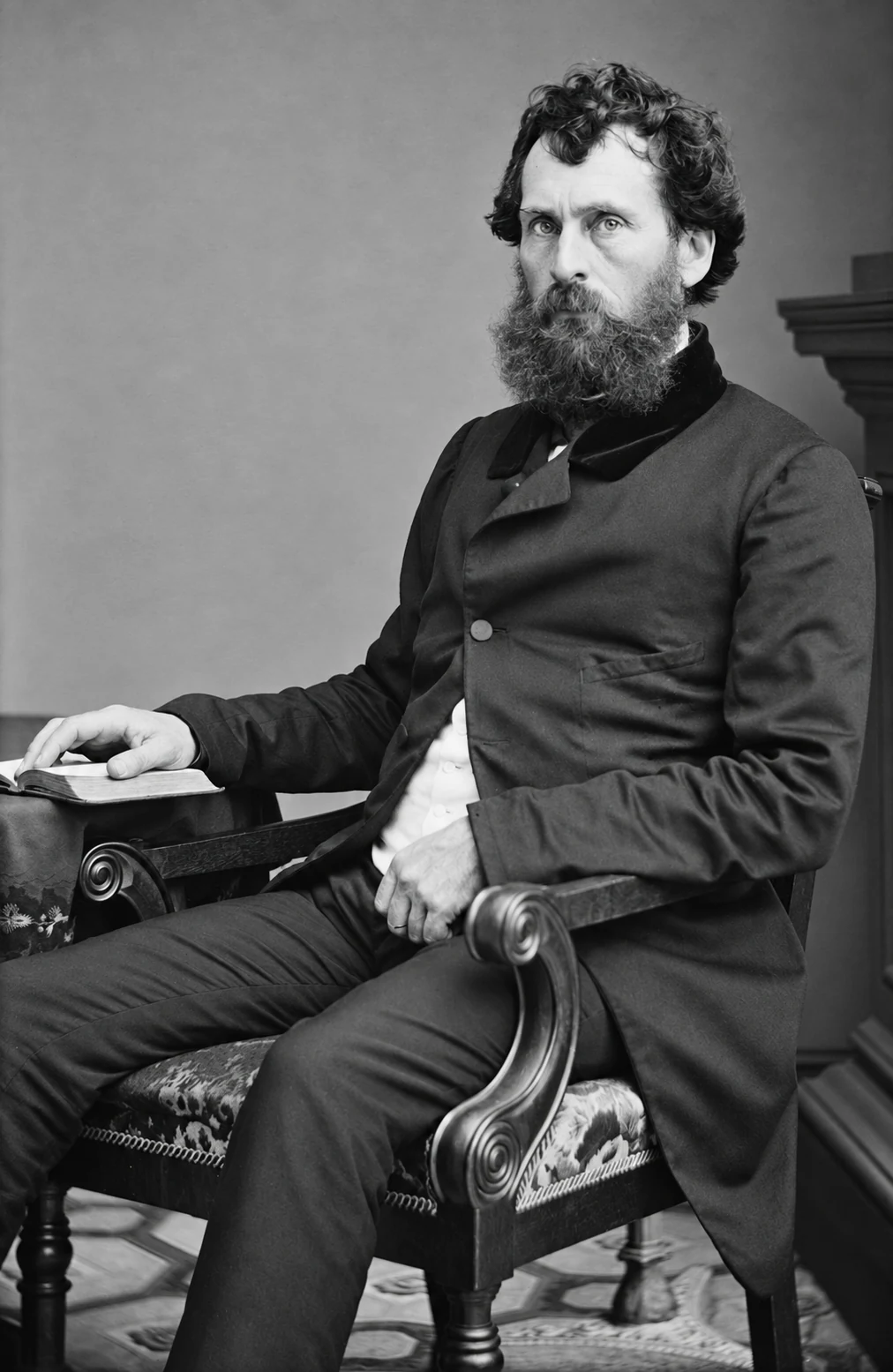
Bigelow arrived with several lives already behind him: lawyer, newspaper editor, reformer, and diplomat. At the New York Evening Post, he had worked alongside William Cullen Bryant. Abraham Lincoln sent him to Paris as consul in 1861; in 1865 he became the United States minister to France.
His wartime work was practical as well as persuasive. The papers preserved by the New York Public Library document his efforts against Confederate activity in Europe, including the acquisition of ships from French yards. By the time he settled on Gramercy Park, the struggle he had helped conduct was history. Writing, editing, correspondence, and public affairs remained part of his daily life.
The house belonged to a family
Jane Poultney Bigelow and their daughters made No. 21 a social household as well as a literary one. Receptions, weddings, and returning family members brought a different rhythm to the rooms. Grace would become an especially important presence: hostess, manager of her father’s affairs, and eventually custodian of his papers.
She was also an owner who commissioned changes. An October 1893 filing in the Record and Guide names Grace Bigelow, architect F. Conlon, and builders P. McCormack & Son. The $10,000 project called for interior alterations and the conversion of a door into a window. The house was already adapting to its inhabitants long before its modern exterior appeared.
A library for the whole city
Tilden’s unfinished work
One of Bigelow’s closest associations was with Samuel J. Tilden, whose elaborate house stood farther west on the same side of the Park. Tilden’s death in 1886 left both an estate and an ambition: a free library and reading room for New York. Bigelow, one of his executors, helped carry that ambition forward.
The Library’s own history credits Bigelow with the plan to combine the Tilden Trust with the Astor and Lenox libraries. Their agreement of May 23, 1895, created the New York Public Library, Astor, Lenox and Tilden Foundations. He became its first president.
The connection gives this unassuming address an importance out of proportion to its frontage. A friendship between neighbors on a private square helped sustain a project intended for the entire city. The new library brought collections, money, and institutional experience together; Bigelow helped turn those separate resources into a shared future.
A New Year’s gift to Morgan
His concern for books also took a more personal form. On January 1, 1906, Bigelow wrote from Gramercy Park to J. Pierpont Morgan, sending manuscript notes associated with Benjamin Franklin’s autobiography. The letter survives at the Morgan Library, together with its recollection of a recent visit to Morgan’s new library. It is a small, tangible link between this house and another of New York’s great collections.
Bigelow lived to see the Fifth Avenue library dedicated in May 1911. He died at No. 21 that December, aged ninety-four. Friends remembering him the following year returned to the image of a man receiving visitors in his book room, still reading and working, with his family around him. Public achievement and domestic life met in the same chair.
Grace keeps the record
More than an inherited address
Grace Bigelow’s part in the story did not end with her father’s death. The home remained a family center, and she continued the work of keeping its history together. Letters, diaries, and the papers of several generations survived through that attention.
Between 1924 and 1932, she donated her father’s papers to the New York Public Library. The surviving collection makes it possible to follow his working life across decades: diplomacy, publishing, friendships, family affairs, and the canal projects that occupied his later years. Preserving the papers gave future readers access to a life that had once been conducted behind a private front door.
The Park outside the window
Grace’s care extended beyond the house. John B. Pine’s Story of Gramercy Park, published in 1921, lists her election as a Park trustee in 1916. Her father had also taken an active part in the neighborhood, presiding over meetings of lot owners during the controversy over the Irving Hotel in 1902.
Together, those records place the family within the practical work of sustaining Gramercy. The view across the street was something to enjoy, but it also required decisions, cooperation, and care. Grace’s death in 1932 closed a long family chapter. The house’s association with cultural life was about to take a different form.
The salon opens to the arts
Yun Gee at No. 21
By the 1930s, the National Musical Benefit Society was using the house. In January 1934, its rooms hosted an exhibition of paintings by Yun Gee together with a dance recital. The artist’s exhibition chronology gives the address explicitly: 21 Gramercy Park.
For a painter whose career connected China, San Francisco, Paris, and New York, the house offered a setting in which painting and performance could be presented together. The combination is a striking episode in the life of a building usually remembered for an elderly diplomat and his library.
The gathering also belongs to a wider Gramercy tradition. The Players and the National Arts Club had made homes for creative communities in neighboring houses. No. 21’s musical society occupied a smaller place in that landscape, but the surviving exhibition record puts it firmly among the neighborhood’s rooms for art.
The old front survives
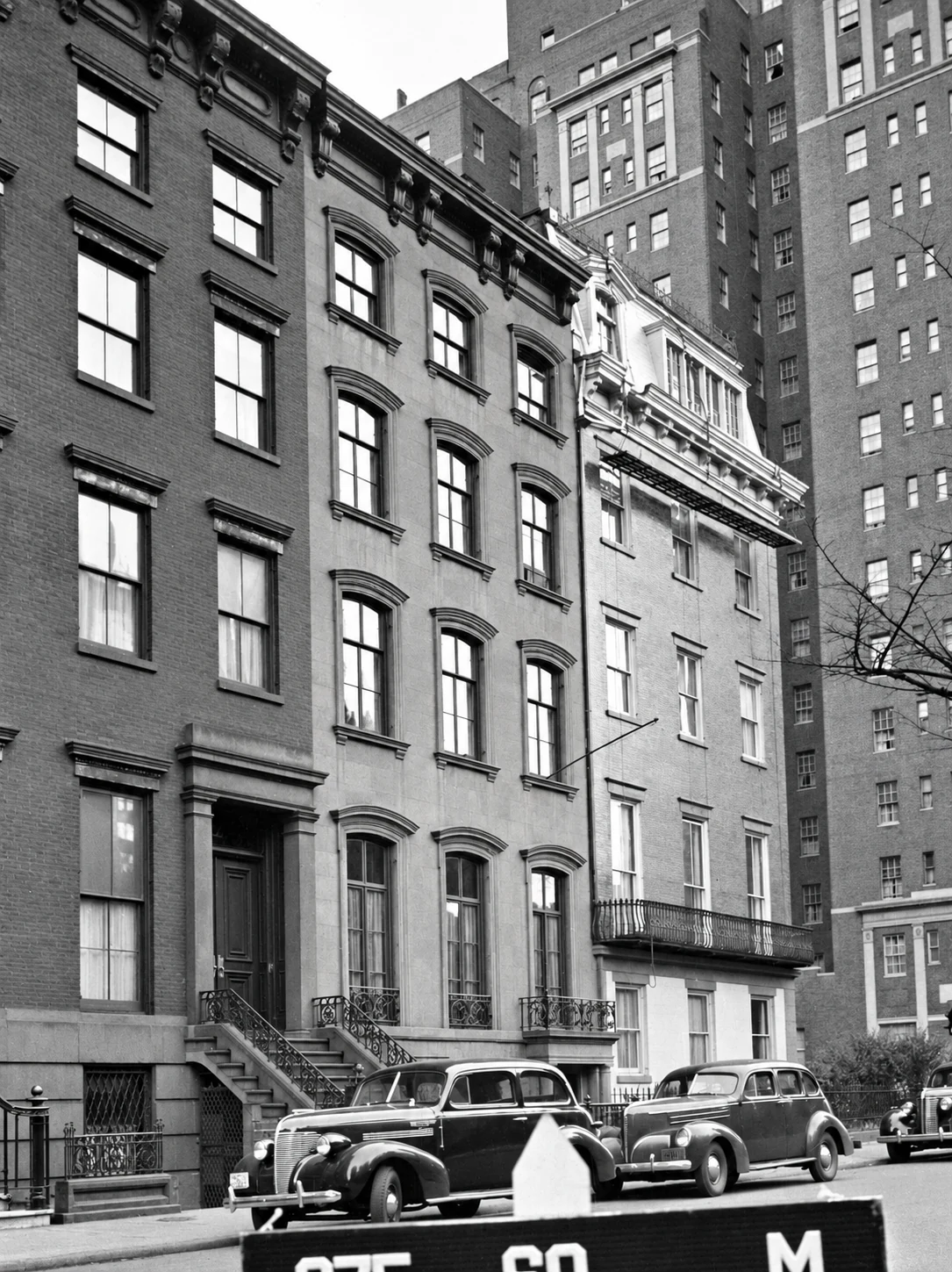
The municipal tax photograph from around 1940 catches the house before its most radical exterior change. Its arched windows and cornice remain, while a much taller apartment building rises beyond the older row. The photograph holds two scales of Gramercy in the same frame: the individual townhouse and the apartment city growing around it.
The Bigelow estate sold the property in 1946. The cultural institution had given the former residence another use; the following decade would bring a far more conspicuous transformation.
The house behind the brick
A new front, a new arrangement
A renovation completed in 1956 replaced the brownstone exterior with the brick front seen today and reorganized the building as apartments. The broad modern windows, reduced ornament, and straight roofline changed the reading of the house from the street. The old three-bay composition became something much quieter.
The difference is clearest when the present view is placed beside the 1907 photograph. The earlier façade used molded window surrounds and a strong cornice to articulate its height. The later front relies on brickwork, rectangular openings, and the shadows cast by their reveals. It belongs to a different period of New York housing, when an old private house could be remade for many households.
What an address can preserve
The Gramercy Park Historic District was designated in 1966, a decade after the refacing. No. 21 stands within that protected neighborhood today. Its significance includes what survives physically, what has been altered, and what can still be recovered from photographs and records.
The building remains a six-story residential address with twenty-three apartments. Behind its changed appearance lies the memory of a merchant’s home, a diplomat’s books, Grace Bigelow’s stewardship, and a room where Yun Gee brought painting and performance together. The façade no longer tells those stories on its own. The address still can.
Overview
The building record
- Historic name
- John Bigelow House; earlier Henry Trowbridge House
- Address
- 21 Gramercy Park South (East 20th Street), New York
- Built
- c. 1851; extensively altered in 1956
- Architecture
- Originally Italianate; mid-century brick refacing
- Architects
- Original architect unidentified; F. Conlon, 1893 alterations
- Current form
- Six-story residential building; 23 apartments
- Historic district
- Gramercy Park Historic District, designated September 20, 1966
- Map position
- South side of the Park, east of Irving Place
Over time
A merchant’s brownstone
Henry Trowbridge’s Italianate house takes its place on the south side of the Park.
The Bigelows arrive
John and Jane Bigelow establish the family home that he will keep for the rest of his life.
Grace alters the house
A $10,000 alteration filing names Grace Bigelow, architect F. Conlon, and builders P. McCormack & Son.
A public library is formed
The Astor and Lenox libraries join with the Tilden Trust; Bigelow becomes NYPL’s first president.
A lifetime closes
The Fifth Avenue library opens in May. Bigelow dies at No. 21 in December.
Painting meets performance
Yun Gee exhibits and gives a dance recital at the National Musical Benefit Society here.
The brick façade appears
A major renovation changes the exterior and adapts the former private house for apartments.
Sources Cited
- Tom Miller · July 31, 2024.
- Trow’s New York City Directory · 1857.
- Old Buildings of New York City · 1907.
- Real Estate Record and Builders’ Guide · October 21, 1893.
- U.S. Department of State · Office of the Historian.
- New York Public Library · John Bigelow papers.
- New York Public Library · Institutional history.
- New York Public Library · Bigelow Society.
- Morgan Library & Museum · MA 723.5.
- Century Association · March 9, 1912.
- John B. Pine · 1921.
- Yun Gee Archives · Exhibition chronology.
- NYC Landmarks Preservation Commission · September 20, 1966.
- StreetEasy · Building record.
Historical notes: c. 1851 follows Miller’s building history; municipal-derived records also give 1854, while some real-estate listings give 1910. The latter is not treated here as the original construction date. The 1956 refacing and 1946 sale follow Miller. The 1893 filing documents a door-to-window change and interior alterations; it does not expressly describe removal of the stoop. No original architect has been established. District designation is distinct from individual landmark designation.