
John Bigelow
The reader at No. 21
1817–1911 · Editor, diplomat & library founder
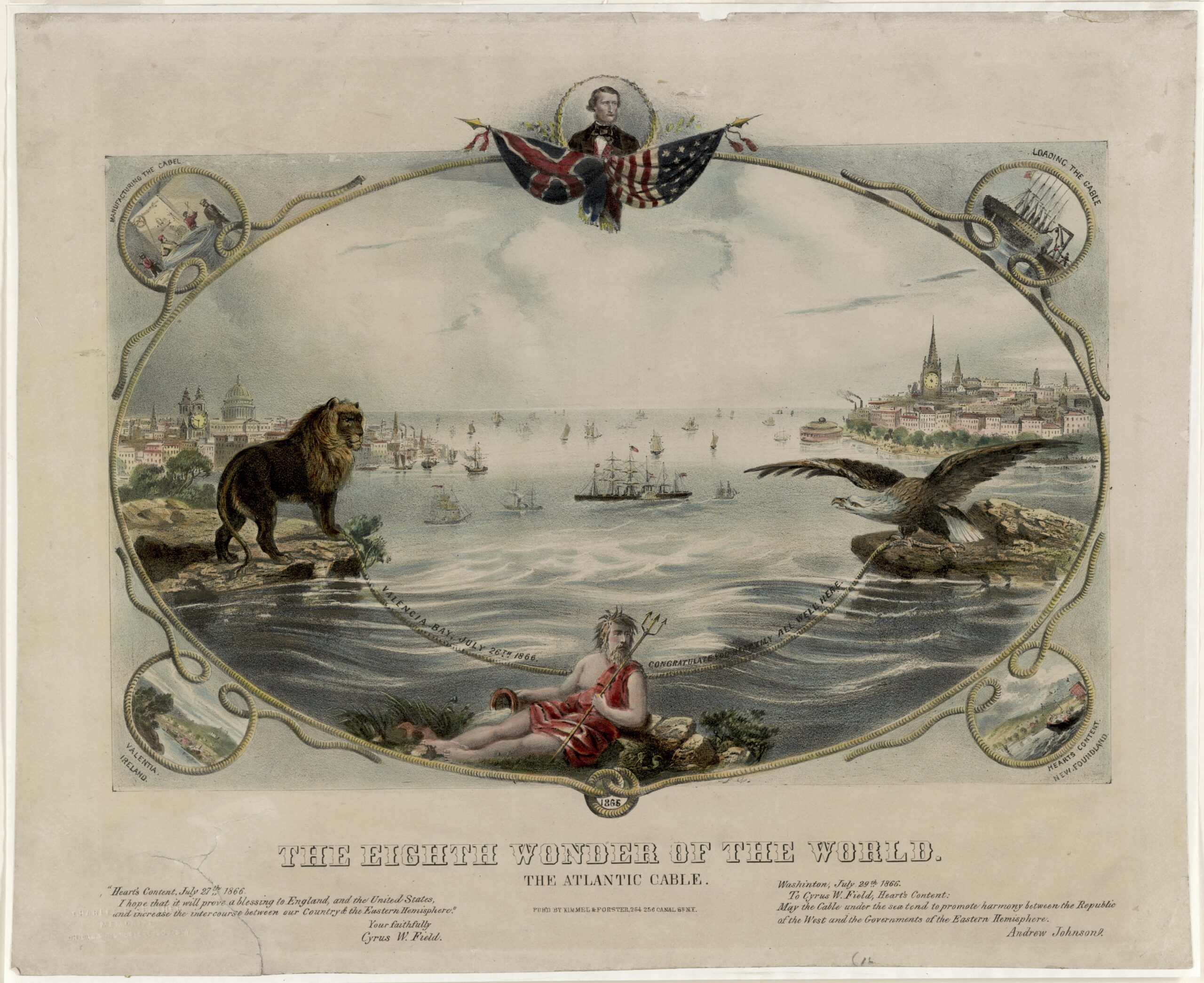
A telegram at 5:28 in the morning
On July 28, 1866, a telegram from Newfoundland reached the American legation in Paris. John Bigelow, the United States minister, recorded the time to the minute. Cyrus Field had wired him at last. “The Atlantic cable is successfully laid. May it prove a blessing to all mankind.”
Twelve years earlier, Field had assembled his backers over breakfast in his brother’s house on the site of today’s One Lexington Avenue. Peter Cooper of Lexington Avenue became president of their company. Now, in his dispatch to Washington, Bigelow could report something a Paris newspaper had just done. It had printed American news dated that very day.
Bigelow had spent the Civil War waiting for news to cross the ocean. He knew what those lost days could cost. Years later, in a house a short walk from Field’s corner, he faced a question that took the rest of his life to answer. His friend Samuel Tilden had left New York money for a free library. How was an ordinary reader to get a book?
An editor takes sides
When John Bigelow first met Samuel J. Tilden, neither man had a house on Gramercy Park. Bigelow was a young lawyer trying to make a living in New York. Born in 1817 at Bristol, now Malden-on-Hudson, he had graduated from Union College at seventeen. Clients were scarce. Writing for the Democratic Review brought him into the company of people who cared about politics, among them Tilden.
In 1845, with Tilden’s help, Bigelow became an inspector at Sing Sing. He and his fellow inspectors required punishments to be put on record, attacked graft in the prison workshops and tried to put hiring on a merit basis. In 1848 he bought a share in the New York Evening Post and joined its editor, the poet William Cullen Bryant. The newspaper gave the two men a daily audience for their opposition to the spread of slavery.
For American readers debating emancipation, Bigelow went to Jamaica to see how people made a living after slavery. He turned the trip into a book. He called it Jamaica in 1850, or, The Effects of Sixteen Years of Freedom on a Slave Colony. In 1856 he backed John C. Frémont, the first Republican presidential nominee. In 1861 the new Republican administration had a use for an editor who knew how to follow a story abroad.
The shipbuilder’s papers
On September 10, 1863, a shipyard employee named Trémont called at the American consulate in Paris. Six warships were under construction in French yards. The explanation offered to the authorities involved a Pacific packet service and the danger of pirates. Trémont brought Bigelow twenty-one documents identifying the actual customer, the Confederate navy. He wanted 20,000 francs if the information kept the ships out of Confederate hands.
Bigelow called his informant “Mr. X” and put the evidence in the hands of William L. Dayton, the American minister. Eight days later Dayton told Secretary of State William Seward that he had confronted the French foreign minister. The exchange can still be followed in the published diplomatic correspondence, down to a contract that increased an order for cannon shells from five thousand to twelve thousand.
French pressure forced the builders to find other buyers. One armored ram eventually reached the Confederacy by a roundabout route. By then the delays had done their work. The Stonewall crossed the Atlantic too late to affect the war. Bigelow succeeded Dayton as minister in 1865. In the following summer he received Field’s telegram, and the time available to a diplomat to act on news from home changed overnight.
Franklin in his own hand
Benjamin Franklin’s grandson had published an edition of the Autobiography. But where was the manuscript from which a reader could tell what Franklin had actually written? In January 1867 a letter caught up with Bigelow in London. His French friend Édouard Laboulaye had traced the manuscript to the heirs of Franklin’s friend Le Veillard in Paris.
Bigelow sent William H. Huntington to examine it. The family also had Franklin letters and a pastel portrait. The packet was bought, packed and carried through Paris to the express office. Huntington’s cheerful expense account included the porter, the cab and the six francs it cost to telegraph Bigelow in London. All the speed in the world could not overcome one difficulty with the parcel itself. The express company would make no Sunday delivery.
When Bigelow put the handwriting alongside the printed text, he counted more than 1,200 differences. The last eight manuscript pages had disappeared from the earlier English edition altogether. His own edition, dated 1868, gave English readers all four parts of Franklin’s account. Nearly forty years later he was still finding homes for Franklin’s papers. On New Year’s Day 1906 he wrote from Gramercy Park to give J. Pierpont Morgan a set of Franklin’s manuscript notes.
A house in Grace’s name
Back in New York, Bigelow helped Governor Tilden investigate contractors and officials who had profited from the state canals. He was elected secretary of state in 1875. When Tilden ran for president the next year, his campaign chairman, Abram S. Hewitt, was already living on Lexington Avenue. Bigelow’s move to the Park came later.
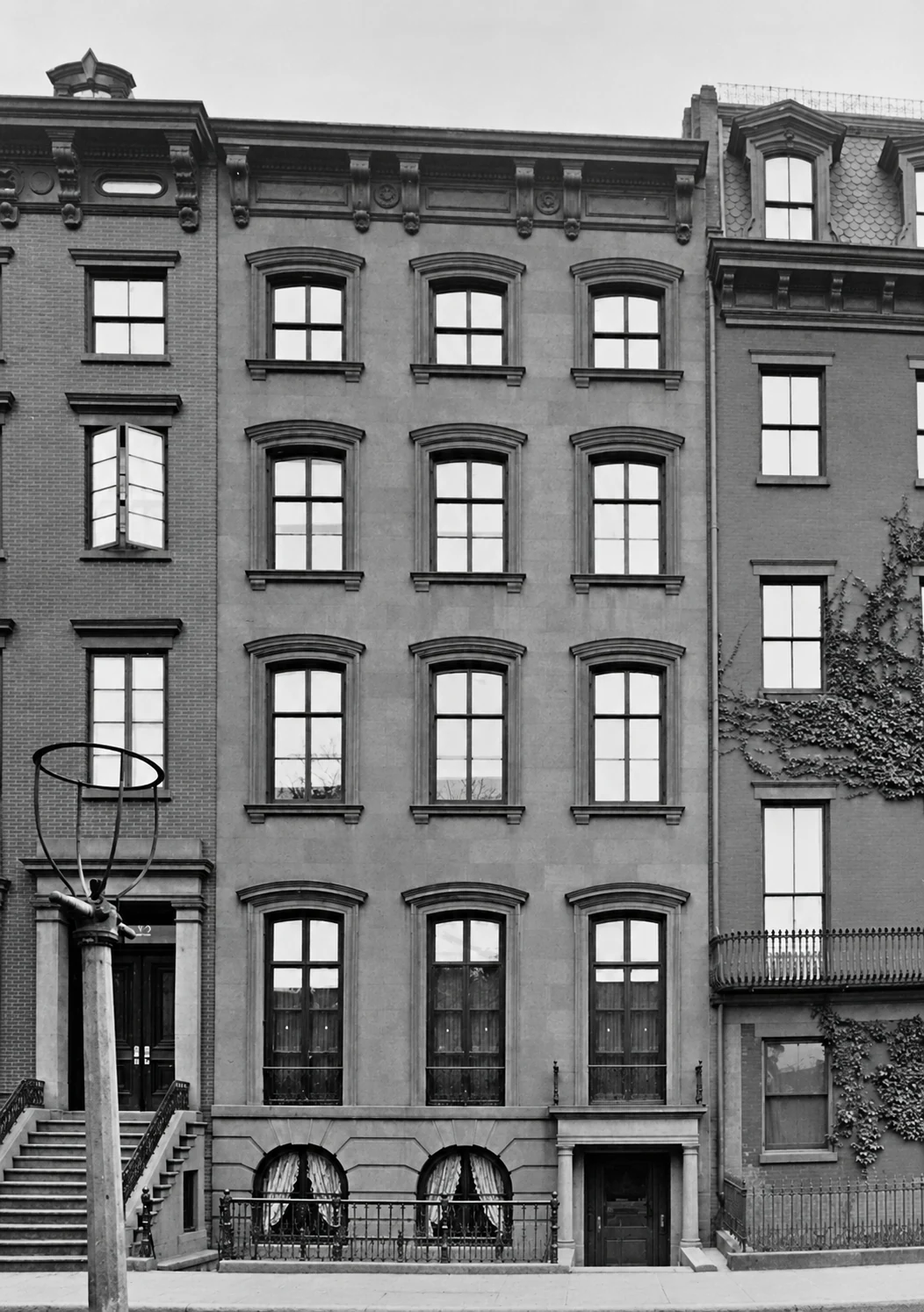
By the early 1880s the Bigelow family was wintering at 21 Gramercy Park South. Stephen Garmey tells a story about how Tilden arranged it. He wanted his friend close by and knew how Bigelow would answer an offer of a house. He put it in the name of Bigelow’s daughter Grace.
Granddaughter Grace B. Cook remembered coal fires because her grandfather objected to furnaces, and winter rides beside him in an open carriage, huddled under a fur robe. Andrew Carnegie regularly sent him Scottish birthday presents. The oatmeal went uneaten and the whisky undrunk. She loved the drives anyway. Once her grandfather began to talk, the cold had some competition.
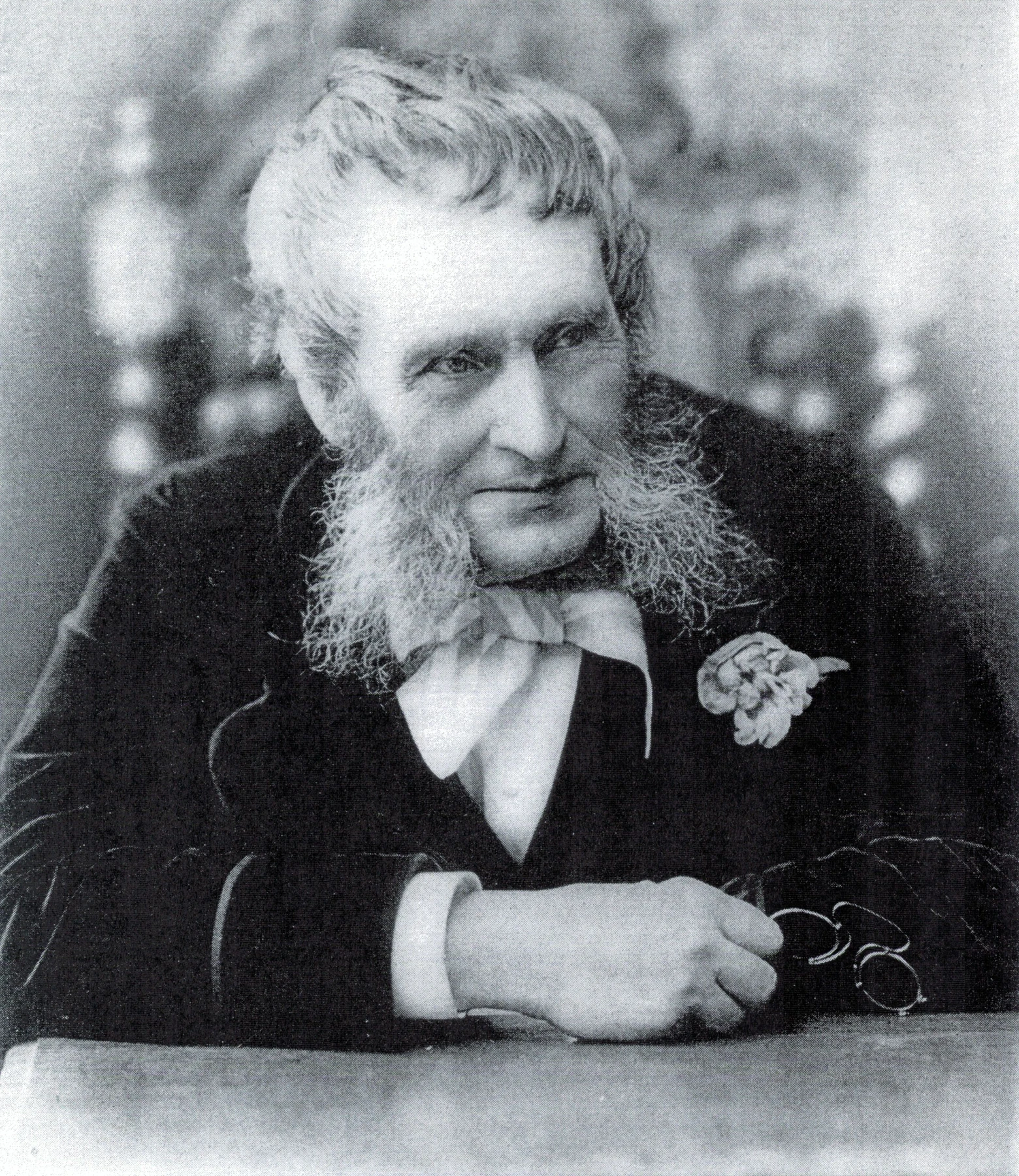
John and Jane Bigelow divided the year between the Park and their house at Highland Falls. On Oscar Wilde’s American tour in 1882, Bigelow invited him to dinner and took him to the Century Association. At home he had the former governor a few doors away, books within reach and a study where he would write Tilden’s biography. A photograph of him there shows his spectacles in his hand. He could still be persuaded to leave the study. In 1886 he went to Panama as a guest of the French canal company to report on its progress for the New York Chamber of Commerce. He later helped the engineer Philippe Bunau-Varilla make the case for an American canal by that route.
Three foundations at one table
At 14–15 Gramercy Park South, Tilden had put together an extraordinary private library. He died in 1886 with a provision in his will for a free library and reading room in New York. The difficulties began almost at once. After his heirs challenged the will, a little over two million dollars remained for the library. As one of his executors, Bigelow had to work out what the trustees could still deliver.
The Astor Library already owned a research collection. James Lenox’s library held rare books and manuscripts. Each institution faced the expense of maintaining its collections and making them available. The Tilden trustees had money for readers and a mandate to serve them. Bigelow proposed putting the three together. It meant persuading the trustees of two distinguished libraries to give up their separate existence.
The agreement of May 23, 1895, kept all three names. They are still carved on the Fifth Avenue façade, where a reader can see the words “Astor, Lenox and Tilden Foundations.” Bigelow became the new institution’s first president. The consolidation committee’s records preserve the negotiations behind those carved words.
Seven minutes for a book
Sixteen years separated the signatures from the dedication of the great building on the old Croton Reservoir site. On May 23, 1911, the ninety-three-year-old Bigelow went to Fifth Avenue with Grace. The library has kept a photograph of his arrival. President William Howard Taft dedicated the building that day. The following morning the doors opened to the public.
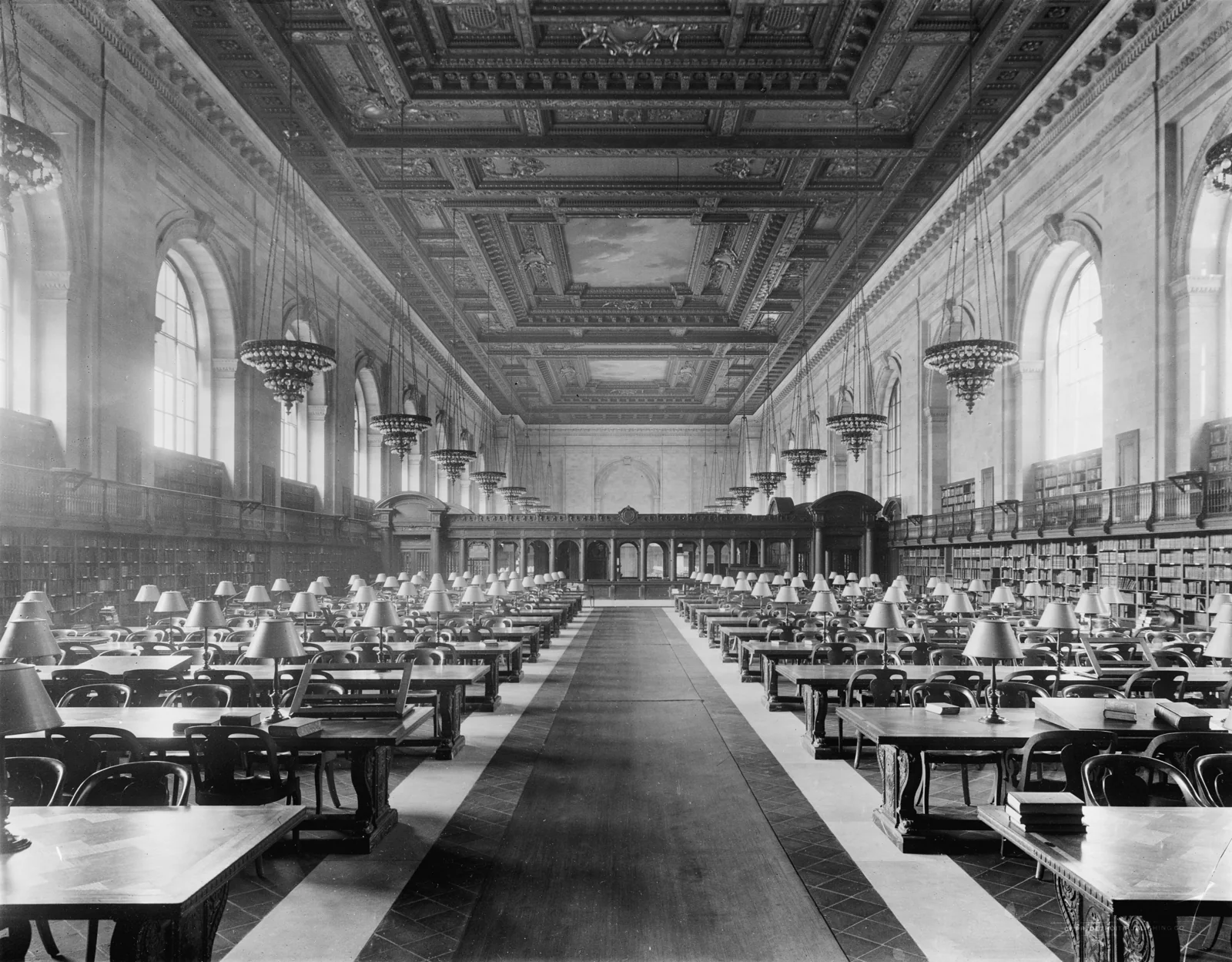
One early reader wanted a Russian work on Nietzsche and Tolstoy by Nikolai Grot. His call slip went down to the stacks. Seven minutes later he had his book. Bigelow lived until December, dying at No. 21 a few weeks after his ninety-fourth birthday.
Life at a glance
- Life
- November 25, 1817 – December 19, 1911
- Gramercy home
- 21 Gramercy Park South, from the early 1880s until his death
- Newspaper
- Co-owner and editor of the New York Evening Post with William Cullen Bryant
- Diplomatic service
- United States consul in Paris, then minister to France, 1865–1866
- New York Public Library
- First president of the consolidated library, 1895–1911
Over time
- 1845 · Inspector at Sing Sing
- 1848 · Joins Bryant at the Evening Post
- 1863 · Receives the shipyard papers
- 1866 · Records Field’s telegram from Newfoundland
- 1868 · Publishes Franklin’s complete autobiography in English
- Early 1880s · The Bigelows settle at No. 21
- 1895 · Becomes the library’s first president
- 1911 · Attends the dedication with Grace
Sources cited
- Stephen Garmey, Gramercy Park (Balsam Press, 1984), pp. 152, 155–157. The Bigelow household, Grace B. Cook’s family recollections, and John and Grace on their way to the library dedication.
- Carole Klein, Gramercy Park: An American Bloomsbury (Houghton Mifflin, 1987), pp. 42–43, 159–162. The Cooper and Field circle, Tilden’s collecting and the library bequest.
- John Buckley Pine, “The Story of Gramercy Park,” Valentine’s Manual of Old New York, pp. 229–230. A neighbor’s account of Bigelow at No. 21.
- John Bigelow papers, Manuscripts and Archives Division, New York Public Library. Correspondence, diaries, newspaper work and political career. Phyllis F. Field, “Bigelow, John,” American National Biography, on his early life and prison reforms.
- U.S. Department of State, Office of the Historian. Ministerial appointment, correspondence on ships built in France and Bigelow’s dispatch of August 3, 1866.
- National Archives, “The Diplomats Who Sank a Fleet”, and Naval History and Heritage Command, Stonewall. Trémont’s evidence and the fate of the ships.
- John Bigelow’s account and correspondence on the Franklin manuscript. Library of Congress, early printed editions of the Autobiography. Morgan Library & Museum, Bigelow to Morgan, January 1, 1906.
- New York Public Library, consolidation committee records and opening day at the 42nd Street Library. New York City Landmarks Preservation Commission, designation report on the library’s interiors.
Photo credits
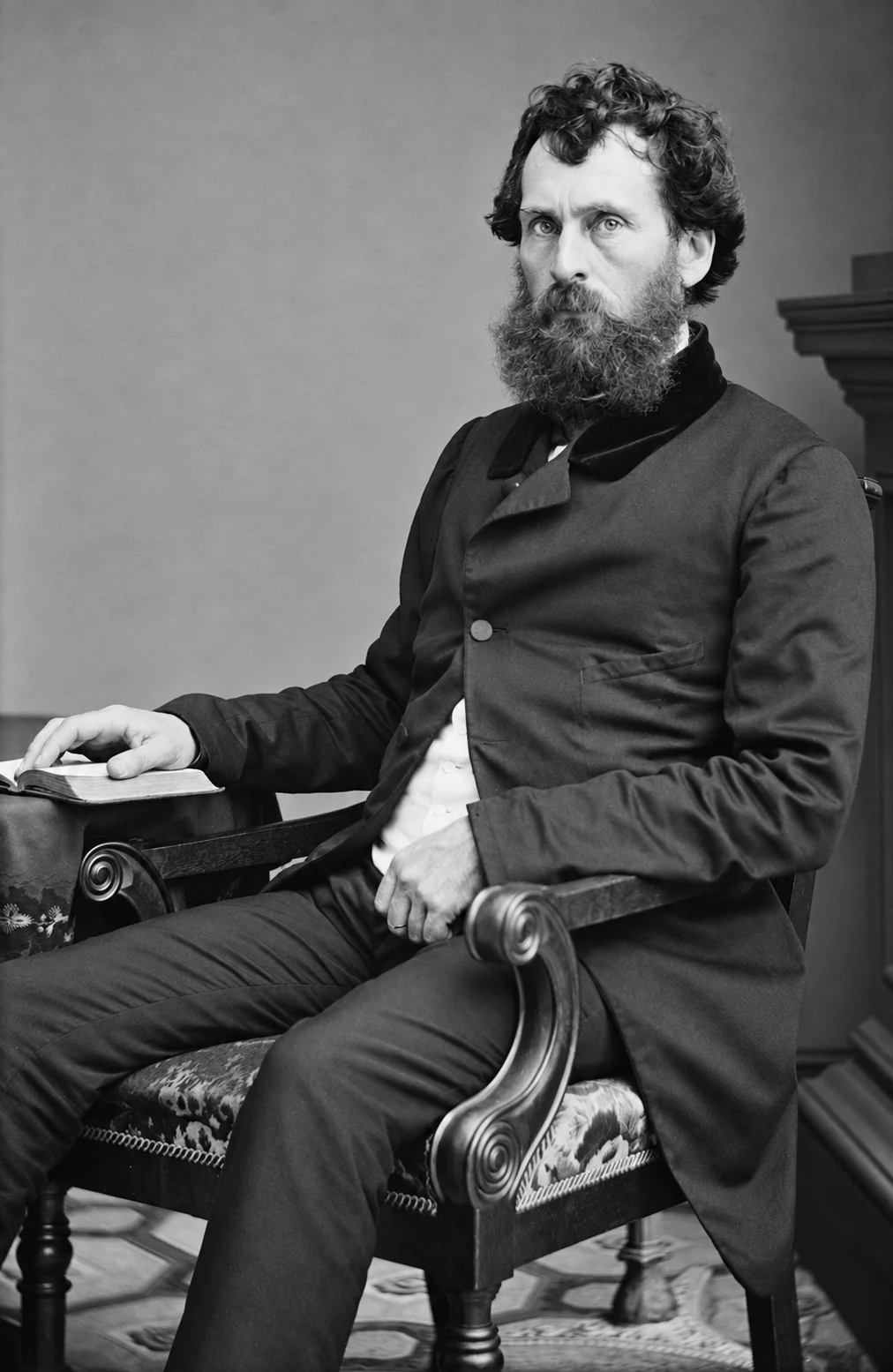
- Portrait of John Bigelow, 1860s. Brady–Handy Photograph Collection, Prints and Photographs Division, Library of Congress. Historical image also reproduced in the John Bigelow House profile.
- Kimmel & Forster, The Eighth Wonder of the World—The Atlantic Cable, 1866. Library of Congress, LC-DIG-ds-04508. No known restrictions on publication.
- The Bigelow residence, Old Buildings of New York City (Brentano’s, 1907), p. 82. Public domain.
- John Bigelow in his study. Gramercy Park Block Association historical archive. See the house profile’s image credits.
- Detroit Publishing Company, Main Reading Room, New York Public Library. Library of Congress, LC-DIG-det-4a24347. Public domain.