
Abram S. Hewitt
The mayor at 9 Lexington Avenue
1822–1903 · Ironmaster, mayor & Cooper Union steward
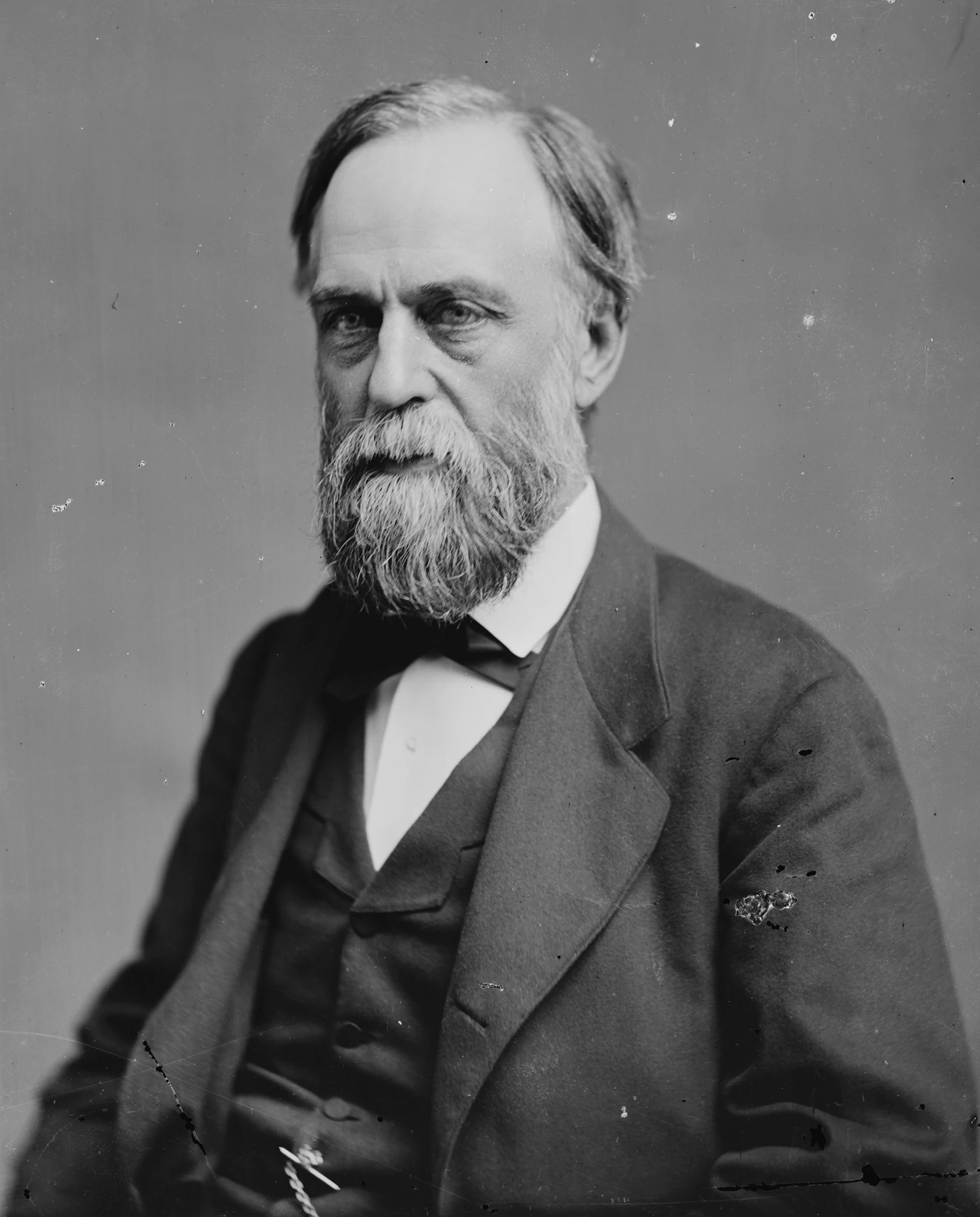
Two candidates in the family circle
In the presidential election of 1876, Abram Hewitt ran the Democratic campaign for his neighbor Samuel J. Tilden. At home, he shared a roof with another candidate. Peter Cooper, his father-in-law and business partner, was running for president on the Greenback ticket.
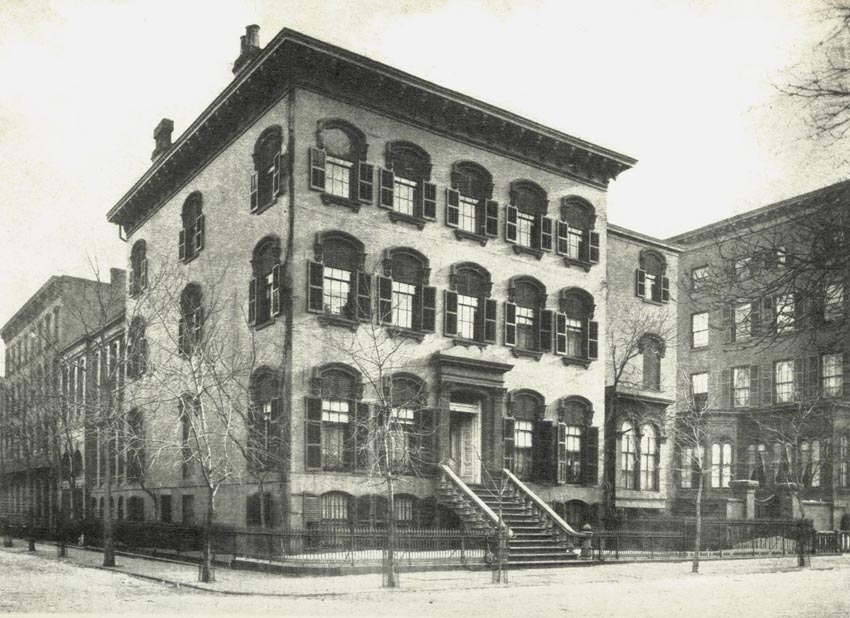
Election maps put the two men in different political camps. A map of Gramercy Park puts them at the same front door. The house at 9 Lexington Avenue stood on the site now numbered 7. Three generations of Coopers and Hewitts lived there. Their school at Astor Place taught mechanics and artists after work. Their ironworks in Trenton helped pay for it. Even the cook’s rolling pin was liable to disappear into one of the children’s experiments.
A partnership tested at sea
Abram Stevens Hewitt was born near Haverstraw, New York, on July 31, 1822. His father John was an English cabinetmaker whose New York furniture business was destroyed by fire. A scholarship took Abram to Columbia College. He graduated in 1842, taught mathematics, read law and earned money tutoring a young man named Edward Cooper.
Edward’s father could afford to send him abroad. Abram went with him, and on their return from Europe in 1844 the two young men survived a shipwreck. By the following year Peter Cooper was backing them in an ironmaking business in New Jersey. Abram qualified for the bar that autumn, but his eyesight was failing and he gave up the idea of practicing law. He and Edward went to work in Trenton. Ten years later he married Edward’s sister Sarah Amelia.
The households were close enough to suit Peter Cooper. Edward had a home across Lexington Avenue. Amelia and Abram spent their winters with her parents, dividing the year between Gramercy and the family’s ironmaking estate at Ringwood, New Jersey. As the children came along, No. 9 acquired a large library and a gymnasium. Eventually there were six children and thirty-five rooms.
Iron for the printers
A publisher on the west side of the Park had particular reason to know what the Trenton mills could do. In December 1853 a fire destroyed the printing establishment of Harper & Brothers on Pearl Street. James Harper, who lived at 4 Gramercy Park West, and his brothers needed a building that could bear the weight of their presses and give them better protection from the next fire.
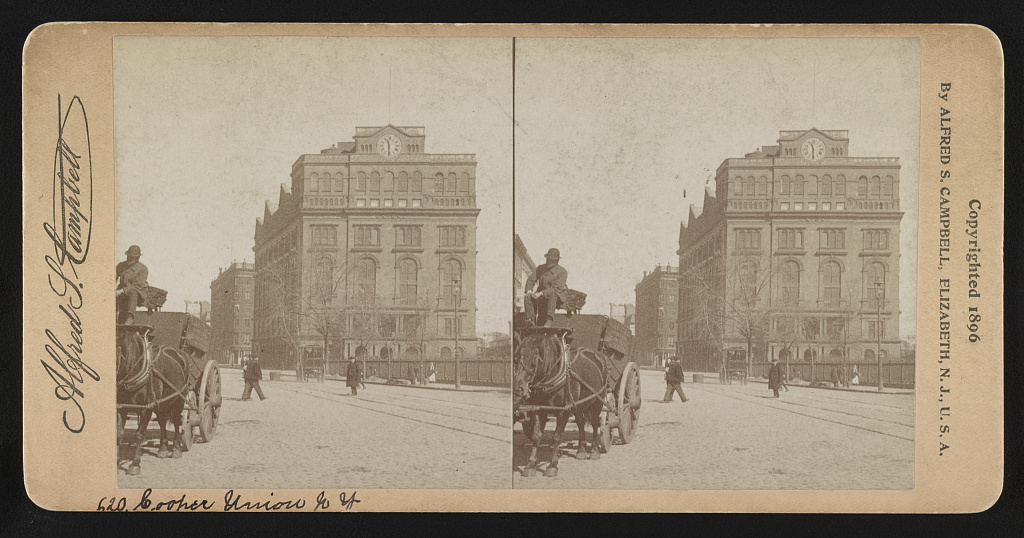
At Trenton, Edward Cooper and Hewitt were producing rolled wrought-iron beams. Peter had intended the beams for his free school at Astor Place. Construction there paused after the second floor so that the mill could supply the Harpers and then the United States Assay Office. As other builders saw what the iron could carry, orders multiplied. The school had to wait for its beams, but the trade helped finance the rest of the building.
On April 29, 1859, Peter and Sarah Bedell Cooper signed the deed of trust that created Cooper Union. Abram and Edward were among its first trustees. In November the classrooms and reading room opened. Hewitt stayed on as secretary for more than forty years. He took a particular interest in technical instruction for people who earned their living by day.
A roll of brown paper
Bernard Saint-Gaudens made boots for the Cooper family. His son Augustus spent the working day cutting cameos for jewelry. He wanted to draw. In Carole Klein’s account, Bernard took the fourteen-year-old to Cooper Union with a roll of brown paper. The usual minimum age was sixteen. While his father spoke to Hewitt, Augustus unrolled the paper and drew. Hewitt let him into the evening classes.
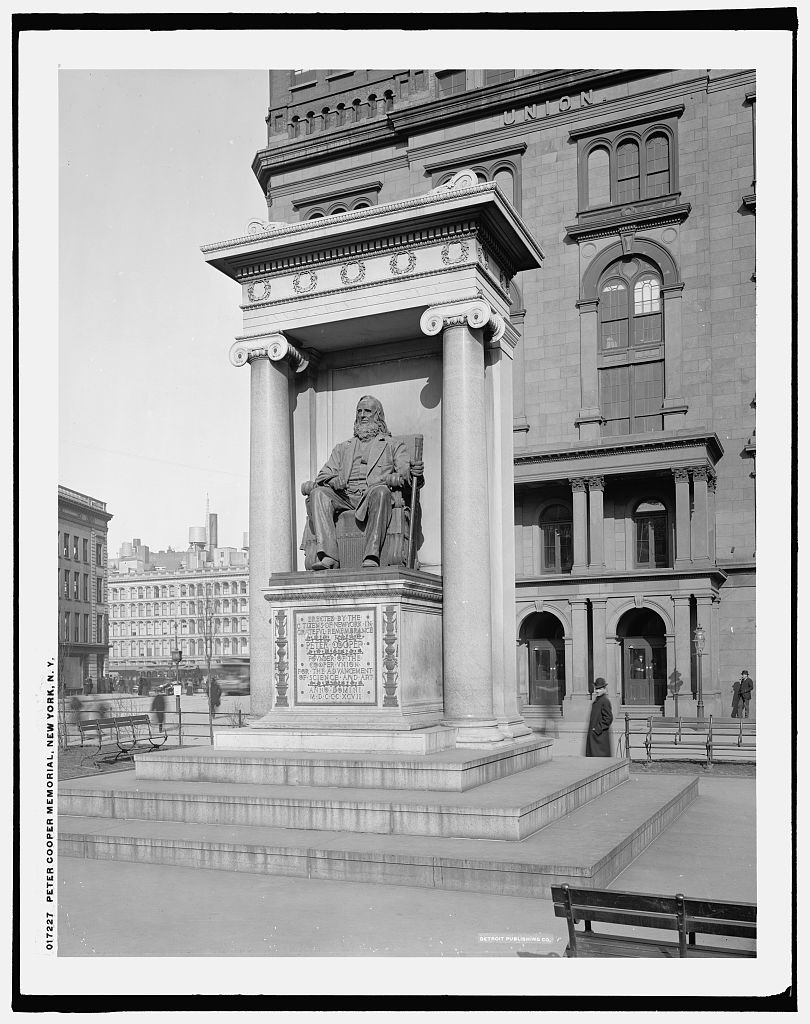
The sculptor’s own recollection of those evenings dwells on what it took to get there. He came home from the cameo cutter at six, ate a hurried supper and went back out to draw. His mother had to pull him out of bed in the morning. He remembered a kindly glance from Hewitt at the school and the gratitude he felt for the rest of his life. In 1897 his seated bronze of Peter Cooper was unveiled outside the building where he had studied.
At No. 9, the children enjoyed an education with somewhat looser rules. Edward Ringwood Hewitt remembered Thomas Edison bringing a phonograph to show his grandfather. The boys had parts left over from their homemade telephones. What they lacked was a cylinder. Edward waited until the cook was in the laundry and took her rolling pin. Wrapped in foil, the contraption could say “Hello” and a few squeaky words. Edward told the story in his memoirs, and Garmey preserved it in his account of the house.
The disputed election
Hewitt entered Congress in 1875. The following year, as chairman of the Democratic National Committee, he managed Tilden’s campaign against Rutherford B. Hayes. On election night he and Tilden followed the returns at a Union Square hotel. By the time Tilden walked back to 15 Gramercy Park South, neighbors were waiting to congratulate him. He had won the national popular vote. Twenty electoral votes were still in dispute.
The disagreement reached inside the campaign itself. Congress created a commission to decide which returns to accept. Hewitt accepted Justice Joseph P. Bradley as its fifteenth member. Tilden thought his campaign manager had conceded too much. The commission split eight to seven and awarded all twenty votes to Hayes, who won the presidency by one. Behind the arguments over ballot certificates lay violence and intimidation against Black voters in the South and the future of Reconstruction. Columbia’s account of Hewitt’s part in the crisis follows him through those months in Washington.
Tilden’s friend John Bigelow would later write his biography from No. 21 on the Park. Hewitt’s own work in Washington returned to questions he knew from the mill. In 1879 he sponsored the legislation creating the United States Geological Survey. Making iron had given him a practical reason to ask precisely what lay underground. On the House floor he asked the question for the country.
The mayor’s front door
After Peter Cooper died in 1883, Amelia and Abram engaged their Gramercy neighbor Stanford White to remodel No. 9. In 1885 he took down the high stoop and brought the entrance to street level beneath a columned portico. Amelia had bought a Venetian mural in Paris. White set it above seventeenth-century Flemish oak in the dining room. That room survives in the Andrew Dickson White House at Cornell. White would later join two former Field houses for Henry William Poor on the site of One Lexington Avenue. Two of his grandest Gramercy commissions stood within a short walk.
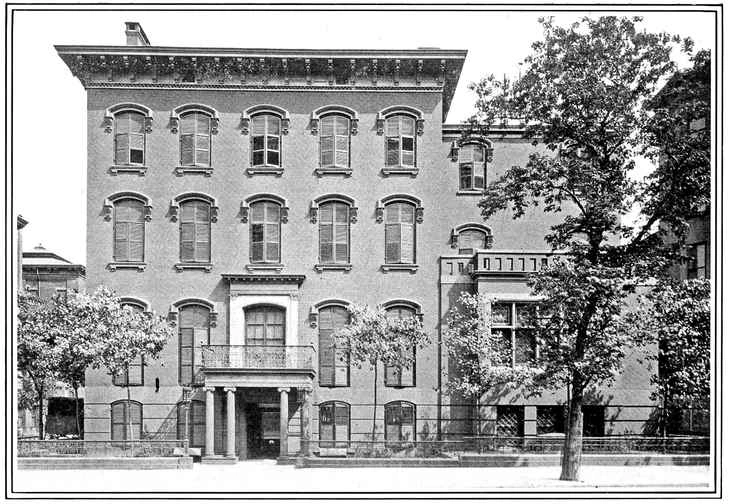
In 1886 Hewitt won a three-way race for mayor. Henry George, backed by a labor coalition, came second. The young Republican Theodore Roosevelt came third. Hewitt took office in 1887 and served through 1888. White designed the mayor’s lamps for his new front entrance.
His son Edward recalled a less sociable gathering behind that door. Hewitt, frustrated by gambling houses operating openly, summoned senior police officers to his study and locked the door. He told them he had paid investigators to gather evidence against them. He would keep the reports in his safe, available to the district attorney if his orders went unheeded. Edward, who said he was in the room, remembered the gambling houses closing across the city the following day.
Hewitt had less luck getting Albany to listen. Building an underground railway cost more than private investors would risk. He proposed that the city borrow the construction money and own the railway. A private company would build and run it under lease, paying rent to service the city’s debt. His 1888 bill attracted little support. Six years later, with no responsible bid for a privately financed line, New York voters endorsed municipal ownership. The railway company’s opening-day history recorded the debt it owed the former mayor.
The museum upstairs
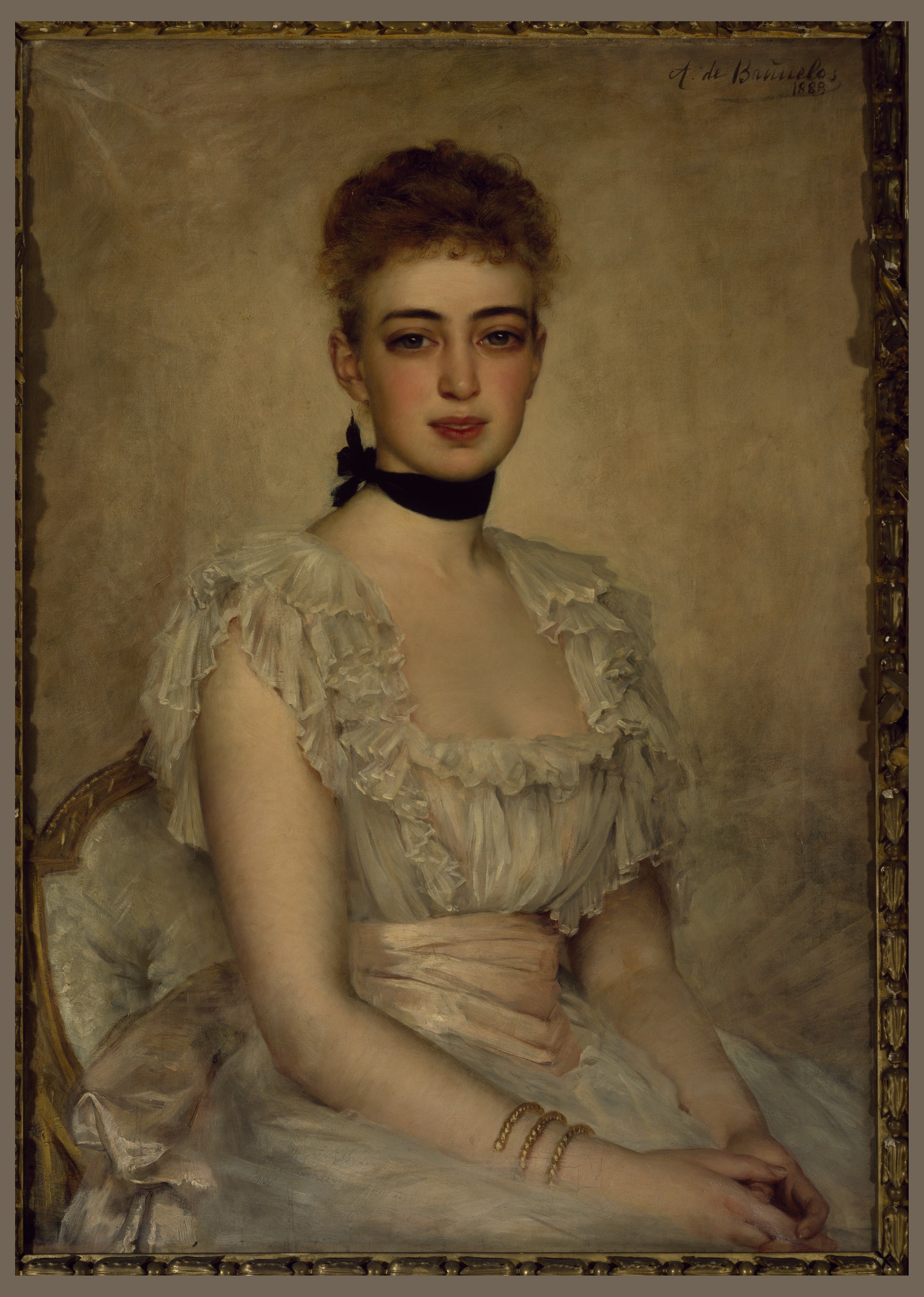
Hewitt’s daughters Sarah and Eleanor had grown up in a house where their father’s illustrated books lay within reach. Their childhood scrapbook mixed drawings with playbills, ship manifests and programs from the opera. On visits to Paris they studied the Musée des Arts Décoratifs. Back in New York they began asking friends for things that a designer could learn from, among them textiles, furniture and books of engravings.
In May 1897 the sisters opened the Cooper Union Museum for the Arts of Decoration on the fourth floor of their grandfather’s school. Their older sister Amy helped plan it. Abram and Amelia gave more than three hundred plaster casts made from historical objects in Paris. The daughters decided how the collection would be used. An artisan could come after work, handle a specimen, measure it and sketch the way it was made. Their collection became the foundation of today’s Cooper Hewitt, Smithsonian Design Museum.
Abram died in New York on January 18, 1903. His subway was already under construction. On October 27 of the following year passengers went down the stairs at City Hall and rode north on a railway the city owned.
Life at a glance
- Life
- July 31, 1822 – January 18, 1903
- Gramercy home
- The Cooper–Hewitt family house at 9 Lexington Avenue, on the site of today’s No. 7
- Family
- Married Sarah Amelia Cooper in 1855. Their six children included museum founders Sarah Cooper Hewitt and Eleanor Garnier Hewitt.
- Industry and education
- Partner of Edward Cooper in the iron business. Founding trustee and longtime secretary of Cooper Union.
- Congress
- Represented New York from 1875 to 1879 and from 1881 until December 1886
- Mayor of New York
- 1887–1888
Over time
- 1842 · Graduates from Columbia
- 1845 · Enters the iron business with Edward Cooper
- 1855 · Marries Sarah Amelia Cooper
- 1859 · Becomes a founding Cooper Union trustee
- 1860s · Saint-Gaudens attends evening classes
- 1876 · Manages Tilden’s presidential campaign
- 1885 · White remodels No. 9
- 1887–1888 · Serves as mayor
- 1897 · Sarah and Eleanor open their museum
Sources cited
- Stephen Garmey, Gramercy Park (Balsam Press, 1984), pp. 68–79. The two generations at No. 9, the phonograph experiment, White’s alterations and the mayor’s meeting with police officers. Garmey draws on Edward Ringwood Hewitt, Those Were the Days (1943).
- Carole Klein, Gramercy Park: An American Bloomsbury (Houghton Mifflin, 1987), pp. 42–49, 130–132, 152, 159–160. The family household, Saint-Gaudens’s admission and election night with Tilden. Compare Saint-Gaudens’s memoir excerpt in the Jasper Courier, March 5, 1909.
- John Buckley Pine, “The Story of Gramercy Park,” Valentine’s Manual of Old New York, pp. 222–224. Hewitt as neighbor, ironmaster and public official.
- Jon C. Teaford, “Hewitt, Abram Stevens,” American National Biography. U.S. House of Representatives, official biography and terms of service. U.S. Capitol Visitor Center, Hewitt and the Geological Survey.
- Historic American Engineering Record, The Cooper Union for the Advancement of Science and Art, HAER NY-20, p. 23. The mill’s orders for the Harpers, the Assay Office and the Foundation Building. Cooper Union, 1859 deed of trust and founding trustees.
- Paul Hond, “Abram Hewitt and the Disputed Election of 1876,” Columbia Magazine. University of Maryland, Samuel Gompers Papers, Henry George’s 1886 mayoral campaign.
- Cooper Hewitt, Smithsonian Design Museum. Family history, childhood at No. 9, Amelia’s commission to Stanford White, and the 1897 museum opening.
- Interborough Rapid Transit Company, The New York Subway: Its Construction and Equipment (1904), chapter I. Hewitt’s account of municipal credit, the 1888 bill and the vote of 1894.
Photo credits
- Representative Abram S. Hewitt of New York, about 1875. Brady studio, Prints and Photographs Division, Library of Congress, via the U.S. Capitol Visitor Center.
- Unidentified photographer, 9 Lexington Avenue before 1883. Historical photograph reproduced by Cooper Hewitt, Smithsonian Design Museum.
- The Cooper–Hewitt residence, Old Buildings of New York City (Brentano’s, 1907), facing p. 107. Public domain.
- Alfred S. Campbell, Cooper Union, N.Y., 1896. Library of Congress, LC-DIG-stereo-1s07232. No known restrictions on publication.
- Detroit Publishing Company, Peter Cooper Memorial, New York, N.Y., c. 1900–1906. Library of Congress, LC-DIG-det-4a11532. No known restrictions on publication.
- Antonia de Bañuelos, Portrait of Eleanor Garnier Hewitt, 1888. Cooper Hewitt, Smithsonian Design Museum, bequest of Erskine Hewitt, 1938-57-737. Photograph by Scott Hyde.