
39A Gramercy
Park North
An address for dissent.
145 East 21st Street · c. 1930
In June 1953, a letter bearing the address 39A Gramercy Park arrived at the State Department. Its author, Norman Thomas, had run for president six times. Now he wanted an answer to a smaller, sharper question: could a democratic socialist get a government job?
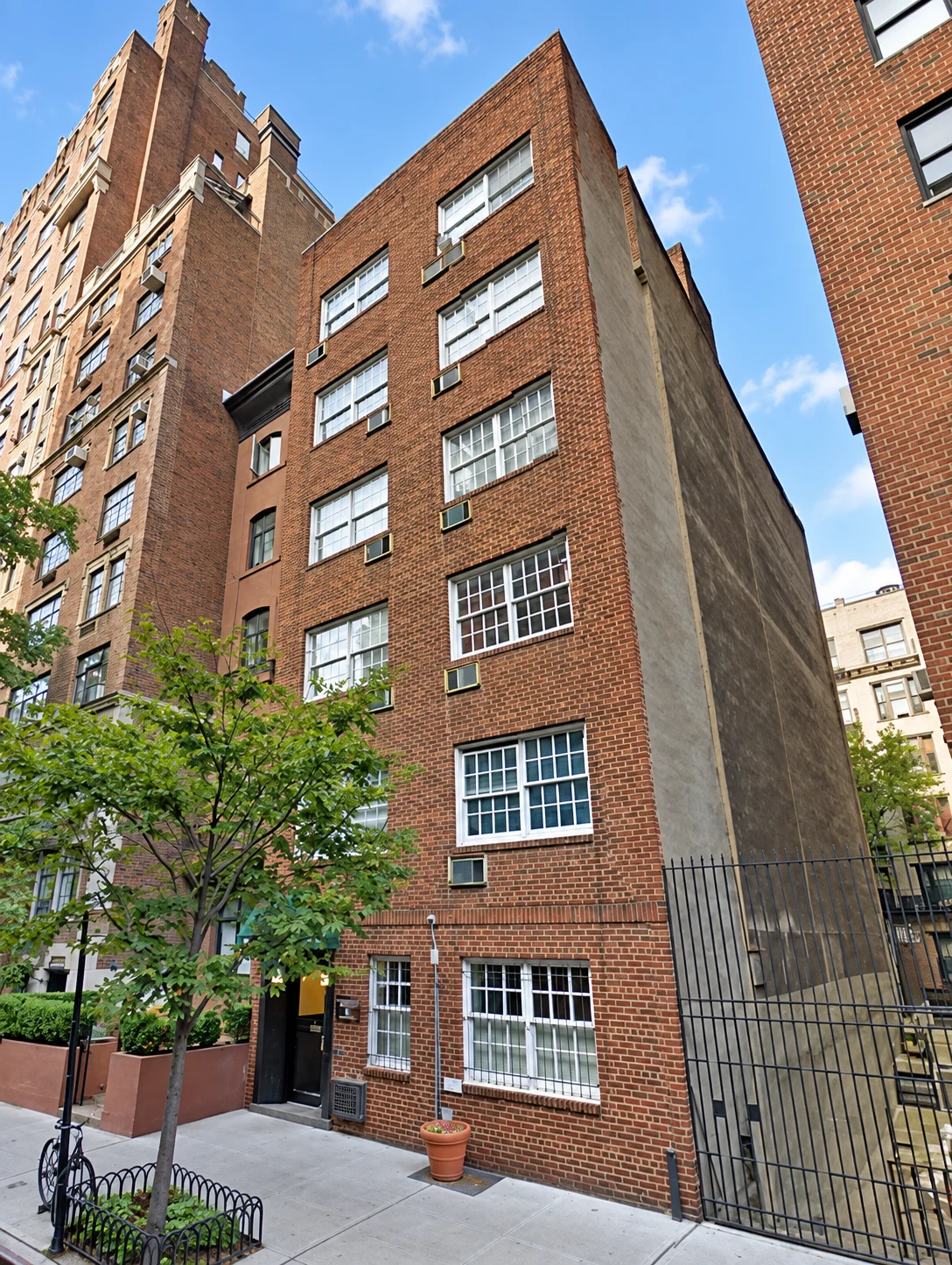
The building behind that letter is easy to pass. Six stories of brick occupy a narrow piece of East 21st Street, close to the Park but far from the scale of its grand hotels. Its history opens onto a wider world: a refugee rescuer under suspicion, an argument over loyalty, and a writer determined to make officials explain themselves.
A quiet façade. A far-reaching voice.
A narrow place on the north side
Twenty-six feet of New York
On East 21st Street, the difference between 39 and 39A is more than a letter. No. 39 is the broad apartment building reaching toward Third Avenue. No. 39A is its slender neighbor to the west: a red-brick front, broad groups of windows, and an entrance tucked to one side. The small scale invites a closer look. A person can take in the entire frontage almost at a glance.
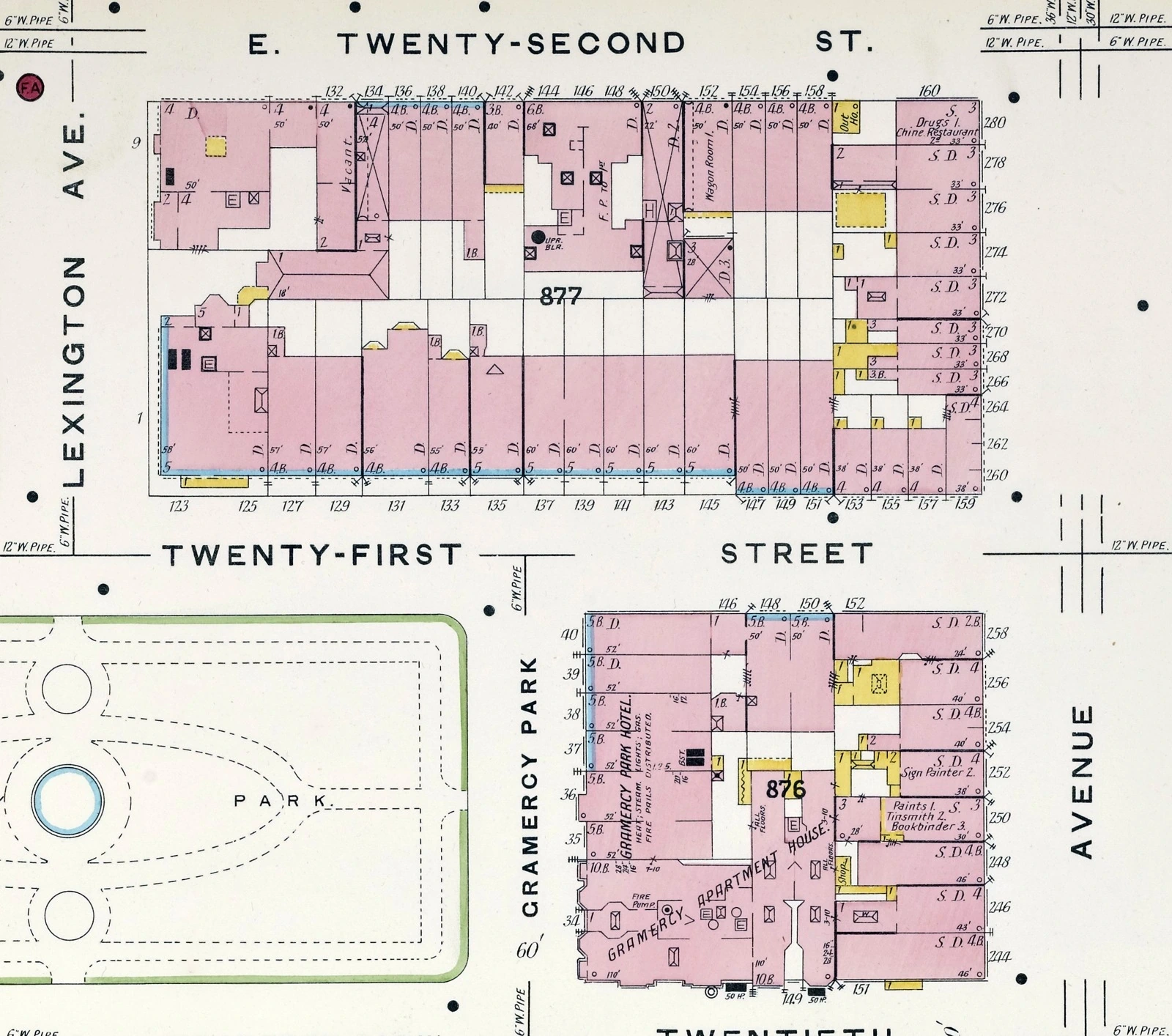
The city knows this property by another name: 145 East 21st Street. In the October 19, 1918 issue of Record and Guide, a short real-estate notice records Pease & Elliman’s appointment as agents for that address. It is a modest entry, but it gives the site a life before the present apartment house. The notice concerns the earlier property; it does not date the building standing here now.
New York City Department of Finance records give 1930 as the year built. The six-story house occupies a frontage of only 26 feet, according to the city’s property assessment. Its architecture makes that narrowness legible. Brick piers hold the window groups in place; a tall, largely blank side wall emphasizes the depth of the structure behind its small public face.
The windows do much of the expressive work. Their breadth gives the front a generous, almost studio-like character, while the recessed doorway keeps the entrance quiet. There is little applied ornament to distract the eye. The effect comes from the proportion of openings to wall, from the red of the brick, and from the light changing across the glass.

A public voice, a Gramercy address
The candidate who kept asking
By the time the 1950 Congressional Record listed Norman Thomas at 39A Gramercy Park, he had spent decades trying to change American public life. He had been a minister, an organizer, an editor, and the Socialist Party’s presidential candidate in six successive elections, from 1928 through 1948. The campaigns ended. The arguments did not.
His grandson Evan Thomas, writing for Princeton Alumni Weekly, recalled a platform that could sound startlingly familiar to later generations: minimum wages, a five-day working week, unemployment insurance, inexpensive housing, and support for older Americans. Electoral defeat was only one measure of such a career. Ideas that failed to win an election could still alter the terms of national debate.
Thomas also refused an easy division of the world into loyal citizens and suspect dissenters. As the King Institute’s biography explains, he opposed both communism and Senator Joseph McCarthy’s methods. His record included speaking for Japanese Americans subjected to wartime incarceration and for Black sharecroppers. The defense of unpopular people was a long-standing commitment.
At 39A, that public life enters the local record through something wonderfully ordinary: an address. It appears in printed reporting, on correspondence, and in a directory cited by federal officials. Those traces place this small Gramercy building within Thomas’s working world. They also allow the story to be told through his actual interventions, rather than through a famous name attached loosely to a façade.

A letter for a rescuer
When a defender needed defending
On October 12, 1951, Thomas wrote to Colonel Victor W. Phelps about Varian Fry. A later FBI correlation summary, on printed page 143, identifies the writer at 39A Gramercy Park and describes his letter as disputing Fry’s alleged Communist Party membership. The entry is brief. The life behind it is extraordinary.
A decade earlier, Fry had gone to Marseille for the Emergency Rescue Committee. France had fallen; refugees who had already fled Hitler were trapped again. The United States Holocaust Memorial Museum’s account follows Fry and his colleagues as they arranged documents, found routes out, and helped some 2,000 people escape France in 1940–41. Their work reached far beyond a single celebrated refugee. It depended on money, ingenuity, contacts, and repeated decisions to help people in immediate danger.
In the 1951 record, the direction of assistance is reversed. Fry’s own political standing is under challenge, and Thomas steps forward on his behalf. The surviving summary does not tell us that Fry came to Gramercy, or how the two men discussed the matter. What it does preserve is an act: Thomas put his name to a defense of Fry, and the address beside that name was 39A.
This is one of the rewards of looking past the grandest buildings. A narrow apartment house can lead directly into a history of rescue, suspicion, and personal responsibility. Its significance rests in the particular connection the documents reveal: one man using his public standing to challenge an allegation against another.
The question sent to Washington
A practical question, carefully put
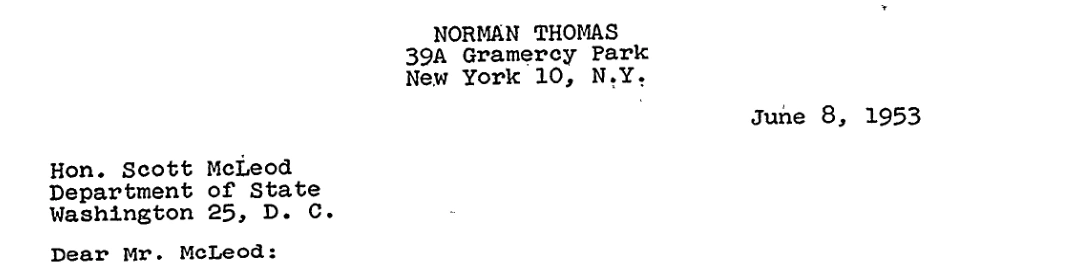
The letter dated June 8, 1953 begins with the plain heading “NORMAN THOMAS,” followed by 39A Gramercy Park. Its recipient was Scott McLeod at the Department of State. Thomas wanted a clear statement of the administration’s position on employing socialists, especially in civil-service work. Young people came to him for advice about government careers. He wanted to give them an answer grounded in policy.
His reasoning was exact. Political belief and personal loyalty were separate questions. A government could assess an individual’s conduct; a party label alone could not do that work. Thomas acknowledged that an administration might require political agreement from people making its policy. He asked what happened beyond those positions, where qualified people might serve despite holding different views.
McLeod’s July 14 reply drew that same distinction, though it left Thomas’s underlying concern very much alive. General application forms, he explained, did not ask ordinary political affiliation, apart from specified security questions. For policy-making appointments, he personally would not knowingly choose a socialist. The exchange became public reading in the September 1953 Foreign Service Journal.
Read beside the photograph of the building, the reproduced letterhead changes the scale of the story. The street has its brickwork, windows, and doorbells. The letter has Washington, employment, conviction, and the futures of people seeking work. A small address connects them. The force of the document comes from its practical purpose: Thomas was asking what a young person could actually expect when filling out an application.
The test of freedom
The reader on the other side
There was another reason for the inquiry. Thomas told McLeod that he was preparing a book for W. W. Norton on civil liberties and wanted to describe the administration’s position accurately. The correspondence was research as well as advocacy. He was collecting an answer that could be examined in public.
In 1954, Norton published The Test of Freedom. A June 14 FBI memorandum preserved in the released headquarters file summarized the book and again identified Thomas’s address as 39A Gramercy Park, this time citing Who’s Who in America 1954–55. Among the passages the Bureau noted was his insistence on distinguishing dissent from conspiracy. It also recorded his objection to treating police work as a source of political policy.
The archival arrangement is revealing in itself. A critic writes about the proper limits of government power; officials read the book, extract its observations, and circulate an assessment. The files now let us see both sides of that encounter. They are evidence of official attention, not a reason to adopt every suspicion or characterization that appears within them.
No surviving source consulted here identifies the room in which Thomas wrote the book. The documentary connection is narrower and more secure: he used the Gramercy address during the exchange that preceded publication, and the Bureau repeated it when reviewing his work. That is enough to give these otherwise quiet windows an unexpected place in the story of American civil liberties.
The address remains
Listen, then look again
Thomas’s voice survives as well as his paper trail. In WNYC’s recording of a 1964 Book and Author Luncheon, an elderly man still presses his audience to act. He discusses poverty, war, the pending civil-rights bill, and the temptation to believe that nothing can change. The recording belongs to his later public career; it does not establish that he was still using 39A. It does let a reader hear the person behind the typewritten letters.
The building continues its own, quieter life. Today the city assessment classifies 39A as an elevator cooperative. Its modest width preserves the rhythm of an individual lot, even beside a much larger apartment house. Seen from the sidewalk, the front remains a composition of brick and unusually broad windows: a practical piece of residential architecture in a neighborhood often remembered for its nineteenth-century houses.
The story asks us to slow down at the smaller address. There is no need to imagine a grand salon or an undocumented gathering. A few surviving pages already bring the building close to questions with real consequences: who could work for the government, how an allegation should be answered, and how much room a democracy could make for disagreement. At 39A, the route into that history begins with a line at the top of a letter.
Overview
The building record
- Address
- 39A Gramercy Park North / 145 East 21st Street, New York, NY 10010
- Location
- North side of East 21st Street, between Lexington and Third Avenues
- Property identifiers
- Manhattan block 877, lot 35; BIN 1017996
- Date
- c. 1930, following city finance records
- Form & style
- Six-story brick apartment house; restrained twentieth-century design
- Original architect
- Not established in the sources consulted
- Frontage
- 26 feet, according to the city assessment
- Present use
- Elevator cooperative; city records list 23 residential units
- Historic connection
- Norman Thomas’s address documented in records from 1950–1954
- Neighboring property
- 39 Gramercy Park North is a separate building
A note on dates and addresses
The 1930 year-built field appears in city finance records. An original construction permit or opening announcement has not been established, so this profile uses “c. 1930.” Commercial building directories give conflicting dates and unit totals; those discrepancies are not treated as proof of a different construction history. The 1918 management notice refers to the address before the present building.
The Thomas documents establish his use of 39A as an address during 1950–1954. They do not establish his first or last year of residence, a specific apartment, where he wrote every page of his book, or visits by the people discussed in his letters. Historical documents often omit “North.” They are read here alongside the modern property identification, not confused with the separate No. 39.
Sources Cited
- Record and Guide. October 19, 1918, p. 467. Management notice for 145 East 21st Street.
- New York City Department of Finance, J-51 benefits report. FY 2015/16, Manhattan, printed p. 7: block 877, lot 35; 1930 year built and 23 residential units.
- New York City Department of Finance, property assessment. 39A Gramercy Park North, block 877, lot 35; six stories, frontage, alternate address, and cooperative classification.
- Sanborn Map Company, Insurance Maps of Manhattan, vol. 2, plate 46. 1903. New York Public Library, via Wikimedia Commons.
- Congressional Record, House. 1950, p. 13097. Post War World Council reporting naming Thomas at 39A.
- FBI, Norman Thomas correlation summary. Released file, printed p. 143. Summary of Thomas’s October 12, 1951 letter concerning Varian Fry. Internet Archive / The Black Vault.
- United States Holocaust Memorial Museum, “Varian Fry”. Holocaust Encyclopedia. Fry’s rescue work in France, 1940–41.
- FBI, Norman Thomas headquarters file, part 1. Released file. Thomas–McLeod correspondence, June 8 and July 14, 1953; reproduced Thomas letter on PDF p. 114. Internet Archive / The Black Vault.
- Foreign Service Journal. September 1953. “McLeod–Thomas Correspondence.”
- FBI, Norman Thomas headquarters file, part 2. Released file. Memorandum to Mr. Nichols, June 14, 1954, reviewing The Test of Freedom and citing Thomas’s address.
- Evan Thomas, “#24: Norman Thomas 1905”. Princeton Alumni Weekly. Political career and reform platform.
- The Martin Luther King, Jr. Research and Education Institute, “Thomas, Norman Mattoon”. Stanford University. Biography and civil-rights work.
- Philip Quarles, “Norman Thomas”. WNYC, April 27, 2017. Archival 1964 luncheon recording; portrait credited to AP.
- CityRealty, “39A Gramercy Park North”. Exterior photograph; photographer uncredited. Its conflicting construction date is not adopted.
- StreetEasy, “39A Gramercy Park North”. Secondary cross-check of building identity, 1930 date, and residential units.
Image credits & treatment
Exterior: CityRealty, photographer uncredited. Norman Thomas portrait: AP, via WNYC. Both photographs received conservative AI-assisted tonal and clarity enhancement; the exterior also has minor foreground distractions removed. The portrait remains black and white. These images illustrate the documented building and person, not a reconstructed historical scene.
Sanborn map: Sanborn Map Company / New York Public Library, public domain; an existing cropped and contrast-adjusted detail. Letter: released FBI file, Internet Archive / The Black Vault; cropped directly from the scan without generative alteration. All images are served as responsive WebP files. Source links accompany each image. Research reviewed October 3, 2026.