
23 Gramercy
Park South
A quiet house.
A life in the public world.
Built 1847 · Late Greek Revival
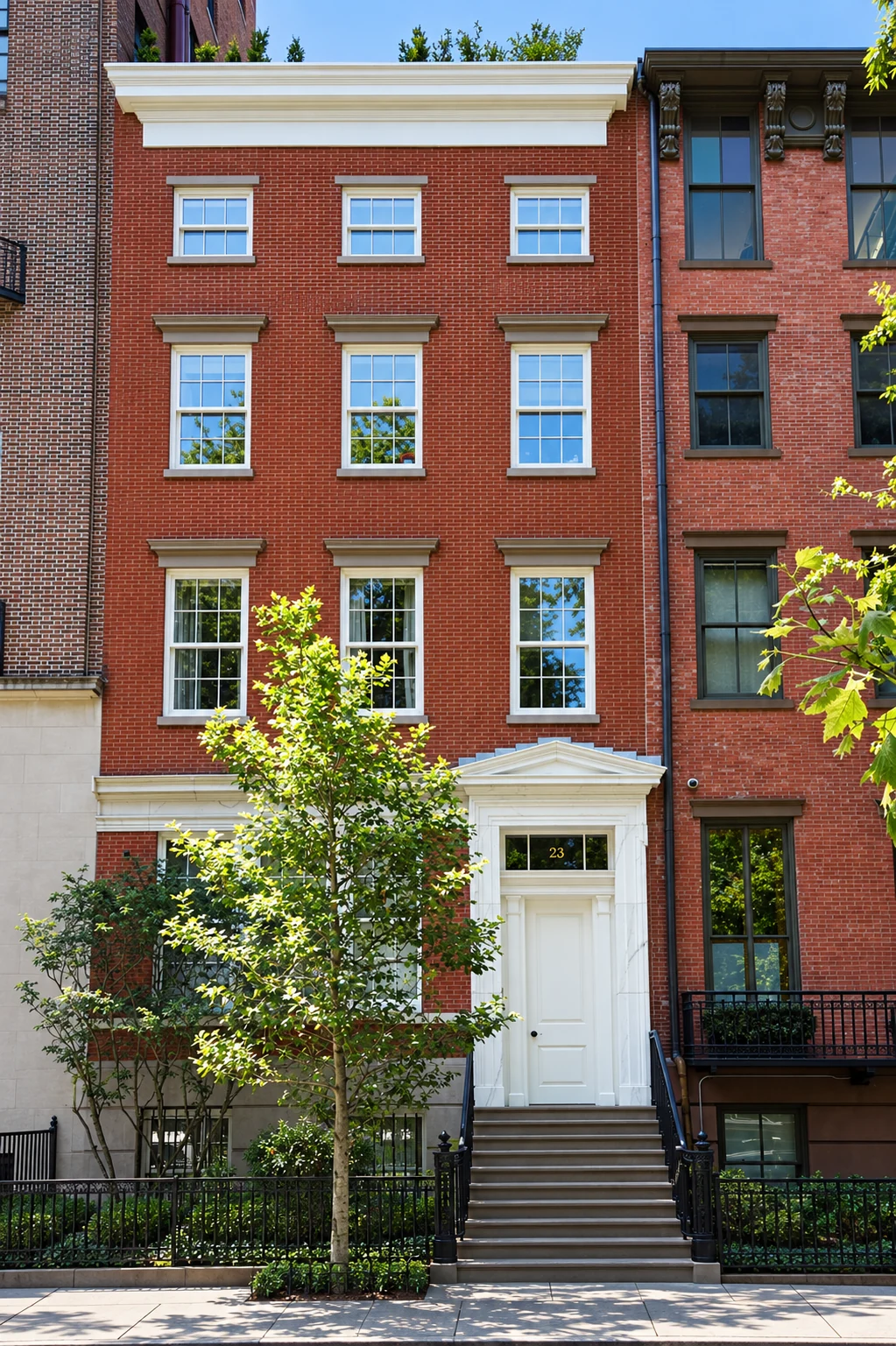
A suffragist’s meeting room. A journalist’s working address. A bequest that helped secure Fraunces Tavern. Behind the composed brick front of 23 Gramercy Park South, the life of a private house repeatedly crossed into public history.
Built in 1847, the house drew some of its most consequential occupants from the worlds of reform, writing, and philanthropy. Margaret Winchester, Kate Field, Frederick Samuel Tallmadge, and Marion and Max Ascoli left different kinds of records. Read together, they reveal a Gramercy address whose influence extended well beyond the Park.
A house with a public life
The quiet authority of brick
A door onto Gramercy
Start with the front door. A short flight of steps lifts it above the sidewalk, and a pale triangular pediment crowns the entrance. Above, the windows climb in three orderly ranks. At the roofline, a broad cornice brings the composition to a decisive stop. The house makes its impression through proportion: red brick, light trim, and the measured relationship between openings and wall.
The Landmarks Preservation Commission’s record dates No. 23 to 1847 and identifies it as late Greek Revival. That date places the house in the formative decades of Gramercy Park’s residential life, before the neighborhood acquired the apartment buildings, clubs, and institutions that would make its streets so varied.
Architectural historian Tom Miller traces the early house to the lawyer William Templeton Johnson and his wife, Laura Winthrop. Their domestic beginning offers a useful first view of the building: a substantial family home facing the Park, long before its address entered the records of reformers, writers, and philanthropists.
Reading the façade
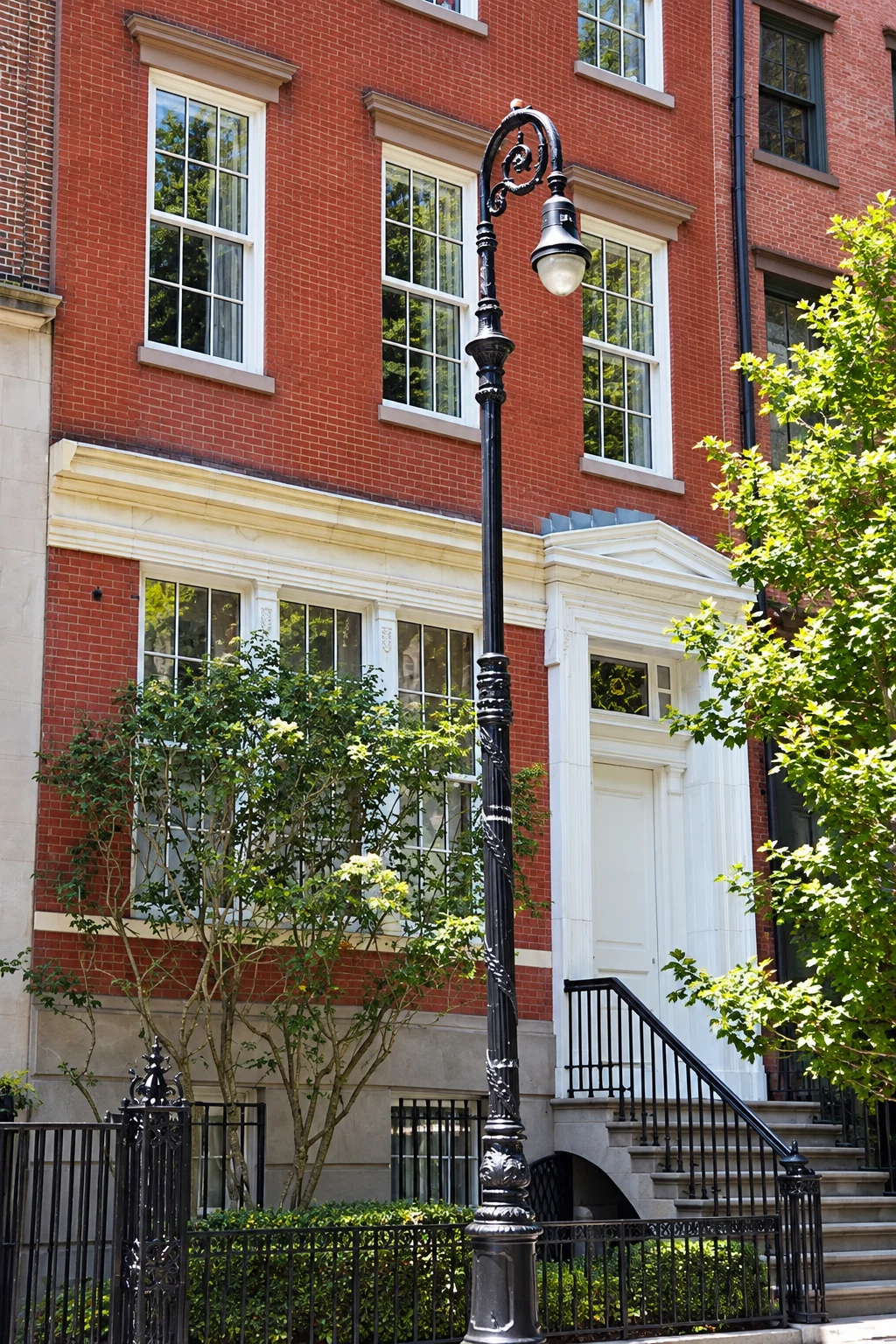
The upper windows do much of the architectural work. Their repeated spacing lends the front its composure; the shorter openings just below the cornice make a quieter final beat. The entrance, set to one side, prevents the front from becoming rigidly symmetrical. At street level, the planted area and ironwork create another transition between the public pavement and the rooms above it.
Look closely and the house also resists an easy reading as an untouched relic. The treatment of the lower windows differs from the regular upper stories. Like many old New York houses, it has been lived in, adapted, and repaired. Its historical interest lies partly in that persistence: the recognizable outline of a nineteenth-century dwelling surviving successive ideas about how a city house should work.
No original architect has been securely established in the records consulted for this profile. The building can be dated and understood without attaching a celebrated name to it. Its strongest architectural claim is visible from the street.
A parlor enters the argument
The hostess was an organizer
By the post–Civil War years, No. 23 was associated with Margaret E. Winchester. Her importance was more than social. The 1866 proceedings of the American Equal Rights Association, preserved in History of Woman Suffrage, name her among its executive committee. She belonged to the working organization behind the speeches and petitions.
The association’s stated ambition was immense: equal rights for American citizens, with particular attention to suffrage, without discrimination on the grounds of race, color, or sex. Its formation brought together people whose antislavery and women’s-rights work had overlapped for years. The abolition of slavery had forced a new question into national politics. Who would possess the power to vote in the reconstructed republic?
The published proceedings preserve the movement’s arguments in the participants’ own voices. They are often untidy, urgent, and difficult. That is their value. Behind the familiar names were disagreements over strategy, power, and whose exclusion should command immediate attention. Winchester’s house belongs in that political history because a private address could provide space for organizational work that reached far beyond its walls.
May 14, 1870
At Winchester’s home on May 14, 1870, the American Equal Rights Association held its final meeting. As historian Susan Goodier recounts in “Doublespeak”, those present voted to merge the organization with the National Woman Suffrage Association, despite opposition from Lucy Stone and Henry Blackwell. The National association already existed; it had been founded in 1869. This was a meeting about the fate of the older coalition.
The distinction matters. Calling No. 23 simply a birthplace of women’s suffrage would flatten a far more revealing episode. The house witnessed an argument about how a movement should continue after its alliances had fractured. Goodier’s study also insists on the place of Black women in this history and the racism they confronted within the suffrage movement.
From the sidewalk, nothing announces that struggle. The restrained doorway gives little hint of the questions once carried through it. Yet this is precisely how political life often entered Gramercy: through a meeting in a house, a person willing to host it, and decisions whose consequences traveled well beyond the neighborhood.
Kate Field, at work
A New York address, an Atlantic audience
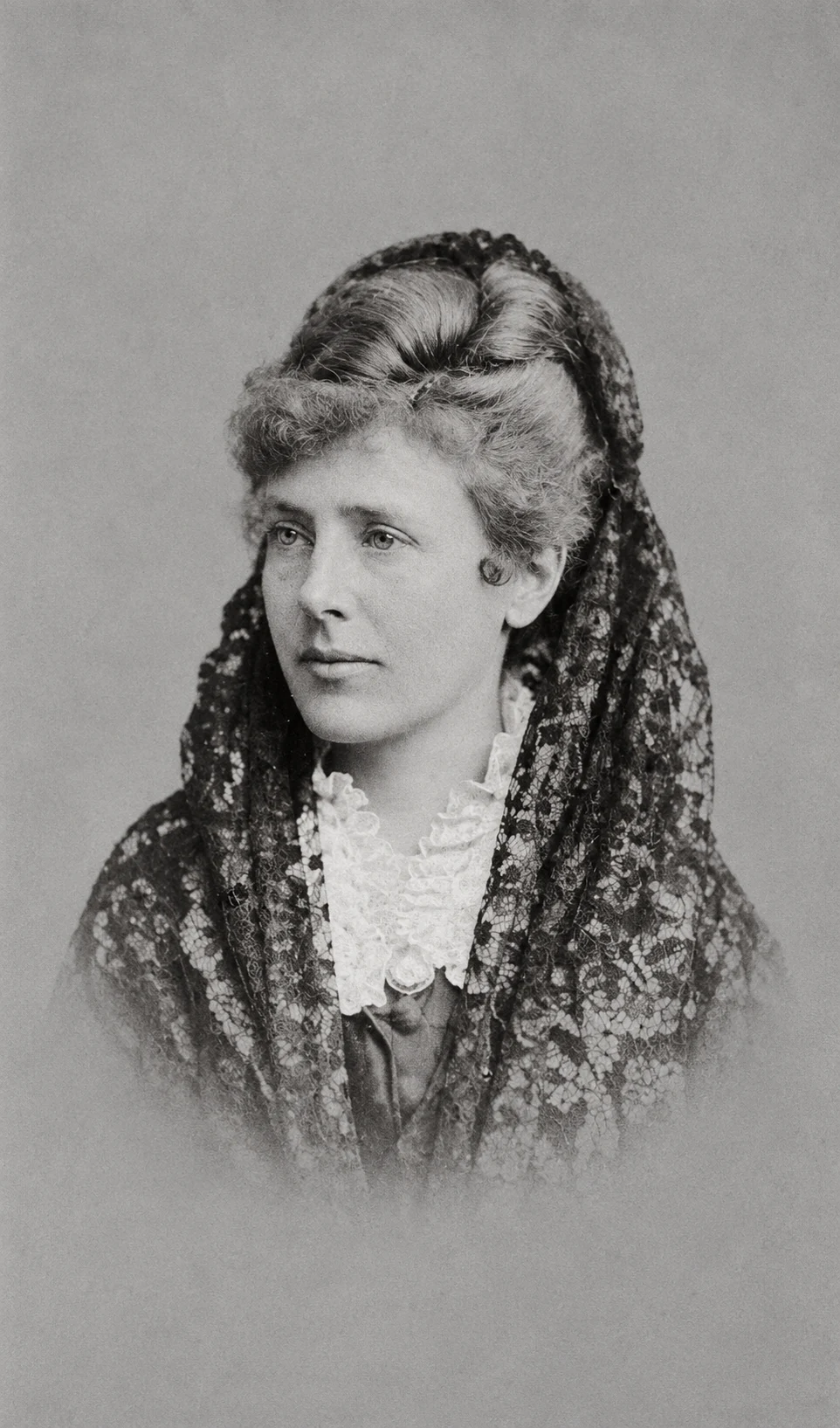
Kate Field came back to America in the autumn of 1873 after traveling in Europe. Her biographer Lilian Whiting places her that winter at an unmistakable address: Gramercy Park, No. 23. The passage appears on page 319 of Kate Field: A Record, published in 1899. For a house whose history is scattered across many kinds of documents, those few words are wonderfully direct.
Field was a journalist and critic with an appetite for music, theater, literature, and travel. Whiting describes a New York circle that included the Gilders, Edmund Clarence Stedman, and Whitelaw Reid. The social world mattered, but it did not exhaust her day. During the winter of 1873–74 she was sending a series called “Notes from the United States” to London’s Athenaeum.
The title makes the direction of her work clear. From New York she interpreted American cultural life for readers across the ocean. Gramercy was her base in a network of editors, performers, authors, and correspondents. Her rooms gave her a place to return to; her professional world was much larger than the Park.
Fifty-seven articles
Whiting preserves Field’s own reckoning of the year from June 1873 to July 1874: fifty-seven articles, amounting to eighty-six columns, as well as six short magazine pieces. She had also devoted the winter to dramatic study. After listing this output, Field added that it hardly seemed as though she had written at all.
It is an extraordinary little account of labor. The figures replace the vague image of a literary celebrity with a working writer’s arithmetic: columns delivered, articles completed, another discipline learned alongside them. The tally covers a year that included her travels as well as her Gramercy winter; it should not be mistaken for a list of manuscripts all composed in this house.
Her subjects were as varied as her ambitions. In the letters reproduced by Whiting, Field took notice of the excitement around Wagner’s Lohengrin and praised William Dean Howells’s A Foregone Conclusion. Howells wrote back to thank her. Criticism here was a lively exchange among people making, performing, reading, and arguing about art.
The same pages include a letter of introduction from critic Henry T. Tuckerman to the Harpers. He urged them to consider Field’s manuscripts, pointing to her experience abroad and her writing on art. Even an established reputation had to be put to work: an introduction, an editor’s attention, a manuscript accepted.
Seen through these records, No. 23 becomes more intimate. The important image is not a grand reception but a writer between assignments, studying a role, answering a letter, and turning the city’s cultural life into copy.
The house that helped save another
A collector’s intention
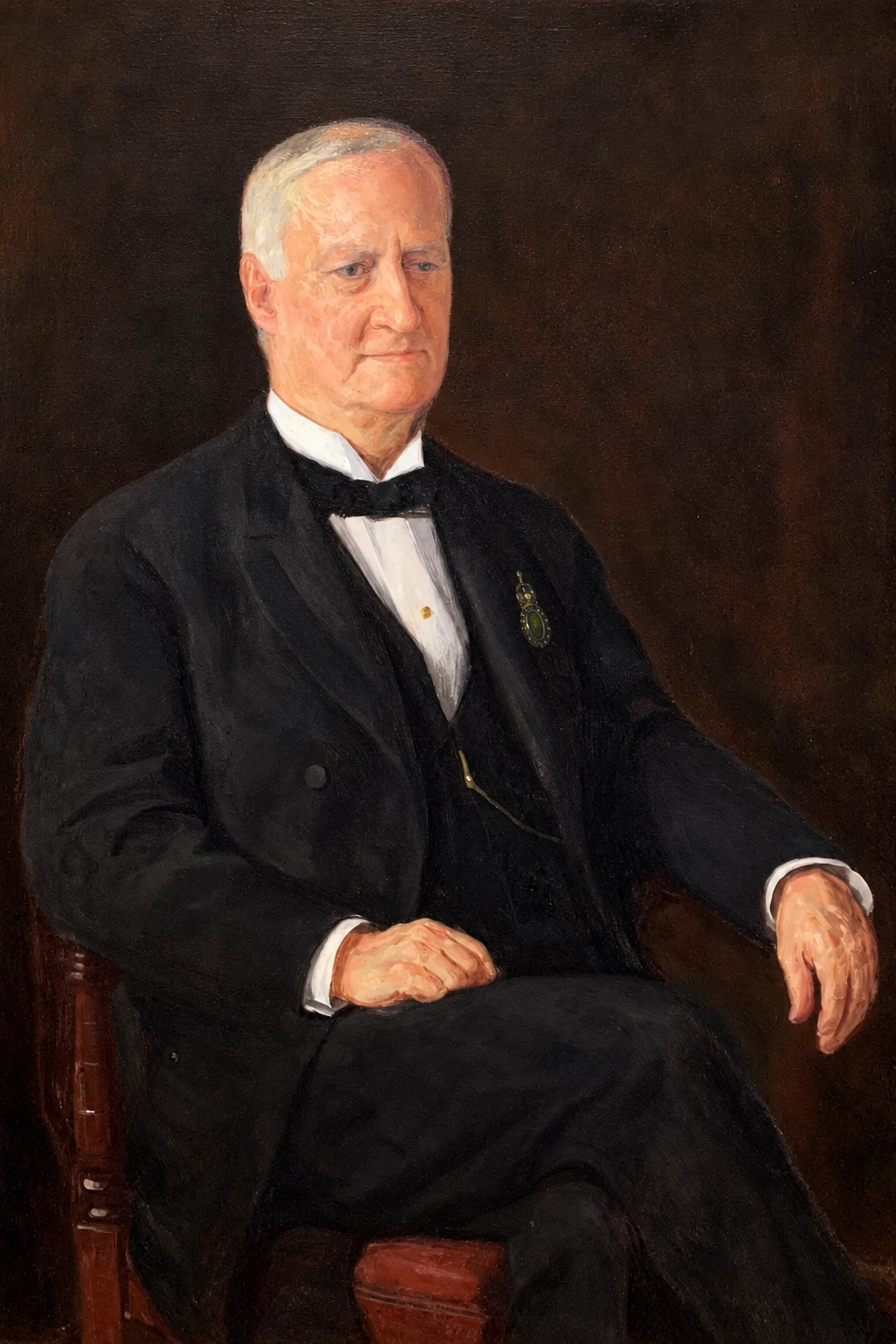
In the next century, No. 23 acquired an unexpected connection to Lower Manhattan. Its owner, Frederick Samuel Tallmadge, left the property to the Sons of the Revolution in the State of New York when he died in 1904. His bequest also included a library and historical relics.
According to the society’s account of Tallmadge’s legacy, the original intention was to make the Gramercy house a museum. The organization, however, had another demanding preservation project: Fraunces Tavern. Tallmadge’s sister, Mary Seymour, consented to the sale of No. 23 so that the proceeds could help discharge the debt incurred in acquiring the tavern.
Miller dates the sale to 1905 and identifies the purchaser as George Zabriskie. The house remained a house. Its value went to work elsewhere.
Preservation beyond the doorstep
The episode gives this address a place in the history of preservation that a façade alone cannot explain. One possible museum was relinquished to strengthen another. A property on Gramercy Park helped secure an institution associated with the city’s Revolutionary past.
It also reveals the practical side of historical memory. Buildings require money as well as affection; collections require somewhere to go; a benefactor’s intentions sometimes have to be reconciled with circumstances after his death. Tallmadge’s legacy joined those questions together.
The connection is easy to miss when the two buildings are considered separately. Walk past No. 23 and its history seems entirely local. Follow the bequest, and the story leads downtown. Gramercy’s private wealth had become part of the machinery through which New Yorkers preserved a shared past.
A home for an international life
The house changes hands
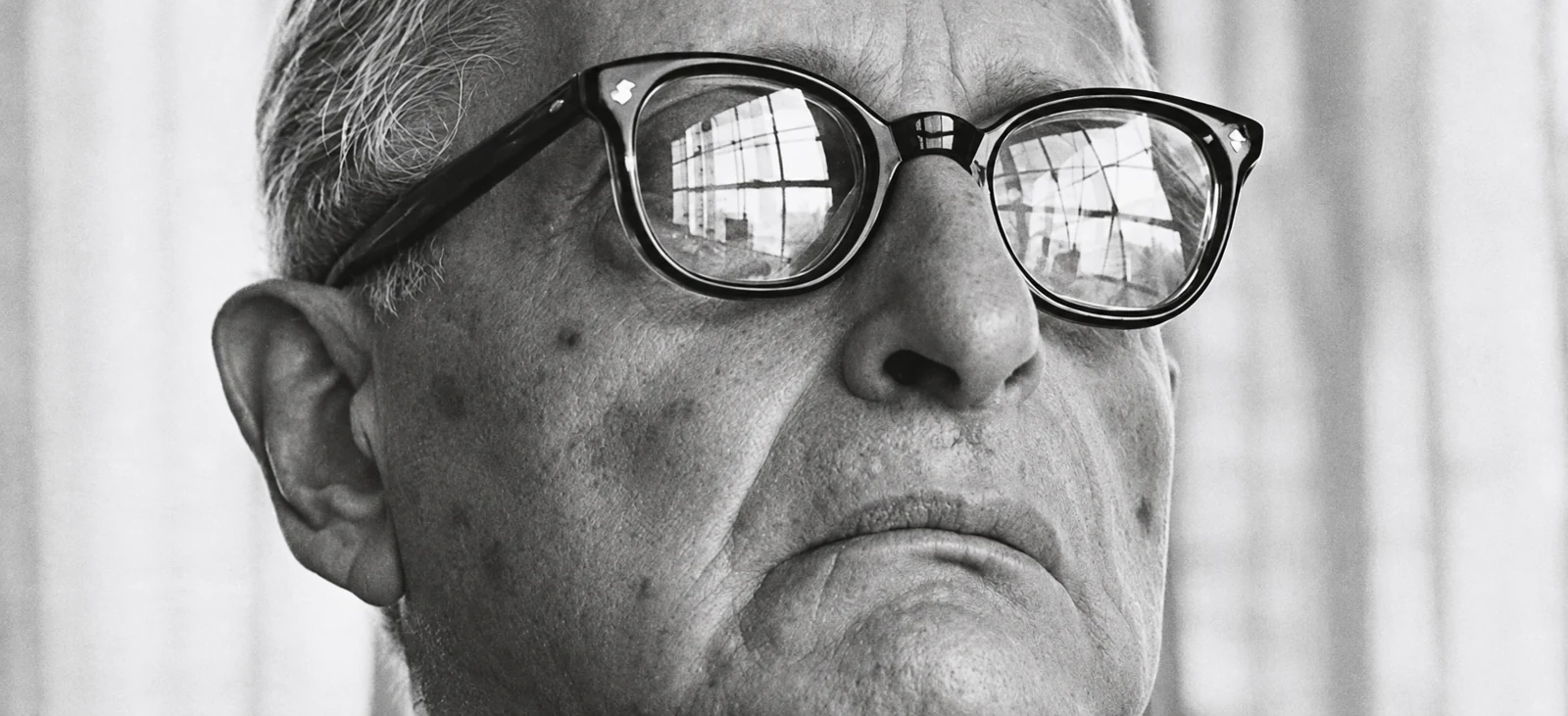
In 1940, the house entered the Ascoli family’s story. A New School archival catalogue identifies a contemporary clipping about George Gray Zabriskie’s sale of 23 Gramercy Park South to Max Ascoli. The real-estate notice is a small but valuable link between the property record and a much larger intellectual history.
Ascoli was an Italian-born scholar of law and political philosophy. The New School’s biographical account places his arrival in the United States in 1931 on a Rockefeller fellowship and his appointment to the school’s Graduate Faculty in 1933. He served as dean from 1939 to 1941. His American career grew out of the upheavals that had driven European scholars into exile.
The University of Chicago’s Ascoli family finding aid records his marriage to Marion Rosenwald in 1940. Marion was the daughter of Julius Rosenwald, the Sears executive whose philanthropy helped build thousands of schools for Black children in the South. Their marriage brought together different experiences of public responsibility: European political exile and an American family deeply involved in education and philanthropy.
Ideas with consequences
Centro Primo Levi’s account of Ascoli recalls his arrest in Fascist Italy in 1928 and his later efforts to help scholars escape European fascism. The dangers he wrote and spoke about were not abstract. He had encountered them before making his American life.
In 1949 he founded The Reporter, a magazine of politics and ideas that continued until 1968. A Boston University account of his archive describes a man who thought of himself as an American citizen of Italian origin, rather than an exile waiting to go home. That distinction gives his purchase in Gramercy a particular resonance: a settled address within a deliberately chosen country.
The house was the family’s home, not an editorial office that can simply be inferred from its owner’s profession. Its place in this story is quieter and more durable. It connected everyday domestic life to people whose work was directed outward—to schools, universities, readers, and the political responsibilities of citizenship.
By then, the building was nearly a century old. Its classical front had outlasted the world in which it was built. Winchester’s committee work, Field’s correspondence, Tallmadge’s bequest, and the Ascolis’ public commitments give successive meanings to the same address. Behind the orderly windows, the house kept opening onto a larger world.
The building at a glance
- Address
- 23 Gramercy Park South, New York
- Built
- 1847
- Style
- Late Greek Revival
- Original architect
- Not securely established
- Historic district
- Gramercy Park Historic District
- Historical associations
- Margaret E. Winchester; Kate Field; Frederick Samuel Tallmadge; Marion Rosenwald and Max Ascoli
The construction date and style follow the Landmarks Preservation Commission’s building description. The 1870 suffrage meeting was the final meeting of the American Equal Rights Association, not the founding of the National Woman Suffrage Association. Field’s residence is independently documented for the winter of 1873–74.
Sources cited
- New York City Landmarks Preservation Commission. Public Meeting Calendar, May 18, 2010, item 20, p. 4. Building date, style, and district.
- Miller, Tom. “The Wm. Templeton Johnson House — No. 23 Gramercy Park.” Daytonian in Manhattan, September 2016. Early ownership and the 1905 sale.
- Stanton, Elizabeth Cady, Susan B. Anthony, and Matilda Joslyn Gage, eds. History of Woman Suffrage, vol. II (1882), chapter XVIII. American Equal Rights Association proceedings and Winchester’s committee membership.
- Goodier, Susan. “Doublespeak: Louisa Jacobs, the American Equal Rights Association, and Complicating Racism in the Early U.S. Women’s Suffrage Movement.” New York History 101.2 (Winter 2020–2021), especially p. 209.
- Whiting, Lilian. Kate Field: A Record. Boston: Little, Brown, 1899, pp. 319–322. Gramercy residence, correspondence, and work.
- Sons of the Revolution in the State of New York. “Tallmadge Day.” The bequest and its role in financing Fraunces Tavern.
- The New School Archives & Special Collections. Publicity scrapbook collection, scrapbook 20, 1939–1941. Catalogue entry identifying the sale of 23 Gramercy Park South to Max Ascoli.
- The New School Archives & Special Collections. New School publicity scrapbook collection, biographical note on Max Ascoli.
- University of Chicago Library. Guide to the Peter Ascoli Papers, 1896–2006. Family history and the Rosenwald educational legacy.
- Centro Primo Levi. “Max Ascoli,” November 24, 2014. Political exile, rescue work, and The Reporter.
- Boston University. “Connections: How Special Collections’ archival holdings tell the story of our time.” B.U. Bridge, November 23, 2001. Ascoli’s American identity and papers.
Illustrations
- Exterior and entrance: photographs by Tom Miller, 2016, from Daytonian in Manhattan. Digitally enhanced for color and clarity; foreground vehicles removed from the exterior view.
- Kate Field: historical Reutlinger portrait, Library of Congress, reproduced by Tom Miller. Monochrome retained; border cropped and tonal clarity improved.
- Frederick Samuel Tallmadge: painting reproduced by the Sons of the Revolution. Glare and tonal muddiness reduced.
- Max Ascoli: historical photograph reproduced by Centro Primo Levi. Monochrome retained and clarity enhanced.