
Stephen Crane
The Studio on East Twenty-Third Street
1871–1900 · 143 East 23rd Street · former Art Students League building · 1892–1894
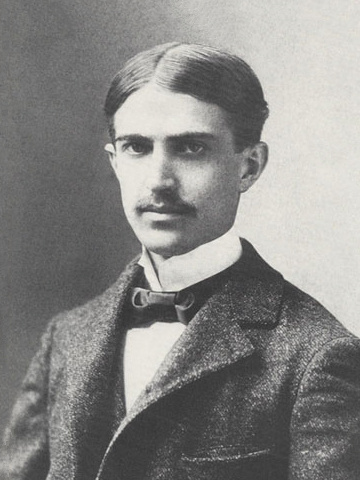
A life in Gramercy
One good suit, four young men
One good suit of clothes had to serve four men at 143 East 23rd Street. In a top-floor studio in the former Art Students League building, Stephen Crane and three artist roommates shared what they had: three slept in a bed, the fourth on a cot, and the presentable suit went out when someone needed to look for work. Crane also wore it to take tea with William Dean Howells on East 17th Street. The distance between an almost penniless young writer and one of the country’s most influential literary men could be measured in a few blocks—and the availability of a coat.
Above them, a beam carried a challenge chalked from Emerson: “Congratulate yourselves if you have done something strange and extravagant and broken the monotony of a decorous age.” Crane was trying. His first novel, Maggie: A Girl of the Streets, had shocked an important editor and scarcely sold at all. Meals came from cheap delicatessen food and free soup at a bar. Yet in this crowded room, with no experience of battle, he began the book that would make readers believe they were inside a frightened soldier’s mind.
The Red Badge of Courage grew out of an argument with the way war had been described. Old issues of The Century offered battles, commanders, and recollections; Crane wanted to know what an ordinary soldier felt. His Gramercy years joined severe material hardship to remarkable artistic confidence. By the time he left the studio behind, he had found a way of writing that made fear, shame, and the confused impressions of a single person carry the weight of a great public event.
The Minister’s Fourteenth Child
A household with convictions
Stephen Crane was born in Newark, New Jersey, on November 1, 1871, the fourteenth child of the Reverend Jonathan Townley Crane and Mary Helen Peck Crane. His father was a Methodist minister; his mother spoke for temperance. The household offered firm convictions about conduct and a public language in which good and bad behavior could be named with confidence. Their youngest son would become interested in lives that resisted such tidy judgments, and in the distance between a person’s reputation and what that person experienced.
There was a connection to the literary world before Stephen had written a novel. His uncle, Robert Newton Crane, had helped establish the Newark Morning Register with Richard Watson Gilder. Gilder would become editor of The Century and an important figure in Gramercy’s cultural life. For the young Crane, he was a family connection as well as an eminent editor. That relationship would later make a rejection more personal than a manuscript returned by an anonymous office.
Baseball and a reporter’s eye
Crane’s early life included Asbury Park and reporting on the New Jersey shore. The work brought him into contact with the behavior of people outside the ministerial household, supplying subjects that did not arrive with a moral already attached. He was drawn away from the pieties of small-town respectability and toward the particular incident: what someone did, how other people reacted, and how an event might look different to the person caught inside it. Those interests would accompany him into fiction.
At Lafayette and then Syracuse, baseball claimed much of his attention. His route toward authorship was not the orderly progress of a model student into a learned profession. College, sport, and newspaper work belonged to a restless apprenticeship. By the time he turned toward New York, the family’s religious inheritance and his own appetite for observation were pulling in different directions. He did not need to abandon questions of right and wrong to become a writer; he needed room to ask them without knowing the answer in advance.
Learning to Look Without Looking Away
The city after dark
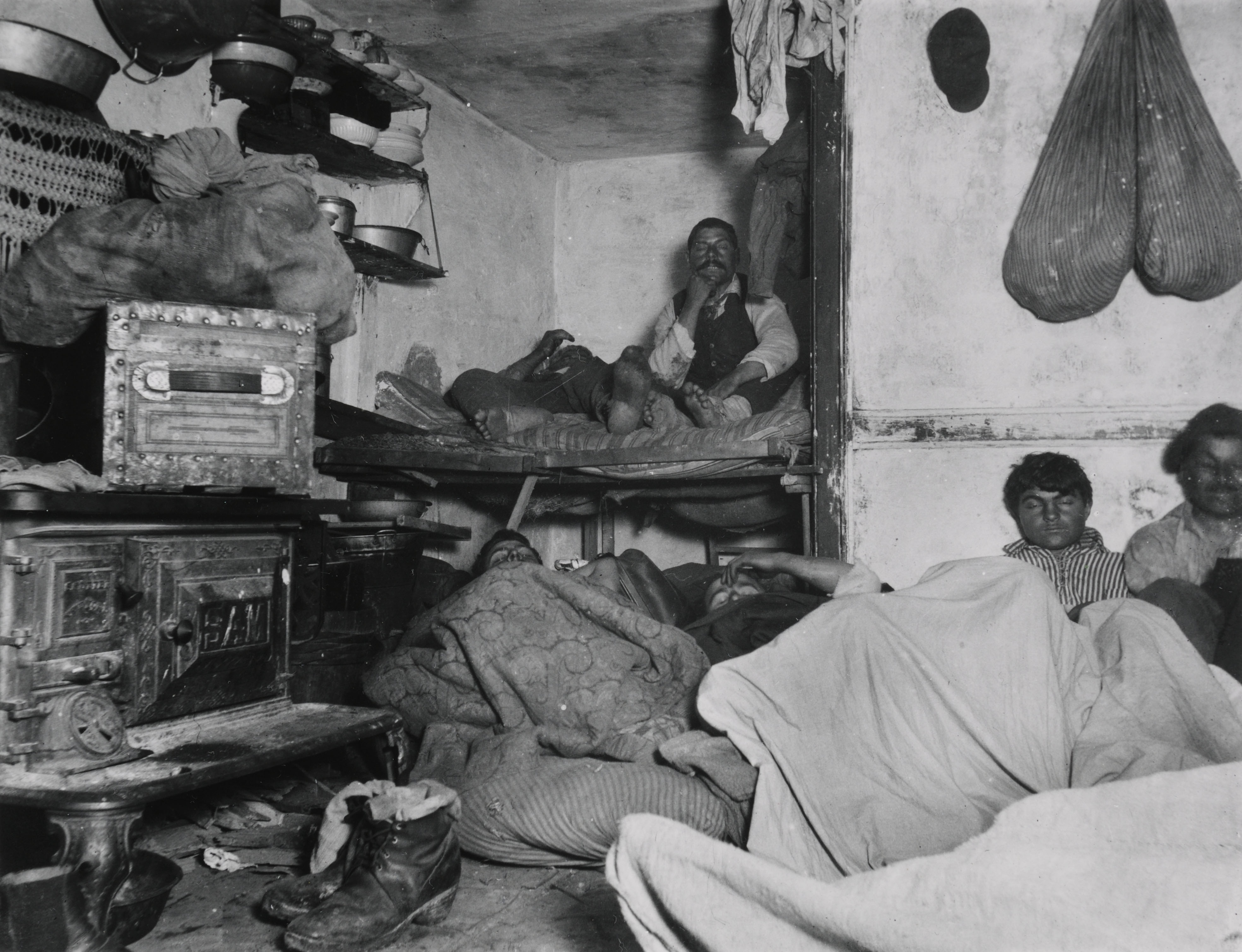
In New York, Crane explored the Bowery’s rooming houses and saloons and watched the people who gathered in Union Square after dark. Sex workers, exhausted men, and people who had been beaten or defeated occupied a city largely absent from polite drawing-room fiction. He was interested in them as people whose lives could sustain a story. The streets gave him voices, gestures, and situations that would be diminished if a writer hurried past them in embarrassment or supplied a reassuring lesson at the end.
This was not simply a search for shocking material. Crane wanted to challenge the habits that determined which lives could appear in literature and how readers were permitted to see them. His ambition was to “show people to people as they seem to me.” The phrase places responsibility on the observer: he must look closely, but he cannot pretend that his own vision is a neutral account delivered from nowhere. His New York writing would make much of sharply selected impressions.
Maggie takes shape
Out of this work came the early drafts of Maggie: A Girl of the Streets. Crane was unwilling to tidy the circumstances around his heroine into something more acceptable to respectable readers. The novel’s world included poverty, violence, drink, and public judgments made with a certainty that the story itself would question. The minister’s son was writing about people who could easily be condemned from a comfortable distance, then making that distance difficult for a reader to maintain.
The book also exposed him to a problem that would become painfully familiar: artistic conviction did not guarantee access to print. A young author could decide to abandon nineteenth-century literary prudery, but editors, publishers, and buyers had their own expectations. Crane had little money and no established audience with which to challenge them. The manuscript needed a reader willing to recognize the purpose beneath its harshness. One obvious person to approach was the editor his family already knew.
A Novel Too Cruel for The Century
An argument with Gilder
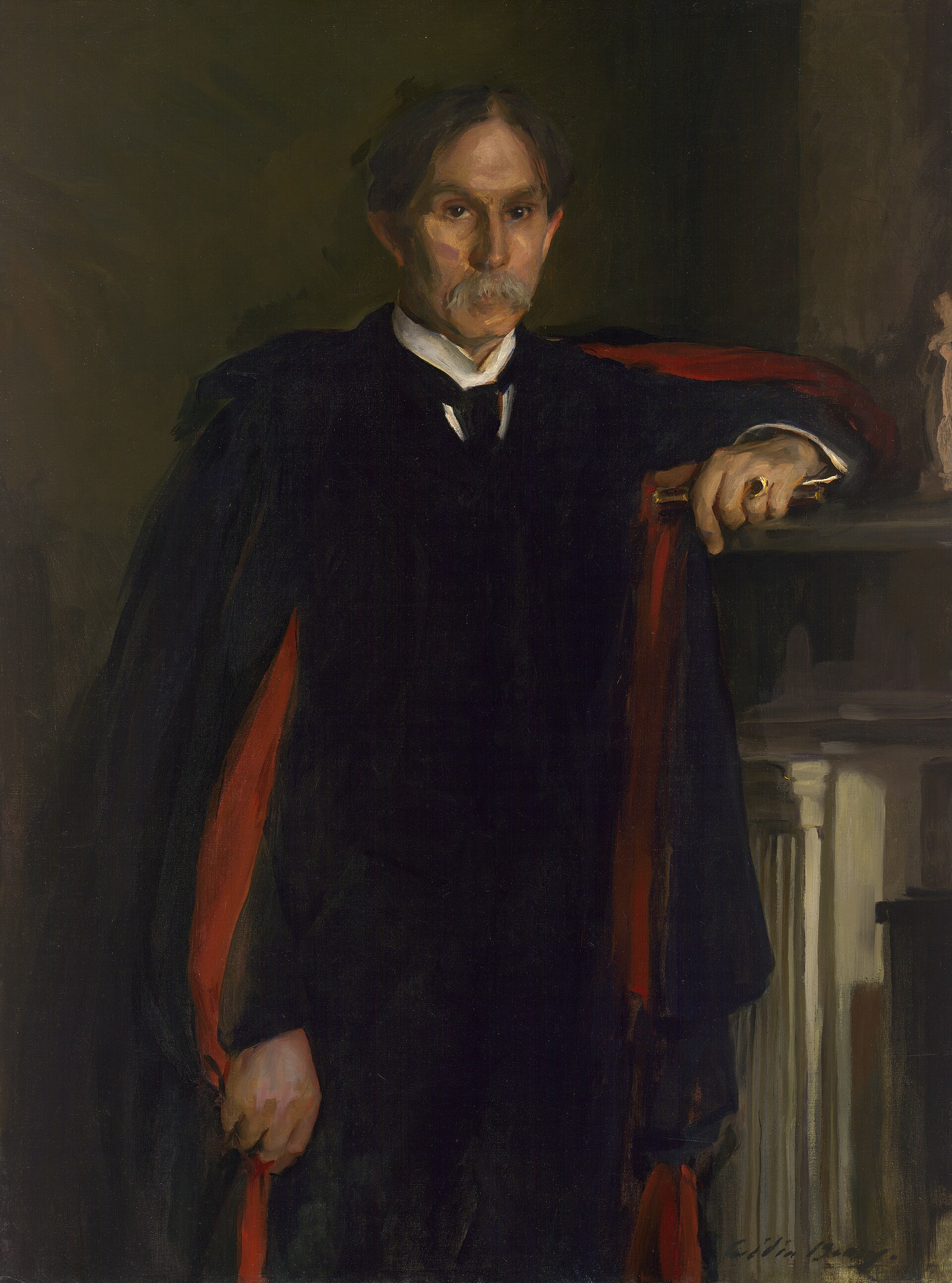
In the fall of 1892, Crane submitted Maggie to Richard Watson Gilder at The Century. The magazine commanded an audience a struggling young novelist could scarcely hope to reach on his own. Gilder’s family connection made him an approachable reader, but it did not make him an accommodating one. The encounter brought two ideas of a writer’s obligations into direct conflict: the editor’s concern about the effect of the story and the author’s determination to describe the world as he saw it.
In the remembered exchange, Gilder called the novel “too cruel.” Crane interrupted: “You mean that the story’s too honest?” It was an uncompromising answer from an author who needed help. Yet the distinction mattered to him. If cruelty belonged to the life being described, removing it could falsify the account. Gilder did not accept the novel. Crane would later find something indispensable in the pages of the very magazine whose editor had turned this book away.
Johnston Smith’s two customers
Crane borrowed money from his brother to publish Maggie himself in 1893. The paperbound copies appeared under the name “Johnston Smith.” Changing the name on the cover could not provide the machinery of an established publisher, and the venture found almost no paying audience: the story of its first appearance records only two copies sold. The novel existed as a physical object, but its author was left with the expense and the unsold stock rather than the beginning of a livelihood.
One winter night, a stack of those books went into the fire to warm his freezing room. The detail is hard to forget because it makes the failure tangible. Money borrowed to turn a manuscript into books had finally bought a little heat. It would be tempting to let that moment stand for defeat, but Crane kept writing. The first readers he needed were not necessarily numerous. A few writers with the authority to recognize his work would prove more useful than the market had yet been.
The Buffalo-Mud and Tea with Howells
Housekeeping for four artists
Crane’s home at 143 East 23rd Street was a top-floor studio in the building formerly used by the Art Students League. He shared it with three young artists. Three men used the bed and the fourth a cot; one good suit served for occasions on which a respectable appearance mattered. The arrangement was crowded and poor, but it placed the writer among people whose work, like his, depended on looking carefully and finding a form for what they saw.
The Emerson passage chalked on a beam gave this household its declaration of independence. To do something “strange and extravagant” and break “the monotony of a decorous age” sounded appealing in a room whose occupants had little reason to congratulate themselves on their circumstances. The motto did not pay a bill or supply another bed. It did, however, express an ambition larger than the room: originality was worth attempting before anyone had agreed to reward it.
Cheap meals and a discerning reader
Food came from places that could accommodate very small budgets. The roommates bought potato salad at the Boeuf-à-la-Mode delicatessen, which they renamed the “Buffalo-Mud.” Billy Mould’s bar on University Place offered free bean soup. These were not picturesque accessories to an otherwise comfortable bohemian life. They were ways of getting through the day. A finished manuscript could not be eaten, and the author of a book with almost no sales had the same immediate needs as his roommates.
There was a very different destination on East 17th Street: the home of William Dean Howells. Crane could put on the shared suit and go there for tea. Howells championed Maggie with extraordinary enthusiasm, even making a comparison favorable to it against Mark Twain. Where Gilder had recoiled, another major literary figure recognized an achievement. The encouragement did not instantly change Crane’s finances, but it gave him a reader whose judgment carried weight well beyond a friendly visit.
That combination of privation and recognition is essential to the studio story. Crane was not working in total isolation, and his confidence did not have to survive on the Emerson quotation alone. He had artist companions, experienced readers, and access to the magazines in which American literature was being debated and published. What he lacked was dependable money. What he was developing, amid the shared furniture and borrowed respectability, was an increasingly distinctive way to tell a story.
What Did the Soldier Feel?
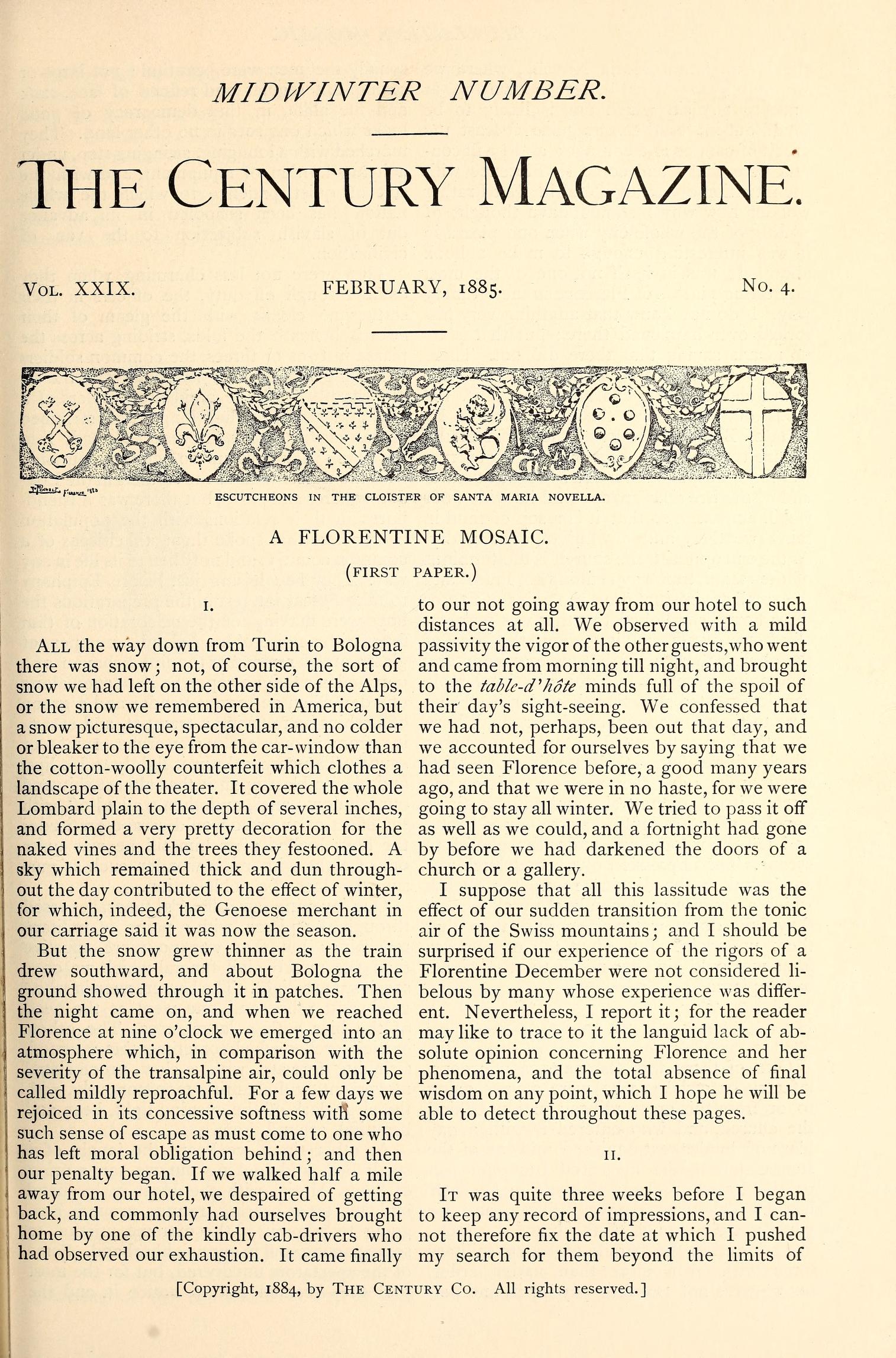
Reading the war in The Century
One recollection of the studio years places Crane returning on a rainy night in 1893, soaked and shivering, to the roommates with whom he was living. The work that emerged from those years would move far beyond their immediate surroundings. He pored over old numbers of The Century, including its celebrated Civil War series, “Battles and Leaders.” Gilder’s magazine, which had declined Maggie, now supplied an immense store of material for a quite different novel.
The accounts described battles and the men who commanded them, but Crane kept returning to a question they did not answer to his satisfaction: what did the ordinary soldier actually feel? He had never fought in a battle. His task was therefore not to reproduce his own experience but to imagine the inward experience missing from the accounts before him. Fear could alter the meaning of everything a soldier saw; shame and the desire to appear brave could be as powerful as an order.
In the East 23rd Street studio, that question became The Red Badge of Courage. The novel made a soldier’s unstable perceptions part of its method. A reader would encounter battle through uncertainty rather than from the elevated position of someone who already knew the outcome. Crane’s interest in the impressions of an individual—so evident in his attention to city streets—had found another setting. The Civil War became immediate through the mind of a young man trying to understand himself under pressure.
Thirty dollars and a breakthrough
In April 1894, Crane brought the manuscript to Hamlin Garland, an older writer who had taken an interest in him. Earlier, in desperation, he had offered to sell all his work for thirty dollars. Garland marveled at the ability of the “yellow-fingered” young man before him. The contrast between the price Crane was prepared to accept and the power of what he had written says much about his circumstances. Recognition by another writer still had to be translated into a publisher and an audience.
D. Appleton published The Red Badge of Courage in 1895, and the book’s success transformed Crane’s position. Readers who had never heard of Johnston Smith now encountered Stephen Crane as a striking new voice. Commercial republication of Maggie followed, giving the earlier novel the opportunity its first appearance had denied it. The two books were different in setting, but both asked readers to enter an uncomfortable human situation without the consolations of a ready-made moral. The studio’s strange and extravagant ambition had reached print.
Beyond the Studio, Before Thirty
From imagined battle to reporting it
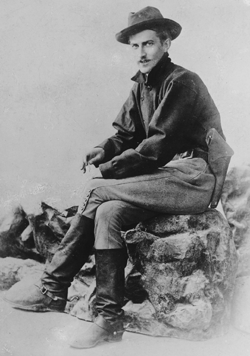
The success of The Red Badge of Courage did not turn Crane into a settled author content to remain at a desk. His reporting took him through the American West and into the conflicts of Cuba and Greece. The novelist who had first approached battle through old magazines now worked as a correspondent near actual fighting. Observation, literary invention, and newspaper work continued to belong to the same career, even as his circumstances became very different from those of the shared Gramercy studio.
He also formed friendships with Joseph Conrad and Henry James in England. Both men took seriously the work of a writer still in his twenties. It is a remarkable compression of a literary life: the author whose first book had scarcely found customers became a colleague of writers whose own achievements would define an era. Yet the later recognition should not make the early work seem inevitable. The books had been written when success was uncertain and small material difficulties could interrupt almost everything.
The room the books left behind
Crane died of tuberculosis at Badenweiler, Germany, on June 5, 1900. He was twenty-eight. The dates put a sharp limit on every account of his development: there would be no long middle career, no comfortable retrospective volume written by the author of his own apprentice adventures. His poetry, journalism, and fiction belonged to a life in which the years between obscurity and international recognition could be counted on one hand.
For Gramercy, the address that holds the story is 143 East 23rd Street. It was a working studio, a makeshift household, and the place where Crane wrote a novel about a war fought before his birth. The single suit, the cheap potato salad, and the Emerson quotation are memorable because they put the act of composition back into a human room. From there, a young man who had not been a soldier made readers feel the bewilderment of battle.
Places, people & connections
Around the Park
Richard Watson Gilder
The family friend and Century editor whose rejection of Maggie became a memorable argument about honesty in fiction.
24 Gramercy Park South
Gilder’s later home, completed long after his encounter with Crane, and part of the neighborhood’s literary history.
O. Henry
Another writer who turned the city’s rented rooms, public streets, and precarious livelihoods into fiction.
Edith Wharton
A different observer of New York’s judgments and conventions, with deep family connections to Gramercy.
George Bellows
A later neighborhood artist who also found his subjects in the force and variety of city life.
The Tilden Mansion
The National Arts Club’s home on Gramercy Park South, linking the neighborhood’s writers and visual artists.
Life at a glance
The biographical record
| Born | November 1, 1871 · Newark, New Jersey |
|---|---|
| Died | June 5, 1900 · Badenweiler, Germany · age 28 |
| Parents | The Reverend Jonathan Townley Crane and Mary Helen Peck Crane |
| Gramercy address | 143 East 23rd Street · former Art Students League building · 1892–1894 |
| Household | A top-floor studio shared with three artist roommates |
| Early occupations | Reporter, novelist, and poet; later a war correspondent |
| First novel | Maggie: A Girl of the Streets (1893), self-published as Johnston Smith |
| Breakthrough | The Red Badge of Courage (D. Appleton and Company, 1895) |
| Literary supporters | William Dean Howells and Hamlin Garland; later friendships with Joseph Conrad and Henry James |
Over time
Born in Newark
The fourteenth child of a Methodist minister and a temperance speaker is born on November 1.
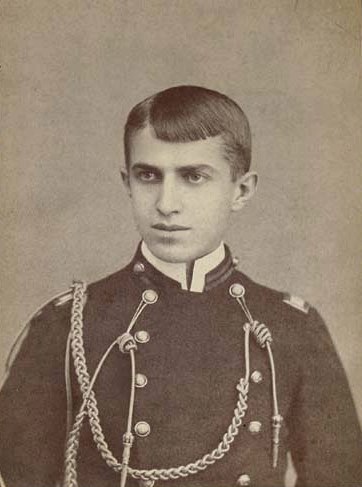
A young man in uniform
An Asbury Park studio portrait records Crane at seventeen.
College and reporting
Lafayette, Syracuse, baseball, and work on the New Jersey shore form part of his early apprenticeship.
The Bowery and Union Square
Crane studies New York street life while developing Maggie.
Gilder rejects Maggie
The family friend and editor of The Century finds the novel too cruel.
143 East 23rd Street
Crane shares a top-floor studio with three young artists in the former Art Students League building.
Johnston Smith in print
Borrowed money finances the paperbound first edition of Maggie.
A Civil War novel
Reading the Century war series helps Crane develop The Red Badge of Courage.
The manuscript reaches Garland
Hamlin Garland encounters the young author’s new novel.
An international readership
D. Appleton publishes The Red Badge of Courage; its success brings Crane wide recognition.
Correspondent and colleague
War reporting and friendships in England follow the New York years.
Death at twenty-eight
Crane dies of tuberculosis at Badenweiler on June 5.
Sources cited
- Carole Klein, Gramercy Park: An American Bloomsbury (Boston: Houghton Mifflin, 1987), for Crane’s studio years and connections to the neighborhood’s writers.
- Stephen Crane, writing as Johnston Smith, Maggie: A Girl of the Streets (New York, 1893).
- Stephen Crane, The Red Badge of Courage: An Episode of the American Civil War (New York: D. Appleton and Company, 1895).
- The Century Illustrated Monthly Magazine, “Battles and Leaders of the Civil War” series; collected under the editorship of Robert Underwood Johnson and Clarence Clough Buel.
- Hamlin Garland, Roadside Meetings (New York: The Macmillan Company, 1930), recollections of Stephen Crane.
- R. W. Stallman, Stephen Crane: A Biography (New York: George Braziller, 1968); also cited in the source record for the 1888 portrait.
- Linda H. Davis, Badge of Courage: The Life of Stephen Crane (Boston: Houghton Mifflin, 1998); source of the portrait reproduced by the University of Victoria Libraries.
- Gramercy Park Block Association, Richard Watson Gilder and 24 Gramercy Park South, for Gilder’s neighborhood connections and the chronology of his later residence.
Photo credits for this page
- Stephen Crane, Washington, D.C., 1896. Photographer unidentified. University of Victoria Libraries, TRBOC—Stephen Crane Portrait; reproduced from Linda H. Davis, Badge of Courage: The Life of Stephen Crane (1998). Image and collection record. Public domain.
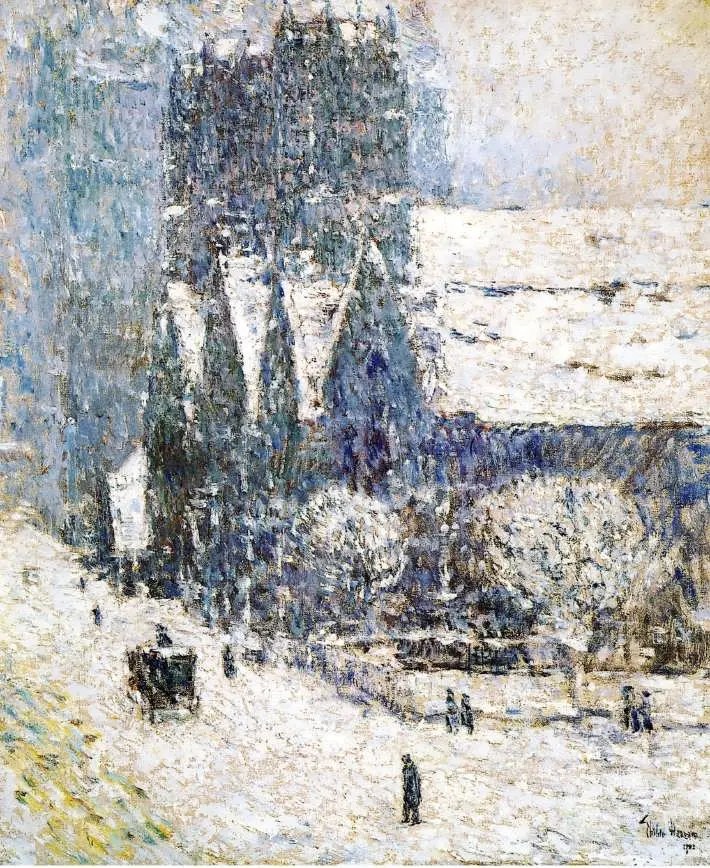
- Calvary Church in the Snow, 1893. Childe Hassam, oil on canvas. Image and source record, Wikimedia Commons. Public domain.
- Stephen Crane in uniform, 1888. Photograph by W. H. Stauffer, Asbury Park, New Jersey. Date identified in R. W. Stallman, Stephen Crane: A Biography (1968). Image and source record, Wikimedia Commons. Public domain in the United States.
- Lodgers in a crowded Bayard Street tenement, 1889 (also known as Five Cents a Spot). Jacob A. Riis. Library of Congress, Prints and Photographs Division, reproduction LC-USZ62-18572. Image and source record, Wikimedia Commons. Public domain.
- Richard Watson Gilder, 1902–1903. Cecilia Beaux, oil on canvas. National Portrait Gallery, Smithsonian Institution; gift of Rodman and Mary Ellen Gilder, NPG.98.77. Collection record. Smithsonian Open Access, CC0.
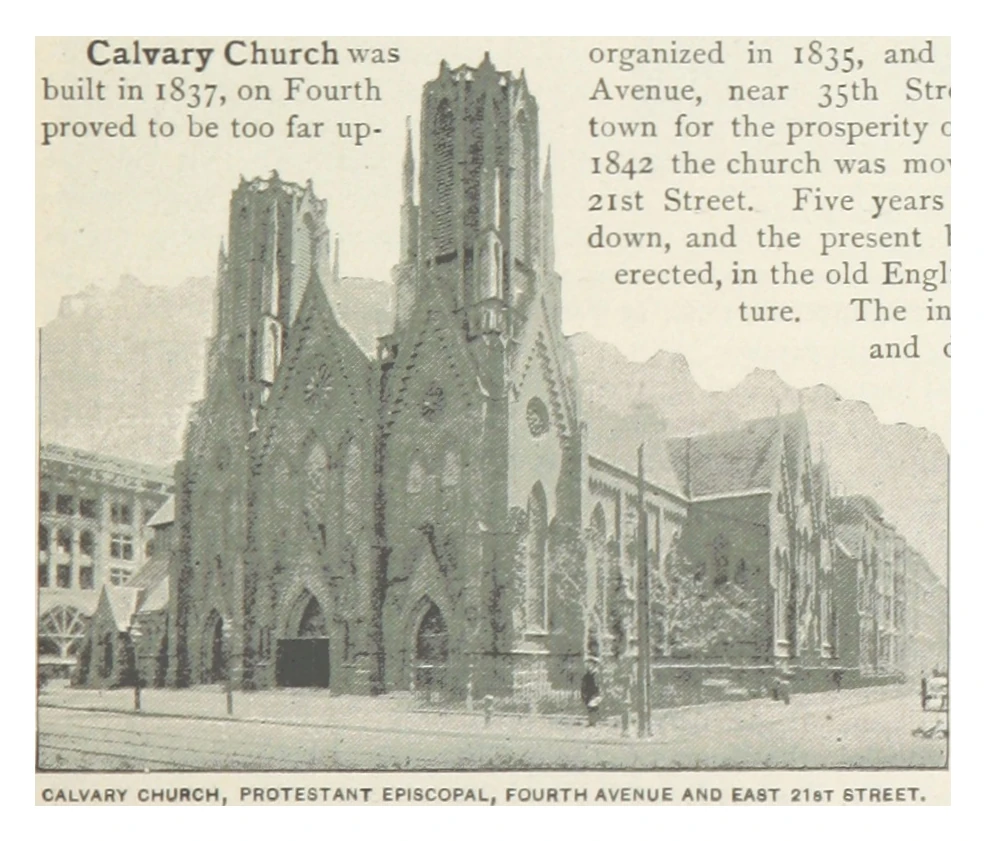
- Calvary Church, Fourth Avenue and East 21st Street. Illustration from Moses King, King’s Handbook of New York City (1893). Historical image preserved in the GPBA collection. Public domain.
- The Century Magazine, February 1885. Opening page of the midwinter number, vol. 29, no. 4, p. 483, with the heading of “A Florentine Mosaic.” The Century Co., New York. Lincoln Financial Foundation Collection, Internet Archive. Public domain.
- Stephen Crane in Greece, 1897. Photographer unidentified. Image reproduced by Syracuse University Magazine, Summer 2002; digital image and source record, Wikimedia Commons. Public domain in the United States.