
Paul Rosenfeld
An Open Door on Irving Place
1890–1946 · 77 Irving Place · 1920s–early 1930s
A life in Gramercy
A piano, some paintings, and an open door
At 77 Irving Place, a block south of Gramercy Park, Paul Rosenfeld made room for the arts in the most literal way. There was a piano for composers, wall space for paintings by Marsden Hartley and Georgia O’Keeffe, and shelves of books that could send a conversation in almost any direction. Writers read their work aloud here. Music was tried out among friends. The apartment at East 19th Street became one of those private places through which a public cultural life passes.
Its host wrote about music, painting, and literature with an enthusiasm that resisted departmental boundaries. Rosenfeld was the music critic of The Dial, a friend of Alfred Stieglitz and O’Keeffe, and an early advocate for Aaron Copland. He could offer an artist a review, an introduction, an attentive hearing, or the practical encouragement to attempt something new. The young Robert Penn Warren found in him a reader who took his possibilities seriously before a large public had reason to know his name.
For Gramercy, Rosenfeld’s story belongs to the neighborhood’s long history of hospitality with consequences. His nearby friend Carl Van Vechten brought together his own exuberant company; Rosenfeld’s rooms had their particular rhythm of reading, listening, and talk. When the Depression eventually forced him to leave Irving Place, the gathering place disappeared, but the work begun there continued in books, compositions, paintings, and friendships. A critic’s influence could extend well beyond anything bearing his signature.
Learning to listen across the arts
A New York education
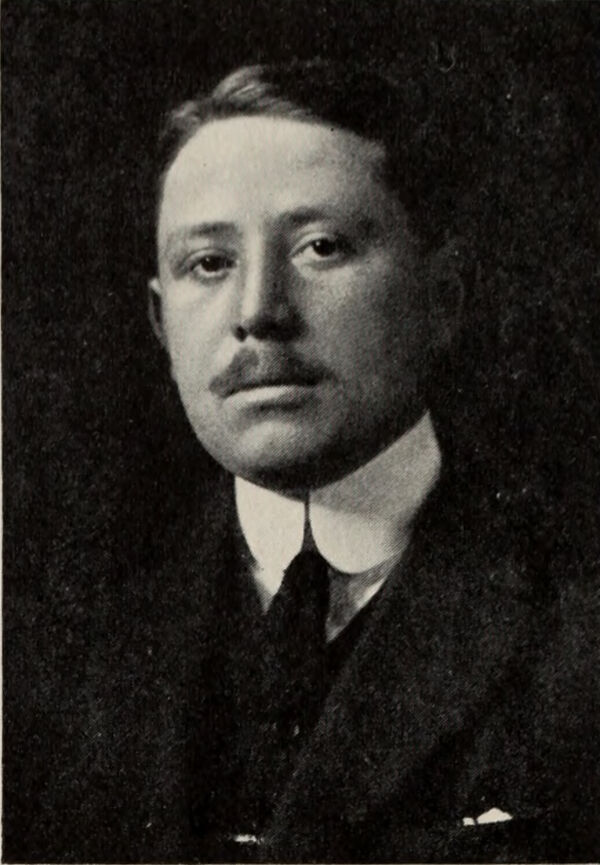
Paul Rosenfeld was born in New York on May 4, 1890, into a cultivated German-Jewish family. His education carried him to Yale, where he graduated with the class of 1912, and then to Columbia’s School of Journalism. Music and books were central to the life he was preparing to lead, but he would not remain within a single specialty. The future critic’s interests crossed the borders between literature, painting, and musical composition, following the individual artist rather than a fixed professional territory. His Yale class history records contributions to the college’s literary publications and service as an editor of the Lit. It also describes him as uncertain about his future occupation. The small entry, accompanied by his portrait, catches him before the career that would bring his interests together: already writing and editing, but without a settled professional destination.
That breadth became one of his distinguishing qualities. A new painting and an unfamiliar piece of music presented related challenges: both asked an audience to look or listen without relying entirely on an established model. Rosenfeld’s criticism attempted to describe the experience of encountering a particular artistic personality. His writing could be lavish, even extravagant, but the abundance served a recognizable purpose. He wanted readers to feel that a work had a living presence, worthy of sustained and sympathetic attention.
Finding a voice in print
In the years before his association with The Dial, Rosenfeld wrote for The Seven Arts and The New Republic. These journals gave him a place in the conversation about modern American culture. He championed contemporary work in several forms, taking seriously the possibility that American writers, painters, and composers could speak in voices of their own. The case had to be made one artist at a time, through detailed attention rather than a declaration that everything new was necessarily good.
His prose itself attracted notice. Ezra Pound slyly called its lushness “oriental splendor,” a phrase that catches the distance between Rosenfeld’s impressionistic manner and a spare statement of critical judgment. Rosenfeld could sound more like a poet responding to another poet than a reviewer sorting merits and faults. That approach carried risks of overstatement, but it also made his advocacy personal and memorable. By the end of the 1910s, he had begun to establish the vocation that would give his Irving Place home its character.
The magazine and the living room
A place in The Dial
In 1920 Rosenfeld became music critic of The Dial, newly transformed under Scofield Thayer into a journal of modern art and letters. Its pages would carry T. S. Eliot’s The Waste Land, alongside work by E. E. Cummings, Marianne Moore, Ezra Pound, and D. H. Lawrence. Music belonged within that larger undertaking. Rosenfeld’s reviews addressed readers whose interest in artistic experiment might begin with poetry or painting and extend, through his writing, to an unfamiliar composer.
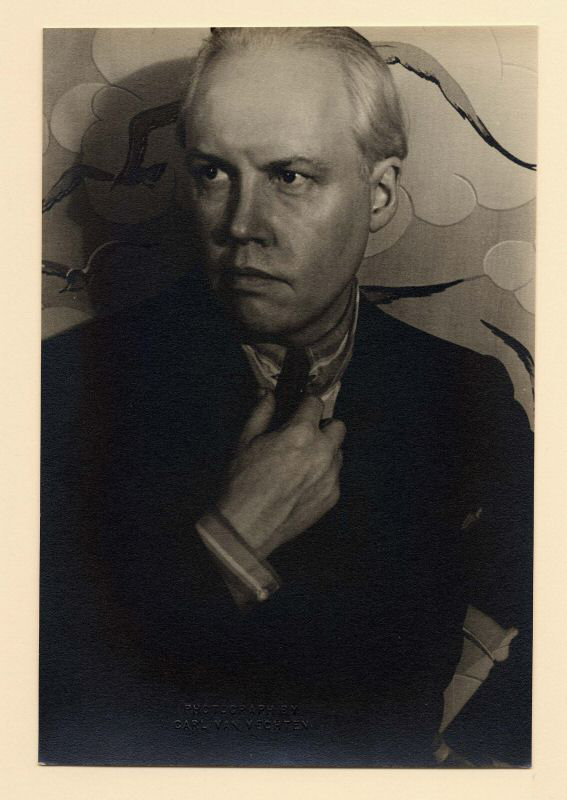
His apartment at 77 Irving Place supplied a domestic counterpart to the magazine. Situated at East 19th Street, it stood close to the Park and to other households that made the neighborhood a meeting ground for artists and writers. Rosenfeld often crossed paths at dawn with Carl Van Vechten returning from Harlem. The two men pursued different projects, but their proximity is a reminder of how easily these cultural worlds could touch: a magazine circle, a musical enthusiasm, and a neighborhood acquaintance might lead into one another.
Conversation with room to range
Alyse Gregory, The Dial’s managing editor, remembered the apartment as “an interior that might have been lifted out of some European capital—Vienna, Paris, Florence.” Her description continued with a lovely reversal of expectations: “an interior for pleasures that were grave and thought that was gay, for conversation witty and civilized.” The distinction matters. Serious attention did not require a solemn gathering, and enjoyment did not mean that the work under discussion was treated lightly. Rosenfeld’s hospitality allowed both to occupy the same room.
The apartment became a social center for people associated with The Dial, bringing a printed conversation into direct exchange. A critic could hear a composer at the piano; a writer could encounter the paintings that another guest had been discussing. These meetings gave Rosenfeld’s broad interests a practical setting. His contribution was partly editorial and partly personal: he supplied a place where people working in different forms could meet without first having to explain why their work belonged in the same conversation.
Pictures on the walls, artists in the room
Helping new painting find readers
Rosenfeld’s friendship with Alfred Stieglitz brought him close to a circle of artists whose work he repeatedly championed. Stieglitz photographed him; Georgia O’Keeffe became a close friend. In his 1921 essay on American painting for The Dial, Rosenfeld helped introduce her art to the magazine’s readers. The essay appeared with the first published reproduction of an O’Keeffe painting, Black Spot. A work previously encountered in person could now enter a much wider discussion through the printed page.
His Port of New York, published in 1924, extended that interest through portraits of American moderns, among them O’Keeffe, Marsden Hartley, John Marin, and Arthur Dove. Rosenfeld treated artists as individual presences rather than interchangeable examples of a movement. The book’s title gave these encounters a New York setting, but its concern was with the possibilities of American cultural life. His criticism was a form of advocacy, asking readers to grant unfamiliar work the patience and curiosity that established reputations already received.
Living with the work
At Irving Place, paintings were part of the household itself. Edmund Wilson remembered a room where “poets read their poetry and composers played their music beneath his little collection of Hartleys and O’Keeffes, surrounded by his shelves full of Nietzsche and Wagner, Strindberg, Shaw and Ibsen.” The recollection places the arts in close company without making them identical. Paintings remained on the walls as a poem was read; books supplied a background of other voices when a composer sat down to play.
Rosenfeld’s friendships and collecting gave his essays a closeness to their subjects that could be both a strength and a limitation. His interpretations remained his own, rather than a substitute for an artist’s account of the work. What he offered unmistakably was attention: space in his rooms, space in influential publications, and a willingness to make an extended case for an individual talent. The story of modern painting in New York includes these smaller acts of reception, as well as exhibitions and museum acquisitions.
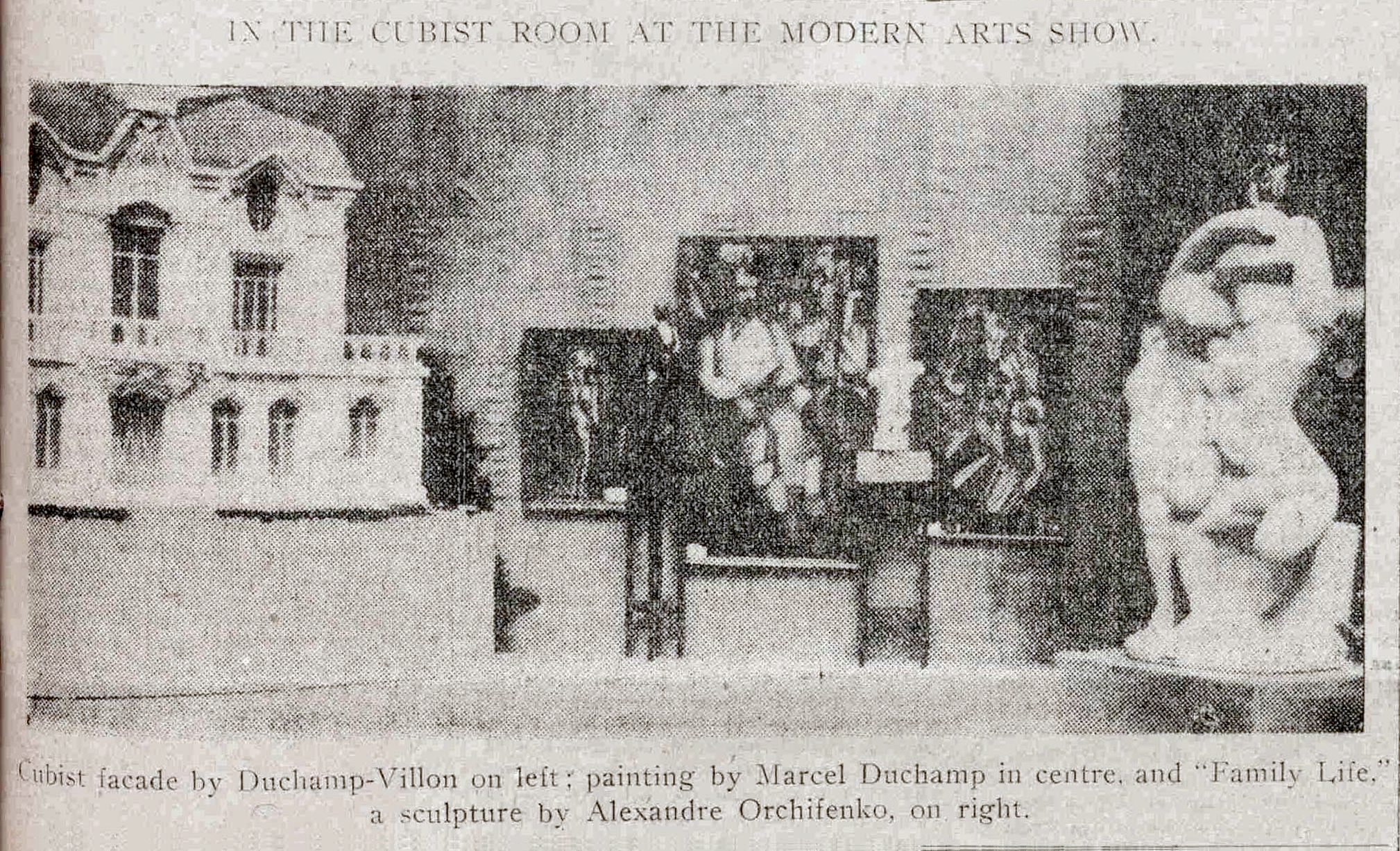
An audience before the concert hall
A piano on Irving Place
Among the composers welcomed at Rosenfeld’s Irving Place piano were Aaron Copland, Darius Milhaud, Edgard Varèse, Roger Sessions, and Leo Ornstein. The list brings American and European modern music into the same domestic setting. These were artists with distinct musical languages, not members of a single school. For a critic who valued individual expression, that variety was essential. The apartment offered a small audience prepared to listen closely, outside the formal sequence of a public concert and its reviews.
Copland benefited particularly from Rosenfeld’s advocacy. The critic championed his music and helped him secure patronage, extending support beyond a favorable judgment in print. A young composer needed opportunities as well as understanding, and an introduction could have practical consequences. Rosenfeld’s several roles met here: the reviewer who could explain a work, the host who could bring people together, and the friend prepared to help. His influence cannot be measured solely by counting the articles in which a composer’s name appeared.
The listener becomes a writer
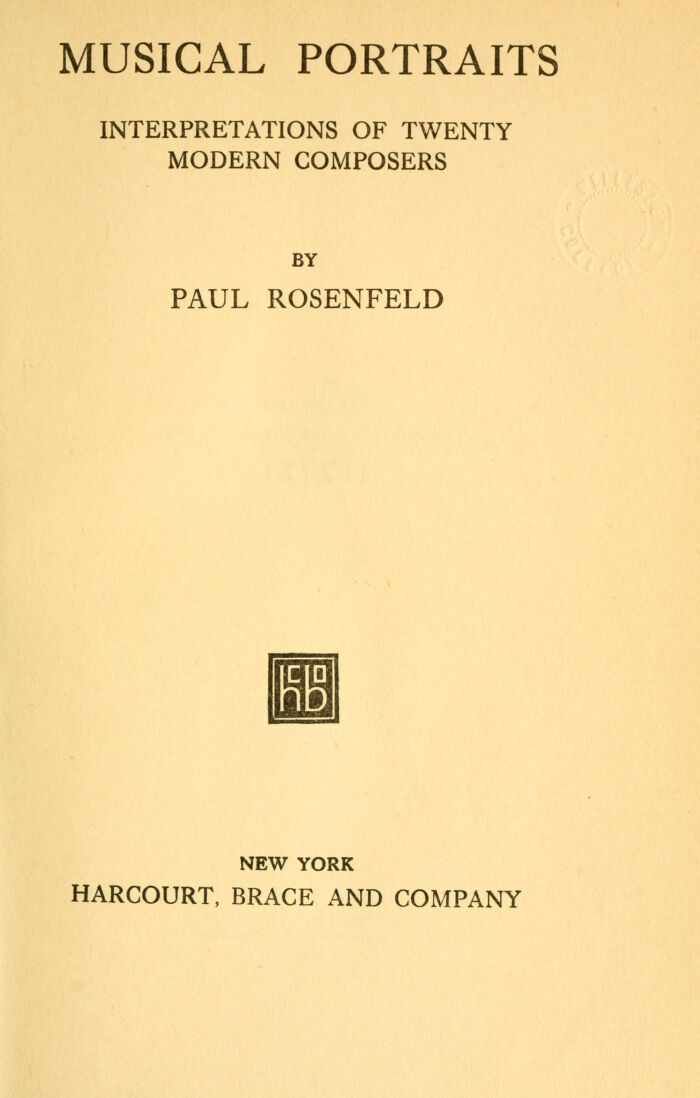
The books trace the continuing musical side of his career: Musical Portraits appeared in 1920, Musical Chronicle in 1923, and An Hour with American Music in 1929. Their titles suggest different distances from the subject, from a portrait of a personality to a chronicle of musical life and an invitation to spend time listening. Across the decade, Rosenfeld worked to make criticism a sustained encounter with music rather than a brief verdict attached to a single performance.
Writing about sound asks language to do work for which it has no exact equivalent. Rosenfeld answered with an unusually expressive prose, attempting to convey a composition’s character and emotional force. The same quality that could make his sentences excessive also made them hospitable to readers willing to follow his response. At 77 Irving Place, the process could begin in the presence of a composer and a piano. In a book or magazine, he tried to preserve something of that concentrated act of listening.
Making room for the next writer
An anthology takes shape at home
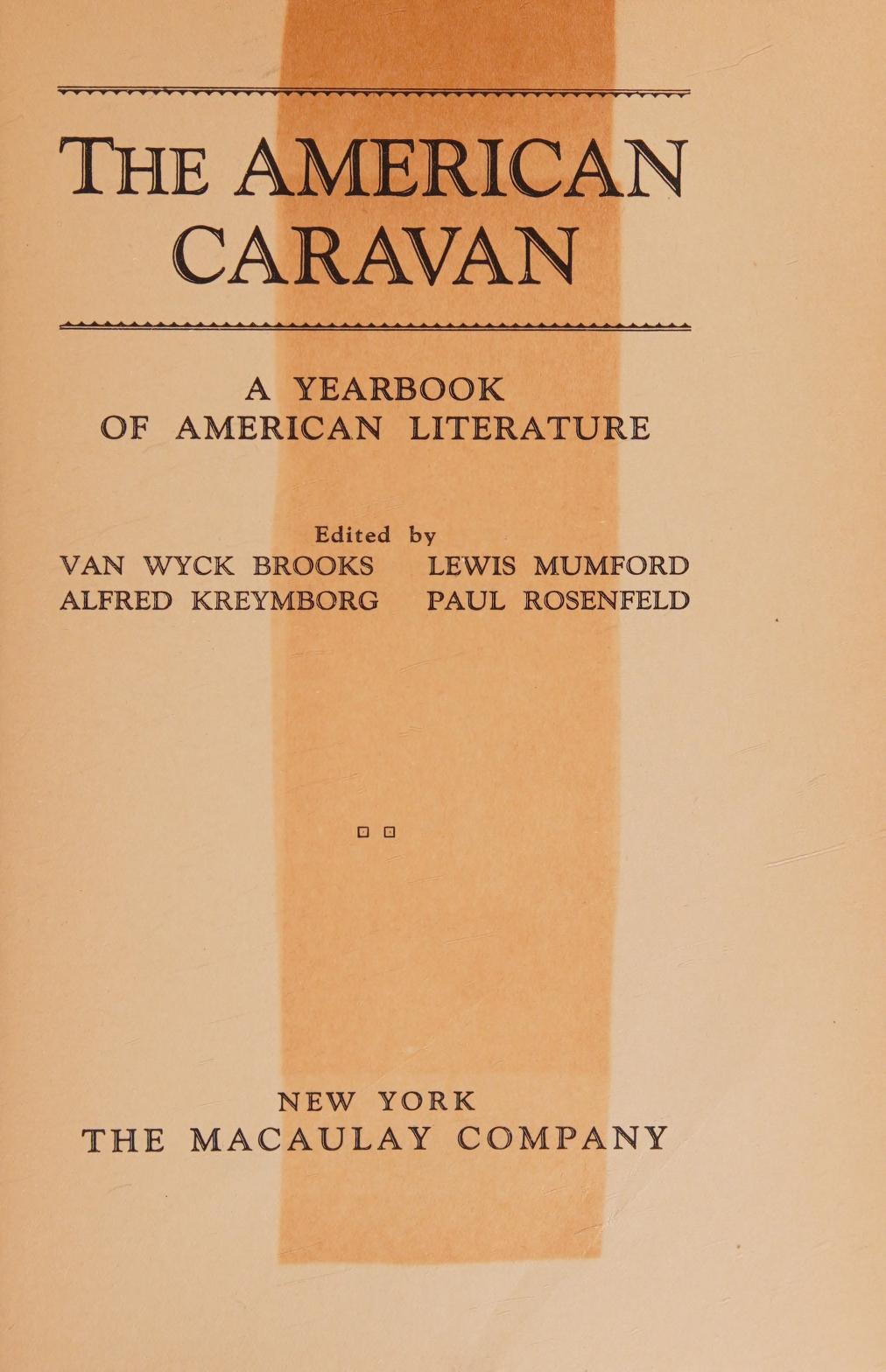
In 1927 Rosenfeld helped found The American Caravan, an annual anthology that continued through 1936. Working with Alfred Kreymborg, Lewis Mumford, and Van Wyck Brooks, he helped create another route by which new writing could reach readers. The living room at 77 Irving Place served as a place of editorial work as well as conversation. The host’s willingness to hear an unfamiliar voice now found expression in selecting manuscripts and bringing them into print.
An anthology allowed individual pieces to travel together while retaining their differences. For a writer still finding a public, inclusion could provide a first substantial appearance and the confidence of being read seriously by an editor. Rosenfeld’s participation connected the broad cultural interests of his criticism to this patient work with manuscripts. The apartment’s literary life was therefore more than a succession of distinguished visitors. Some of its most consequential exchanges concerned work whose author had yet to become distinguished at all.
Encouraging Robert Penn Warren
Robert Penn Warren was a young Yale graduate student when Rosenfeld welcomed him to Irving Place in 1927. Rosenfeld took him to modern art exhibitions and encouraged him to try writing fiction. The connection crossed both a difference in age and a boundary between the arts. Looking at paintings could form part of a young writer’s education; an older critic’s conversation could open possibilities beyond the work the younger man had already attempted. Rosenfeld’s hospitality included the willingness to imagine what a guest might become.
Warren’s early story Prime Leaf appeared in The American Caravan in 1930. Its publication gave concrete form to the encouragement that had begun in person. Rosenfeld did not write the story, but he helped make a place for its author to develop and be heard. Warren’s later remembrance of him as a prompter of fiction catches this quieter kind of literary importance. Behind a published work there may stand a reader who asked for more, offered confidence, and followed an encouraging conversation with editorial action.
The room closes, the friendships endure
Leaving number seventy-seven
The Great Depression eroded the inherited income that had helped support Rosenfeld’s way of life. He had to give up the apartment at 77 Irving Place and move to a small flat in Greenwich Village, taking only a few treasured paintings and books. The change reduced the physical setting in which so many friendships had developed. A room that had accommodated music, readings, editorial work, and visitors could no longer serve as their familiar point of meeting.
The loss makes visible the material conditions behind even the most apparently effortless hospitality. Rosenfeld had supplied space, time, and attention; the first two depended in part on resources that could disappear. Yet leaving Irving Place did not end his vocation. He continued to write and to champion younger artists, carrying into more modest surroundings the interests that had animated the larger apartment. The household had changed, while the habits of reading, listening, and encouraging other people’s work remained.
Remembered by the people he heard
Rosenfeld died of a heart attack in July 1946, aged fifty-six. A tribute volume published in 1948 brought together remembrances by writers and musicians including Edmund Wilson, Marianne Moore, Aaron Copland, and Wallace Stevens. Their presence conveys the reach of a career that never settled into only one branch of the arts. He had been a colleague, critic, editor, and friend, and each of those relationships preserved a different part of his contribution.
For the neighborhood, 77 Irving Place offers a particularly clear way to remember him. The address joins a piano, a collection of paintings, bookshelves, and the people who used them. Rosenfeld’s achievement lay partly in the writing he left, and partly in helping other people continue theirs. His apartment gave American modernism a place to gather on an ordinary residential street. The books and music that outlasted those gatherings carry something of the generous attention once available a block south of Gramercy Park.
Places, people & connections
Around the Park
Carl Van Vechten
The nearby critic, novelist, and photographer whose East 19th Street gatherings brought another circle of artists together.
George Bellows
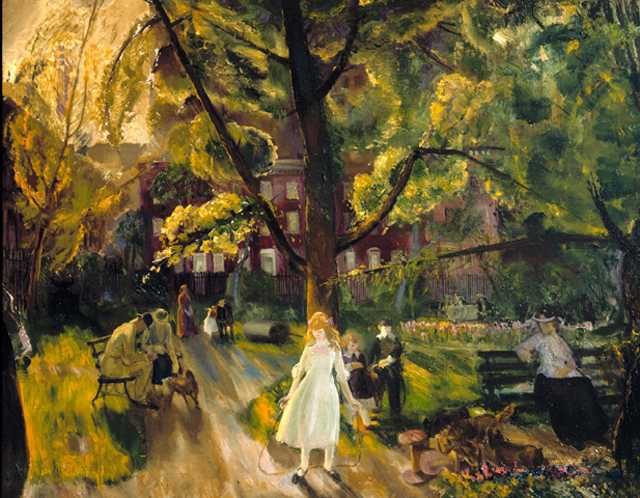
A painter of the Park and the surrounding city, working within Gramercy’s close community of artists.
Robert Henri
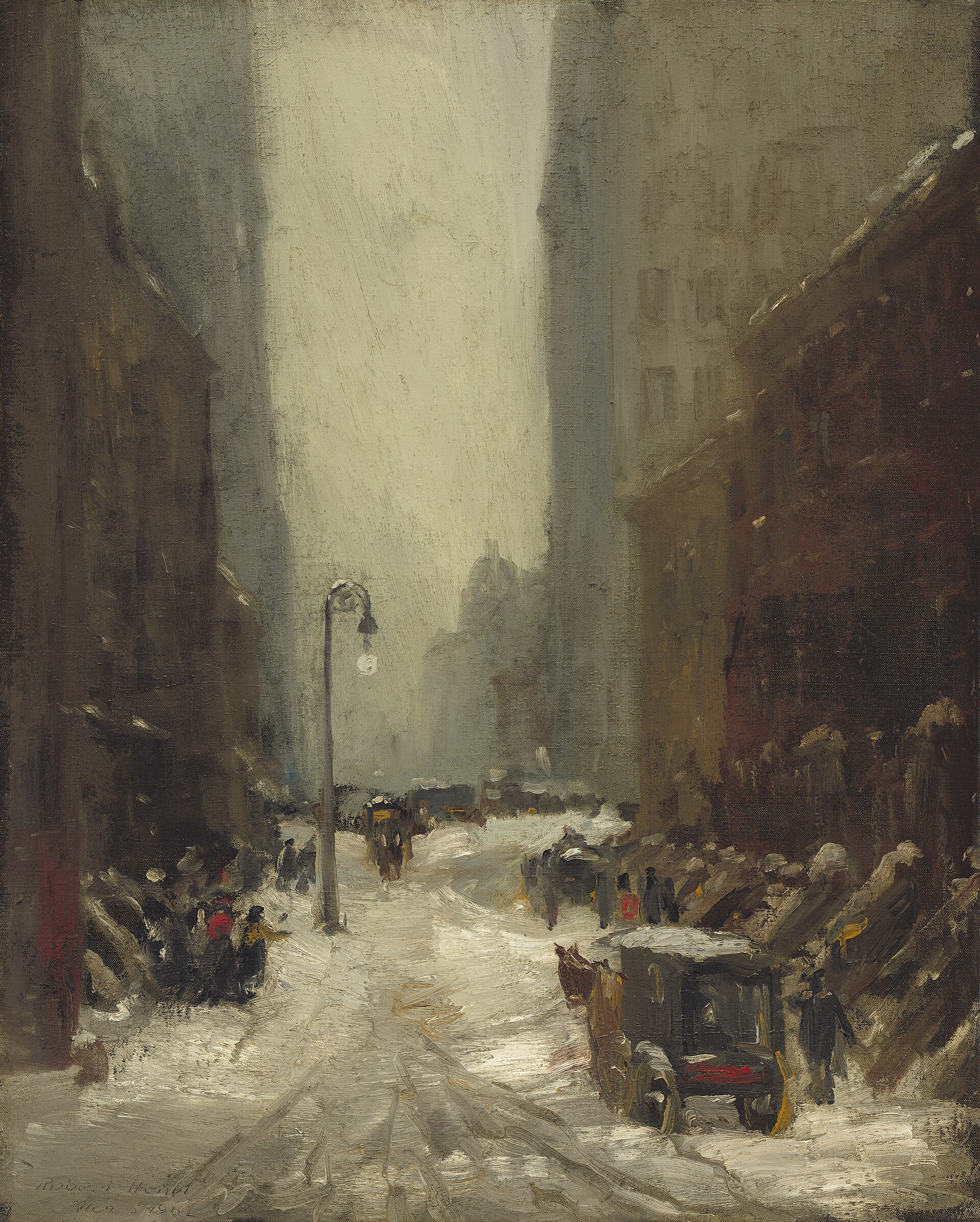
The teacher and painter who encouraged artists to find subjects in the life around them.
10 Gramercy Park South
The home and studio of Robert Henri, where painters gathered just north of Rosenfeld’s Irving Place apartment.
19 Gramercy Park South
A house whose social and artistic history offers another view of Gramercy hospitality.
O. Henry
An earlier Irving Place writer who found material in New York’s everyday encounters.
Life at a glance
The biographical record
| Born | May 4, 1890 · New York City |
|---|---|
| Died | July 1946 · aged fifty-six |
| Irving Place home | 77 Irving Place, at East 19th Street · 1920s–early 1930s |
| Education | Yale University, Class of 1912; Columbia School of Journalism |
| Work | Music and art critic, literary essayist, editor, and salon host |
| Magazines | The Seven Arts, The New Republic, and The Dial |
| Music books | Musical Portraits (1920); Musical Chronicle (1923); An Hour with American Music (1929) |
| Portraits in prose | Port of New York: Essays on Fourteen American Moderns (1924) |
| Editorial enterprise | The American Caravan · 1927–1936 |
| Later home | A smaller apartment in Greenwich Village |
Over time
Born in New York
Paul Rosenfeld is born on May 4 into a German-Jewish family.
Graduates from Yale
Further study at Columbia’s School of Journalism precedes his career in criticism.
The little magazines
Rosenfeld writes about music, literature, and painting for The Seven Arts and The New Republic.
Music critic of The Dial
He joins the modernist journal; Musical Portraits is published the same year.
O’Keeffe’s work reproduced
His essay on American painting in The Dial appears with a reproduction of Black Spot.
Port of New York
His collection of essays gives sustained attention to American artists and writers.
A new anthology and a young writer
The American Caravan begins; Robert Penn Warren is welcomed to Irving Place.
An Hour with American Music
The book continues Rosenfeld’s advocacy for American composers.
Prime Leaf appears
Warren’s early fiction is published in The American Caravan.
Leaving Irving Place
Depression losses lead Rosenfeld to a smaller home in Greenwich Village.
Death in July
Rosenfeld dies of a heart attack at fifty-six.
A collective remembrance
Paul Rosenfeld: Voyager in the Arts gathers tributes from writers, musicians, and friends.
Sources cited
- Carole Klein, Gramercy Park: An American Bloomsbury (Boston: Houghton Mifflin, 1987), for the Irving Place salon and its neighborhood connections.
- Paul Rosenfeld, Musical Portraits: Interpretations of Twenty Modern Composers (1920), and Musical Chronicle (1923), for his musical criticism.
- Paul Rosenfeld, “American Painting,” The Dial 71 (December 1921), pp. 649–670. See the Georgia O’Keeffe Museum’s catalogue record for Black Spot, No. 2 (1919), reproduced as Black Spot in the essay.
- Paul Rosenfeld, Port of New York: Essays on Fourteen American Moderns (New York: Harcourt, Brace and Company, 1924), for his portraits of American writers and artists.
- Paul Rosenfeld, An Hour with American Music (Philadelphia: J. B. Lippincott, 1929), for his continuing advocacy of American composition.
- The American Caravan, first annual volume (1927), and the 1930 volume containing Robert Penn Warren’s Prime Leaf, for the anthology’s editorial work.
- Robert Penn Warren, “Paul Rosenfeld: Prompter of Fiction”, Commonweal, for Warren’s remembrance of Rosenfeld’s encouragement.
- Paul Rosenfeld: Voyager in the Arts (New York: Creative Age Press, 1948), for the collected remembrances of his friends and colleagues.
- Yale University Library, Beinecke Rare Book and Manuscript Library, finding aid to the Paul Rosenfeld Papers, for the archival record of his life and work.
- Yale University, History of the Class of 1912, Yale College (New Haven, 1912), p. 276, for the contemporary student portrait and college record; University of Illinois Urbana-Champaign copy, digitized by Internet Archive.
Photo credits for this page
- Paul Leopold Rosenfeld, portrait published in 1912. Photographer unidentified. Portrait detail from History of the Class of 1912, Yale College (New Haven: Yale University, 1912), p. 276. University of Illinois Urbana-Champaign copy, digitized by Internet Archive. Original page and source volume. Public domain.
- Gramercy Park, May 1920. George Bellows, oil on canvas, private collection. Digital image from the George Bellows Catalogue Raisonné, compiled by Glenn C. Peck, H. V. Allison & Co. Image and collection record. Public-domain artwork.
- Snow in New York, 1902. Robert Henri, oil on canvas. National Gallery of Art, Washington. Collection image and source record, Wikimedia Commons. Public domain.
- Carl Van Vechten, self-portrait, May 8, 1934. Photograph by Carl Van Vechten. Library of Congress, Prints and Photographs Division, LC-USZ62-115305. Collection record; digital image via Wikimedia Commons. Public domain.
- The Cubist room at the Armory Show, 1913. Photographer unidentified; New York Tribune, February 17, 1913, p. 7. Wikimedia Commons source record. Public domain.
- Musical Portraits, title page. Paul Rosenfeld, Musical Portraits: Interpretations of Twenty Modern Composers (New York: Harcourt, Brace and Company, undated printing; work first published in 1920). Wellesley College Library copy, digitized by Internet Archive. Original volume. Public domain.
- The American Caravan, title page, 1927. Edited by Van Wyck Brooks, Alfred Kreymborg, Lewis Mumford, and Paul Rosenfeld; New York: The Macaulay Company. Internet Archive scan. Public domain.
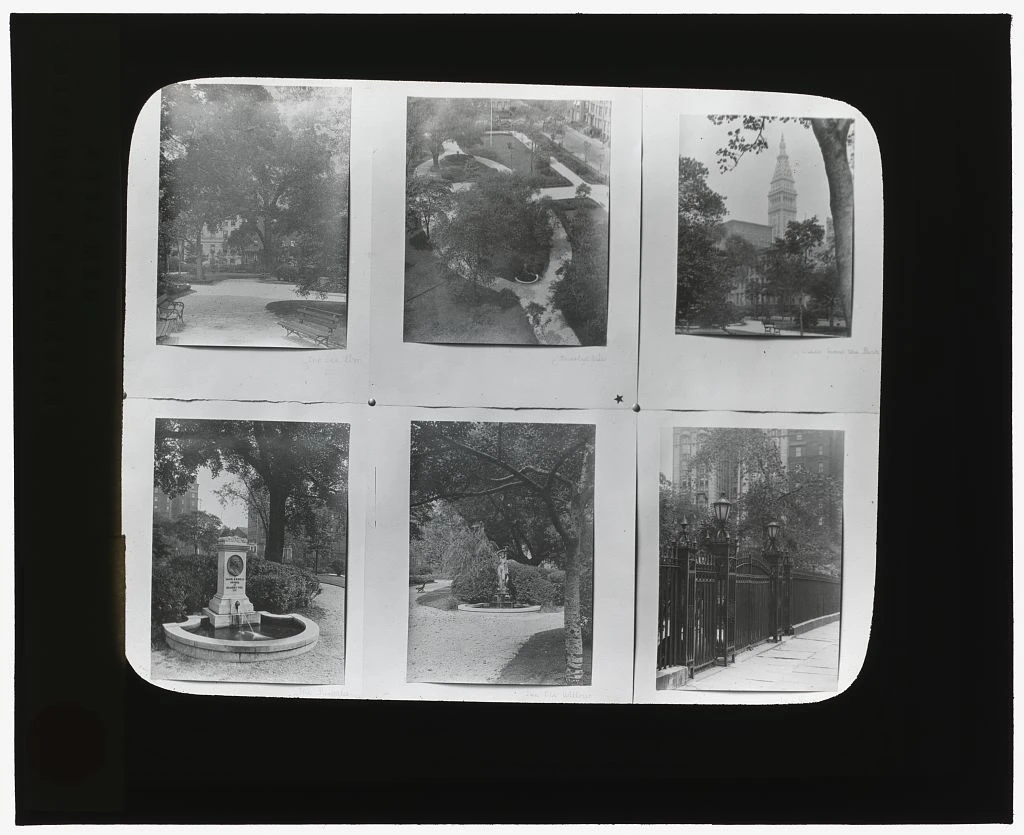
- Gramercy Park, 1922. Exhibition panel from the Frances Benjamin Johnston Collection. Library of Congress, Prints and Photographs Division, digital ID LC-DIG-ppmsca-16306. Collection record. No known restrictions on publication.