1844
The landscape takes shape
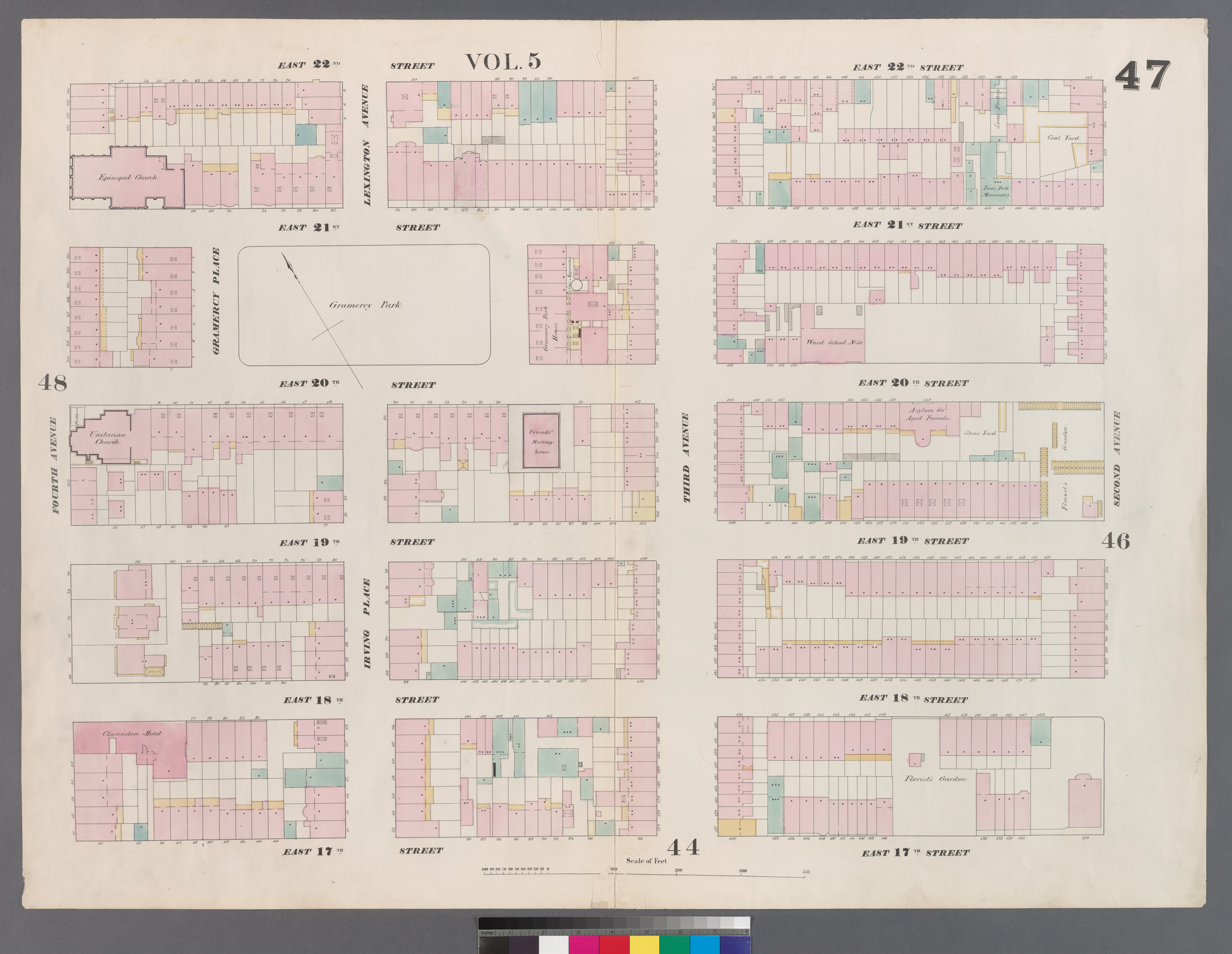
The first recorded meeting of the Trustees took place on November 15, 1844. Pine describes the practical decisions that followed: a border of privet, a hundred trees and plans for a fountain. The planting list included chestnuts, willows, lindens, maples, elms and many other species.
A grand fountain modeled on those outside St. Peter’s in Rome proved too ambitious for the contributions available. A more modest fountain followed in 1848. The landscape developed through choices about planting, cost and maintenance, as gardens still do.
Homes with connections to a growing city
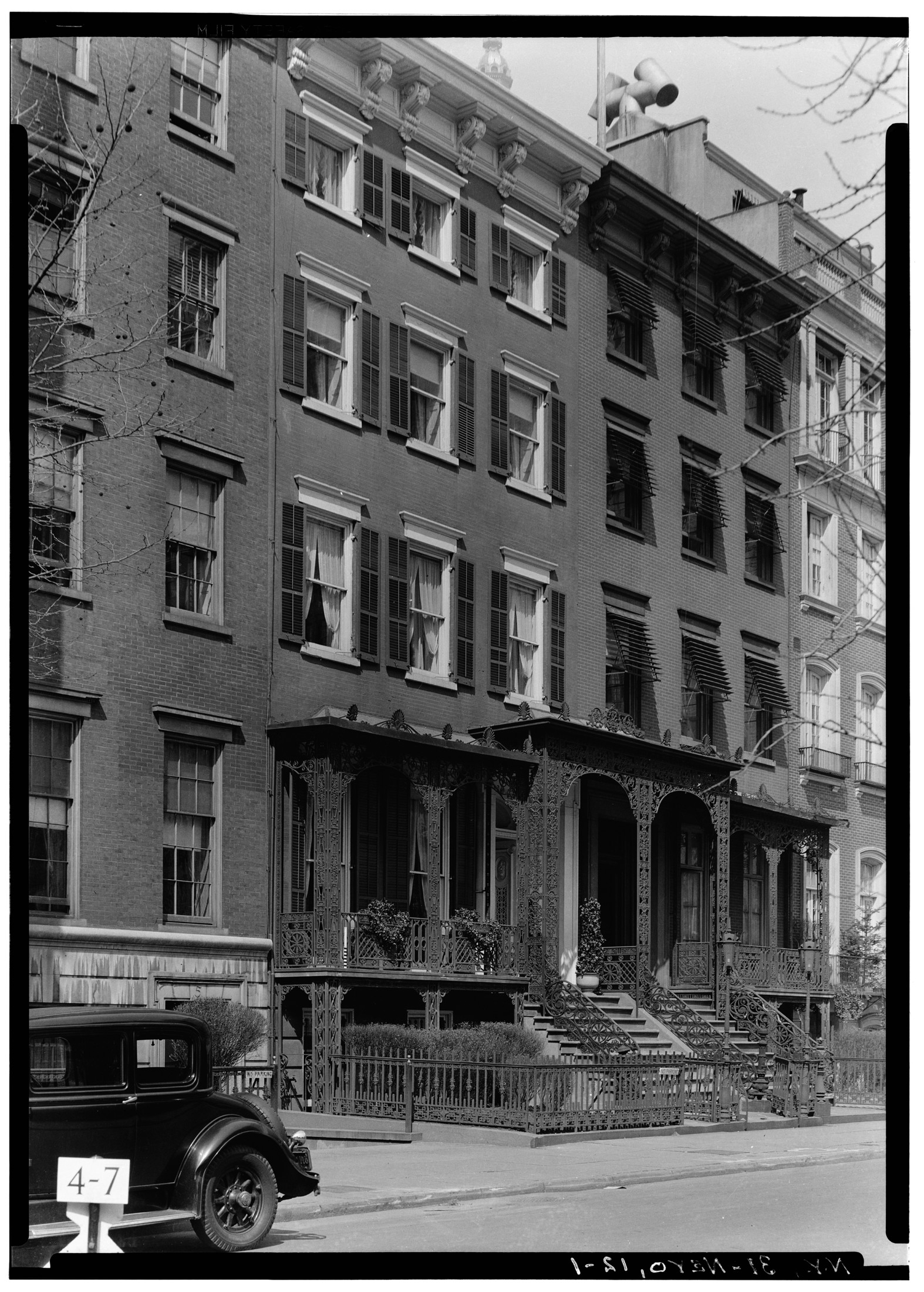
By the middle of the nineteenth century, houses filled much of the Park’s perimeter. Pine’s account connects those homes with people whose work reached far beyond Gramercy: Peter Cooper in education and industry, Cyrus W. Field in the Atlantic cable undertaking, and Samuel J. Tilden and John Bigelow in civic and library work.
Houses of worship became important places of gathering and service. Calvary Church and the Friends Meeting House belonged to this developing neighborhood. The history of Gramercy is also a history of the institutions that brought people together.
Gramercy and the Atlantic cable · Gramercy’s houses of worship and community institutions
Mid-19th-century Gramercy
1859
A meeting house on the square
King & Kellum’s Friends Meeting House introduced a place of Quaker worship to Gramercy Park South in 1859. Its spare interior and broad frontage offered a different architectural presence among the houses.
Brotherhood Synagogue’s institutional history connects the congregation’s Quaker predecessors with abolitionism and shelter for people escaping enslavement. That account belongs alongside the story of the neighborhood’s prominent residents. The building acquired another chapter when Brotherhood made it its home in 1974.
LPC · Building history · Brotherhood Synagogue · Congregational account · The building’s later life
1863
The Civil War reaches the Park
Gramercy’s history includes the violence of New York’s July 1863 Draft Riots. Black New Yorkers were attacked across the City. Pine records the presence of troops in Gramercy Park and recalls cannon stationed near its northeast corner.
The Park was not insulated from national events. Neighborhood residents were also involved in wartime relief and medical support. Reading these accounts together gives a fuller picture of the period than the homes and social gatherings alone.
Pine’s Civil War account · PDF · Relief work and the Draft Riots
1875
Remembering the founder
John Ruggles Strong placed a tablet in the Park in 1875 to commemorate his grandfather’s creation of the garden in 1831. The tablet made the act of founding part of the landscape itself.
Later generations would add the Ruggles Fountain and Edwin Booth’s monument. Each memorial gave the garden another story to tell, placing the memory of a person within the landscape people used every day.
1883
A new way to live around the square
The apartment building at 34 Gramercy Park East introduced an early cooperative venture to the square in 1883. Taller buildings would become part of Gramercy’s residential fabric alongside its townhouses.
1888
A home for The Players
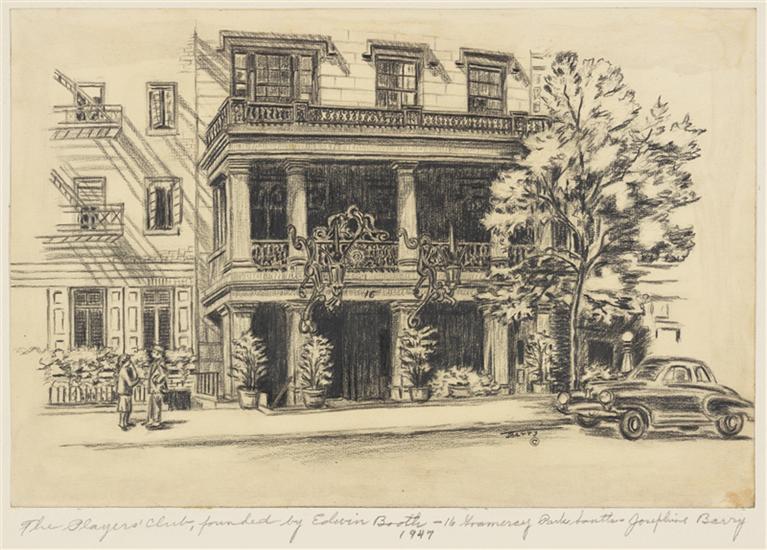
Edwin Booth founded The Players in 1888 and gave the club his house at 16 Gramercy Park South. Stanford White adapted the building for its new role as a meeting place for people in theatre and the other arts.
A change of use brought another layer of life to an existing house. The relationship between artists, their homes and the Park would become one of Gramercy’s enduring themes.
The Players at 16 Gramercy Park South