
1925
A hotel on the northern edge
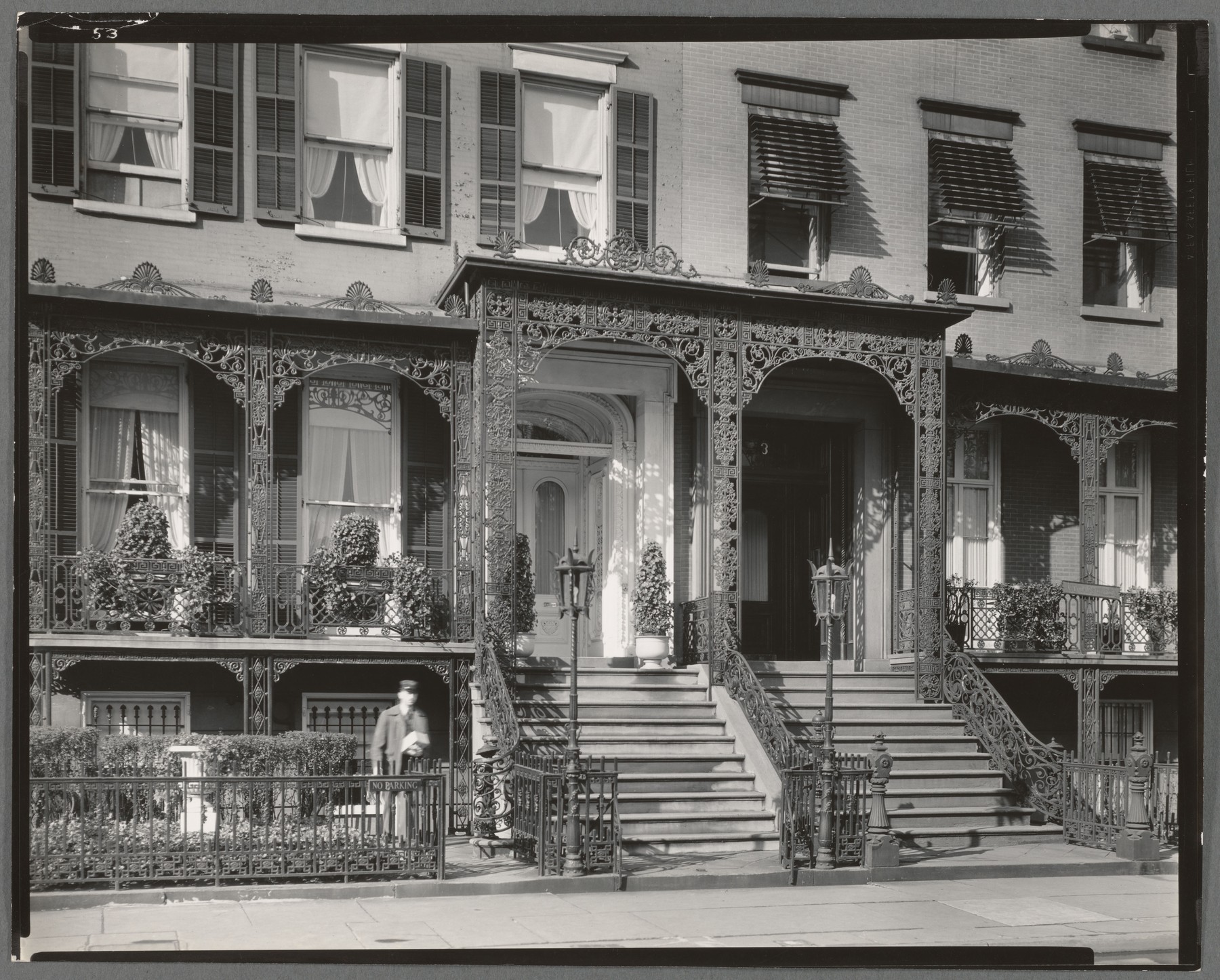
The Gramercy Park Hotel opened in 1925. Its presence at Lexington Avenue added a new kind of life to the north side of the square, alongside the private homes, apartments and clubs already established around it.
The hotel’s successive chapters also show how a familiar name can outlast changes in ownership, interiors and use. Its history continues in the neighborhood’s reporting on renovation and plans for its future.
1926
Anxiety over a changing skyline
In November 1926, The New Yorker criticized the replacement of houses with taller buildings. Preservation concerns preceded official landmark protection.
The New Yorker · November 20, 1926 issue, p. 20
1947
The flower-show tradition begins
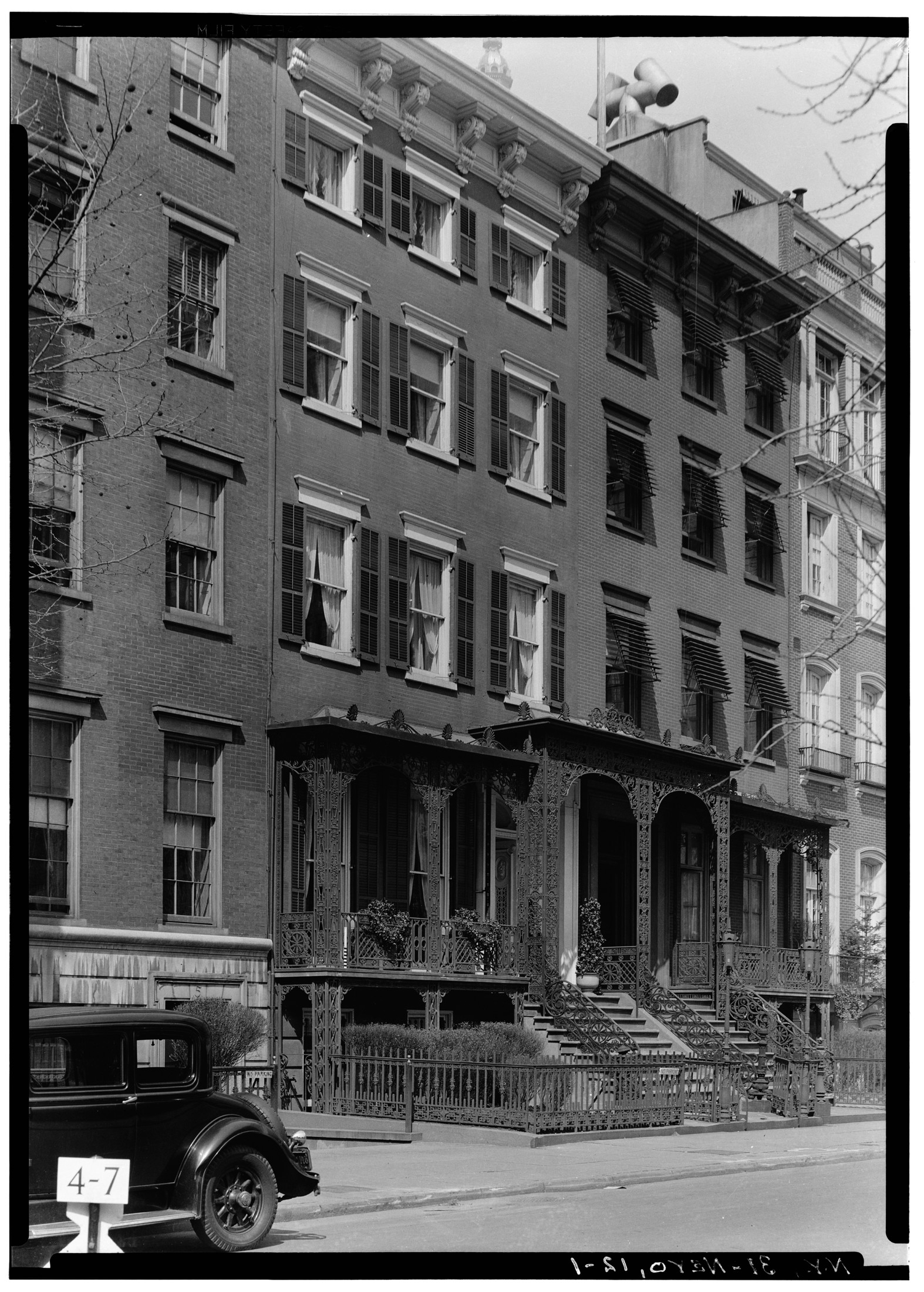
The annual Gramercy Park Flower Show began in 1947. Records at New York Historical document the shows through at least 1994.
Gardening joined preservation as a form of neighborhood participation. The flower shows also make visible the work of organizers and amateur growers whose contributions rarely enter architectural histories.
1966
A historic district
On September 20, 1966, the Landmarks Preservation Commission designated the Gramercy Park Historic District. Its report considered the Park together with the architecture and residential streets around it.
That wider view matters. The experience of Gramercy depends on relationships: the scale of neighboring buildings, the rhythm of windows and entrances, the ironwork, and the open ground they surround. The designation report offers a way to read those details on a walk through the neighborhood.
1974
A historic building finds a new congregation
Brotherhood Synagogue acquired the former Friends Meeting House in 1974. Architect James Stewart Polshek helped adapt the building for its new congregation while respecting the character of the older space.
Preservation here meant continued use. Worship and community service gave the nineteenth-century building a future as well as a past.
1980
National recognition
The Gramercy Park Historic District entered the National Register of Historic Places on January 23, 1980. The National Park Service record identifies its significance in architecture and landscape architecture.
The federal recognition followed the City’s 1966 designation. Both drew attention to the relationship that makes Gramercy distinctive: architecture surrounding a garden, with each giving character to the other.
The early 1980s
Fantasy Fountain
Greg Wyatt’s Fantasy Fountain brought a new sculptural work into the garden. The Fantasy Fountain Fund’s history dates a loan to Gramercy Park to 1981; later accounts commonly give 1983 for its installation or dedication.
A new work could join a historic garden and change the way people saw it. Fantasy Fountain added another layer to a landscape already shaped by successive fountains and memorials. The source guide follows the differing dates given for its arrival.
Fantasy Fountain Fund · Artist’s institutional history · A note on the dates
1988
The district is extended
On July 12, 1988, the City extended the historic district to include 36 Gramercy Park East.
1989
The steam explosion and cleanup
On August 19, 1989, a Con Edison steam pipe exploded beside 32 Gramercy Park South. Three people died. Asbestos contamination forced residents from their homes and required a prolonged cleanup.
The Gramercy Park Block Association’s later account recalls Arlene Harrison’s role as a community liaison during the response. The disaster is part of the history of the inhabited neighborhood, as well as its buildings and garden.
1994
The Block Association begins
Arlene Harrison founded the Block Association in 1994. The Block Association brought neighbors together around the safety, historic character and everyday quality of life of the residential community.
The Block Association’s work has grown to include clean streets, street trees, preservation advocacy, communication and practical help for neighbors. It is distinct from the Gramercy Park Association described in Pine's 1921 book.
Arlene Harrison and the story of the Block Association
Preservation remains an active part of the Block Association’s daily work: keeping neighbors informed, organizing support, following construction and advocating for the historic streetscape and residential character around the Park. Explore that continuing work.
2001
A neighborhood responds
After September 11, the Block Association helped organize meals, supplies and places to rest for rescue and recovery workers. Residents, restaurants, schools, houses of worship and other neighbors contributed to the response.
The Block Association’s contemporary accounts preserve the practical work behind that effort. They show how relationships built locally could support people facing a crisis far beyond the neighborhood.
2006–2009
Restoring the enclosure
The Trustees undertook a major restoration of the Park’s fence and curb between 2006 and 2009. Later projects repaired damage from vehicles and restored gates and other historic metalwork.
The enclosure is central to the view of Gramercy from the street. Its survival depends on repeated repair, skilled fabrication and care for the masonry beneath it. The project record distinguishes major restoration campaigns from individual repairs.
2011–2021
Art and remembrance in the garden
Alexander Calder’s Janey Waney was installed on loan in October 2011. Its bright form brought a different sculptural language to a garden already marked by commemorative figures. The work also traveled to European exhibitions; a 2016 photograph shows it back in the Park. An August 2021 neighborhood letter records its removal.
A December 2011 Trustees’ report documents a quieter memorial: the Christmas Grove behind the Ruggles Fountain, honoring officers lost in service, especially on September 11. These two records reveal different ways the Park became a setting for art and remembrance.
Calder · Installation, exhibition and removal records · Christmas Grove · December 2011 record
2012–2013
Storm recovery and new planting
Hurricane Sandy in 2012 took two large sidewalk trees on the southeast side of the Park. Replacement trees were planted in October 2013. These were street trees outside the fence.
Inside the enclosure, the Trustees completed a perimeter landscape project in October 2013, with landscape architect Kathleen Scupp and Anthony Bulfamante Landscaping. The two projects show how the planted setting depends on separate responsibilities inside and outside the garden.
Street-tree recovery and the original 2013 notice · The Trustees’ perimeter planting project
2026
Caring for historic places
Announced in October 2025, the Trustees’ Ruggles Fountain project restored the basin, stonework and water system under architect Thomas Fenniman. A gift from the Trustees’ Chairman funded the work. The June 4, 2026 neighborhood report showed the fountain operating again.
The restored east and west gates came back as well. Water flowing and gates returned to their places may seem like modest events, but they are how a historic landscape stays part of daily life.
Sixty years after the City’s September 20, 1966 designation, the Trustees care for the garden, while the Block Association works with neighbors on the surrounding streets and community programs.
Fountain restoration · 2025–2026 reports · The restored gates · LPC · September 20, 1966