
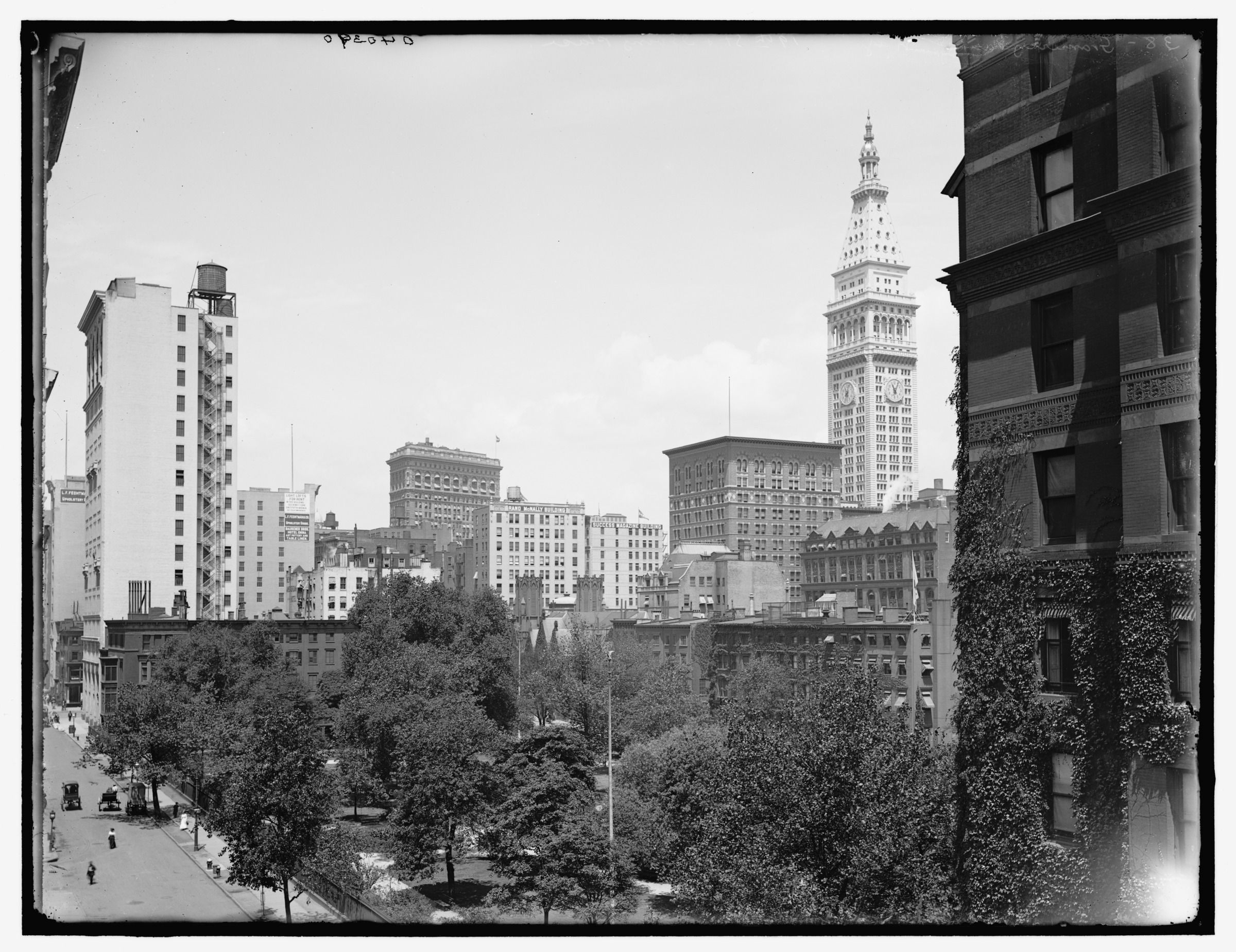
1890
A proposed route through the Park
In 1890, legislation would have allowed a cable road through Gramercy Park. Pine records the Trustees’ opposition and Governor David B. Hill’s refusal to sign the bill.
The episode is an early example of a recurring question: how should a rapidly changing city accommodate movement and development while preserving an established landscape? For the Park, continued existence depended on active attention to plans outside its boundaries.
1903–1910
The tax dispute
A City assessment of the Park in 1903 led to seven years of litigation. Pine explains that the courts considered the value of the lot owners’ rights to use the garden: that value had already been included in the assessments on surrounding property.
The assessments were set aside, and part of the refunded money became an endowment for the Park. A dispute over taxes had reinforced something built into Ruggles’s plan: the garden and the surrounding homes were connected, financially as well as visually.
1906
The National Arts Club moves to Gramercy
Founded in 1898, the National Arts Club acquired the Tilden mansion in 1906. Its new home joined the neighboring Players in giving Gramercy Park South a lasting cultural role. The Club admitted women as full members from its beginning.
1908–1910
The east side rises
James Riely Gordon’s design for 36 Gramercy Park East brought elaborate Gothic detail to a tall apartment building. Built in 1908–1910, its glazed terra-cotta exterior remains a distinctive part of the Park’s eastern edge.
1912
Neighbors organize to protect the Park
The Gramercy Park Association formed in 1912 amid a proposal to extend Irving Place through the Park to Lexington Avenue in connection with subway construction. Pine records the Gramercy Park Association’s opposition and the City’s subsequent change of plan.
Its purpose also extended to the residential character and community life of the neighborhood. This earlier Association is distinct from the Gramercy Park Block Association, founded in 1994.
The 1912 preservation campaign
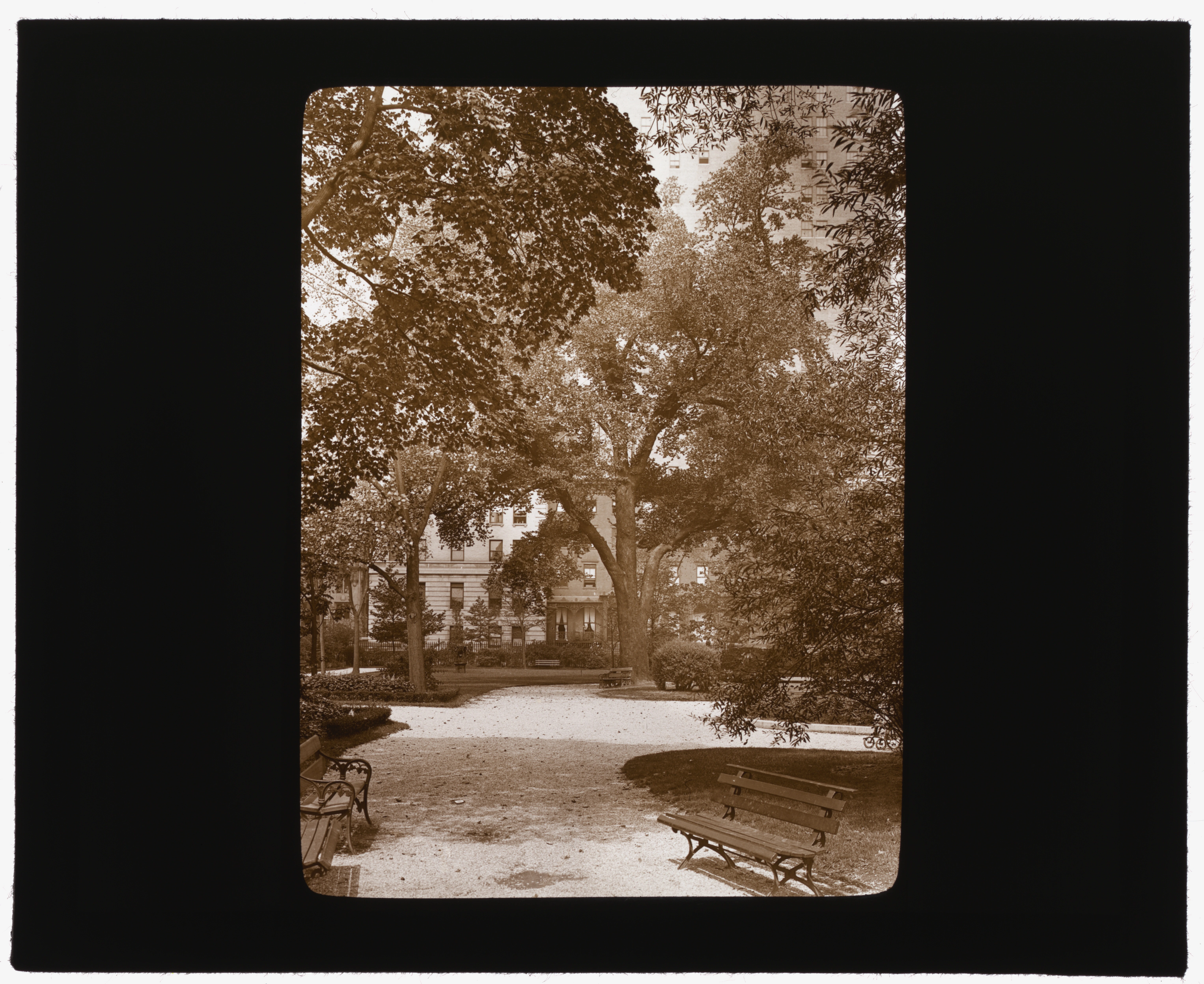
1916
A residential district
Pine credits the earlier Association with helping secure residential zoning for the streets around the Park when the City adopted its zoning system in 1916. The new framework reinforced a residential character that had been part of Ruggles’s original plan.
1918
Edwin Booth at the center
The monument to Edwin Booth was unveiled on November 13, 1918. Edmond T. Quinn modeled the actor as Hamlet; Edwin S. Dodge designed the pedestal. The Players commissioned the memorial with the cooperation of the Trustees.
The statue changed the center of the garden. Pine describes the earlier fountain’s displacement and the creation of smaller fountains toward the east and west entrances, including a memorial to Ruggles on the western side.
The Booth memorial in Gramercy Park · The Park’s fountains and memorials
By 1921
Two fountains and a new center
The arrival of Booth’s monument displaced the garden’s earlier central fountain. Pine describes two smaller fountains designed by architect Charles I. Berg near the east and west entrances. The water nymph from the old fountain moved east; the western fountain carried a portrait of Samuel B. Ruggles.
Quinn also made the bronze portrait of Ruggles, and the founder’s grandson John R. Strong gave the memorial. By the time Pine pictured it in 1921, the garden had a new arrangement: an actor at its center and a tribute to its founder at the west. The fountain’s “1831” inscription remembers the Park’s beginning.
The Park’s fountains and memorials · The Ruggles Fountain
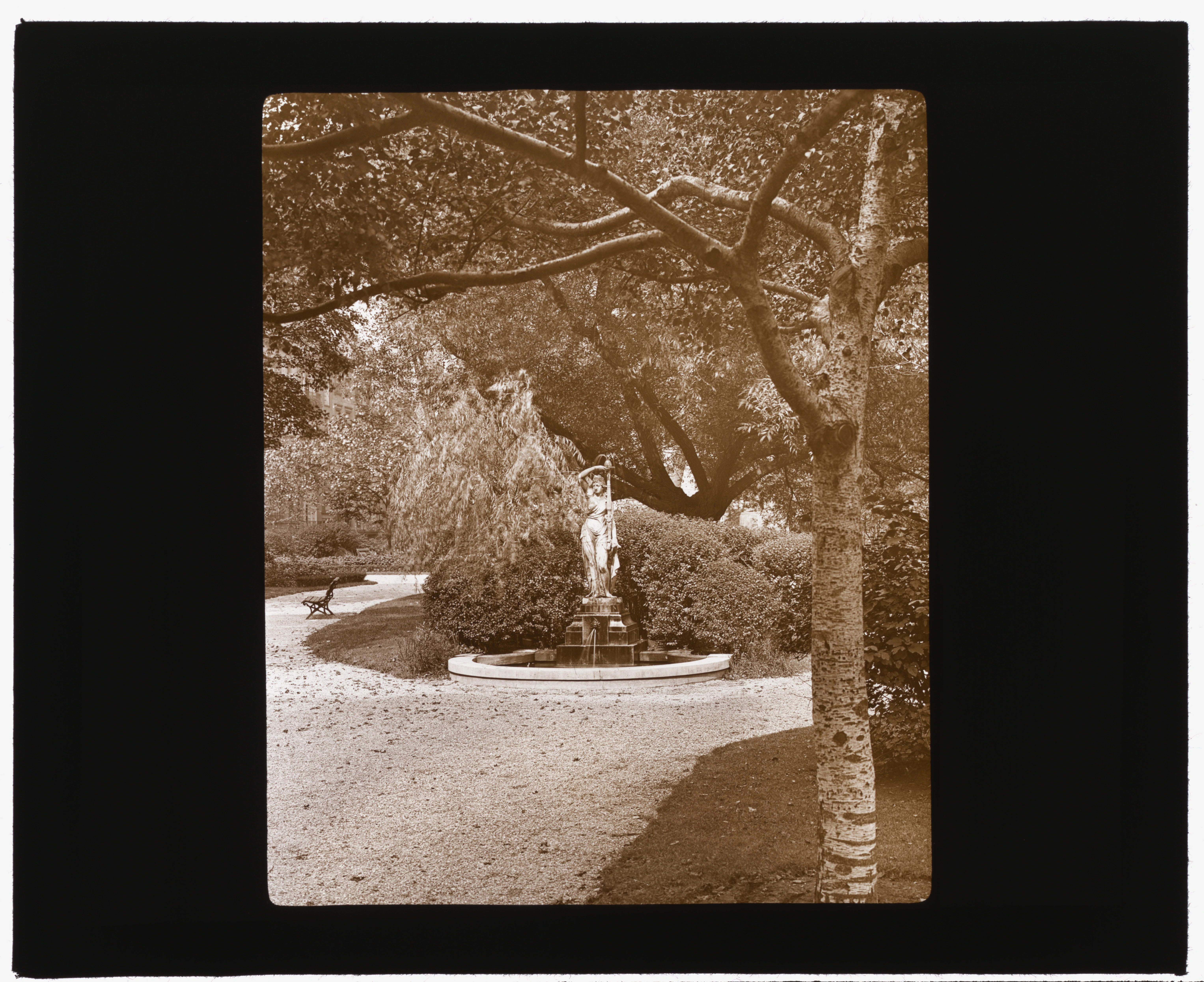
1921
The first ninety years in print
John B. Pine’s The Story of Gramercy Park, 1831–1921 brought records, recollections and illustrations together for the ninetieth anniversary of the Park’s founding. The Gramercy Park Association published the book.
It remains a valuable starting point, with the perspective and limits of a commemorative history written in its own time. Its references to “today” describe the early twentieth century, not the present-day neighborhood.