
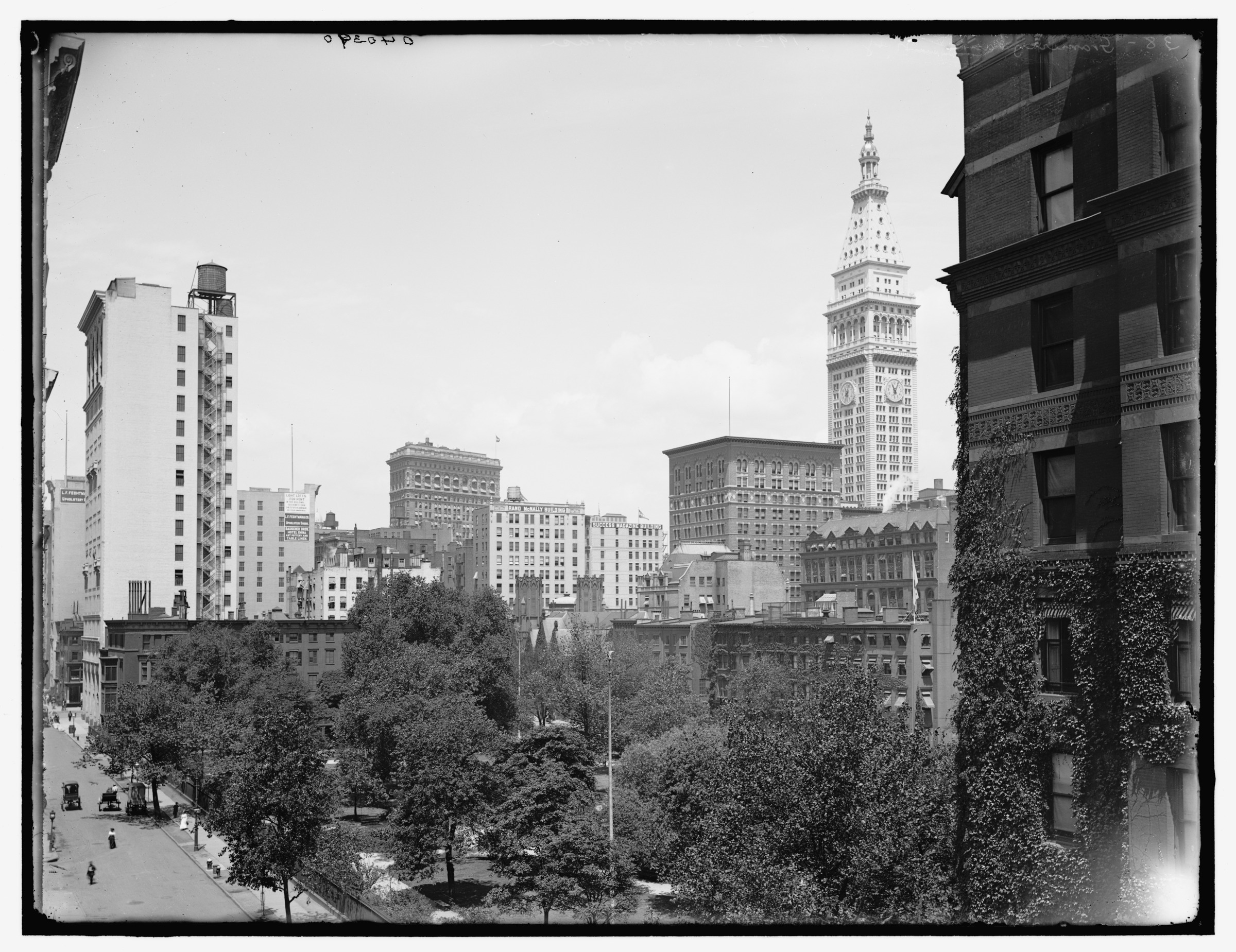
An earlier threat in 1890
The 1912 proposal was not the first attempt to run a transport route through the Park. Pine records that the Legislature passed a bill in 1890 permitting a cable road through the grounds. The Trustees opposed it, and Governor David B. Hill refused to sign it.
The Trustees thanked Hill formally. A decision made far from Gramercy had left the garden intact—but it would not be the last time neighbors had to defend that open ground.
A street through the square
John B. Pine’s 1921 history describes a threat to the Park during work on the Lexington Avenue subway: a proposed extension of Irving Place through the Park to Lexington Avenue. In 1912, residents and other interested neighbors organized the Gramercy Park Association in response.
Pine records that the City changed its plan and the proposed intrusion was averted. His account places the protection of the Park within a wider concern for the residential neighborhood surrounding it.
A neighborhood purpose
Pine also credits that association with securing the inclusion of the streets around the Park in a residential district under the City’s 1916 zoning system. He describes support for community spirit and neighborhood organizations, including a music committee and boys’ club.
Protection did not stop at the fence. The association also sought a residential setting for the Park, and activities that would bring its neighbors together.
A tradition, with distinct organizations
The Gramercy Park Association formed in 1912 was a separate organization from the Gramercy Park Block Association, founded in 1994. The Block Association’s November 2025 letter revisited the earlier campaign through Pine’s account.
Read about the Block Association’s preservation work around the Park today.
Sources
Based on John B. Pine’s 1921 history, printed pages 17–21, with its 1912 account also shared in the Block Association’s November 20, 2025 newsletter.
- Pine, 1921 · printed pages 17–21