
The Irving
26 Gramercy Park South · From the Hotel Irving to Irving House
A HOTEL WITH MANY LIVES
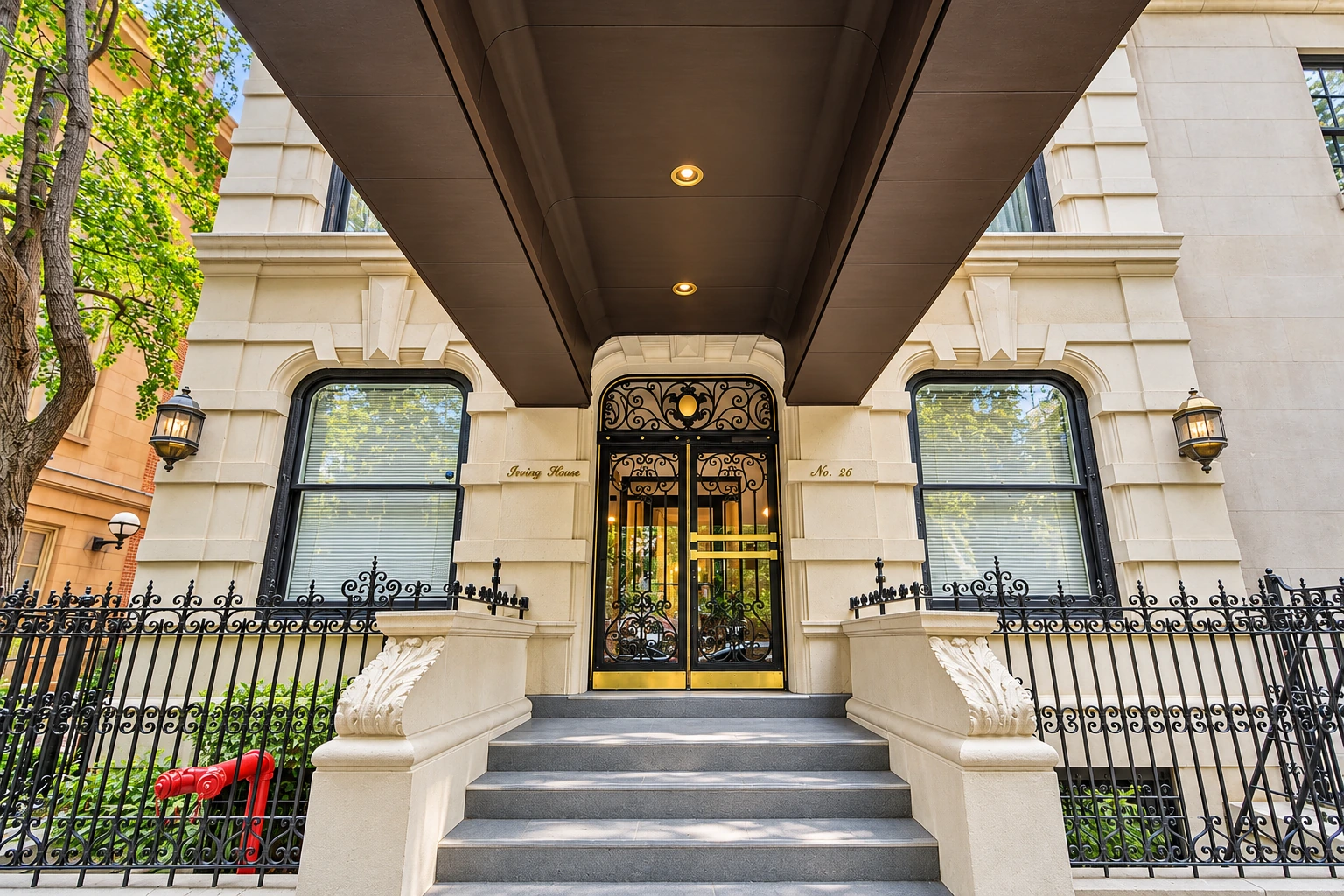
For nearly a quarter-century before the present Beaux-Arts building rose at 26 Gramercy Park South, this through-block lot reaching to 133 East 19th Street held the family townhouse and carriage stable of piano manufacturer and civic leader William Steinway. Replaced in 1902–1903 by the nine-story Hotel Irving, the address spent more than eight decades as one of Gramercy Park’s signature residential family hotels.
Behind its rusticated limestone base and scrolled iron doors passed a parade of twentieth-century creative lives: a teenage Preston Sturges, writer and illustrator Ludwig Bemelmans, stage and screen actor John Garfield, radical cartoonist Art Young, Minsky’s burlesque legend Steve Mills, centenarian abstract painter Carmen Herrera, and “Fairy Godmother of Origami” Lillian Oppenheimer, who founded the Origami Center of New York in the hotel’s penthouse in 1958. Converted into a residential cooperative in 1986 and known today both as The Irving and Irving House, the building continues to link Gramercy Park South directly to East 19th Street’s “Block Beautiful.”
A Steinway on the Park
William Steinway’s Gramercy mansion and East 19th Street stable
When developers proposed a nine-story apartment hotel on Gramercy Park South at the turn of the twentieth century, the thirty-foot lot stretching 179 feet through the block to 133 East 19th Street was occupied by a four-story Italianate brownstone mansion and a two-story brick carriage house. On November 29, 1873, thirty-eight-year-old piano manufacturer William Steinway (1835–1896)—head of Steinway & Sons—recorded in his diary his agreement to purchase 26 Gramercy Park South for $65,500, making the square his home for the remaining twenty-three years of his life.
The earlier house belonged to a family group along the row. Caroline Pryor Pine’s recollections place Morris Ketchum at No. 26, beside his sister-in-law Mrs. Samuel Mitchill at No. 25 and the family of Surrogate Sylvanus Miller at No. 24. She dates Nos. 25 and 26 to 1849–50 and identifies their builder as Mr. Hennessy of East 19th Street. Both were faced in Nova Scotia stone; Mrs. Mitchill contributed a foot of her lot’s width to No. 26.
Steinway’s exhaustive nine-volume diary, now preserved at the Smithsonian’s National Museum of American History, paints an intimate portrait of Gilded Age domestic and musical life inside No. 26. After returning from an 1880 European wedding tour with his second wife, Elizabeth Ranft Steinway (1856–1893), he oversaw the birth of their three children—William Richard, Theodore Edwin, and Maud Paige—inside the house; following Elizabeth’s untimely death in March 1893, his eldest daughter Paula Steinway von Bernuth and her husband Louis von Bernuth moved into 26 Gramercy Park South to preside over the household.
From Steinway Hall and Paderewski to the first subway plans
From his parlor on Gramercy Park, Steinway shaped the cultural and physical infrastructure of New York. Having built Steinway Hall on East 14th Street into the city’s premier concert venue before Carnegie Hall and founded the model industrial village of Steinway in Astoria, Queens, he welcomed world-famous virtuosos—including Ignacy Jan Paderewski, Anton Rubinstein, and Rafael Joseffy—alongside conductor Theodore Thomas, reformer Carl Schurz, and Gramercy neighbor Abram S. Hewitt to 26 Gramercy Park South. Equally devoted to civic reform, he served on the Committee of Seventy that toppled Boss Tweed in 1871 and in the 1890s chaired New York’s Rapid Transit Commission, laying the engineering and financial groundwork for the city’s first subway line.
After Steinway died of typhoid fever in his bedroom at 26 Gramercy Park South on November 30, 1896, his family remained in the house for five more years. In December 1901, his executors conveyed the house and stable for $70,000 to the Realty Mortgage Company, which flipped the parcel two days later for $81,000 to the Robert J. Blake Building & Realty Company. By late March 1902, the Steinway mansion was being demolished.
An apartment hotel beside the Park
Gilbert Robinson & Son’s Beaux-Arts design
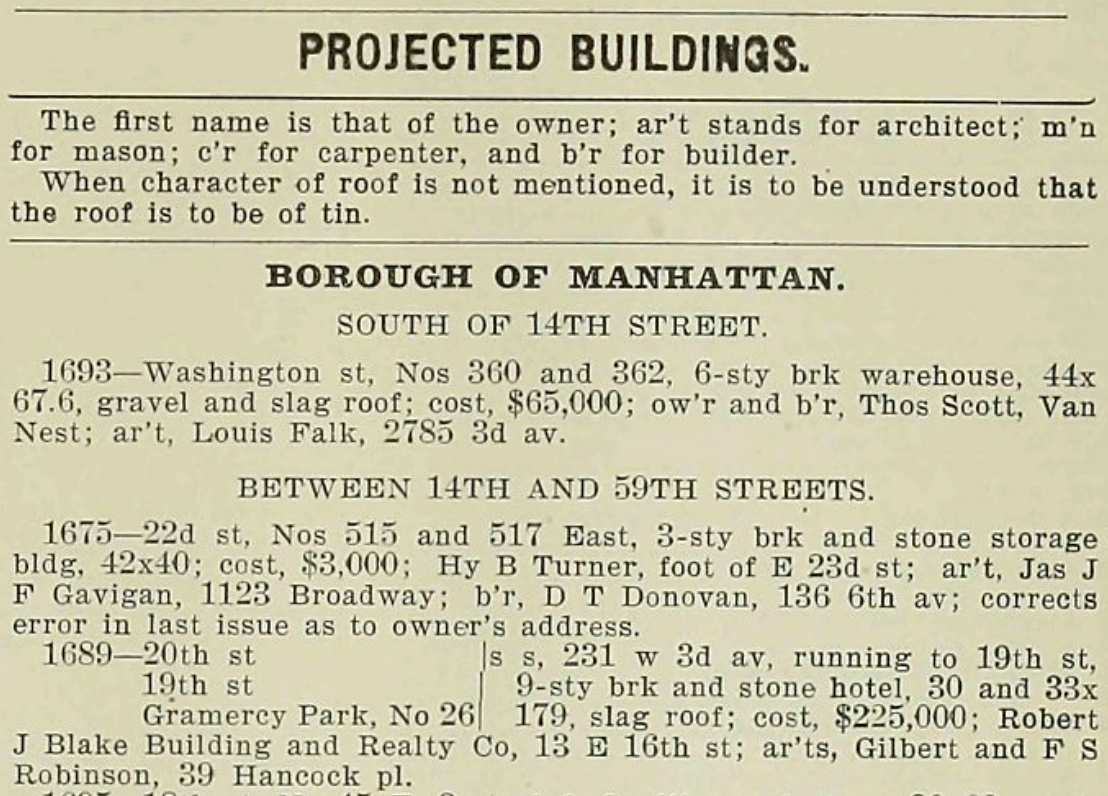
New York at the dawn of the twentieth century was in the midst of an apartment-hotel boom, driven by families and professionals seeking multi-room suites with full hotel dining and housekeeping services but without the expense of maintaining a private brownstone and staff. On December 7, 1901, developer Robert J. Blake filed plans for a nine-story-and-penthouse brick-and-limestone hotel spanning the entire 179-foot depth of the site—measuring thirty feet wide on Gramercy Park South and thirty-three feet wide at 133 East 19th Street—at an estimated cost of $225,000.
The proposal also tested the meaning of Samuel Ruggles’s 1831 covenant. Neighbors challenged whether an apartment hotel belonged among the “dwelling houses” permitted around the Park. John Bigelow chaired meetings of the lot owners on January 20 and 27, 1902, while the Gallatin family pursued an injunction. The court accepted the proposed private family hotel as a dwelling house under the covenant, allowing the project to proceed.
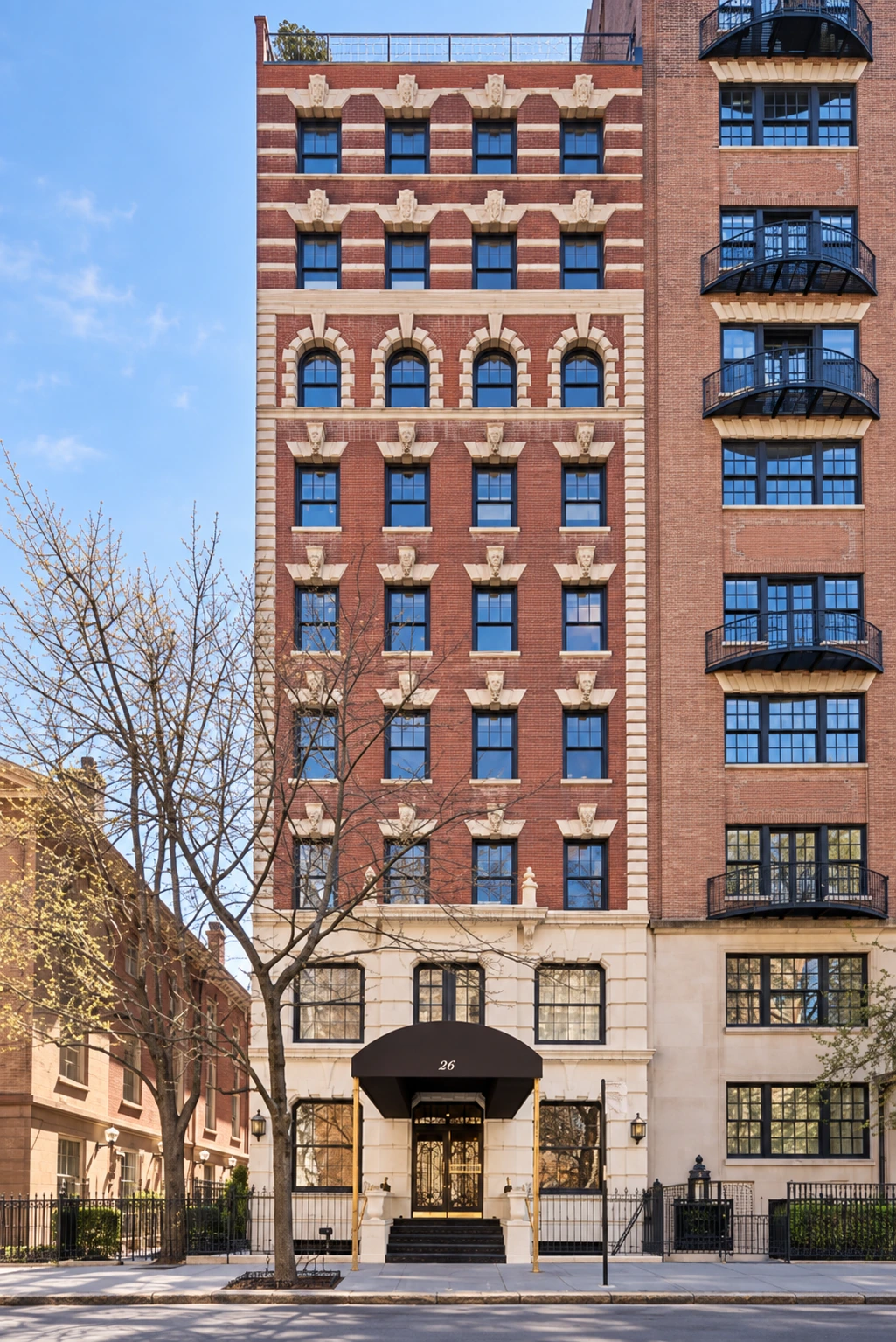
To design the building, Blake commissioned the father-and-son partnership of Gilbert Robinson Jr. and Frederick S. Robinson (Gilbert Robinson & Son). Facing Gramercy Park, the architects composed a symmetrical four-bay Beaux-Arts elevation: a two-story rusticated Indiana limestone base pierced by splayed-keystone windows and crowned by carved stone urns, five middle stories of warm red brick accented by stone window lintels with scrolled keystones and continuous stone quoins, an eighth-floor arcade of round-arched windows, and a ninth story banded with horizontal limestone stripes beneath the roofline.
Opening as the Hotel Irving (1902–1903)
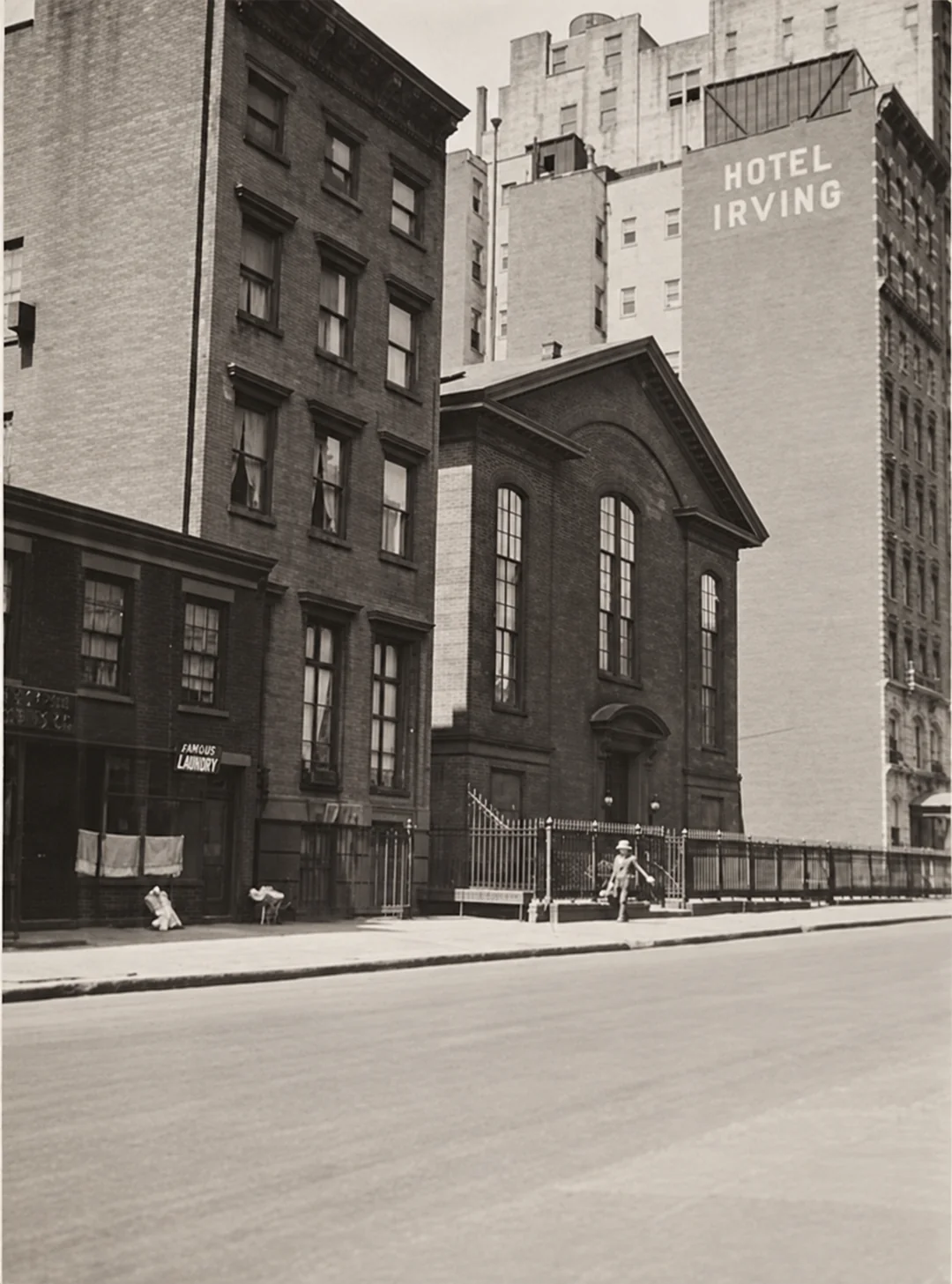
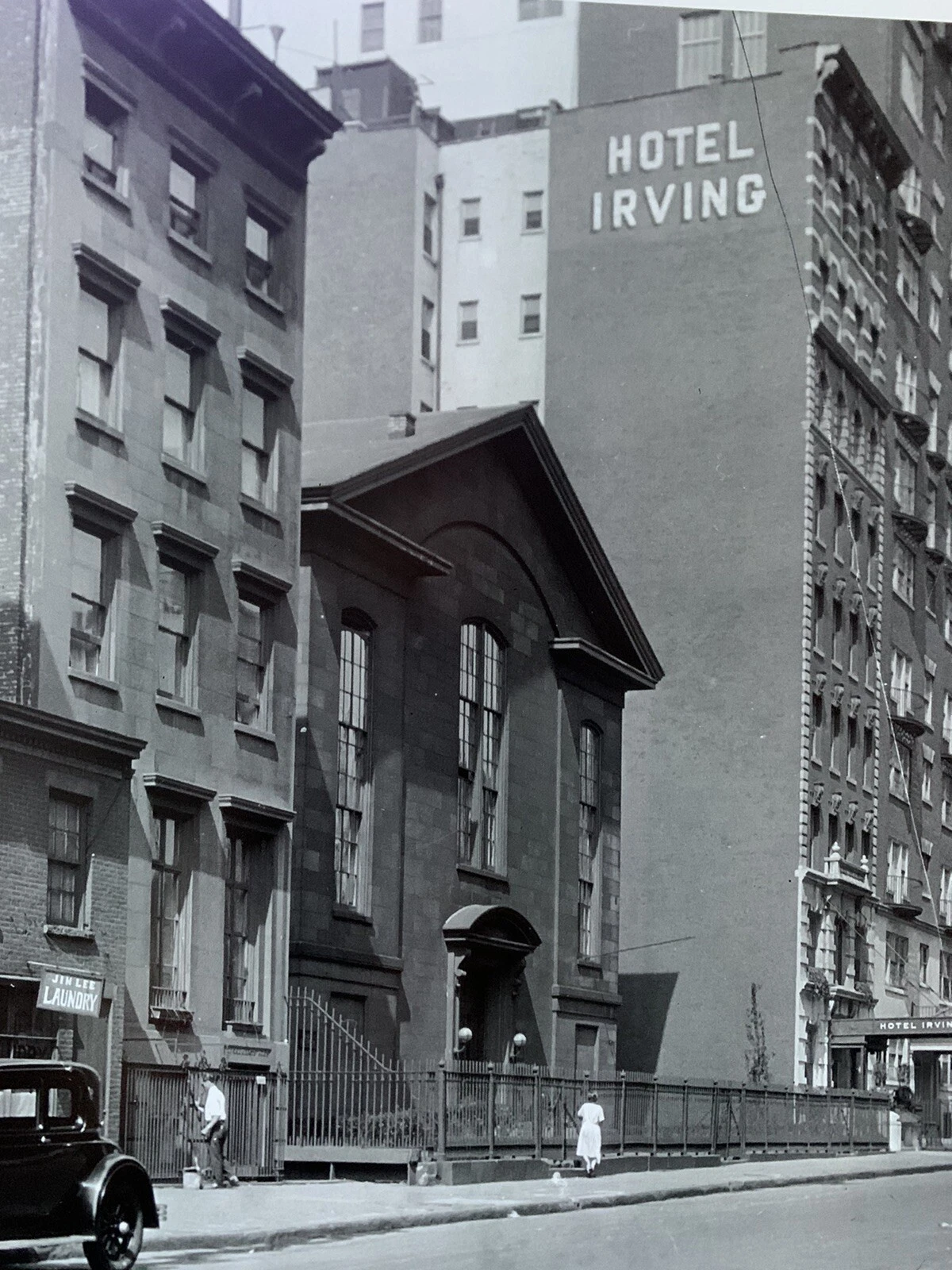
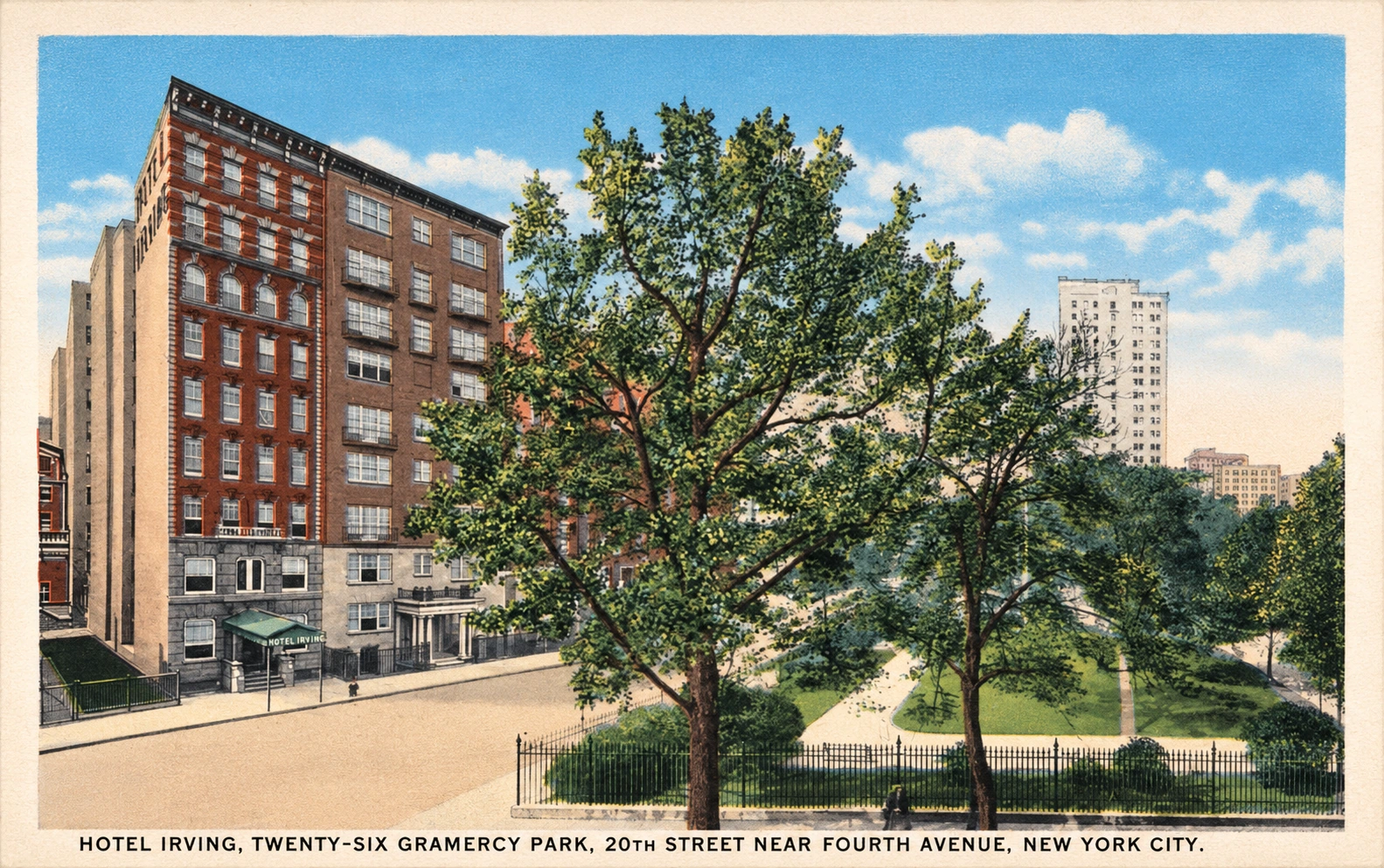
Named the Hotel Irving in honor of Washington Irving—whose namesake street meets the south side of the square a few doors west—the building neared completion in the autumn of 1902. Its first operating lessee, the Ruggles Company (named for Gramercy Park founder Samuel B. Ruggles), signed a twenty-one-year lease beginning December 1, 1902, at an annual rental of $27,000, outfitting the building with $10,000 in custom hotel fixtures from John Wanamaker’s store. High on its eastern brick party wall, towering over the 1859 Quaker Meeting House next door at No. 28, giant white block letters announced “HOTEL IRVING” to passersby across the southeastern corner of the square.
A family hotel, with characters
Knott Hotels, Preston Sturges, Ludwig Bemelmans, and John Garfield
Marketed in an August 1915 New-York Tribune advertisement under the management of Blake Brothers as a “high class family hotel” offering parlor, bedroom, and bath suites for permanent and seasonal guests, the Hotel Irving joined one of New York’s leading hotel empires in October 1917 when it was leased by hotelier and Democratic Sheriff of New York County David H. Knott (1879–1954). Integrating the Irving into the Knott Hotels chain—which operated Greenwich Village landmarks including the Judson, the Earle, and the Holley on Washington Square as well as the Hotel Albert and Hotel Chelsea—Knott cultivated an atmosphere of quiet literary and theatrical gentility.
Across the interwar decades, that atmosphere attracted an extraordinary roster of writers, filmmakers, and actors. In 1914, a fifteen-year-old Preston Sturges (1898–1959)—future Academy Award–winning screenwriter and director of The Great McGinty, The Lady Eve, and Sullivan’s Travels—stayed at the Hotel Irving while his mother, cosmetics entrepreneur Mary Desti, stayed uptown with dancer Isadora Duncan. In the 1930s, Austrian-born writer and artist Ludwig Bemelmans (1898–1962), creator of Madeline (1939), made his home at the Hotel Irving before moving four doors west to a top-floor studio at 20 Gramercy Park South—where, as his daughter Barbara Bemelmans later fondly recalled, the uniformed doorman of the Hotel Irving would still walk her across the street, unlock the gate of Gramercy Park with his key, and relock it safely behind her. During the same era, stage and screen actor John Garfield (1913–1952) also lived at the hotel during his rise from the Group Theatre to Hollywood stardom.
Garmey also places novelist and playwright Booth Tarkington at the Hotel Irving in the 1920s, adding the author of The Magnificent Ambersons to the hotel’s literary company.
Art Young’s last round of New Year’s postcards (1943)
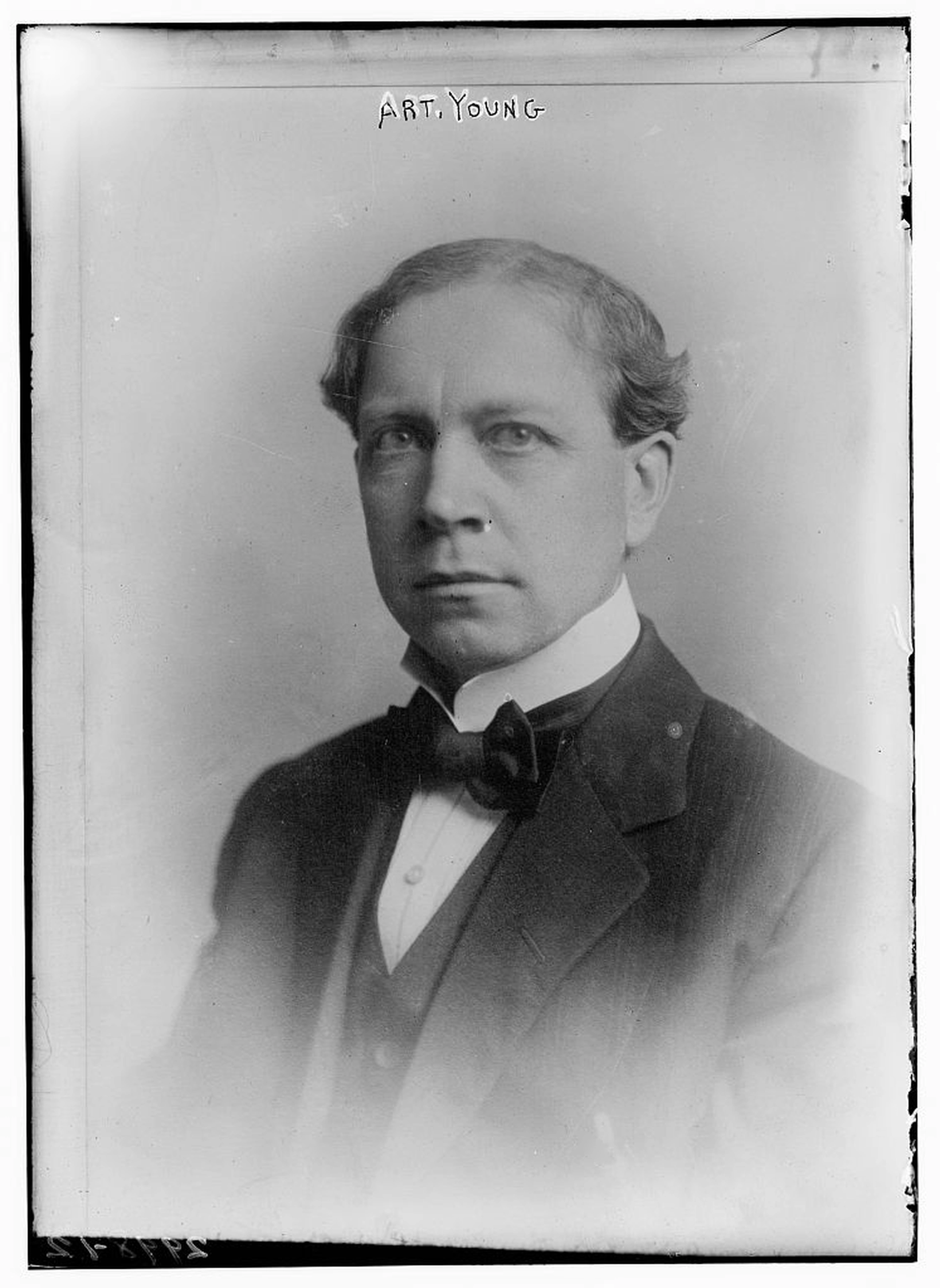
No resident was more beloved around the neighborhood than political cartoonist and humorist Art Young (1866–1943). A trailblazing socialist illustrator for The Masses, The Liberator, Good Morning, and The New Yorker who had famously fallen asleep in the courtroom while on trial for sedition under the Espionage Act in 1918, Young moved into the Hotel Irving from his farm in Bethel, Connecticut, around 1942. From his room overlooking the trees—using stationery headed “HOTEL IRVING · 26 GRAMERCY PARK · OVERLOOKING BEAUTIFUL GRAMERCY PARK” for letters to friends such as Helen Keller—he held court for a wide circle of artists and writers.
As Andy Logan and Russell Maloney recounted in The New Yorker in January 1944, Young spent his final afternoon on December 29, 1943, completing his cherished annual ritual: hand-addressing 1,200 illustrated New Year’s greeting cards to friends across the country. After dining with poet Shaemas O’Sheel, the seventy-seven-year-old cartoonist walked out along Fourth Avenue to mail the last bundles—insisting on dividing the cards among several different street mailboxes so that no single postal carrier’s sack would be too heavy. Returning to the Hotel Irving alone, he collapsed in his room just after midnight as a flash on the lobby switchboard summoned the night clerk and house physician; more than five hundred mourners packed his memorial service the following week.
A penthouse of paper, a painter’s landing place, and three hundred songs
Lillian Oppenheimer founds the Origami Center of New York (1958)
In the 1950s and 1960s, the upper floors of the Hotel Irving became the unlikely headquarters of an international artistic movement. Upon her marriage in 1954 to textile merchant Harry C. Oppenheimer (1889–1962), collector and arts patron Lillian Oppenheimer (1898–1992) moved into the penthouse apartment atop 26 Gramercy Park South. Captivated by the traditional Japanese art of paperfolding after using origami to entertain a hospitalized daughter, she corresponded with master folder Akira Yoshizawa in Tokyo and began gathering fellow enthusiasts in her Gramercy penthouse.
On October 6, 1958—after a summer feature in The New York Times profiling her penthouse collection sparked a flood of letters from across the country—Oppenheimer hosted the inaugural meeting of the Origami Center of New York at 26 Gramercy Park South and launched its journal, The Origamian. Celebrated by Scientific American mathematics columnist Martin Gardner, who directed readers nationwide to “The Origami Center of New York, 26 Gramercy Park South,” Oppenheimer’s penthouse gatherings brought together mathematicians, museum curators, entomologist Alice Gray, and international artists, inspiring the landmark 1959 exhibition Plane Geometry and Fancy Figures at the Cooper Union Museum and laying the foundation for today’s national organization OrigamiUSA. Hailed worldwide as the “Fairy Godmother of Origami,” Oppenheimer lived at 26 Gramercy Park South for thirty-eight years until her death in July 1992 at ninety-three.
Carmen Herrera’s return from Europe (1963)
Five years after the Origami Center’s founding, the Hotel Irving served as the New York landing place for Cuban-born geometric abstract painter Carmen Herrera (1915–2022) and her husband, Jesse Loewenthal (1902–2000), a longtime English teacher at nearby Stuyvesant High School. Returning from Europe on December 9, 1963, the couple stayed at the Hotel Irving through early 1964 before moving around the corner to 118 East 19th Street and then to a loft studio at 51 East 19th Street—anchoring a six-decade Gramercy residency that culminated in Herrera’s international museum acclaim and 2016 Whitney Museum retrospective at the age of 101.
Burlesque legend Steve Mills and his three hundred songs
Down the hall in April 1965, New Yorker writer James Stevenson paid a visit to sixty-nine-year-old burlesque and vaudeville comedian Steve Mills (1895–1988) in his apartment at the Hotel Irving. A Boston-born veteran of Minsky’s burlesque houses who had performed alongside Abbott and Costello and Phil Silvers, Mills had turned his hotel suite into a living archive of the American stage—lined with theatrical photographs, comedy sketches, a collection of quirky secondhand clocks (one of which ticked only when laid face down), and a ledger of more than three hundred vaudeville songs that he gladly sang for his visitor. Mills continued performing into the 1970s—appearing on Broadway in Sugar Babies—and lived to ninety-two.
From faded hotel to tenant preservation
The twilight of the residential hotel era
By the 1970s, the economic model that had sustained Manhattan’s turn-of-the-century family hotels was unraveling across the city. In a July 1977 New York Post survey later reprinted by the U.S. Senate Special Committee on Aging, journalist Joseph Berger grouped the Hotel Irving among New York’s “faded, but still genteel hotels,” where longtime artistic and retired residents lived on modest monthly rents.
Yet deferred maintenance under an absentee operating sublease and a pair of violent incidents in 1976 and January 1979—including a fatal late-night lobby shooting reported in The New York Times that left residents shaken—underscored the vulnerability of the seventy-seven-year-old hotel. While transient hotel tenants under the sublease were not issued keys to Gramercy Park across the street, long-term residents inside the building organized to demand stronger security, building repairs, and a stable residential future.
Tenants organize to reclaim the building
Determined not to see their homes lost either to continued neglect or to displacement, the Irving’s long-term residents formed an active tenants’ association at the end of the 1970s. Pressing city housing officials and the property’s owners to restore essential services, upgrade lobby security, and end the troubled operating sublease, the residents laid the groundwork for a tenant-sponsored cooperative conversion plan—turning a decade of crisis into the catalyst for resident ownership.
A new life as a cooperative
Conversion to Irving House (1986)
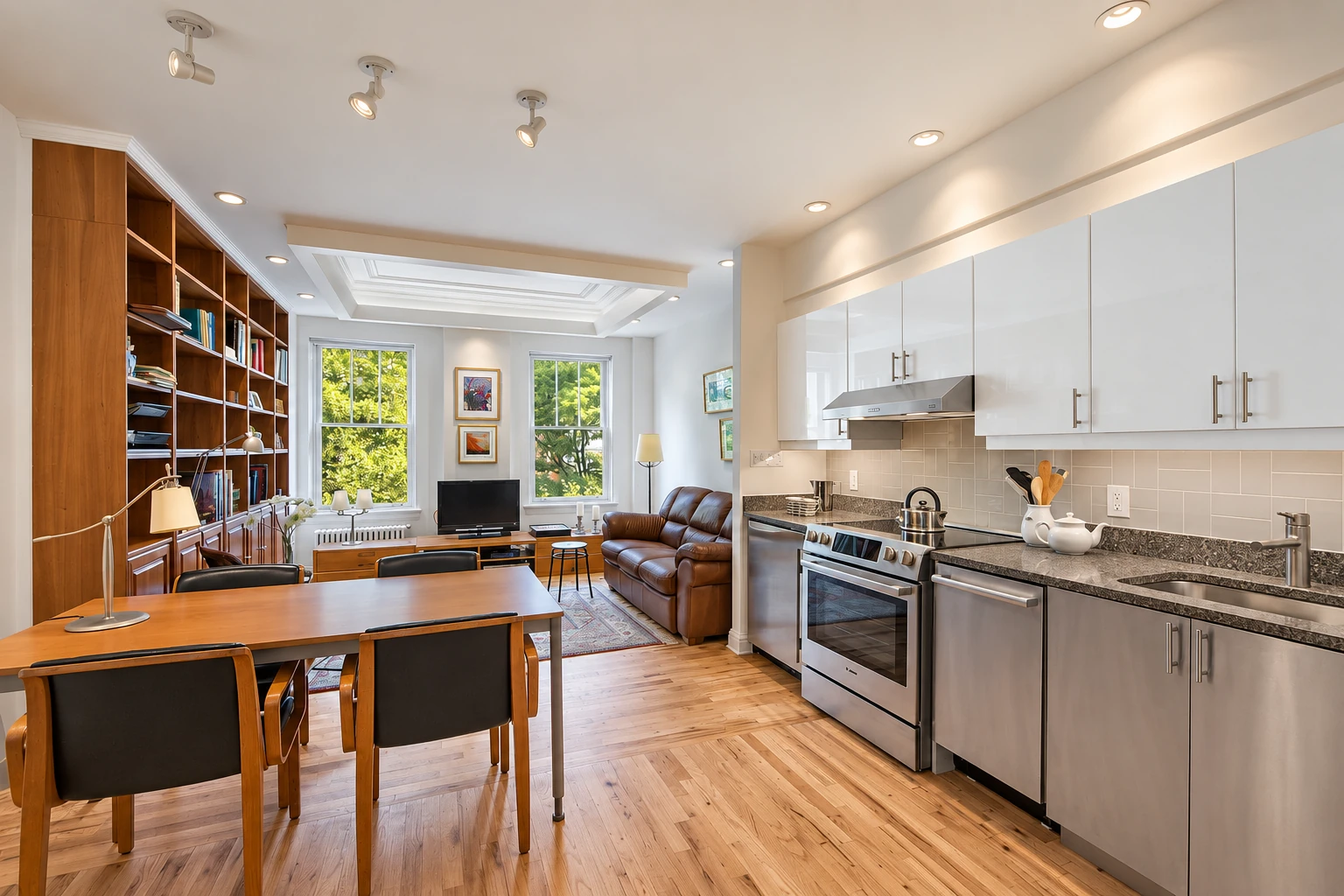
That residential renewal arrived in 1986, when the former hotel was converted into a residential cooperative under 26 Gramercy Park Owners Corp. and rechristened Irving House (also known simply as The Irving). Across its nine stories and penthouse level, the former hotel suites were reconfigured and combined into roughly seventy-six to seventy-eight cooperative apartments ranging from sunny studios to expansive multi-bedroom homes.
Connecting Gramercy Park to the “Block Beautiful”
As a full residential cooperative occupying one of the square’s original perimeter lots within the 1966 Gramercy Park Historic District, 26 Gramercy Park South restored its residents’ deeded key privileges to Gramercy Park while preserving the architectural distinction of Gilbert Robinson & Son’s 1902 design. Today, its unique 179-foot through-block passage gives shareholders two of Manhattan’s most celebrated thresholds: a formal limestone-and-brass main entrance at 26 Gramercy Park South looking directly into the private square, and a quiet southern entrance at 133 East 19th Street opening onto the tree-lined artistic row known since the 1920s as the “Block Beautiful.”
Residents of Note
The People of Gramercy- Ludwig BemelmansAustrian-born writer, painter, and creator of Madeline (1898–1962); lived at the Hotel Irving in the 1930s prior to his top-floor studio at 20 Gramercy Park South
- John GarfieldStage and Hollywood film actor (1913–1952); lived at the Hotel Irving during his early theatrical career
- Carmen HerreraCuban-born geometric abstract painter (1915–2022); stayed at the Hotel Irving with her husband Jesse Loewenthal in 1963–1964 upon returning from Europe before settling on East 19th Street
- David H. KnottHotelier, New York State Assemblyman, and Sheriff of New York County (1879–1954); leased the Hotel Irving in 1917 as part of his Greenwich Village and Gramercy Knott Hotels chain
- Steve MillsVaudeville and Minsky’s burlesque comedian (1895–1988); longtime mid-century resident profiled in The New Yorker in 1965
- Lillian Oppenheimer“Fairy Godmother of Origami” (1898–1992); lived in the penthouse at 26 Gramercy Park South from 1954 to 1992 and founded the Origami Center of New York (now OrigamiUSA) here in 1958
- William SteinwayPiano manufacturer, Steinway Hall founder, and Rapid Transit Commission chairman (1835–1896); lived in the earlier brownstone mansion at 26 Gramercy Park South from 1873 until his death in 1896
- Preston SturgesAcademy Award–winning screenwriter and film director (1898–1959); stayed at the Hotel Irving as a teenager in 1914
- Art YoungSocialist political cartoonist and author (1866–1943); spent his final years at the Hotel Irving, where he died in December 1943 after mailing 1,200 New Year’s postcards
Building at a glance
The building record
- Address
- 26 Gramercy Park South · through-block to 133 East 19th Street
- Historic & current names
- Hotel Irving (1902–1986) · The Irving / Irving House (1986–present)
- Earlier building on site
- William Steinway Residence & Stable (four-story Italianate brownstone, 1840s–1902) Caroline Pryor Pine’s recollections date the Ketchum house at No. 26 and adjoining No. 25 to 1849–50, built by Mr. Hennessy in Nova Scotia stone.
- Developer
- Robert J. Blake Building & Realty Co.
- Architects
- Gilbert Robinson & Son (Gilbert Robinson Jr. and Frederick S. Robinson)
- Built
- 1902–1903 (plans filed December 7, 1901; estimated cost $225,000)
- Architecture
- Nine-story (plus penthouse) Beaux-Arts limestone-and-red-brick apartment hotel (30 x 179 ft. through-block lot; Block 875, Lot 55)
- Historical hotel operators
- Ruggles Company (from Dec. 1902) · Blake Brothers (by 1915) · David H. Knott / Knott Hotels (from Oct. 1917)
- Cooperative conversion
- 1986 (26 Gramercy Park Owners Corp.; approx. 76–78 residential units)
- Park access & landmark status
- Deeded key privileges to Gramercy Park; within the Gramercy Park Historic District (LP-0251, designated September 20, 1966)
Over time
William Steinway’s residence
Piano manufacturer and Rapid Transit Commission chairman William Steinway purchases the four-story brownstone and East 19th Street carriage house at 26 Gramercy Park South for $65,500, hosting musical and civic figures here until his death on November 30, 1896.
The Hotel Irving rises
Following the sale of the Steinway house, developer Robert J. Blake and architects Gilbert and F. S. Robinson erect a nine-story Beaux-Arts apartment hotel running through the block to 133 East 19th Street.
Knott Hotels and literary guests
Leased in 1917 to hotelier and Sheriff David H. Knott, the Hotel Irving welcomes guests and residents including young Preston Sturges (1914), writer-illustrator Ludwig Bemelmans, and actor John Garfield.
Art Young’s final New Year’s cards
Resident political cartoonist Art Young dies in his room at the Hotel Irving at age seventy-seven just hours after walking down Fourth Avenue to mail 1,200 New Year’s postcards to friends.
The Origami Center of New York is founded
Penthouse resident Lillian Oppenheimer (1898–1992), who moved into No. 26 in 1954, establishes the Origami Center of New York (forerunner of OrigamiUSA) and begins publishing The Origamian from 26 Gramercy Park South.
Carmen Herrera and Steve Mills
Painter Carmen Herrera and her husband Jesse Loewenthal stay at the Hotel Irving upon returning from Europe in December 1963, and The New Yorker profiles vaudeville and burlesque comic Steve Mills in his hotel apartment in 1965.
Gramercy Park Historic District
The building is included within the New York City Landmarks Preservation Commission’s Gramercy Park Historic District.
Conversion to Irving House cooperative
After a turbulent final decade as a residential hotel in the 1970s, 26 Gramercy Park South converts into a residential cooperative under 26 Gramercy Park Owners Corp.
Sources cited
- Real Estate Record and Builders’ Guide, Avery Architectural & Fine Arts Library, Columbia University: William Steinway estate conveyances (December 14, 1901); new-building plans for 26 Gramercy Park South / 133 East 19th Street by architects Gilbert and F. S. Robinson (December 7, 1901, page 793); Ruggles Company lease (May 9, 1903); and David H. Knott lease (October 6, 1917).
- The William Steinway Diary: 1861–1896, Smithsonian National Museum of American History (entry for November 29, 1873, recording the purchase agreement for 26 Gramercy Park, and household biographies of William Steinway and Elizabeth Ranft Steinway); and Richard K. Lieberman, Steinway & Sons (Yale University Press, 1995).
- New-York Tribune, August 29, 1915. Display advertisement for the Hotel Irving (“A high class family hotel”), Blake Brothers, managers.
- Andy Logan and Russell Maloney, “Backward Boy,” The New Yorker, January 15, 1944, and Time, January 10, 1944 — Recounting cartoonist Art Young’s residence and final evening at the Hotel Irving on December 29, 1943; and Art Young correspondence on Hotel Irving stationery in the Helen Keller Archive, American Foundation for the Blind.
- Martin Gardner, “Mathematical Games: Origami,” Scientific American (July 1959), reprinted in The Second Book of Mathematical Puzzles and Diversions (Simon & Schuster, 1961), and OrigamiUSA archives — Documenting Lillian Oppenheimer (1898–1992) and the October 1958 founding of the Origami Center of New York in the penthouse of 26 Gramercy Park South.
- Mónica Espinel, exhibition chronology in Dana Miller, ed., Carmen Herrera: Lines of Sight (Whitney Museum of American Art / Yale University Press, 2016) — Documenting Carmen Herrera and Jesse Loewenthal’s December 1963 return to New York and stay at the Hotel Irving.
- James Stevenson, “The Talk of the Town: Comic,” The New Yorker, April 17, 1965, and The New York Times, March 12, 1988 (“Steve Mills, Comedian in Vaudeville Days, 92”).
- Barbara Bemelmans, interview with Betsy Bird, School Library Journal, October 13, 2020 — Recalling Ludwig Bemelmans’s Gramercy Park years and the Hotel Irving doorman.
- U.S. Senate Special Committee on Aging, Single Room Occupancy: A Need for National Concern (1978, Appendix 4, page 45, reprinting Joseph Berger’s July 11, 1977 New York Post report), and Robin Herman, The New York Times, January 10, 1979.
- New York City Landmarks Preservation Commission. Gramercy Park Historic District Designation Report (LP-0251, September 20, 1966).
- New York City Department of Finance / ACRIS and Department of Buildings property records for Manhattan Block 875, Lot 55 (26 Gramercy Park Owners Corp., 1986 cooperative conversion).
- Caroline Pryor Pine, Recollections (1929, Museum of the City of New York), pp. 6, 8, 10, as quoted and discussed in Garmey. Family memories of Nos. 24–26, their construction, and the occupants of No. 25.
- Unpublished Minutes of the Meetings of the Gramercy Lot Owners, January 20 and 27, 1902, as cited in Garmey; the Hotel Irving dispute and meetings chaired by John Bigelow.
- Stephen Garmey, Gramercy Park (1984), pp. 9, 112, 153–154, 165–167, 172. The earlier houses, Caroline Pryor Pine’s recollections, the Hotel Irving, and the Gilder cooperative.
- John B. Pine, The Story of Gramercy Park, 1831–1921 (1921), discussion of the Hotel Irving injunction and the covenant’s meaning of “dwelling house.” Pine identifies Mrs. Gallatin as the plaintiff and the Quaker Meeting House as the setting for the lot owners’ meetings.
Photo credits for this page
- Exterior, entrance, and interior views of 26 Gramercy Park South (The Irving / Irving House): Gramercy Park Block Association archive.
- New-building filing for 26 Gramercy Park South: Real Estate Record and Builders’ Guide, December 7, 1901, page 793; Avery Architectural & Fine Arts Library, Columbia University.
- Hotel Irving rising above the Twentieth Street Friends Meeting House, 1930s: Museum of the City of New York (MNY216341).
- Portrait of Art Young (c. 1910–1915): George Grantham Bain Collection, Library of Congress, Prints and Photographs Division (LC-DIG-ggbain-15536).
- Vintage postcard of the Hotel Irving overlooking Gramercy Park (postmarked April 30, 1918): Published by E. R. Rott; Gramercy Park Block Association historical archive.