
Gramercy Stories
Behind the Tower at No. 60
The stories of 60 Gramercy Park North
Dear Neighbors,
Our series on the buildings and monuments around Gramercy Park—and the stories they tell—continues with No. 60.
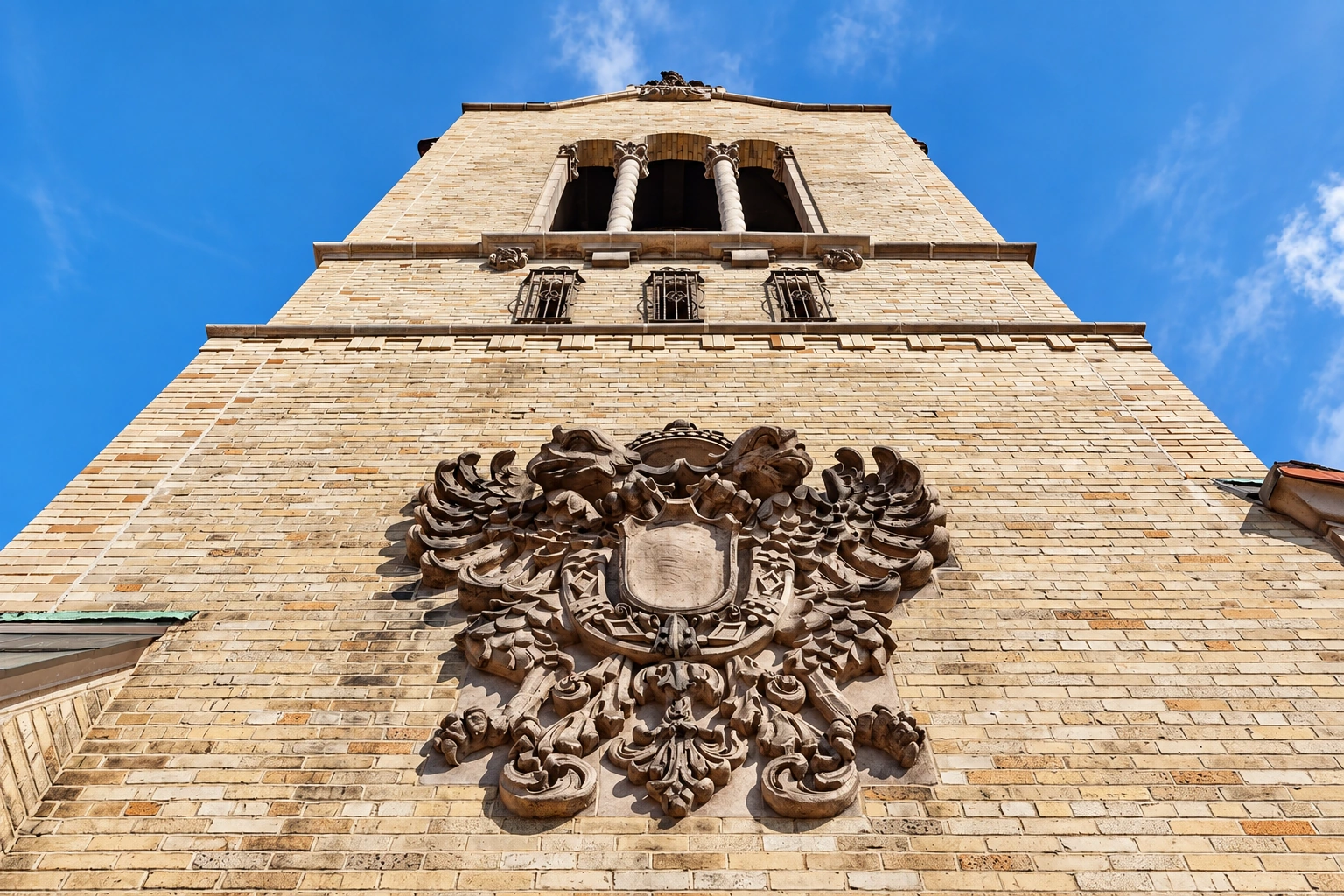
Look up from the Park at the tower that crowns 60 Gramercy Park North and you might never guess what it is for. It hides the building’s water tank. Emery Roth took an everyday necessity and made it one of the Park’s most recognizable sights, giving his apartment house a little Mediterranean grandeur in the bargain.
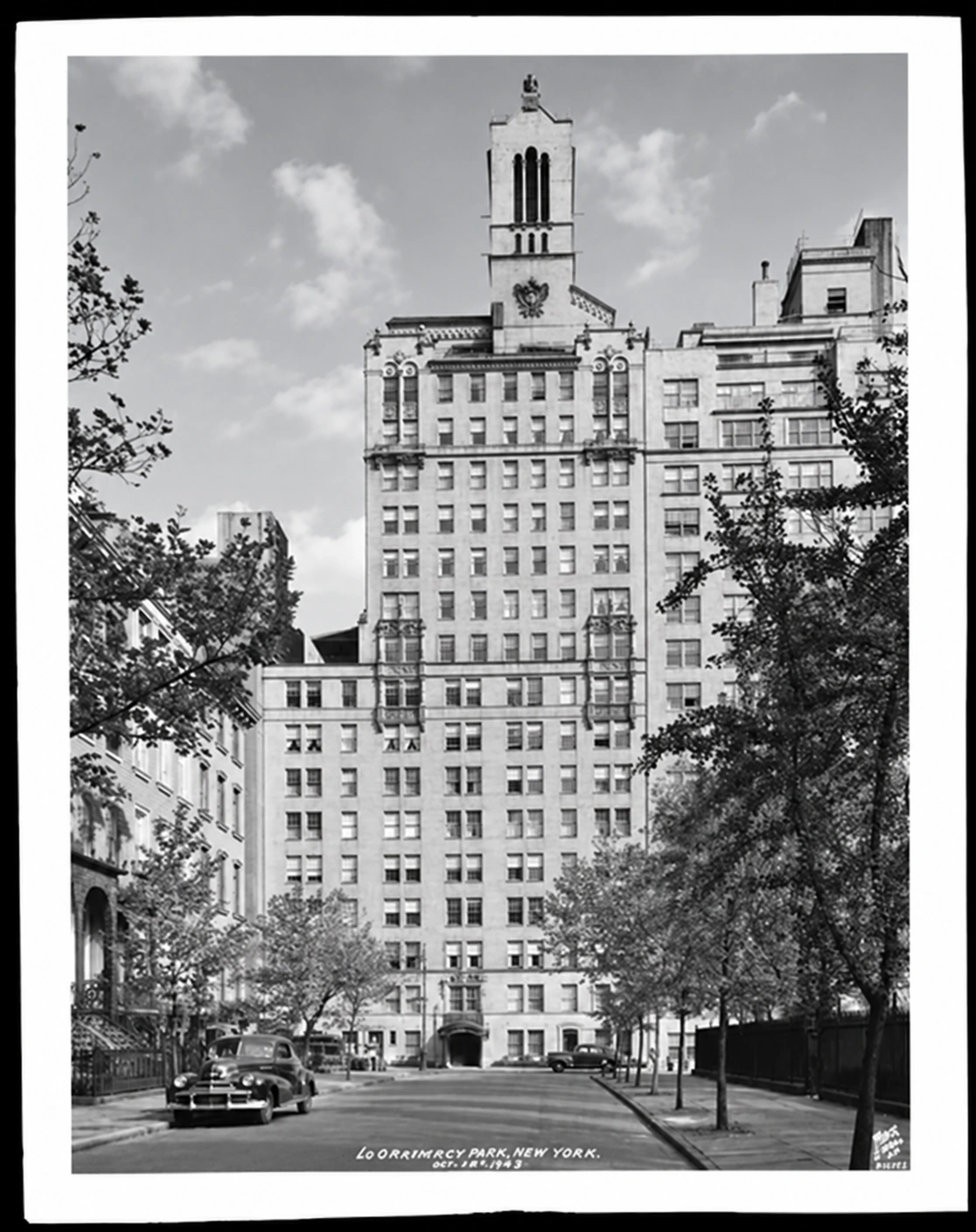
Below it, plain brick walls grow more elaborate as they rise, and terraces step back beneath red-tiled roofs. Roth finished the building in 1928, while designing the Beresford and the San Remo. The 1943 photograph that follows shows the whole composition, before the Park’s trees grew tall enough to hide much of it.
There is more to No. 60 than you can see from the Park. It is really two sixteen-story buildings, one facing the Park and the other East 22nd Street, joined across a garden court by a circular lobby. The original 162 apartments ranged from single rooms to large suites.
A familiar face at the Met
The stories here begin before the tower. One of the smaller houses that once stood on this part of the Park’s north side, 109 East 21st Street, was home to Susanna Shaw Minturn, the widow of a partner in the shipping firm Grinnell, Minturn & Co. She came from the abolitionist Shaws of Staten Island: her brother, Colonel Robert Gould Shaw, commanded the 54th Massachusetts, one of the Union Army’s first Black regiments, and her sister Josephine Shaw Lowell helped found the Consumers’ League of New York.
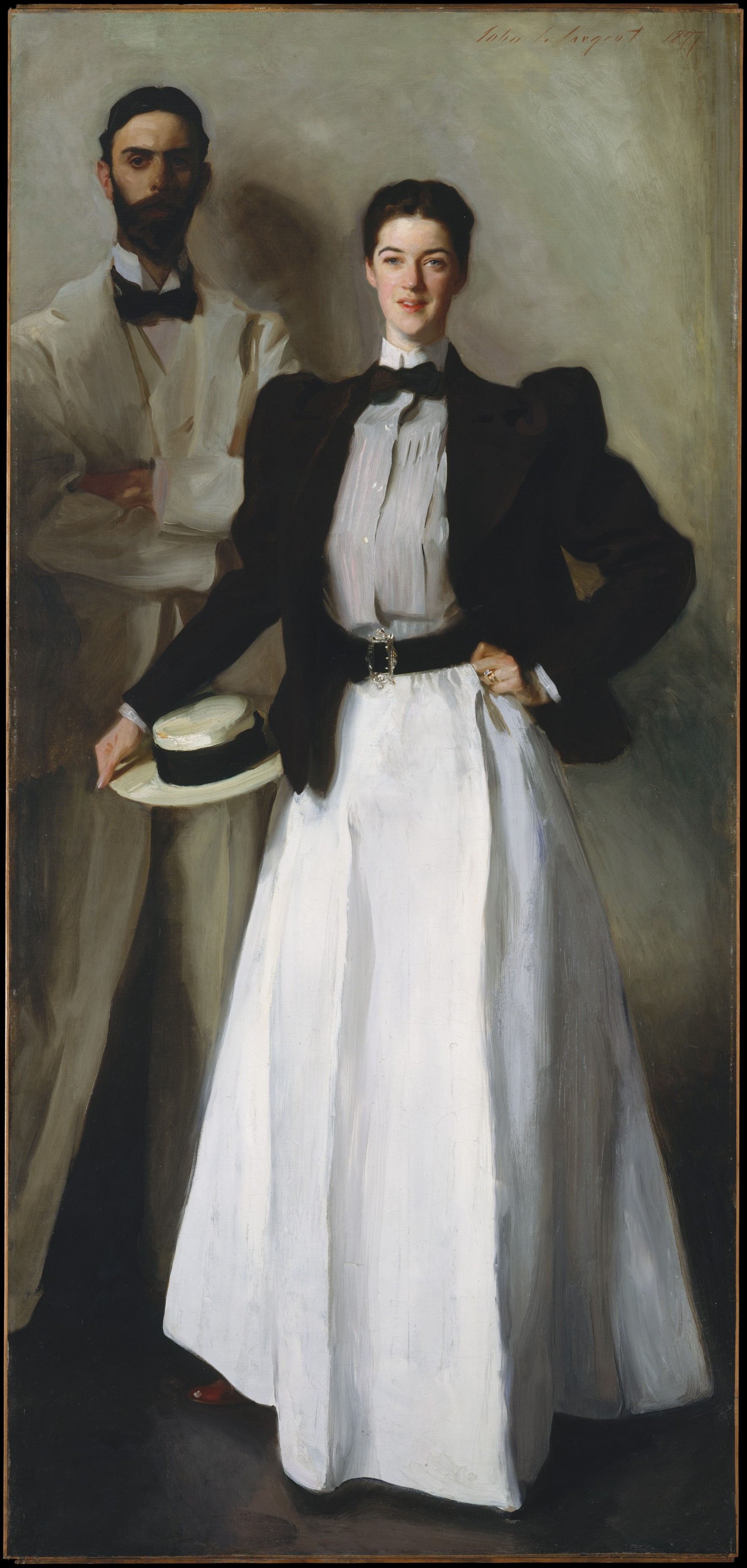
Susanna’s daughter Edith may be familiar even if her name is not. She is the woman holding her hat in John Singer Sargent’s Mr. and Mrs. I. N. Phelps Stokes at the Metropolitan Museum of Art, and her husband was never meant to be in the picture.
A friend had commissioned a portrait of the bride as a wedding gift. Sargent first chose an evening gown, then decided on sporty day clothes, with a Great Dane at her side. When the dog proved unavailable, her husband, in his own words, “offered to assume the role of the Great Dane in the picture.” He has stood just behind her ever since.
Edith was no stranger to posing. She had modeled for Daniel Chester French’s Republic, the towering gilded figure at the heart of Chicago’s 1893 World’s Fair. French, whom we met in our last building profile, later lived at 36 Gramercy Park East. And among those at work on that fair was Emery Roth, who would one day build on the site of her mother’s house.
Apartment life, circa 1928
When The New Yorker visited the newly completed building in October 1928, Marcia Davenport found much to like: generous rooms, plentiful closets, well-equipped kitchens and “delicious sunshine.” A restaurant was promised, along with maid and valet service for those who wanted it. She did prefer a proper dining room to the smaller apartments’ dining alcoves, and she reserved a little sympathy for the garden’s rhododendrons, which looked “a shade discouraged,” though June would come again.
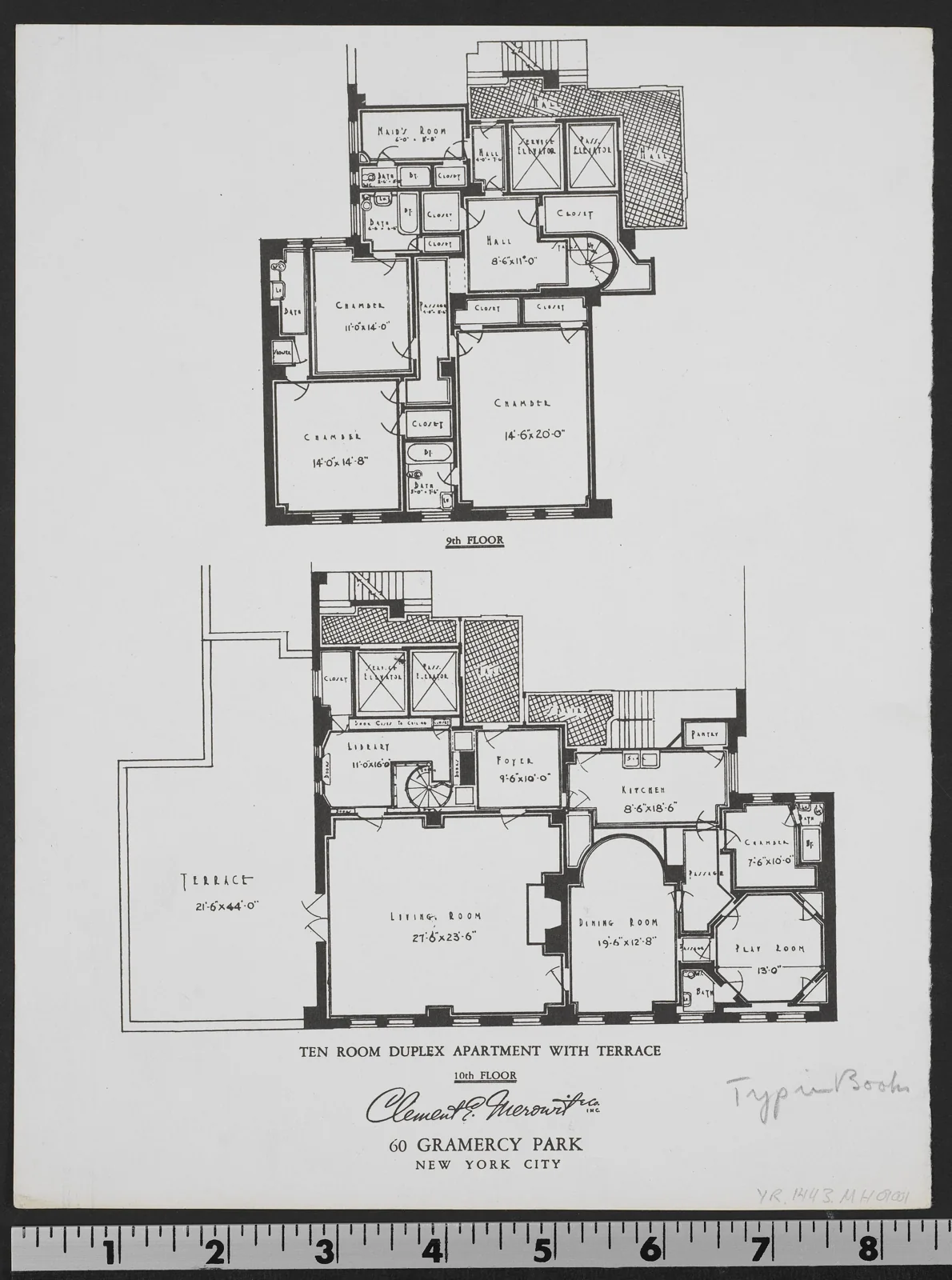
An old rental brochure takes us inside one of the larger apartments, a ten-room duplex on the ninth and tenth floors. The main rooms were upstairs: a living room twenty-seven feet long, a library, a dining room with a rounded end, an octagonal playroom and a terrace that ran forty-four feet. The bedrooms and a maid’s room were on the floor below, and separate passenger and service elevators meant the family and the groceries never had to share.
The New Yorker was back in February 1936, this time for the man at the door. Joe, the doorman, had inherited one hundred acres in Kentucky and was leaving to farm them. Children there, “The Talk of the Town” observed, would need no key to get in—and Joe would need no uniform.
An artist with a Gramercy address
The Sargent portrait was not this site’s only brush with American art. The painter Ralston Crawford, known for turning factories and grain elevators into sharply defined geometric paintings, gave No. 60 as his address in six Whitney Museum exhibition catalogues between 1953 and 1967.
His career took some extraordinary turns. He worked at Walt Disney’s studio, sailed on merchant ships and, in 1946, witnessed the atomic-bomb tests at Bikini Atoll, making paintings in response. New Orleans drew him back again and again. He photographed its musicians and its cemeteries, and after his death in 1978 he was buried there with a jazz funeral.
The beauty behind the front door
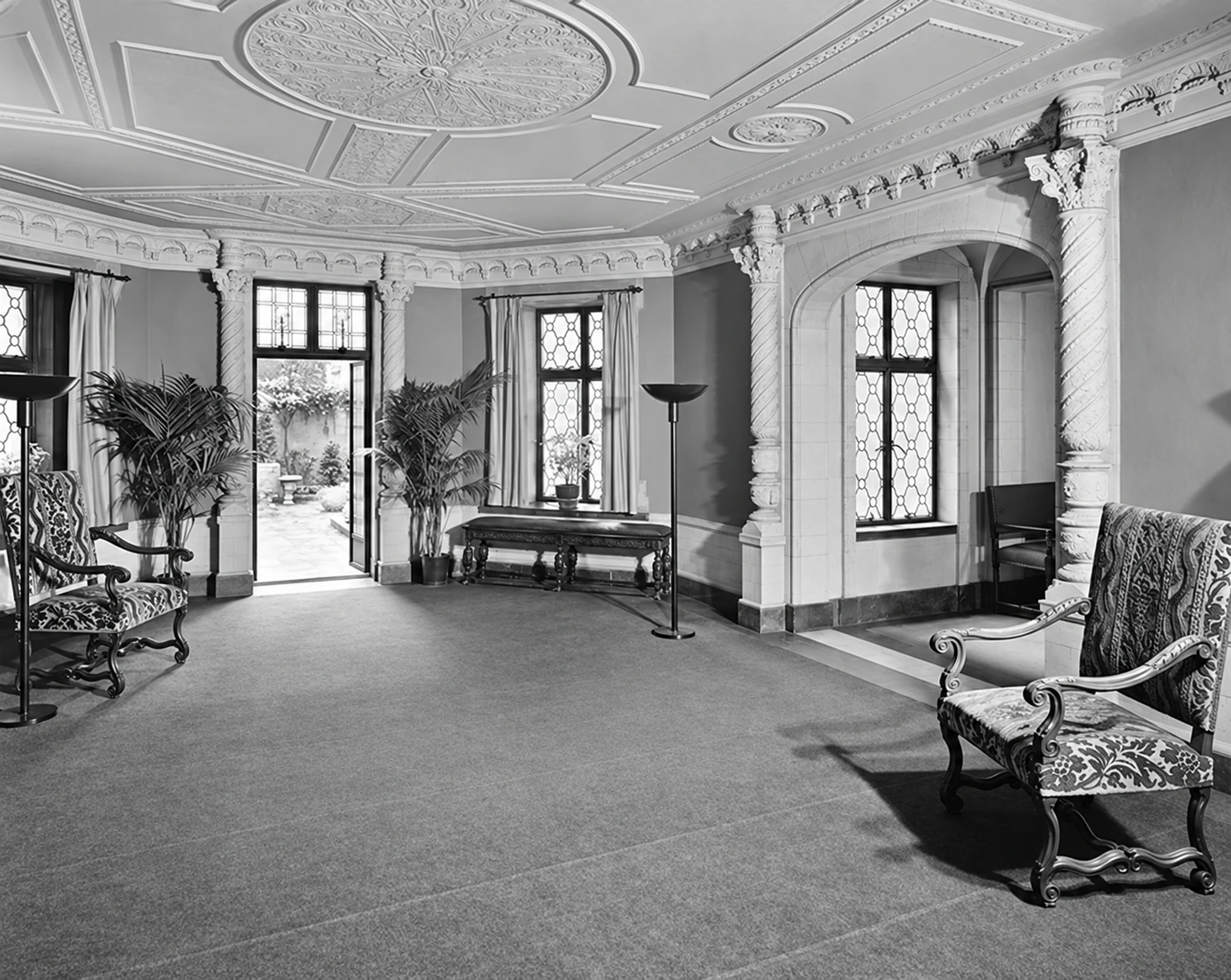
The 1941 photograph above shows Roth’s circular lobby when the building was thirteen years old. Upholstered chairs line the rotunda beneath an intricately decorated ceiling, and patterned windows look out toward the garden. The rental agents who commissioned the picture plainly knew a selling point when they saw one.
The decades that followed were less kind. Freestanding mailboxes crowded the room, layers of glossy paint hid the original travertine-like plaster, and the leaded-glass windows grew fragile.
The restoration completed in 2007 by Françoise Bollack Architects recessed the mailboxes into the walls to open up the rotunda, recovered the original finishes and colors through careful tests and mock-ups, and added new brass and hammered-glass lights inspired by period fixtures. With decorative painting by EverGreene Painting Studios, the ceiling ornament and gilded shells came back into view. The room is once again a gracious place to arrive, pause and meet a neighbor.
From across the Park, of course, none of this shows. There are only the red tiles, the arches and the eagles, still keeping watch over the water tank.
Explore the full story of No. 60 →
Visit our full building profile for more archival photographs, original apartment plans, rooftop gardens, the Minturn family’s history and links to the original sources.
Warmest regards,
Arlene Harrison
President, Gramercy Park Block Association
Photographs & artwork: Exterior: Wurts Bros., October 18, 1943; Museum of the City of New York, X2010.7.1.8440. Tower detail: CityRealty; photographer unidentified. Lobby: Wurts Bros., May 21, 1941; Museum of the City of New York, X2010.7.1.8000. John Singer Sargent, Mr. and Mrs. I. N. Phelps Stokes, 1897: The Metropolitan Museum of Art, Bequest of Edith Minturn Phelps Stokes, 1938, 38.104; public-domain reproduction via Wikimedia Commons. Full historical sources and image credits →