History
Why is there a garden here at all?
Meet the people who imagined it, defended it and kept changing the neighborhood around it.

Get to know the Park today, explore a building or a chapter of neighborhood history, or find a street tree on the map.
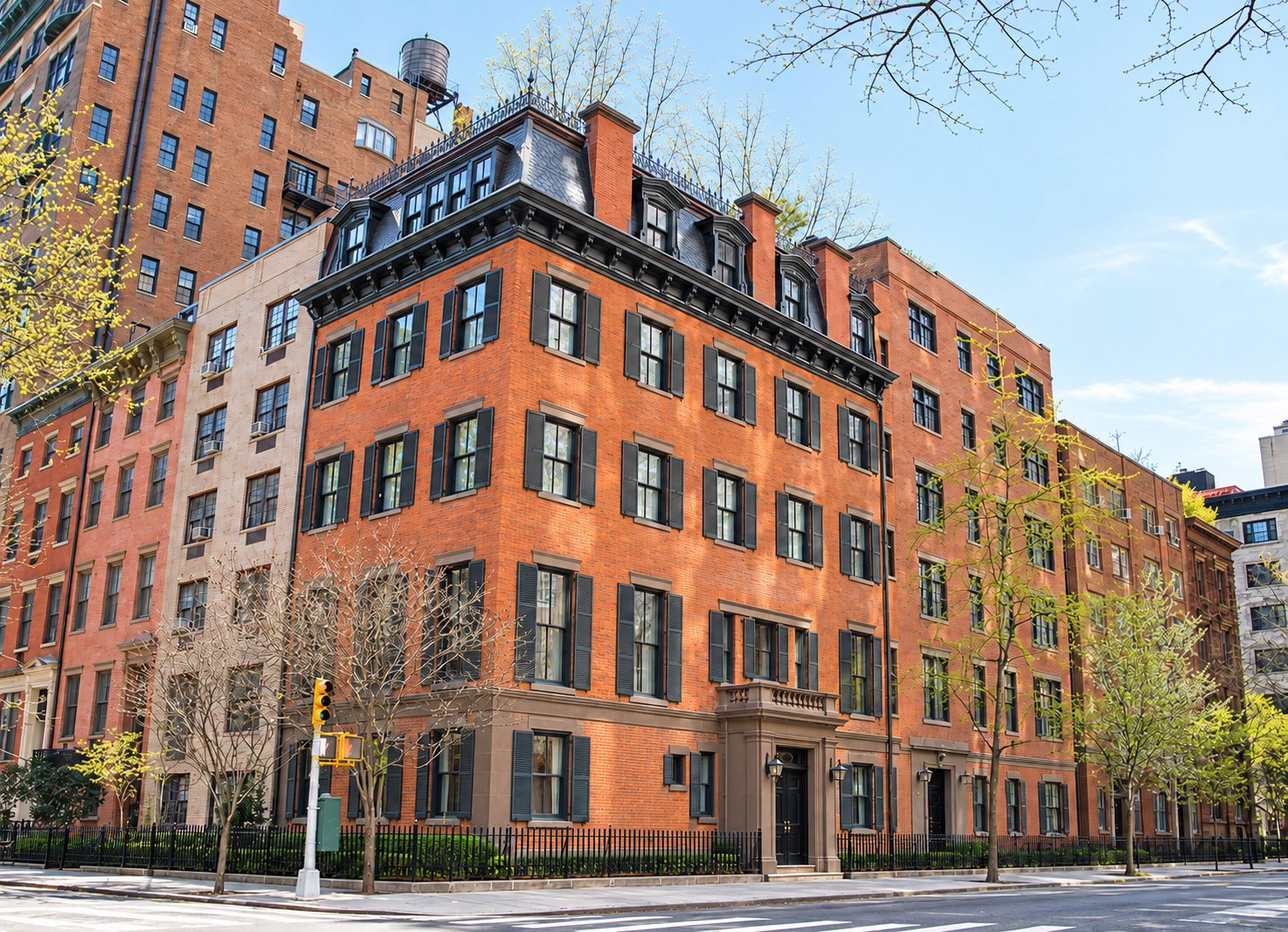
A shared cast-iron porch, an artists’ club and a hostess who changed her address without moving her front door: start with the houses around the Park.
The red-brick house at the corner of Irving Place began life in 1845. Its mansard roof came later, and so did the Gramercy Park address. When Mamie and Stuyvesant Fish bought the house in 1887, Stanford White remodeled and enlarged it for a new chapter of entertaining.
The house’s next celebrated hosts were Benjamin and Hilda Sonnenberg. They first rented rooms here in 1931, then bought the property in 1945 and joined it to the house next door. Their thirty-seven-room home brought art, books and guests into rooms already rich with stories.
Our building profiles follow these changes through the people who lived here and the details still visible from the sidewalk. Old photographs, architectural records and the Gramercy Park Block Association’s accounts of restoration connect an address we pass today with the lives and decisions that shaped it.
Step inside the story of No. 19Meet the people who imagined it, defended it and kept changing the neighborhood around it.
Ginkgo, willow oak, dawn redwood. Find your tree on the map and discover what grows around the Park.
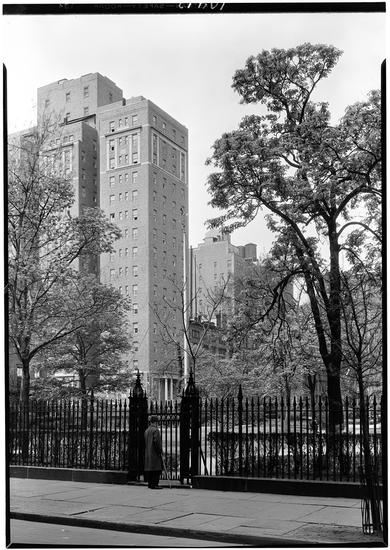
Samuel H. Gottscho’s 1929 photograph looks through the iron fence toward 18 Gramercy Park South. The Museum of the City of New York’s photographs and postcards preserve the buildings, gardens and everyday life of earlier Gramercy.
Follow those views through the Park’s history, or compare the historic atlas sheets to trace a familiar building or corner.
Explore the historic mapsWho cares for the garden, how access works, and what eligible residents need to know about keys and rules.
A practical guide to the Park