
Gramercy Stories
45 Gramercy Park North
From the Harpers to The Village Voice
Dear Neighbors,
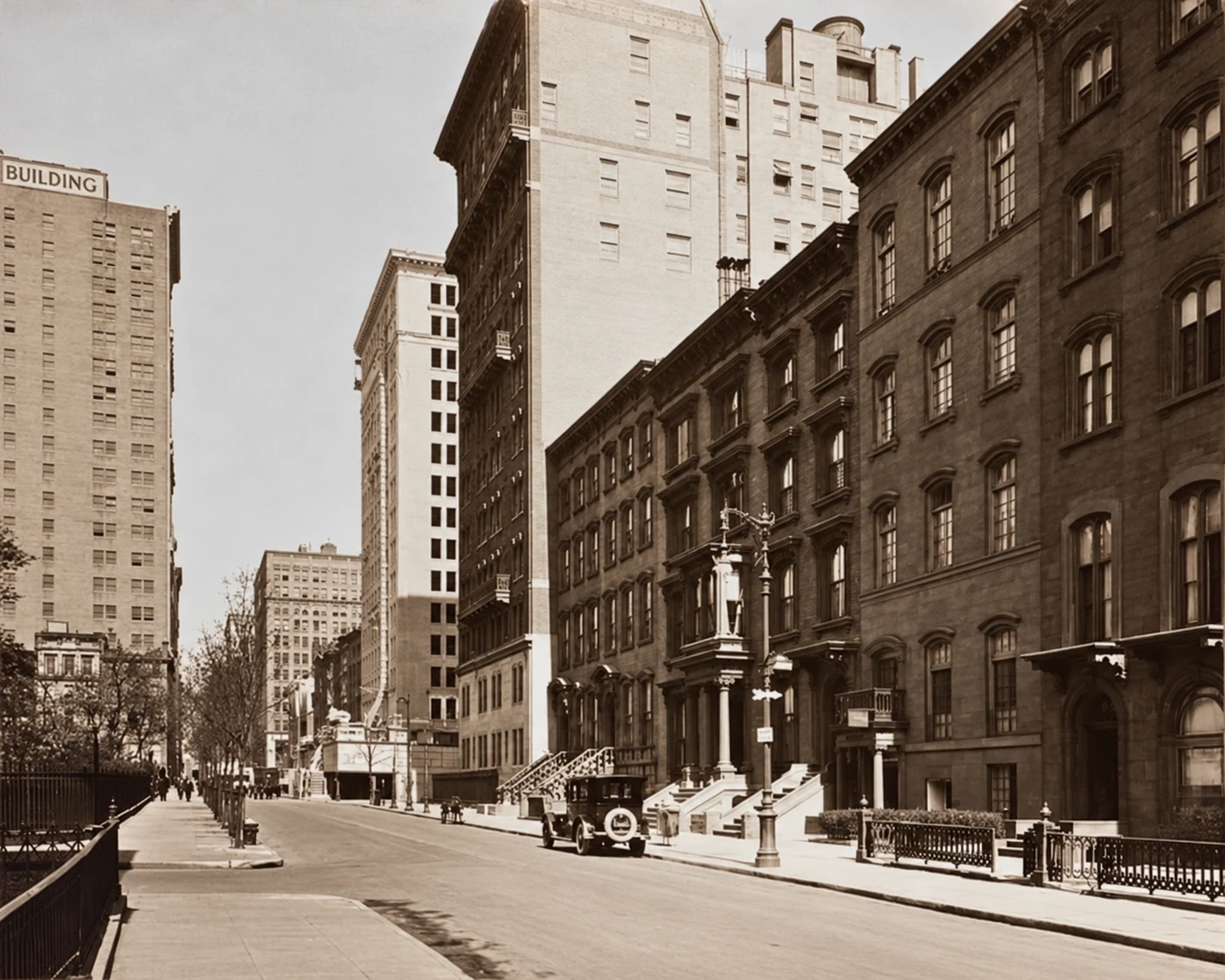
In December 1911, Henry Sleeper Harper tried a very New York way of holding off change: he bought the house next door. A twelve-story apartment building had just risen at One Lexington Avenue. Harper, of the publishing family, wanted to protect his own home in the row of brownstones immediately to the east.
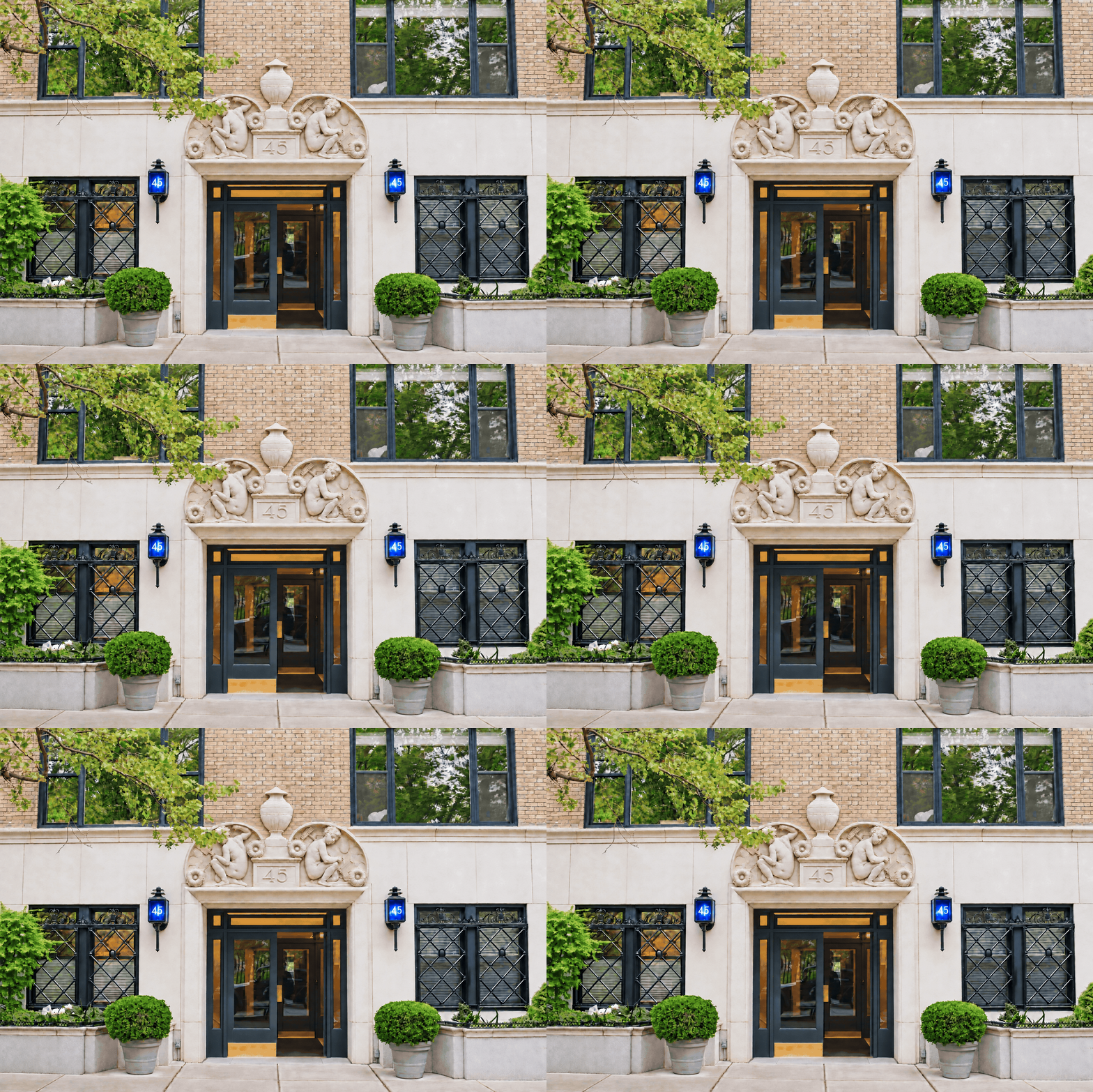
Harper’s brownstones are gone. In their place, and on an adjoining lot, stands 45 Gramercy Park North, the buff-brick apartment house distinguished by two carved figures above its limestone doorway. The publishing connection would outlast the houses: decades later, Ed Fancher, a founder of The Village Voice, would make his home here.
The Harpers lived at 131 East 21st Street. The deed for neighboring No. 133 put the purchase in Myra Harper’s name, with rights and privileges to Gramercy Park. For the moment, the family had secured a buffer against the changes around them.
A Pekingese in Lifeboat No. 3
Four months after the purchase, Henry and Myra Harper boarded the Titanic for the journey home. With them were Hammad Hassab, their Egyptian guide and interpreter, and Sun Yat Sen, a Pekingese they had bought in Paris. When the ship sank in April 1912, all four escaped in Lifeboat No. 3.
At least twelve dogs sailed on the Titanic; only three are known to have survived. Sun Yat Sen was one of them, along with two Pomeranians. The Harpers’ home was the brownstone at No. 131, on part of the site where today’s No. 45 was completed fifteen years later.
Harper eventually left the Park. In 1926, he hired Herbert Lucas to combine two Murray Hill houses into a new home. In an ironic turn, Lucas was the same architect whose apartment building at One Lexington had helped prompt Harper’s protective purchase fifteen years earlier.
A New Address Above the Trees
Bing & Bing, the brothers who had opened the Gramercy Park Hotel across Lexington Avenue in 1925, built No. 45 in 1926–27. Architects George A. and Henry A. Boehm gave it a limestone base, buff-brick walls and a succession of setbacks. By September 1927, apartments were being advertised for immediate occupancy, some with roof terraces.
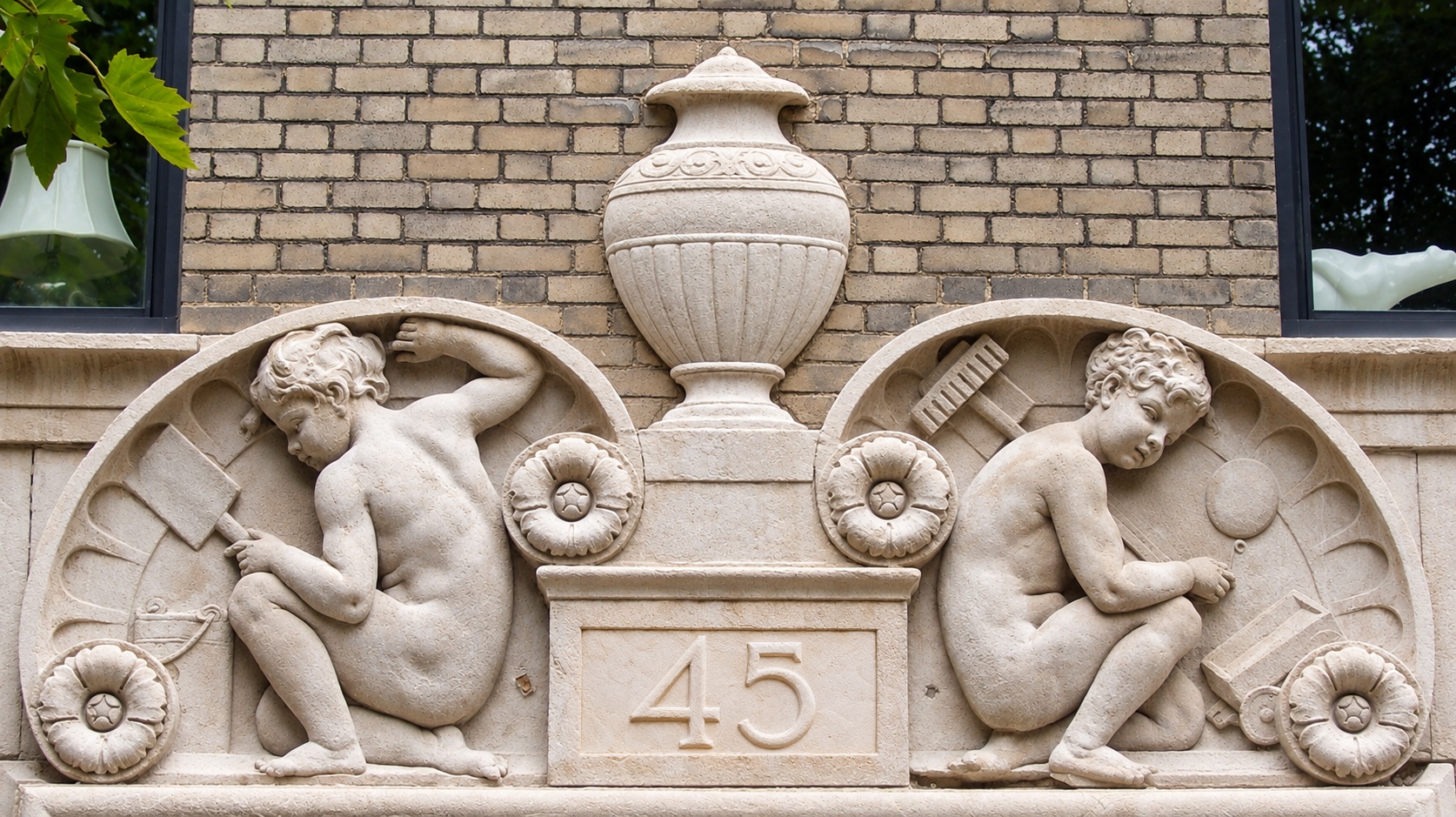
At the doorway, two carved figures flank a central urn amid shells and stone flowers. They are best understood as Renaissance-inspired ornament, rather than depictions of particular historical or mythological characters. The classical flourishes give this apartment-house entrance something of the formality of an old European residence.
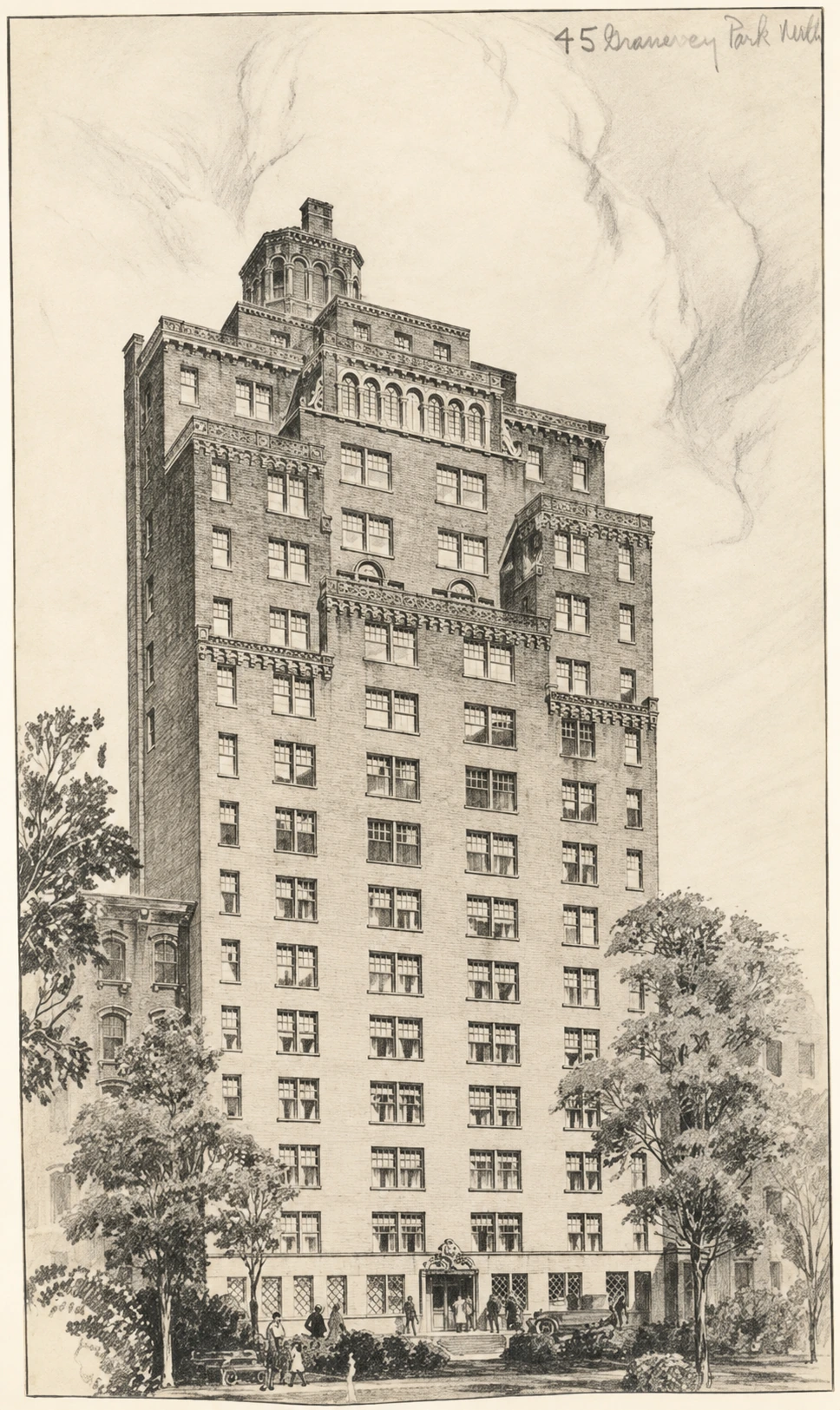
The architectural drawing below reveals a detail farther from view: the columns at the very top conceal a rooftop water tank, giving a piece of everyday equipment an unexpectedly grand setting.
The Voice Comes to Gramercy
In 1955, Ed Fancher had helped launch The Village Voice, handling the young newspaper’s circulation, distribution and advertising while continuing his training as a psychoanalyst.
Fancher had helped give downtown New York a newspaper of its own. Ed died here in September 2023, shortly after his hundredth birthday.
No. 45 is approaching its own hundredth birthday with a newly renovated façade. Its carved limestone doorway and rooftop colonnade have long since become familiar features of the Park’s north side.
Explore the full story of No. 45 →
More photographs, original documents and the building’s complete history are on the GPBA website.
Warmest regards,
Arlene Harrison
President, Gramercy Park Block Association
Images: Entrance photograph: Compass Gramercy neighborhood guide; photographer unidentified. Doorway detail adapted from a photograph by Beyond My Ken, 2010, Wikimedia Commons; CC BY-SA 4.0, available under the same license. April 1925 streetscape: Brown Brothers, New York Public Library. Architectural drawing: artist unidentified, New York Public Library, via Vestiges of New York. Full historical sources →